
San Valentino
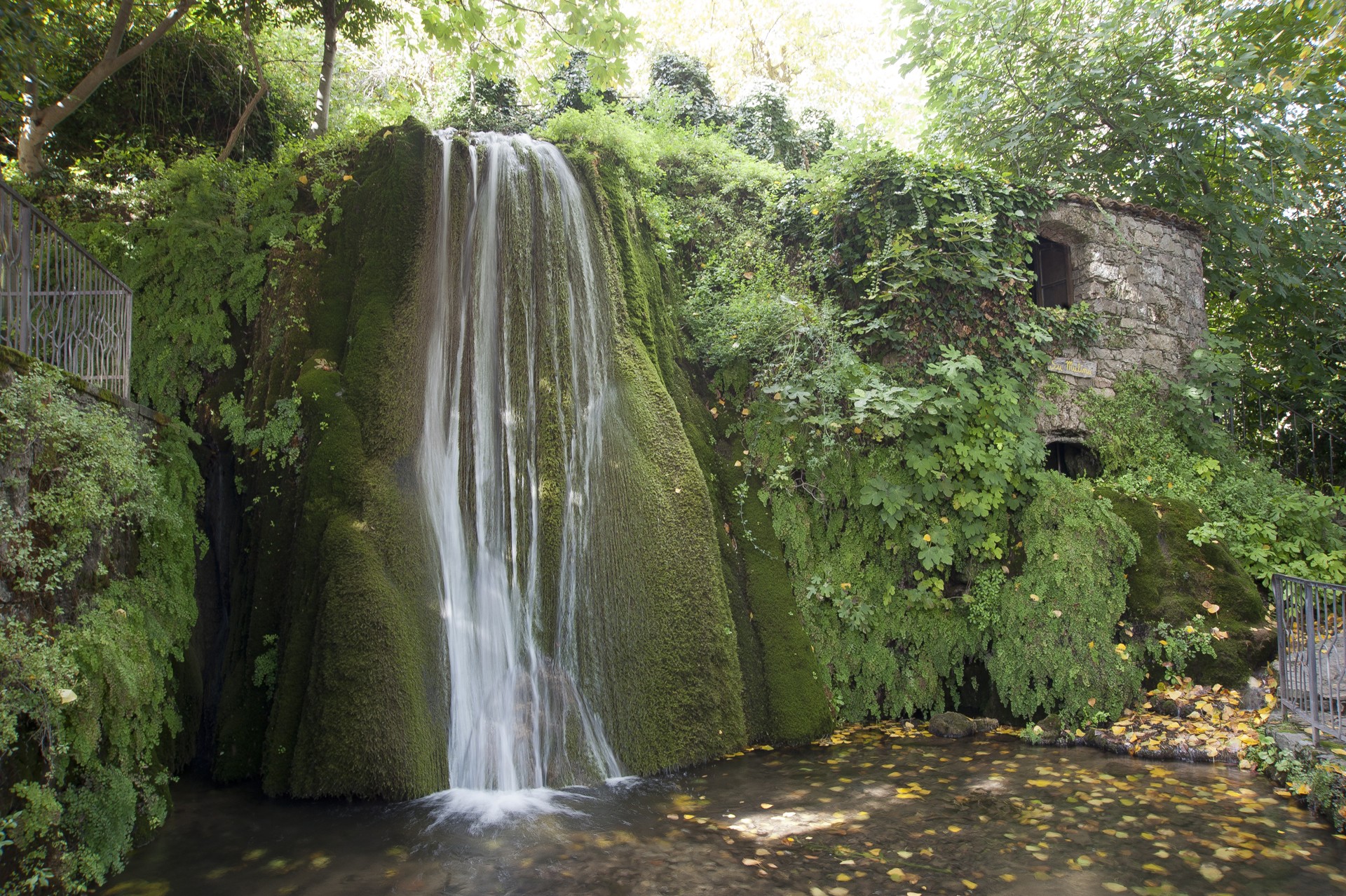
In Sardinia, Saint Valentine is su santu coiadori, the ‘saint who marries’. The only church on the island dedicated to the protector of lovers is in Sadali, a picturesque town with medieval origins and agro-pastoral traditions in the historical region of Barbagia di Seulo, one of the most beautiful villages in Italy and a way station for the Trenino Verde. The village celebrates its patron saint three times a year: on the ‘classic’ date of 14th February, then on 8th May and 6th October. The devotion derives from a legend - a vagabond came carrying a statue of the saint, stopping in Sadali in front of a waterfall. Upon resuming his journey, despite all his efforts, he was unable to budge the statue. The people of Sadali jealously guarded the simulacrum, even erecting a ‘temple’ dedicated to the saint. From the parish church, the spectacle of nature perpetually flowing in front of this place of worship took its name - the Cascata di San Valentino, as the only waterfall on the island to flow within a town. Indeed, according to the canon and historian Flavio Cocco, who lived throughout the first half of the 20th century, it was the only such example in all of Europe.
The evocative waterfall seems to have been made especially for a visit on the most romantic day of the year to this pilgrim destination who have come here time immemorial to implore the saint to grant them the blessing of finding a companion. Powered by the wellhead Funtana Manna that ensures a cool climate all year round, its waters jump seven metres along a green rocky ridge. The flow ends, like that of the countless sources in Sadali, within sa Ucca Manna, an underground ravine, equipped with a stone access path. The stream flows through the ‘large mouth’ for 150 metres before flowing out into the lower part of the town, stretching out across the slope of the plateau known as su Taccu, a reservoir of groundwater that feeds a myriad of springs. During the feudal age, water power was used to operate various mills that dotted the countryside, one of which is located next to the rapid. Rising up to a great height before it is the bell tower of the San Valentino Martire parish church, which was added in the mid-20th century to a historical building. The initial layout from the late Byzantine with Romanesque influences (9th-10th century) was revisited firstly at the end of the 16th century in Gothic-Aragonese forms then again in the Savoy era. Other churches of Sadali are dedicated to Santì’Anna, built around the year 1000, Santa Maria, Sant’Elena Imperatrice and Sant’Antonio Abate. To be admired in the historical centre is the 19th-century house-museum sa Omu e’ tzia Cramella, with original furniture and instruments. To stroll through in the surrounds of the village are woods of holm oaks, oaks, cork oaks and Mediterranean scrub, in an explosion of colours. The Flumendosa adds further charm to the ‘water landscape’, as the emblem of su Stampu e’ su Turrunu, on the border between Seulo, a unique karst phenomenon: a stream, swallowed by a hole in the ground, re-emerges many metres below a cave with a waterfall that forms a pond. The route to reach it, within the Addolì forest, passes through another wonder of nature, the is Janas caves which, according to legend, are home to three fairies. To visit within these grottos are six rooms composed of stalagmites and stalactites that unite in columns, ochre-coloured dripstone and marble drapery formations. These are the most famous of around forty caves scattered throughout the Sadali territory, inhabited since Neolithic times and again in the Bronze Age, as evidenced by Domus de Janas, the Nuraghe and Tombs of Giants.
Sa Oche 'e Su Bentu
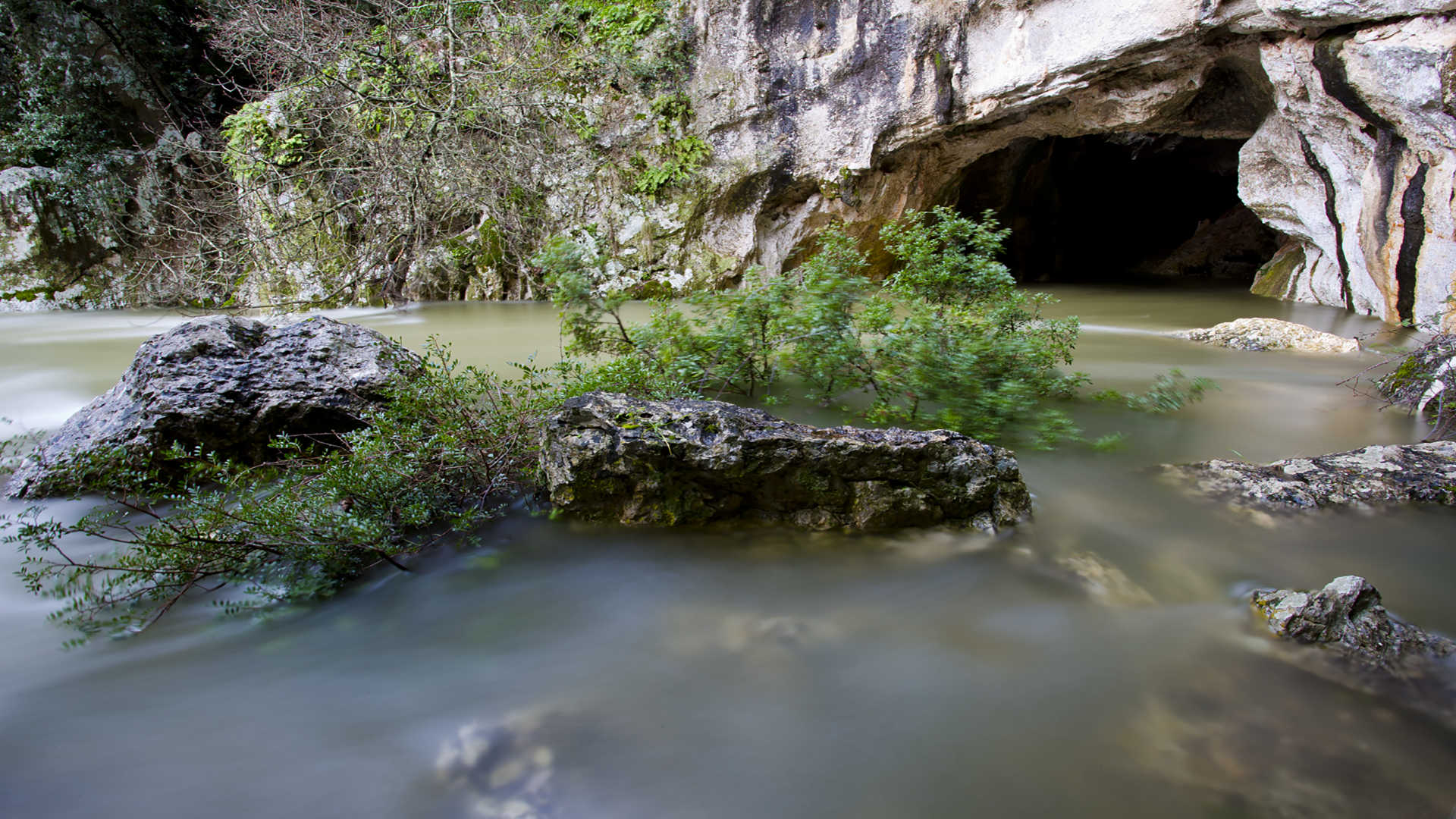
Stronger than time, water and wind. The complex at sa Oche e suBentu, "the voice of the wind", set at the bottom of the majestic Lanaittu Valley, is the epitome of natural grandeur. Between high, vertical walls, ancient yews, maples and junipers, over the millennia Karst phenomena have created a place where the wind blows so strongly on the water that it howls. While you explore, listen for the sound of the air flows created by the water inside.
Sa Oche and su Bentu, which you can reach by a trekking path that passes through the Nuraghic village sa Sedda ‘e sos carros, are some of the largest caves in Europe. The caverns can be kilometres long and include spacious rooms up to 100 metres high, decorated with stalactites and stalagmites, tunnels and floors covered in sharp crystals, in a scenery of crevasses, underground lakes and beaches of quartz sand.
Inside sa Oche, after a big storm, huge quantities of air rush through the caves, creating a booming sound. The cave has a large entrance with three lakes, opening at 150 metres altitude, and runs for 260 metres. Su Bentu, which can only be accessed by expert cavers, is part of the Supramonte hypogeic system, crossed by a river that runs from the plateaus of Orgosolo and Urzulei before gushing to the surface as the springs at su Gologone (another jewel in the territory of Oliena), after flowing thirty kilometres through the bowels of the earth. The cave opens wide at 206 metres altitude, and has a long, complicated path on various levels. Linked by a siphon to its twin "Voce", it is mainly horizontal and includes lakes, salons and sharp drops, characteristics that make it a unique place for speleological research and explorers form all over the world.
The feeling of the immensity of nature will also accompany you in the nearby village of Tiscali, the last stronghold of the Nuraghic peoples, and other caves in the Supramonte in Oliena and Dorgali: the stunning Ispinigoli, s’Abbamedica and Grotta Corbeddu, home to a legendary outlaw, with traces of human activity dating back 10,000 years, and the remains of a prehistoric deer from 30,000 years ago.

The Corbeddu cave
It gets its name from a famous bandit who used it as his hideout for a long time. The Corbeddu cave is located in the majestic Valley of Lanaittu, in the territory of Oliena, close to Nuoro: it is 130 metres long and has three rooms. In the second one, the most ancient findings of homo sapiens in Sardinia were unearthed. The first space is large dry and illuminated by a faint light: Giovanni Corbeddu Salis lived here. A corridor leads to a second room, where the excavations unearthed, as well as more recent findings - from the Mesolithic and Early Neolithic periods - a temporal bone and a jaw of the same individual, dating back to 13,500 years ago. More recently, the phalanx of a hand, dating back to twenty thousand years ago: they are the oldest human remains on a Mediterranean island. Studies have shown that they are different from those of other European populations from the same period.
Together, other tools made of bone and stone, used in everyday life, were unearthed. In the same room, fossils of an ancestor of the deer and of the prolagus sardus, a rodent that became extinct twenty million years ago, were also found. A short tunnel with limestone columns unites a second and third space, which is full of stalagmites. The cave ends with the entrance to a well that, in the past, linked it to the vast hypogeum system of the Supramonte mountain range.
The plateau, one of the most remote treasure chests on the Island, is dotted with towers, valleys, springs and other deep caves, like Ispinigoli (in the territory of Dorgali) and Sa Oche and Su Bentu (in that of Oliena) among the largest in Europe, with rooms embellished by stalactites and stalagmites, tunnels, pavements covered in crystals, underwater lakes and little sandy beaches. Thirty kilometres of underground depths along which runs a river that reaches the springs of On Gologone, a national monument.
The feeling of immensity will accompany you to Tiscali, stronghold of the Nuragic populations in the valley of Lanaittu, an ideal place for trekking. After visits and excursions to Oliena, at the foot of Mount Corrasi, you can refresh yourself with some local delicacies: cheeses, sausage and salami and wines, like Nepente. The beginning of September is a good time, on the occasion of Autumn in Barbagia.
Church of san Giovanni Battista
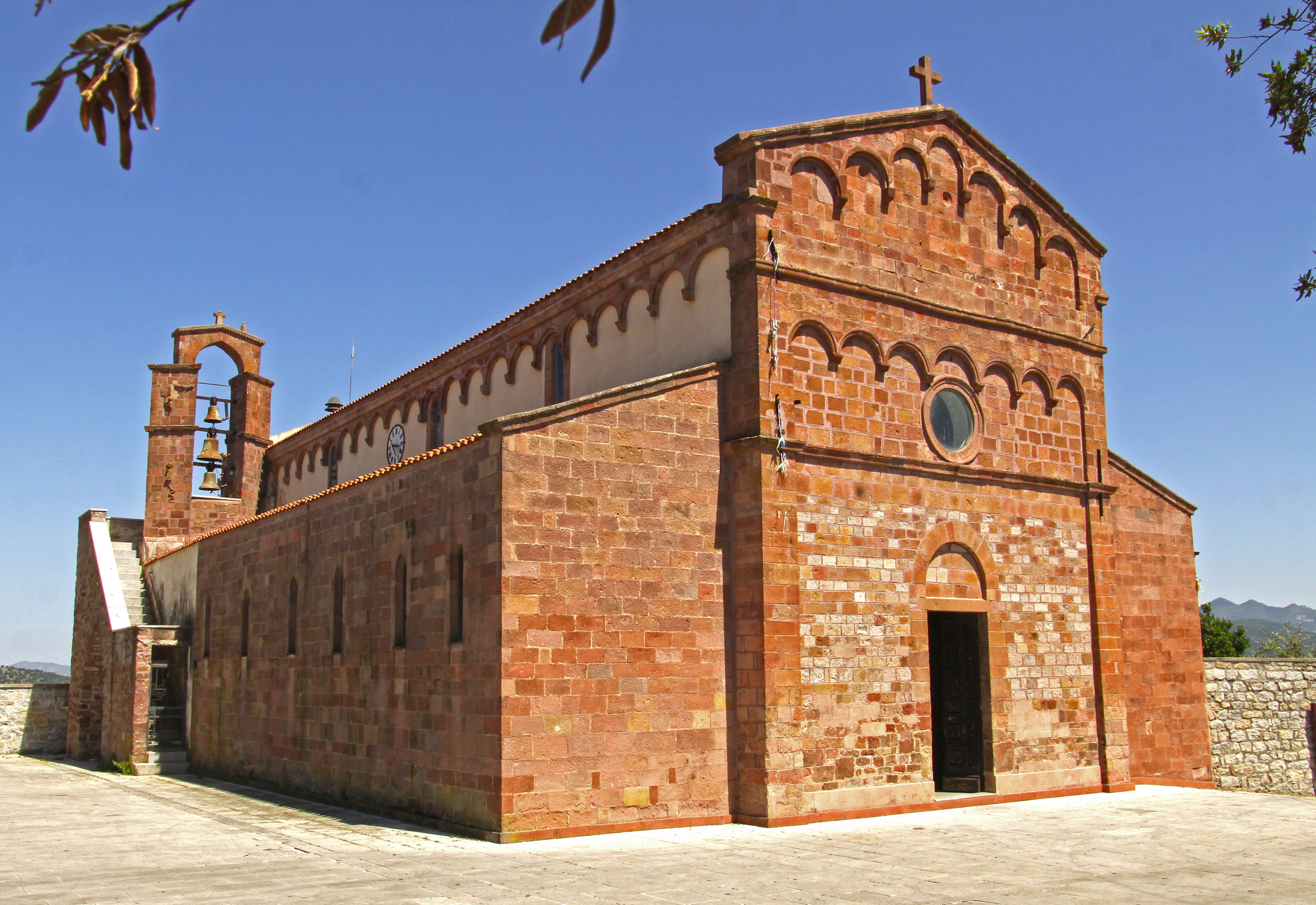
Standing atop a hill, its dominant position overlooks the surrounding valley. The Church of San Giovanni Battista is the oldest church in Orotelli, in the heart of the island. It is named after the patron of the Barbagia village, celebrated at the end of August. The construction dates back to the first 25 years of the 12th century. Between 1116, the year of the Othana diocese’s institution, and 1139 it was a temporary episcopal see, pending the completion of the construction of the Church of San Nicola in Ottana.
Throughout the centuries, San Giovanni Battista has undergone alterations that have changed its original appearance, divided into a layout with a cross commissus (being a T-shape). Built in red trachyte, it is 30 metres long and quite narrow (eight metres). The roof is constructed with exposed wooden beams. Originally, the space within was a single nave with exposed trachyte blocks and had a wooden cover, with the partitions of the transept turned crosswise. In the 1960s, the 17th-century wooden altar was removed and two side aisles were added, which saw it take on a basilica form.
Of the Romanesque structure in volcanic stone remain the façade, apse and angular pilasters of the transept and sides. The 14th-century bell tower strongly characterises the building, with its impressive shape and the bas-reliefs depicting mysterious symbols (a Roman soldier, a man holding a palm, lambs and snakes), but above all the fretwork and embroidery of the frames.
Two horizontal frames divide the façade into three segments: in the lower part, there is the architraved portal, in the middle an oculus surmounted by a series of small arches resting on moulded pediments. The sloping elements of the upper part are also decorated with arches that continue along the sides of the building and the apse façade. Inside the apse is a single window with a carved Greek cross, similar to that of San Nicola. Other single-lancet windows open in the sides of the church. The frontage is divided into three sections by two horizontal frames. The portal, with an architrave and a lunette, opens up in the base. The middle panel is characterised by a central oculus and a second frame decorated with a series of small arches. The sloping roofs are also decorated with a series of small arches that continue along the sides of the church and decorate the façade of the apse, in which a central single lancet window with a carved Greek cross opens up.
Other churches in the territory of Orotelli that are not to be missed include Spirito Santo, built in granite in the form of a pyramid, San Pietro di Oddini in the countryside, San Lussorio, and Madonna di Sinne, along with the Parco Sa Serra, with various Nuragic remnants.
Piazza (town square) Satta - Nuoro
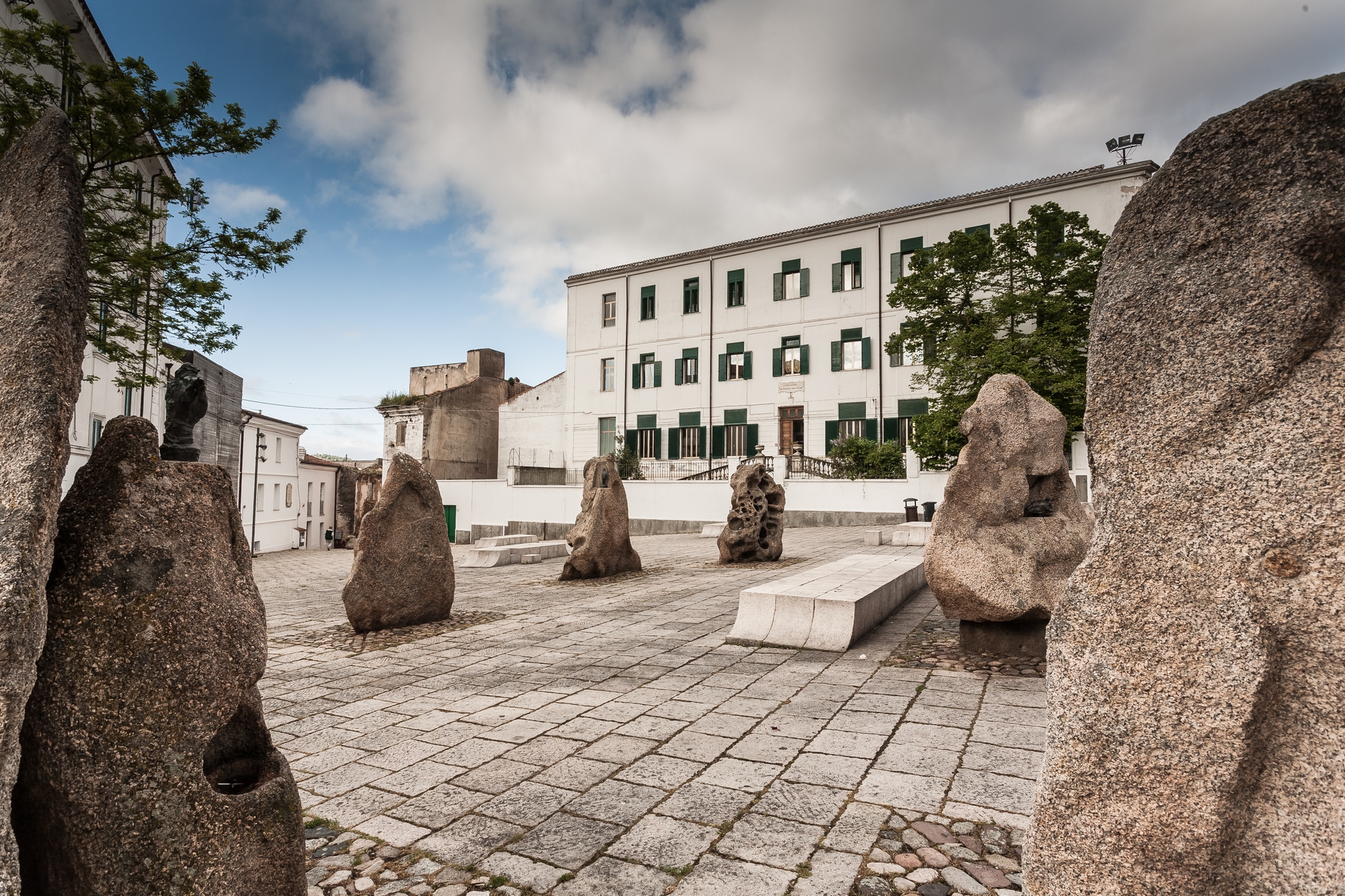
When in 1965 the City of Nuoro charged Costantino Nivola with designing a monument to the poet Sebastiano Satta, the sculptor, who had just returned from America where he had known such greats as Le Corbusier and Saarinen, sought inspiration in archaic worlds, in the lifestyles of shepherds. He began with the poet’s personality, which he incarnated and interpreted through small terracotta figures (which were then made into bronze for the final version) in a wide variety of positions and at different moments of life.
The square in the old centre of town was designed by Nivola in 1967. The buildings surrounding it were painted white and the ground was covered with large square tiles on which he placed heavy blocks of natural granite, into which the statues were then placed. The end result is a whole marked by the contrasts between the work of the sculptor and the modest XVIII and XIX century buildings (including Satta’s birthplace) that provides a remarkable and elegant urban setting. The artist created a place to be enjoyed, more than one that inspires contemplation, in an irregular space that also called for the demolition of a few buildings. The boulders with their statues set in protective niches stand in contrast to the geometric composition of the ground and achieves an almost metaphysical result.
Piazza Satta is the juncture point of the historic quarter of Santu Pedru and the XIX century space that leads to the gardens and the cathedral of Santa Maria della Neve. It has no one particular belvedere, but a different perspective presents itself depending on which direction you came from. Landscaping techniques reminiscent of the work of Isamu Noguchi, who was very active in the USA at the time, are clearly distinguishable in terms of preferring contact with the spirit of the town itself, the genius loci, over any emphasis on monuments.
Gavoi
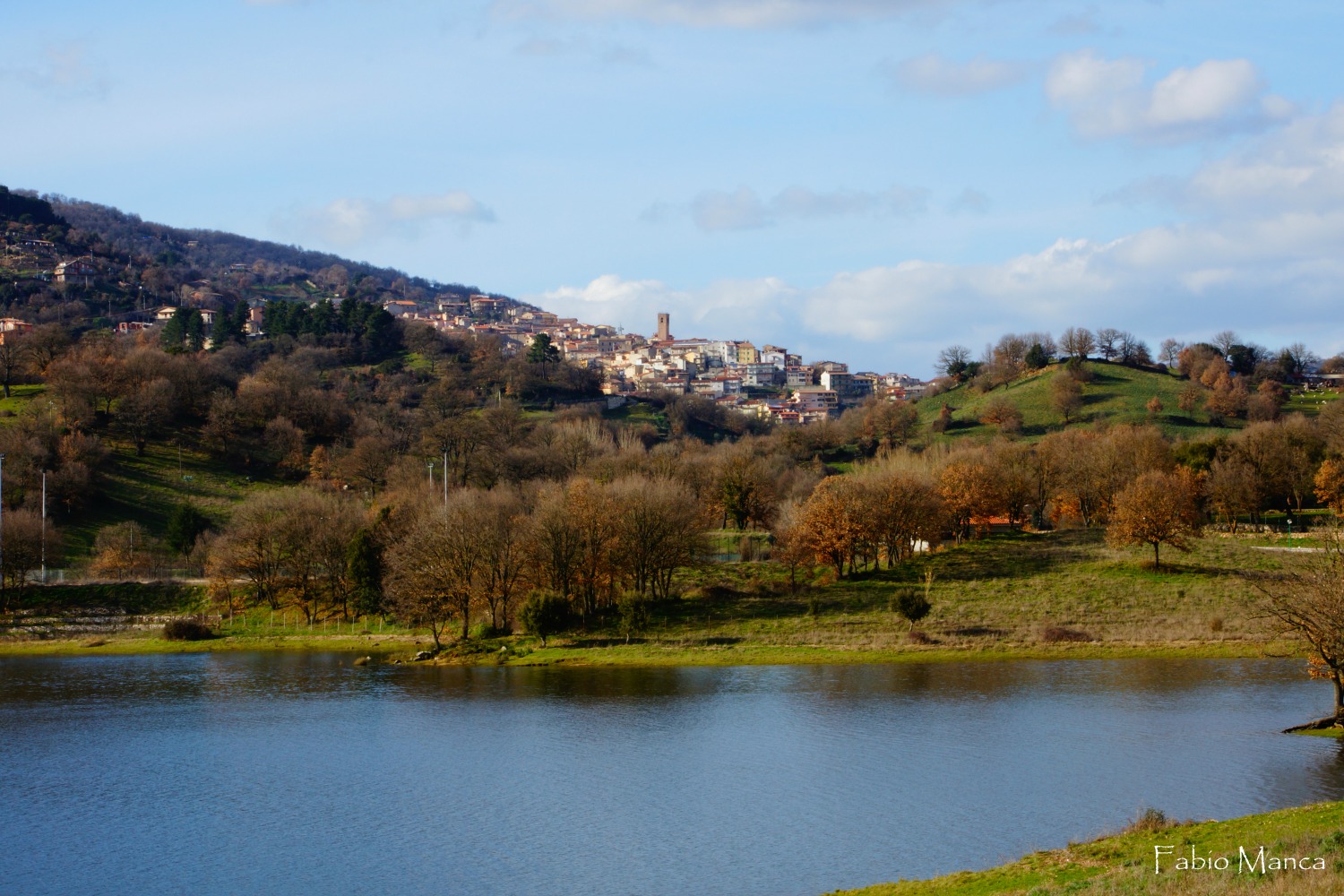
Surrounded by the mountains and woods of Gennargentu and washed by waterways, making it a setting for rare wildlife and woodlands, Gavoi is in an enviable position in the wild heart of the island's hinterland. Lake Gusana is located two kilometres from the village. With deep blue waters in autumn and winter, it is ideal for trips on horseback and by canoe for recreational fishing.
Walking along the streets in the centre of the village, you will lose yourself in your search for the flower-filled balconies, from which writers, actors, musicians and journalists from all over the world perform at the beginning of July, on the occasion of the literary festival, L’Isola delle Storie (The Island of stories). In this village of stone houses, with their snow-covered roofs in the wintertime, you can enjoy the splendid valley of holm oaks, chestnut, walnut and cherry trees and you can taste the delicacies and admire the excellent artisan products. Gavoi has been recognized as a 'slow food' presidium, for its famous Fiore Sardo pecorino cheese PDO.
If you want to broaden your knowledge of the local culture, you should visit the Casa Porcu Satta museum, which boasts beautiful traditional Gavoi clothes, toys from the past (the splendid Jocoscollection), ancient craft tools and musical instruments, like su tumbarinu (drum), played by theTumbarinos, that made the village famous. The church of Sant'Antioco Martire is undoubtedly another evocative cultural place worth visiting.
In the 'highest' parts of the territory, near the springs, there are the menhir, the domus de Janas and the nuraghi, a symbol of aterritory inhabited since prehistoric times, particularly the settlements of Castrulongu and the Talaichè nuraghe, with its tholos roof, (false dome) which is still intact.
Parco Aymerich
There is a place in the historical Sarcidano area where you can go on lovely walks over nature trails surrounded by countless plant species and medieval ruins: the Ayermich Park, a 22 hectare oasis that until 1990 was the property of marquises, the feudal owners of this stretch of land. The creator of this natural reserve was Don Ignazio Ayermich Ripoli, a botanist, who, starting in the mid-1800s, brought rare plants back with him from his many trips abroad.
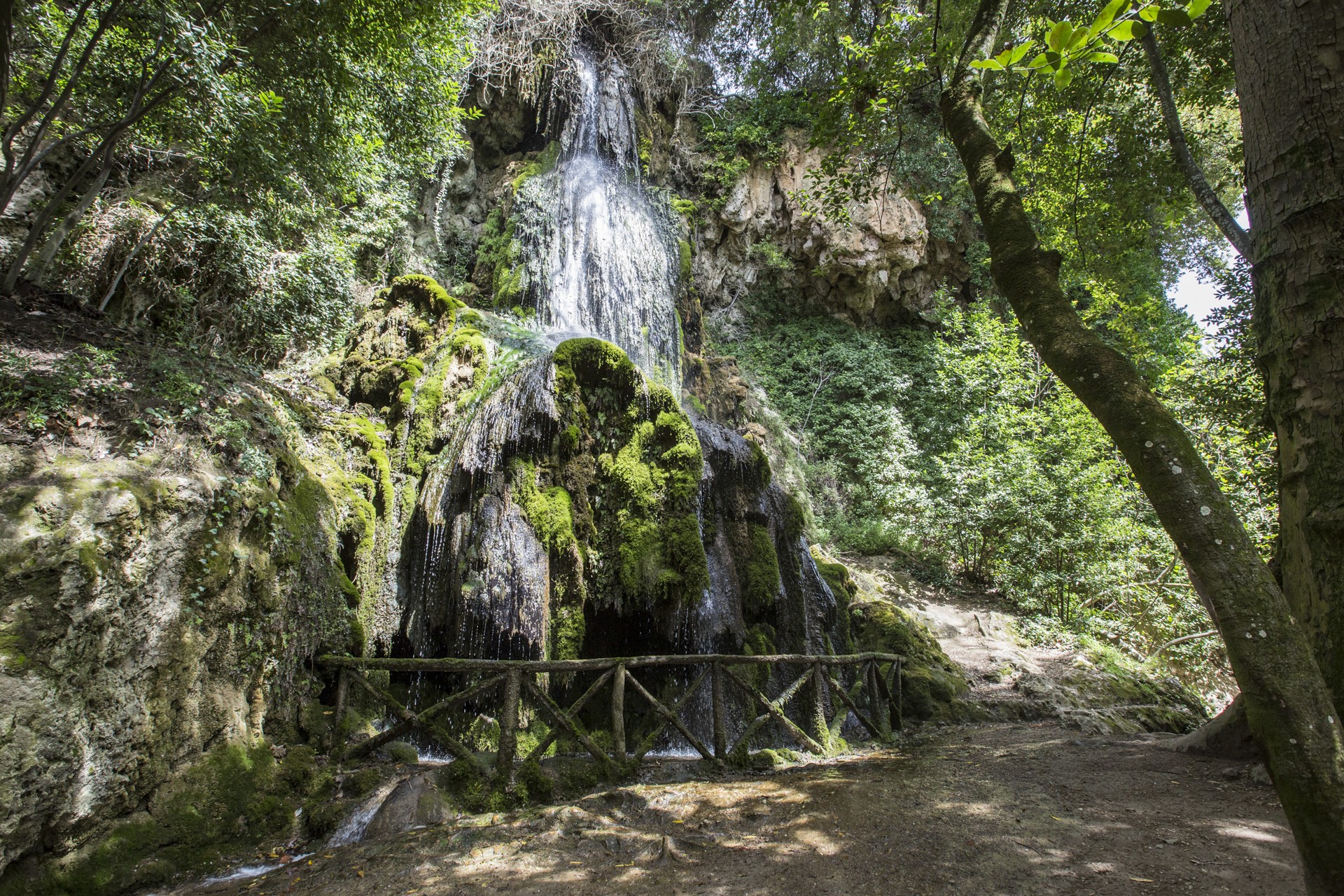
It’s an unusual excursion because it is nestled in the heart of a town, Laconi, some 60 km from Oristano and 90 from Cagliari. The walk takes you along lanes graced with a fresh and lively atmosphere. It starts out in a woods of oak trees, olive groves and locust trees dotted with natural pools, streams, waterfalls and ponds. As you get deeper into the park you’ll see a wide variety of orchids, including autochthonous ones like ophris laconensis and sarcidanis. Among the treed lanes are unusual shapes of vegetation, like the pyracantha coccinea and collectia cruciata, whose leaves resemble military aircraft, as well as exotic plants like the majestic Cedar of Lebanon and of the Himalayas, trees of extraordinary size. Then there are plants from not wo far away, yet not common, like the Corsican Pine, fagus sylvatica, southern magnolia and taxus baccata, known as the “tree of death.” Water is a recurring theme and life source of the park, running in abundance all year round, creating rivers that then fall, like the cascata maggiore, or “big falls,” one of the many attractions of the park.
As you walk along the paths, the natural beauty suddenly gives way to fascinating historical remains: you’ll see the ruins of a medieval castle built in the XIII century to keep an eye on the border between the guidicato of Arborea and that of Cagliari. It was also claimed by each of those governments. Its main tower is of Spanish origin and was turned into a prison in the XVIII century. It’s a two storey rectangular building with an arched entranceway graced with a barrel vaulted ceiling that leads to a spacious courtyard. The building’s doors and windows are embellished with elegant Catalan-Gothic frames. A portico leads to a 35 m long room divided into various spaces. The aristocratic residents lived on the upper floor, the servants on the lower. When here, don’t miss the chance to visit the grottoes used as bomb shelters during the Second World War. The Aymerichs are also to be thanked for the architectural gem in the centre of town that was the last residence of the marquises. The XIX century Palazzo Aymerich is now home to the Museum of Prehistoric Sardinian Statues, with an rare and extensive collection of menhir from all over the island and various relics from the many pre-Nuragic megalithic necropoles that dot the Sarcidano region. When you have finished your naturalistic and archaeological tour of the park, you can go enjoy a Franciscan spiritual experience in the town that was the birthplace of Saint Ignazio, starting with the house he was born in and the museum dedicated to him.
Ghilarza
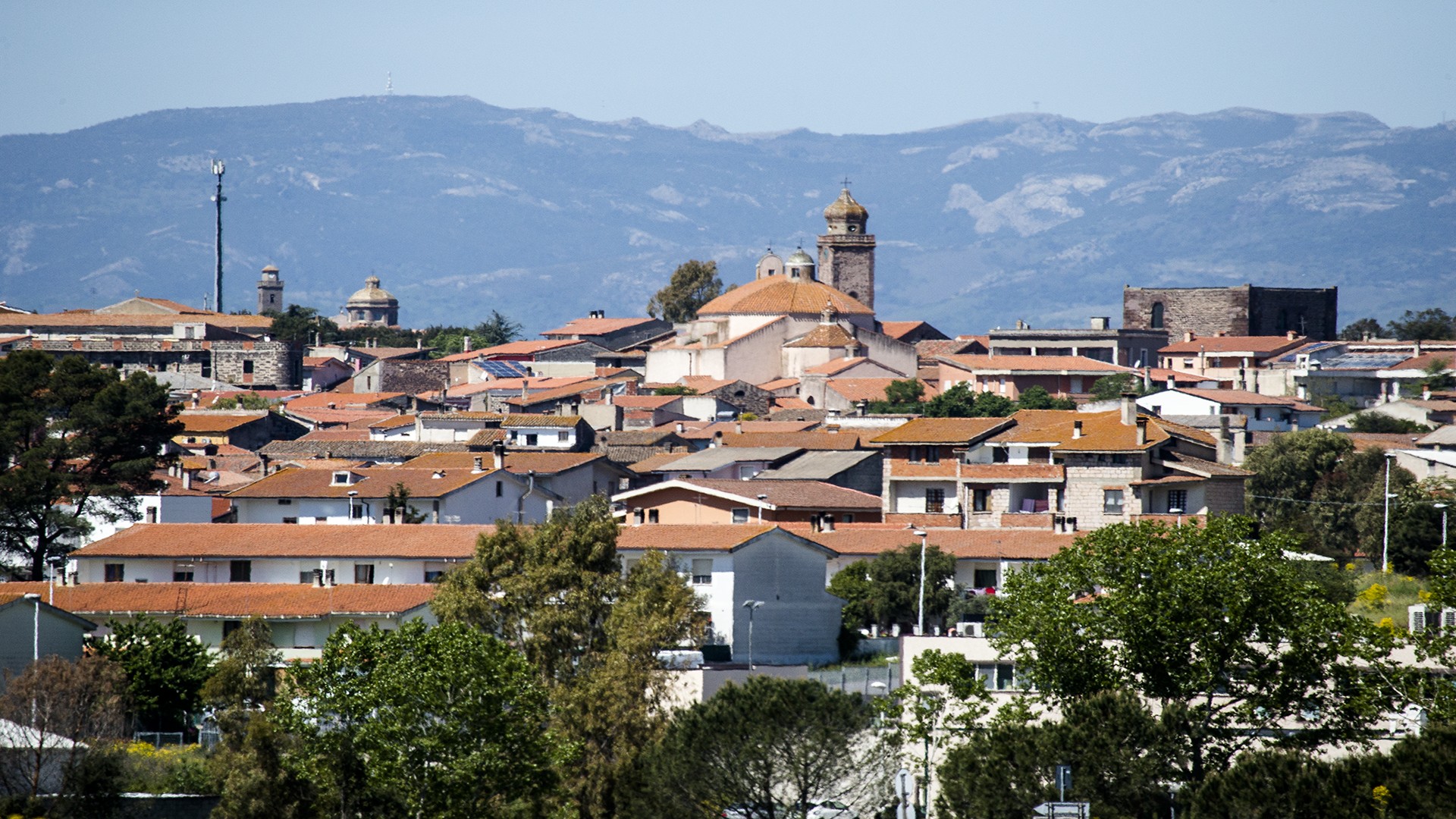
It is located on the plateau of Abbasanta, on the edge of the Montiferru and Marghine massifs. Ghilarza is a village with four thousand 500 inhabitants in the centre of Sardinia, in the province of Oristano. The structure of the houses is inspired by agricultural and pastoral activities, which was once dominant. They were built from black basalt, the processing of which is currently the village's main resource. The skill of the Ghilarza stone masons is famous throughout the Island. It was also a centre of culture: the circolo di lettura (reading circle) was founded in the early nineteenth century and the first female circle began at the beginning of the twentieth century. This context was lifeblood for jurists, diplomats and scholars. In the nineteen sixties, the village boasted the highest percentage of university graduates on the Island. Unsurprisingly, one of Europe's most influential twentieth-century intellectuals spent his childhood here: Antonio Gramsci, founder of the Italian Communist Party. Along the main road, you will find the Casa Museo Gramsci, where you can relive the important stages of his life through images, documents and personal effects. In the centre of the village, there is a 15th century Aragonese tower, once a prison and now used for cultural events. In the outskirts, there is a Romanesque architectural 'gem', the church of San Palmerio, dating back to the first quarter of the 13th century. You will be captivated by the harmony with which it blends into the urban and rural landscapes and also by its two-toned style: on the façade, there are dark basalt ashlars and others made of reddish vulcanite. Another shining example of sacred medieval architecture is the church of San Pietro in Zuri, a district located four kilometres from the village. Where the sanctuary and village originally emerged, there is now lake Omodeo, which was the largest artificial basin in Europe for a long time and is currently a splendid natural attraction in the Barigadu region. Following the creation of this basin (1923), the sacred building was demolished and rebuilt, stone by stone, upstream of the lake, along with the village's new houses, while the 'old Zuri' lies under the water. The lake is an enchanting setting for one of Sardinia's most famous engineering works. Along the road leading to the village, you can admire other religious buildings: the church of San Giorgio and the village of San Serafino, in which there is a sanctuary, perhaps of Byzantine origin, and a novena site, formed by more than one hundred muristenes, 'little houses' built in the 17th century to accommodate worshippers during the nine days of celebrations for the saint. The entire territory of Ghilarza is an area rich in archaeological evidence of the past: you can admire Domus de Janas, Nuraghi and Tombs of Giants as well as traces of the Pheonician-Punic, Roman and Byzantine periods.

Bonorva
It is located in the northern part of the Campeda plateau, deep within the Logudoro region. Bonorva is a village with approximately 3500 inhabitants, located 50 kilometres from Sassari and it developed at the end of the Middle Ages. Its name possibly comes from the Latin bonus orbis, meaning 'good land'.
Its territory was inhabited in the Pre-Nuragic age and continued to be populated during the Nuragic age and in all the periods that followed. The most important prehistoric evidence is the necropolis of Sant'Andrea Priu, a funerary complex consisting of twenty domus de Janas dating back to the Neo-Eneolithic period (4th-3rd millennium BC), dug out of the wall and on the trachyte plain, 500 metres from the rural church of Santa Lucia (14th century) and ten kilometres from the village. Inside them, architectural details have been reproduced to recreate environments similar to the house of the deceased person. Three tombs stand out for their large size and state of preservation. One of these (the Tomba del Capo, meaning Tomb of the Head), has 18 rooms and is one of the most extensive underground burial sites in the Mediterranean. In the vicinity, there is also the prehistoric spring of Lumarzu and the Puttu de Inza and Monte Donna Nuraghi. The necropolis was reused for a long time: in the Roman era and in the Byzantine period the 'Tomba del Capo' was turned into a rural church, one of the first during the period of the persecutions. It was plastered and frescoed several times with scenes from the New Testament, and it was named after Sant'Andrea (Saint Andrew).
The architecture in the village of Bonorva is typical of agricultural and pastoral villages, with narrow lanes and houses with large courtyards, allowing you to retrace moments from the past. Artisan tradition is alive and well: textile art, especially embroidery, stands out: rugs and tapestries are created using horizontal frames and they feature colours and designs inspired both by ancient patterns and by modern trends. If you want to savour typical local dishes you can go to the feast of Su Zichi, ancient durum wheat bread, accompanied by a market fair, where you can admire the fine intricate work of the rugs and enjoy tasty local pastries. Inside the residential area and in the surrounding countryside there are numerous places of worship. Particularly worthy of a visit are the church of San Giovanni Battista, consecrated in 1174, the church of San Simeone with the archaeological site of the same name on the Campeda plateau, the two churches (San Lorenzo and Santa Giulia) in Rebeccu, both dating back to the 12th century and, above all, the Natività di Maria parish church, built in the Late Gothic period between 1582 and 1610.

Museum of Canto a Tenore
You will be enchanted by performances that sing of nature, solitude and hard work. The canto a tenore is melody, as well as the original expression and inestimable wealth of Sardinian tradition, to be protected and enhanced. The multimedia museum of Canto a Tenore, built in 2005, is unique: thanks to modern technology, it allows you to gain knowledge and, at the same time, it transmits the choral singing proclaimed a masterpiece of Oral Heritage by UNESCO. It is situated in the centre of Bitti, in a wing of the Museum of Rural and Pastoral Civilization, inside an ancient manor house. It stands out as an innovative centre of research into polyphonic music in Sardinia, a reference point for academics and enthusiasts, and it collaborates with the countries in which traditional song is still performed today.
Through the use of multimedia, you will enter a mysterious world, in contact with the most ancient expression of Sardinian music, the origins of which are deeply rooted in the rural and pastoral life when shepherds lived alone in the countryside, in close contact with nature. The museum has four rooms. The first has workstations equipped with a screen and headphones. The second has four Totems, with monitor and audio system, arranged in a circle like the tenores when they perform. You will be able to interact with the virtual singers, listening to the voices in sync or singularly: bassu (bass), contra (contralto), mesu oche (half voice) and oche (voice). The third room allows you to listen to the music of the various island territories. In the fourth room, as well as listening, you can observe the images of the performers at work.
A visit to the museum also includes the section dedicated to agricultural and pastoral life, in other rooms of the house, as well as a trip to the village-sanctuary of Romanzesu, located13 kilometres from the inhabited area, a major legacy of Nuragic Sardinia, based on the size and architectural complexity of the dwellings and temples. Inside the village, you can complete your cultural tour with a visit to the church of San Giorgio Martire.