
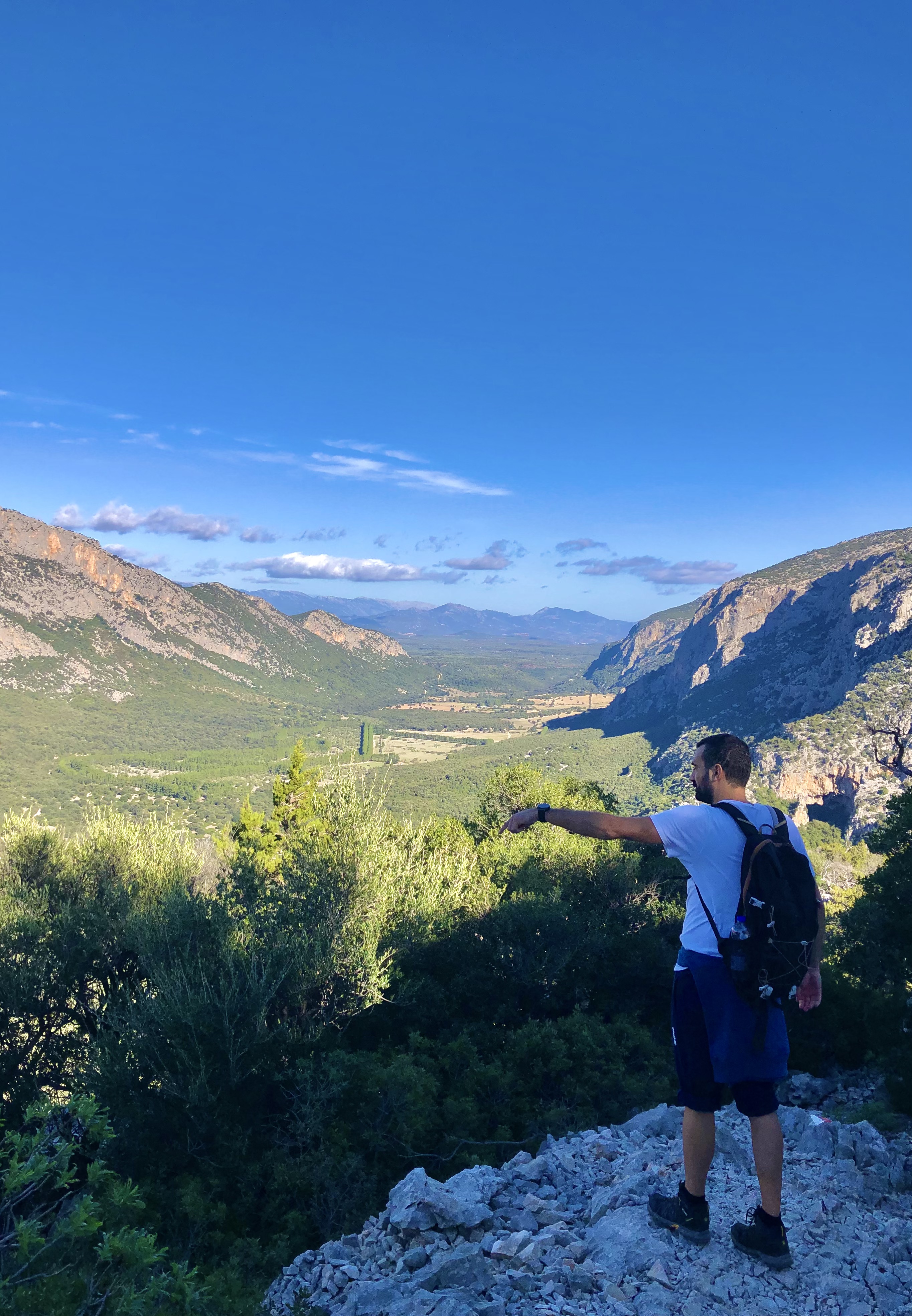
Trekking among ancient shelters in the Supramonte di Oliena area
It is one of the harshest and wildest areas in Sardinia, in the deep heart of the Barbagia area, where the ancient Late Nuragic peoples possibly put up their last, strenuous resistance to the conquest of the Island by Rome. The route along the Z14 stage of the Grand Italian Trail leads from the secrets of Mount Tiscali to the enchanting Lanaitto valley, continuing westwards towards Mount Maccione, overlooking Oliena and close to Mount Corrasi, and finally concluding the stage in the Bandiera Arancione (Orange Flag) village, ‘capital’ of Nepente wine. The trek up to Mount Maccione is for expert hikers, with a total elevation gain of 1950 metres.
Itinerary: 23 km
Walking travel time: 9 hours
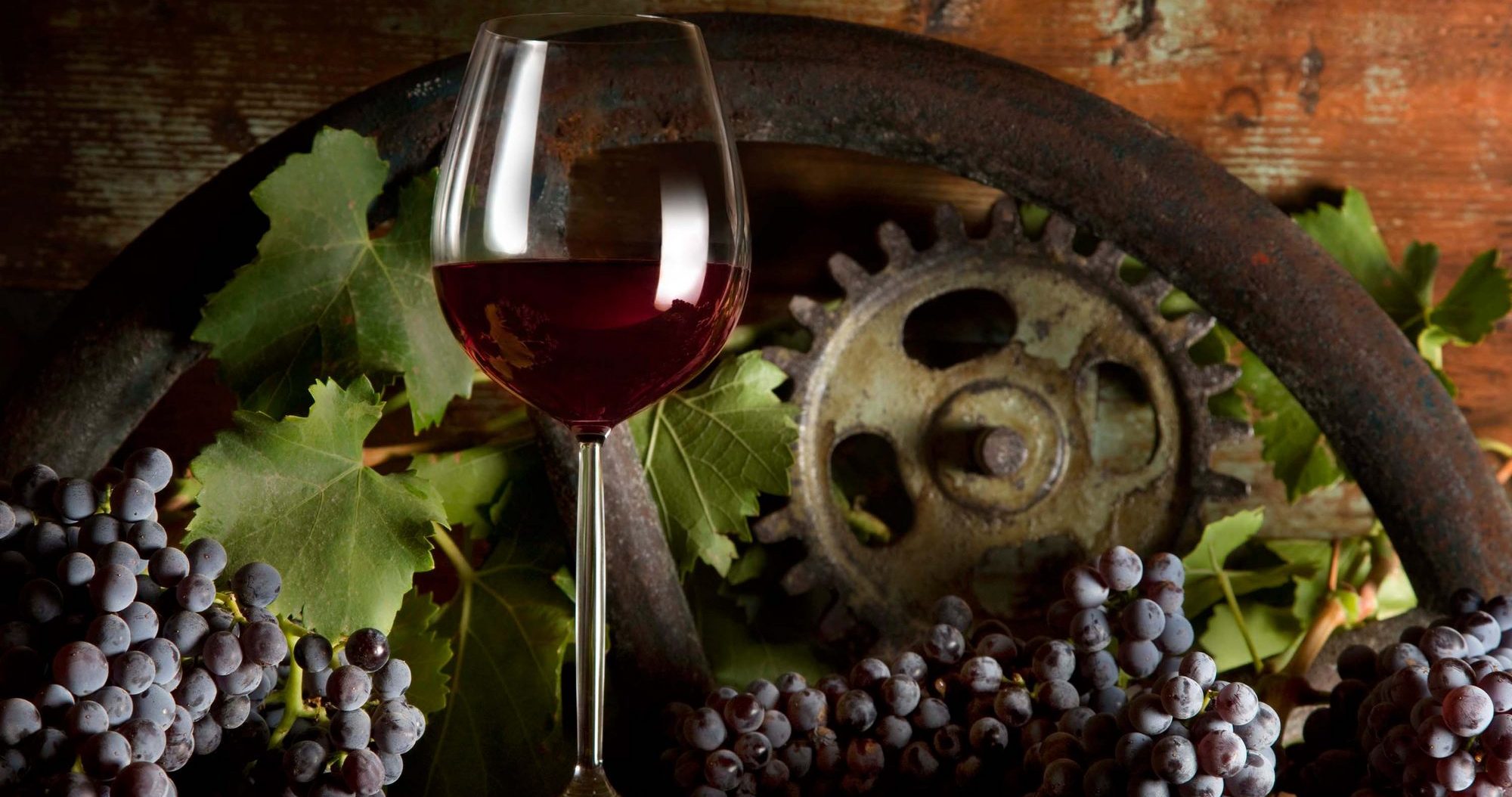
Sipping cannonau
Jerzu, Tortolì, Oliena and Mamoiada, vineyards and wineries in the heart of Sardinia
Route: 125 km
driving time: 2 h 35 min
Find out more
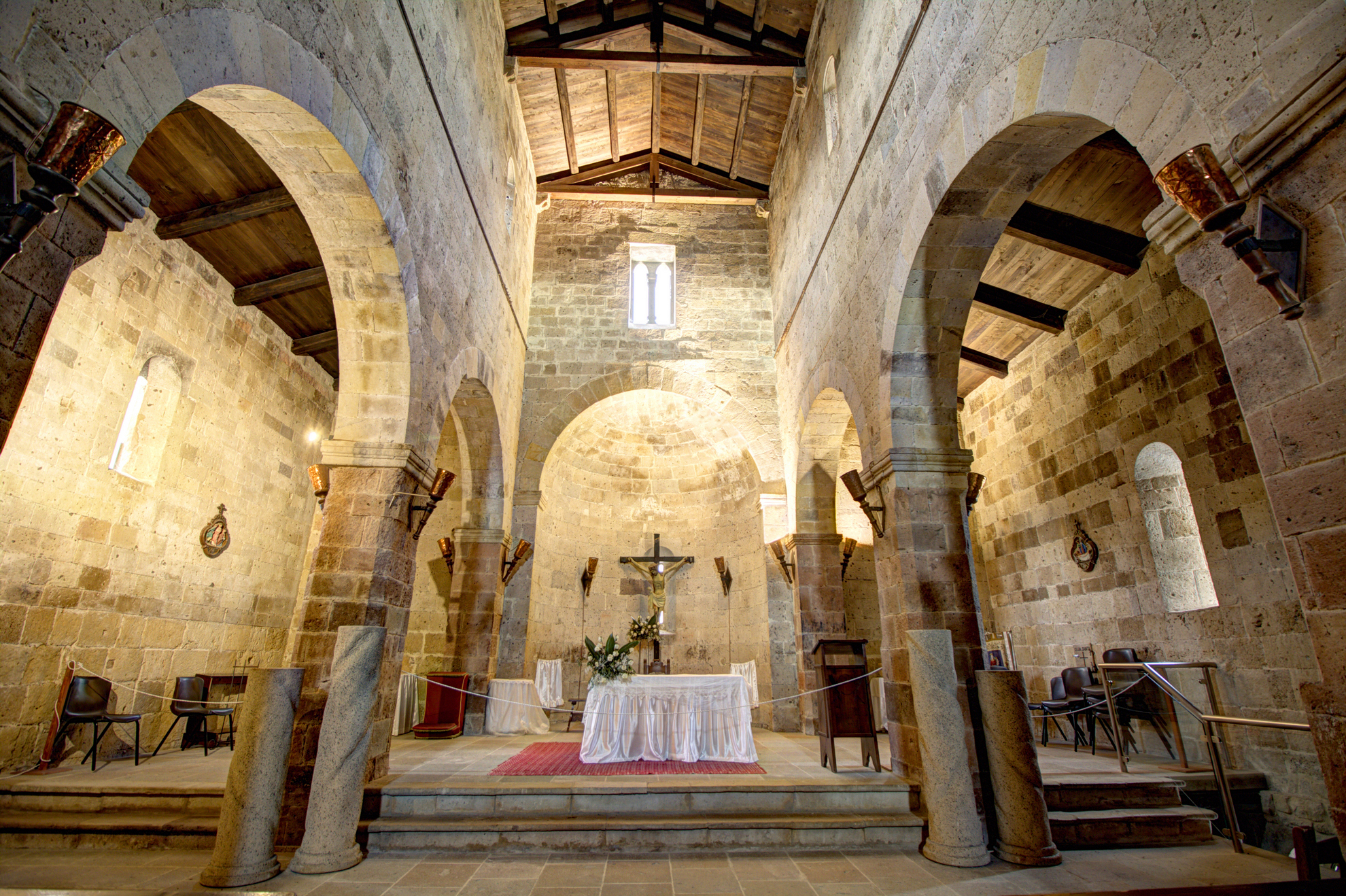
Sulcis amid the glorious sees of the Bishops
Nuxis - Tratalias - Sant'Antioco
In a world of mines and lush vegetation, visitors can seek out small architectural gems such as the country Church of Sant'Elia di Nuxis, Santa Maria di Tratalias and Sant'Antioco in the town of the same name. Country churches or ancient cathedrals dating from a splendid past, set in panoramic positions of great scenic appeal.
Journey length: 35 km
Road travel time: 40 min
Visit the website
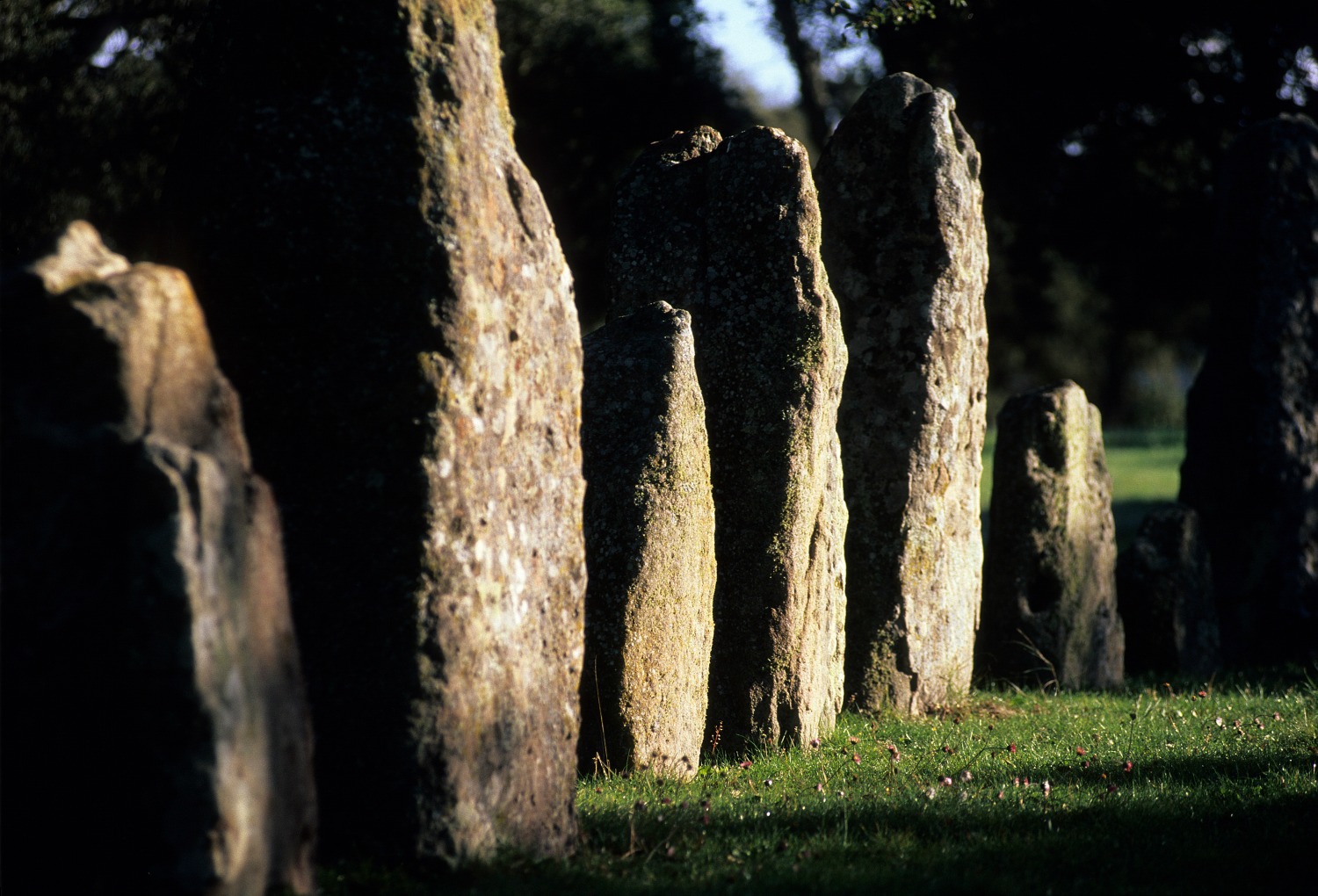
Menhirs, mysteries pointing to the Sardinian sky
Aniconic or anthropomorphic, worked ‘with a light hammer’, decorated with mysterious symbols: the menhirs of Sardinia represent one of the most fascinating puzzles in island archaeology. The monoliths embedded in the ground - perdas fittas in Sardinian – appeared in the Recent Neolithic age and during the Eneolithic period, that is around the third millennium BC. They may have represented deified characters and, in fact, they are often found in sacred or funeral areas. Among the patterns carved into their surfaces, there are ‘human’ features (noses, eyebrows, breasts) and symbols, like the ‘overturned’ and daggers. The first appears to be the depiction of the soul of the deceased that has ‘migrated’ into a dimension opposite to that of the living. The latter could refer to hero figures celebrated as gods. The journey to discover them starts in Gerrei and leads to the centre of the Island, crossing Trexenta and Sarcidano and ending in the woods of Mandrolisai.
Journey length: 94 km
Road travel time: 2 hours
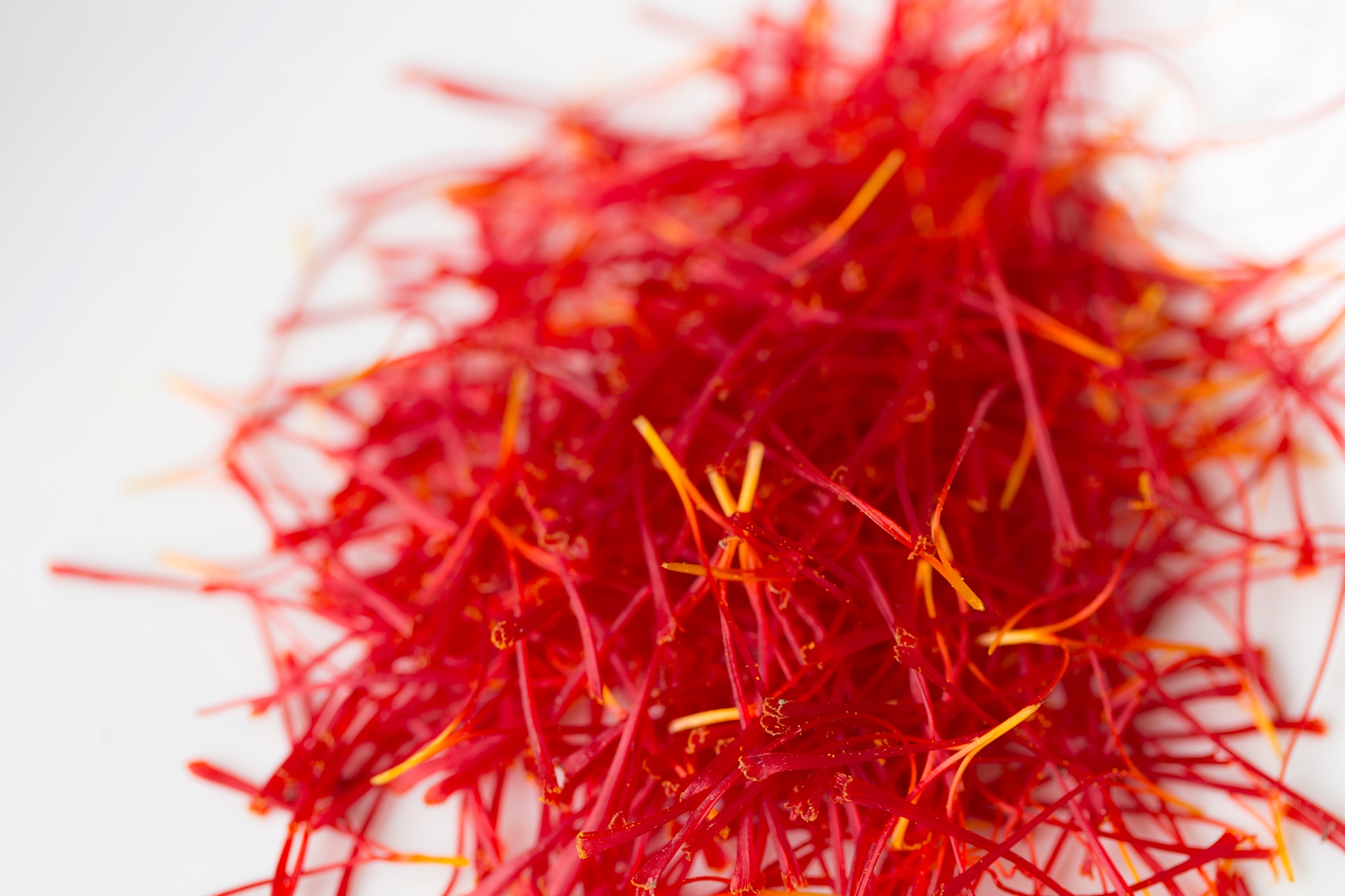
Saffron, the red gold of Sardinia
San Gavino Monreale, Villanovafranca and Turri: in the fields of the ‘capitals’ of saffron production to listen to the stories of the peasants, the custodians of ancient knowledge
Route: 50 km
Driving time: 52 min
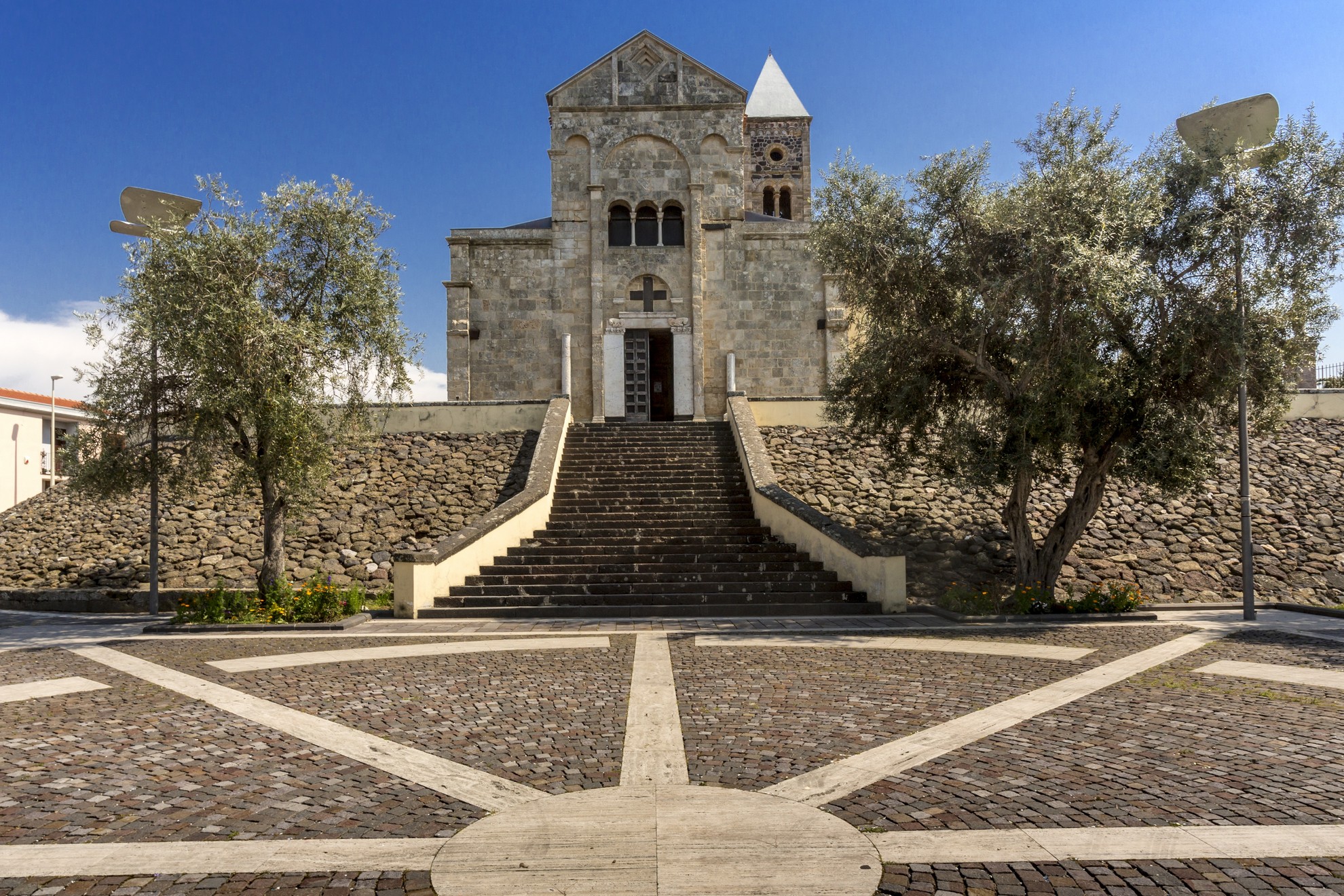
Precious Romanesque architecture in the Oristano area
From one of the oldest churches on the island to a cathedral that has become a kaleidoscope of architectural styles over time, as well as a solemn and elegant basilica church and captivating examples of two-tone ‘rural’ style, concluding the itinerary amid the mysteries of a church with an origin that can only be deduced from a fragment of wall. All around, there are spectacular beaches, fascinating archaeological discoveries, natural oases, centuries-old traditions and legacies from the Judicates period. Between one stage and another, a good glass of Oristano Vernaccia wine is recommended as an aperitif.
Journey length: 47,5 km
Road travel time: 1 hour for the various journeys

The fortresses of prehistoric Sardinia
The itinerary touching on the fortresses built in the Bronze Age starts in Sarcidano with the great nuraghe Arrubiu of Orroli, which looks out over Flumendosa Lake, and goes to Marmilla, where you will see one of Sardinian prehistory’s greatest landmark, the su Nuraxi at Barumini and another impressive prehistoric construction, the Genna Maria nuraghe at Villanovaforru
Journey length: 54 km
Road travel time: 1 h 13 min
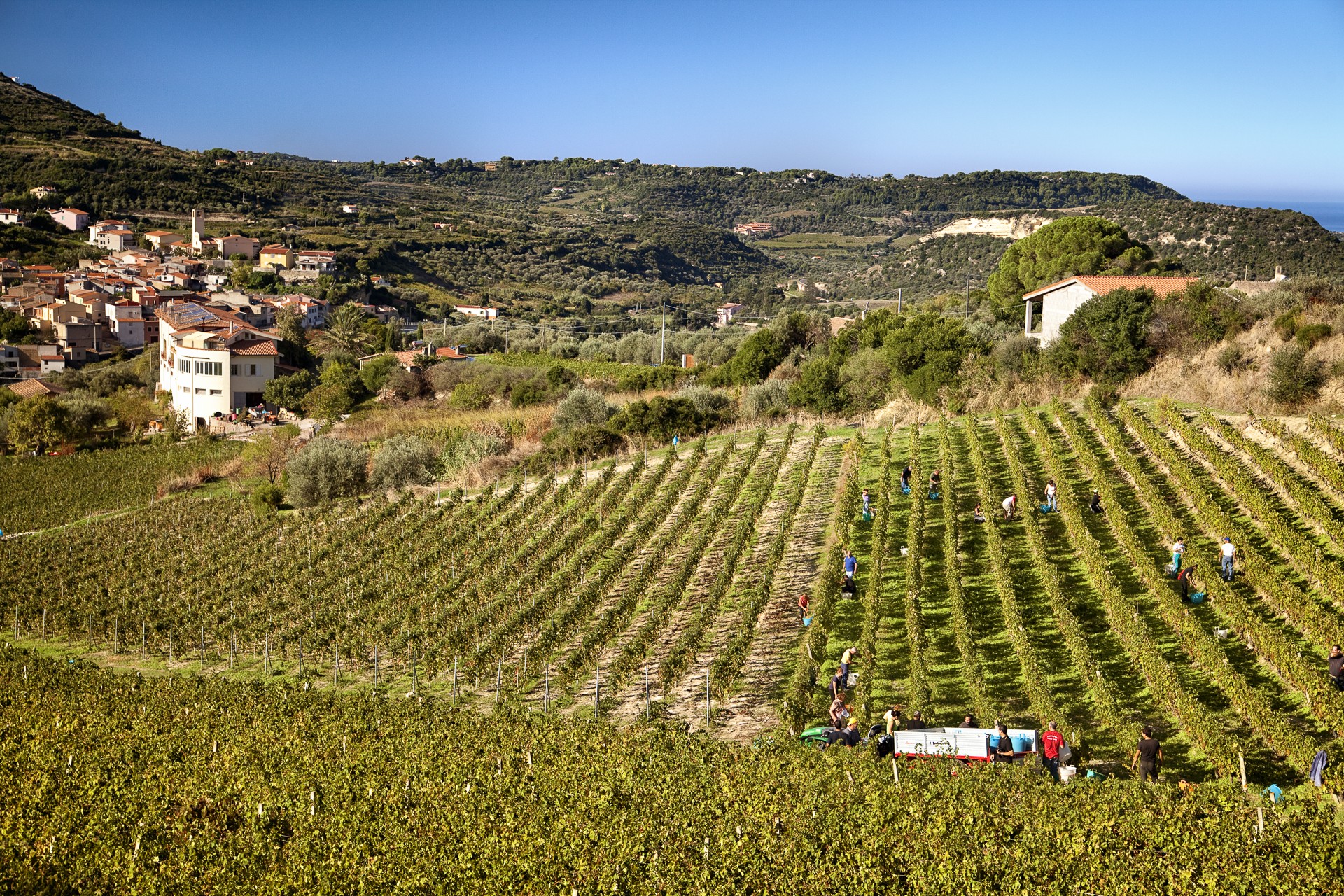
The Malvasia di Bosa route
One of Sardinia’s excellent wines and among the symbols of a territory in which the re-enactment of traditions is often accompanied by moments of sharing, conviviality and celebration. From Bosa, one of the Borghi più belli d’Italia (most beautiful villages in Italy), you will be following a short itinerary through villages very close to each other and surrounded by vineyards, each worthy of a visit, to discover their picturesque views and appreciate their flavours and hospitality.
Itinerary: 13,5 kilometres
Road journey time: 25 minutes in all for the various journeys
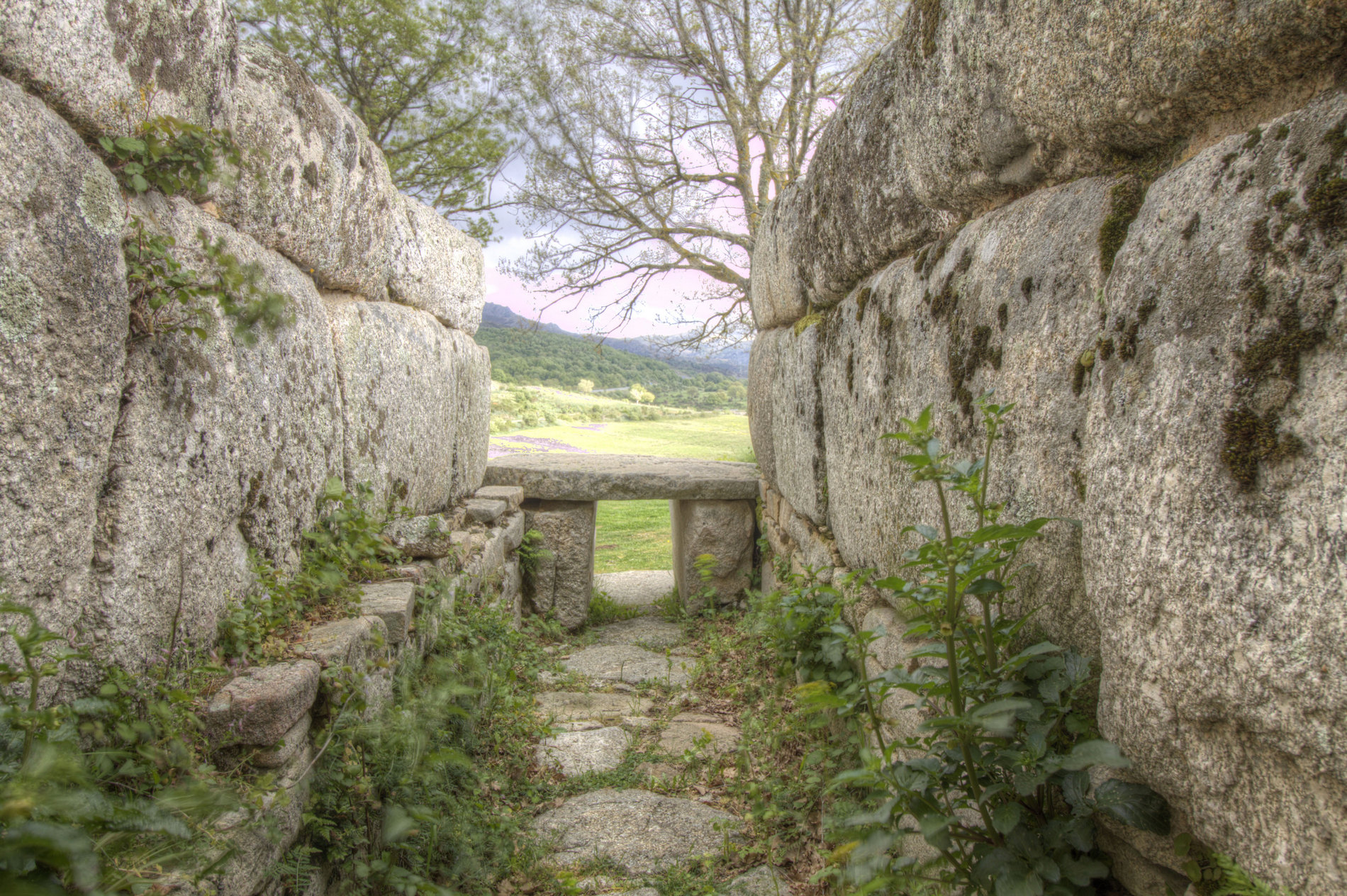
The Giants’ Tombs between legend and reality
According to fanciful theories and popular beliefs, they were the tombs of Cyclopean peoples, ancient inhabitants of Sardinia of whom no trace remains. Instead, it is the evolution of covered gallery tombs (or alleè couverte) starting in the Early Bronze Age (around 1800 BC). They are generally found in the area around nuraghi and villages and have often revealed fundamental artefacts for the study of the Nuragic age. They were probably a place of mysterious rituals and some still believe that the stones with which they were built release a mysterious energy.
The route starts inside an evocative forest in Ogliastra and heads north alongside splendid water landscapes, ending on the slopes of Gennargentu.
Itinerary: 42 km
Road travel time: 1 hour
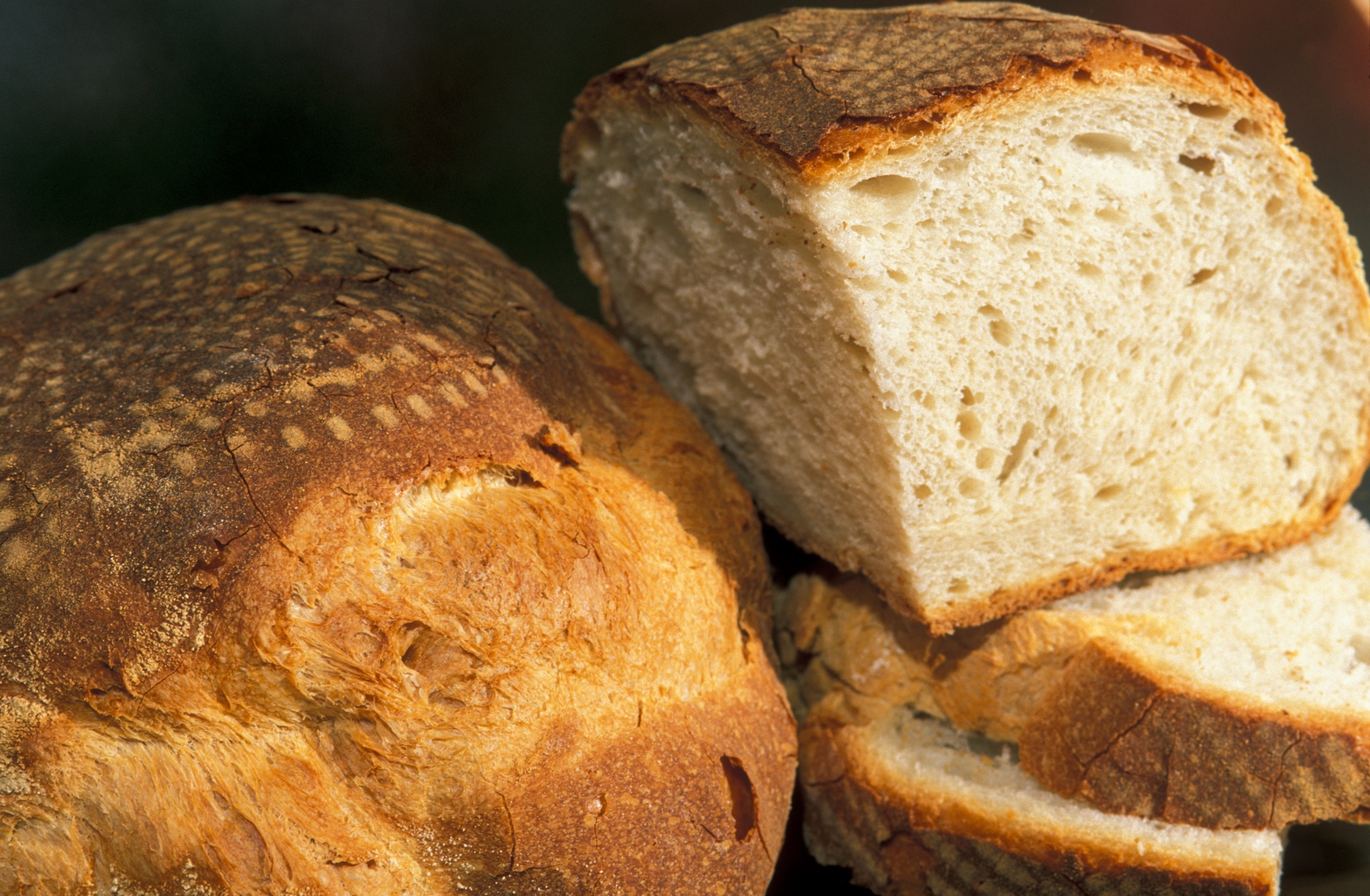
Food trail: discovering civraxiu bread in Sanluri, Giba and Santadi
Sanluri, Giba, Santadi
Journey length: 82 km
Road travel time: 1 h 30 min
Find out more
Find out more