

Sa Chida Santa: authenticity, passion and mystery
Centuries-old ceremonial rites rooted in the Middle Ages and tinged with Spanish tradition come together in archaic Campidanian, Logudorenian and Barbagian traditions that date back to Nuragic paganism. During Holy week, from the coast to hinterland villages you will discover Sardinia’s most authentic essence and experience an itinerary of sacred rituals that revolve around the Passion of Christ. Holy Week in Alghero reveals its Spanish roots. It all starts on the Friday before Palm Sunday with the Addolorata Procession and ends at Easter with the Encontre. The Disclavament (deposition) is deeply emotional: the body of Christ is carried in procession on His deathbed and as the sun sets, the town is illuminated by glow of torches and lanterns draped in red veils.
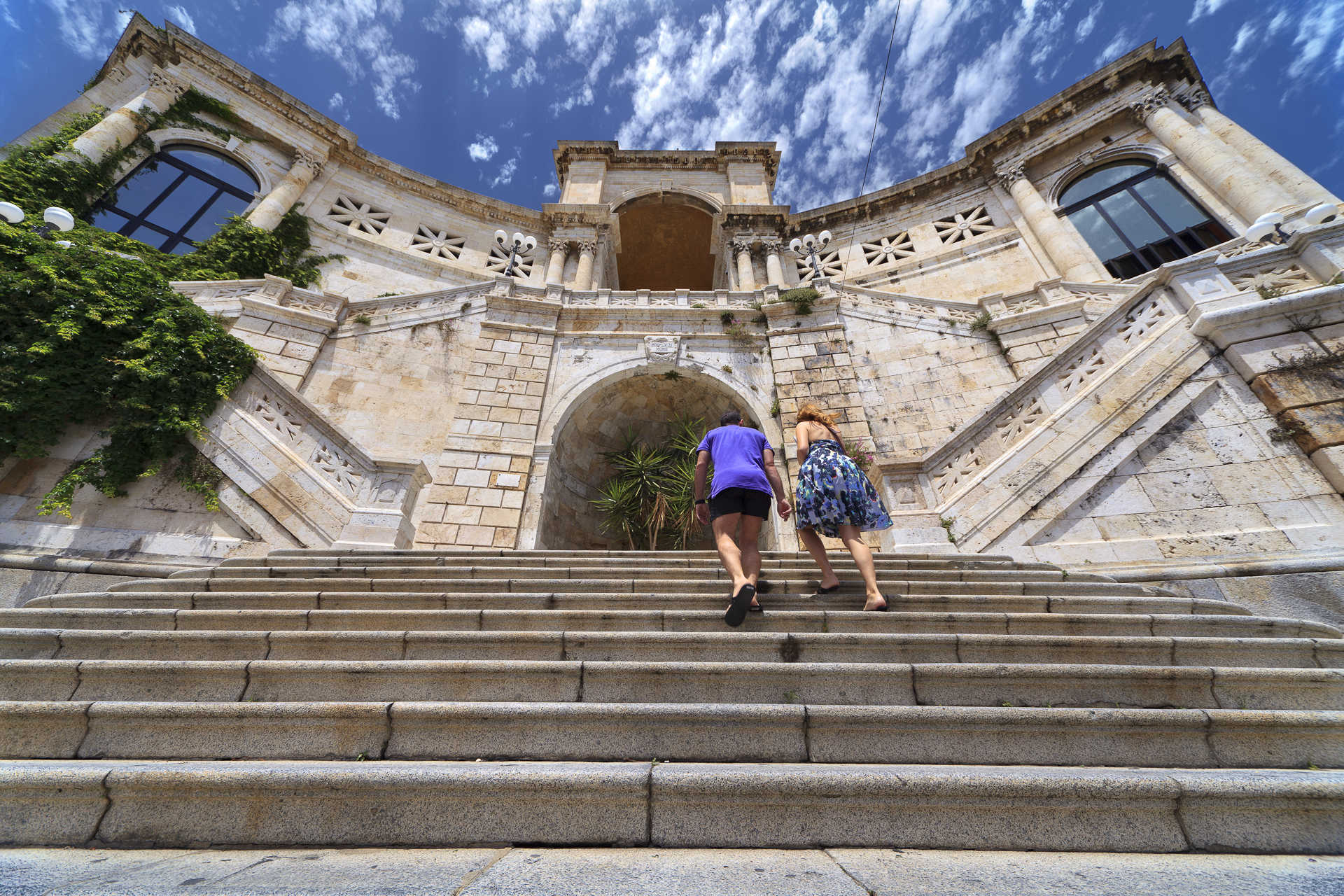
Sardinia unveils its architectural treasures
Artistic magnificence, shared memory, identity and a sense of community: this is the most encompassing effort to safeguard, enhance and promote the cultural heritage of Sardinia. Following in last year's footsteps, the 2025 edition — the 29th — will once again take place in two phases, stretching across nine weekends: from May 3 to June 1 for the first phase, and then again between October and November. Hundreds of cultural sites will open their doors during this time, such as museums, archaeological sites, churches and historical buildings, natural monuments and parks. Each town will tell its tale through literary itineraries, architecture routes in cities that have been marked by centuries of powerful rulers. Students and volunteers are warming up to lead you along a travel through the beauty that crosses millennia, all the way to the farthest past. Places of yesterday and today, where memories of the past and ideas aiming towards the future coexist.
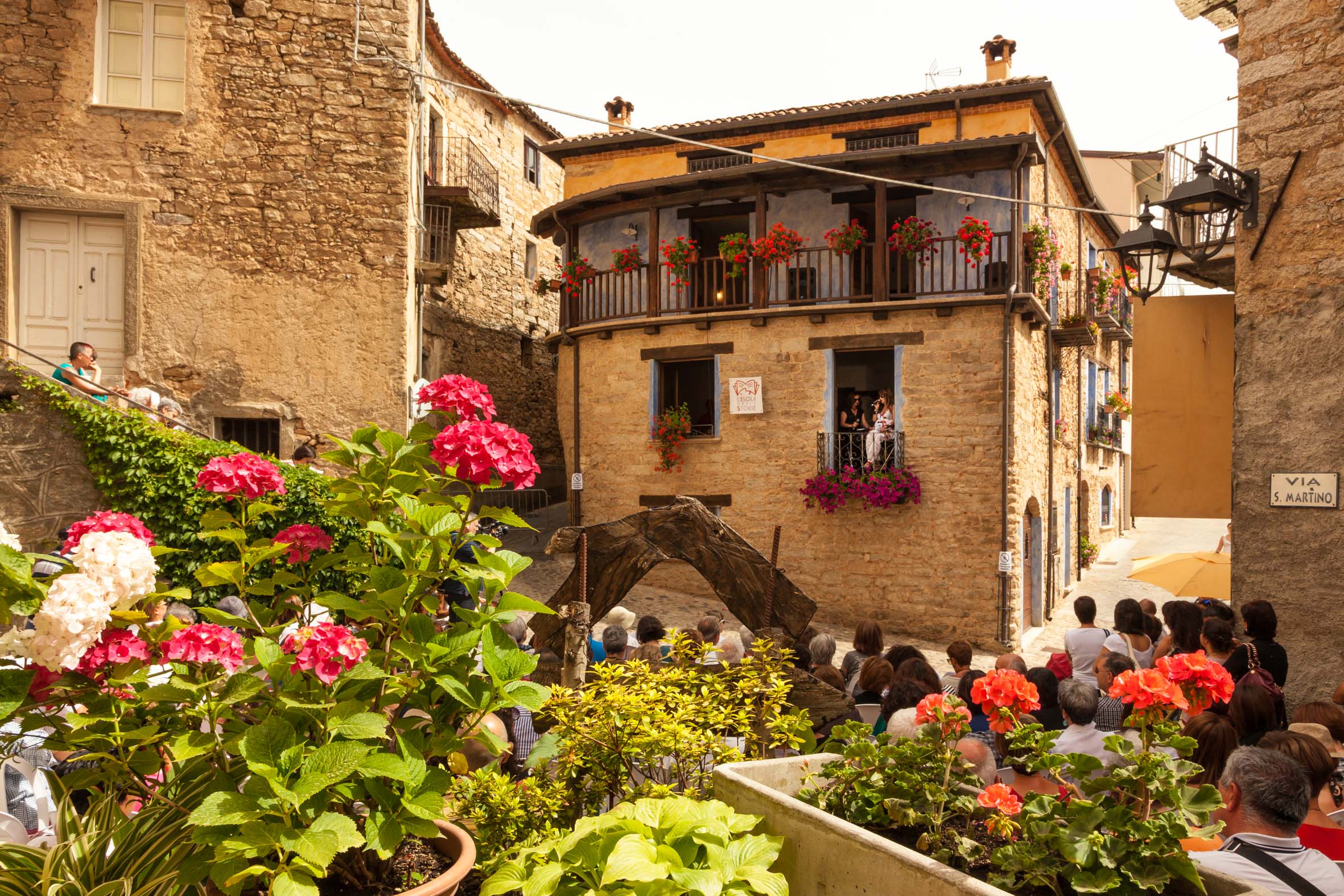
Spring in the villages
The explosion of spring colours on the island are in harmony with one of its most typical ‘picture postcard’ views: the colourful houses of Bosa. Walking along the Temo River, you can admire their reflections in the water, climb the hill dominated by the Malaspina Castle and, by crossing the Ponte Vecchio bridge, you will reach the south bank and discover the ancient tanneries. You will be welcomed by a glass of malvasia wine and impressed with coral jewellery, asphodel baskets and precious textiles. Bosa is a concentrate of history and craftsmanship, industrial archaeology and special treats. Do not miss the churches: the ‘cathedral’ of the Immacolata Concezione, Nostra Signora de sos Regnos Altos inside the castle, and san Pietro extra muros, at the centre of Bosa vetus. And then there is the natural beauty: the park of capo Marrargiu , the reserve of Badde Aggiosu and, on the coast, Bosa Marina, s’Abba Druche and Compoltitu.

Tuttavista
On its peak, which is over 800 metres high, stands a bronze statue of Christ, a work of art created by an artist from Madrid, Pedro Angel Terron Manrique. The sculpture is twelve metres high and it is a reproduction of the wooden statue of the holy Crucifix located inside the church of the same name in Galtellì. Thanks to the symbolic presence, Mount Tuttavista, it is a destination for pilgrimages for those who wish to meditate in a secluded place in contact with nature, along a captivating trail that climbs its slopes.
The mountain is located in Baronìa, in the territories of Galtellì, Onifai and Orosei. Its sides are delimited by the alluvial valley of the Cedrino river. From the peak, you can see a 360 degree panorama of the surrounding territory: to the south, there is Dorgali with mount Irveri, to the west the Cedrino river, Galtellì, Loculi and Irgoli, to the northwest the long Monte Albo mountain range and to the east the Gulf of Orosei. Travelling along the scenic road, up the slopes and along the hairpin bends, you will stop numerous times to observe breathtaking landscapes: the name of the mountain, Tuttavista (meaning 'all view'), is a guarantee. Stopping at 635 metres of altitude is a must: here, you will find a natural monument, Sa Preda Istampada (the pierced stone), a rock face in which there is a hole of 40 metres in diameter created by the wind and rain, practically a window onto the valley below and Supramonte. You can also try your hand at trekking trails, like the one that climbs the mountain from the area of Taraculi.
The limestone rock of the Tuttavista has a rugged morphology, with grottoes and Karst caves where fossils of wildlife and endemic species that lived between ten thousand and two million years ago have been found. Holm oak forests, junipers, mastics, spurge and 32 types of wild orchid - rare endemic species that you can photograph along the trails - bring colour to the mountain. The vegetation is populated by wild boars, weasels, martens, foxes and various bird species: common ravens, kestrels, partridges and buzzards. This natural oasis is also ideal for free climbing enthusiasts: there are various rock faces equipped for climbing, with medium and high difficulty paths.
S'Ena e Thomes
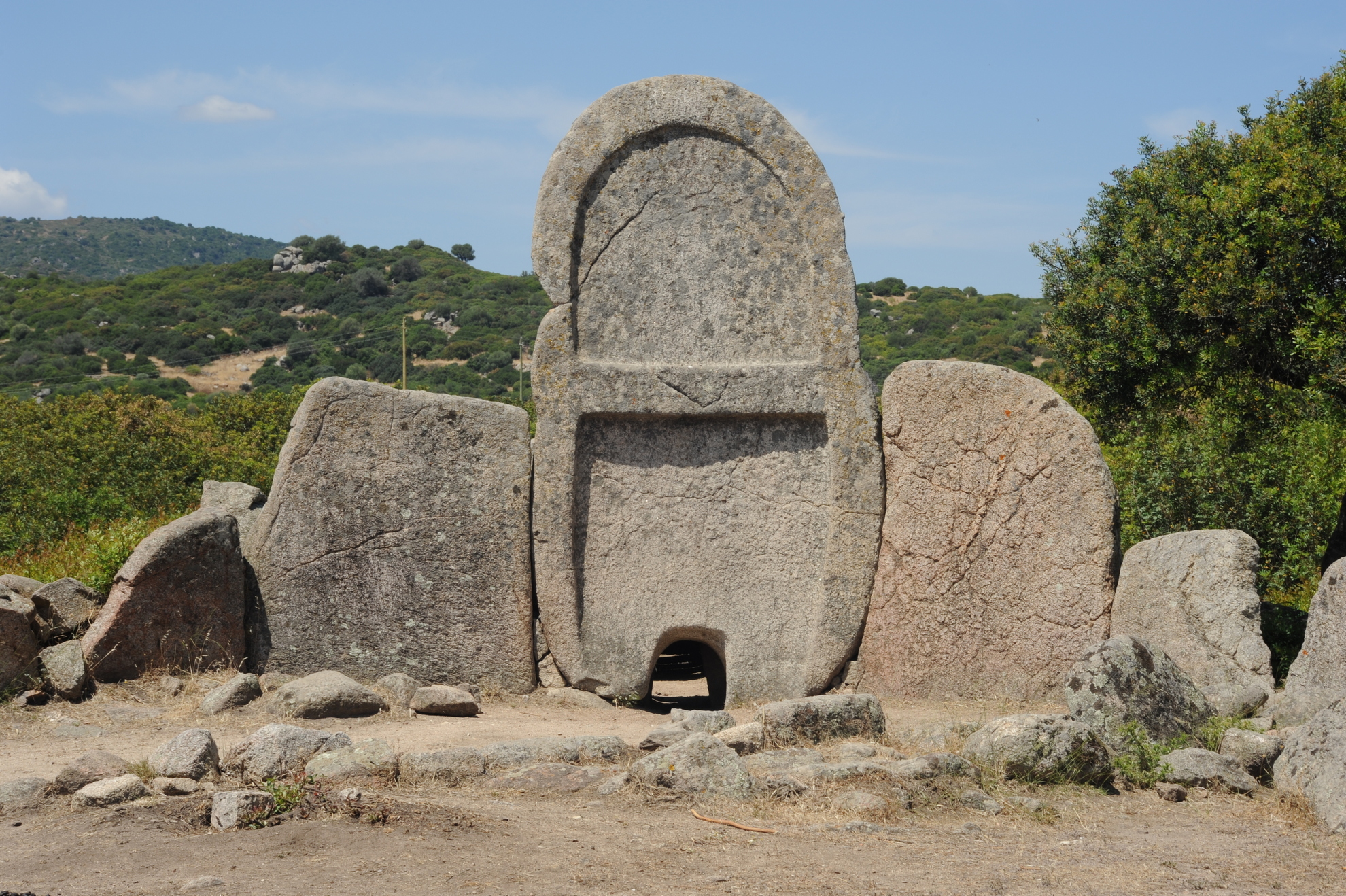
You will see its enormous stele, a granite slab almost four metres high, standing out in the valley of the Isalle rivulet, at the end of a trail half a kilometre long and covered in Mediterranean scrub. The Tomb of the Giants of S'Ena 'e Thomes is the most important Nuragic burial monument on the island: it is majestic, just like it was thousands of years ago. Dating back to the Early Bronze Age (1800-1600 BC), it is located in the Dorgali territory, six kilometres from the Nuragic village of Serra Orrios and approximately 17 km from the residential area, along the road that leads to Lula.
Your impression will be one of archaism and monumentality. The granite stele with smooth edges weighs seven tonnes and is at the centre of an exedra, or a semicircle of stone slabs 'laid on edge' set in the ground in the shape of a bull's horn, decreasing in size from the centre outwards. They delimit the sacred area, where ancestral funeral rituals were officiated. A symbolic little door has been carved out of the stele, giving access to the gods of the underworld, and is so small that it is inaccessible to living beings. Behind it, almost intact, there is the dolmen funerary corridor, 11 metres long, with a jack arch roof: the stone slabs are arranged horizontally along the walls. The mortuary is facing south, which is unusual compared to the 'eastern' facing ones in many other Nuragic tombs. This is true also in the burial sites of Goronna (Paulilatino) and Baddu Pirastru (Thiesi). According to legend, the tombs of the giants were used by huge beings: the gigantic size make the origin of the name clear. In reality, they were collective burial places. S'Ena 'e Thomes also confirms the fact that, for the Nuragic people, death made no distinctions: during the excavations, the meagre grave goods that were found do not point to any social disparities. The doubt about whether it was a mass grave or one reserved to a single class (aristocratic) still remains. They are also considered places that emit energy: researchers, spiritualists and people who are curious visit them, seeking physical healing or spiritual regeneration. In the ancient ritual, also widespread in Greek culture, a person would fall into a trance, thus entering into contact with the divinity.
Esterzili
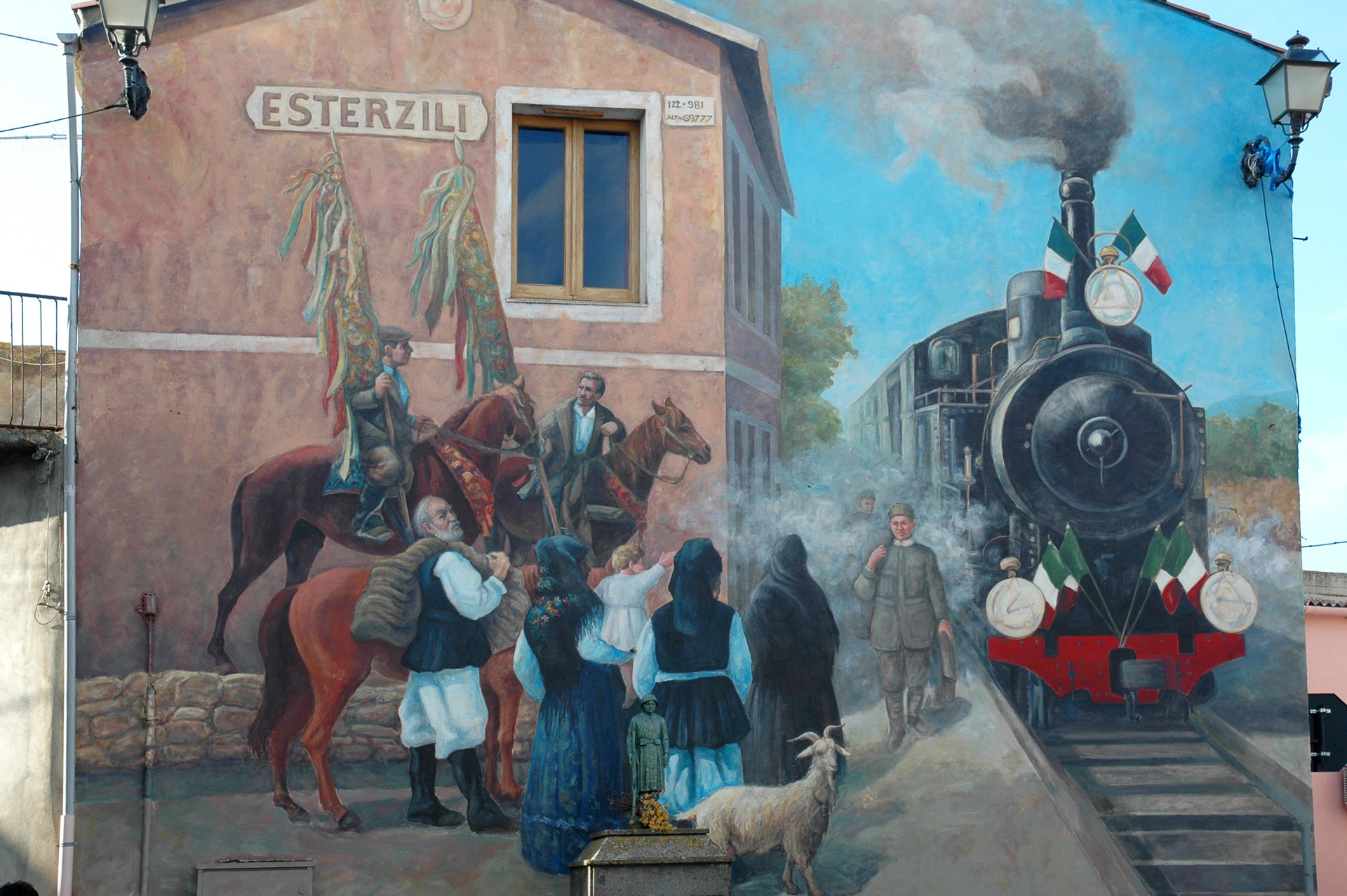
From the village, looking upwards, you will see the peak of an isolated and captivating mountain and then, looking towards the valley, you will be enchanted by the variety of landscapes. Esterzili is a small village with approximately 650 inhabitants located at an altitude of 700 metres on the slopes of Mount Santa Vittoria, the peak of which exceeds 1200 metres of altitude. From up there, at the end of a climb, you can admire a landscape that dominates Sarrabus, Gerrei and Sarcidano and that even stretches as far as Campidano and the Ogliastra sea.
From an administrative viewpoint, Esterzili comes under southern Sardinia, but it is considered part of Barbagia di Seulo. In the old town centre, the charm of the houses featuring murales is still intact. The village and the countryside are dotted with religious buildings. In the centre, there is the new parish church (1972) dedicated to St. Ignatius of Laconi. Inside the church, there is an altarpiece depicting Christ on the cross, a statue of the Virgin Mary of the Rosary (17th century) and an 18th century group of sculptures. The church of San Michele (15th century), dedicated to the patron saint, is a Gothic-Aragonese style church and it is located in the northern outskirts. In the refined façade, there is an inlaid main door and alongside it there is a belfry. The church of Sant'Antonio da Padova (17th century) is located on a hill at the northwestern end of the village. Nearby, inside the park of the same name, there is the seventeenth century rural church of San Sebastiano. Among the festivities not to be missed, in mid-August, there is the festival of Su frigadòri (onion bread baked in the oven) and that of Is cocoèddas (delicacies with a potato filling). Along with the flavours of the cuisine, there is folk music and shows.
The territory of Esterzili was inhabited as early as prehistoric times. 77 archaeological sites have been counted: Domus de Janas, Nuraghi, temples, Tombs of Giants and bronze statues. The most important one is the Nuragic temple of Domu de Orgia, perched at an altitude of one thousand metres. It is the most important megaron-type temple on the island, dating back to the second half of 2nd millennium BC: it consists of two rooms preceded by a vestibule and around it there is a sacred enclosure. During excavations, various bronze statues emerged. The most important evidence of the Roman period, one of the main ones discovered in Sardinia, is the Tavola di Esterzili, a sheet of bronze on which there is an inscription in Latin, describing the controversy between the peoples of the area, the Patulcenses Campani and the Gallilensi.
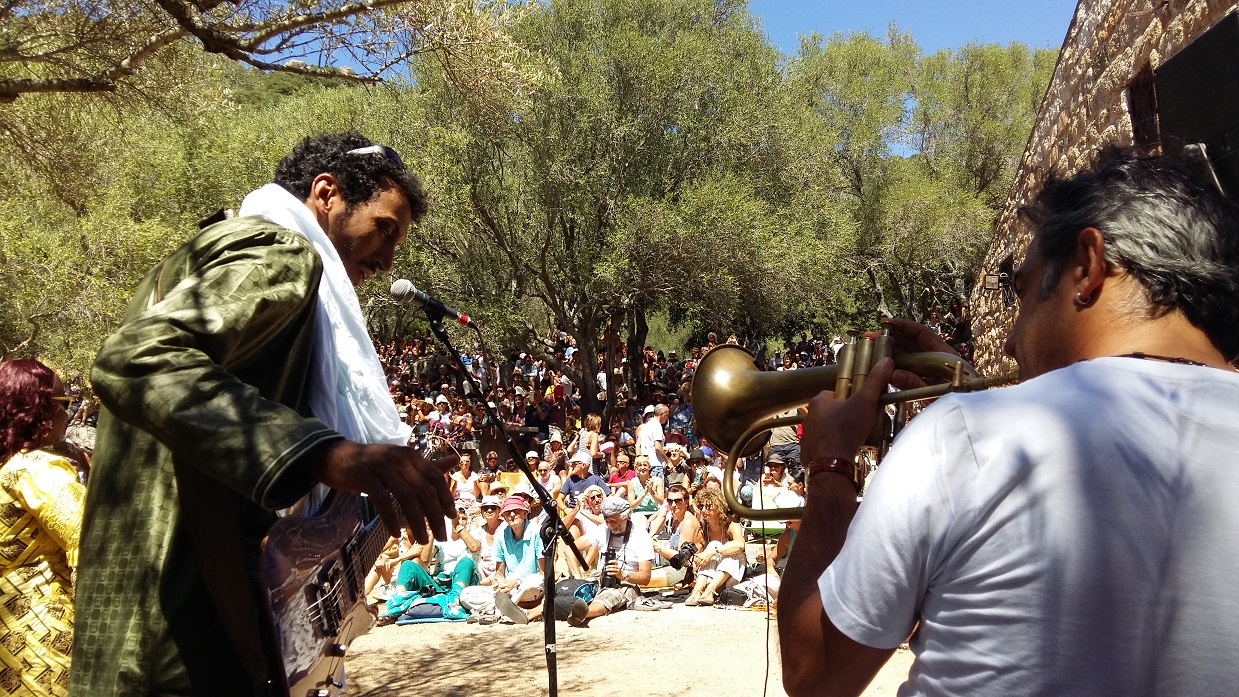
The jazz&blues soul of Sardinia
Granite coves sculpted by time, venues nestled among pure white limestone or red porphyry cliffs, enchanting village squares, archaeological sites, and even sea caves. From June to October, breathtaking natural backdrops become lively stages, resonating with melodies from renowned international artists. Harmonies and rhythms blend effortlessly with the environment, creating a symbiosis with Sardinia's unique lifestyle. For almost four decades, Sardinia has become an increasingly preferred destination for jazz, largely thanks to an artist who has unveiled a new musical soul for his homeland. Paolo Fresu was born in the small town of Berchidda, where he founded and nurtured Time in Jazz, now celebrating its 38th edition. Among the unmissable events, on Saturday, August 9th, in L'Agnata, the Sardinian retreat of Fabrizio De André, Paola Turci pays tribute to the unforgettable Genoese singer-songwriter.

Acquario di Cala Gonone
This is the largest and most modern structure of its kind in Sardinia. The aquarium of Cala Gonone, built in 2010 in the coastal village of Dorgali and set within a green park to symbolise the transition from the mountains of Supramonte to the sea, unites educational aspect (and environmental protection) with fun. You will be ‘immersed’ in 24 display tanks on a journey from the shore to the depths of the sea, passing rocky coasts and the open sea dominated by jellyfish, large snappers and sharks. This is a representation of the main marine habitats of the Mediterranean. You can come across the world of trumpetfish, see the camouflage capabilities of cuttlefish and octopus, dive into the dark hideouts and other spectacular environments of the Gulf of Orosei. In one of the most fascinating pools, dark rocks reproduce columnar basalt with an opening that has become a lair for eels and moray eels, whilst the lateral ‘terraces’ are home to scorpion fish. The open sea basin is the largest, divided into three sections across a number of levels - the first being naturally lit, the other two artificially illuminated to represent the kingdom of large pelagic fish, also home to sea urchins. A loggerhead sea turtle also lives here. Mediterranean and beyond: in the first pool, the only freshwater one, you will see the voracious piranhas, In the tropical seawater pools are a range of species in amazing shapes and bright colours that live in coral reefs. Tropical basins tell the story of the origin of an atoll and cases of evolutionary adaptations and symbiosis. The route ends with the tactile tub - learn to fearlessly feel a fish and touch sea urchins, starfish and hermit crabs.
After this ‘dive’ into aquarium life, the village of Cala Gonone can be explored, nestled on a steep hill that slopes down to the sea, an attraction for lovers of nature and adventure or for romantic boat trips. Relax on the golden sands of Cala Cartoe, Ziu Martine and Cala Osalla or, by the sea or on a trekking adventure, you can reach Cala Luna, the ‘pearl’ of the Mediterranean. A guided excursion will take you to the Grotte del Bue Marino, a spectacular ‘forest’ of stalactites and stalagmites, once the habitat of the monk seal, the evocative setting of the Cala Gonone Jazz festival. From the coast to the hinterland of Dorgali: cultural, food and wine traditions, archaeological attractions, including the museum housing the remnants of the Nuragic village-sanctuary of Serra Òrrios, with crafts (such as filigree jewellery and ceramics) and monuments of worship, or the churches of Madonna d’Itria and Santa Caterina. To be discovered is a natural heritage extending over 225 square kilometres, with the pride and joy of the Supramonte, the Valle del Cedrino and the Valle di Lanaittu.
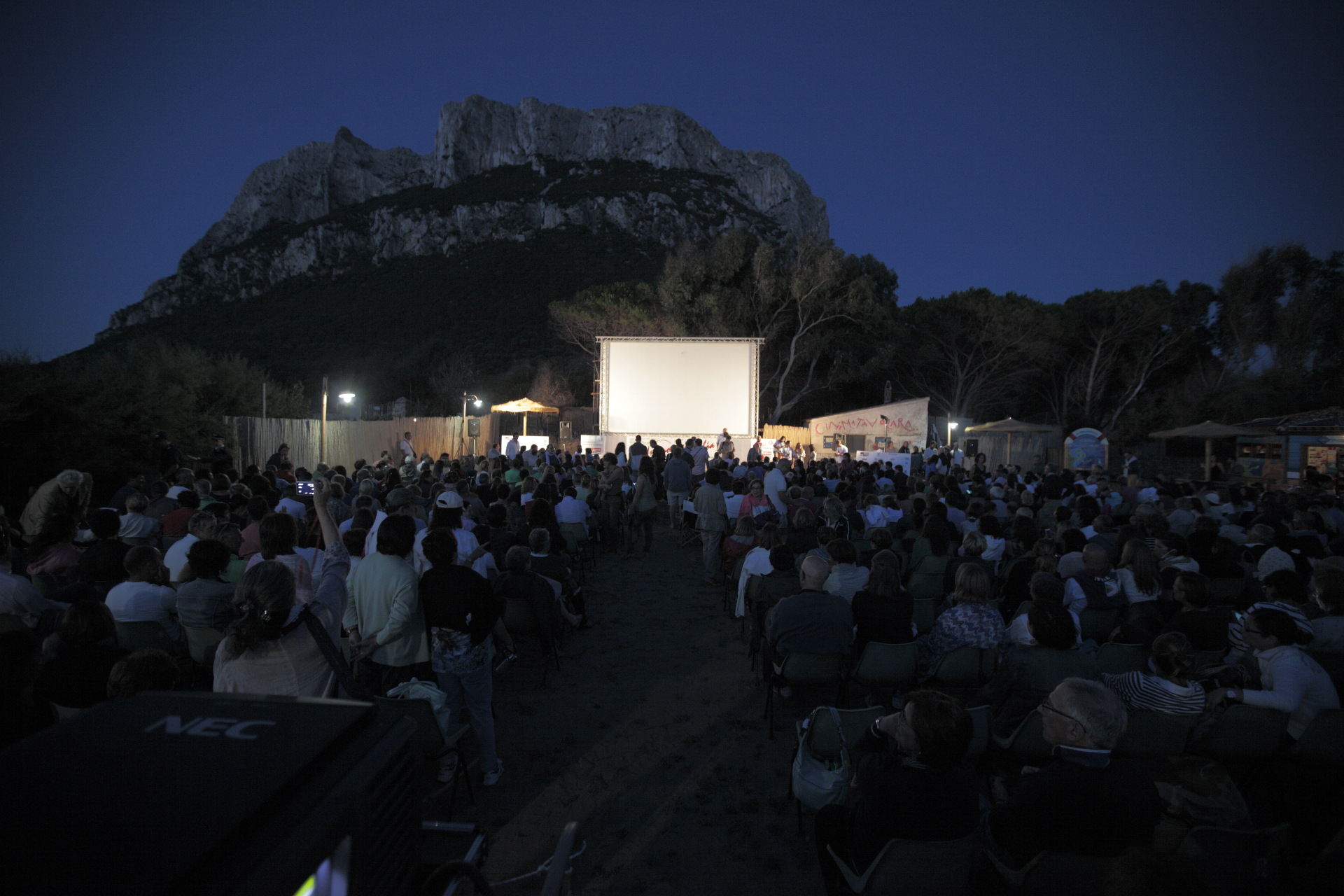
Sardinia, a natural cinema under a starry sky
Four festivals in the lesser islands of Sardinia, islands in the Island. Tavolara, a limestone mountain that emerges from the sea, in mid-July turns into an immense cinema with a starry vault of Una Notte in Italia. Established in 1991 to focus on filmmaking and creativity in Italian cinema, it is now a traditional event at national level. Meeting and interaction between the public, artists and experts already starts on board the boats that reach the island leaving from Porto San Paolo near San Teodoro and a little south of Olbia, that is, the three Municipalities involved in the 28th edition. For over a quarter of a century, the best Italian actors have walked on this unique red carpet surrounded by the waters of the spectacular marine reserve of Tavolara-Capo Coda Cavallo. Una Notte in Italia 2018 will be a travelling edition: it will start on Tuesday 17 July in the nature reserve of San Teodoro lagoon, then it will move to Porto San Paolo on Thursday 19 and then from Friday 20 the screenings will be held in the enchanting setting of the island of Tavolara.
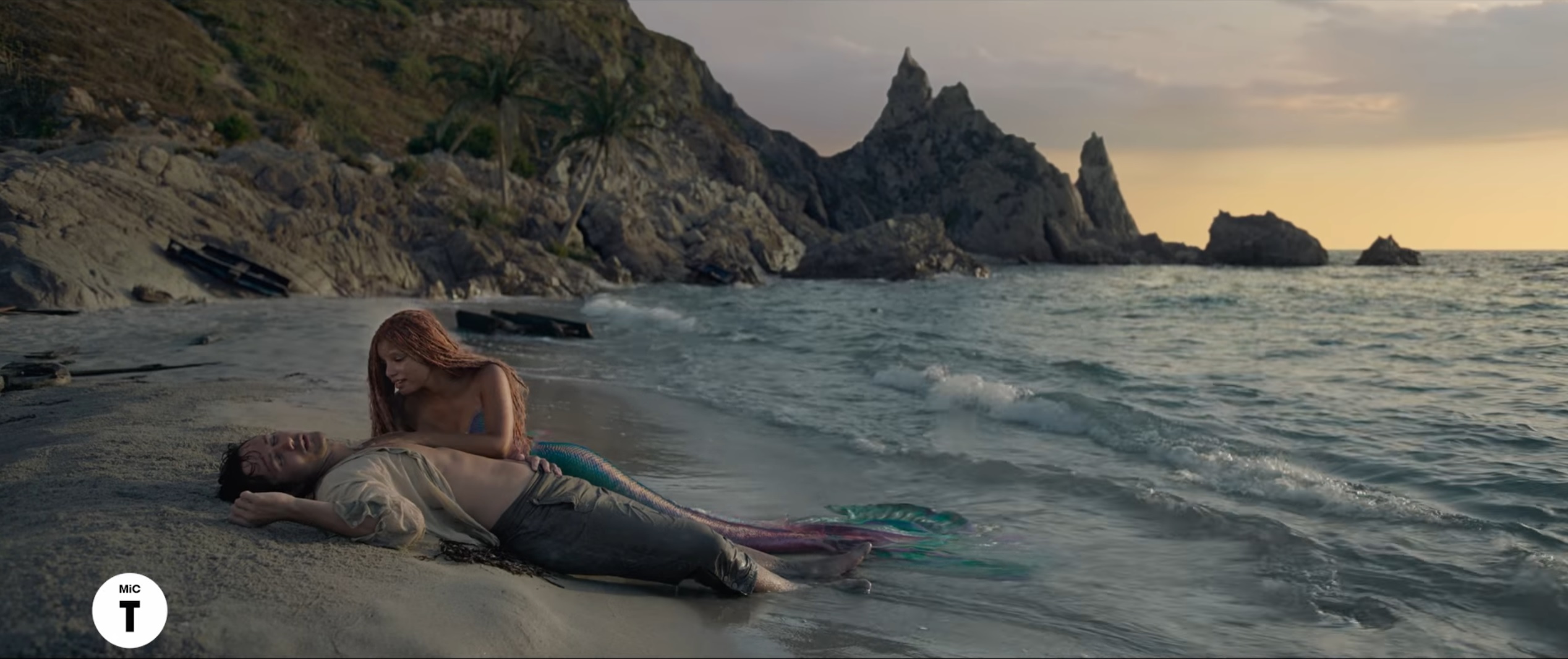
Natural scenery of an island straight out of a film
From deserted beaches to promontories overlooking the sea, from the wild Supramonte to the abandoned mining villages of Sulcis, from ancient forests to towns where time has stood still: Sardinia has always been an inspiration to writers and directors looking for scenery. Among the latest successes, there are several TV series, a very popular genre nowadays: ‘L'isola di Pietro’ (Peter’s Island), interpreted by Gianni Morandi and set on the island of San Pietro and in its village, Carloforte, and ‘Catch-22’, starring George Clooney, with its main location in the area around Olbia. The first films were recorded here in black and white, between the two world wars. The first successful film was “Forbidden” (1954) by Mario Monicelli, based on “La Madre” by Grazia Deledda, filmed between Codrongianos, Ittiri and Tissi. Ten years later, the scene of Isaac's sacrifice, part of “The Bible” (1966) by John Huston used Mount Corrasi in Oliena as a backdrop. A whole series was based on the wildest Barbagia: from “Bandits of Orgosolo” (1958) to “Father and Master” (1977) by the Taviani brothers. The theme was revisited in “Disamistade” (1988) by Gianfranco Cabiddu, set between Nuoro and Ghilarza.