
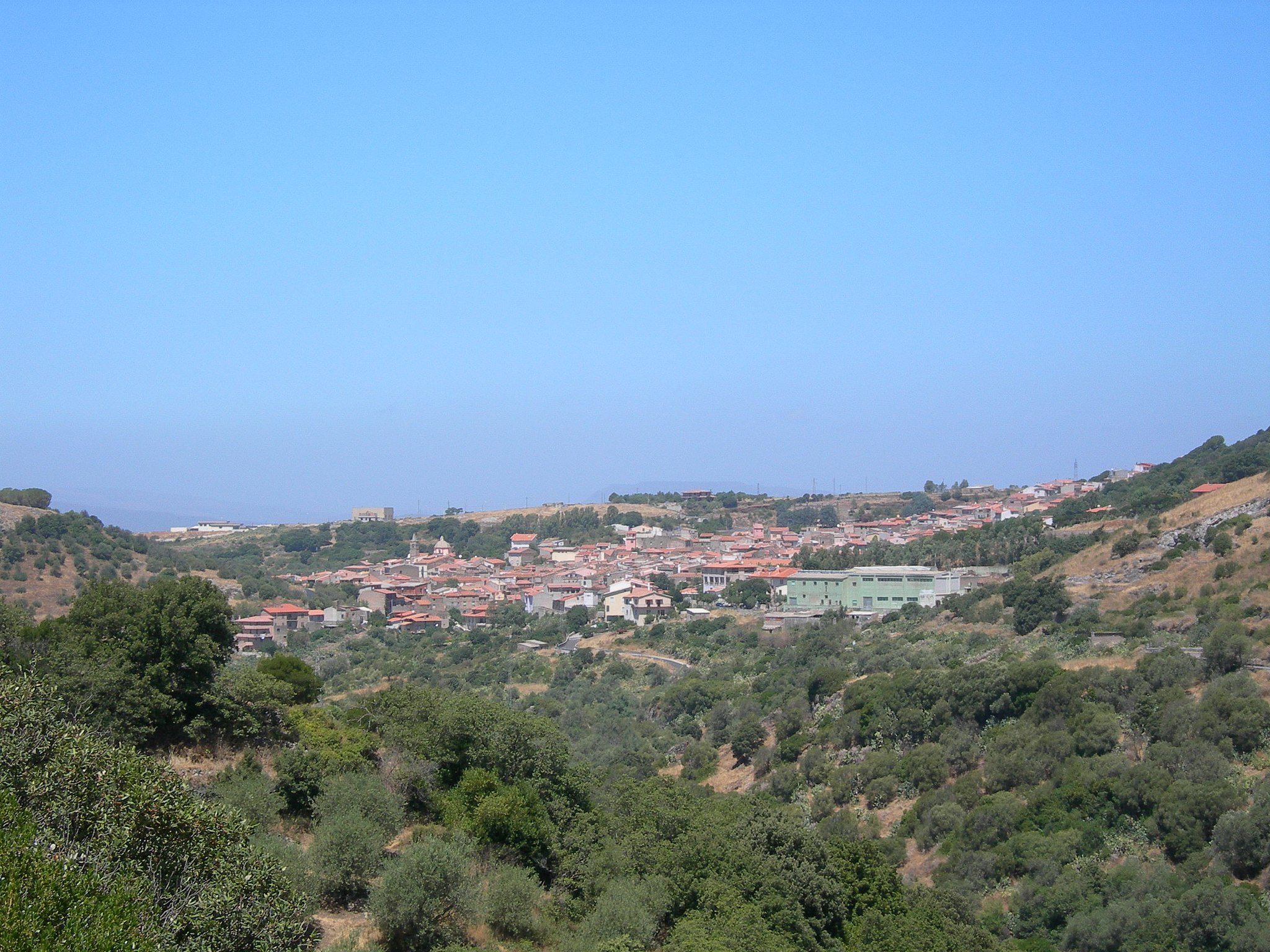
Scano di Montiferro
It reaches almost 400 metres in height on the northern slope of Montiferru, surrounded by olive groves and centuries-old woods of holm oaks, oaks and strawberry trees, whilst being dotted with springs that are famed for their beneficial effects. Scano di Montiferro is a town of 1,500 inhabitants between Oristano and Bosa, a half-hour drive from the west coast, founded on the cultivation of vineyards and olive trees, from which derives a prized (and award-winning) olive oil. Another renowned activity is honey production. The Logudorese-speaking village has deep-rooted customs: Su Cuncordu, a chant that has accompanied the rituals of Holy Week for centuries, traditional dances and festivities such as the Fuochi di Sant’Antonio Abate, the Carnevale Iscanesu in which the archaic mask of s’Ainu Orriadore is the protagonist, Sa Festa ‘e Totta ‘Idda (every four years) and Sa Feast Manna in honour of St. Peter the Apostle, at the end of June.
The 18th-century parish church is dedicated to the patron saint, where his ancient wooden simulacrum is preserved. The town also features the 15th-century bell tower of the Madonna del Rosario and the 17th-century façade of San Niccolò. Amongst the rural churches, the Santa Croce and San Giorgio are quite evocative, positioned on two hills to ‘guard over’ the town, whilst the best known is the Chiesa di Sant’Antioco, dedicated to the patron saint of Sardinia, six kilometres from the village. Built in 1636, it is flanked by accommodation for the faithful during novenas and the feasts dedicated to the saint, whose statue features in a procession twice per year, once during the week after Easter and once at the end of August. The church also welcomes crowds of pilgrims from neighbouring towns. The saint also lends his name to the nearby Sant’Ant Antioco springs, which feed the area’s aqueducts and operate the mills of the Rio Mannu. Arising near the village is the Via dei Mulini, a one-of-a-kind on the Island, which gave life to the Paleo-industrial operations from the Middle Ages. Of the 16 original mills, seven remain today, featuring both horizontal vertical wheels. Also near the village are the waterfall in the s’Istrampu de Alere forest and the parco degli uccelli (bird park), a naturalistic museum populated by donkeys, Giara horses, fallow deer, emus and mouflons, with flamingos, cranes, ibis, parrots and peacocks overhead. Large pools host swans and geese. A visit to the Santa Barbara sanctuary offers quite a thrill. Located two kilometres from the village amongst the rocks and next to Domus de Janas and the Nuraghe Abbaudi, constructed in sandstone blocks, its sole tower spans 16 rows and nine metres in height. It is encircled by the remains of a village. One of the most impressive Nuraghe of Montiferru is the Nuracale, consisting of a central tower and reaching eleven metres in height, with squared curtain walls and corner towers around. In the area you can also admire the Tombs of Giants of Pedras doladas. These are the three major expressions of the Nuraghic civilisation, which has disseminated traces of 50 settlements in an area frequented since the Neolithic period before being inhabited in the Punic-Roman period.

Gonnoscodina
Nestled on a highly fertile hillside, Gonnoscodina is a village of medieval origin with 500 inhabitants living high up in the Marmilla region, surrounded by elevations and crossed by the Rio Mogoro. Indeed, the root gonnos (common to various Sardinian towns) means ‘hill’, whilst the final part codina signifies ‘rock’. The main business is agriculture, accompanied by woodworking and ceramic crafts. At the entrance of the village, the large and elegant dome of the Church of San Daniele can be seen. Dating back to the first half of the 19th century, it is a symbol of the village. Inside, with a central plan, it houses a magnificent parian marble altar. In the surrounds is a beautiful park adorned with Mediterranean vegetation. Inside the historic town, an ancient bridge can be admired, the date of which is uncertain. There is also the parish church of San Sebastiano, built in the 17th century in Ionic style with a Greek cross (in place of the ancient parish church of San Bartolomeo) and housing a relic of the Holy Cross and an ancient goblet of great prestige. The patron saint is celebrated on 20th January with a characteristic bonfire that illuminates the night. Three events are held in honour of San Daniele: in early May, mid-October and mid-November. At the end of August, the feast of San Bartolomeo is held in the evocative setting of the park surrounding the ruins of the church dedicated to him.
From Gonnoscodina, it is easy to reach areas where nature is at its best: the Giara di Gesturi, an unparalleled environmental oasis famous for wild horses, the Giara di Siddi, where time has formed unique vertical cracks with warm reddish hues in the basaltic rock, and the slopes of the charming Mount Arci with uncontaminated nooks and deposits of obsidian, exploited since prehistoric times. As to ancient times, the fertility of the land has contributed to the inhabitation of the Gonnoscodina territory since the Nuragic age, with the greatest remnants being the Nuraghe Nurazzolu. The area was then populated by the Romans, with a small necropolis and a money deposit in the countryside near the town dating back to this period in time.
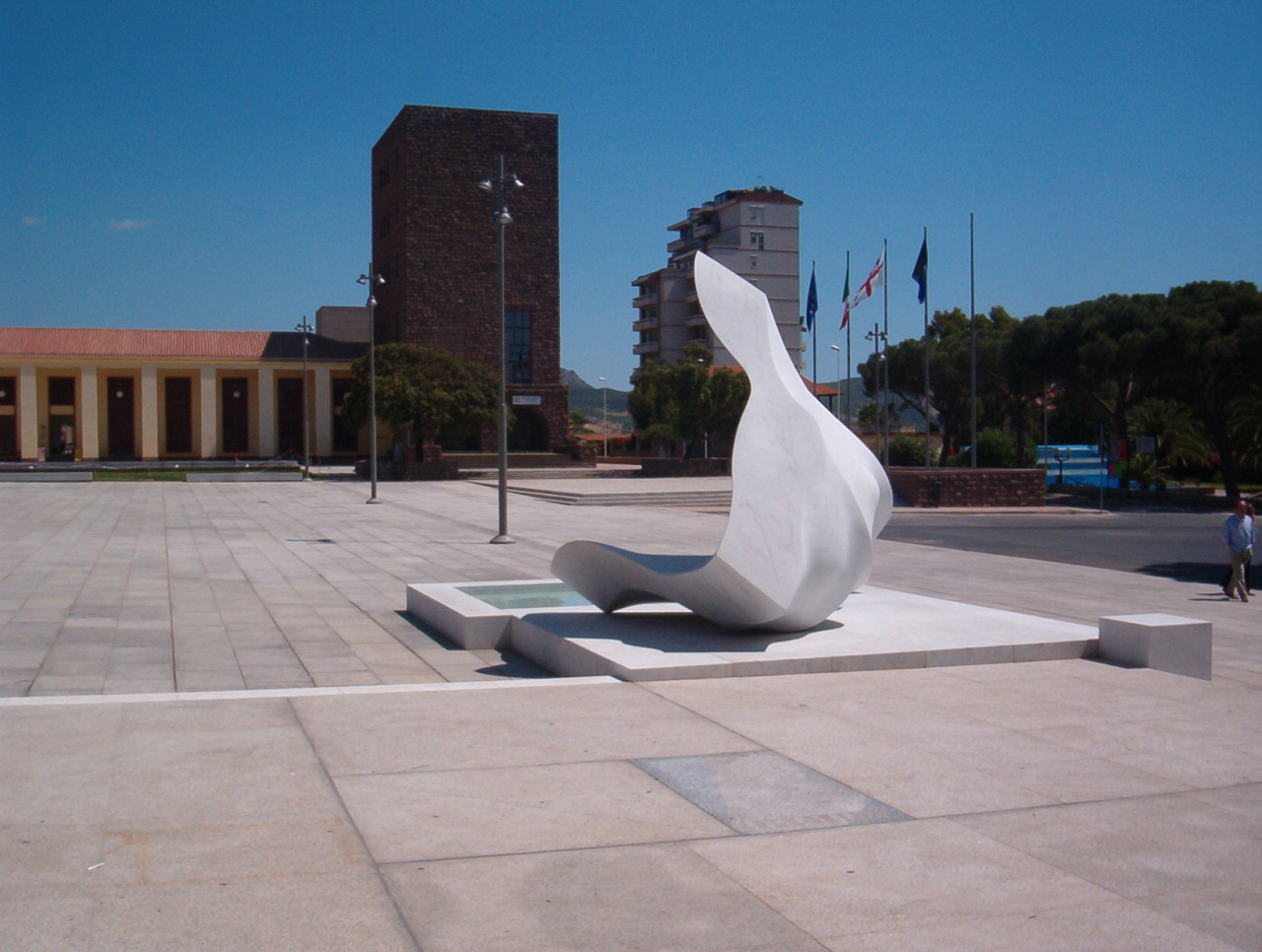
Nureci
It is perched on the slopes of Mount Maiore, at the northern border of Marmilla, surrounded by wide valleys, springs, rock cliffs and unique-looking granitic formations. Nureci is a charming town of about 400 inhabitants, who live mainly off farming, shepherding and stone carving. The town was once part of the Part’e Valenza curatorial (administrative district) of the Giudicato of Arborea. Today’s built-up area dates to the second half of the 15th century: present day Nureci was settled by the inhabitants of Genadas, who left their village due to bandit raids. Next to the small country Church of the Madonna d’Itria, there are ruins of the ancient villa (village). On the first Tuesday after Pentecost, a celebration of Byzantine origins is held here. The town has retained some older corners: buildings from early 19th century catch the eye, including the Baronial Palace of the Touffani and courtyard houses with architraves, balconies and beautiful gates, elements characteristic of Nureci. The squares and streets of the historical centre, paved with cobbles and decorated with fountains and murals, radiate away from the 17th century Church of Santa Barbara, the patron of miners. Her feast day is in early December. The religious celebrations held here, during which you will get the chance to try traditional agro-pastoral cuisine, include the feast days of Saint Rita in late May, Saint Giacomo and Saint Anna in late July, Saint Ignazio da Lacomi in mid-October and most importantly the Fires of Saint Sebastian in January. This celebration is an ancient, good luck ritual. In mid-August, the Mamma Blues Festival, an international blues and jazz event, is held here.
The scenery around the town offers striking surprises: granite and limestone formations, forests and rare species. A Permanent Museum of Nature has been set up in the town’s social centre to represent the natural environment. Nureci’s geo-paleontological sites are of leading importance in the study of the Mediterranean: specifically, the outcrops of Miocene age marine sedimentary rocks of Genna Manna-Muru ‘e Cubeddu. At the same location, fossils and archaeological artefacts were also found. The area was inhabited since the Neolithic, as demonstrated by local stone industry. In Murtas, a structure traced to a megalithic complex has been found. The Bronze Age is represented by 14 nuraghes, including Attori, perched on the green, northern slope of the Giara, and Giuerri Mannu, where one leg of a pre-Nuragic tripod was unearthed. At the town’s exit, on the edge of an overhang overlooking the town, stands the mysterious Corona ‘e Su Crobu (boulder of the crow): a powerful wall – 3 metres of which still stand – with minor structures on its interior, possibly dating to the Punic era. In the granite mass set in the barycentre of the walls the stylized features of the Goddess Mater, a deity common to all the Mediterranean civilizations, can be made out. Pottery fragments dating to the time of the Roman Republic were found at the sites of Turri Piccinnu and Pranu Ollastu.
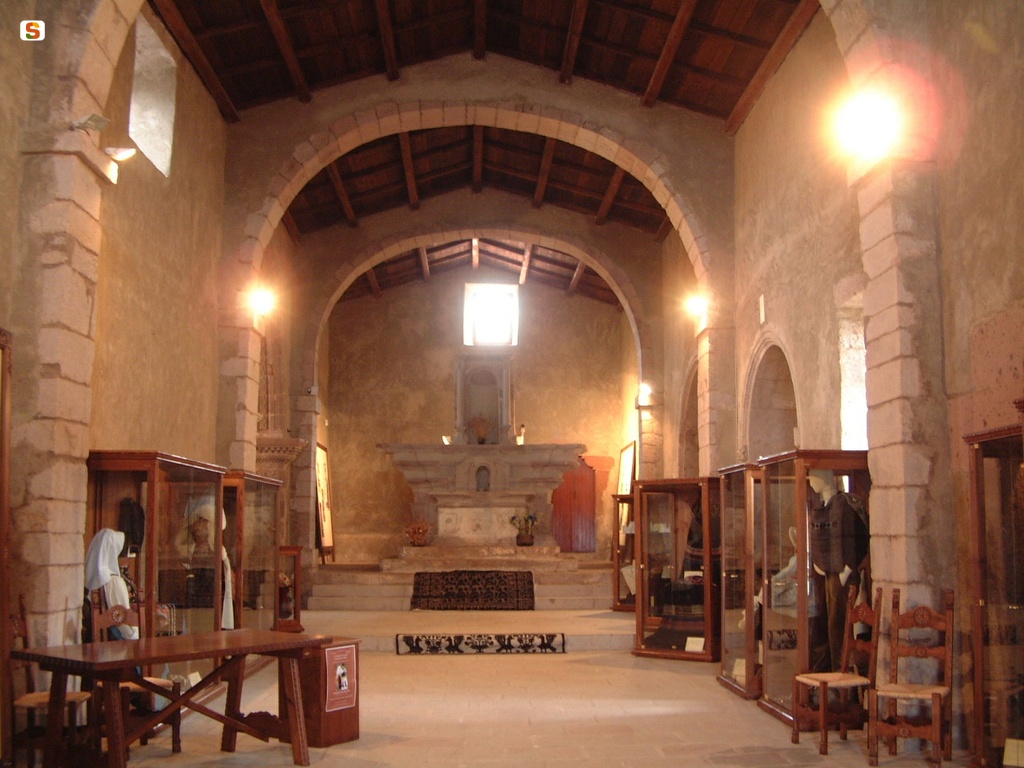
Museum of Traditional Costume and Linen Processing
Inside, you can retrace the ‘evolution’ of linen, starting from its cultivation, through the various stages of processing, to the creation of fabrics and the making of wonderful traditional clothes. The Museum of Traditional Costume and Linen Processing is located in Busachi, a village in the historical region of Barigadu, which boasts a deep-rooted tradition linked to costumes: it is one of the few places in Sardinia where it is still worn in everyday life. The exhibition is located in the rooms of the deconsecrated church of San Domenico, which dates back to the 16th century and was once part of a Dominican monastery. Not surprisingly, it is known locally as su cunventu.
The quality of Busachi linen has been famous since the 19th century, as reported in evidence provided by authors such as Alberto Della Marmora and Vittorio Angius. Until the spread of cotton and industrial fabrics, the village’s economy was mainly based on the trade of linen fabrics and clothes, made by the women of the village. Today, this art only survives in a few homes, where objects and products, like the headscarves worn by the elderly women of the village, are made. When visiting the museum, you can admire the men’s and women’s clothes, used in the various phases of life, from the most important moments - ceremonies and festivities - to everyday ones, as well as the clothes worn during periods of mourning and garments for babies, children and teenagers. In a specific section of the museum, located in the side chapel and in the sacristy, you can learn more about the linen production process, from the flower to the finished product.
Also on display are the tools required for processing: ploughs, mallets and scutching machines for beating and removal of fibres from the stems, hackles, spindles, warping machines and looms. At the end of the itinerary, products made entirely of local linen are on display, with fascinating embroidery. The museum actively organises projects and workshops, with the aim of passing on knowledge and manual skills, to keep the cultural heritage linked to linen processing alive. You can take a deep dive into the traditions of Busachi by visiting the museum on the days during the festival of su succu, the traditional dish of the village, made of thin strips of dried pasta, cooked in mixed meat broth and seasoned with casu axedu, dry cheese and saffron. The festival is linked to the celebration of the ancient Busachi wedding, preceded by the ceremony of su presente: a procession of women in traditional dress parading through the streets of the village, carrying bread, sweet foods and pasta in baskets, used to prepare the typical dish, tasted at the end of the ceremony, with music and dancing.
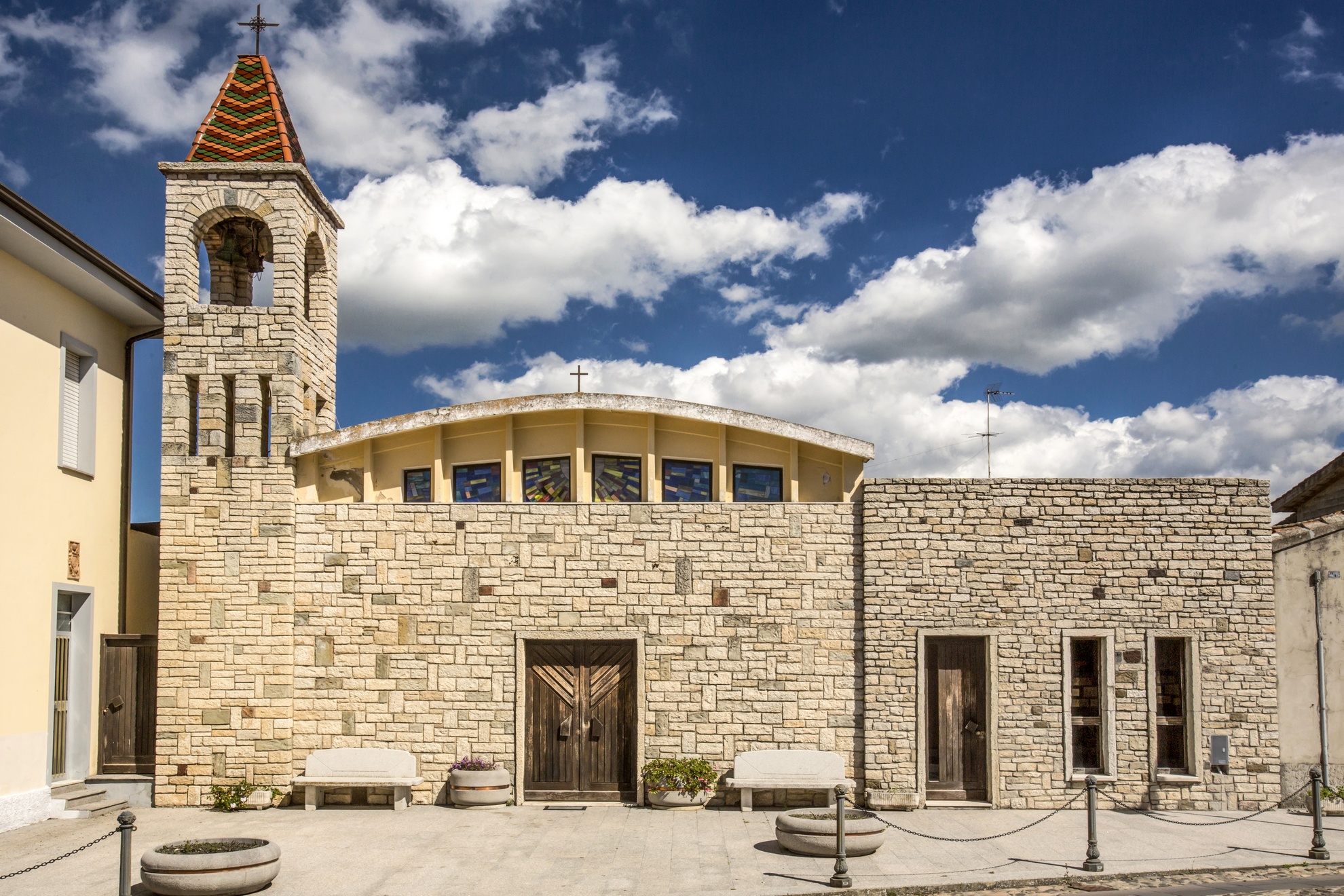
Siris
The town lies nestled in a valley at the feet of the Monte Arci Park, under the small Tanca Manna giara on which a fascinating nuraghe was built, and surrounded by woods of holm oak, durmast, cork and Mediterranean shrubs. Siris is a town of some 220 inhabitants 25 kilometres from Oristano. It has been an independent comune since 1961, after having been incorporated into Masullas and Pompu in 1927. Its name comes from the Greek xiris, iris, a flower that flourishes in the area. The local economy is based on livestock farming. The fine pastureland makes for delicious cheeses you can taste in Spring during the Cheese festival. The flavours of Autumn are celebrated during the Quince festival in November, when they are used to prepare a variety of delicacies.
The old town centre is graced with narrow winding streets lined with traditional campidanese houses with stone doorways. Here you will find the church of San Sebastiano and, in the outskirts, the church of San Vincenzo, re-consecrated in the year 2000 after centuries of abandon and a recent renovation project. All around are Roman era remains. The two saints are celebrated a few days apart in January. San Vincenzo is also celebrated in early September on the piazza dedicated to him, home to a centuries-old olive tree. The statue of the saint is carried from its church to the parish church on the first of November during the s’Inserru.
When here, you can go for a hike over the verdant hills and visit Monte Arci, which belongs to the Siris territory. The hills, made of trachyte rock, feature steep walls and cavities. The most interesting cave is next to the lovely little stream Riu Bingias. Aside from the beauty of nature here, you will also explore the history of an area that has been inhabited since Neolithic times, as proven by several domus de Janas, and was densely populated in the Bronze Age. Confirmation of this lies in the Pranu forru, su Sensu and Porcilis nuraghes, where aside from obsidian, the “black gold” of prehistory at Monte Arci, they also found Roman tombs, ceramics and coins, just like in the areas of Pradu fenu, Funtana sassa and Santu Lussurgiu. The most famous of the archaeological monuments is the Inus nuraghe, also known as Pranu Nuracci, on the south-eastern edge of the giara. Perched at 400 m, it looks out over the town three kilometres away. Its dominant position over the valley underlines its importance as an outpost. The archaeological area includes the ruins of a basalt nuraghe complex with a main tower and three connected side towers, the remains of a village, the seat of a pre-Nuragic settlement.
Ardauli
Ardauli is a small village in the historical Barigadu region in the province of Oristano and it stands on a trachyte plateau known as Culunzu Pertuntu, the ‘pierced rock’. According to legend, it was used by sailors as a mooring place, when the sea reached the present-day valley, washed by the Rio Canal, that the village looks out onto. The deep valley runs as far as the southern shores of lake Omodeo, characterised by uncontaminated vegetation and numerous rocks shaped by atmospheric agents: it is the habitat of numerous animal species: hares, foxes, weasels, wild cats, deer, wild boar and martens.
The area of Ardauli is particularly fertile and shows traces of agricultural activities that took place in the past: you will find ancient water mills, stone mills, open spaces used for processing wheat and vats for pressing grapes.
In the village, the parish church of Santa Maria della Guardia is worth a visit. It was built in the first few decades of the 17th century in Catalan Gothic style. The building has a single nave and four chapels on each side. The façade, which is decorated with a large rose-window and has a bell tower built around the eighteenth century alongside it, features ‘classical’ elements: entrance portal and decorations. Various styles also blend with each other inside: the engrailed cornices are of Renaissance inspiration and the semi-columns of the presbytery are of Baroque origin. Don't miss a visit to the country church of San Quirico, overlooking the banks of the Omodeo lake, at an altitude of about 400 metres, built around 1100 and surrounded by several cumbessias, traditional dwellings belonging to the families of the village and used to accommodate them during the celebration of the saint, which bring to mind an original tradition that dates back as far as the Nuragic age.
Soddì
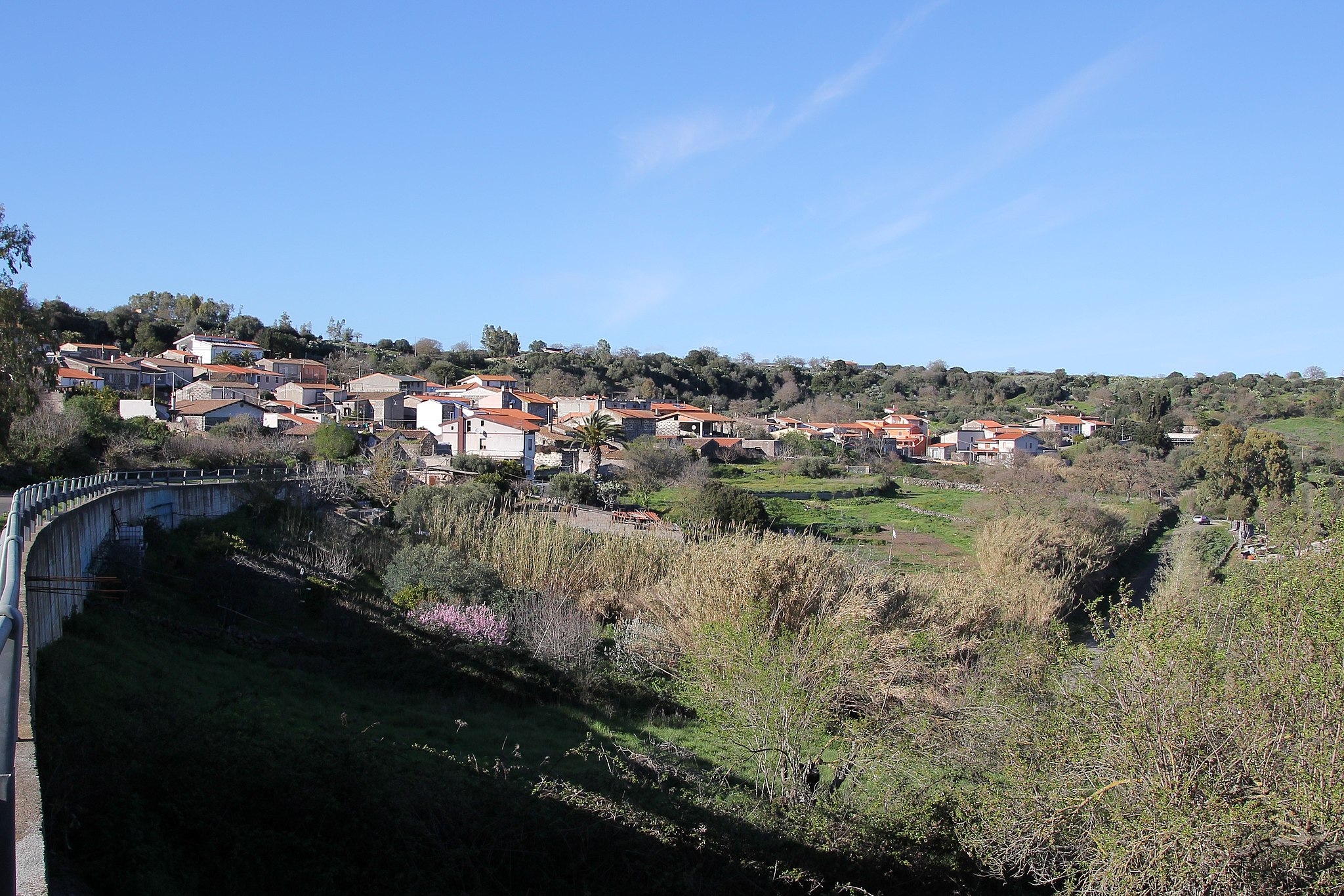
From its scant dwellings, which stand out at an elevation of 250 metres, you will have a splendid view of the enchanting Lake Omodeo, the largest artificial lake in Italy and a local site of scenic and environmental interest. Soddì is a small village in the historical territory of Barigadu, about 40 kilometres from Oristano, with a little over 100 residents. It has been an independent municipality since 1979. Prior to that, it was a hamlet of Ghilarza. During the Medieval period, when it was part of the Giudicato of Arborea, it was one of the most important towns in the Curatoria of Guilcer.
You can go on exciting walks along the shores of the lake, venture out onto the body of water in canoes and kayaks or tour this magical area on a tourist boat: you will see peregrine falcons and various species of ducks, herons and freshwater turtles. In the dry season, signs of the past, uniform in color due to silt deposited on their surfaces, re-emerge, giving an enchanted feel to the area. You can explore the archaeological sites along the lake shore and those usually submerged by following easy hiking trails that set off from the town and lead to various Nuragic sites, including Aurù, Corona, Pajolu, Sant’Anastasia and most importantly, the gorgeous Crastu Nuraghe. Not far from town, you can also explore Prehistoric sites, such as Domus de Janas and Giant’s Tombs, and Punic-Roman ruins containing funerary urns, pottery and coins.
From the little village of Soddì, the view also encompasses the surrounding mountains and basaltic plateaus covered in holm and downy oaks and Mediterranean shrubs, as well as the famous petrified forest of Montigu Abile. The forest, with its palms and baobabs, dates to the Miocene and was destroyed about 25 million years ago by a rain of lapilli erupted by nearby volcanoes. Today, the forest is covered by the waters of Omodeo Lake, re-emerging during droughts. Some of the fossilised trunks are exhibited in front of the country Church of Santa Maria Maddalena (celebrated in late July). The forest is located entirely on land belonging to the municipality of Soddì. Nearby, but on land that is part of the Ghilarza municipality, there is the Church of San Pietro di Zuri, which was dismantled stone by stone and reconstructed at a higher elevation following the construction of the damn (1923), similarly to the town of Zuri itself.
A noteworthy attraction in this primarily shepherding town is the Parish of Spirito Santo. It’s patron’s Feast Day is in mid-October. The other local religious celebration, held in late April, is in honour of Saint Isidoro. Two social-cultural events of interest are the Festival of su Cazau, held in April or May, and Sos Donos de su Lagu in December.
Nurachi
It stretches along SS 292, the north-western panoramic costal highway that will take you to the enchanting beaches of the Sinis Peninsula Marine Area and to the century-old forests of Montiferru. Nurachi is a town of 1500 inhabitants with a very long history located in the Campidano plain of Oristano, which is less than ten kilometres away. Its territory stretches to Cabras Pond and contains natural sites such as Mare ‘e Pauli, protected by the Ramsar Convention, and Pischeredda park with a Spanish tower. Here you will see rare species including flamingos and the common moorehen. These lands are rich in marsh vegetation, such as su fenu, the raw material used for the construction of is fassonis, small boats used by fishermen on the pond for centuries. Fishing is one of the town’s livelihoods, although agriculture is still prevalent: wheat cultivation, citrus fruit orchards and vineyards, where vernaccia, a prized white wine, is produced are widespread.
The town’s name went through a long evolution around the root nur (stone), typical of many Sardinian place names. Its historical centre is characterized by typical Campidano homes built of mud bricks (ladiri) with a corte and surrounding structures. You can learn about Nurachi traditions in the Ethnographic Museum dedicated to Peppetto Pau, a leading 20th century Sardinian writer and scholar. Four multimedia rooms in a historical mansion contain representations of the natural environment of the wetlands, traditional architecture, music (particularly the launeddas, an ancient wind instrument) and food. In the centre of the town, the 17th century Parish of San Giovanni Battista, built over a small pre-existing 6th century Romanesque church discovered under the flooring, draws the eye. The building is composed of a sole apsidal nave and two structures to the sides of the presbytery one of which was used as a baptistry: a circular bath coated in white plaster was found here. The church was surrounded by a necropolis dated to the 6th-7th century.
The territory, inhabited since prehistoric time, contains Neolithic settlements such as the villages of Mare e Pauli, Paule e Fenu, Cuccuru e Mari and Gribaia, where obsidian arrowheads and axes, small marble and terracotta statues, and other clay and stone artefacts have been unearthed. The area was inhabited into the Bronze Age: as seen from the ruins of Nuraci de Pische nuraghe, from which the town takes its name. Clay fragments reveal a Phoenician presence in Is Ollaius and Sa Manenzia. Roman traces are much more evident: Nurachi was an important stop along the road from Tharros to Cornus. Oil lamps, amphoras, coins, mill grinders as well as a cippus (funerary stone) depicting purification tools were found.

Zeddiani
Zeddiani rises up within fertile terrain characterised by fields planted with cereals and vineyards. A small town with just 1,100 inhabitants ten kilometres from the Campidano of Oristano sub-region, Zeddiani is known for its excellent agricultural products and handicrafts, especially textiles. Stand-out products include the wine production, such as the famous Vernaccia, a sweet and fragrant wine, and vegetables - especially tomatoes - to which the Sagra del Pomodoro (tomato festival) is dedicated in mid-August, presenting a great opportunity to taste typical dishes.
Around the town with medieval origins is evidence of Nuragic settlements, in particular the Nuraghe Couau and Nuraghe Urigu. Over the centuries the town has changed name several times, from Cellayani, to Cellevane, then Seleiani. All have the common Latin matrix of cellarium, being 'warehouse', a place where crops and especially wheat were stored. Of great value and interest in the historic town centre is the church of Madonna delle Grazie, founded in the 13th century and rebuilt in the 17th century. The façade is distinguished by light sandstone ashlar alternating with pieces of dark basalt to create an elegant two-tone effect. Equally prestigious, especially due to the adornments within, is the parish church of San Pietro Apostolo, dating back to the 17th century. To be admired within is a baroque wooden altar with a simulacrum of the Madonna della Neve in polychromatic and gilded wood. The parish church is the final destination of the procession, the climax of the feast of Sant'Apollonia, on 9th February. The patron saint of San Pietro is celebrated in late June, two weeks following the feast day dedicated to Sant’Antonio da Padova. Zeddiani is strongly connected to religious traditions. In addition to celebrations for its saints, the events of Settimana Santa (Holy Week) are also testimony to this, with the entire community of the town taking part.
Santa Barbara - Villacidro
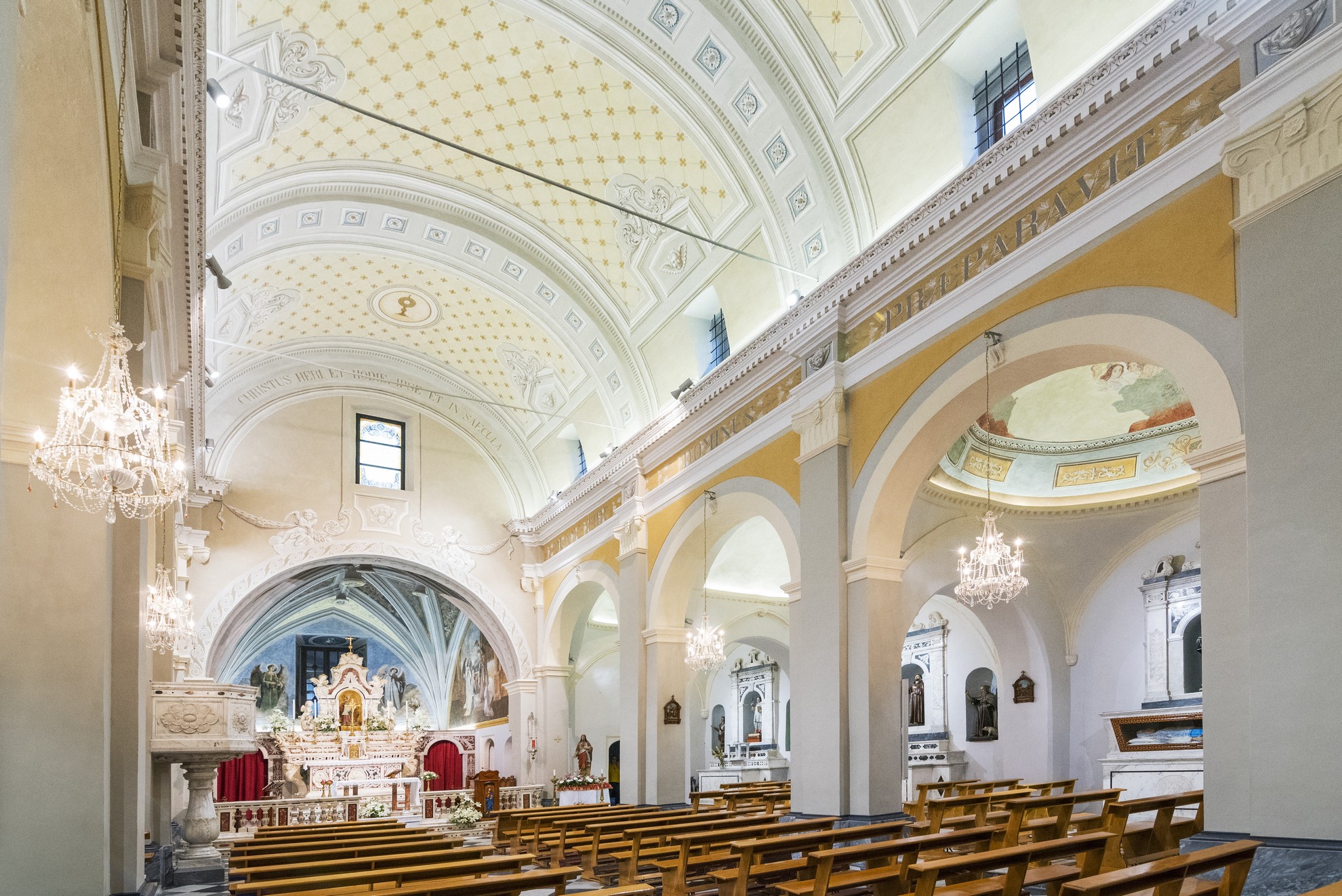
A balanced overlapping of architectural forms, it is also a wonderful example of how sacred art on the island has adapted to the dictates of the Counter-Reformation. In the parish church of Santa Barbara, which stands in the historical ‘upstream’ part of Villacidro, this piece of the ‘modern’ European matrix is shown in the choice of a single room system, barrel roofs, evolved and proportionate orders and classical decorative themes. Various construction phases can be distinguished, given that the church has been gradually modified, creating stylistic stratifications. The first certainties regarding the site date back to the 13th century (perhaps in Romanesque style). After the destruction of the medieval Villa at the beginning of the 1400s, during the war between the Aragonese and the Giudicato of Arborea, it was restored in the 16th century in the Gothic-Aragonese style with three naves, without a transept, bearing vaulted side chapels and a wooden roof supported by architraves. Of the original 16th-century structure remains the sumptuous capilla mayor (presbytery) with its ribbed stellar vault, the only element not affected by the restructuring commissioned in 1670 to the Genoese Domenico Spotorno, he who was responsible for the Baroque forms on the Duomo di Cagliari (the cathedral) and the Basilica di San Pietro in Ales. The temple, which evolved into late-Mannerist and Baroque forms, continued to be enriched with neoclassical accents in the following centuries. The façade has a flat surface and is crowned with a ‘Carabineer's hat’. In 1992, a bronze portal was added with depictions of the Madonna, saints and a selection of symbolic places in Villacidro, such as the waterfall Sa Spendula. Alongside is a square-barrelled bell tower, built in 1639 and 1659, then ‘revisited’ a century later. It is comprised of three sections surmounted by an octagonal drum and topped with a small majolica-covered cupola. The interior has a longitudinal layout, with a single barrel-vaulted nave and three intercommunicating chapels per side, covered by hemispherical domes. A Baroque high altar in polychrome marble and balustrade are 18th-century masterpieces by Giovanni Battista and Domenico Spazzi. Of great value is the antependium adorned with a fine bas-relief depicting Saints Barbara, Pietro and Sisinnio. Behind the altar is an 18th-century wooden choir. The pulpit, baptismal font and organ also date back to the 18th century. The marble furnishings of the chapels are largely neoclassical. Amongst the paintings, a 17th-century wooden panel stands out.
Santa Barbara rises up in the ancient village of Villacidro, comprised of stone houses. The town extends between lush olive groves and orchards at the foot of the Monte Linas park, sprinkled with waterways and covered with forests, forming the habitats of rare species.