Monuments and landscapes at the foot of the Giara
A tour of the Marmilla region, around sa Jara Manna, the largest and best-known of the three basalt plateaus in central-southern Sardinia, where the famous little horses roam free

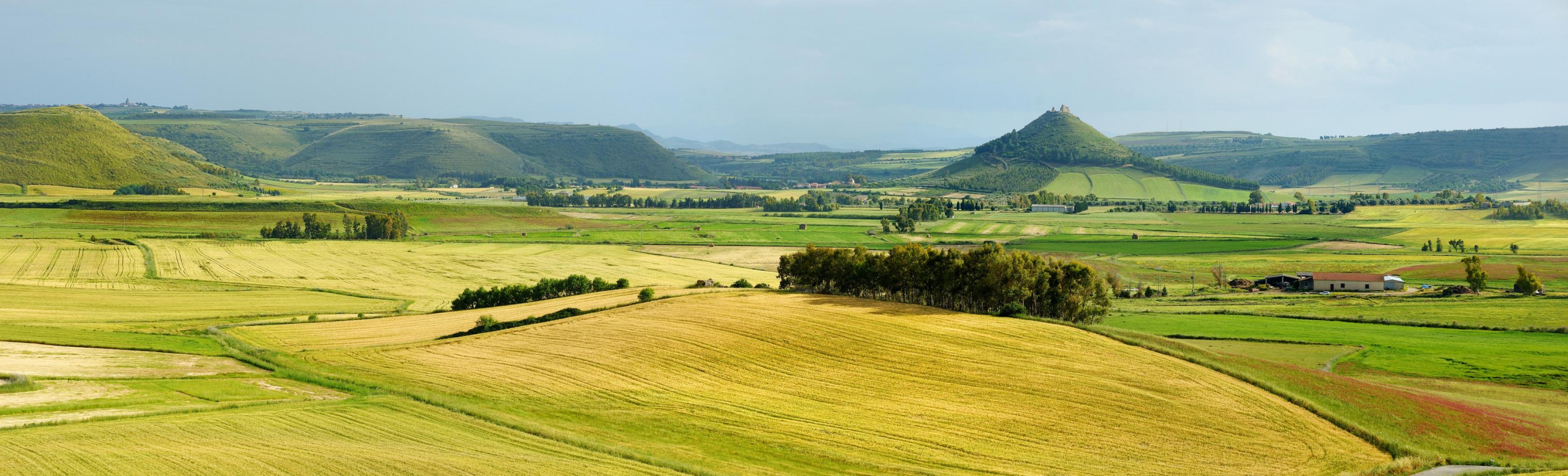
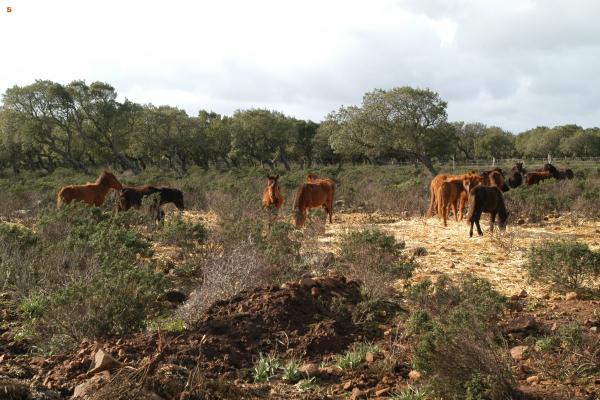
Its outline is unmistakable: a plateau of volcanic origin that rises between the valleys and hills of the Marmilla region, in the territories of Gesturi, Setzu, Tuili and, encroaching on the Sarcidano area, in that of Genoni. The Giara di Gesturi plateau is a place where you’ll find the little Giara horses living in the wild and typical is paulis, depressions that fill with rainwater in the cold seasons. All around, you’ll see a multitude of Domus de Janas and nuraghi and a ‘crown’ of villages bound to cultural traditions and excellent artisan products, food and wine. They are all close to each other, but each one has its own distinctive characteristics waiting to be discovered.
Itinerary: 20 kilometres
Road journey time: 30 minutes in all for the various journeys
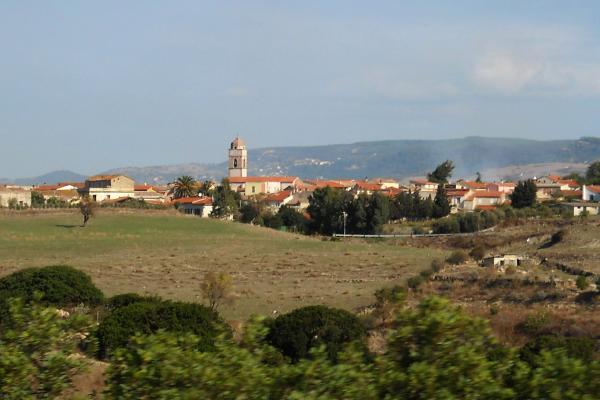
The itinerary starts in a small village surrounded by wheat fields and olive groves in the heart of Marmilla. You’ll find some monumental olive trees, including one that appears to have a human face, next to the country church of San Domino. Next to that dedicated to San Marco, surrounded by a beautiful park, stands the majestic nuraghe of the same name. It’s worth visiting, perhaps during the celebrations on April 25. Then, in August, the Palio degli Asinelli (donkey race) takes place.

Just two kilometres separate Genuri from Setzu, one of the smallest and oldest villages in southern Sardinia. Nevertheless, it has numerous traditions, especially linked to food. During your visit to the village, you will see the typical Campidano houses with lollas (courtyards), the churches of San Leonardo and San Cristoforo and the ‘Il filo della memoria’ (the thread of memory) museum. Heading towards the Giara, you’ll find the two main archaeological sites: the Domus de Janas sa Domu ‘e s’Orcu and the nuraghe S’Uraxi.

The next stop is Tuili, also two kilometres from the previous one, and it is characterised by architecture and art. Don’t miss a visit to the church of San Pietro, with its splendid Retable by the Master of Castelsardo, one of the main Sardinian Renaissance works of art, as well as Villa Pitzalis and Villa Asquer, now a museum and a location for events. Just outside the town, in the direction of Barumini, there is the ‘Sardegna in Miniatura’ theme park.

There are three and a half kilometres between Tuili and Barumini. Just before entering the town, on the right, stands Su Nuraxi, a UNESCO heritage site and the most famous nuraghe on the Island. In the town, you can breathe culture in every corner: The Lilliu Cultural Centre, the launeddas museum and Casa Zapata, inside which another nuraghe is ‘hidden’, that of Su Nuraxi ‘e Cresia. Other nuraghi are dotted across the hiking trails to the north, where the Giara plateau dominates.

The journey heads north, always keeping the plateau on your left. After approximately four kilometres, you come to Gesturi, the town that gave its name to the Giara in the territory of which most of its surface area falls, as well as a famous pilgrimage destination. In fact, the Blessed Nicola, a spiritual figure and the object of profound devotion, was born here. A visit to the house where he was born is a must, while on the southeastern edge of the Giara, you will find the protonuraghe Bruncu Madugui, ‘ancestor’ of the nuraghi.
The itinerary ends on the Sarcidano border, in a village where an excellent white wine comes from and rich in archaeological evidence. Written sources from the Ancient Roman Valentia still remain, along with the probable ruins of a necropolis and the name, in the ruins, of a medieval church. The Giara stands out to the south-west, while in the opposite direction there are the Santu Millanu nuraghe and the sacred well of Coni. The best time to visit the town is between May and July, the period when food and wine festivals and religious celebrations take place.