

Cave of Santa Barbara
In the eyes of the miners who discovered it in 1952, during the excavation of a well, it must have seemed like an apparition. It had remained undiscovered until that point in time, hidden in the bowels of the mountain. Indeed, the Grotta di Santa Barbara is one of the oldest in the world, certainly the oldest in Italy, and a natural wonder at the heart of the San Giovanni mine, in the territory of Iglesias. After a long period of closure, visits resumed in 2016, with scheduled accesses that serve to preserve the grotto like a precious jewel it is.
The cavity consists of a large hall extending over 25 metres in height and dotted with columns of stalactites (extending from the top to bottom of the room) and beautiful stalagmites, covered with extravagant aragonite, formed over thousands of years. Another characteristic of the cave consists in the honeycomb concretions arranged along walls and vaults. At the bottom, a small, silent lake makes the surrounding walls glimmer with reflections of water. This Grotta opens up between a layer of ceroid limestone and yellow silicified dolomite, formations dating back to the early Cambrico period (about 500 million years ago). What is unique are the tabular crystals of dark brown barite covering the walls, a mineral only found in Europe.
From 1875 to 1998, lead and zinc were mined in the cave, which can be entered on a little electric train that crosses the mining tunnel (about 300 metres in length), located at an altitude of 200 metres. From the train, an elevator takes you 36 metres up the shaft before you enter Santa Barbara from a spiral staircase. The cave has no external exit points, hence why it has remained so intact.
The section of the train takes you back in time to the mining epic that characterised all of Sulcis-Iglesiente area - inside the gallery gunpowder, slow-burning fuses, detonators, hoppers, even the mineral on the walls can be seen. Next to the cave, passes the Santa Barbara mining route: a 400-kilometre long historical-religious itinerary, to be travelled on foot or by mountain bike, along ancient paths and abandoned railways, today the heritage of industrial archaeology of the Geo-mining Park of Sardinia. To further your knowledge of the mining world, you can visit the museum of mining arts and the machine museum in Iglesias or delve into the mining world through guided tours in the mines of Monteponi, San Giovanni in Domusnovas and Masua.
Madonna del Rosario
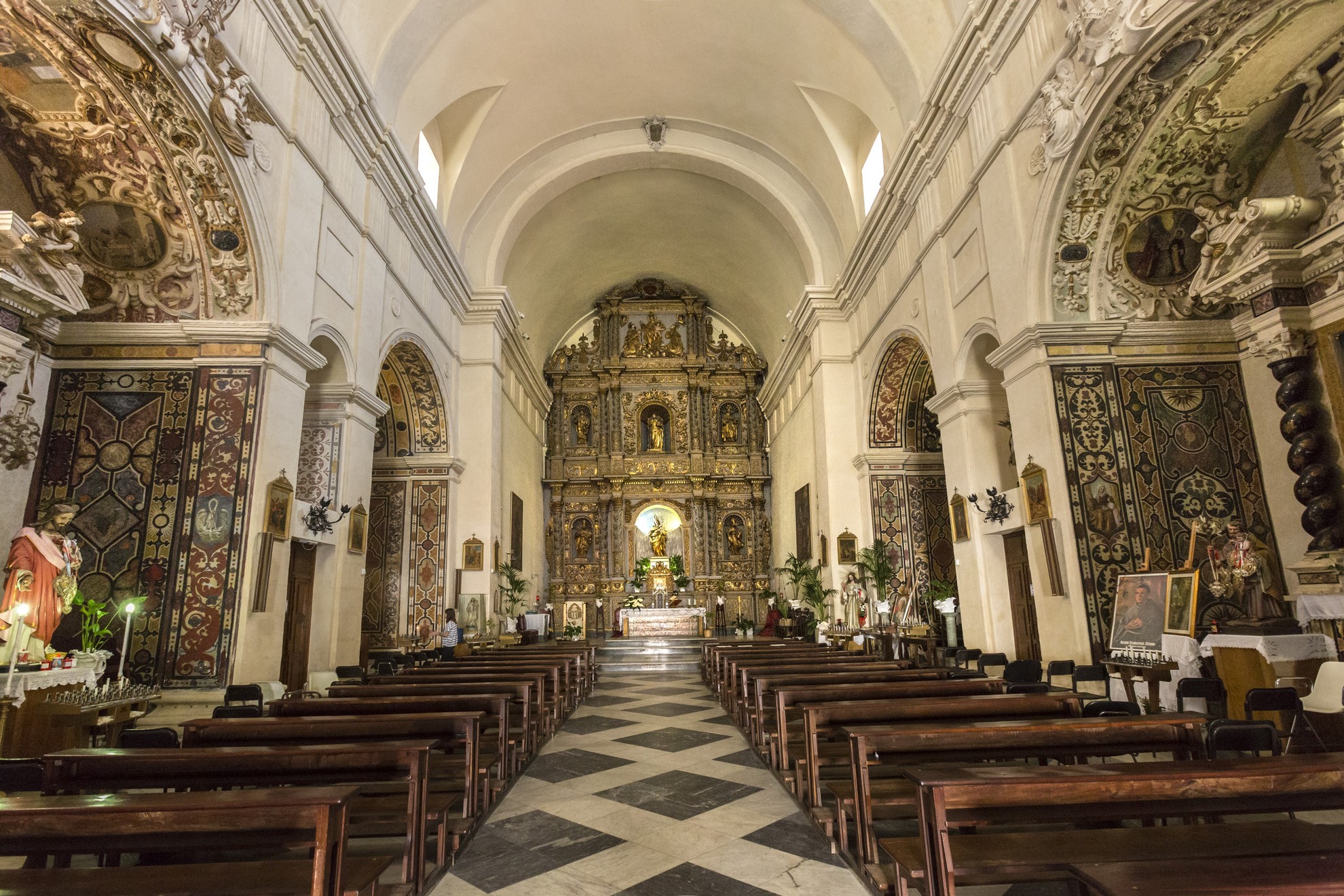
It overlooks Piazza Castello in the heart of Sassari, where once stood an opening in the walls of the medieval citadel, revealing in its architecture and furnishings a complete and splendid expression of Baroque art. It is thanks to the hard work of the Dominican monks that the first church of Madonna del Rosario was built, together with the convent, in 1635. The temple was rebuilt and enlarged twenty years later, taking on its present form. All was completed in 1759 with the façade, the work of Gavino Pirinu from Sassari, arranged into two sections. At the centre of the lower part stands a portal framed by Corinthian columns and an entablature, from the ends of which rise two volutes that simulate a curvilinear pediment. Inside, a niche houses the statue of Our Lady of the Rosary. The second segment is narrower and smoother, with a central high-arched window.
Immediately upon entering, the gaze is captured by the high altar. The entire back wall is occupied by the monumental Altarpiece of the Rosary (1682) carved in wood, polychrome and gilded, considered in terms of its size and value as one of the most important works of sacred art on the island. It is structured in three sections, the lower two including six statues inside niches and the upper fastigium.
As is customary in Sassari religious buildings from the 17th and 18th centuries, the church has a single nave divided into three bays, on which are three chapels on each side, with a barrel vault. In the background, dominated by the wooden retable, are the raised presbytery, which connects to the hall through a triumphal arch, and the apse, both with a quadrangular layout. The presbytery is covered by a barrel vault that stands on a moulded frame, decorated with adornments and a triglyph frieze, marked by double transverse arches. The side chapels are entirely decorated with motifs imitating marble inlay, a baroque decorative technique that is unusual in the Sardinian context. Inside, stone and stucco altars stand out, painted with marble effects and characterised by a great variety of ornamental motifs.
The structures and ornamentation of the Madonna del Rosario can be traced back to a project that included workers from Liguria and Lombardy undertaking a project in Sassari at the end of the 17th century. Baroque architecture and decorative solutions can also be found in the rich façade of the Duomo di San Nicola (cathedral), in various works and the decor of the church of Sant'Antonio Abate and in the furnishings of San Pietro di Silki.
Monte Corrasi
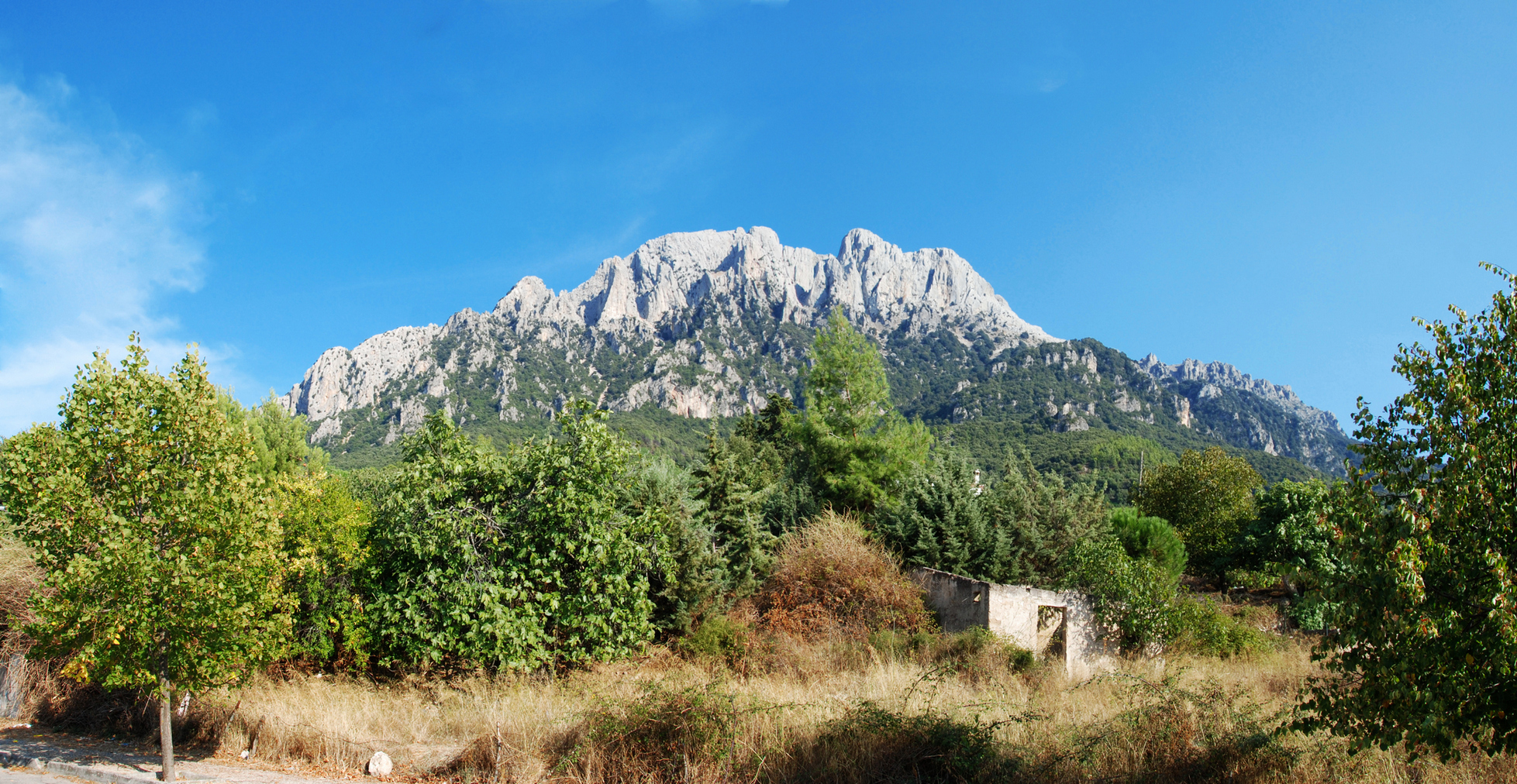
Its appearance is characterised by sheer limestone rock faces, crags, white pinnacles, caves and large plains. It is rugged and barren at the summit, covered in holm oaks in the middle strip and is adorned by olive trees, vineyards and almonds in the lower part. Mount Corrasi is the highest peak of the vast and inaccessible plateau of the Supramonte mountain range, as well as being one of the most evocative elevations in the Island. The challenging trails that cross it and climb to an altitude of 1463 metres are destinations that expert (and in good shape) trekking enthusiasts aspire to and arrive in Oliena to climb it. From the summit of the Corrasi, you can enjoy spectacular views and a 360-degree panorama that stretches from the coastlines of the Gulf of Orosei to the Gennargentu massif. Flora and fauna complete this 'special' place with its dolomitic atmosphere: although it might seem completely arid and desolate, in reality there are 650 botanical species here, about 60 of which are native ones. It is a green paradise of the highest order, persuading the Italian botanical society to include the mountain in the census of the biotopes of greatest interest, where birds of prey like the golden eagle, the buzzard, the Eleonora's falcon and the peregrine falcon reside and where the mouflon roams freely.
In the Oliena part of the Supramonte mountain range, which features valleys, plains, sinkholes and canyons, as well as the Corrasi, you can tackle other summits: Ortu Hamminu, sos Nidos, the evocative mountaintop of Cusidore and Carabidda, at the foot of which lies the village. Something else that trekkers should not fail to do is climbing Mount Maccione and, above all, visiting the valley of Lanaittu, rich in natural and prehistoric sites: within it, you will find the village of Tiscali, the caves of sa Oche and su Bentu and the Corbeddu cave. At the entrance to the valley you will find the sacred area of sa Sedda ‘e sos Carros, important for the traces of metalworking in the Nuragic period and as evidence of the practice of the cult of the waters. A visit to the su Gologone, which has been declared a national monument, is a must. “The murmur of the surrounding forests is like that of a sea not far away; a riptide at the foot of the mountains”. This is how Elio Vittorini, in his 'Viaggio in Sardegna' (Journey to Sardinia, dated 1936) evokes the sensations generated from by Oliena, a Bandiera Arancione (Touring Club of Italy Orange Flag) municipality and one of the most distinctive villages in the Nuoro area, with an enviable position, natural beauty, cultural traditions and welcoming community. Products, like embroidery on silk scarfs and filigree jewellery, Carasau bread, rustic cuisine and Nepente, the renowned Cannonau wine revered by the poet Gabriele D'Annunzio, are just a few of the things that make it stand out.
The jazz&blues soul of Sardinia
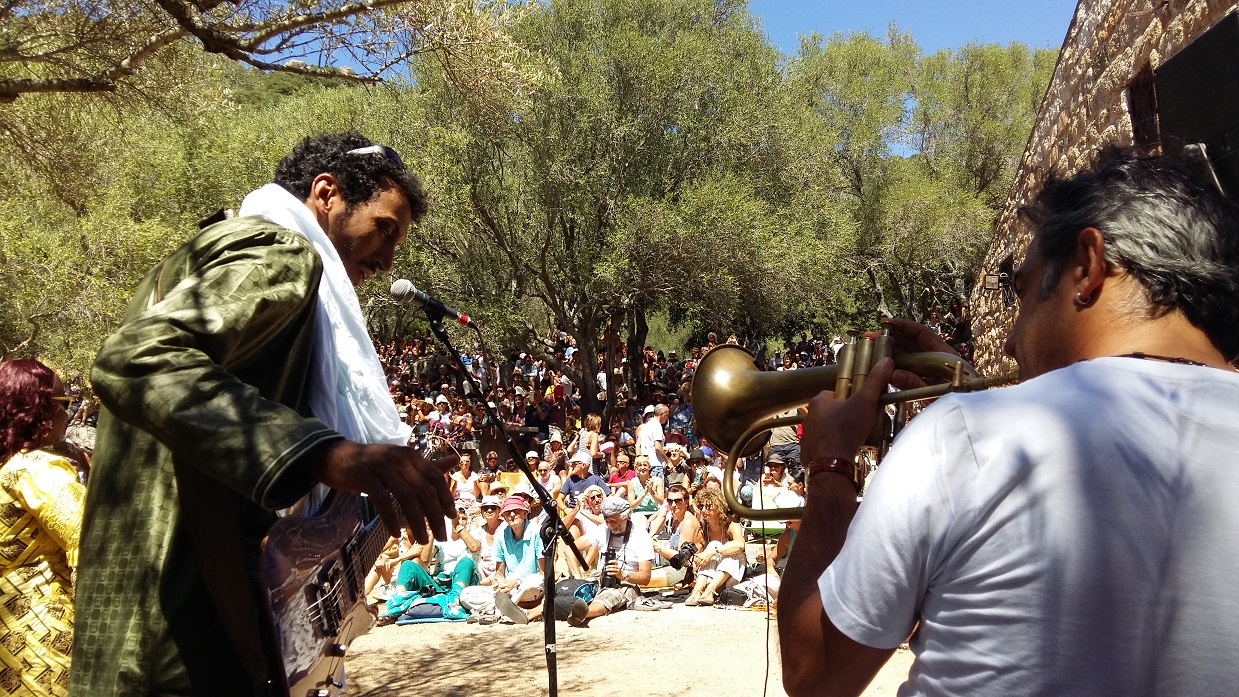
Granite coves sculpted by time, venues nestled among pure white limestone or red porphyry cliffs, enchanting village squares, archaeological sites, and even sea caves. From June to October, breathtaking natural backdrops become lively stages, resonating with melodies from renowned international artists. Harmonies and rhythms blend effortlessly with the environment, creating a symbiosis with Sardinia's unique lifestyle. For almost four decades, Sardinia has become an increasingly preferred destination for jazz, largely thanks to an artist who has unveiled a new musical soul for his homeland. Paolo Fresu was born in the small town of Berchidda, where he founded and nurtured Time in Jazz, now celebrating its 38th edition. Among the unmissable events, on Saturday, August 9th, in L'Agnata, the Sardinian retreat of Fabrizio De André, Paola Turci pays tribute to the unforgettable Genoese singer-songwriter.
Tempio - Altare di Monte d'Accoddi
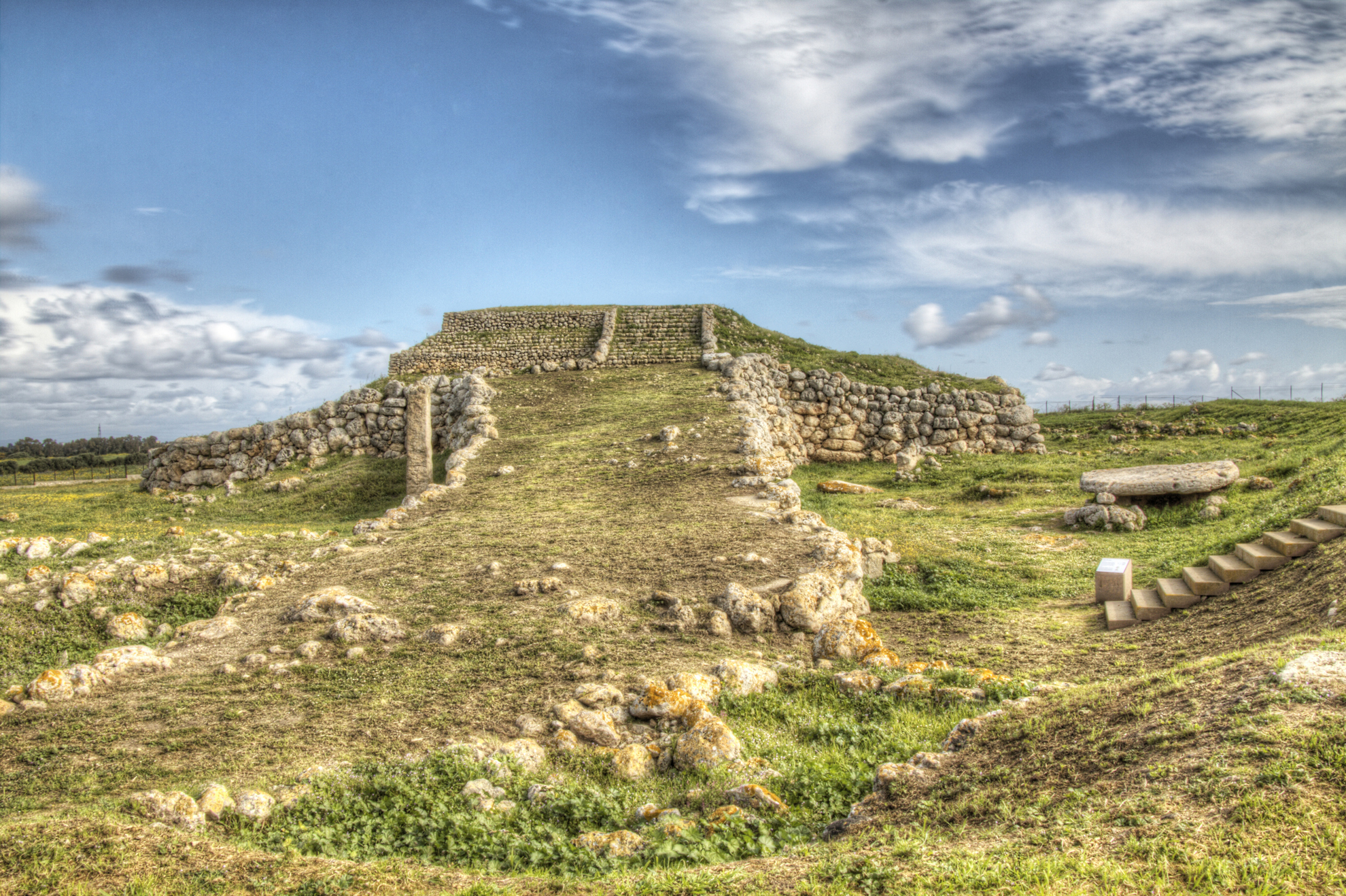
Although there is no direct relationship, it is identical to the contemporary Mesopotamian temples and embodies the ‘oriental’ creed of the union between heaven and earth - the sacred areas on top of reliefs were considered the meeting point between man and divinity. The temple of Monte d'Accoddi (from the archaic kodi, ‘stone’), dating back five thousand years, is a ziqqurat that is unique in Europe due to its singularity of architectural types. It was discovered in the mid-20th century, digging into a small hill that appeared to be ‘artificial’, rising up in the middle of a plain. In fact, it was a pyramid altar covered with earth, perhaps dedicated to a female deity, carved in a granite stele alongside the monument. According to legend, it was built by a prince-priest who had fled from the Middle East. It had one very special feature: the ziqqurat is the temple of the Sun, in turn dedicated to the Moon.
The pre-Nuragic sanctuary stands in the centre of Nurra, along the ‘old’ State Highway 131 (heading towards Porto Torres), in the territory of Sassari, eleven kilometres from the capital of the north of the island. The monument played a central role in society of the time, being the culmination of the evolution of a complex developed from the second half of the 4th millennium BC. The altar is the superimposition of two phases, that of the ‘red temple’, in the final Neolithic period (3500-2900 BC), and the following ‘terraced temple’, in the Aeneolithic period (about 2700 BC), as part of the Abealzu-Filigosa culture. In the first phase, several villages of quadrangular huts were part of a ceremonial hub, including a Domus de Janas necropolis and alongside the Santuario, in their original positions, are an elongated menhir (four and a half metres high), an enormous slab with seven holes (perhaps use to tie up victims) and boulders of spheroidal stone, one of five metres in circumference. All the stones served a specific purpose in the sacrificial rituals. At the end of the final Neolithic period, the people of the Ozieri culture built a platform in the shape of a pyramidal trunk, with sides at the base extending 27 metres, above which stood a rectangular room with surfaces plastered and painted in ochre and traces of yellow and black. Of the sacred area remain the floor and remnants of a perimeter wall. Around 2800 BC, the structure of the ‘red temple’, abandoned for about two centuries, was buried under a colossal filling of earth, stones and limestone marlstone, in turn ‘covered’ with large blocks of stone. A new large terraced pyramidal platform was built, with sides longer than the previous one and accessible from a ramp that was forty metres long and thirteen to seven metres wide. The second sanctuary is reminiscent of the ziqqurat with an ‘open-air’ altar. The structure occupies 1,600 square metres, rising up almost six metres (originally perhaps eight). Inside is an unexplored room. Perhaps, as in Mesopotamia, it contains the sacred bed where the ritual of regeneration of life and fertility of the earth was carried out. Around are the remains of a village, where ceramics were found almost intact. To be admired are finds safeguarded in the Sanna archaeological museum, along with a model of the altar in its earliest form. The building retained its religious function for a millennium. At its base, remains of sacred meals and objects used in propitiatory rituals were discovered. The site was abandoned at the beginning of the ancient Bronze Age (1800 BC) and occasionally reused for burials.
Village of sa Sedda 'e sos Carros
The name literally means 'where the carts pass', and dates back to the charcoal collection activities that characterized the site in the nineteenth and twentieth centuries: it is the location of a nuragic complex of exceptional architecture and engineering, created at the time of metalworking and linked to the cult of water, a precious element in the arid calcareous environment of the Supramonte, the Sardinian 'dolomites'. The village of sa Sedda 'e sos Carros is set in the wild valley of Lanaittu, a spectacular natural background within the territory of Oliena, accessible from the road that also leads (going towards Dorgali) to the national monument of the karst spring on Gologone and beautiful caves of sa Oche and su Bentu.
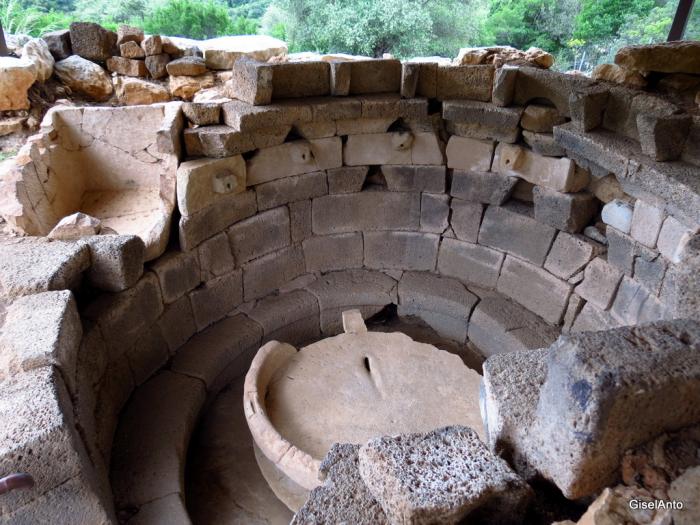
It is an insula similar to many nuragic villages in the Barbagia area, that grew up without any close nuraghes. It lies on the left side of Lanaittu, on the steep outcrops of Mount Uddè, about 300 meters above sea level. It dates back to a period between the Late Bronze and early Iron Age (12th-9th century BC) and is particularly important due to the presence of traces of metals fusion in the Nuragic age - an era in which man learned to extract and forge metals (bronze and iron), leaving behind the finds found in the numerous circular and oval huts that make up the village. One dwelling stands out for its singular architecture and ritual function: it is the 'source', a circular space with internal walls in dual-tone squared blocks - of white limestone and dark basalt - and carefully worked flooring. On the walls are carved mouflon heads in high relief with a hole through which the water, which came from the canal built into the wall thickness, gushed into the monolithic basin in the center of the floor. Near the hut you will see a large circular structure with steps: this was the pool for ceremonial ablutions, religious rites that involved the use of sacred water. This structure changed its use over time, becoming a storeroom for bronze objects waiting for a new processing cycle. It is probable that there was a casting workshop near the village.
In addition to sa Sedda 'and sos Carros, the Lanaittu valley also holds another nuragic site, the most spectacular of the island: the village of Tiscali. The green valley, which will appear sunny and solitary once you pass over passu malu (the bad pass), was inhabited long before the Nuragic age: it was a favorable environment for settlement since the Upper Palaeolithic, as shown by the remains of the Corbeddu cave.

Acquario di Cala Gonone
This is the largest and most modern structure of its kind in Sardinia. The aquarium of Cala Gonone, built in 2010 in the coastal village of Dorgali and set within a green park to symbolise the transition from the mountains of Supramonte to the sea, unites educational aspect (and environmental protection) with fun. You will be ‘immersed’ in 24 display tanks on a journey from the shore to the depths of the sea, passing rocky coasts and the open sea dominated by jellyfish, large snappers and sharks. This is a representation of the main marine habitats of the Mediterranean. You can come across the world of trumpetfish, see the camouflage capabilities of cuttlefish and octopus, dive into the dark hideouts and other spectacular environments of the Gulf of Orosei. In one of the most fascinating pools, dark rocks reproduce columnar basalt with an opening that has become a lair for eels and moray eels, whilst the lateral ‘terraces’ are home to scorpion fish. The open sea basin is the largest, divided into three sections across a number of levels - the first being naturally lit, the other two artificially illuminated to represent the kingdom of large pelagic fish, also home to sea urchins. A loggerhead sea turtle also lives here. Mediterranean and beyond: in the first pool, the only freshwater one, you will see the voracious piranhas, In the tropical seawater pools are a range of species in amazing shapes and bright colours that live in coral reefs. Tropical basins tell the story of the origin of an atoll and cases of evolutionary adaptations and symbiosis. The route ends with the tactile tub - learn to fearlessly feel a fish and touch sea urchins, starfish and hermit crabs.
After this ‘dive’ into aquarium life, the village of Cala Gonone can be explored, nestled on a steep hill that slopes down to the sea, an attraction for lovers of nature and adventure or for romantic boat trips. Relax on the golden sands of Cala Cartoe, Ziu Martine and Cala Osalla or, by the sea or on a trekking adventure, you can reach Cala Luna, the ‘pearl’ of the Mediterranean. A guided excursion will take you to the Grotte del Bue Marino, a spectacular ‘forest’ of stalactites and stalagmites, once the habitat of the monk seal, the evocative setting of the Cala Gonone Jazz festival. From the coast to the hinterland of Dorgali: cultural, food and wine traditions, archaeological attractions, including the museum housing the remnants of the Nuragic village-sanctuary of Serra Òrrios, with crafts (such as filigree jewellery and ceramics) and monuments of worship, or the churches of Madonna d’Itria and Santa Caterina. To be discovered is a natural heritage extending over 225 square kilometres, with the pride and joy of the Supramonte, the Valle del Cedrino and the Valle di Lanaittu.
Necropolis of Madau
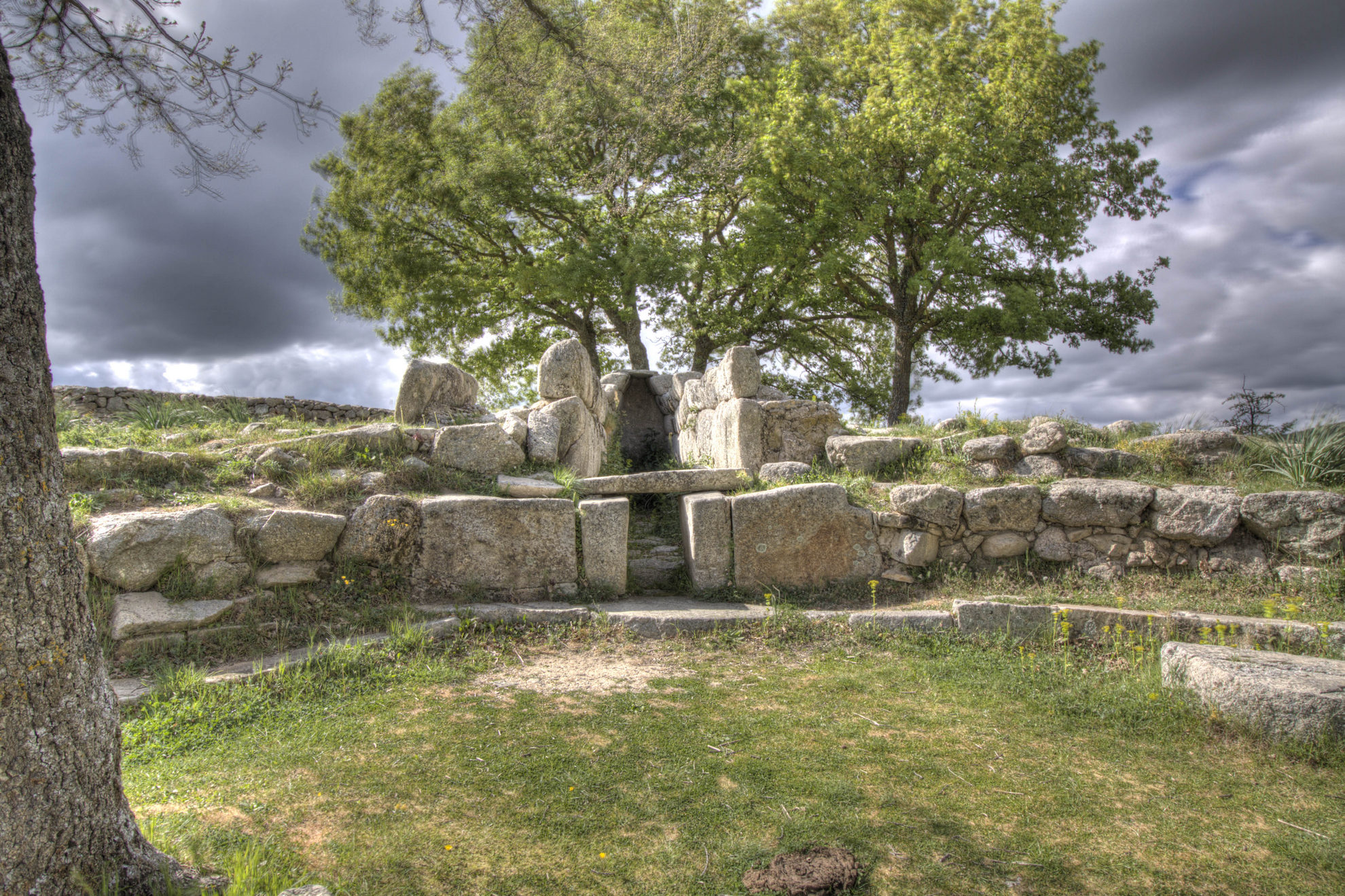
Near the hamlet of Pratobello, about 15 kilometres from Fonni, the ‘highest’ village of the island, a Nuragic necropolis with four similar Tombs of Giants arises, standing on a plateau in the midst of the splendid Riu Madau valley, at the foot of the Corr’e Boi passage, so-called because it looks like the head of a gigantic bull. The tombs, dating back to the early or late Bronze Age and perhaps connected to the nearby Nuragic village of Gremanu, are structured around an amphitheatre and face the rising sun. Two of them are well-preserved, having been excavated and studied between 1982 and 1986 by the ‘father’ of Sardinian archaeologists, Giovanni Lilliu.
After crossing a trail at the entrance of the archaeological area, one comes across the first and oldest tomb on the right. It looks like a sarcophagus made of large granite slabs set into the ground, delimiting the burial chamber. On the slabs magical-religious motifs and cups can be seen in the depictions. One is the Stela di Madau, which presents symbols connected to the cycles of Nature or, perhaps, to the constellation of the Pleiades. The next tomb is the most monumental. Having a 22-metre long funeral chamber and a wide exedra (24 metres around), its benches-seats (for votive offerings) delimit the space for funeral ceremonies. Relatives of the dead would have gathered around the still-visible hearth in this sacred place. At the centre of the exedra is an architraved entry door on which, perhaps, was the toothed frieze formed by two horizontally overlapping blocks, now lying on the ground. Accessed from the entrance is the funeral chamber, almost completely intact and made of perfectly-squared and horizontally-arranged stone blocks. The roof was created in ogive, with the flooring being part of an older tomb. The third tomb, alongside and similar to the previous one, is characterised by a large exedra that extends its arms until enclosing a large circular area. The entrance to the funeral chamber opens at the centre. Like the previous one, it was rebuilt on the remains of an older Dolmen tomb, as can be seen by the different masonry technique. The fourth tomb has not yet been explored. Interesting founds have been discovered in the necropolis, including Nuragic pottery, baetylus in trachyte, bronze bracelets and beads for glass-paste necklaces.
Sardinia, golf&more
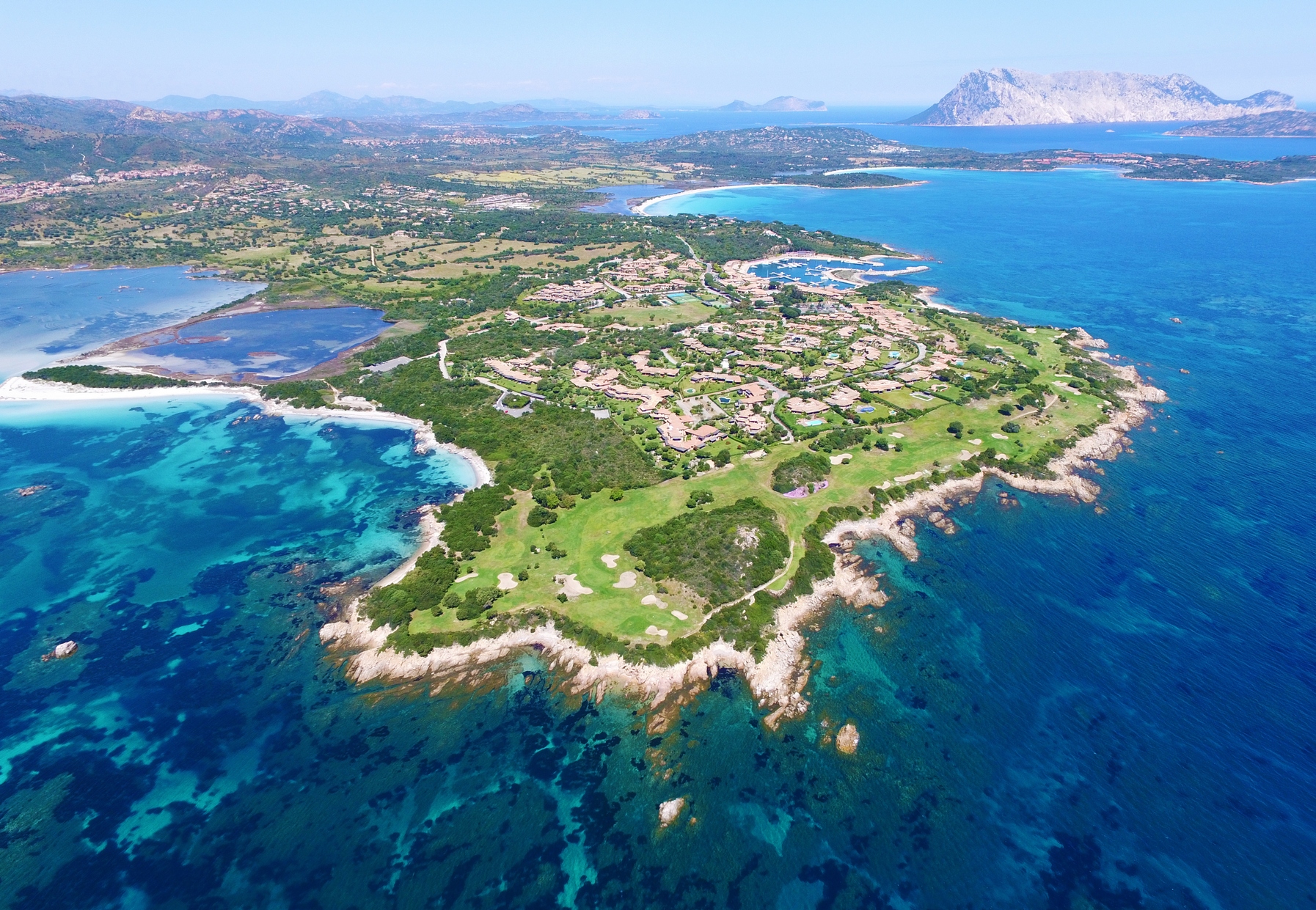
A mild climate and warm hospitality, thousands of years of traditions with varied and unparalleled landscapes: this is the setting where the Island's golf courses are located, places where you can combine a passion for sport with a charming holiday, in elegant environments, with high-quality services, wellness centres and delicious cuisine
Learn more: www.italygolfandmore.com

Villa Leni
Evidence recovered in the sites of Villacidro and other nearby villages tells us about prehistoric times and ancient history in the Medio Campidano province. In the Villa Leni civic archaeological museum, there are artefacts on display, ranging from the Neolithic period to the Copper Age and the Bronze Age and from the Punic Age to the Ancient Roman period, until the Early Middle Ages. The exhibition, which has been held since 2003 in the former grain bank, an evocative building dating back to 1761, is equipped with educational panels, two of which provide a scenic introduction to the landscape of the Villacidro territory from the Neolithic age to the 7th century AD. You can also gather information, supported by the guides, from illustrations of findings and detailed chronological outlines.
Ample space is devoted to the sites in Villacidro: you can admire the stone instruments from the Nuragic village of Cottega (12th century BC), a bronze model of a quadrilobed nuraghe (chosen as the symbol of the museum), Punic pottery, Imperial Roman grave goods from the incineration necropolis of Ruinas, in which a beaker made of meticulously crafted glass stands out, ceramic artefacts and bronze jewellery dating back to the late-ancient and Byzantine age. In Citra Villa, the first inhabited nucleus from which the current village (perhaps) emerged, the ruins of two thermal baths dating back to Roman times still remain.
Artefacts ranging from decorated pottery belonging to the Ozieri culture (3200-2800 BC) to bronze necklaces dating back to the late ancient and Byzantine period come from various nearby municipalities (Mogoro, San Gavino, San Nicolò Arcidano and Serramanna). The bronze ox-hide type ingots, associated with votive knives, are of particular interest and come from s'Acqua Cotta, and the earthen jar that comes from the nuraghe of su Sonatori, both sites in Villasor. Then there is a lithic model of a monotower nuraghe from Vallermosa, discovered in Matzanni.
Leni Villa is the first stage on the journey of discovery of Villacidro, the town in which writer Giuseppe Dessì - winner of the Strega Prize (1972) - was born, to whom the Dessì cultural park is dedicated, inside the splendid Mount Linas, the elevation richest in natural monuments, from the forest of Montimannu to the sa Spendula waterfall. The most illustrious citizen of Villacidro glorifies natural beauty and centuries-old agricultural and pastoral traditions of the 'mountain village'. The itinerary continues on with the museum of sacred art and with the pharmaceutical museum of sa Potecarìa. Among the religious buildings, the sixteenth-century parish church of Santa Barbara is a must and, among the municipal ones, there is the public washhouse, inaugurated in 1893.