

The fortresses of prehistoric Sardinia
The itinerary touching on the fortresses built in the Bronze Age starts in Sarcidano with the great nuraghe Arrubiu of Orroli, which looks out over Flumendosa Lake, and goes to Marmilla, where you will see one of Sardinian prehistory’s greatest landmark, the su Nuraxi at Barumini and another impressive prehistoric construction, the Genna Maria nuraghe at Villanovaforru
Journey length: 54 km
Road travel time: 1 h 13 min
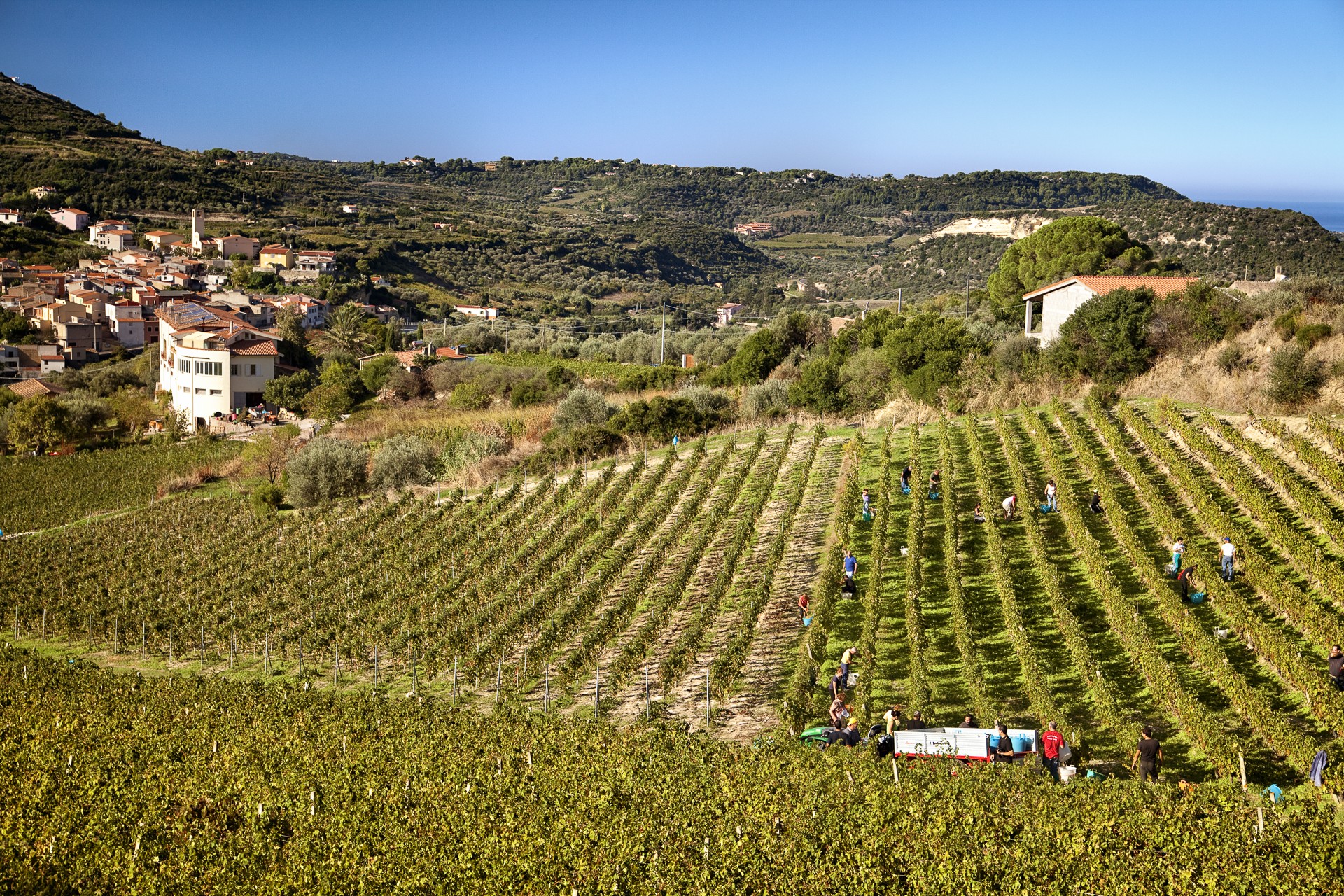
The Malvasia di Bosa route
One of Sardinia’s excellent wines and among the symbols of a territory in which the re-enactment of traditions is often accompanied by moments of sharing, conviviality and celebration. From Bosa, one of the Borghi più belli d’Italia (most beautiful villages in Italy), you will be following a short itinerary through villages very close to each other and surrounded by vineyards, each worthy of a visit, to discover their picturesque views and appreciate their flavours and hospitality.
Itinerary: 13,5 kilometres
Road journey time: 25 minutes in all for the various journeys
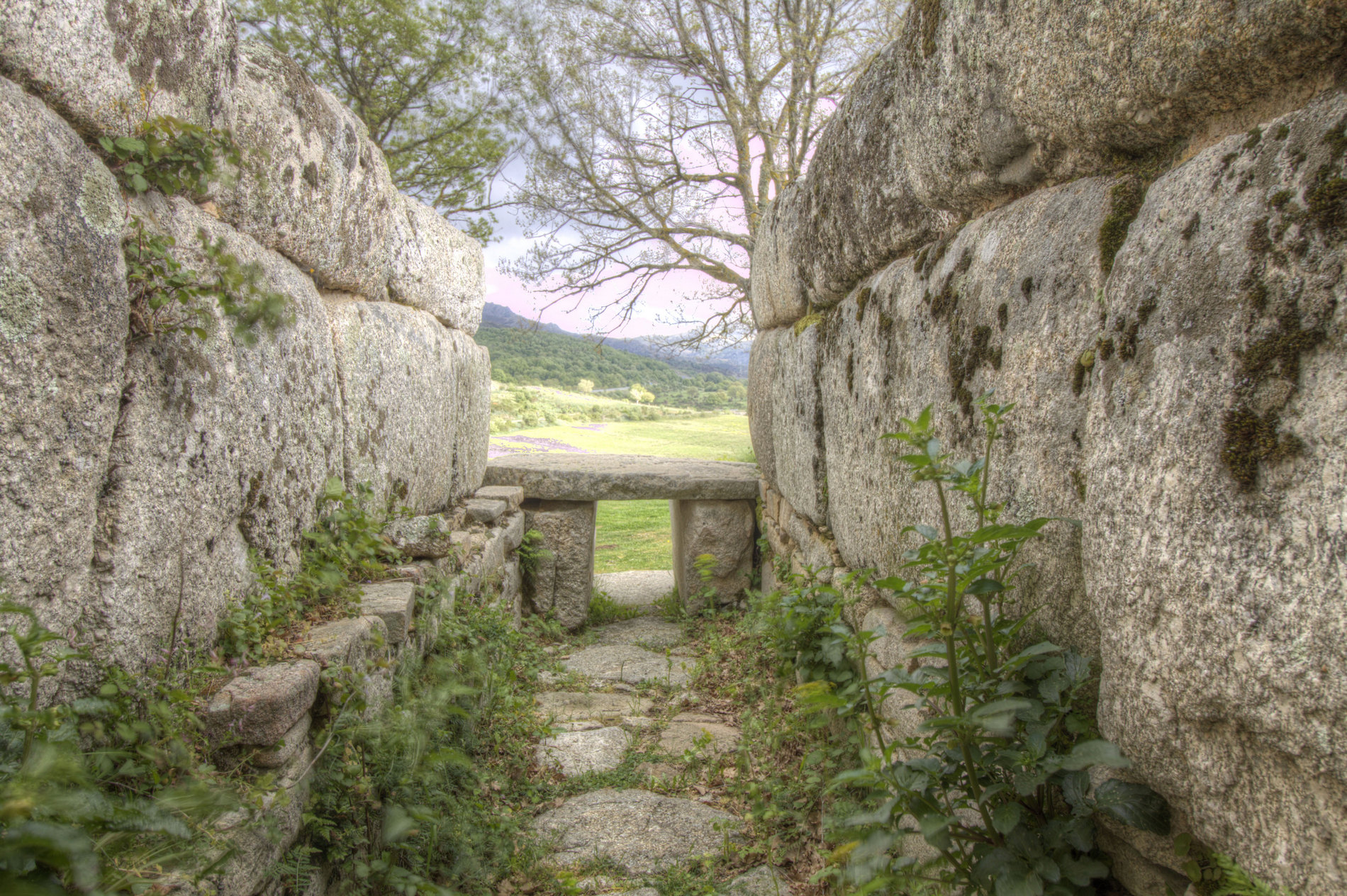
The Giants’ Tombs between legend and reality
According to fanciful theories and popular beliefs, they were the tombs of Cyclopean peoples, ancient inhabitants of Sardinia of whom no trace remains. Instead, it is the evolution of covered gallery tombs (or alleè couverte) starting in the Early Bronze Age (around 1800 BC). They are generally found in the area around nuraghi and villages and have often revealed fundamental artefacts for the study of the Nuragic age. They were probably a place of mysterious rituals and some still believe that the stones with which they were built release a mysterious energy.
The route starts inside an evocative forest in Ogliastra and heads north alongside splendid water landscapes, ending on the slopes of Gennargentu.
Itinerary: 42 km
Road travel time: 1 hour
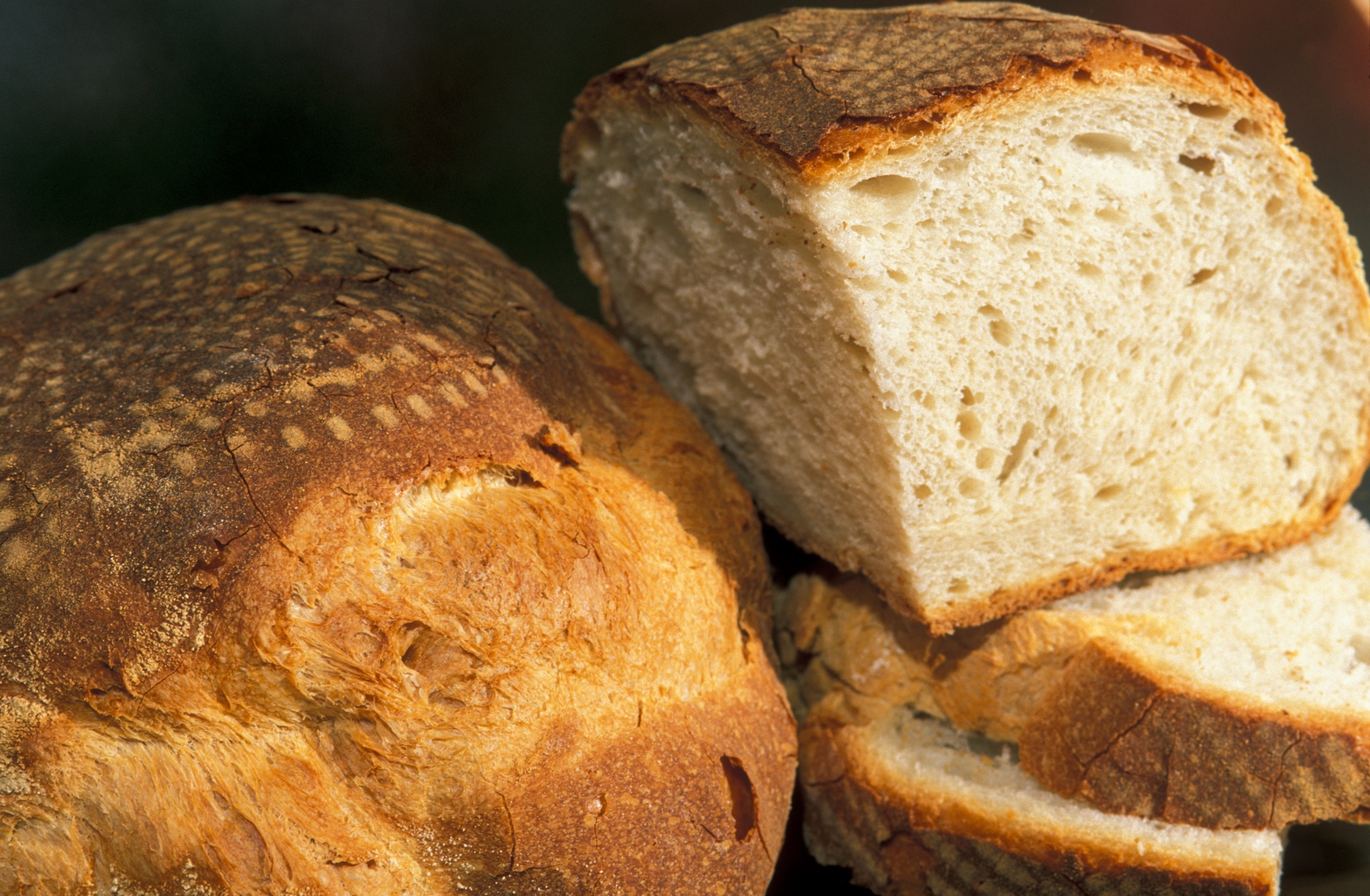
Food trail: discovering civraxiu bread in Sanluri, Giba and Santadi
Sanluri, Giba, Santadi
Journey length: 82 km
Road travel time: 1 h 30 min
Find out more
Find out more
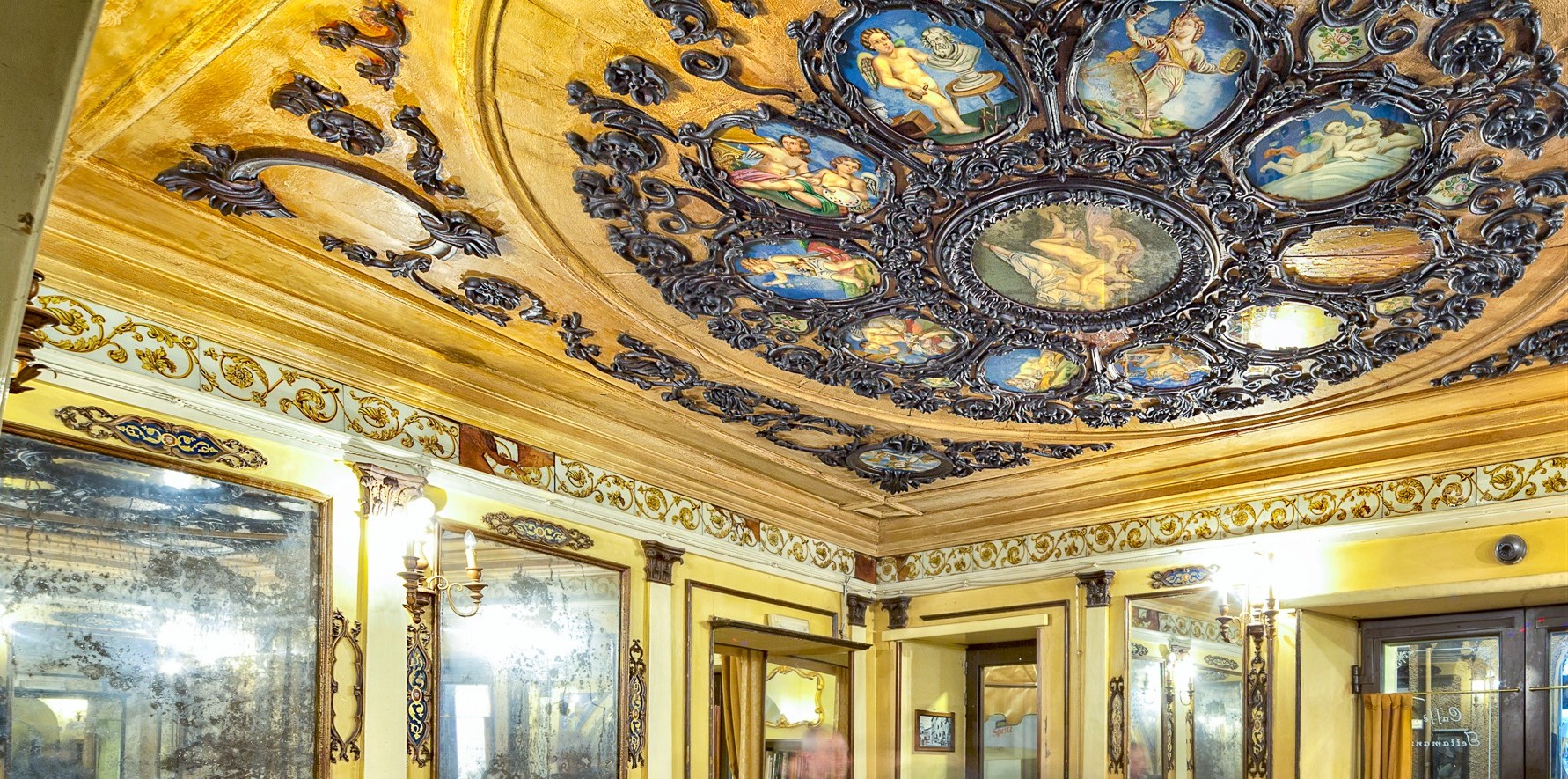
Salvatore Satta’s Nuoro
A famous, respected jurist in life and only ‘discovered’ as a novelist after his death, thanks to ‘Judgement Day’. On the pages of his masterpiece, Salvatore Satta reconnected the thread of his memories of Nuoro during his youth, describing a small town undergoing transformation and a collection of extraordinary characters. His Nuoro is “located at the point where Mount Orthobene (...) almost forms an isthmus, becoming a plateau: on one side, there is the terrible Marreri Valley, marked by the Passo dei Ladri (Pass of Thieves), and on the other side the meek, if anything can be meek in Sardinia, Isporòsile Valley”. The protagonists of the novel are the two historical centres: Santu Pedru, the shepherds’ district, and Seuna, the farmers’ district, each one represented almost as a microcosm. Between them is the “Corso”, or Corso Garibaldi, and the “Palazzi dei Signori” (Noble Palaces) around the cathedral.
Itinerary: about 1 km
Walking journey time: 15 minutes

Monuments and landscapes at the foot of the Giara
Its outline is unmistakable: a plateau of volcanic origin that rises between the valleys and hills of the Marmilla region, in the territories of Gesturi, Setzu, Tuili and, encroaching on the Sarcidano area, in that of Genoni. The Giara di Gesturi plateau is a place where you’ll find the little Giara horses living in the wild and typical is paulis, depressions that fill with rainwater in the cold seasons. All around, you’ll see a multitude of Domus de Janas and nuraghi and a ‘crown’ of villages bound to cultural traditions and excellent artisan products, food and wine. They are all close to each other, but each one has its own distinctive characteristics waiting to be discovered.
Itinerary: 20 kilometres
Road journey time: 30 minutes in all for the various journeys
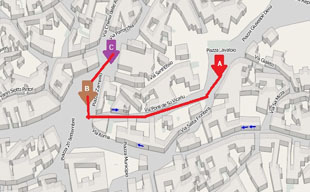
Literary trail: Giuseppe Dessi's novel “Paese d’Ombre” (The Forests of Norbio)
Villacidro Wash house, Grain Bank, Parish Church of Santa Barbara
Villacidro is a small town in the Medio Campidano region, in south-western Sardinia. Together with a cluster of other small towns, it belongs to a Culture Park centred on Sardinian writer Giuseppe Dessì, who spent the greater part of his childhood in Villacidro where he set his most famous novel, “Paese d’Ombre” (winner of the Strega literary prize in 1972, translated into English as “The Forests of Norbio”) giving his hometown the fictional name of Norbio: ''Then, around a curve, he saw the tiled rooftops of Norbio. The rounded top of the bell tower, with the iron cross and the lightning conductor stood out against the gray sky.”
Journey length: 0.9 km
Road travel time: 2 min
Read the book
Visit the website
Scheda sulle opere di Giuseppe Dessì
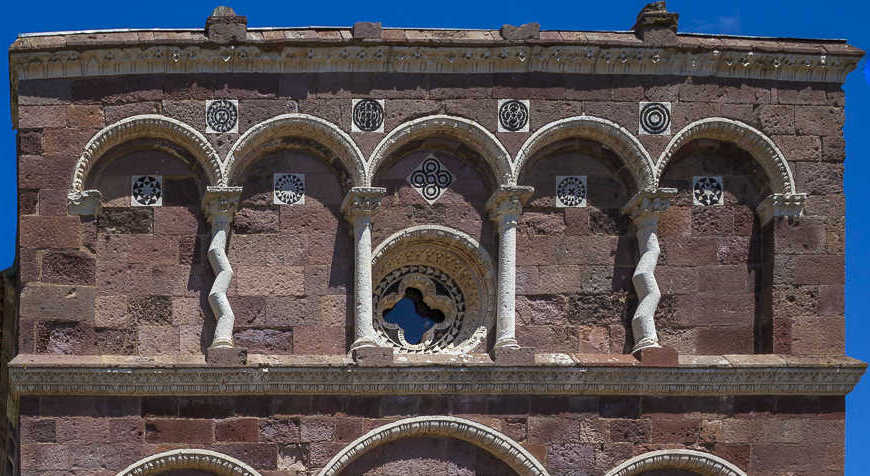
From golden limestone to volcanic rocks
San Gavino di Porto Torres, Santa Maria di Tergu, San Pietro del Crocefisso di Bulzi
A fascinating route winding between the sea and the hilly countryside around Sassari. The golden-hued stone walls of the Church of San Gavino in Porto Torres start us on a journey leading to the pink tones of the fine Church of Santa Maria di Tergu and the spectacular striped facade of San Pietro del Crocifisso near Bulzi.
Journey length: 47 km
Road travel time: 1 h
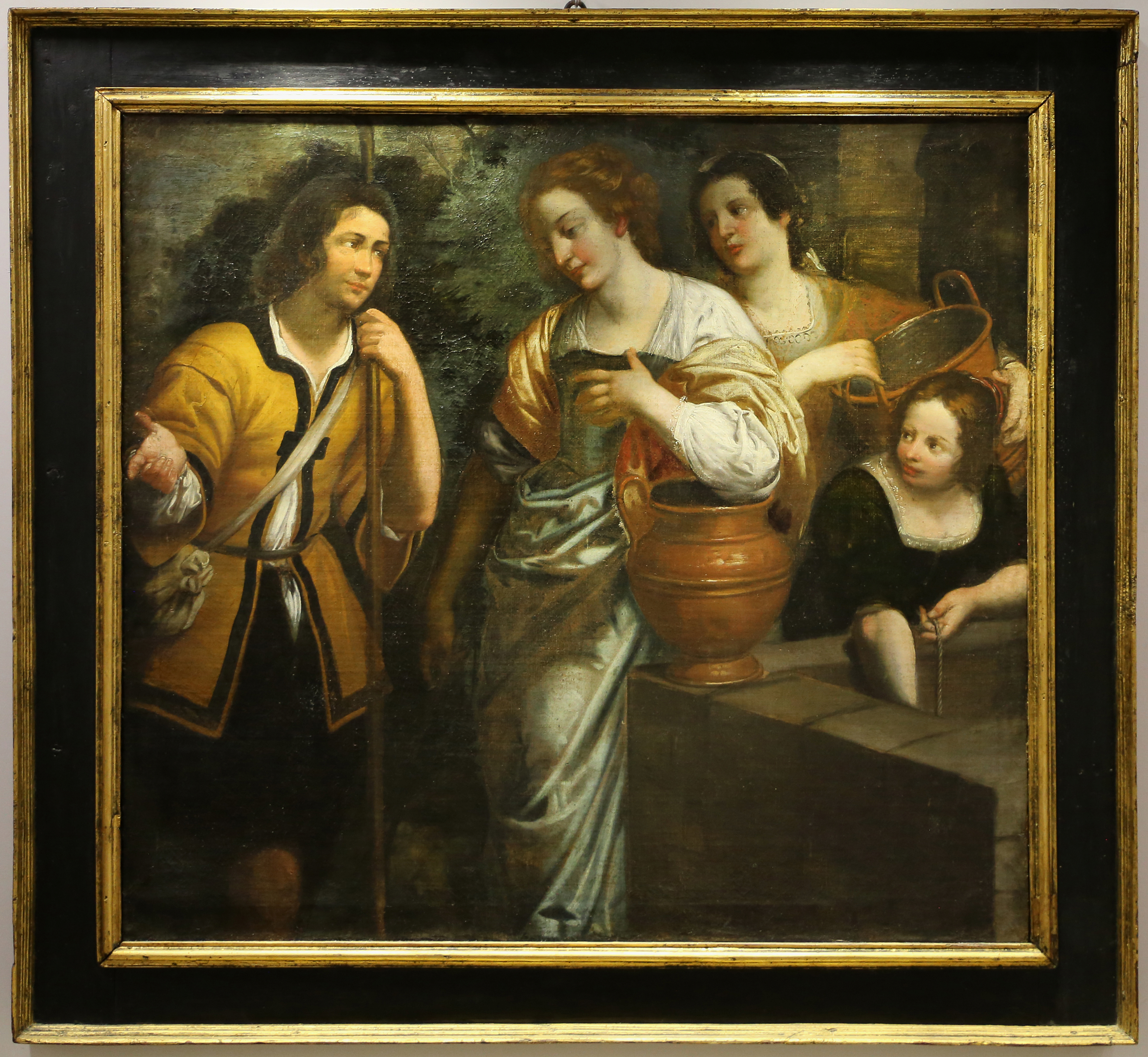
Painting itineraries in Cagliari
From the medieval altarpieces of Spanish origin in the Picture Gallery to the contemporary paintings kept in the Municipal Art Gallery, as well as Renaissance and Savoy canvases: Cagliari offers the possibility of a fascinating tour in search of works of great historical-artistic value. Often in places that are, in themselves, worthy of a visit, such as the Cathedral or Palazzo Bacaredda, better known as the Palazzo Civico (Town Hall). The short, pleasant walk links two historic districts, Castello and Marina, adding other ideas and points of interest to the itinerary.
Itinerary: about 2 km
Walking travel time: 30 min

Neoclassical forms in the heart of Oristano
The ‘mark’ of Gaetano Cima, one of the most famous nineteenth-century Sardinian architects, is strongly impressed in the ‘attire’ that Oristano used in one of its most iconic city spaces, Piazza Eleonora, and in the surrounding streets. The city’s ‘salon’, famous for the Sartiglia, an equestrian tournament, for its noble judicial past and for Vernaccia wine, is characterised by buildings in which friezes and elements stand out, reminding us of the classical world. There are two important places of worship nearby: the church of San Francesco and the Cathedral, the ‘mother church’ of the Archdiocese of Arborea, which also display elements of the same architectural style.
Road journey time: The various places to visit are just 5 minutes away on foot