

Su Carroppu
Prehistory in the Sulcis area, and in Sardinia in general, gained a new chapter in 2012. The first traces of the presence of humans have always been attributed to the ancient Neolithic period (approximately the 6th millennium BC), while, in reality, a finding in the site of Su Carroppu on the limestone hills of Sirri, an agricultural ad pastoral district of Carbonia, moves the date to three thousand years earlier. The period in which humans frequented the shelter under the rocks in this part of the Sulcis area dates back to the Mesolithic era: bones were found here and radiocarbon dating places them at 9000 BC, representing scientific proof, after endless unconfirmed suppositions, of the new dating of prehistoric Sardinia.
The shelter of Su Carroppu was first used sporadically by man and it was later populated assiduously in the Ancient Neolithic period (6000-5300 BC). The settlement was also used as a burial place. A civilization developed and was exclusive to Sulcis, hence taking the name of Su Carroppu Culture. Thanks to the excavations in the little and quite shallow (approximately ten metres) cave, numerous pottery fragments were found, the oldest of which from prehistoric Sardinia, made of course, greyish-black material, mostly very thick with brown surfaces with blackish spots. These are fragments of pots, bowls and bulging-shaped dishes, all with convex sides and small looped handles. They have decorations obtained by exerting slanting or vertical pressure on the raw material: an incredible variety of ornamental patterns, with horizontal or slanting stripes, bands of broken lines, internally dotted triangles and other backgrounds that tend to cover the entire surface of the pots.
There is also an abundance of obsidian artefacts, possibly from the nearby Monte Arci - where Sardinia's best preserved ruins of a Phoenician-Punic colony are located – including various shapes and sizes, known as ‘geometric microliths’, small elements that are triangular, trapezoid or circular-segment shaped with a sharp side. Furthermore, the first signs of agricultural activities were also found here. The artefacts are partly kept in the archaeological museum of Villa Sulcis in Carbonia and partly in the National Archaeological Museum of Cagliari.
Cabras
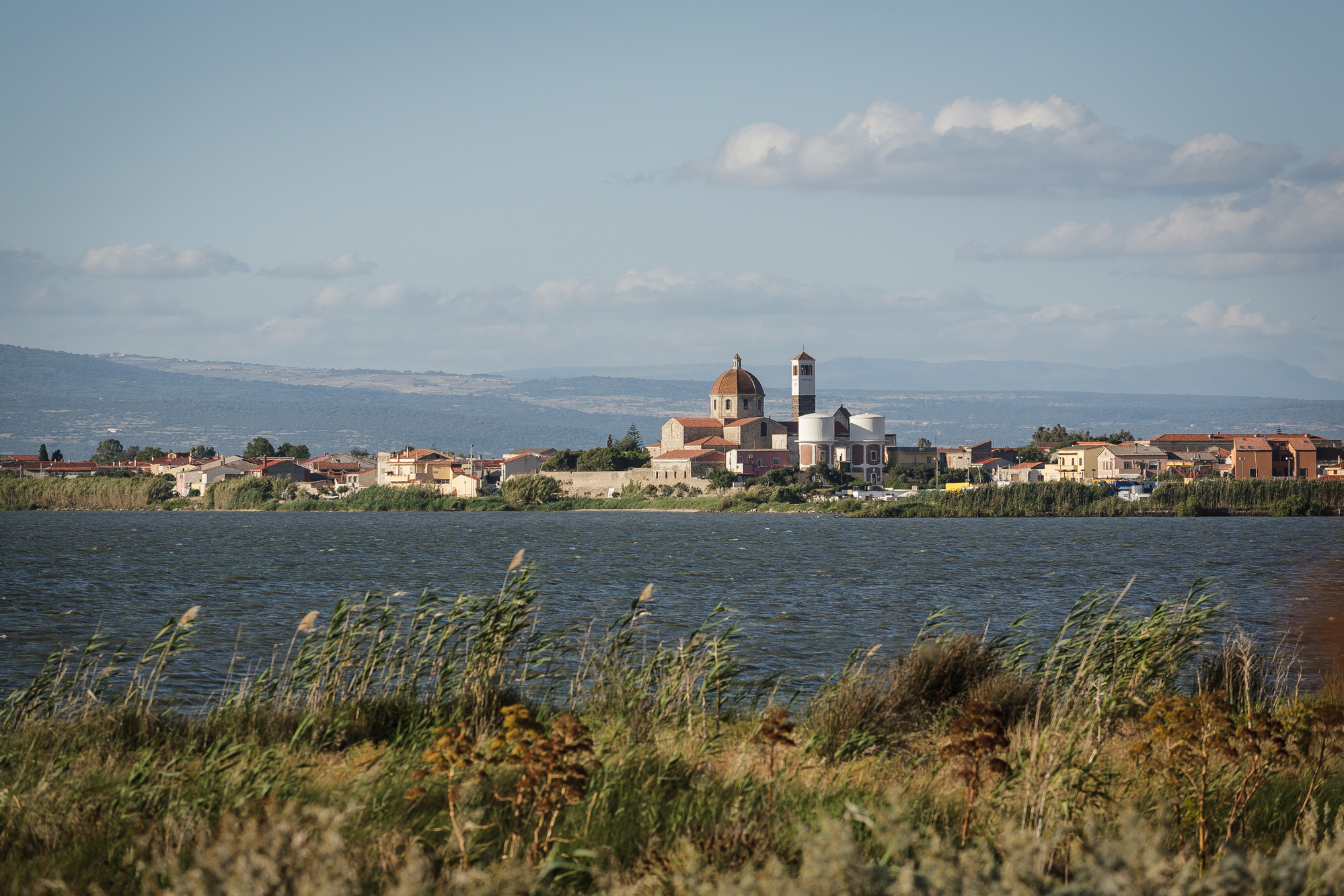
It is the ideal place for a holiday in the pursuit of nature and culture. Cabras looks out onto about 30 kilometres of coastline, where the marine area of the Sinis peninsula stretches between the bay of Is Arenas and the Gulf of Oristano. The protected area also includes the island of Mal di Ventre and the little islet of Catalano, where the wreckages of ancient ships lie on the seabeds. Opposite, on the Cabras coastline, beaches of fine grains of quartz emerge from the turquoise sea, formed by the action of the wind and water on the limestone rocks in the area: don't miss the three wonders of Is Arutas, Maimoni and Mari Ermi. Their beauty will bewitch you. Other equally beautiful beaches with fine white sand are those of San Giovanni di Sinis. Along the road to Is Arutas, you can give your holiday a different touch, by passing through San Salvatore di Sinis. Its low houses, grouped around a central spring, have caught the attention of film directors: 'Garter Colt' (1968), belonging to the 'Spaghetti Western' subgenre of Western films, was filmed here.
Cabras is a very ancient village and in which there is evidence of the Neolithic period, with the site of Cuccuru is Arrius and numerous nuraghi. It can be dated as far back as the Iron Age (8th century BC) and is the greatest archaeological discovery of the late 20th century in the Mediterranean Basin: the statue complex of the Giants of Mont'e Prama, colossal stone sculptures discovered in a large burial area on the hill, partly on show at the town's Civic Archaeological Museum, which was named after the illustrious local personality Giovanni Marongiu. Today, they are a symbol of Sardinia’s identity. Continuing your archaeological visit in the territory of Cabras, you must not miss a chance to travel back in time to the ancient town of Tharros, founded by the Phoenicians in the 8th century BC on what was previously a Nuragic village. Sardinia’s history is summarized in this location: a flourishing centre of trade in the Phoenician-Punic period, an urbs romana, then Byzantine, first capital of the Giudici period and frequented until the Middle Ages.
Another attraction in Cabras: fishponds providing top quality fish, like grey mullet, the eggs of which are used to produce bottarga (fish roe), the 'Sardinian caviar', used by the best restaurants to enrich their dishes.
Nostra signora di Valverde
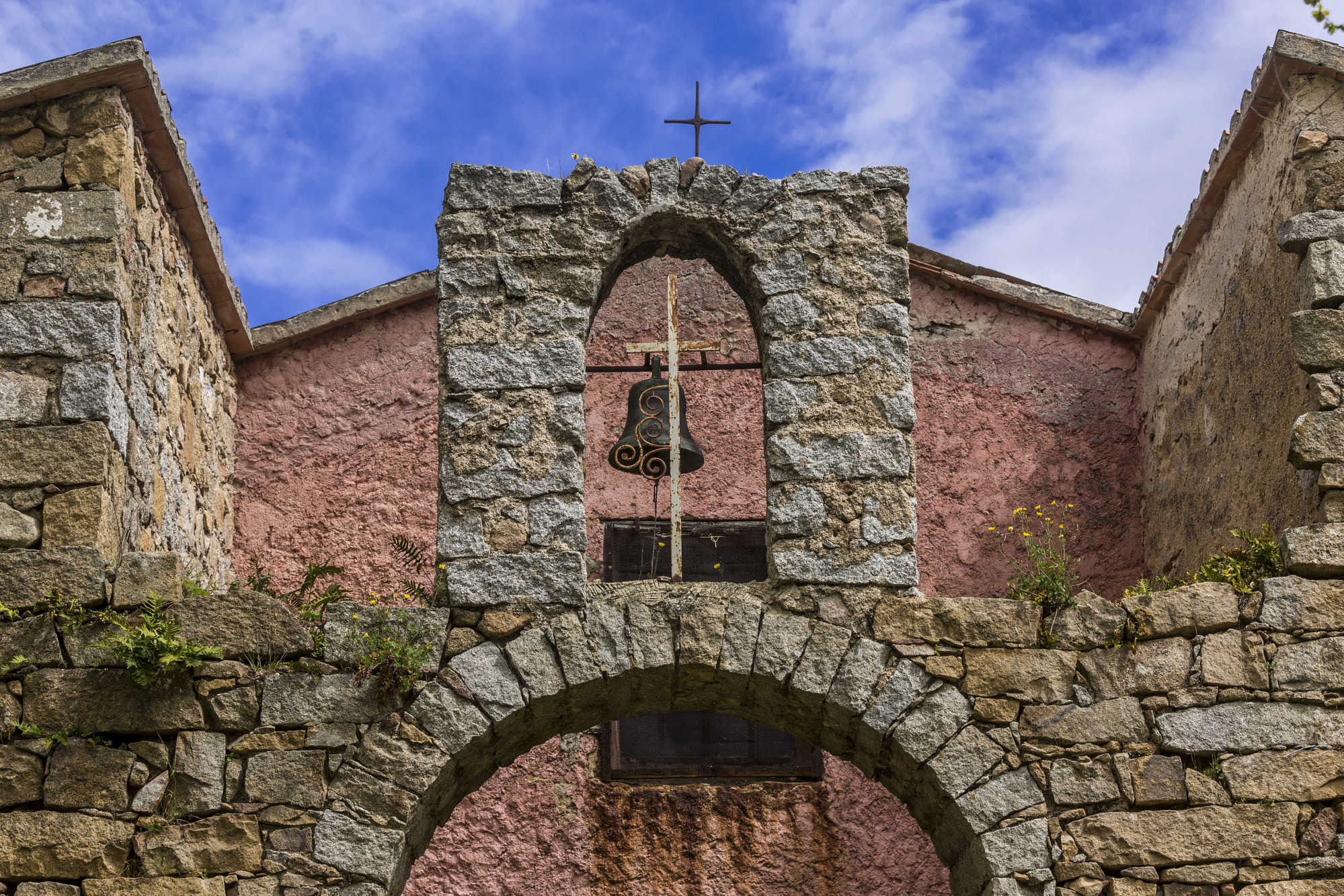
In a place of great allure and beauty outside of the city of Nuoro, a place known since remote times as Balubirde or Palu Birde, is a little country church dedicated to the Madonna. It was built in the late XVII century at the behest of a devout Nuorian lady, Nicolosa Solis Manca, who wanted to call it Nostra Signora di Valverde and to donate half of the tanca she owned in Goine to it.
On 8 September, the faithful climb up the slopes of Ortobene in a procession featuring a novena to reach the little church and thus inaugurate one of the most heartfelt of local religious festivities.
This area has, since prehistoric times, been frequented for religious reasons. There is a domu de Janas burial chamber at Borbore, also known as Valverde. It has a square courtyard you reach passing under a granite archway. The funerary chamber is unique and can also be accessed from the sides. Obsidian relics and stone axes were found here, and many believe the shrine was once used to worship water and the god Pan. Underground burial chambers, the most famous of which are the sas Birghines, were dug into the rocky slopes of Ortobene. Along the road you’ll find another fascinating church, the Nostra Signora della Solitudine built in the middle of the XX century, probably on the site of the ruins of a church from the XVII century. It is here that the Nobel author Grazia Deledda was laid to rest. She dedicated a novel to this little building, which has also been embellished with a bronze door designed by the artist Eugenio Tavolara.
Flumendosa
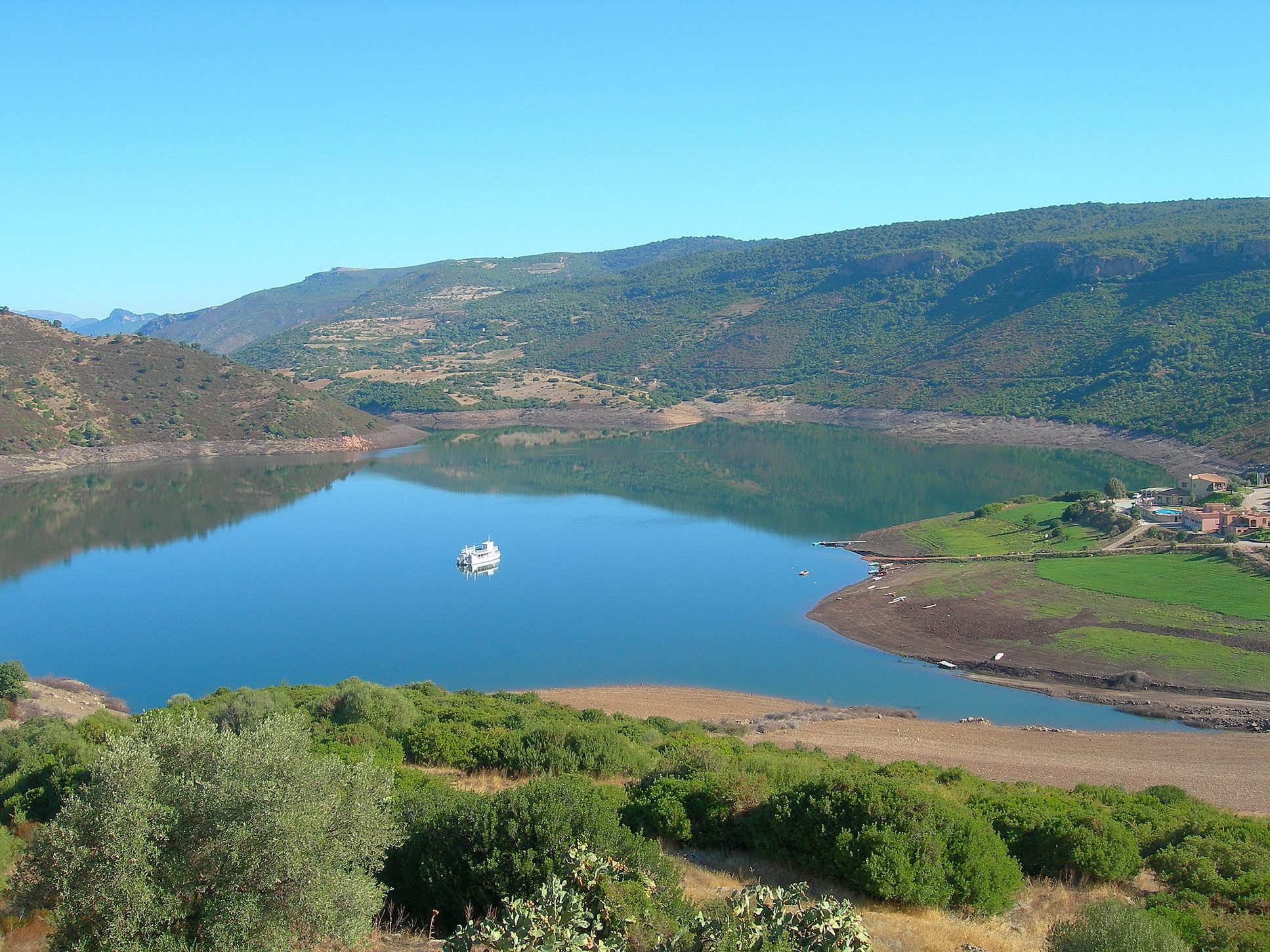
At first sight, from afar, it looks like a shining gem, its sparkling water nestled between mountains that, together with the rocky outcrops, create spectacular contrasts of light and shade. Medio Flumendosa lake is the catch basin of the eponymous river, which flows through the south-central part of Sardinia for 127 km. The river is cut by two dams. The first one is the six kilometre long, 1½ km wide Bau Muggeris gorge at an altitude of 800 metres while the second dam created the spectacular Flumendosa lake, a 17 km long and 500 metre wide basin in the Sarcidano and Barbagia di Seulo area constructed at an altitude of 268 metres in 1952 to generate energy and irrigate the fields of the Campidano region.
The deep blue lake is a wonderful place to go boating and you’ll enjoy the truly memorable experience of floating over it in a Mississippi-style paddle boat complete with upper deck to take in the scenery. The lake is also a great place to enjoy romantic (and family) outings canoeing, sports fishing and wakeboarding. The embarkation point is by the little green Trenino Verde train stop which, along with the paddle boat, are the only way to explore this delightful wilderness area of Sardinia.
In this ‘lake district’ – Flumendosa and Mulargia, linked by a tunnel, and Is Barrocus – nature presents herself to us with breathtaking and unexpected views of landscapes in which to go hiking, visit archaeological sites and enjoy fine food and wine. Start out from the lakes, cross over mountains and hilltops, forests and waterfalls, caves and canyons all the way to the steep cliff walls of Isili, famous for its rock climbing. As the scenery changes, the activities multiply. You will come across amazing natural monuments like the one-of-a-kind su Stampu de su Turrunu – a karstic phenomenon featuring a water that flows through a sink hole to then resurge into a cave as a lake – and the waterfall and caves of Sadali. There are also a variety of not-to-be-missed archaeological sites: the menhir-statues of Goni and Nurallao and the nuraghe architecture of Is Paras (Isili) and Nuraghe Arrubiu (Orroli). Each place is an expression of its own ancient traditions, reflected in the local specialities it offers: bread and cheese, olive oil and wine, flavourful meats and tasty desserts.

San Sebastiano
The church of San Sebastiano sits on an island in the middle of the lake and its reflection in the water creates a lovely panorama of plays of light and colour. The lake is named after the church, which you can reach by swimming to it or in a canoe to see for yourself how many of the ancient legends surrounding it are true.
The Lake of San Sebastiano is in the Isili district and was created by the is Barrocus dam that catches the water of the Mannu river. Along the river’s banks, the lake’s shoreline and all around the surrounding area you can go sports fishing, canoeing, rock climbing and hiking. The route of the little Trenino Verde train runs along the water’s edge and then goes on to Sorgono. The old and now abandoned railroad line that headed towards the Medio Campidano is great for mountain biking and hiking.
San Sebastiano lake is also fed by the rio Corrigas river, along which rise steep cliffs formed some 23 million years ago when much of Sardinia was still under water. Rock climbers come here from all over Europe to climb its sheer rock face, home to more than three hundred climbing routes of various levels of difficulty. All year round, internationally ranked professional free climbers come to the calcareous rock faces found in the is Barroccus area, especially the faces of su Pizzu ‘e Nedda, which rise in a narrow gorge and create beautiful canyons.
The landscape around Isili also includes gently sloping fields of crops, flat plains and fertile countryside. Here you can go on delightful nature walks, horseback riding and cycling, and stumble upon a myriad of prehistoric remains: menhirs megalithic tombs, domus de Janas chambre and 48 nuraghes, most importantly Is Paras, Atzinnara and Nuraxi Longu. There are also traces of Roman and Punic settlements, like the two arches of a bridge over the Brabaciera river constructed in the II and III century CE. The town’s historic centre is also not-to-be-missed, home to churches containing priceless art and the museo per l’Arte del Rame e del Tessuto (Copper and Textile museum), the only one of its kind in Sardinia. One of the town’s most important events is the Bistiris e Prendas, when 400 men and women clad in traditional dress from all over the island gather in a procession.

The Carmelitane cloister
The majestic Monastery of the Carmelitane Scalze (Barefoot Carmelites) has been defined as a “marvellous miracle of Divine Providence” and sits alone, silently on Cuccullio hill, three kilometres outside of Nuoro. Its French architect, Savin Couelle, designed it to house 24 monks and was one of the forefathers, if you will, of the Emerald Coast. He was enamoured of Sardinia and did not leave it, desiring to repay his debt for the hospitality he had received by creating (of his own volition) another masterpiece. The bulk of the monastery looks like a castle on a hilltop, grandiose outside, poetic inside.
The image of it as an austere monolithic fortress evaporates as soon as you enter and discover the genius of the architect and his talent in using humble materials combined with fine and elegant lines. The result is a fluid architecture made of patterns, symbolism and plays of light. The work contains theological messages like the destruction of Christ and the deep humiliation of the Cross. The octagonal dome that closes the church symbolises the eighth day, resurrection and new life. The development of the building is vertical. Once inside you’ll go down to the altar, the lowest point, whereas you go up to the basin, the summit of the apse, together these features represent the Ascension. The building is graced with higher and lower areas that represent life’s own struggles. The tabernacle set in the rock, on the other hand, is an echo of the nature that surrounds Nuoro, just like the huge shell – brought in from Mauritius – symbolizes the sea and the island. The wooden statue of the Virgin Mary – hence the consecration Mater Salvatoris – came from the United State of America. It is damaged and burnt because it dates to the French revolution when the Jacobins desecrated religious symbols out of disrespect. On the side walls are four small bronze crosses bearing the date the church was consecrated: 20 May, 1994.
Archaeological museum of Olbia
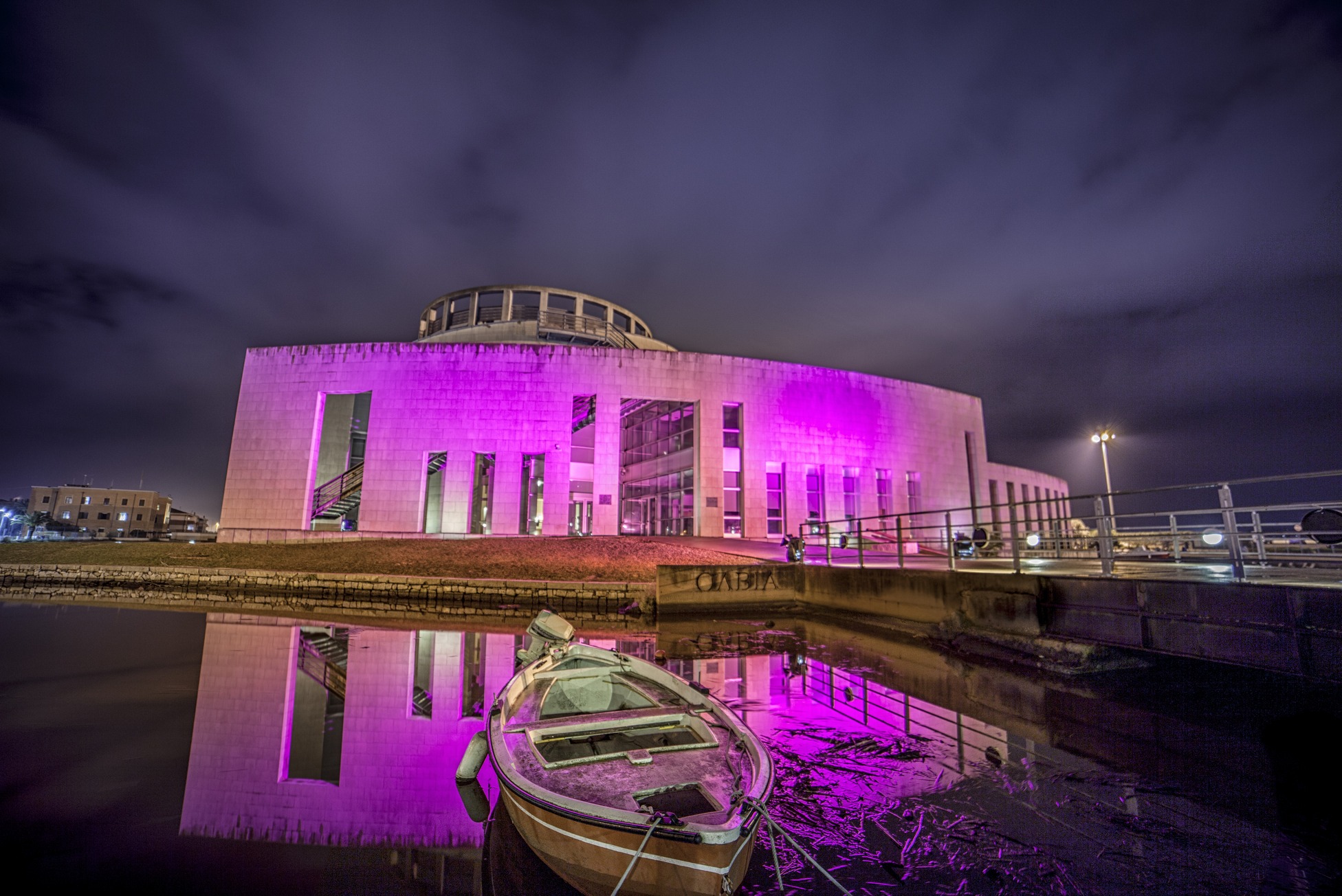
The history of Olbía, Greek for “happiness”, of its harbour and the thousands of years of layers of culture. On the small Peddone island a short walk from the old port is the archaeological museum of Olbia, the Gallura region’s main city, home to an exhaustive collection of relics from the ancient civilisations that thrived in Sardinia. As an homage to its location on the sea and the role the port city played in the island’s history, the museum is shaped like a ship at anchor, with portholes and hanging walkways. The exhibition is dedicated to the history of the port and city and focuses on the Phoenician, Greek, Punic, Roman, medieval, modern and contemporary eras.
The museum has two levels. In the first hall on the ground floor are the ancient masts and rudders of real ships and the reconstruction of two laden cargo ships that were burned down during an attack by Vandals in about 450 CE. In the fourth room you will get a feeling, by way of a projection, of what the attack was like, with the sinking of eleven ships, an event that marked the end of the Roman era in Olbia. The second and third halls display other remains from the port, including a medieval shipwreck, the only one of its kind in Italy. A model of the harbour as it was in the 2nd century CE can be found in last hall. The first hall on the second floor focuses on pre-Nuragic and Nuragic eras, Phoenician settlement (750 BCE) and Greek occupation (630-520 BCE), when Olbia was the only Greek port in the western Mediterranean Sea. Greek relics were, of course, unearthed during digs here. The second hall is dedicated to the Carthaginians, symbolized by the granite stele featuring the goddess Tanit, and then the Romans. The third hall is home to terracottas, funerary items and amphorae dating to when the Punic civilization gave way to the Roman one, while the following room documents Olbia in full Rome era (from the mid-1st century BCE). You will see sculptures like the heads of the Emperor Domitian, the Empress Domitia and an extraordinary one of Hercules, the city’s most revered divinity. The fifth room deals with the relationship between Roman Olbia and the Mediterranean, as well as the traumatic advent of the Vandals. The items on display include clay lamps, coins, rings, necklaces and an Egyptian statue of the god Osiris. The last hall on the upper floor is devoted to the Byzantine era, when the city was reduced to a mere town, and then subsequent periods: as the capital of Gallura, during the Spanish-Aragonese period (when it was called Terranova), the Piedmontese era, during Italy’s unification and afterwards.
The volcanic craters of Meilogu
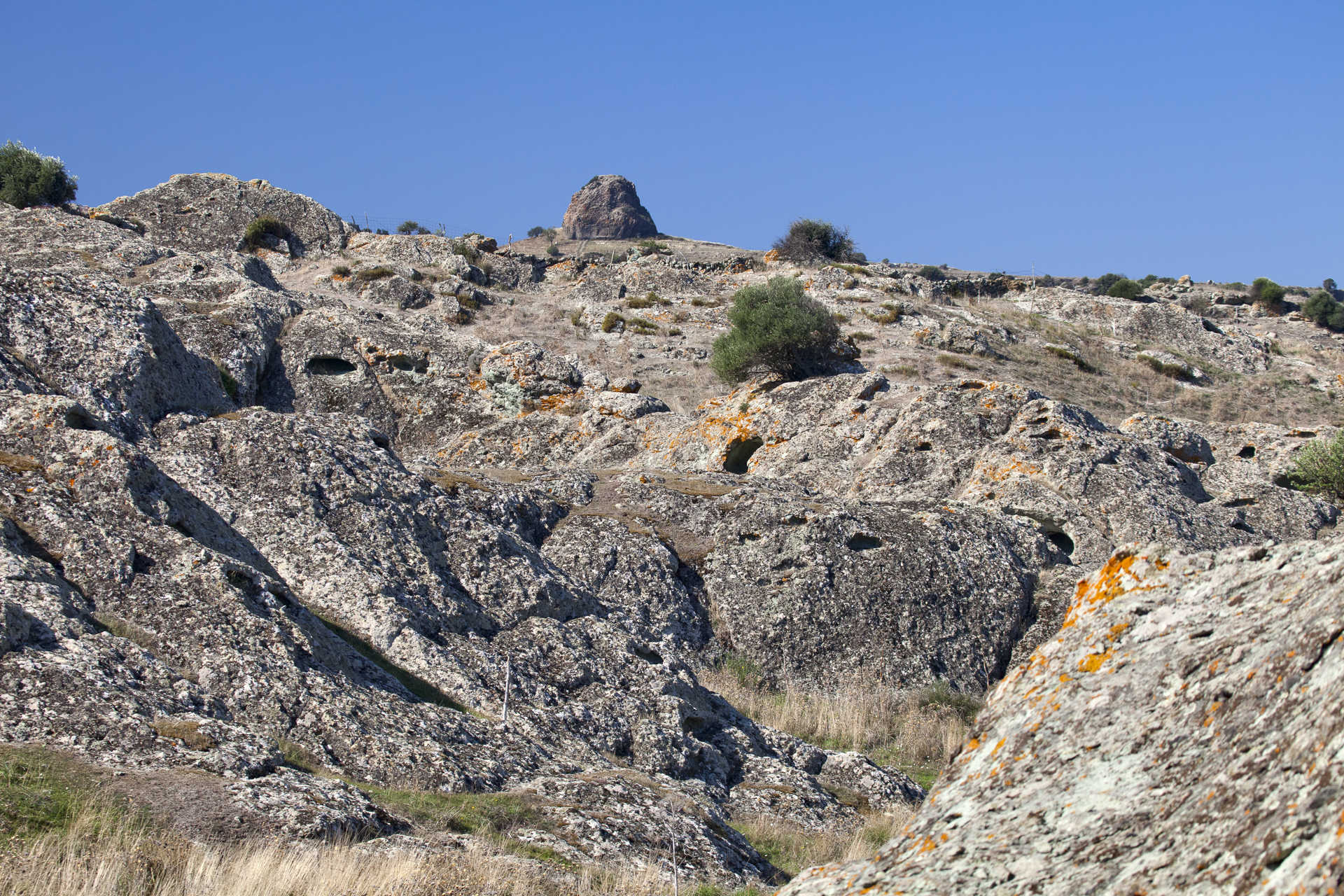
Santu Bainzu hill in Thiesi with two small, almost twin, volcanic peaks, Pabulena at Ploaghe and Ruju at Siligo, the beautiful Mt. Annaru-Pòddighe of Giave and the tabular profile of Mount Pèlao are all in the area of various towns in the Logudoro. A series of five solitary craters stand out in more than 20 thousand square metres of the Province of Sassari. They were declared protected natural monuments in 1994 and together with other volcanic cones – including Cuccureddu of Cherémule and Oes of Torralba – dot the historical region of the Logudoro-Meilogu. A land of extinct volcanoes, home to unusual and unique landscapes: cinder cones and volcanic flows give it its peculiar conformation, with crests at times small and pointy, other times ones round, all here and there separated by flat intervals.
Mount Annaru-Pòddighe is the most characteristic one. Almost 500 metres high, it is an almost intact crater. It is from here that lava flowed, solidified and was then filled with sediment to become the vast plateau north-east of Giave. It is an isolated area, an ideal place for some great walks, especially in autumn and winter when a small lake forms at its centre. You can go down into the crater in summer to see the 50 metres high walls and the original geological structure. Just south of you’ll find sa Pedra Mendalza, and south of the mountain is a resurfaced volcanic conduit on whose slopes crows and goshawks nest.
All of Meilogu will fascinate you, both for naturalistic and historical reasons: from the cinder cones to the flat plateaus (mesas), from the thermal mineral springs to the woods and pasture fields, from traces of prehistory to those from medieval times. The area around the craters is home to Sardinia’s highest density of domus de Janas and nuraghi, the Valle dei Nuraghi with thirty complexes within a range of just a few hundred metres. Some are very famous, like Santu Antine at Torralba and nuraghe Oes, built with blocks of basaltic lava from the craters of mounts Annaru and Cuccureddu. The finds from some 200 nuraghi, of the 350 known in Meilogu, can be seen on display at the museum of Torralba.
Su Stampu de su Turrunu
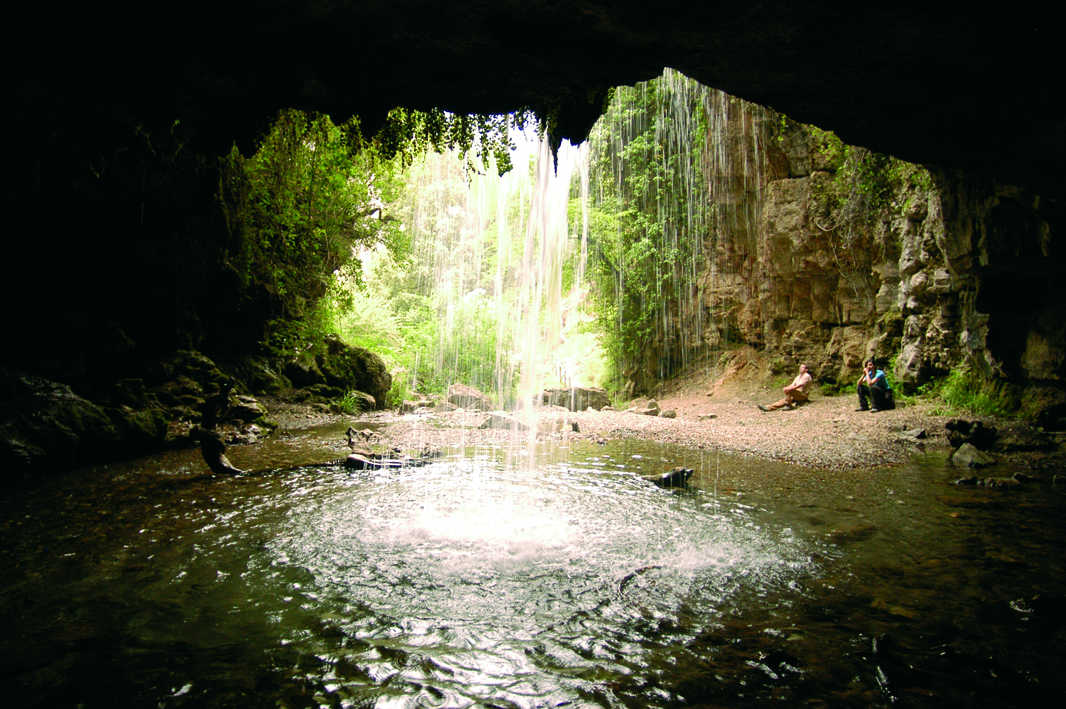
Nestled in the verdant nature of the Addolì woods, between Barbagia and Ogliastra, on the border between Seulo and Sadali, is a small masterpiece of nature that is a hole, a cave and resurgence with waterfall and lake. Su Stampu de su Turrunu is a unique hole carved into the Jurassic rock of the Tacchi – characteristic steep sided reliefs – by the erosive action of water that flows into a small cave with a stream, su Longufresu, that then drops 16 metres into a pool and finally flows downwards into the valley below.
A karstic phenomenon of uncommon beauty, a sound of a waterfall set in the verdant green that splashes into the pool below, the silvery glimmer of clear water that enlivens the entire area and makes it one of the loveliest natural monuments in all of Sardinia. The water is the star here. After having dug a sinkhole, it magically reappears in the cave, which has an even and rounded shape, surrounded by verdant green and rock faces covered in moss and climbing plants. It’s a place where you feel all the power of nature, a wonderful sensation that will linger in your heart, one that is hard to forget. Millions of years of this karstic phenomenon have created a dip where a variety of streams and rivers come together to give birth to a myriad of plants, a very real watery landscape.
An easy to follow marked path leads to this landmark, or you can engage the services of a guide. The itinerary in the heart of the Seulo and Sadali area should also include a visit to the nearby enchanted Is Janas, caves that are 350 metres deep and which, legend has it, are home to three fairies. Most of the cave interiors are easy to visit. The tour will end at Sadali, the Kingdom of Water, where a waterfall splashes right in the centre of town, not far from the Church of San Valentino, and then disappears into an underground abyss known as sa bucca manna, or the “big mouth.”
Madonna delle Grazie - Nuoro
Believers credit the small wooden statue of the Madonna found in Nuoro by a young shepherd in the XVII century with saving the town from the plague. In gratitude, every year since 1812 the hold of a vow made to the Virgin is broken. The festivities of the Madonna delle Grazie, the town’s patron saint, take place on 21 November, a feast that central Sardinia takes to heart. The “old church” (XVII century) in the Seuna quarter of Nuoro is dedicated to her and is called this to distinguish it from the new one built in her honour in the 1950s, which now houses the ‘miraculous’ simulacrum.
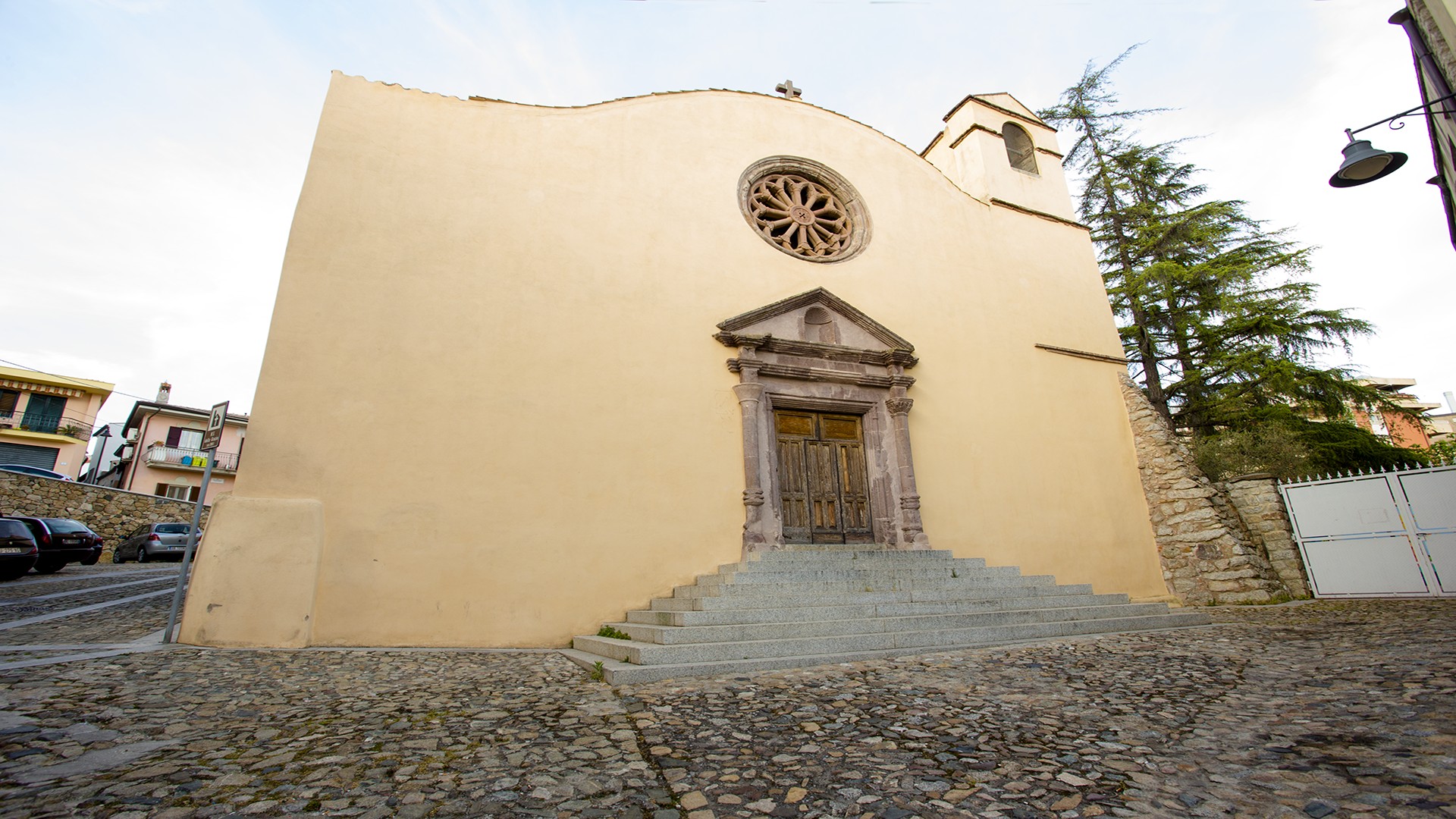
An official document states that permission to build a church in honour of Our Lady of Graces was given in 1679, but the date on the Latin inscription on the building’s façade is earlier: 13 May 1670. The inscription includes the dedication to the Madonna, the name of the man who had the church built (Nicolao Ruju Manca) and his claim to the right to be buried within the church along with his relatives.
The building has a single nave with a barrel vault ceiling and a square raised presbytery with a Neo-Classical altar that was added in the XIX century. Generally speaking, the shape and decorations of the church are a mix of Late-Gothic elements. The main door has a trachyte front piece, made up of a gable with niches, that sits on an architrave divided into identical parts by two frames and held up by two semi-columns. The capital of one of these sports flowers and animal figures, like the rose window, it too beautifully made of quality trachyte.
You can enter the church up the granite stairs or through two side entrances: the one on the left has late-Renaissance adornments, while the one on the right led to a cloister with a spacious loggia, once a hostel for pilgrims during the festivities in the patron saint’s honour. Along the sides are smaller loggias to lighten the massive volume of the building. Inside are priceless frescoes from the XVIII century that depict apostles, prophets and episodes from the Holy Scriptures.