

Biru 'e Concas
Right in the middle of the island is a place that exudes spirituality and provides food for thought. You will notice it when you visit the most extraordinary grouping of menhir in all of the Mediterranean basin. It is the archaeological park of Biru ‘e Concas, which literally means ‘trail of the heads’, commonly referred to as the Sardinian Stonehenge. Located a few kilometers from Sorgono, the town is nestled in the woods of the Mandrolisai region, the westernmost point of the Barbagia. Inside you will see two hundred huge sculpted boulders that have been worn down to an oval shape. The oldest, proto-anthropomorphic, date to the late Neolithic (3500-2800 BC), while the more elaborate stylized ones, anthropomorphic, date to the Eneolithic (2700-1700 BC). In essence, the megalithic monuments are elongated sacred rocks that were once embedded (perdas fittas) and served as phallic symbols for fertility to evoke the Mother Goddess, a primordial Nuragic divinity that somehow echoes the mythical and heroic figures of the forefathers.
Nestled among pine, chestnut and hazelnut trees and still spread about as they were in origin, you will see some of these forms of prehistoric cultural art alone or in pairs, trios, other times set in circles or rows of twenty. Thirty of them are lined up in double rows, like warriors defending an area of worship, another 170 are flat on the ground pointing west, towards the sunset, broken up, the result perhaps of the holy war against the idolatry of the Barbagians declared by Pope Gregory in the VI century during the Christianisation of inner Sardinia. The two hundred menhir discovered in the late XX century were remarkably important for Barbagia, who had only counted some fifty before the big find. And they are all concentrated within an area of five hectares, very near the famous Sanctuary of San Mauro, a complex erected by Benedictine monks as though they were attempting to exorcise the holy, phallic granite statues all lined up along the transhumance routes towards the plains. Who were the makers of the great stones? Is there some connection to Celtic or Breton megalithic tradition, or where they autochthonous, original? And why such a vast concentration of menhir near Sorgono? These are questions still being asked and the object of debate among Sardinian archaeologists.
Not far from the menhir is a hidden spring that could indicate a well for the worship of water, the confirmation of an intertwining of styles and architecture between the Neolithic and Bronze Ages. All around are remains of round huts, perhaps a Nuragic village, while further on are two nuraghe, one with a corridor, the majestic Talei, the remains of a Giant tomb and a dolmen.
Casa Gramsci
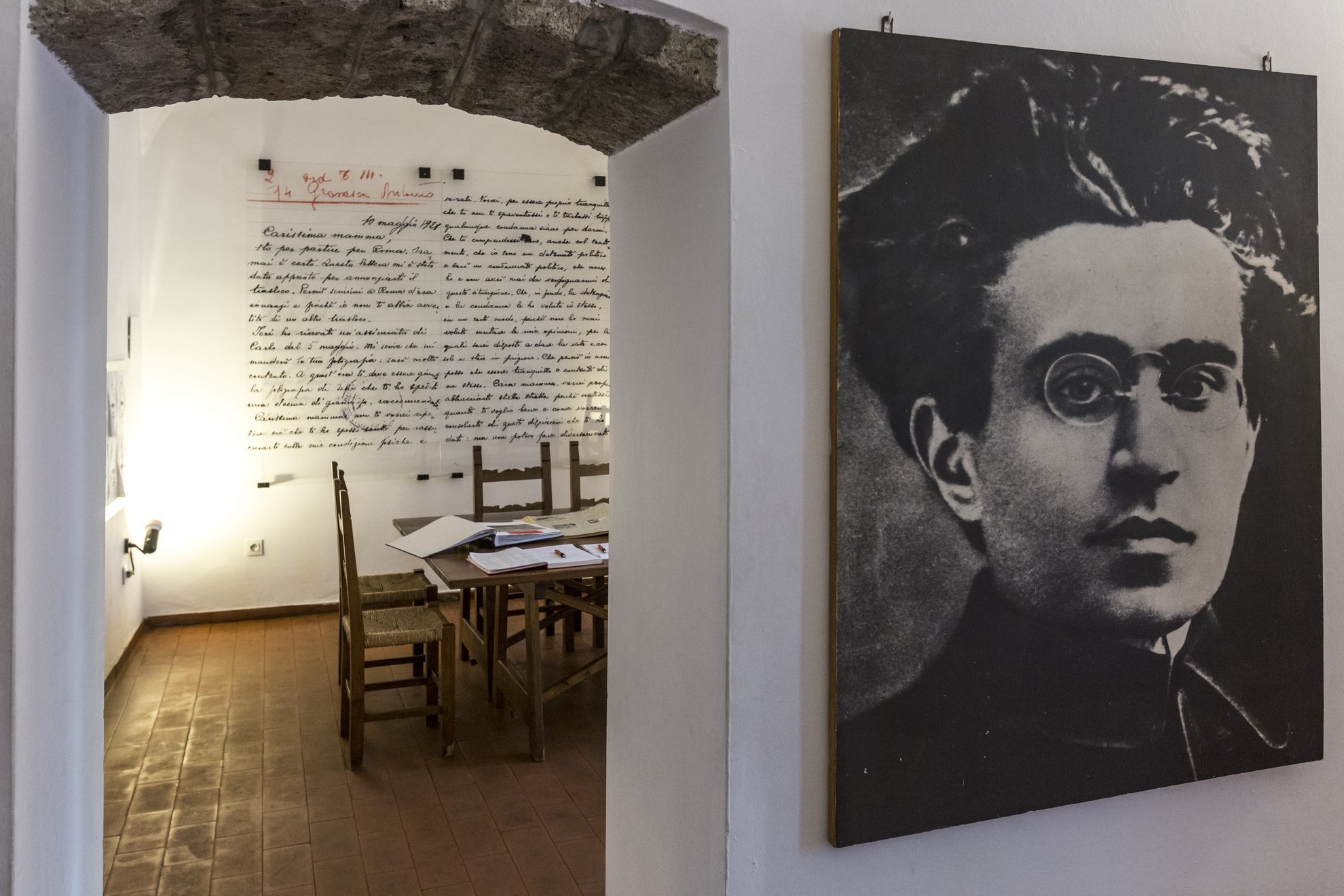
Antonio Gramsci lived in the old town centre of Ghilarza, between 1898 and 1914, and was the creator and founder of the Italian Communist Party, as well as one of the most influential twentieth century European intellectuals. His modest dwelling brings to mind the image of a family that, in a situation of financial difficulty, transmitted to him the values on which his work was later established. He spent his childhood and adolescence here, educated by his cultured and sensitive mother. He attended primary school in Ghilarza, junior school in Santu Lussurgiu and secondary school in Cagliari, where he started participating in 'battles' for the establishment of free thought. His cultural interests, reading and inclination towards science and mathematics made him stand out. He started to write, after being noticed by the director of the Unione Sarda newspaper. He concluded his studies brilliantly and moved to Turin but his interest in his homeland remained alive in his mind.
In 1965, the Italian Communist Party bought his house in Ghilarza, making it a centre of documentation and research. In order to transform it into a museum, fundamental work was carried out by his nieces and by intellectuals, among whom Vando Aldovrandi. The promotion of events celebrating Gramsci are also their merit: on 27 April, Ghilarza becomes a meeting place and one in which homage is paid to an ideologist who has been translated all over the world. The house is the headquarters of the association that manages the museum. At the end of 2016, the Fondazione Casa Gramsci was created.
The journey through the museum, with images, documents, personal effects and statements will allow you to relive the significant stages of his life: study and thinking, journalistic and political activities, imprisonment and illness. It is organized into six rooms, spread over two floors. In the first room, there is an enlarged reproduction of the letter he wrote to his mother, in which he talks about doing his time in prison for not having changed his opinions. Following on, there is the former kitchen, now a place for meetings and study. A third room contains the library: three thousand books on the history of the labour movement and Gramsci's thinking and work. From the entrance, a staircase will take you to the upper floor, where a bedroom from that period has been reconstructed. In a tape library, there are statements made by forty historical and influential personalities who knew him. On a wall, there is a reproduction of the prison cell in Turi, where he was locked up.

The Teti Archaeological Museum
A journey back in time among ex-votos, rings, bracelets, daggers, pins, figures depicting crowds of devotees and warriors who, between the Middle Bronze and Iron Age, frequented the sanctuary village of Abini and the village of s’Urbale. Teti, a pleasant town in the Nuoro region, sits at 900 metres on the slopes of the Gennargentu mountain range. It is steeped in ancient civilisation, details of which have been carefully reconstructed at the regional archaeological museum, housed since 1990 in a building constructed in the oldest part of town. As you visit the rooms, you will catch a glimpse of life as it was in s’Urbale, walking through a detailed full scale reconstruction of a typical dwelling, and you will uncover the secrets of Abini via the relics found at the vast settlement that surrounded the meeting field and sacred well, a place of sacred rites, most likely linked to water worship.
A large number of Nuragic bronze items were found at the sanctuary: anthropomorphic statuettes, reproductions of animals and sailing vessels, as well as raw pieces waiting to be shaped. One especially interesting piece depicts a demon or warrior with four eyes, four arms and a double shield. The museum also houses relics from the Atzadalai plain, including a female idol dating to the late Neolithic Age and several relics from the countryside around the nearby towns of Mandrolisai, Tonara, Sorgono and Meana Sardo. Other material recovered from the two main Teti sites is at the National Archaeological Museum in Cagliari. You will be led by museum guides to visit the digs at the two villages, and in one of them you’ll be able to see a hearth made with a layer of clay that would be periodically replaced, and that may have been the cause of a violent fire that forced the entire population to abandon the village.
The museum exhibition is located in the historic centre of town near the church of Santa Maria della Neve, the patron saint celebrated in early August. At Teti you will find archaeology, ancient places of worship and even some cultural treasures, like the ethnographic exhibits of casa Satta and casa Mereu. During Autumn in Barbagia festivities, you will enjoy the heady aromas and flavours of the local cuisine when private homes open their doors to visitors to enjoy rural traditions together. The views are also enchanting, great for nature walks through green woods of ancient oak and cork trees, of chestnut, cherry and Mediterranean brush. It is here that deer, mountain goats and foxes live, it is the reign of rare birds of prey like the Royal Eagle, who nests on the summits here.
Menhir museum - Museum of prehistoric statuary in Sardinia
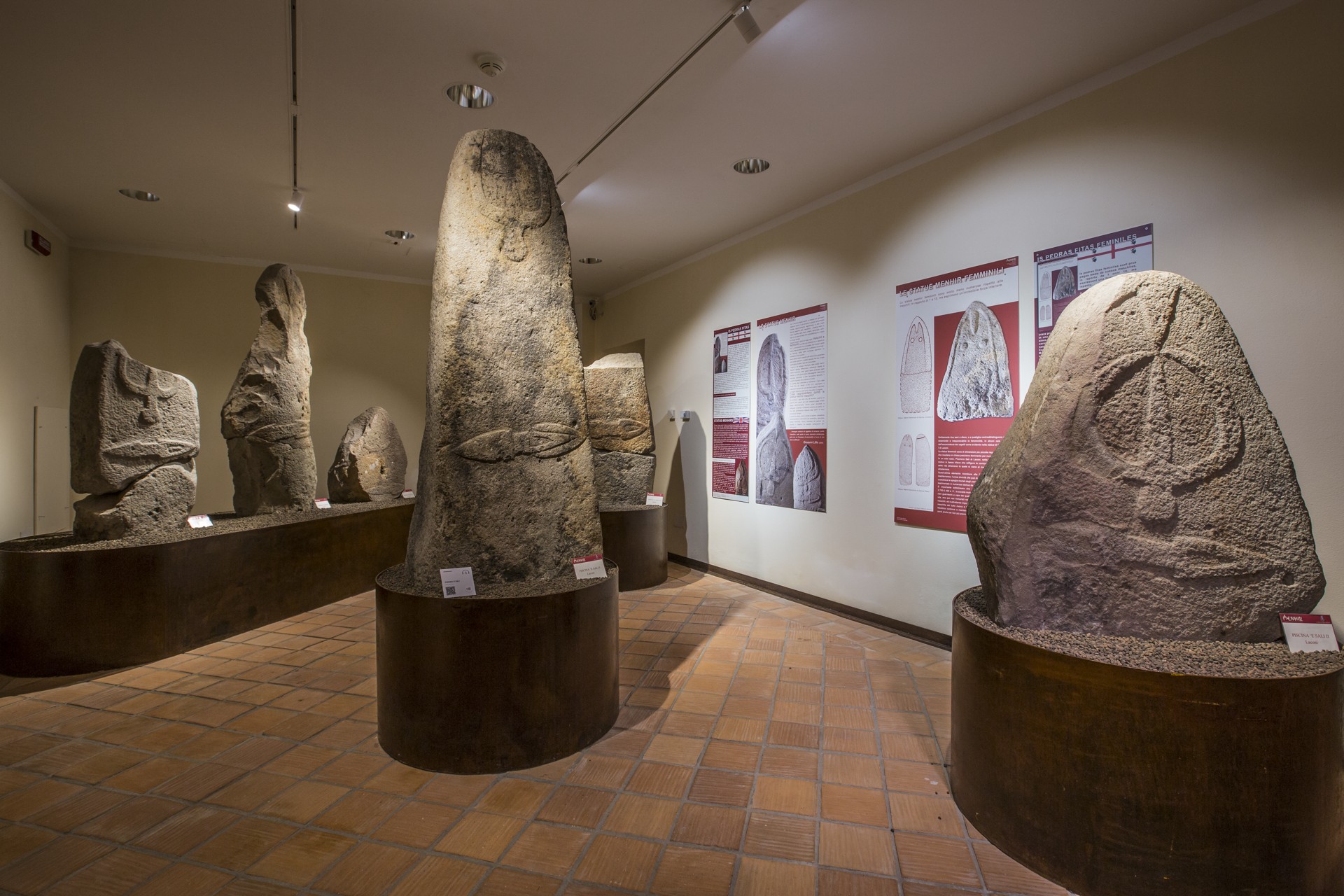
Fascinating and of great scientific value, the exhibition embellishes the village-jewel of Laconi. The museum of prehistoric statuary in Sardinia hosts a unique collection of 40 monoliths-menhirs (perdas fittas in Sardinian), a number of giants, attesting to the typological development of anthropomorphic statues in the 3rd millennium BC and accompanying visitors on a discovery of figurative and symbolic expressions of the first age of metals on the Island and in the European megalithic tradition. The museum itinerary unfurls over two floors of the 19th-century Aymerich building, a stately neoclassical home in the centre of the town. Ten rooms, with multimedia support devices and panels, are dedicated to prehistoric statues of Sarcidano and neighbouring territories. The eleventh room displays ceramic, metal and stone finds (from ancient Neolithic to ancient Bronze), coming from megalithic sites such as the Corte Noa dolmen and Masone Perdu tomb.
The 40 menhirs, carved in trachyte, are of three types: proto-anthropomorphic, of ogival shape and void of depictions, anthropomorphic ungendered figures, with somatic facial features, and statues-menhirs rich in details that distinguish the sex. The masculine ones have arched eyebrows and a pronounced nose, in addition to the symbolism of the ‘overturned’ (linked to the worship of the dead) and of the double dagger (a sign of strength and power). Perhaps they were statues dedicated to tribal chiefs or warriors who had performed marvellous deeds. The smaller female ones have conical or flat chests. In some cases, the hairstyle is noteworthy, such as in the Genna Palàu I statue. Quite particular is the statue Piscina ‘e Sali III, with a low relief under the bust that is the frame of a door, through which one enters into the world or has access to the otherworldly life, a motif attributable to the Mediterranean Mother Goddess. The most famous findings are those of Masone Perdu (an alignment of seven menhirs), Perda Iddocca (eight monoliths) and Pranu Maore (six statues). Other specimens of the museum, which are distinguished by an iconography differing from that of the Sarcidan menhirs, three coming from the site of Pranu Orisa in Allai, where there is a large multiform group, from Paule Lutùrru of Samugheo, where the site of Cuccuru e Lai has resulted in other very interesting fragments, and from the territory of Villa Sant’Antonio, a village famous for its statues-menhirs. After visiting the menhir museum, the Bandiere Arancione village of Laconi and the devotion of its community to Saint Ignatius - the house of his birth, museum of sacred art and parish dedicated to him (15th century) are all stops on an intense journey. To be surrounded amongst greenery, there is Parco Aymerich, a short distance from the centre. This garden of holm oaks and exotic plants is interspersed with caves, waterfalls and ponds, surrounding the remnants of an 11th-12th century castle.
Olzai
The town looks over a valley, surrounded by ancient woodland and set among impressive mountain peaks that acted as refuge and points of control in antiquity. Olzai is a small town in the Barbagia di Ollolai, with a wealth of traditions and events that take place in November as part of the Autunno in Barbagia event. It played a key role in the medieval Sardinian struggle against the Catalan-Aragonese invaders. Even after conquest, it remained hostile to its Iberian rulers. In the early 20th century it was named "the town of the graduates" thanks to its high rate of literacy (for the time) and number of graduates. Today, the 900 inhabitants have held on to ancient customs: bread-making, engraving and choir music. The paved roads and alleyways of the historical centre are lined with granite houses, set around the 14th century Church of Santa Barbara, who is celebrated in late August. Inside the church is an 18th century wooden cross, used for the s’Iscravamentu during Holy Week, and the famous Retablo della Pestilenza by the ‘Maestro d’Olzai’. Other fine examples of religious architecture include the Church of Sant’Anastasio (XVI 16th century) in Catalan-Gothic style, which hosts the Retablo della Sacra Famiglia and the 15th century parish Church of San Giovanni Battista – whose patron saint is celebrated in late June - which was extended in the 17th century and completed with a belltower in 1738, and which has a marble altar and inlaid walnut choir. Don't miss the house-museum of artist Carmelo Floris, the town's most famous personage. The art gallery in the town hall is also dedicated to him, and has a collection of more than 250 works. The painter/engraver was constantly inspired by the fairy-tale Olzai landscape, which is ideal for excursions along paths that climb to peaks from which you can admire boundless panoramas, from Gennargentu to the Tirso valley.
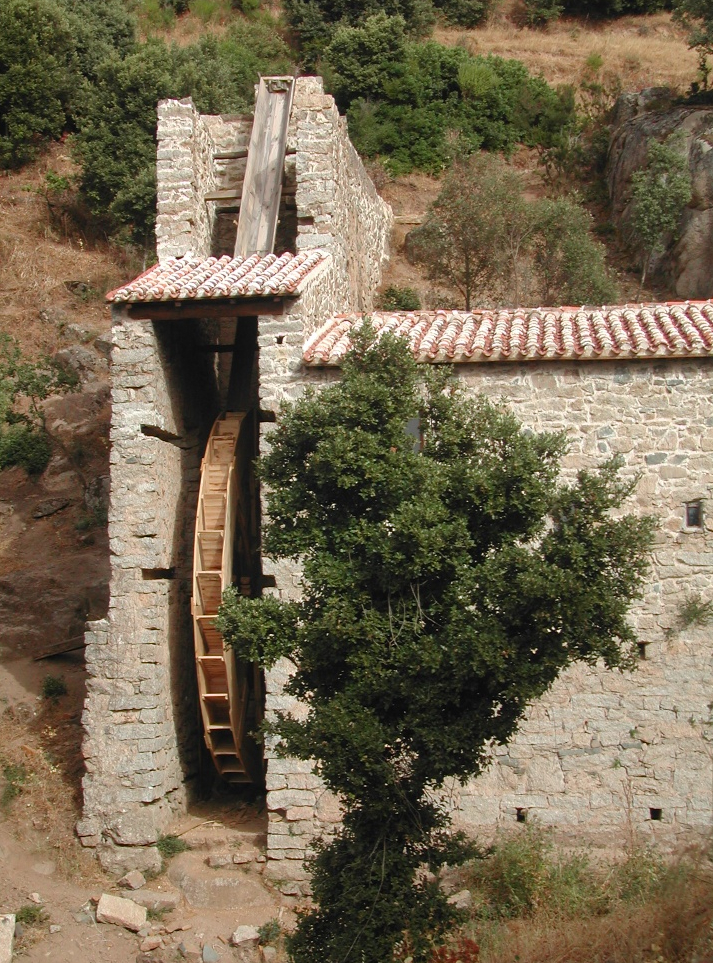
Following a devastating flood, a monumental flood barrier was built in the centre in 1921 to contain the River Bisine. The winter floods were used to drive the watermills and grind grain up until the 20th century. Just outside the town, you can visit the last functioning watermill (of the seven that were in function in 1911): su Mulinu vezzu. Built in granite, it is a majestic work of pre-industrial hydraulic engineering, surrounded by nature. This is the starting point for the climb to Mount Gulana, cloaked in holm oaks and home to rare birds of prey, with natural attractions such as su Nodu de su malune. On the peak, you will find enormous blocks of stone, where a castle, possibly Byzantine, used to stand; it is mentioned as far back as the early 19th century and is surrounded by legends of fantastic treasures hidden in the cellars. To the south-west is the artificial Lake Benzone, used to produce electricity and a habitat for eels, carp and trout. The nearby hills are dotted with the remains of 11 Nuraghes (of 17 catalogued in the early 20th century). The main Bronze Age remains are the Giants' tombs s’Ena ‘e sa Vacca, long believed to be a dolmen due to the slab used to cover them, but with the typical rows and exedra structure of Nuragic tombs.
Supramonte
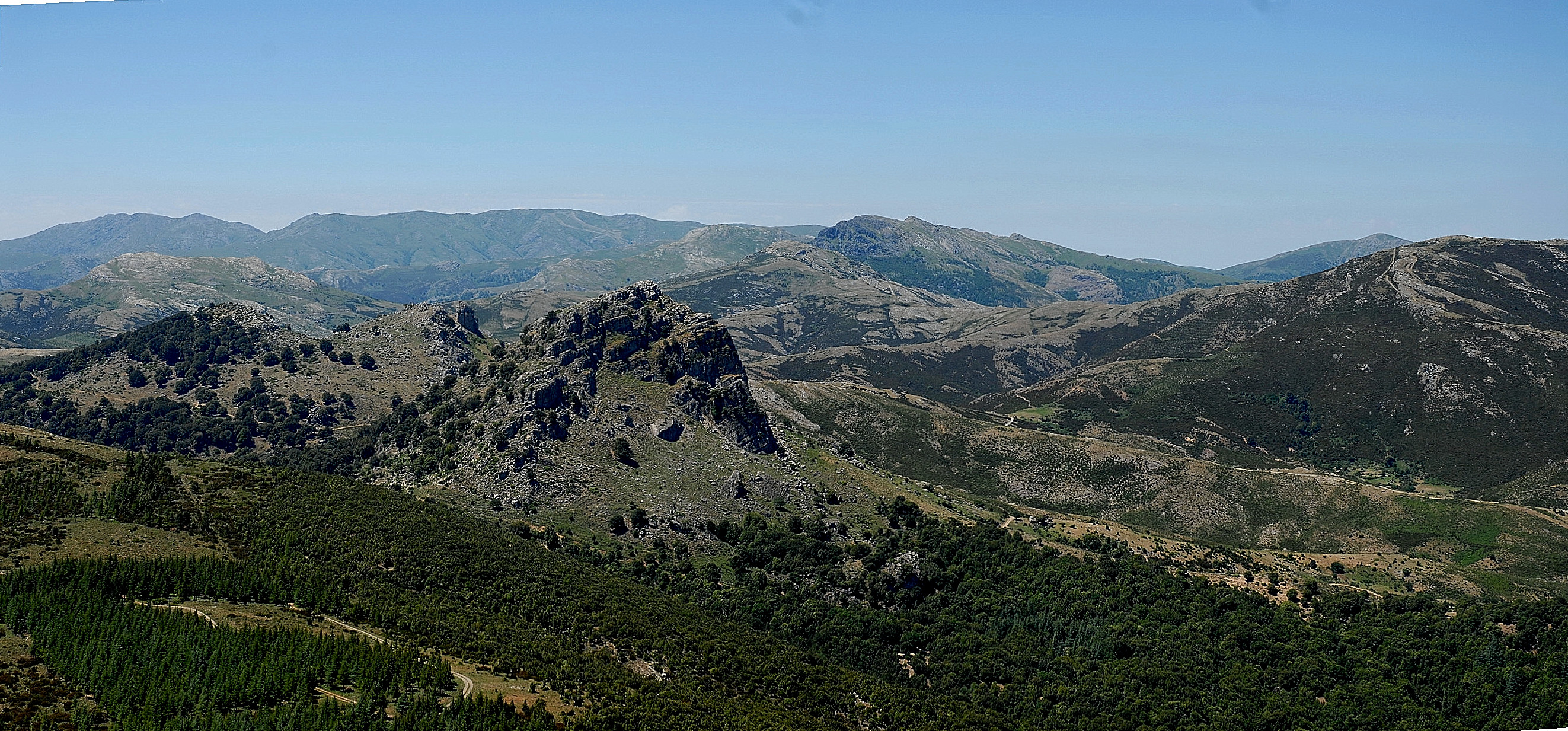
Its extension, of over 35 thousand hectares, gradually becomes invisible to the naked eye and is large enough to contain the territories of five villages, Baunei, Dorgali, Oliena, Orgosolo and Urzulei, and part of the Gulf of Orosei. Supramonte is a mountain range featuring plateaus and sinkholes. The landscape has distinctive features identical to each other: huge bastions, deep canyons and rocky peaks towering up towards the sky. However, each municipality has its ‘own’ Supramonte, with original and unique natural monuments.
The Nuragic village of Tiscali enriches the territory of Dorgali and Oliena. The Grotta del Bue Marino is the undisputed symbol of Dorgali; the gorge of Su Gorroppu identifies Baunei and also Dorgali. In the Supramonte di Oliena area, above the valley of Lanaittu, the cave of Corbeddu is well worth a visit. Its name comes from the bandit who took shelter here in the 20th century and it is well-known for being the place in which the remains of a deer, already extinct in the Sardinian Pleistocene era, was discovered, from which the humans are presumed to have been present on the massif 18,500 years ago. Then there is Urzulei, characterized by lush vegetation and the cave of Palu. The sinkhole of Su Suercone, a limestone chasm 500 metres wide and 200 metres deep, and the unspoilt forest of Sas Baddes, the only extensive primary Holm Oak forest in Europe, are the distinctive features of the Supramonte area of Orgosolo.
Also in Oliena, you will remain speechless at the sight of Mount Corrasi, the highest peak in the mountain range (1463 metres), featuring a barren, rocky environment with chasms, aiguilles and unusually-shaped pinnacles, covered by 650 botanical species, most of which are exclusive to the limestones of central Sardinia and some of which exist only in the Corrasi area. It is also home to the Nurra de sas Palumbas, a cave famous for its wildlife.
Seulo
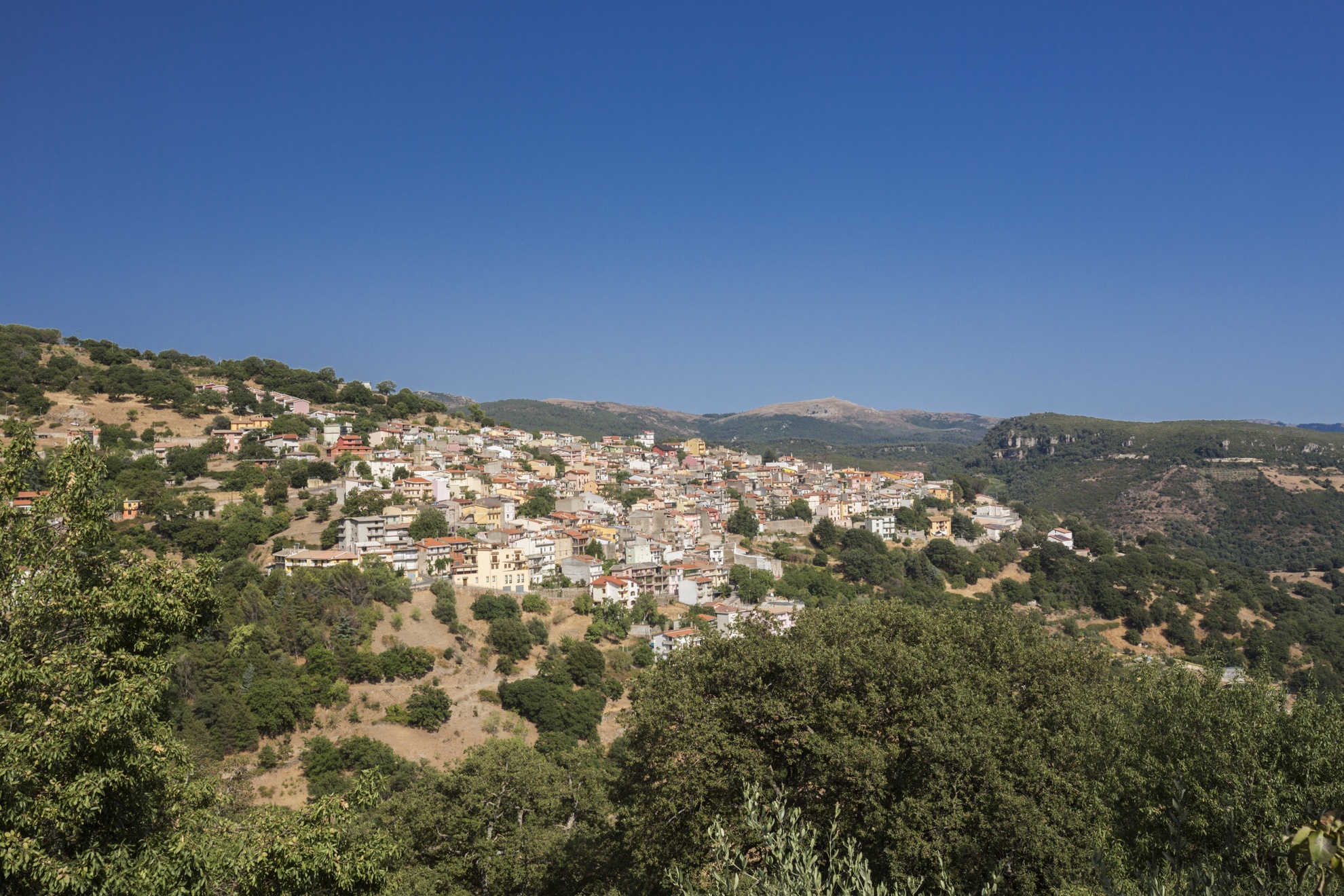
A pleasant, welcoming mountain town for which the surrounding territory is named. It is part of Sardinia’s blue zone: one of five areas in the world where lifespans are above average. Between 1996 and 2016 twenty centenarians have been recorded here. Seulo is the main town of the homonymous sub region of Barbagia, located on the border of southern Sardinia and Nuoro. The town, with its roughly 800 inhabitants, stretches at the foot of Monte Perdedu (1400 m), which is separated from Gennargentu massif by the Flumendosa river. If you follow the course of the river, it will take you past deep gorges, valleys covered by holly oaks and Mediterranean shrubs, limestone cliffs, springs, small lakes and rapids. Over the millennia, its waters have carved karstic caves inhabited since prehistoric times in the Addolì Forest. Some examples include Sa Ruta ‘e i Bitulleris and Sa Omu ‘e Janas, with a large hall full of stalagmites and stalactites. The most famous and characteristic spot is Su Stampu ‘e Su Turrunu, on the border with Sadali: a “water landscape” composed of a sinkhole, cave and a spring with a waterfall and small lake.
The Flumendosa also has a lot of drops, which have generated the waterfalls of Piscina ‘e Licona and Sa Stiddiosa, along the border of Gadoni, with water falling in a thick rush in the winter and a calm flow in the summer from plant-covered limestone into polished, rounded schists below. Combined forces of water and wind created S’Arcu ‘e Su Cuaddu, a natural dolmen under which a Domu de Janas was excavated. In order to bring attention to the natural beauty of Seulo, the Ecomuseum of Alto Flumendosa was founded in 2002. Excursions are grouped by theme: Andalas (trails), the most famous excursion, takes visitors to the coves and canyons of the river on August 13.
The town radiates from a 16th century Parish of Beata Vergine. However, the oldest church, the Church of Saints Peter and Paul, whom are honoured in June, is located in the upper part of the town. It is called the town of s’orrosa ‘e padenti, the “peony of the forest”, the main flower of Gennargentu, In the first warm days of spring, it paints the steep slopes of Perdèdu with reds and yellows. In April, a festival dedicated to this flower is held and guided tours to see the flowers are organized. In July, a Festival of Su Casu in Filixi, a unique cheese, is held. The town is also known for its bread and sweets. The cuisine is based on ancient shepherd tradition recipes and contributes to the longevity of the community. There is also a tradition of crafts: carpet weaving and knife making. Celebrations begin mid-January with Saint Anthony’s fires and offerings of wine and sweets. At the end of September, there is the Feast of Saints Cosma and Damiano, held in the country church named in their honour. In June, there is an unusual festival: Sa Tundimenta Seulese, the Sheep Shearing Festival. The area’s enchanting natural beauty safeguards archaeological treasures. Neolithic and Bronze Age walls and towers watch over the town: Domus de Janas, a Giant’s Tomb and some nuraghes, the closest of which are the smaller Su Nuraxeddu and the larger Su Nuraxi ‘e Pauli. The most important site, the Nuragic village of Ticci, stands on a plateau. A common characteristic of pre-nuragic monuments are cult chapels and this area is one of the most touched by this “cup-mark” phenomenon.
Santa Maria della Neve
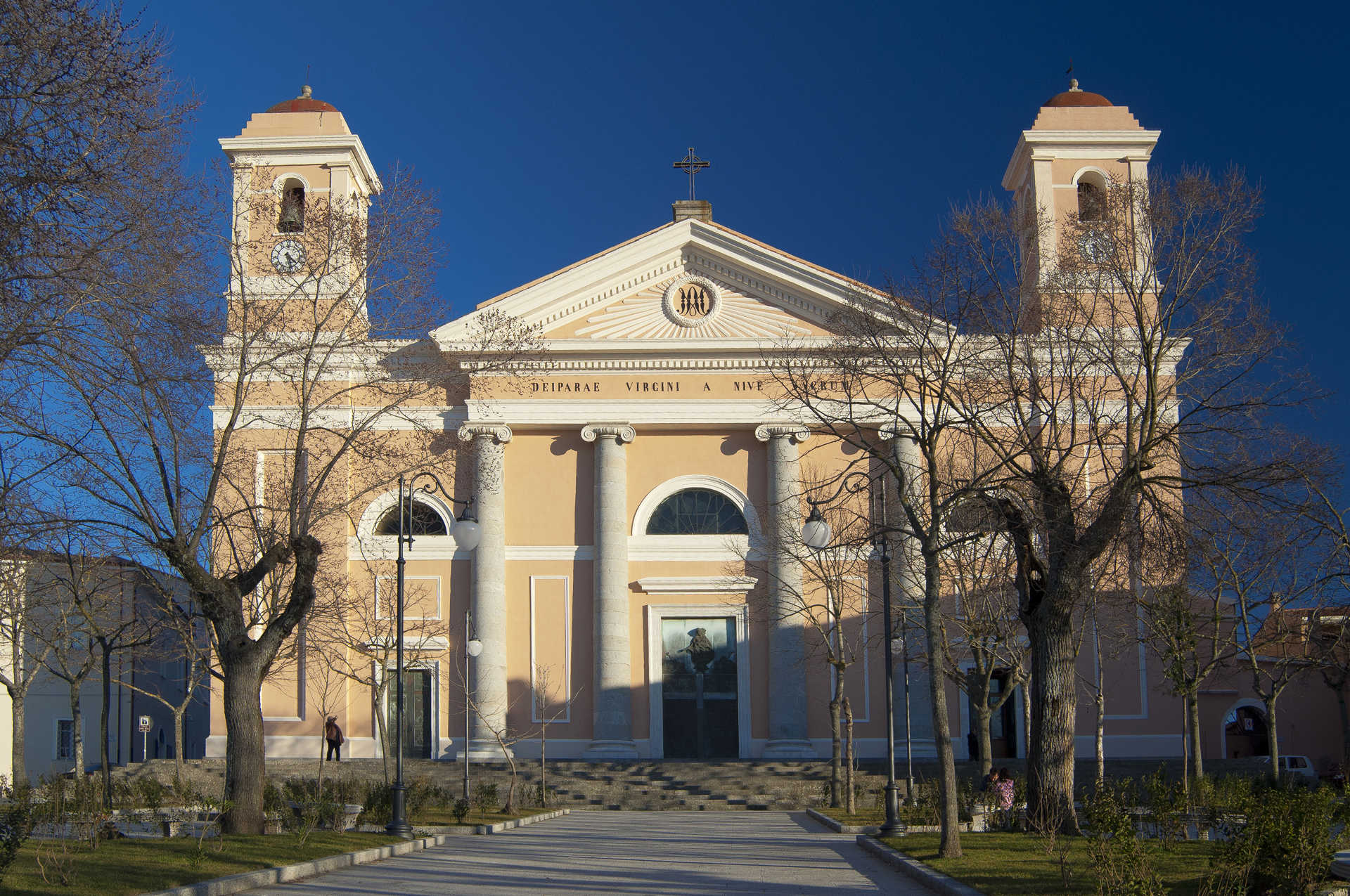
It sits on a hill the locals call sa tanchitta, outside of the historic quarters of Seuna and santu Pedru, a place much loved by the Nobel author Grazia Deledda. Santa Maria della Neve was constructed over the old and smaller church of Santa Maria Maggiore, which Bishop Giovanni Maria Bua decided to rebuild because it was too small to function as a Cathedral when Nuoro was elevated in rank to seat of a diocese. Although he blessed the cornerstone in 1835, a variety of events slowed the work down and it took almost twenty years for the new cathedral to be completed. The majestic building dominates a huge piazza. Twin towers stand on either side of the main gable.
The façade has four monumental granite columns topped by Ionic capitals that hold up the entablature. The perspective is closed by a triangular gable with a Palladian touch the designer, a Friar from Sassari named Antonio Cano who died tragically during construction, was especially fond of. The outer flanks are characterized by the lovely lines of the apses of the side chapels.
Technically speaking there is only one nave. It has a barrel vaulted ceiling and wide windows let in plenty of sunlight that then creates lovely chiaroscuro effects. But the three chapels on each side, each with an apse and covered by a hemispheric vault, communicate with one another via tall arches and so the effect is that of three naves and a cross-shaped layout. The raised presbytery is distinguished by a highly geometric structure where white marble, multicoloured stone and golden garlands alternate.
The area’s artistic flair comes to life and the church becomes the spiritual centre of the entire region around Nuoro during the last week of July and until the 5th of August, when religious festivities bring together local parishes and lay brotherhoods with those from ten towns in the surrounding province for masses, novenas and processions, culminating on the last day with a popular celebration dedicated to Santa Maria della Neve.
Modern and Contemporary Art Museum “Antonio Ortiz”
The museum is in the historic centre of Atzara, housed in a fully restored 19th-century building.
It occupies three floors and has three sections: a historic section, consisting of a photo gallery of the village in the early decades of the 20th century, an art gallery with works by foreign, Italian and Sardinian painters and, lastly, an area for temporary exhibitions.
One might wonder at the presence of a modern and contemporary art museum in a small village in the Nuoro countryside: its roots go back to the early 20th century, when Atzara was visited by three Spanish 'costrumbrist' painters: Eduardo Chicharro Agüera, Antonio Ortiz Echagüe and Bernardo De Quirós, drawn there by the local folk costumes and traditions. Atzara, which had already a vibrant intellectual and cultural life, thus became the centre of a local painting style, inspired by the Spanish example, attracting important Sardinian artists who spent time there. Some of the best-known names are Francesco Ciusa, Antonio Ballero, Giuseppe Biasi, Filippo Figari, Mario Delitala, Carmelo Floris and Stanis Dessy.
Besides featuring a notable collection of 20th-century paintings, the museum has an interesting group of contemporary paintings, donated by collectors, artists and public institutions. The best known work is certainly the painting by Antonio Ortiz Echagüe 'Donne di Sardegna', which the museum has on loan from the Regional Ethnographic Institute.
Address: piazza Ortiz Echagüe - 08030 Atzara Phone +39 0784 65508 Managing Agency: Municipality of Atzara.
Museum of Sardinia’s Castles
In its rooms you can go on a journey through time, to medieval Sardinia with its fortresses, wars, treaties, intrigues and stories halfway between fantasy and reality that have survived to this day, with special focus on the events of the four Sardinian judicates of Calaris, Arborea, Torres and Gallura. The Museum of Sardinian Castles is located in the heart of Burgos, in the rooms of a late 19th-century manor house, which belonged to a family of local landowners. The building, which has been refurbished and renovated, has three floors. The museum itinerary is structured into various thematic spaces. One part contains temporary exhibitions on the subject of castles, another displays thematic maps that indicate the coastal towers of the Spanish era and the strategic defence points on the Island, constantly subjected to attacks due to its geographical position, in the centre of the Mediterranean trade and military routes.
There is also an area of the museum entirely dedicated to the reconstruction of rural life. You can deepen your knowledge of the work instruments from the past and of the tools of different shapes that illustrate man’s work and toil. In an area of the museum, there is an exhibition of old and recent photos on the subject of castles. The itinerary ends with a multimedia room that allows you to enjoy a historical reading of the approximately one hundred castles of Sardinia.
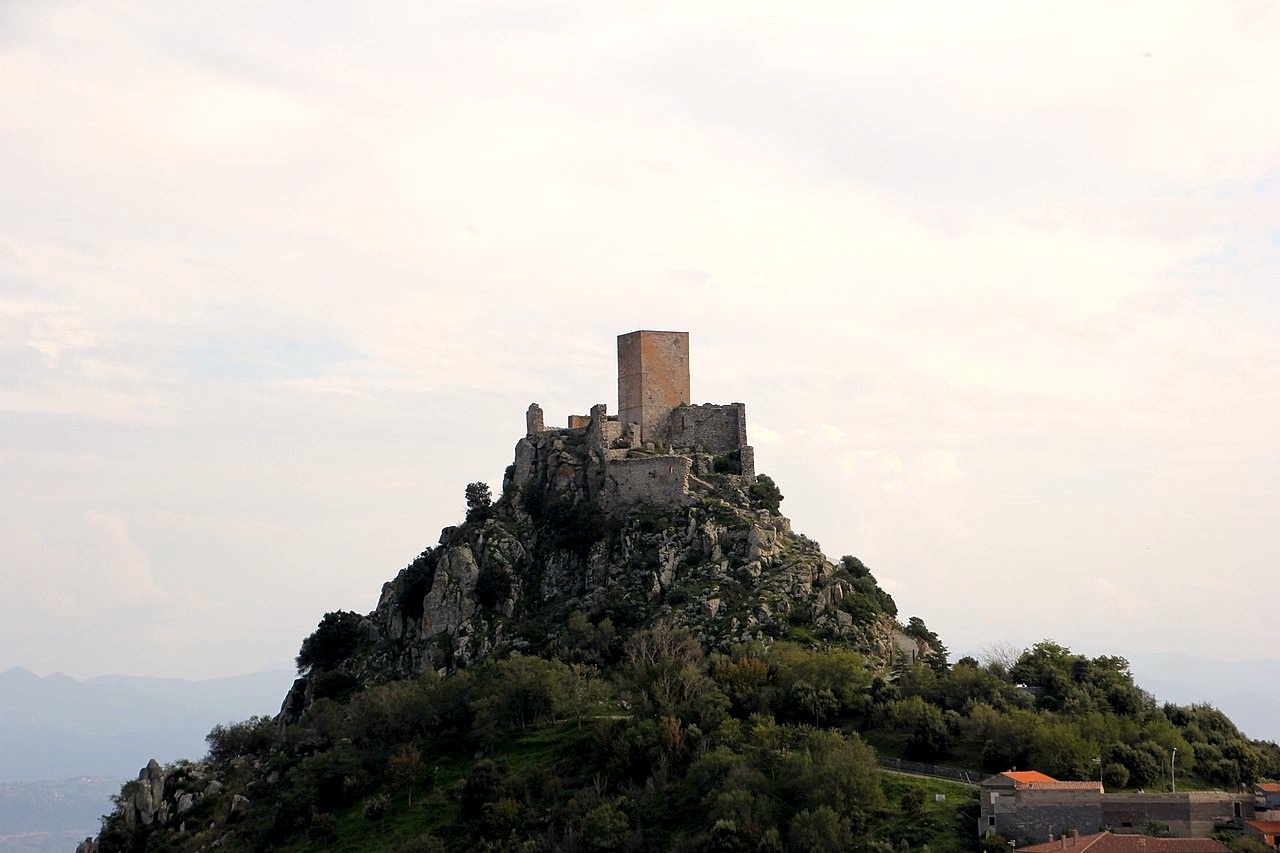
Walking a few hundred metres to the east, along a cobbled path, you will reach the Castle of Burgos, also known as the castle of Goceano. It stands in an isolated position on the top of a rocky massif, a position that helped make it practically unassailable. You can still see the fortress’s triple surrounding wall, the perimeter walls and the large tower, over fifteen metres high.
After the visit, it’s worth taking a walk around the narrow streets of the village, observing brick houses with gabled roofs and losing yourself in the medieval-looking alleys of the historic centre. A good way to relive the medieval atmosphere of Burgos is to participate in Prendas de Adelasia, a festival that takes place in December.