
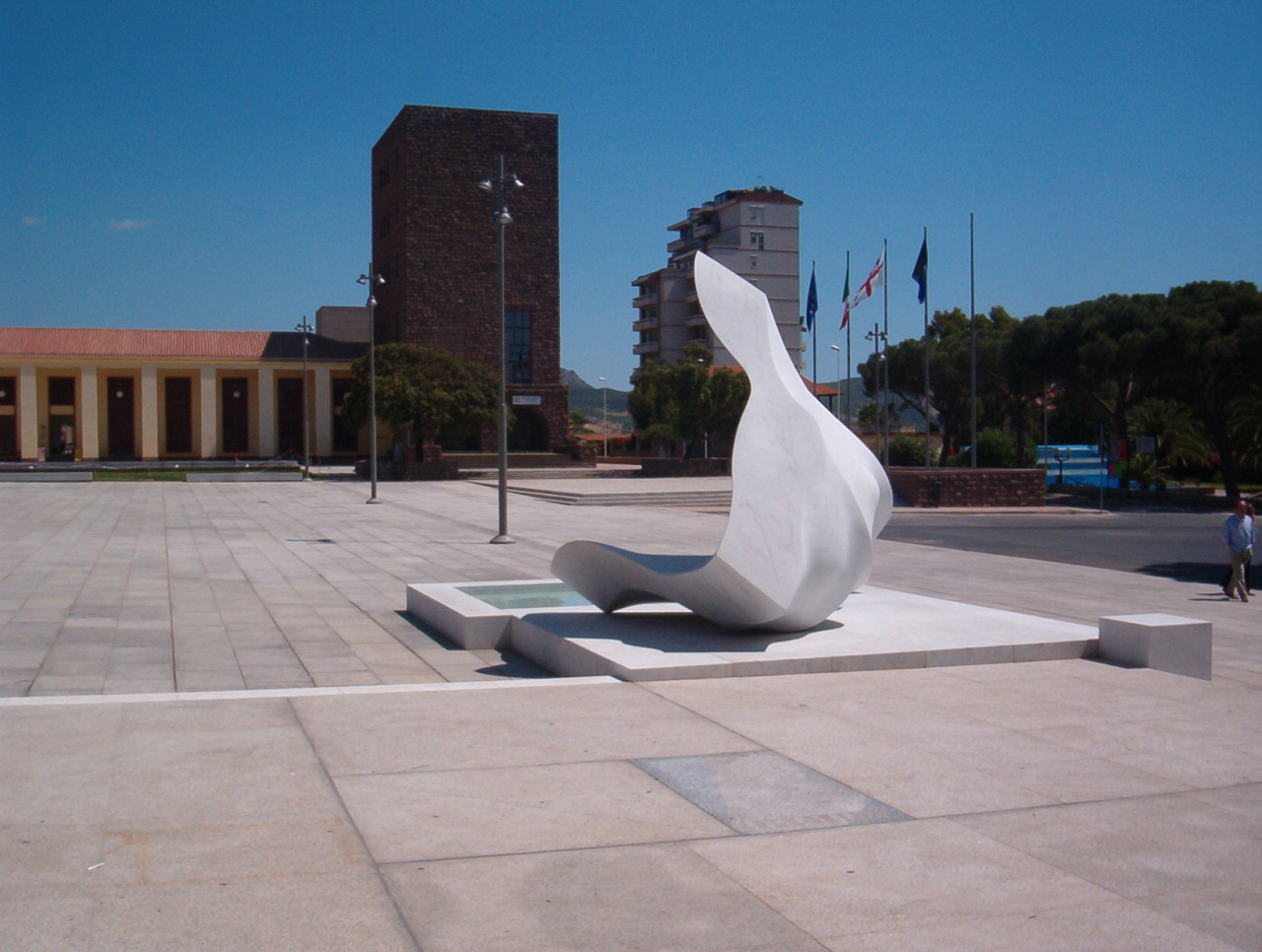
Capoterra
Capoterra stretches along the foot of Mount Arcosu and it is washed by the Stagno di Cagliari lagoon – known as Santa Gilla. Capoterra is a town with approximately 23 thousand inhabitants at the southwestern gates of Sardinia's capital city. In its immense territory, which has been inhabited since the Pre-Nuragic period, nature and history are intertwined. You will find enchanting and remarkably interesting landscapes on Monte Arcosu, consisting of almost four thousand hectares of forest, with a 'heart' of holm oaks and cork oaks, surrounded by Mediterranean scrub, where the Sardinian deer and the fallow deer wander undisturbed. The park is kept moist by watercourse and waterfalls. Located within the 1300 hectares of the Cagliari lagoon, one of the most important birdlife oases in Europe, there is the pond of Capoterra, where you can take a comfortable position and observe flamingos and black-winged stilts. Nearby, in the locality of Cuccuru Ibba, there are traces of the Neolithic era: a lithic workshop and round huts. In various localities, there are ruins dating back to the Nuragic age, necropolises and towers and, in particular, the Monti Arrubiu Nuraghe. Dating back to the Punic period (5th-4th century BC) there is a settlement in Su Loi and a necropolis in the locality of Sant'Antonio. From history to astrophysics: in the hills near the district of Poggio dei Pini, the astronomical observatory frequented by international teams of scientists stands out.
Its name comes from the Latin Caput terrae: during the Roman period, the town (perhaps an oppidum) developed near the lagoon. In the Giudicati period, it was the villa of the administrative region of Nora and, from 1120, of the Giudicato of Cagliari. After passing to the Signoria Pisana (Seignory of Pisa) and then conquered by the Aragonese, the village was destroyed and was uninhabited for three centuries. Until the middle of the seventeenth century, when the baron, Girolamo Torrelas, decided to repopulate it, granting plots of land to families from other parts of Sardinia as well as 'good conditions' for avoiding disputes with the lesser legal authorities.
In the village, worthy of note for its history and tradition is the parish church of Sant'Efisio, patron saint of the village, the original nucleus of which was unsurprisingly called Villa Sant'Efisio. Identities and legends materialise in the church of Santa Barbara de Montes, dating back to the Romanesque period, built on the eastern slope of the Capoterra mountains. 50 metres from the church, the Basilian monks built a chapel, where it is said that Barbara, a martyr from Cagliari, was beheaded during the persecution of Christians. The head, as it fell, gave rise to a spring, which is still active and is called Sa Scabizzada (the beheaded one). In the 20th century, the surrounding area became the summer residence of families from Cagliari: you will see beautiful villas set between palm trees and centuries-old olive trees.
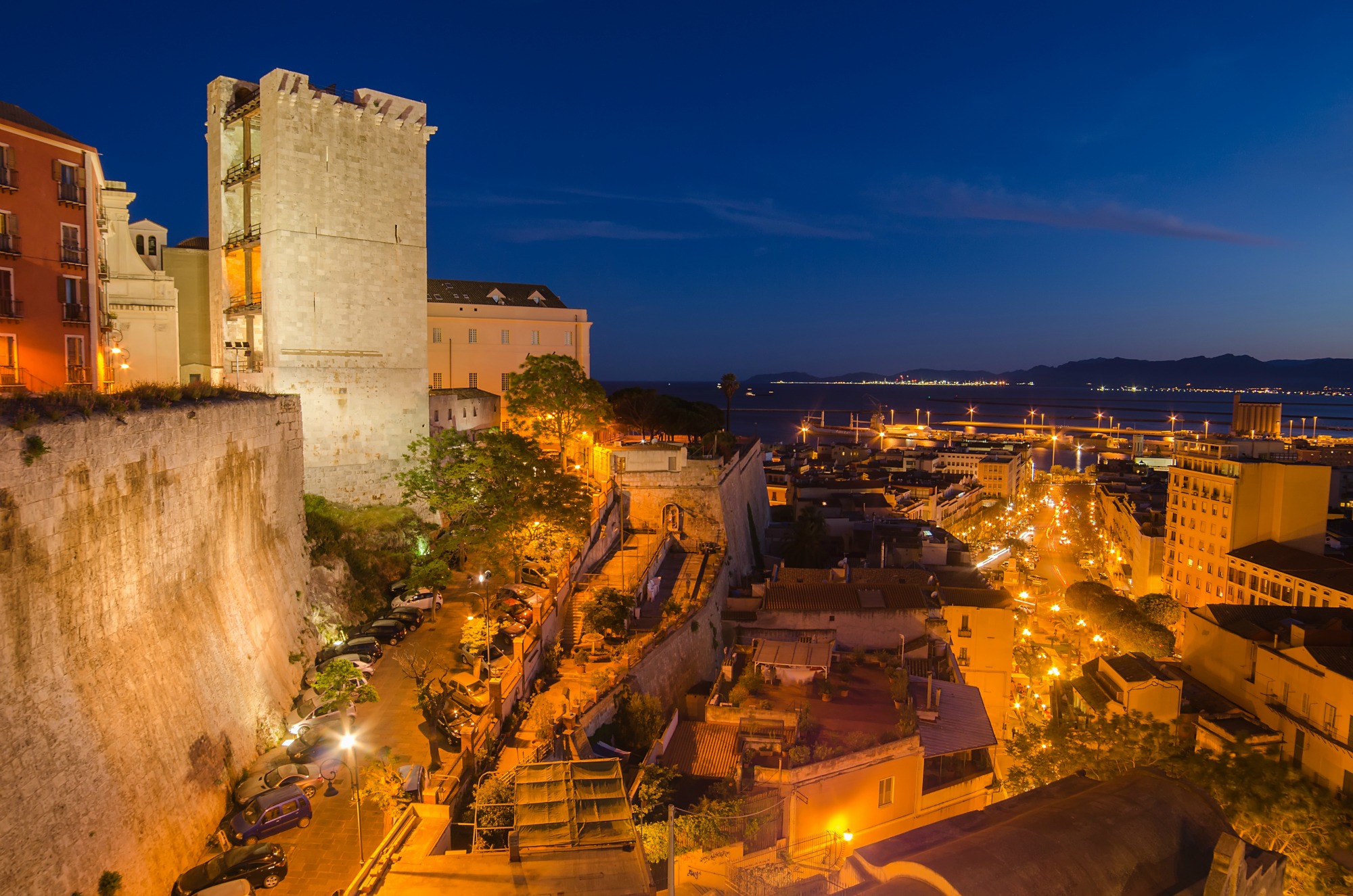
Fortifications of Cagliari
Cagliari's walls run all around the perimeter of the ancient Castello district and include the tower of the Elephant and that of San Pancrazio. Large parts of the old system of towers and bastions, built to protect the town, are still remaining and today, thanks to the panoramic views of the town they offer, you can spend pleasant, relaxing moments. From elegant terraces, in one of Cagliari’s highest areas, you can sip an aperitif while enjoying the breathtaking views. Not far from the fortifications, you will find the main shopping streets.
Between 1491 and 1508, a bastion was built on the hill of the Castello district and was the seat of the town's civil and religious authorities for centuries. In 1534, a boundary wall was built between the Tower of the Elephant and the Church of Santa Croce, a former synagogue converted into a Catholic place of worship in 1492. The Bastion of Santa Croce is now an elegant terrace, an elegant terrace and centre of nightlife, overlooking the Stampace district and facing the deep blue sea of the port.
The Tower of San Pancrazio, built in 1305 by architect Giovanni Capula, was constructed in sandstone, white limestone extracted from the Bonaria hill, where the splendid basilica of the same name stands. At the base of the tower, the gate of San Pancrazio opens up, allowing you to enter the Castello district.
The Tower of the Elephant was built two years later. Its name comes from the statue of the pachyderm, symbol of the city, positioned on a corbel on the external part, facing towards the port. Divided into four levels, you will be struck by the majesty of the great portcullis which is raised, but ready to close the entrance door to the old district. Don't be afraid to cross it, though, because it is now one of the access routesalways open (and highly-frequented) to the beautiful sights of Cagliari.

Armungia
It stands on a plateau surrounded by woods, Mediterranean scrub and cultivated fields in the historical territory of Gerrei. From a portion of the territory of Armungia, known as Cilixiucci, you can enjoy a view of incomparable beauty over the whole valley from the Flumendosa, the second longest river in Sardinia (and the one with the greatest flow). The historic centre developed around the nuraghe Armungia, which gives the village its name and dates back to the 15th-14th century BC. Today, it is in a good state of preservation, located right in the centre of the village, and it is one of the rare cases of a town-based nuraghe. The archaeological area includes a tower made of limestone blocks that has a twelve-metre diameter, with an internal chamber more than eight metres high and covered by a tholos (false dome). A flight of steps on the left of the entrance led to the terrace.
The village architecture reflects the agro-pastoral origin of the village: modest houses made of schist, inside which you will often find a ball oven and courtyards with rooms used as storehouses or stables. The town is a true scattered museum, meaning a system of museums and monuments that bear witness to the culture and everyday life of the village. When crossing the quaint village streets, you will be following an itinerary of great cultural interest. From the nuraghe Armungia, which is softly lit up in the evening, you will pass by the ethnographic museum of sa Domu de is Ainas, located inside the municipal building, in which there are about six hundred artefacts from the material culture of the local farming community, then the Bottega del Fabbro (Blacksmith’s Workshop), a stone building dating back to the early nineteenth century that contains the tools of the ferreri, and lastly the house of Emilio Lussu, a museum dedicated to the great writer and statesman, who was deeply linked to his village of birth, and to his wife Joyce Salvadori Lussu, both protagonists of twentieth-century history and key figures in the democratic and antifascist history of Italy.
Around Armungia, you can also admire numerous caves, like those of su Pittiolu and Gospuru, as well as a few abandoned mines, which offer you an interesting itinerary of industrial archaeology. The territory is on the border of the Park of Sette Fratelli (Seven Brothers): you can lose yourself in the lush, enchanting nature, particularly appreciated by trekking lovers.
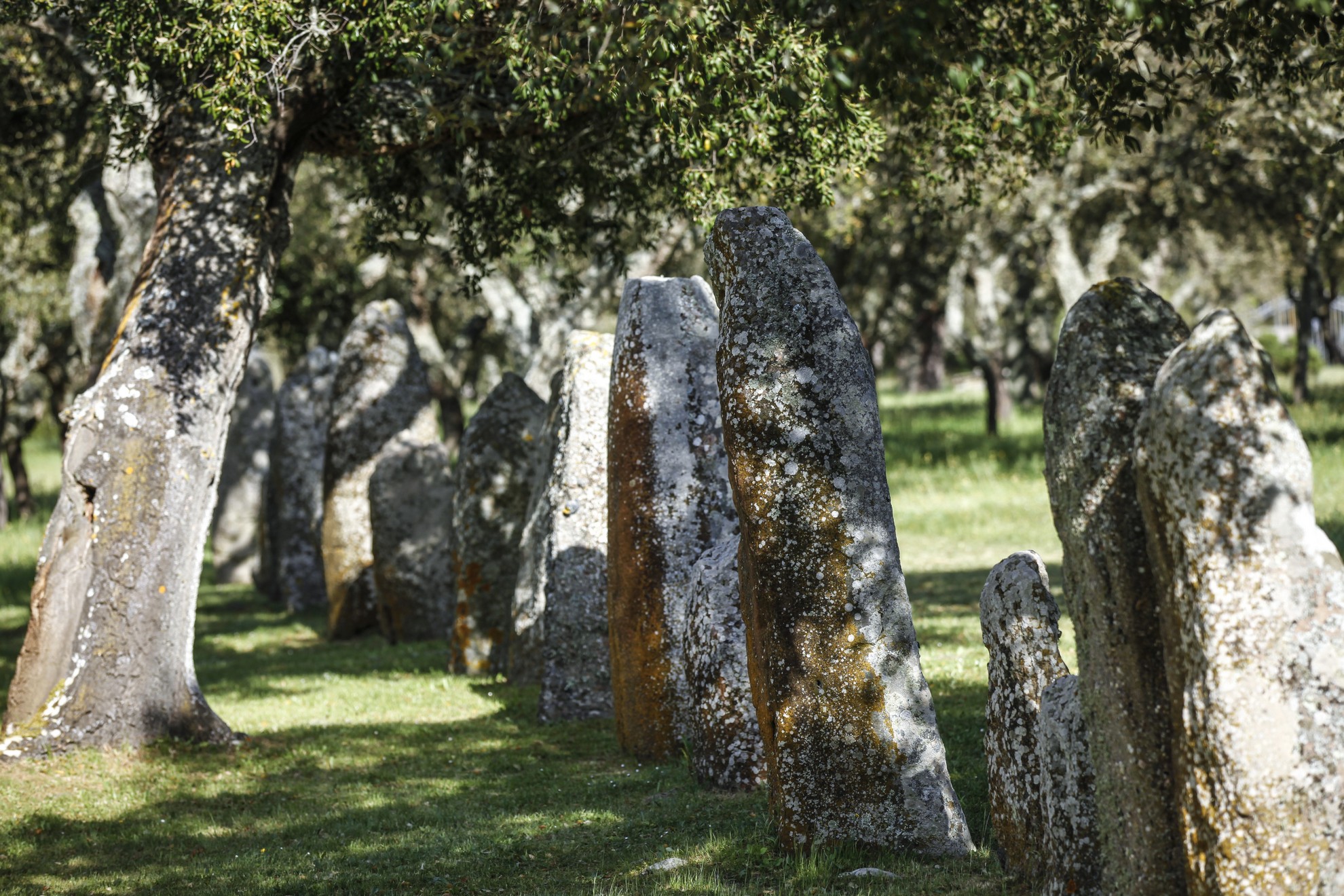
Pranu Muttedu Park
Extending 200 thousand square metres and surrounded by lush cork oak trees flanked by the Mediterranean scrubland of the Gerrei hills, it is one of the most evocative and significant archaeological sites in Sardinia. A few kilometres from the town of Goni, along the provincial road to Cagliari (just half an hour from the capital), is the Pranu Muttedu park, an extensive platform of arenite and schist, on which stands a vast pre-Nuragic monumental complex, ‘divided’ into a number of agglomerations. In the locality of Crancu to the north is the agglomeration of the hut of reference of the necropolis. To the south of the village are the burial grounds of Pranu Mutteddu and Nuraxeddu, exceptionally surrounded by large groups of menhir pairs in alignment or inside the tombs themselves, and from round constructions likely of a sacred nature. Excavated in rocks further south stands the Domus de Janas necropolis of Genna Accas, consisting in three tombs, thanks to which the park was declared a Unesco World Heritage Site in 2025, together with 16 other pre-Nuragic sites on the island.
Other structures arise in the area, with the remains of the Dolmen ad Allée Couverte di Baccoi being of particular interest. The exceptionality of the site also derives from the highest concentration of menhirs known in Sardinia, with around 60 variously distributed, be it in pairs, in alignments or in small groups, sometimes in the same tomb architecture. They are of the ‘proto-anthropomorphic’ type, with an ogival shape and a flat anterior surface. The sepulchres consist of two or three concentric rings of stones, sometimes with a frontage in echelon to support the mound. At the centre is the funeral chamber, which is accessed through a corridor formed by orthostatic slabs, covered with lintels. The cellae within are circular or elongated, depending on how many sepulchres are housed inside. The coverings were tabular or pseudo-inverted. The grandiose Tomb II has an entrance, an antechamber and a funeral cella that have been excavated in two distinct rocky blocks, carefully set down and arranged, with fine workmanship and an architectural design that recalls the Domus de Janas sepulchres. The excavations revealed miniature pots, arrowheads in obsidian and various other objects, including a flint dagger and a white stone hack. From the artefacts, we can trace the complex to the late Neolithic period (3200-2800 BC) with late ‘assimilations’ through to 2600 BC.
The park is equipped with services, including an introductory area to the excavations, equipped with multimedia tools to guide users throughout the visit accompanied by guides, with the option to stop for refreshments and to enjoy the local cuisine.
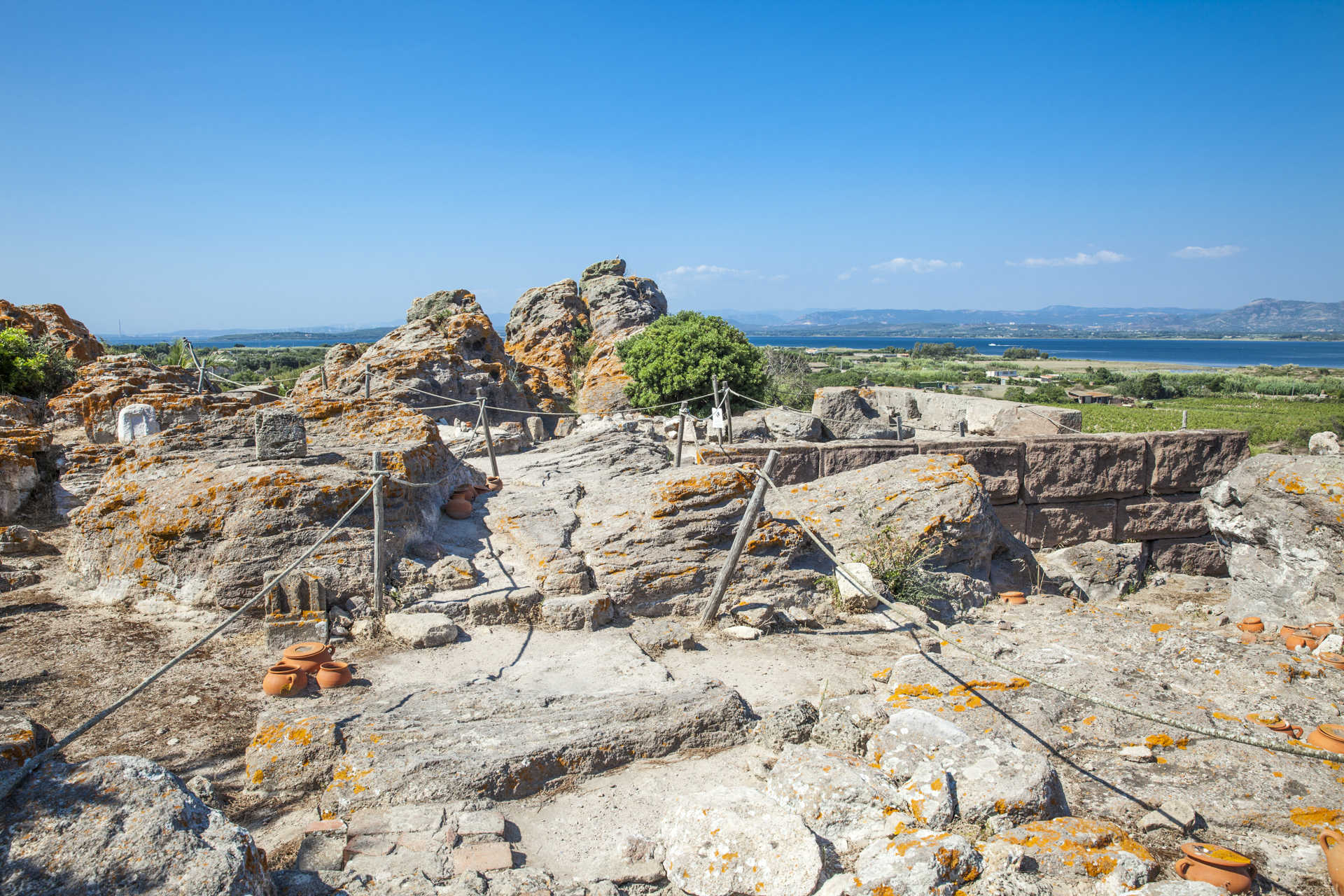
Ancient City of Sulki
In the splendid island of Sant'Antioco, inhabited since the 3rd millennium BC, as confirmed by the domus de Janus at Is Pruinis, the Phoenicians lived peacefully alongside the Nuraghic populations, founding Sulki (later Sulci) in around 770 BC, lending its name to the south-western territory of Sardinia. Trade connections ran from the south-eastern coast to the Iberian peninsula, North Africa and Etruria. Sulki was the arrival point for people from Phoenicia and the colony of Carthage, as well as trade with the Greeks and Etruscans. It became one of the most important Phoenician centres, and passed to the Carthaginians in 520 BC. The Punic victory brought a period of crisis, but Sulci flourished once again thanks to the position of its port and the enormous resources in the territory, including silver.
Your journey through time in Sant'Antioco starts from the tofet, a typical Phoenician sanctuary, where children were cremated and buried in urns. It was positioned in the northern outskirts of the town centre: the urns filled with ashes were placed in rocky recesses, sometimes with commemorative steles. The tofet is an element that links Phoenicians and Punics. The latter brought the practice of burial, where the body was sumptuously dressed and bejewelled before being lowered into the grave together with vases of scented oils and essences. The Punic necropolis, which dates back to the 5th and late 3rd century BC, is particularly impressive. From above, it can be seen extending over the entire hill of the basilica, covering six hectares. Each hypogeum is 40 square metres: archaeologists hypothesise that there were 1500, meaning that Sulci had as many as 10,000 inhabitants, making it one of the largest centres in the Mediterranean. The tombs were composed of an entrance corridor with steps, a landing and a burial chamber. Sometimes they were spread over more than one level. Nearby you can see the remains of the ancient town walls, where a splendid pair of statues representing crouching lions was found. They may once have rested on the gates of the city.
During the Christian era, the Romans built a cemetery of catacombs over the Punic necropolis. Between them, the tofet and the necropolis have given the town museum, named for archaeologist Ferruccio Barreca, utensils, lanterns, amphorae, jewels and masks, on display alongside findings from the Neolithic, the Nuraghic civilisation and the Roman period. Complete your cultural tour by visiting the ancient sanctuary of Sant'Antioco Martire, patron saint of Sardinia, and other archaeological sites such as the standing stones at saMongia e su Para and the tombs of the giants at su Niu e su Crobu.
Nuraghe Armungia
A lighting system on the outside and inside the structure emphasizes its shape, amplifies the effects and creates a suggestive atmosphere, especially in the evening. The Armungia nuraghe is a very rare case of nuragic architecture within a town: it rises amidst the rooves of the houses, a few metres from the old town hall, now home to the Sa domu de is Ainas museum, in the north-eastern edge of the town, the 'old part' of Armungia, to which it gives its name. The nuraghe is the most important archaeological feature of the territory, and overlooks the valley of the river Flumendosa: its strategic position may once have controlled the territory, and today it offers a splendid panorama that reaches as far as Gennargentu.
The nuraghe, which dates back to the mid-Bronze Age (15-14th century BC), has a single-layer structure and a truncated cone shape with a diameter of twelve metres and a residual height of ten. It is built with well-worked blocks of calcareous schist arranged in rows, culminating in a false dome (tholos), i.e. missing some of the rows that completed it. The entrance leads into a corridor four metres long, like the wall thickness, which leads to the main circular chamber with a diameter of over five metres. On the wall opposite the corridor you will see two large cells; the one on the left houses a cistern for water, lined internally with opus signinum plaster: it shows signs of having been reused as a burial in the Byzantine era (6th-7th century). This hypothesis is also supported by the finding in the cistern of a bronze buckle dating from the 8th to 9th century. Also on the left there is a stairwell that leads up 17 steps to the terrace. Outside the nuraghe, on the north-east and south-west sides, you will notice some curvilinear walls, which are probably later reinforcement works.
You can enter the nuraghe from the ethnographic museum, where you will continue in the cultural itinerary inside a real country-museum with architecture that recalls its agropastoral origins: modest shale houses, inside which you will often find ball ovens and courtyards with rooms used as warehouses or stables. Walking through the streets of the town, you will pass by the ethnographic museum, which contains about six hundred artefacts from the agropastoral culture at the Bottega del fabbro (the old forge), a nineteenth-century stone building that houses the tools of su ferreri (the smith). Lastly, you can visit the historical museum dedicated to the great writer and statesman Emilio Lussu, who had close ties to his home town, and his wife Joyce Salvadori, protagonists of the twentieth century history and key figures in the national democratic and anti-fascist period. The town is surrounded by abandoned mines, evidence of industrial archaeology, numerous caves and lush nature, which is particularly appreciated by trekking lovers.
Domusnovas
It is located in the valley of the Cixerri river, in a largely mountainous territory. Domus novas, with over six thousand inhabitants, is an important municipality in the Iglesiente area and is known as the 'village of the grottoes' as well as being a protagonist in the historic mining period, which lasted over a year, until the middle of the 20th century, with approximately 50 mines, among which Arenas, Barraxiutta, Sa Duchessa and Tiny. As well as the abandoned sites, you can also visit the city museums: the Mineralogical Museum located in the former Monte Granatico with collections of minerals and fossils, and the Museum of Wildlife and Nature. Evidence of the extraction activities are also kept in the vast complex of Monte Linas-Oridda-Marganai, a park with varied landscapes: from the granite Mount Linas and the limestone massif of Marganai to the Plateau of Oridda, where the forest of Montimannu is situated. In the granitic areas you will come across gorges and waterfalls, like Piscina Irgas and you will find holm oak forests on the elevations, which you can travel through on foot or on horseback.
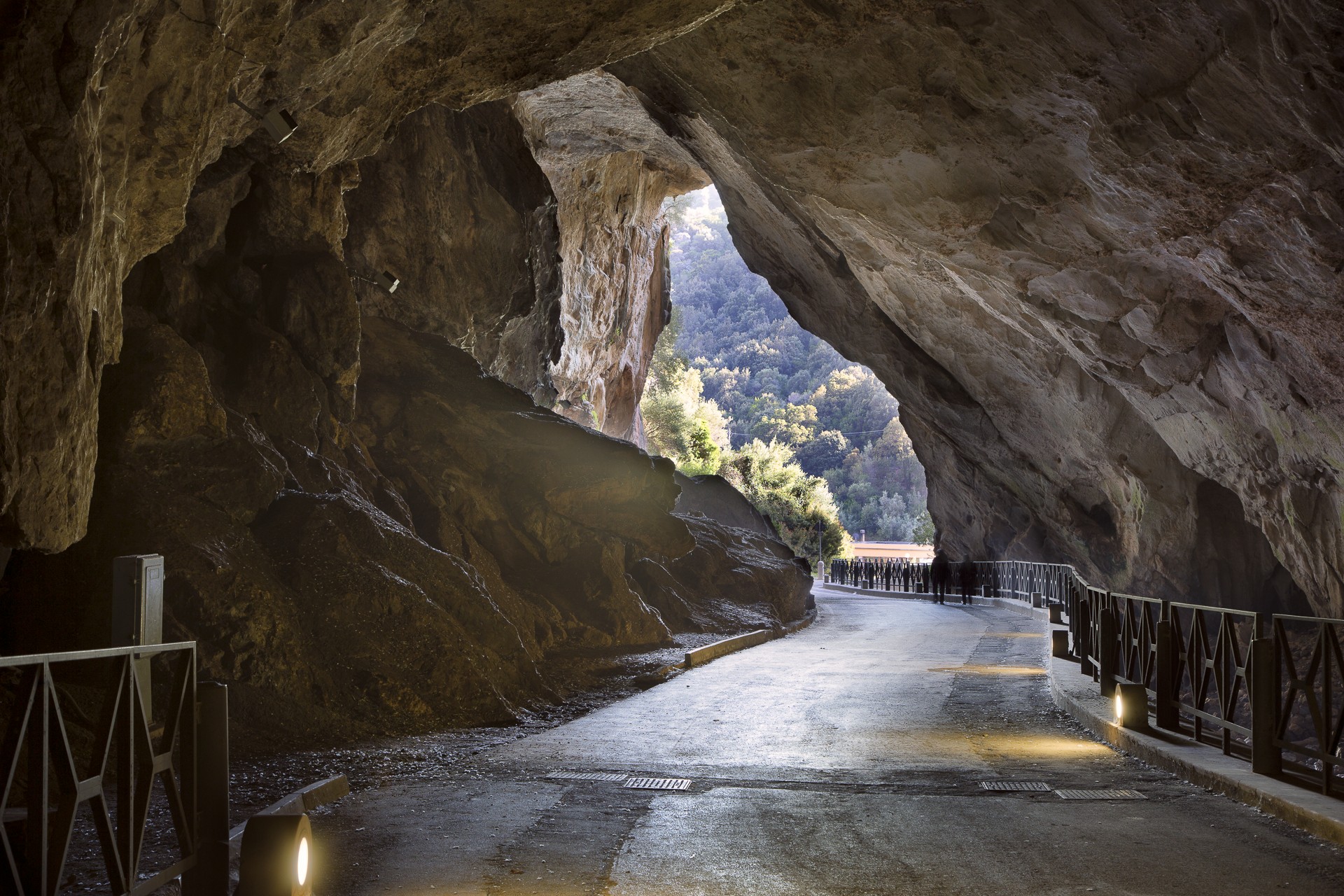
Infiltrations have created underground rivers and caves in the limestone rocks, among which the Abisso Paradiso grotto and a famous 'geological gem', namely the Grotto of San Giovanni, that runs from one side to the other of Mount Aqua. A well-lit winding through road runs through it: it is the only one in Italy and a rarity in the world. It is divided into two levels: a fossilised part, 850 metres long, consisting of large rooms with stalactites and stalagmites, and an active part, two kilometres long, extending through tunnels and underground passages. The rock faces at its entrances and the cliffs of Oridda are ideal for rock climbing. The residential area is three kilometres from the southern entrance: along the road, you can admire the old mill of Sa Ferraia and the little church of San Giovanni. It was built amidst centuries-old olive trees, following the demolition of the chapel dedicated to the saint inside the grotto, around 1800. The other buildings of worship are located in the old town centre: the medieval church of Santa Barbara and the parish church of the Vergine Assunta, dating back to the 18th century, with a stone façade. The festivity in her honour takes place on the 15 August Ferragosto holiday, with folk group processions and launeddas players. At the northern and southern entrances of the Grotto of San Giovanni, there are the remains of gigantic walls, which remained intact until the 19th century and are one of the most majestic pieces of prehistoric evidence in the area. The Nuragic era left behind obvious signs: the most important is Sa Domu e S’Orku, with a central tower and bastion surrounded by a wall intercalated by five other towers. Domus novas has medieval origins. The Pisan and Spanish dominations left a permanent mark on its traditions, particularly on the rituals of Holy Week and Friday is the day on which they are richest in pathos, with the procession of the Crucifix and Su Scravamentu. Among the lay festivities, don't miss the various stages of Primavera Sulcitana (Spring in Sulcis) and Sapori d'Autunno (Flavours of Autumn).
Is Zuddas
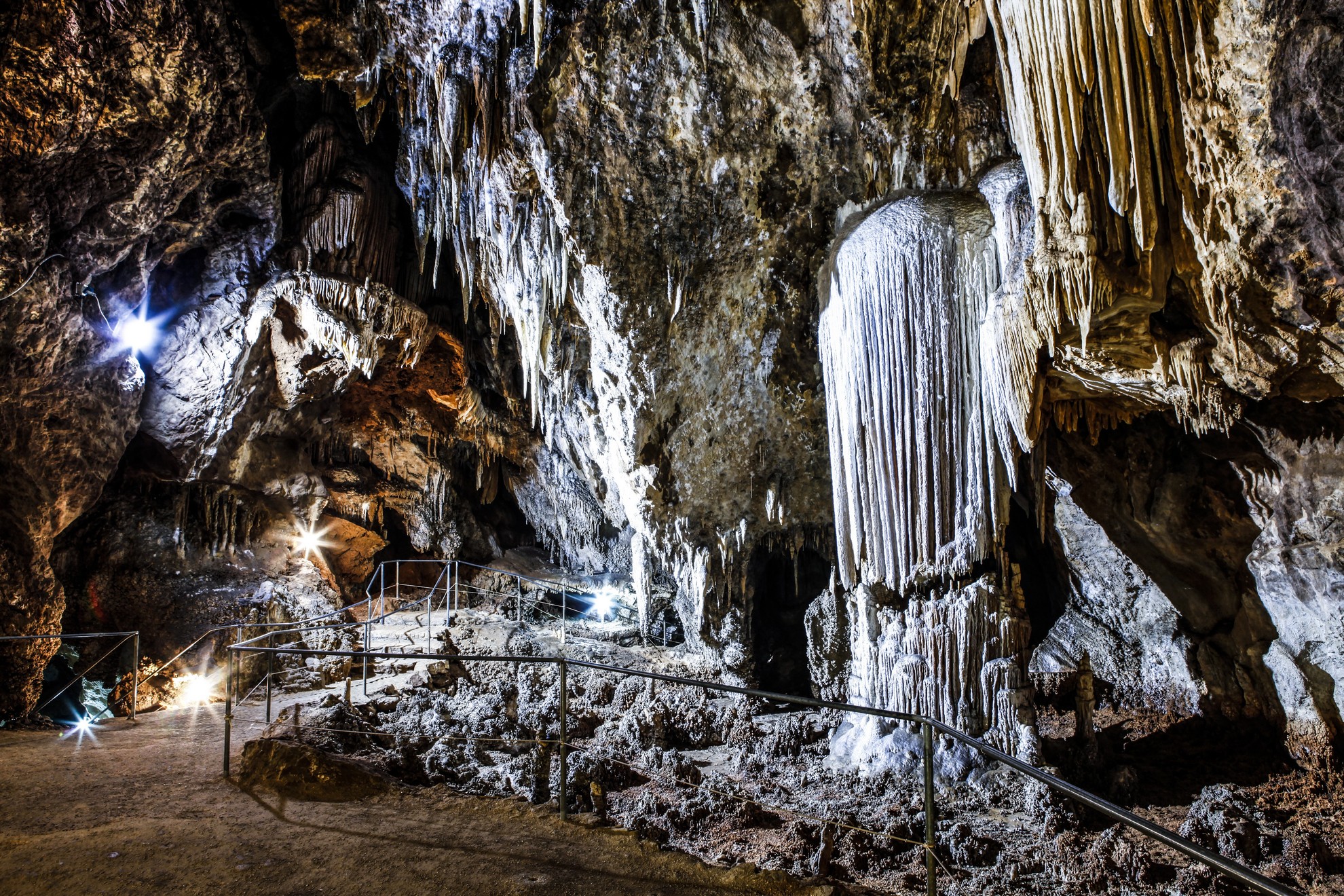
In a magical environment, made of rock and fantasy, you become a child again. The grottoes of Is Zuddas, in the territory of Santadi, open up 236 metres below sea level in the cambrian limestone, dating back to 530 million years ago, of Monte Meana. They extend over a total of 1650 metres, while the visitable tourist itinerary is half a kilometre long. Each of the rooms stands out for its size and the variety of concretions covering cavities and walls: from stalactites, stalagmites, flows and tubular formations to aragonites, symbol of the caves, the formation of which is still a mystery and is the object of research.
Just past the entrance, look up at the ceiling, where you will see the tracks of the Prolagus sardus, a now-extinct rodent that existed only in Sardinia and Corsica. The Organ room is one of the most evocative rooms. Its name derives from a column of stalactites and stalagmites, resembling a pipe organ, embellished by formations of various shapes. After a short tunnel, the impressive Theatre room opens up before you and is a prelude to the Eccentrics room, adorned with aragonites, unique thread-like formations unlike any others in the world, which have developed in all directions without being influenced by gravity, often taking on bizarre shapes. Next to these are the acicular aragonites: large tufts of crystals similar to needles, known as 'cave flowers'.
A visit during the Christmas season is even more exciting: in the Organ room, you will be able to admire a charming nativity scene, enriched by trachyte sculptures created by the sculptor Giovanni Salidu. Nearby, there are other evocative caves: Pirosu, inside which a Nuragic sanctuary was found, and those of the Campanaccio (Cowbell) and the Capra (Goat).

Pula
If you want the sea all year round, for bathing and getting a suntan in the summer and for the poetic atmosphere in the autumn and winter, Pula is the ideal destination for you. There are over seven thousand inhabitants in the residential area, from the metropolitan city of Cagliari, which is just 35 kilometres away. Pula is a treasure chest of natural, archaeological and cultural wealth without equals on the Island. As well as Pula's summer nightlife, with events and aperitifs in the squares, there are also excursions and sporting activities. For example, you can do some jogging along the tree-lined avenues that lead to the archaeological park of Nora, where you will get to know Pula's origins. Not far from the village, you will find yourself in one of the most well-known sites in Sardinia: Capo Pula contains the ruins of an ancient town, the first Phoenician one in Sardinia (8th century BC), which then became a flourishing Punic town and was later conquered by the Romans, becoming a municipium in 1 AD. Over the next two centuries, it enjoyed the maximum splendour: caput viae of all the Sardinian roads. ‘You will travel' through traces of three thousand years of history: you will admire a Phoenician-Punic tophet, the remains of Punic and Roman temples, a forum, noble dwellings, spa baths with mosaics and an amphitheatre that seated a thousand in the Imperial age and that is now the setting for the La Notte dei Poeti (Night of the Poets) festival. At the Giovanni Patroni Museum in Pula and at the Archaeological Museum in Cagliari you can admire the relics found during the excavations. After the archaeological excursion, you can take a walk on the beach of Nora: golden sand washed by a crystal clear sea and delimited by the promontory of the Tower of Coltellazzo. In the bay, you will also find history and traditions. The little church of Sant'Efisio stands here and is the place of the martyrdom of the warrior saint commemorated every year on 3 May during the Festival of Saint Efisio, to whom the population of Pula is extraordinarily devoted. Behind the bay, before having a plate of spaghetti 'allo scoglio' (spaghetti with seafood) and figs with cured ham, don't miss the lagoon of Nora at sunset, the habitat of rare birds. To the east of Nora, there is the beach of Su Guventeddu, popular with kitesurfing and windsurfing enthusiasts even in the winter. To the west, along the coastline, you will find Santa Margherita di Pula, consisting of a series of fine, white sandy coves with splashes of pink granite - Cala Marina, Cala Bernardini, Cala d'Ostia, Cala Verde, other smaller beaches of the resorts - looking out onto the crystal clear sea. A realm of relaxation with an immense pine forest behind it, which stretches as far as the marvellous Chia (Domus de Maria). You will also be by enshrouded by nature in the forest of Is Cannoneris and Pixinamanna, havens for trekkers, with their holm oaks, Mediterranean scrub and conifers. You can explore them while walking along the well-marked out trekking trails, through dense vegetation with rare plants, rocky formations shaped over time by the weather, watercourses and evidence of prehistoric civilizations. The forest complex is a wildlife oasis that has been repopulated with deer and fallow deer.
San Pietro - Villamar
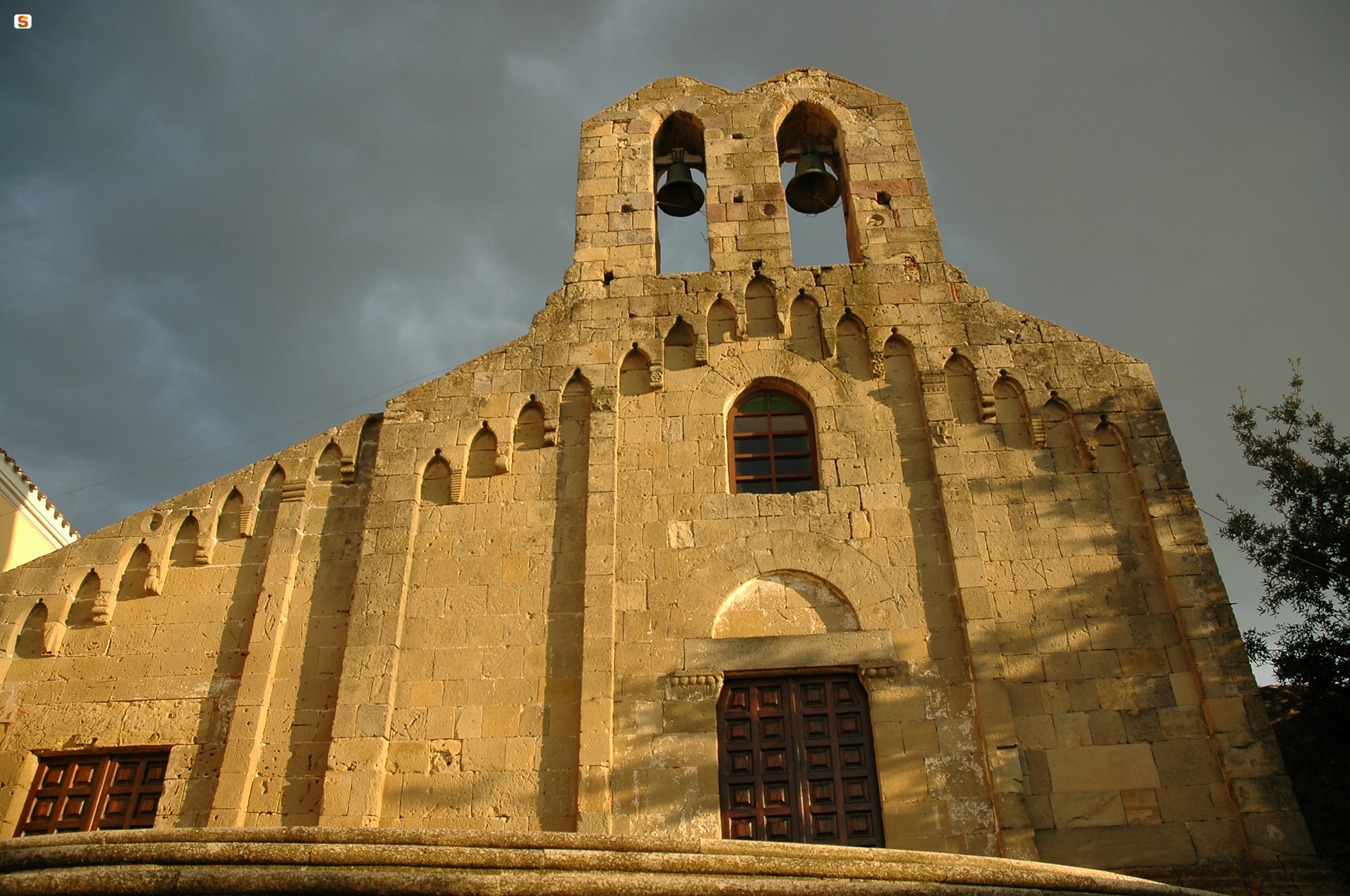
Romanesque churches with two apses are a rarity in Sardinia and the Church of San Pietro is an exceptional case within this originality, perhaps because its double apse was not envisaged in the original building. The sanctuary is located in the historic centre of Villamar, on the edge of the Majorcan district, an area ‘colonised’ in the 14th century by grain traders from the Balearic Islands. There are no sources that attest to the construction phases, but it is thought that the church was built, with a single nave, in the second half of the 13th century. Later on, a decision was made to expand it to the north by adding a second smaller nave. Both naves end with an apse, but the second has a smaller diameter and is not as deep. It is possible that the work was carried out by different workers and that, when constructing the north nave and the double bell gable, the builders tried to imitate the style of their predecessors. Some decorative motifs, such as the pointed arches on the façade, bring to mind Arab influences, suggesting that masters from Spain worked on the construction site.
The sanctuary, built in sandstone and vulcanite, rests on a high plinth, from which you will see corner pilasters and pilaster strips that start in the façade and divide it into sections. The corbels of the arches are decorated with a variety of ornamental motifs: crosses, flowers, pointed leaves and human protomes. Each of the two naves has its own entrance portal. Inside, they are separated by three large arches resting on rectangular-section pillars. The roofing is made of wood, while the floor retains its original stone construction. You can admire several wooden sculptures, including one depicting the saint to whom the church is dedicated in pontifical robes, gilded and damask, dating back to the late 16th and early 17th centuries. Just over two hundred metres separate San Pietro from the parish church dedicated to Saint John the Baptist, constructed on a pre-existing Romanesque building and the result of Gothic-Catalan renovation carried out in the 16th century. The parish church is the place where the Retable of the Madonna del Latte (the Nursing Madonna) is kept, one of the main works by the painter Pietro Cavaro, made up of various panels depicting scenes from the life of Jesus, Mary, apostles and saints. A short distance away, you can also visit the sixteenth-century Church of Madonna di Antoccia, which contains several multicoloured statues created using the cannuga technique, meaning with the body made of a frame of canes. Outside the residential area, in the middle of a park, stands the small Church of Santa Maria d'Itria. Every year, on the third Sunday of August, the people of Villamare come here in a procession, accompanying the statue of the Virgin Mary and celebrating a festival that is particularly heartfelt by the community.