From Mandas to Arbatax
Journey length: 159 km
Travel time: 5 h
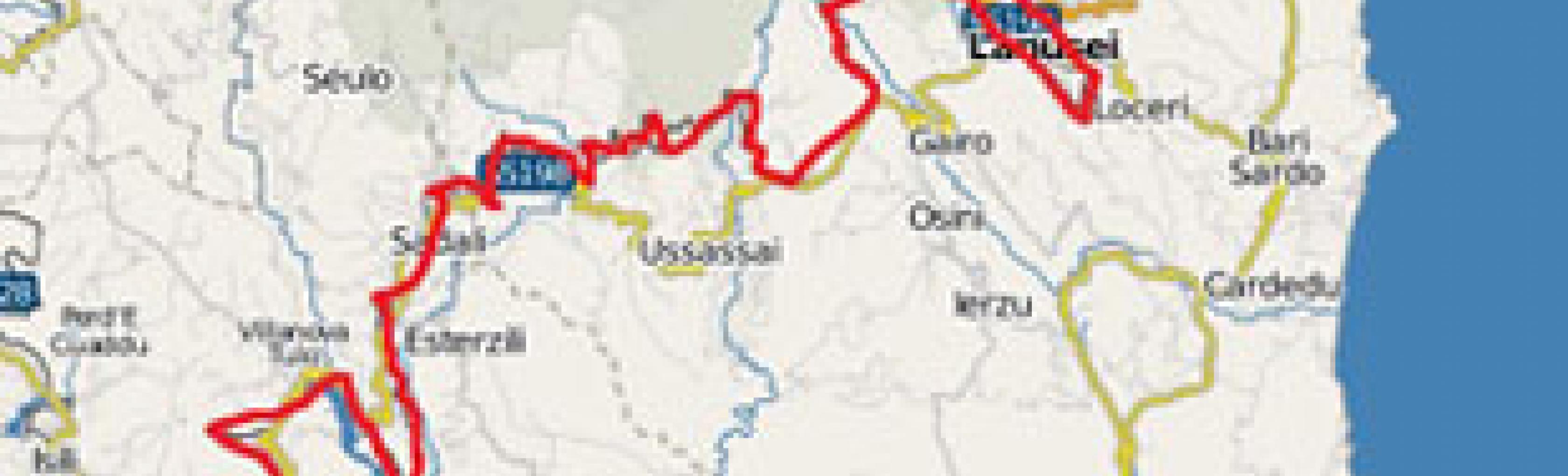
See map
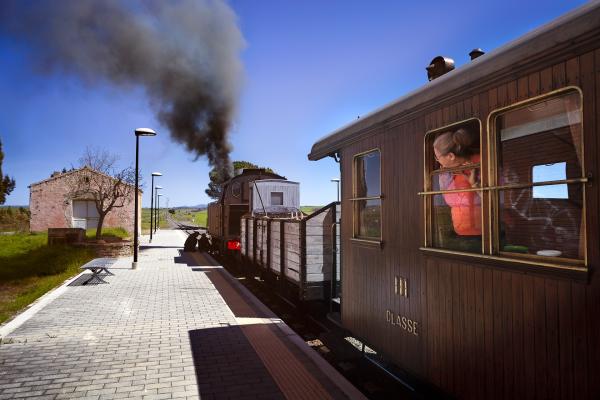
This railway, today a tourist train route known as the “Trenino Verde” (Little Green Train), was built in the late 1800s to link the interior of the island with the main cities and ports. The over 600 km-long railway crosses some fascinating, wild areas of Sardinia, including stretches of landscape not reached by any roads. Many writers rode this train to explore the island’s interior, including D.H. Lawrence.
1st section: Mandas – Orroli – Nurri
Snaking through hilly countryside, the first leg of the train journey starts from the village of Mandas, lying at the border between the Campidano plain and the mountainous Barbagia of Nuoro. In 1600, Mandas became the seat of the island’s first Spanish duchy. The small town has a well preserved historic centre, with interesting heritage attractions: the Church of S. Giacomo, the Convent of S. Francesco and the Ethnographic Museum “Is lollas de is aiaiusu” (the ancestors’ rooms). The first station on the route is Orroli, a village whose countryside is dotted with important archaeological sites, including many chamber tombs, the “domus de janas”, and nuraghi, including the Nuraghe Arrubiu, the island’s only 5-lobed nuraghe. The train then heads to Nurri, in the heart of the Sarcidano. Lying atop an ancient, extinguished volcano, this village is famous for its beautiful wrought iron and wooden handicrafts and offers visitors a choice of accommodation in finely restored traditional houses.
2nd section: Villanovatulo – Esterzili – Sadali - Seui
Having left the wide plains behind us and passed the Villanovatulo station, the view now embraces the Flumendosa lake valley. The train then reaches the mountain station of Betilli - Esterzili, surrounded by thick holm oak forest. The train passes through the tableland of Sadali. This village, a much-loved stop, offers a perfect combination of stunning natural attractions, such as the Is Janas cave and the Su Stampu de su Turrunu waterfall, mouth-watering local food and hearty hospitality. The route then continues uphill, to over 800 m asl. After an interesting stop at the old coal mine of S. Sebastiano, another hugely popular stop, especially among trekkers; the countryside has a wealth of scenic walking routes winding amidst oak and chestnut woodland.
3rd section: Ussassai – Gairo – Villagrande - Arzana
The forest becomes thicker as we cross the longest tunnels and highest bridges of the route, among the Gennargentu mountains, reaching Ogliastra. The first station is Niala-Ussassai, famed for its dramatic mountain landscapes, dotted with huge limestone cliffs which historically isolated this region from the rest of Sardinia. Passing through the moonscapes of Taquisara we reach Gairo, a village whose historic part is now a fascinating ghost town, abandoned in the 1950s after a great flood. After passing the tunnels and the Flumendosa lake, close to the Villagrande Strisaili station, we get to Arzana, which commands a jaw dropping view of the coast and sea of Ogliastra.
4th section: Lanusei – Elini – Ilbono – Tortolì - Arbatax
The railway proceeds downhill, doubling up underneath its previous tract, and reaching Lanusei, a village perched on a mountain slope facing the sea. The area is clothed in holm oak, chestnut, conifer and down oak woodland, stretching for more than 600 ha. The Selene wood, in particular, is famed for its many springs thought to have healing properties. We then get to the small quaint station in the village of Elini. Marking the boundary between the hinterland and the Ogliastra coast, Elini enjoys a panoramic position, surrounded by olive groves and vineyards. Proceeding towards the sea, we cross the village of Tortolì and reach Arbatax, a fitting end to this wonderful trip, on the Cala Genovesi quay, right in front of its famous red rocks. The whole coast is marked by red porphyry rocks alternating with ribbons of white sand.
Catalogo 2012 dei viaggi del Trenino Verde
Information: Trenino verde