
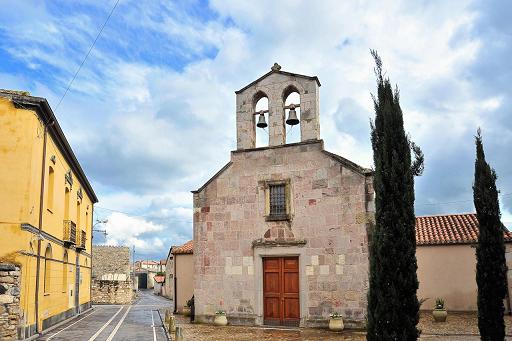
Turri
The town sits in the heart of the flat part of the Marmilla, between the Giara of Gesturi and that of Siddi. Turri offers a variety of panoramas: in the spring you’ll get the green of the cultivated fields, in summer the intense colour of the earth. The town shares a ranking as prime saffron (Sardinia’s ‘red gold’) production area with the town of San Gavino Monreale. The town boasts little more than 400 residents and consists of an historic centre made up of characteristic houses with central courtyards and small vegetable patches, all surrounded by high walls. Most of the houses open to the street with wide entranceways, and while some of these date to the 1800s, most of them were erected in the XX century.
You can visit the town in phases through the XVII century church of San Sebastiano, in front of which is a building from the late 1800s, seat of Monte Granatico, an old palazzo where the harvested grain was gathered. The building has an elegant look about it with Palladian decorations above the architraves of the windows that show the architect’s classical leanings. The lovely park of olive trees and the monumental cemetery of Sant’Elia are also well worth a visit. In September there is an unusual event: the scarecrow exhibition.
The town is surrounded by a territory which has been inhabited by man since prehistoric times, as proven by the nearby nuraghes: the single-tower variety of Bruncu Monti Ari, Turrig and Sirissi, and the two Nuragic complexes of Cabonu and su Senzu.

Campionna
Among the Island’s scenic roads, provincial road SP 71 deserves a special mention: it is known as the ‘South Coast’ and its 25 kilometres offer film-like scenery, alternating picture-postcard beaches with rough granite and clay cliffs, with a hinterland of Mediterranean scrub. The beach of Campionna appears in this scenery, in a stretch of coast defined as rias, due to the rapid evolution of the land from sandy to rocky. The beach is set between two low cliffs: you will be dazzled by the whiteness of the fine sand, while the crystal-clear water reflects shades of green and turquoise. The seabed alternates sand, gravel and rocks and attracts diving, snorkelling and underwater fishing enthusiasts. The beach is never crowded, thanks to its secluded location and wild and unspoilt stretches, making it an ideal destination for both relaxing and enjoying sea sports. The view is also embellished by the islet of Campionna in front of the coast, which gives the beach its name. It can be reached by sea and, from afar, it looks like an unusual green pyramid emerging from the water.
On the coast of Teulada, sea lovers are spoiled for choice. Tuerredda often appears in the rankings of the most beautiful beaches in the Mediterranean published by specialised websites and magazines, with its five hundred metres of golden sand along an inlet between Capo Malfatano and Capo Spartivento, where there is also a scenic islet completing the panorama. Other landscapes are dominated by ancient Spanish watchtowers: this is the case of Piscinnì, a coastal enclave of Domus de Maria on the Teulada coast and a popular destination for surfers and kitesurfers, ‘protected’ from behind by the Piscinnì pond. A tower also stands out on the promontory of Capo Malfatano, surrounded by little coves, with the beach of the same name at its base, where coloured pebbles appear through the transparent waters on the seabed. Continuing further west, you will once more find white sand, transparent, turquoise waters and a small island covered in greenery at Porto Tramatzu, with the distinctive feature of its waters being shallow for dozens of metres, making it perfect for families with children. Beyond Capo Teulada the enchantment takes the form of the white sand dunes of is Arenas Biancas, the southern part of the beach of Porto Pino that falls within the territory of Teulada.
The coast is beautiful and welcoming and has always been frequented: you can admire a Phoenician tophet on the islet of Tuerredda and the mysterious submerged port of Melqart in Capo Malfatano. Towards the inland area you can go on nature hikes through the forest of Gutturu Mannu in search of prehistoric evidence: there are about twenty nuraghi in the surroundings of Teulada.
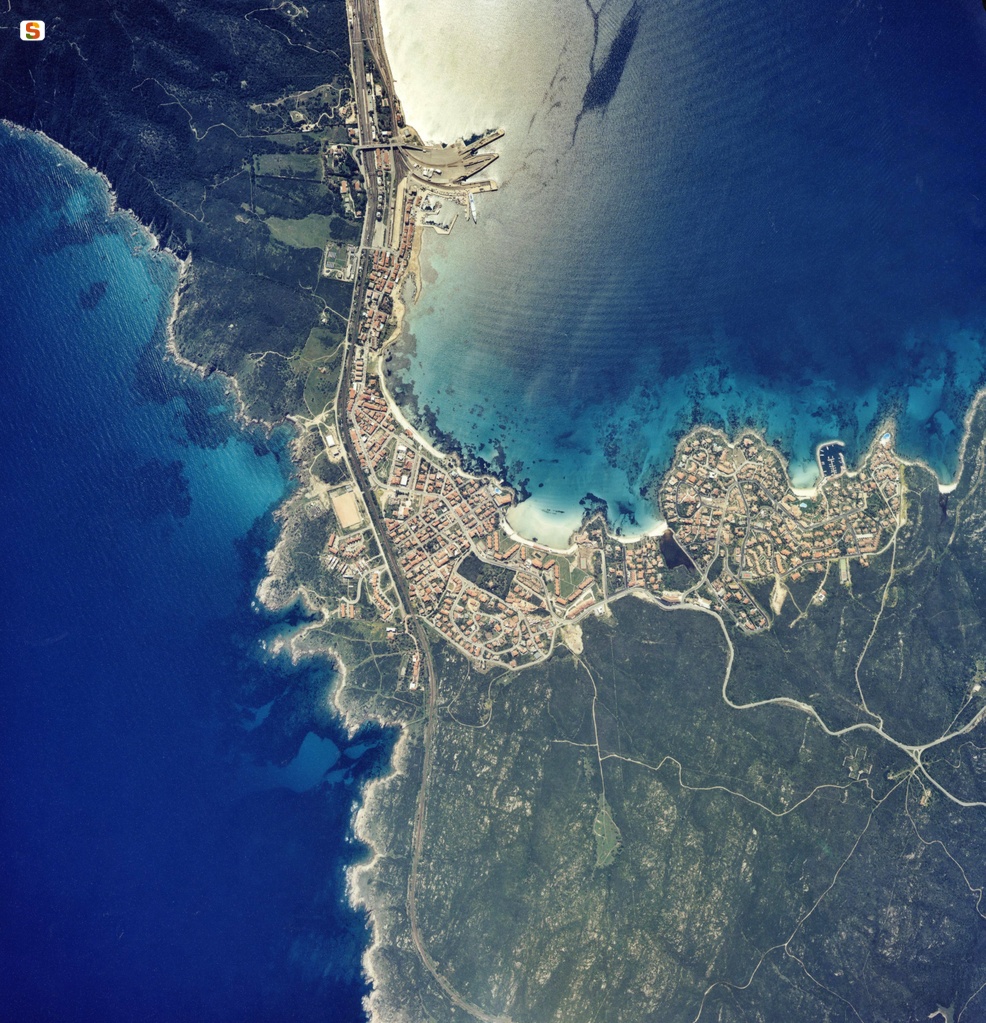
Marineledda
Marineledda is found at Porto Rotondo, in the commune of Olbia. The beach has fine-grained light-coloured sand with a number of rocks. It is reached from Porto Rotondo, continuing for about a few hundred metres after the Il Pirata restaurant, as far as the car park and then proceeding on foot along the dirt patch after the gate. The secluded and peaceful little beach is found set deep in a landscape of great beauty, amongst areas of the shore with low and scented vegetation, alternating with smooth granite rocks.
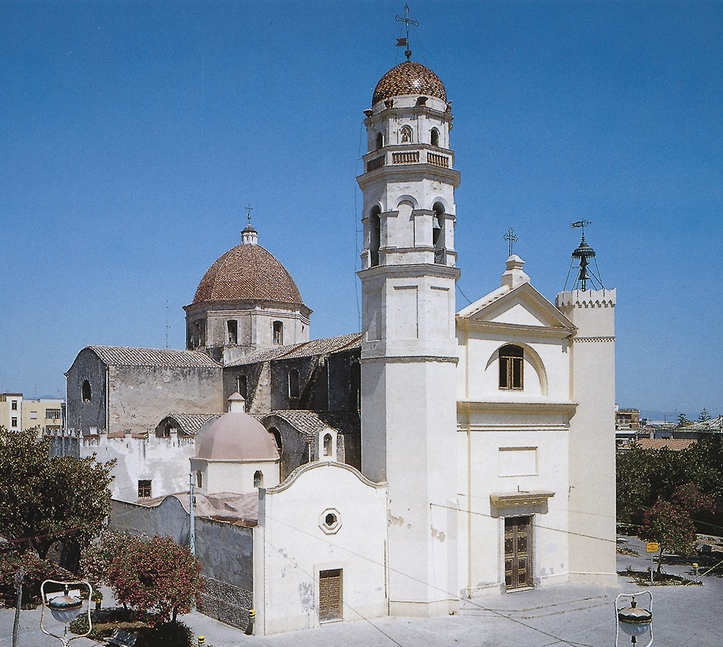
Quartu Sant'Elena
At the end of the 20th century, thanks to the construction of new districts, it underwent considerable expansion and its inhabitants doubled. Today, with almost 70 thousand residents, Quartu Sant'Elena is the third largest town on the Island, after Cagliari and Sassari. Once an agricultural centre, today its wine-growing production is still alive and it is renowned for its Malvasia wine. Its jewellery made using gold filigree is also famous, as is its production of breads and homemade pastries: candelaus, pabassinas and piricchitus. Its territory is located between: the Campidano plain, the mountains and the woods of the Oasis of Sette Fratelli and the Molentargius-Saline park, which you can visit on foot or by bike and admire greater flamingo colonies. The Quartu coast starts from the shoreline of Poetto and stretches for tens of kilometres along the eastern part of the Golfo degli Angeli. There is a mixture of sheer cliffs and sandy or pebbly beaches: Capitana, with a tourist port and, behind it, hills covered in poplars and eucalyptus trees, the natural pools of Is Mortorius, Cala Regina with pebbles and a blue sea, the beautiful Is Canaleddus and the spectacular Mari Pintau, where smooth stones are bathed by the 'painted sea' with its dazzling colours. Lastly, there is Geremeas, with its soft, white beaches: Kala 'e Moru and Marongiu.
Quartu emerged from the union of three villages. In order to protect it from the Saracens, the Spanish built five towers along the coast. Among the churches, the basilica of Sant'Elena Imperatrice stands out, inside which there are still beautiful frescoes, a pulpit and a baptismal font dating back to the 18th century and a statue of the saint, which is carried in a procession during the celebration of the patron saint (mid-September). Other ancient buildings are Santa Maria di Cepola, built on Early Christian ruins and extended in the 14th century, and Sant'Agata, dating back to the 12th century and then rebuilt between 1280 and 1300. In the countryside, there is Nostra Signora del Buon Cammino, with columns from the Roman era. Further evidence of the Roman period is a villa in the district of Sant'Andrea, now submerged by the sea. In the territory, there are 38 Nuragic sites: the main one is Nuraghe Diana, with a main tower and two minor ones connected by curtain walls. In May, during a stage of the Monumenti Aperti (Open Monuments) event, you can visit historical buildings like the kilns that, between 1878 and 1985, produced bricks and roof tiles, the slaughterhouse, which was active until 1968, and the former Perra paper mill of 1911, which was the only factory producing paper for packaging. For the event, the ancient Campidano houses, with their frescoed ceilings and tiles with geometric patterns, are also opened up. There are two dwellings used as ethnographic museums: Sa Dom'e Farra (house of flour), in which agricultural tools are kept, and Il Ciclo della Vita (the cycle of life), where eight thousand traditional objects (18th-20th century) are on display. The Sciampitta is the Island's most important folk event and draws large crowds in July.
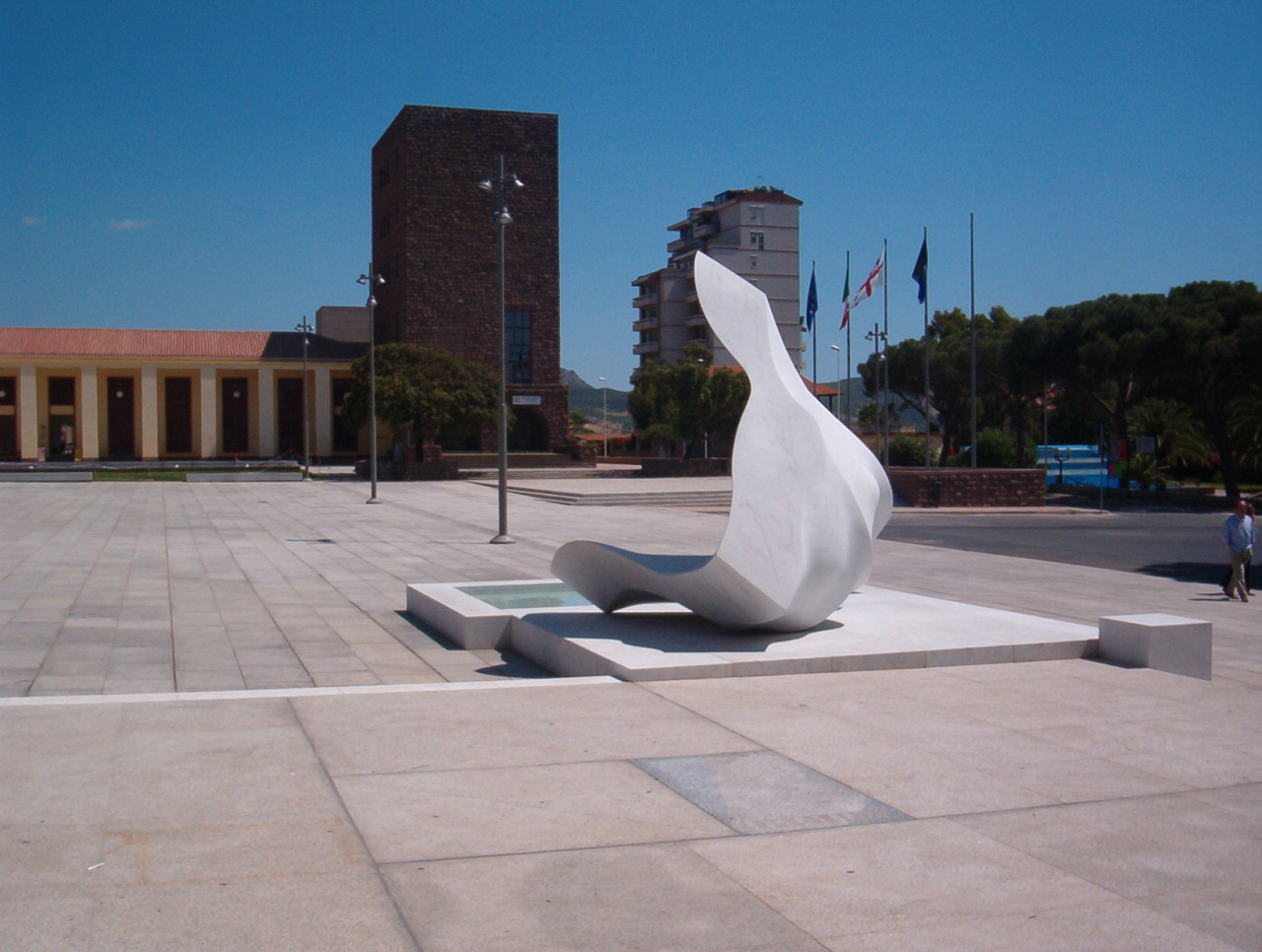
Siapiccia
Its ancient history runs parallel to that of nearby Siamanna, to which it was joined until 1975, when they became independent municipalities. Siapiccia was founded as a garrison town along a Roman road, the via (s’ia in Campidonese) that led from Usellus to Forum Traiani (Fordongianus), along the western slope of Mount Arci. The second half of its name (piccia, small) derives from this road being a smaller, secondary road with respect to the manna (big) road, along which Siamanna is located. The village, with less than 400 inhabitants, stands at the border of the Campidano plain of Oristano Province, from which it is 18 kilometres away, by the western slope of Monte Grighine and at the gates of the Barigadu historical territory. It’s an area rich in outcrops of quartzite, which was once used to obtain tinctorial materials, and in thermal springs: the most well-known are the therapeutic Sa Mitza de S’acqua Callenti thermal spring, and the microbiologically pure S’Arrogana Spring. The mountain, with its weathered rocks and at times impenetrable Mediterranean shrubs, dominates the landscape.
The town’s income comes primarily from shepherding and farming, particularly from the cultivation of wheat and barley. In its highest point, corresponding to the town centre, stands the Parish of San Nicolò di Bari. Consecrated in 1605, it houses a beautiful marble altar depicting the church’s patron saint, whose Feast Day is on December 6. A little over a month later, other religious festivities are held: Madonna del Rimedio on January 8 and the Fires of Sant’Antonio Abate on January 16-17.
The area surrounding Siapiccia has been inhabited since times significantly preceding the Roman Empire, certainly during the Phoenician and Punic periods, from which numerous burial sites and graffiti remain, and earlier still, during the Neolithic and Bronze ages, as seen from scattered evidence, especially from the ruins of nuraghes. During the Medieval Period, the town was initially under the control of Giudicato of Arborea and then under the Marquisate of Oristano.

Capo Malfatano
Along the Capo Malfatano stretch of coast, there is a combination of beaches with greyish sand, impervious cliffs and coves with amber-coloured sand, mixed with pebbles and rocks. The waters are shallow and transparent everywhere, with colours ranging from emerald green to turquoise. Of the beaches on the promontory, one very spectacular one that stands out is called Capo Malfatano, like the promontory, and it is situated between Tuerredda and Piscinnì. Along with Tuerredda, the beach that symbolizes the whole of Sardinia, and the splendid Porto Tramatzu, Cala Zafferano and the Dunes (or Is Arenas Biancas) in Porto Pino, it makes up the coastal treasure of Teulada.
It has medium-grain sand and pebbles, shallow waters and a sandy seabed, as well as inlets with amber-coloured rocks. The waters are always calm and take on a light blue colour, which becomes a deeper blue as you move away from the shore. Not surprisingly, the bay, which is sheltered from the winds, was chosen as a landing place in the 6th century BC, first by the Phoenicians and then by the Punics. Today, you can still see the great blocks of sandstone that formed the docks of the flourishing port, now submerged by the sea, but which can be discovered using a mask and flippers at a depth of just a few metres, close to the shore. In the western part of the beach there is a small beach establishment, from which boat trips set off along the whole coast.
Overlooking Capo Malfatano, there is a Spanish tower, behind which you will find a pond that makes the landscape even more evocative from the point of view of nature. From above, you will have a spectacular view of the nearby bays, particularly the little coves of Punta Tonnara to the west, which can be reached via a steep descent, towards the little island of Tuerredda and, in the distance, you can see the sea stacks of Capo Spartivento.
Narbolia
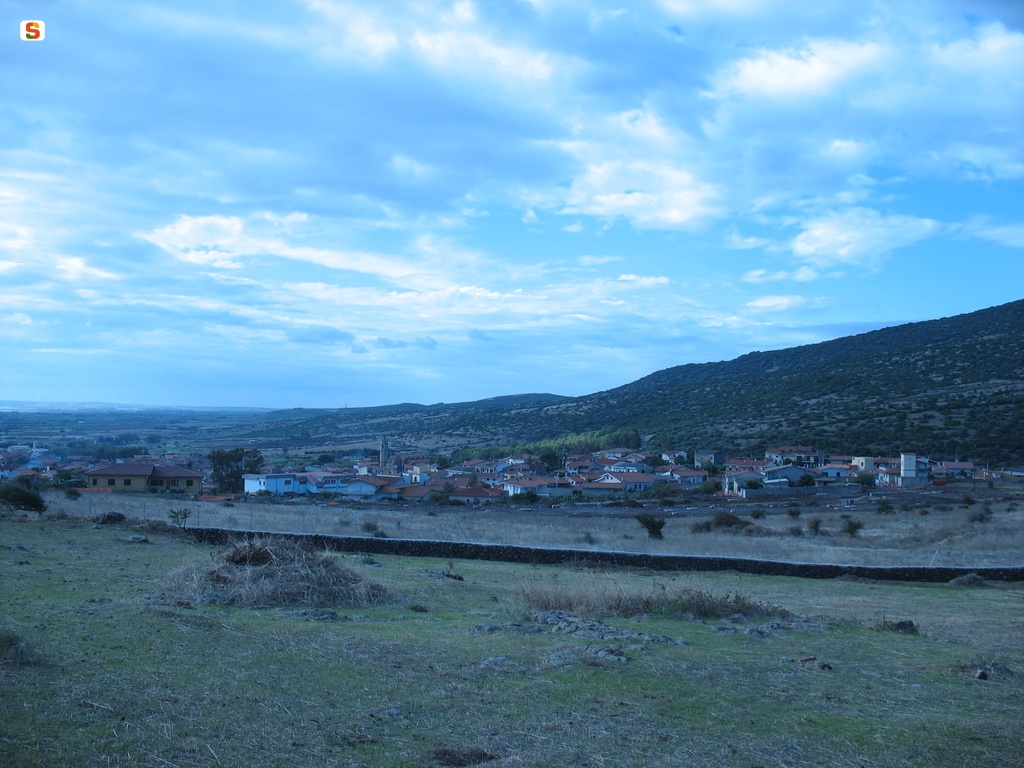
The town is set on the border between Campidano di Oristano and the Montiferru massif, near the splendid beaches of the Sinis peninsula. Narbolia has a population of 1800, with basalt homes decorated with murales of scenes from its long agricultural past. Today the town's economy relies on a combination of agriculture, farming, and tourism; in the 19th and 20th centuries it also included lime production (with 19 kilns in the area). The town is known for producing cereals, fruit and quality wines to combine with its culinary specialities, such as at the Saboris Antigus festival in July. Each religious festival has its own typical pastry: papassini for All Saints Day, is pardulas for Easter, amarettus, gueffus and mustazzolus for christenings, weddings and saints days. During the carnival period, a zippole festival is held. The most popular festival is for Santa Reparata in early October. She is the patron saint of the parish church, which dates from the 17th century and has a Baroque altar (1790). Another unmissable religious building in the town centre is the old church of San Pietro Apostolo, whose saints day is celebrated at the end of June. The town is overlooked by the rocky Mount Rassu (nearly 500 metres), which is surrounded by foothills covered in Mediterranean brush. The Rio Cunzau valley separates the mountains from the great plains of Cadreas, which has a wealth of archaeological remains. Then there is the coastline, dominated by the sand dunes of Is Arenas. It is a small "desert" that has been cleared and stabilised since the 1950s. A pine forest runs from Torre del Pozzo to is Benas, right up to one of Sardinia's longest (7 km) and loveliest beaches. This green oasis of pines, acacias, pistacia, junipers, orchids, palms and grassland also hosts an 18-hole golf course that blends into the dunes and pine forest, making it one of the most spectacular in Europe.
The area has traces of settlement dating back to the Neolithic: the Funtana e Figu site and the domus de Janas at Campu Darè, where a dozen Giants' Tombs were built several centuries later: the megalithic nuraghic burials are set within a square shape framed by four nuraghes. One theory suggests that the name Narbolia is derived from Nurapolis, city of the nuraghes. There are around twenty, dating back to the mid and late Bronze Age (16th to 13th century BC), many of which are complex, a few are single-tower, and one is an archaic "corridor" nuraghe. They are surrounded by walled villages. The most significant is the Tradori nuraghe. A sculpture of a human head similar to that of the Mont'e Prama Giants dates to the late period of nuraghic civilisation. Don't miss sa Murallia, in the old town: a 17 metre long, 3 metre thick and 3.5 metre wide basalt wall built over a four-lobed nuraghe in Phoenician-Punic times. Fragments of plaster hint at its use in medieval times: perhaps as a castle built for Eleonora d'Arborea. Roman villas with baths also remain: in Sant'Andrea di Psichinappiu the ruins were transformed into a Christian church; at su Anzu (the baths) you can see a frigidarium with apsidal bath and what was once mosaic flooring, along with three hot areas, one with a decorated vault. The remains date back to the 1st to 4th century AD.
Cala Greca
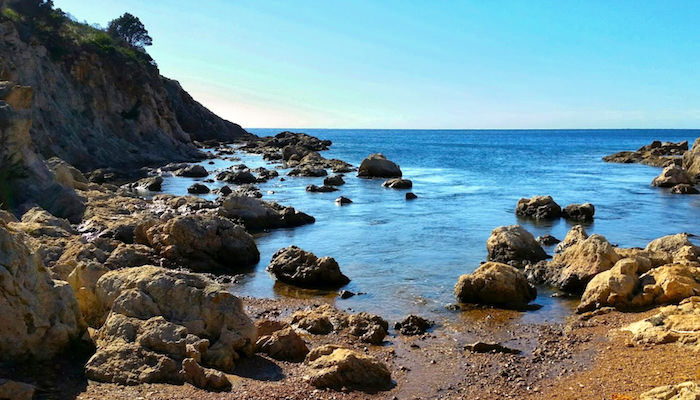
Located in the easternmost part of Capo Figari, in the territory of Golfo Aranci, Cala Greca is a small beach of pink stones and rocks, facing east and hidden by limestone cliffs overlooking the sea. The bay is located inside a nature reserve and can be reached on foot from the nearby Cala Moresca, an enchanting beach where the road ends.
Cala Greca has shallow waters and a pebbly seabed and is surrounded by dense Mediterranean scrub. Nearby, you’ll find the unusual rock of ‘Mamma Chiatta’, named that way because it resembles an overweight, elderly lady. The beach is cosy and without services and it is frequented by diving enthusiasts because of its rich seabed. There is a centre that provides the necessary equipment for lovers of water sports.
Behind Cala Greca, there is a small valley that can be reached via land. It slopes towards the sea and conceals a small cemetery known as the ‘cemetery of the English’. Inside it, there are thirteen tombs but, despite the name, only one English sailor from the ship named Vulcan is buried there, while on the northern side, there is a marble plaque, placed there in 1891 by the crews of the Navigazione Generale Italiana, an Italian shipping company, in memory of the sailors who died in the shipwreck of the Ligurian sailing ship Generoso II and were buried in 1887. The other tombs are of sailors from Golfo Aranci, whose names have been lost and who are celebrated every year.
Cala Greca is part of a nature reserve, namely the promontory of Capo Figari, which is dominated by an ancient lighthouse 350 metres above sea level, a unique Mediterranean habitat, to be discovered on trekking itineraries. You will reach the top after visiting other splendid coves of Golfo Aranci, Moresca and del Sonno. You can also dive down to the seabed full of life and the mysterious caves of Punta Filasca.
Civic Archaeological Museum of Ozieri
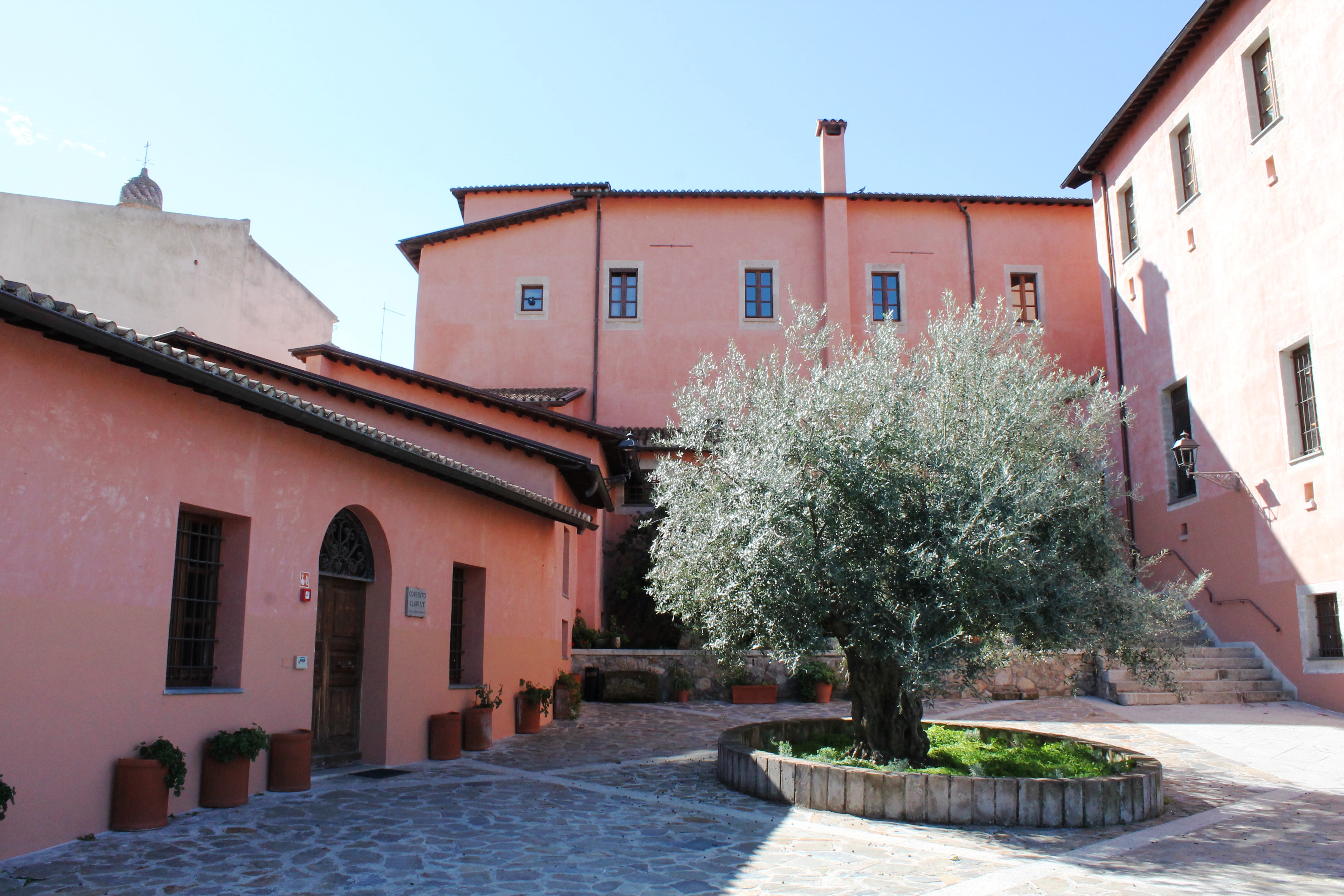
It contains finds discovered in a place that is fundamental for Sardinian prehistory. Furthermore, in its ‘treasure’, there is also one of the main collections of ancient coins of Sardinia. The Civic Archaeological Museum of Ozieri is located in the historic centre and is also known as the ‘Museum of the Poor Clares’ or ‘Convent of the Poor Clares’ because, for almost a century and a half, from the mid-18th to the late 19th century, the building hosted a community of Poor Clare nuns from Orosei. It is dedicated to the archaeology of the Ozieri territory, with objects dating back to the Palaeolithic era, covering a period of time that reaches the modern age. In particular, you can admire the finds from the Cave of San Michele that was important to the point of giving its name to the first prehistoric cultural facies, of which there are widespread traces throughout Sardinia.
Among the various ceramics dating back to the San Michele culture, corresponding to the recent Neolithic Age (3500-2900 BC), a piece that stands out is the famous Pyx, a pot decorated with engravings in the shape of bull horns, very similar to those found in several Domus de Janas in the territory. You will find it in Room 1, dedicated to prehistory. In Room 2, you will find artefacts dating back to the Nuragic age: ceramics, bronzes, stone utensils and votive objects, such as swords and incense boats. Moving on to Room 3, you will find the historical era, where you can see artefacts from the Punic and Roman ages, while Room 4 contains jewels, ceramics and lithic elements from the Byzantine and medieval periods. The numismatic collection can be found on the second floor, divided into another four rooms, where around six thousand coins are on display. Here too, a chronological criterion has been adopted: the various rooms contain, in order, Greek, Punic and Republican coins; Imperial coins; late Roman and barbarian coins; lastly, medieval, Spanish and Savoy coins. On this floor, there is also an ethnographic section and the conference room. The museum organises events, temporary exhibitions, educational workshops and training activities.
Once the visit is over, you can go to the site from which the artefacts of the San Michele culture originate. The cave of the same name is located south of the town and about sixty metres of it can be visited. You will see stalactites and calcite alabaster duricrusts and you’ll be able to imagine the ancient inhabitants of five thousand years ago, who frequented the cave for their cults or to bury their deceased.
Another monument not to be missed in the Oziero area is the Basilica of Sant’Antioco di Bisarcio. To reach it, you’ll need to travel about 15 kilometres and take a leap in time of four thousand years compared to the cave, admiring one of the most captivating medieval churches on the island.
Florinas
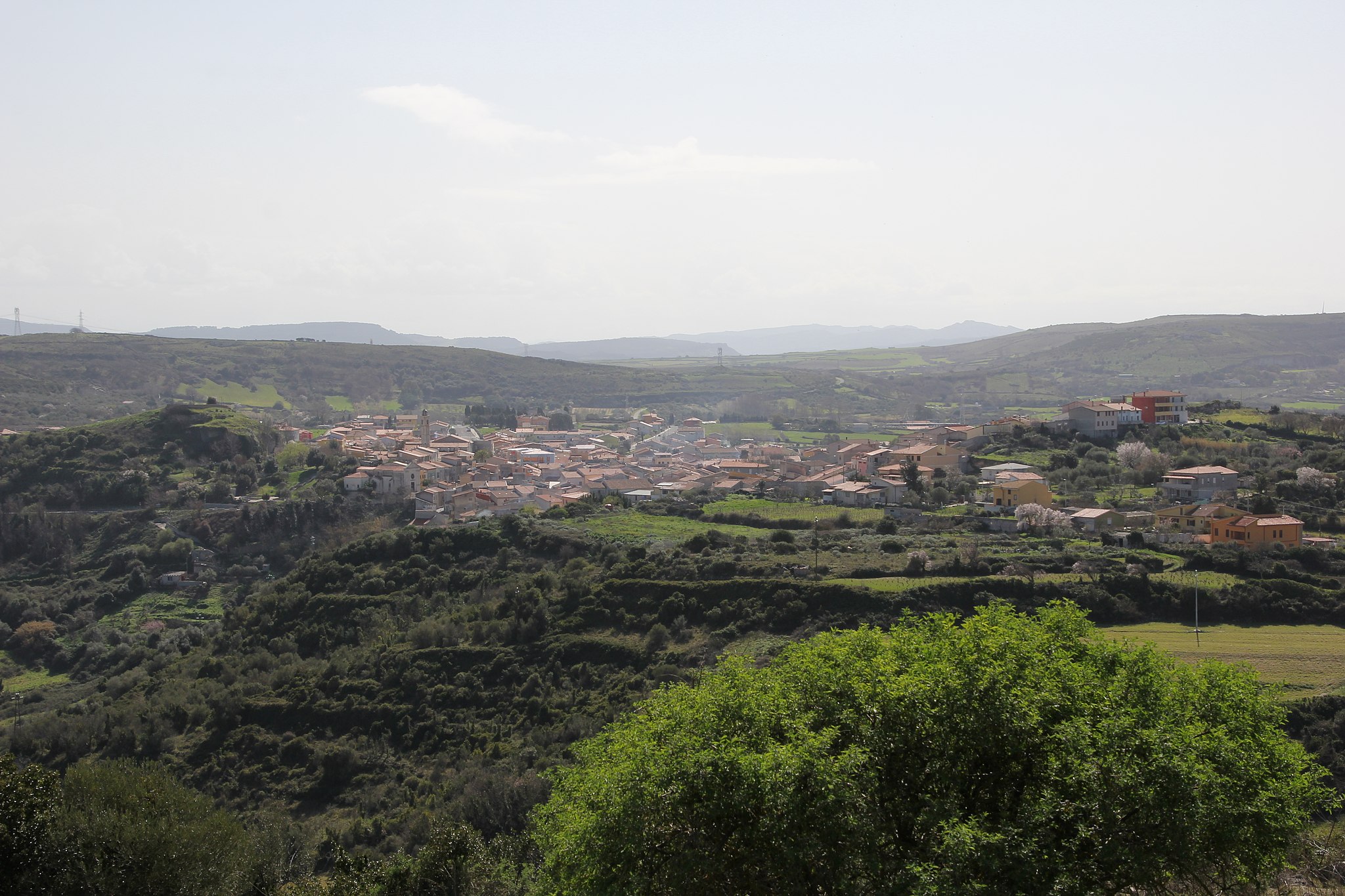
Along the Codrongianos valley in a predominantly hilly area, Florinas is a town of 1,500 inhabitants, situated between Logudoro and Sassari area. The etymology of the appellative is linked to the Latin Figulinas, the name of the mountain by which it is shielded and the toponym that referred to the presence of a town specialised in the processing of ceramics. The Figulinas Festival is the most important cultural event in the country, an evocative and important international folklore festival that, each August, unites folk groups from all over the world.
Florinas has always been a crossroads between north and south of the island, as is confirmed by the discovery of terracotta from the classical age. The territory is a veritable archaeological park full of remnants that attest to its frequentation starting from the pre-Nuragic and Nuragic periods, with around ten Domus de Janas, about thirty Nuraghe structures and a Tomb of Giant’s. To these, the Roman necropolis from the late imperial age is added. Some sites hold particular significance, including the tomb of Campu Lontanu, from the early Bronze Age, which presents an arched stele on the main façade that rises almost 4 metres in height, atop of which were originally placed three small baetyls. The well-preserved Nuragic Corvos dates back to the Bronze Age. From the previous era, the necropolis of Pedras Serradas is a must-see, formed by five Domus de Janas tombs carved into the limestone rock. The site dominates the small valley of s’Elighe Entosu which gives its name to another nearby prehistoric burial ground. The four hypogea of the Neolithic necropolis of s’Abbadia are also of great interest.
To be admired in the historic centre are four churches: Santa Croce, San Francesco, San Rosario and – above all – Santa Maria dell’Assunta, built around the 18th century, perhaps on an even older structure. The room has a rectangular layout and a barrel roof. On the sides are a number of cross-vaulted chapels enclosing valuable wooden altars. Florinas holds three traditional religious festivals, in honour of the Madonna di Pompei (May), of Sant’Antonio (June) and of San Francesco d’Assisi (October). In addition to the Figulinas Festival, another event enriches the cultural calendar, being Florinas in Giallo. During the literary festival dedicated to thrilling noir crime novels, meetings with authors and round tables, readings, animated re-tellings and concerts are held.