

Sa Domo 'e Marras
It was built in the 18th century in the historic centre of Galtellì, a village in lower Baronia, and was inhabited until the 1970s. Then, after being restored in 1995, in keeping with the traditional architecture, the ancient manor house of the Marras family became an ethnographic museum and today it contains a collection of 1800 objects including work tools, furniture and grave goods, which enrich the architecture of sa domo ‘e sos Marras.
Casa Marras is a typical 18th-century noble palace that has retained the appearance of a castle with a crenellated turret. From a large portal, passing through a barrel vault above which there is an inhabited floor, you will enter a rectangular courtyard paved with cobblestones. In the centre there is a well, with arcades on the sides that reflect the organisation of family and collective life of a typical community with an agro-pastoral vocation. On the ground floor, the rooms will allow you to relive activities of the past aimed at transforming and preserving agricultural products. The tools tell the story of the work cycles. The first floor, which can be accessed via an external staircase near the entrance to the courtyard, contains the residence. A corridor will lead you to various rooms furnished with eighteenth-century furniture: here, the collection of antique ‘pieces’ embellishes the rooms, also visited by Nobel Prizewinner Grazia Deledda.
After visiting the museum, don't miss a chance to walk along the stone-paved streets of the village, a former bishopric inhabited by extraordinarily devout citizens: you will come across five churches (plus three more in the countryside) in the space of about one square kilometre. Some are architectural jewels, such as the Church of the Santissimo Crocifisso and the former Cathedral of San Pietro. Then you can dive into the nature of the mountain that ‘protects’ the village: from the top of Monte Tuttavista,. as its name suggests, you can observe breathtaking views.
San Pietro - Galtellì
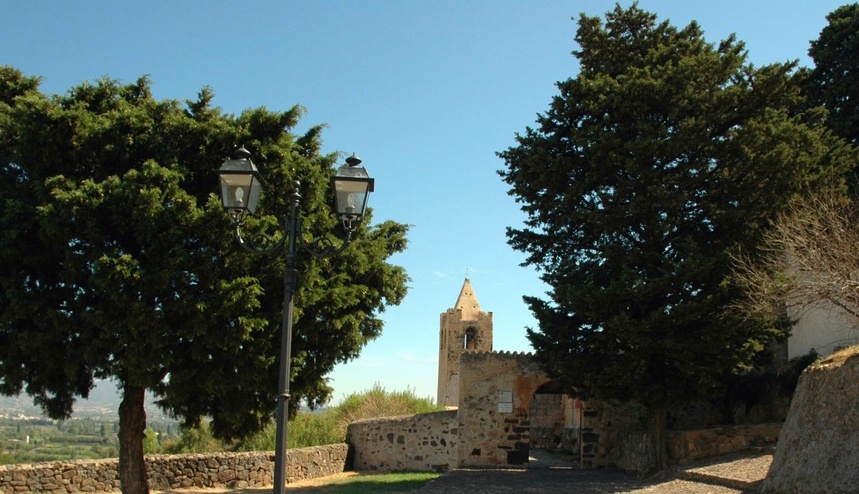
Inside the cemetery walls, at the eastern exit of the residential area of Galtellì, you will see a high bell tower on the right. It is part of the complex of San Pietro, once the bishopric of the small village in Bassa Baronìa, transferred to Nuoro in 1496. Of the three buildings of the medieval diocese, the square-section bell tower may have been built in the late sixteenth century over an older tower and the large Romanesque cathedral remained unfinished, while the other church, perhaps early medieval, smaller and originally with one nave, was then enlarged to include three naves.
Around 1090, construction began on the large Romanesque church, which was to serve as the cathedral of the diocese of Galtellum. The small church may have already existed, but was unsuitable for hosting the bishop’s throne. In 1138, the diocese fell under the control of the archbishopric of Pisa: due to dependence on the Pisans and lack of funds, the works were suspended. The cathedral was to be an imposing building, but only the northern side of the hall, the transept and the oriented apse were built. Two bishop’s tombs were placed in the external walls. Following the abandonment of the construction site, the bishop continued to reside in the smaller church, which was decorated and ennobled along all the walls with frescoes by painters from Umbria and Lazio in the first decades of the 13th century, a series depicting stories from the Old and New Testaments. They have resurfaced thanks to recent restoration work: today you can admire them in all their beauty. To upgrade the church to the ‘episcopal’ rank, the layout was enlarged to three naves and the northern side of the hall, the northern arm of the transept and the eastern end of the southern one were raised, while the apse was rebuilt. The external surfaces are made of local stone. The light spreads through arched single-lancet windows that open into the apse and into an arm of the transept.
From the former cathedral, you can continue your journey along the paved streets of an extraordinarily devout village: in the space of about one square kilometre, you will come across five churches, including several architectural jewels, such as the church of the Santissimo Crocifisso (Holy Crucifix). Then there are three more in the countryside in the direction of Mount Tuttavista, where you can combine a cultural visit with a hike through nature: from the top, you can enjoy breathtaking views.
Castle of Sassai
Its short but intense life lasted about a century, during which time it was built, besieged, destroyed and abandoned, becoming a symbol of a decisive phase of Sardinian history. The Castle of Sassai, also known as Orguglioso, was built on behalf of the Judicate of Cagliari, controlled by Pisa at that time, in the 13th century, with a purpose common to many other of the island’s medieval fortresses: that of defending the borders between enemy judicates. It is no coincidence that it was built high up, on a hill of the plateau four kilometres from Silius, so that it could watch over the territory and protect the nearby village of Sassai, of which no traces remain. The most famous, legendary story linked to the castle dates back to 1353, at the beginning of the Sardinian-Catalan war: after becoming an Aragonese possession - along with the entire Judicate of Cagliari - it was attacked by partisans from Cagliari on behalf of Mariano IV of Arborea. Some sources mention the presence of 700 horsemen and a large infantry defending the castle. Nevertheless, these were not sufficient to ward off the attack. The judge decided to order its destruction and, after the truce signed the following year, the Spanish Crown chose not to rebuild it.
An Aragonese document, dated 1358, contains a drawing, indicating the castle of Argullos, in which the fortress appears as a ruin. The conflict lasted about seventy years, at the end of which the island fell completely into Spanish hands, which is why the border castles lost their function and most of them were left to decay. The castle’s period of life coincides with Sardinia’s transition from a judicial to a feudal land, a change that profoundly marked the life of the Sardinian people.
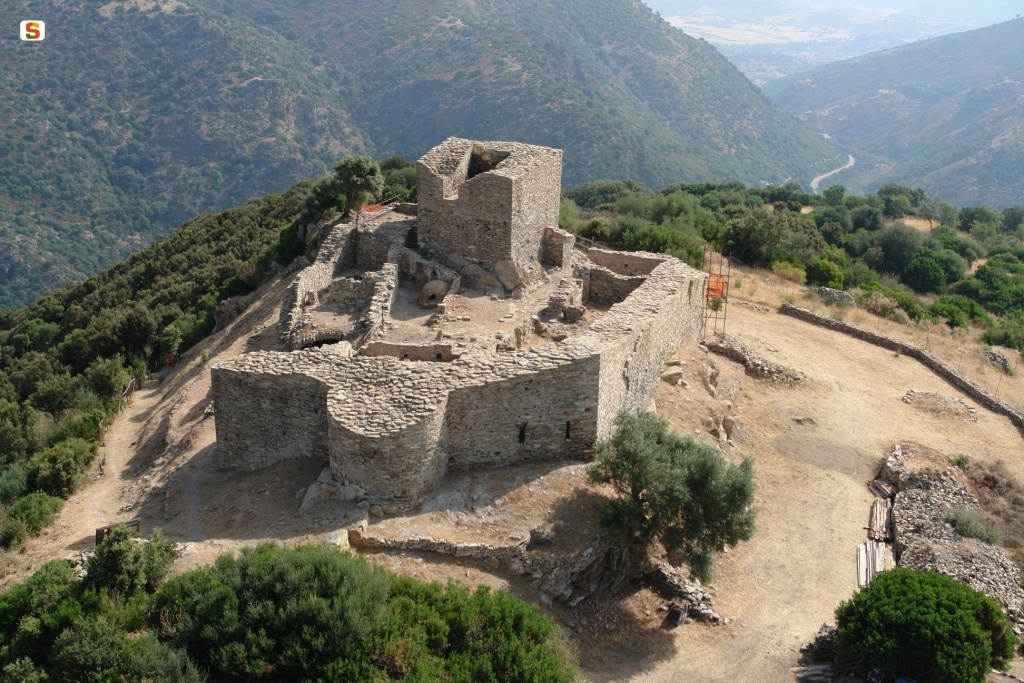
A stepped path surrounded by greenery will lead you from the Silius-Ballao municipal road to the top of the hill, on which you will find the remains of the fortress, built from regular-shaped schist ashlars. On the north side, you can observe the perimeter walls and the ruins of a square tower. Another tower, with a circular section, was inserted into the south-west wall. Along the walls, you will notice the embrasures used by archers. Several iron rings attached to the walls of two cellars show that they were probably used as a prison. Another space has been identified as a kitchen, due to the presence of an oven. Here, you will be intrigued by a red drawing on a wall: it may depict a soldier with chain mail armour and a bow. At night, faint moaning can apparently be heard coming from these ruins: during the siege, the Countess of Sassai, who wove very fine cloth with her gold loom, was the victim of a collapse. According to folk tales, she has been begging for help to free herself from the rubble ever since.
The view from the top of the hill embraces hills and valleys and the Silius villages of San Nicolò Gerrei, Ballao and Goni. You will also notice the pine forest, equipped for picnics and children’s games, inside which you will find the spring of is Alinos, where you can take a refreshing break. Meanwhile, a little further north, you can leap into the Nuragic age and visit the sacred well of Funtana Coberta.
Monte Nieddu
Entering the ‘heart’ of Mt. Nieddu is a non-stop nature discovery tour: wild mouflons, foxes and wild boar roam in their habitat and the golden eagle nests here, and you’ll never know when one will appear circling in the skies high above you. The stunning granite massif rises in the southernmost part of Gallura, between the territories of Padru and San Teodoro. From its peaks, Punta Majore and Punta Coloredda, and from the observation points marked along the trails, the view spans from Gennargentu to the marvellous beaches of San Teodoro all the way to the island of Tavolara. The paths in the woods, home to a wide variety of wild mushrooms, are suitable for everyone and have rest areas equipped for picnics.
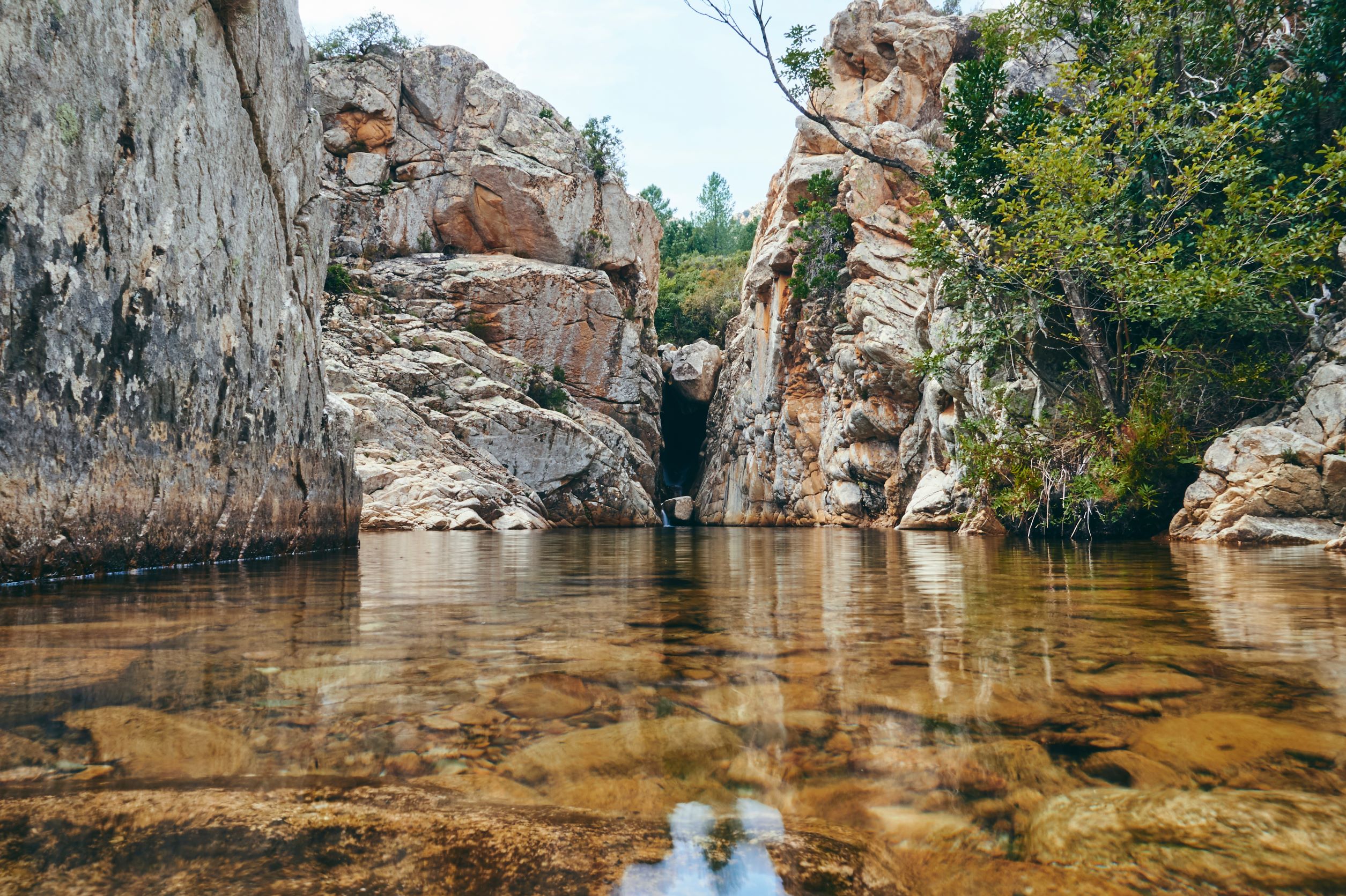
A picturesque forest of oak and juniper trees is home to the waterfalls and pools of Rio Pitrisconi. They are fed by a river bearing the same name, one of the few Sardinian streams that flows all year long. Over time, water erosion on the granite has slowly carved a gorge with natural pools, little lakes onto which the green of the Mediterranean vegetation is reflected, and a scenic waterfall featuring several drops.
To immortalise this gorgeous scenery, you can take some lovely pictures but there’s so more you can do here: a growing number of visitors prefer a more hands-on experience canyoning over the falls, the pools and the natural slides. Hiking is also an exciting option as you walk along the river banks admiring ancient trees and majestic sculpted rocks, even cooling off in the refreshing emerald green water of the pools. Now and again, take a break in the shade of a tafone, a characteristic granite grotto carved by erosion.
As you continue, you’ll come across the Pitriolu natural pool, another destination for canyoning enthusiasts and just as spectacular. The trail continues through woods of strawberry, oak trees and juniper bushes and brings you to the Scala Taddata waterfall, where you’ll find another small pool of crystal-clear water. As you walk along the ring trail back to the trailhead, the views of the sea that open up here and there in the woods are simply spectacular.
San Teodoro is considered one of the ‘queens’ of summer holidays in Sardinia, dotted with fine sandy beaches lapped by clear turquoise water: La Cinta, Cala Brandinchi, Lu Impostu and s’Isuledda, just to name some of the more celebrated beaches, will leave you breathless. Around Pedru, on the other hand, you’ll find archaeology and nature in the area of Santu Miali, a valley dotted with the remains of a rural Roman villa, a necropolis and two medieval churches.
Colostrai
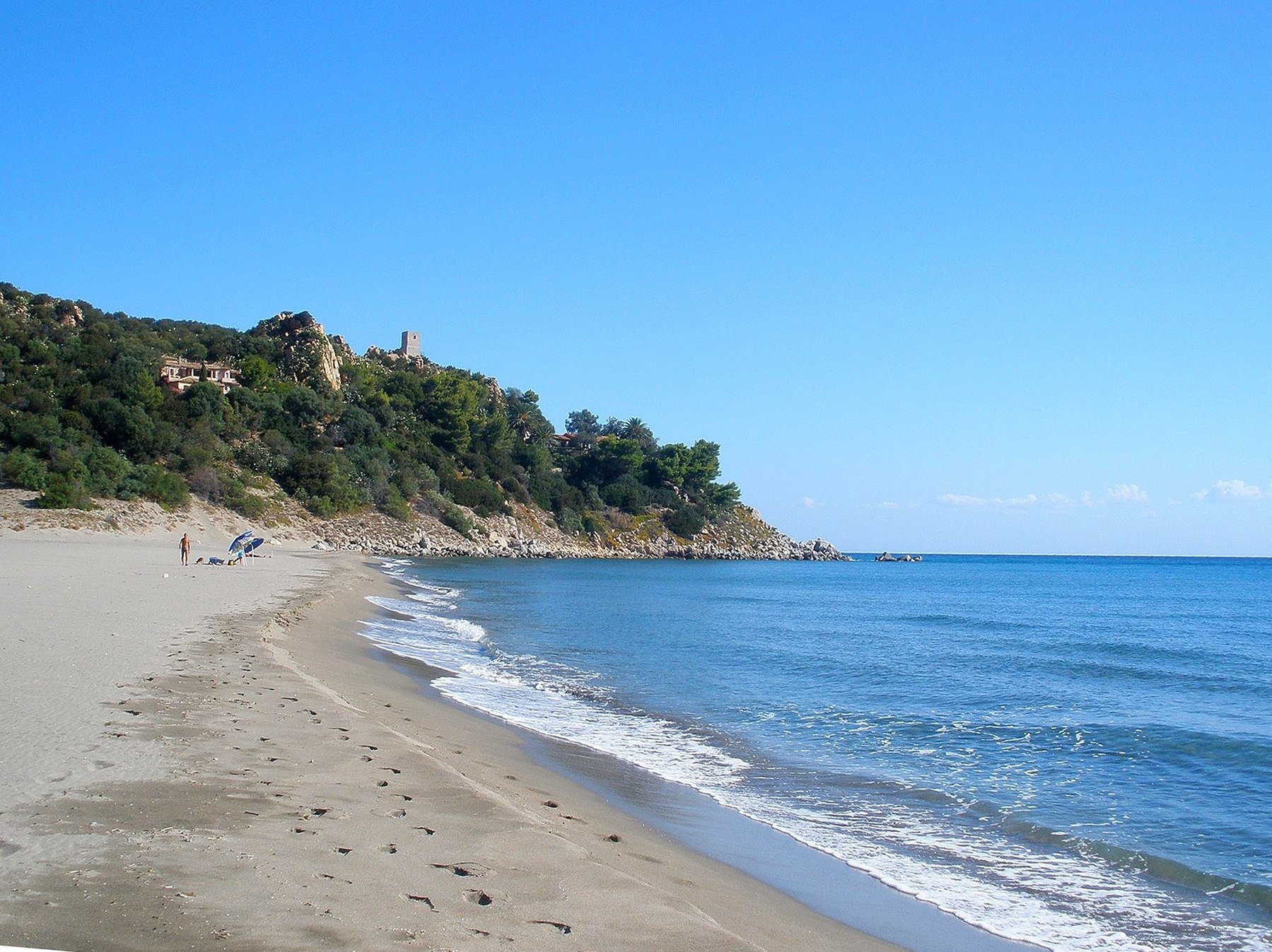
Two kilometres of cream-coloured sand, which is occasionally tinged with grey and ochre, washed by a sea that alternates shades of turquoise, emerald green and indigo. This would suffice to describe the charm of the beach of Colostrai, on the Sarrabus coast, six kilometres south of Muravera. The coast is protected by the pond of the same name behind it and to the south, a paradise for birdwatchers, and also by the varied Mediterranean vegetation, where you will find eucalyptus trees, pines and junipers. Near the beach, there are also small sand dunes, covered with sea daffodils and yellow horn-poppies. To the north, the spectacular promontory dominated by the tower of Salinas establishes the border, while the northernmost stretch of the beach takes the name of Cristolaxeddu.
It is easy to get to Colostrai: from Cagliari, proceeding towards Muravera, follow the exit for San Priamo and drive past the small village; continue along state road SS 125 as far as the crossroads for Torre Salinas/Colostrai, and then another turn-off to the right will take you alongside the pond and to the beach. On the beach, you can rent deckchairs, beach umbrellas and boats. Thanks to its size, the beach is never crowded, even in high season: you can relax and enjoy some physical activity in peace, surrounded by unspoilt nature. The transparent waters make the seabed ideal for snorkelling and diving, as well as a popular destination for sport fishing enthusiasts.
The beaches of Sarrabus are truly captivating, thanks to the beauty of the landscape and the wealth of plant and animal life. South of Colostrai, the pond and beach of Feraxi appear, revealing sand that takes on bronze tones and a sea reflecting shades of turquoise. To the north, you will find the beach of Torre Salinas, featuring fine golden sand and blue and green waters. Continuing beyond, near the unique tower of Dieci Cavalli (Ten Horses), the wide coastline of San Giovanni opens up, where the sea is green near the coast, turning into an intense blue as it gets deeper. Crossing over into the territory of Villaputzu, the coast offers you the wild scenery of Porto Corallo, with pebbles and shells mixed with the sand and stretches of reef emerging from the sea, and that of Porto Tramatzu, with its unusual crescent shape.

Feraxi
With its three kilometres of golden sand, Feraxi is a beach ideal for anyone who wants to both relax and have some fun. Settle down on the spacious beach and enjoy the turquoise and emerald green sea with your family, the water is shallow and ideal for the kids. Rent a pedal boat, go kite or windsurfing, even fishing, and if you’re a naturalist you even have 400 metres of coastline on which to roam freely. Or go explore the surrounding area on a mountain bike, a quad or on horseback, engage in some bird watching at The pools of Sarrabus behind the beach, a protected habitat for cormorants, black-winged stilts and pink flamingos. When the sun sets, you can take the most amazing pictures from several panoramic points as nature’s magical colours gradually change in the fading light.
Feraxi is the area between the fishing dock to the north and a small, lovely cliff to the south, ideal for some serious sunbathing. The beach offers a variety of services: parking, snack bar, as well as sun bed and umbrella rentals. It is easy to get to from nearby Muravera, and from Cagliari, along the 125var, exiting at San Priamo and then following the signs. You can also get to Costa Rei through Capo Ferrato. If you go this way, along the dirt road you’ll find a deviation for the solitary coves of S’Illixi and sa Figu, which can be reached over a trail through the Mediterranean brush which leads you to these intimate, solitary coves that are ideal for wilderness enthusiasts. The crystal clear water is absolutely perfect for snorkelling.
If you want to do a tour of the Sarrabus beaches, the choices are many: in the north is the almost twin beach called Colostrai, graced with soft creamy-coloured sand, crystalline water and bound in by the scenic promontory on which the torre Salinas stands. Further to the north, near the border with Villaputzu, is Porto Corallo, featuring sand mixed with pebbles and shells, porto Tramatzu, an arch-shaped beach with amber sand, and the Murtas dunes. To the south are the delights of the Costa Rei, from Piscina Rei to the Peppino cliff, with transparent water and scenic granite cliffs. Beyond the cliffs are the beaches of Castiadas: Monte Turno, Cala Sinzias and Cala Pira, all blessed with super-fine white sand and water with an infinity of blues.
Behind the Sarrabus beaches, beyond the wetlands, are expansive citrus groves, the area’s mainstay. Every April, Muravera hosts the annual citrus festival, an event that brings find food, culture and tradition together.

Torre delle Stelle
In the evening, the lights of the villas illuminate the cliff like a starry sky and reflect on the calm, clear waters of the sea, with its surf gently breaking on two strips of soft, light sand. The two white expanses separated by the spectacular promontory are Cann’e Sisa and Genn’e Mari, the beaches of Torre delle Stelle, a seaside village reflected in the eastern side of the Golfo degli Angeli and part of the territory of Maracalagonis, centre of the metropolitan city of Cagliari.
Cann’e Sisa is oriented towards the west, i.e. towards the capital and, compared to its ‘twin’ Genn’e Mari, it has more greenery surrounding it, thanks to the pine forest behind the beach. The sand is white, the sea reflects shades of blue and green, the water is shallow and suitable for children, while the crystal clear water is an irresistible attraction for snorkelling enthusiasts. All services are available to bathers, including those linked to accessibility.
Beyond the cliff, proceeding in an easterly direction, lies Genn’e Mari, ‘gateway to the sea’ translated from Campidano dialect: the water is equally shallow, while on the beach, there are a few pebbles peeping out between the grains of sand. This stretch is also equipped for every need and is frequented by kite and wind surfers when it’s windy. Both beaches are a destination for underwater fishing enthusiasts.
In the promontory around the beaches, the residential complex of Torre delle Stelle, the development of which started in the 1960s, comes to life especially in summer, thanks to the beauty of the sea and the events organised in the village. However, the area near the coast deserves to be visited throughout the year, especially by those in search of an oasis of peace and fascinating views of nature; here, myrtle bushes, junipers, olive trees, lentisks and eucalyptus trees form a border along the paths behind the beaches.
Torre delle Stelle is a popular destination and also an excellent starting point for exploring the coast of southern Sardinia, with its renowned resorts and intimate little coves with their wild charm. Nearby, to the west, you will find the beaches of Geremeas: Kal’e Moru and Baccu Mandara, with golden sand and a sea with turquoise reflections. To the east, there is the wide coastline of Solanas, a coastal district of Sinnai, surrounded by Mediterranean scrub and iridescent waters. Moving beyond, from Capo Boi, the splendid coastal stretch of the famous tourist resort of Villasimius begins.

Capo Marrargiu
To the north of Bosa, along the rugged coastal area that leads to Alghero, a promontory emerges, volcanic in nature, around which there is a succession of reddish tuff rocks, coves and ravines. It is Capo Marrargiu, so inaccessible and secluded that, over the decades, it has welcomed majestic and extremely rare species of wildlife and, consequently, has become a bio-marine park. You can reach it via paths surrounded by Mediterranean scrub, amidst myrtles and lentisks, and you will find yourself in a timeless landscape: in the background, to the north, lies Capo Caccia with the islet of sa Pagliosa facing it, while to the south, you will see the white trachyte cliffs of Bosa. At the foot of the ‘cape’ there are a series of pebbly coves with some sandy stretches plunging into a sea of light and cobalt blue waters.
Peregrine falcons, golden eagles and Bonelli’s eagles nest in this area, but the great protagonist is another bird of prey and it’s no coincidence that it gives its name to this stretch of coastline: the griffon. The park is an irresistible attraction for birdwatchers and it is also a paradise for snorkelling and diving enthusiasts: appearing between the ravines and little caves, once landings for the ancient navigators of the Mediterranean, you will see lobsters, groupers, conger eels, morays, corbs, rays, breams, scorpion fish, tuna and above all corals, used by the goldsmiths of Bosa to create splendid jewellery. The nature reserve, which stretches for 160 hectares, also contains the world’s entire area of distribution of the limonium bosanum, a native plant species exclusive to the territory of Marghine-Planargia.
Near Capo Marrargiu, you will also find traces of industrial archaeology, with ruins of silver and manganese mines. By taking a boat trip, you will be able to see some tunnel entrances dug out along the coastline, used to load the minerals mined there. Travelling north along the ‘coast of the griffons’ – which stretches as far as the Coral Riviera - you will come across Poglina, known as the ‘coral beach’, half a kilometre of light sand with a bright blue sea in the territory of Villanova Monteleone. Then, proceeding south, you will find a series of enchanted coves, awarded Legambiente’s Five Blue Sails in 2020: Torre Argentina, with its basalt rocks that remind you of a lunar landscape, the beautiful Compoltitu and s’Abba Druche, characterised by flat rocks and blue-green waters. Around the medieval village of Bosa, you can relax on the coast of Bosa Marina or dive into the spectacular natural pool of Cane Malu.
Cavaliere beach - Budelli
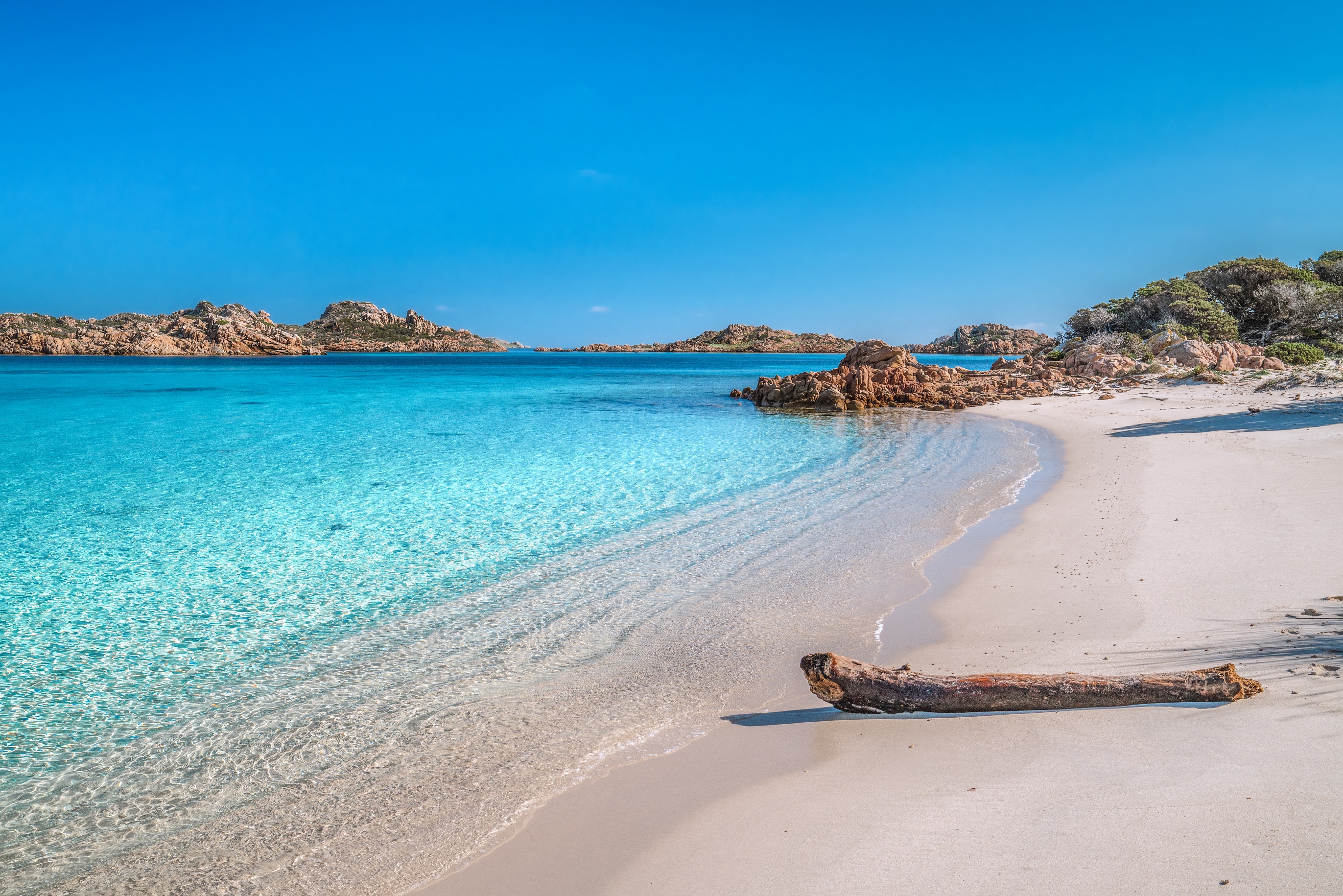
Fine, white sand as soft as talcum powder, crystal-clear turquoise water, a little corner of paradise that you can only reach by boat (with limits) to protect and safeguard both the environment and its very survival. This is the spectacular Cavaliere beach, or Cavalieri, in Maddalenean dialect. It is less celebrated but just as marvellous as the ‘prohibited gem’, the adjacent Spiaggia Rosa, or Pink Beach, the setting for the 1964 Michaelangelo Antonioni movie Red Desert, which helped bring fame to Budelli, an enchanting island in the Maddalena Archipelago National Park.
The beach sits on the north-eastern side of the island, has an almost oval shape and faces the Porto della Madonna, a gorgeous stretch of water between Budelli and the nearby twin islands of Razzoli and Santa Maria. Its location between the three islands shields it from strong currents and thus creates a natural pool of an amazingly transparent emerald colour.
A popular spot on guided tours of the archipelago, ‘il Cavaliere’ can be reached by private or rented boats, but only Park-authorised charter boats may anchor here. Passengers of these boats may deboard at the rocky shore of the beach. A path through the Mediterranean scrub then leads them to the narrow 200 metres long stretch of white sand that gives onto the natural pools surrounded by islets and rocks. The soft sand, shallow water and sandy seabed make it ideal for kids too.
It’s a beach that is as beautiful as it is fragile. Since 1998, the beach has lost half of its size to erosion. The cause? Aside from climate change, currents and a reduction of seagrass for anchoring of boats at the Madonna Harbour, far too many visitors over the decades has led to the involuntary removal of large quantities of its sand. It therefore became necessary to stem the erosion of one of the islands most beloved by tourists from all over the world.
In the summer of 2020, two thirds of Cavaliere beach was closed to visitors. The part that remained open was for the exclusive use of, from mid-morning to afternoon, resident boaters, native-born Maddaleneans, and those businesses authorised to transport passengers. Other tourists were welcome early morning and late afternoon so that everyone could take a dip in the beautiful water facing the beach. There were also other rules put in place, similar to those adopted to safeguard La Pelosa at Stintino: no beach towels, umbrellas, tents or bags were allowed, and, upon leaving the beach, everyone has to wipe the sand from their bodies, clothing and footwear.
San Pantaleo
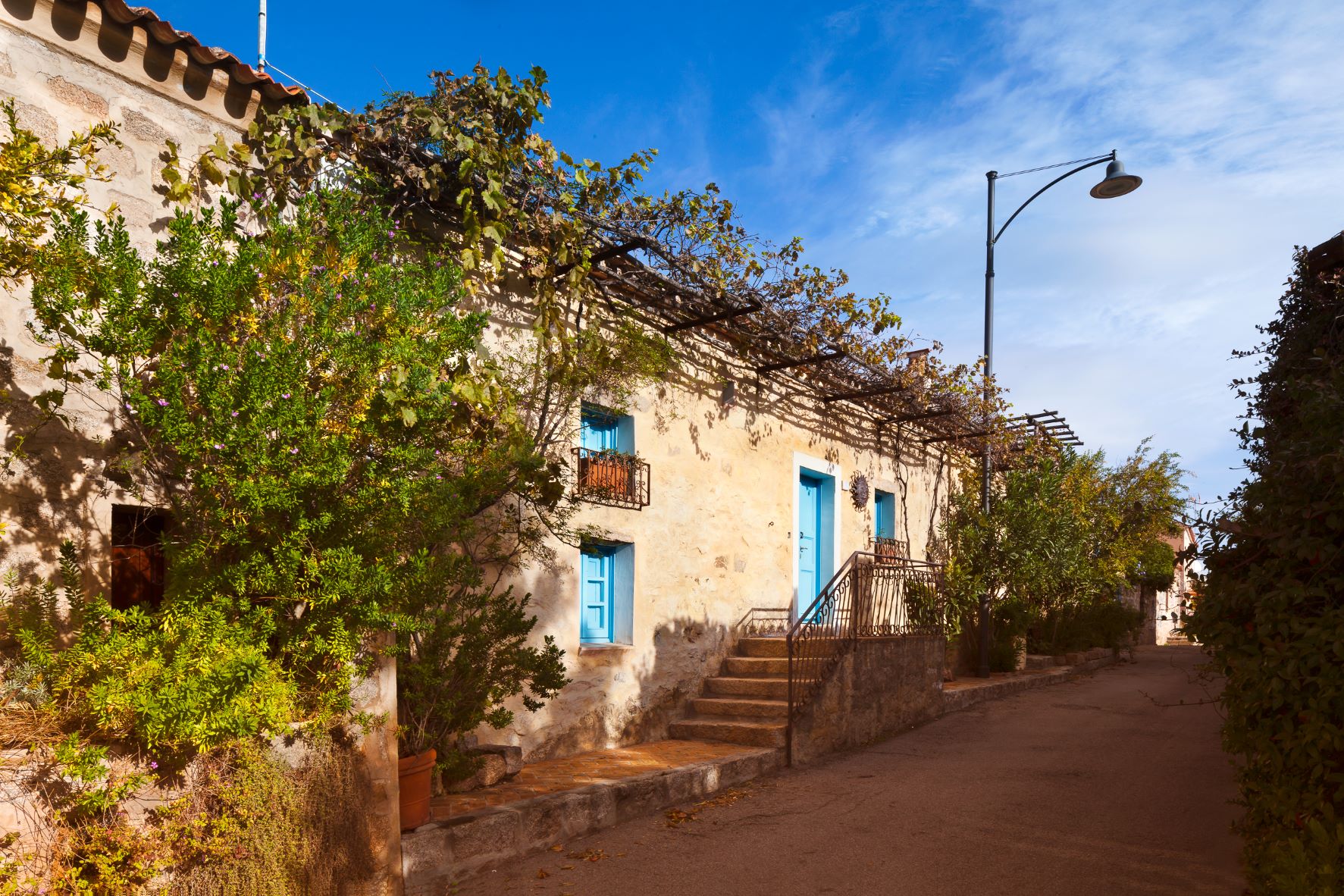
It is ‘the village of artists’ and also of the street market, the stazzi (rural dwellings), Bohemian spirit and iconic scenes from a James Bond film. San Pantaleo small but full of ideas, is located in a granite landscape in the territory of Olbia and has been inspiring works of art and creations within the international artistic circuits for decades. The village stands on the granite massif of Cugnana, surrounded by nature that has maintained its wild appearance despite the glamour of the nearby Costa Smeralda, still shining since the 1960s. The enchantment of the renowned emerald coast is part of the panorama that you can admire around it, together with the pink hues of the granite, even more captivating at sunset. The village itself offers spectacular views: it emerged at the end of the 19th century around a small church dedicated to Saint Pantaleo, rural at that time, and has witnessed an increase in its houses, over time and on a regular basis, built according to the typical model of the Gallura stazzo.
At first glance you will be fascinated by the contrasting colours of the white oleanders in bloom and the granite of the buildings in the main square, where, next to the houses, in apparent contrast, there are elegant boutiques, modern studios, shops selling typical local products and traditional artisan workshops. Its streets are populated by potters, goldsmiths, wrought iron artisans, inlayers, painters and sculptors, who steal the show particularly on Thursdays in spring and summer, the day when a famous market, one of the most fascinating on the island, takes place in the village. In addition to admiring local artefacts and antiques, you will be able to taste typical local products. Two other events characterise San Pantaleo: Magnendi in carrera is an evening for tasting typical local dishes and products, such as cured meats and cheeses, potato dumplings with wild boar, mazza frissa, a traditional rural dish of Gallura, casciu furriatu (melted cheese) and traditional desserts. Then, in September, the folklore festival brings together the main Sardinian folk groups. Walking along the road that enters the village and in the church square, you will experience the charm of the great cinema: some of the scenes from the 1976 007 film ‘The Spy Who Loved Me’, set partly on the Costa Smeralda, were shot here.
The area around San Pantaleo is a gym for outdoor activities: numerous trekking trails have been obtained between the rocks and cork woods of the mountain. A few kilometres away, there are the enchanting beaches of Liscia Ruja, Petra Ruja, Razza di Giunco and Rena Bianca, set between granite cliffs, in front of which small islets emerge. There is a triumph of colours here: white and golden sands, red rocks, pink granites and turquoise waters, surrounded by Mediterranean greenery.