
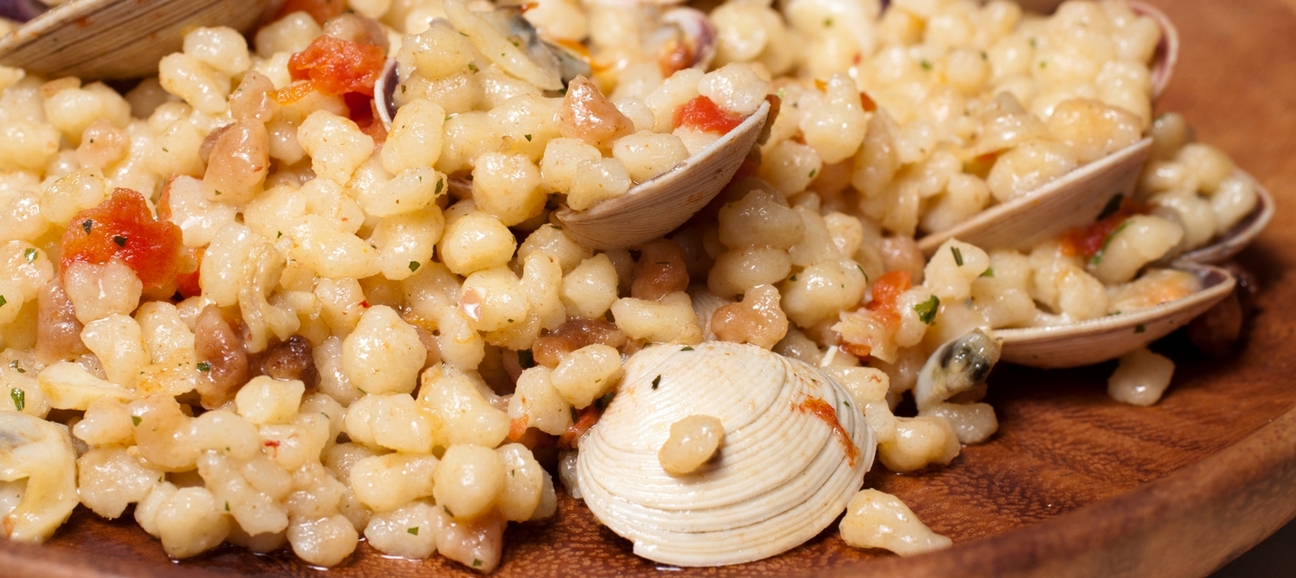
Sardinian cuisine, identity and flavour
Food tells the story of a territory: very few places in the world can boast food is as authentic as that in Sardinia. The quality of the products and the preparation and flavour of the dishes are values that go beyond their tastiness and are the heritage of thousands of years of history. Sardinian cuisine is still very similar to the way it was many centuries ago, while differing between the various territories and preparation techniques. Whether on the coast or inland, Sardinia's delicious specialities, based on simple and genuine ingredients, with strong yet delicate flavours, never fail to amaze you.

Identity and passion: traditional festivities last all year round
Throughout the year, you will be inebriated by the events that have been handed down over the centuries. The enchantment of the traditions begins in January with Fireworks celebrating Saint Anthony, bringing to life dozens of communities in the heart of the Island. In February, there are the compelling and mysterious celebrations of the Carnivals: every village has its own special events and masks. Not to be missed are the acrobatic exhibitions on two or three horses at a time, known as the “Pariglia” during the Sartiglia in Oristano, the ancestral dances of Mamuthones in Mamoiada and Merdules in Ottana, as well as the allegorical festivities in Bosa and the Tempio Pausania, where people live for the festivities all year round. At Easter, the passion of the Holy Week rituals lives again in numerous towns and villages, each with its own special characteristics. These are particularly famous in Aggius, Alghero, Castelsardo, Iglesias and Oliena.
Porto Ottiolu
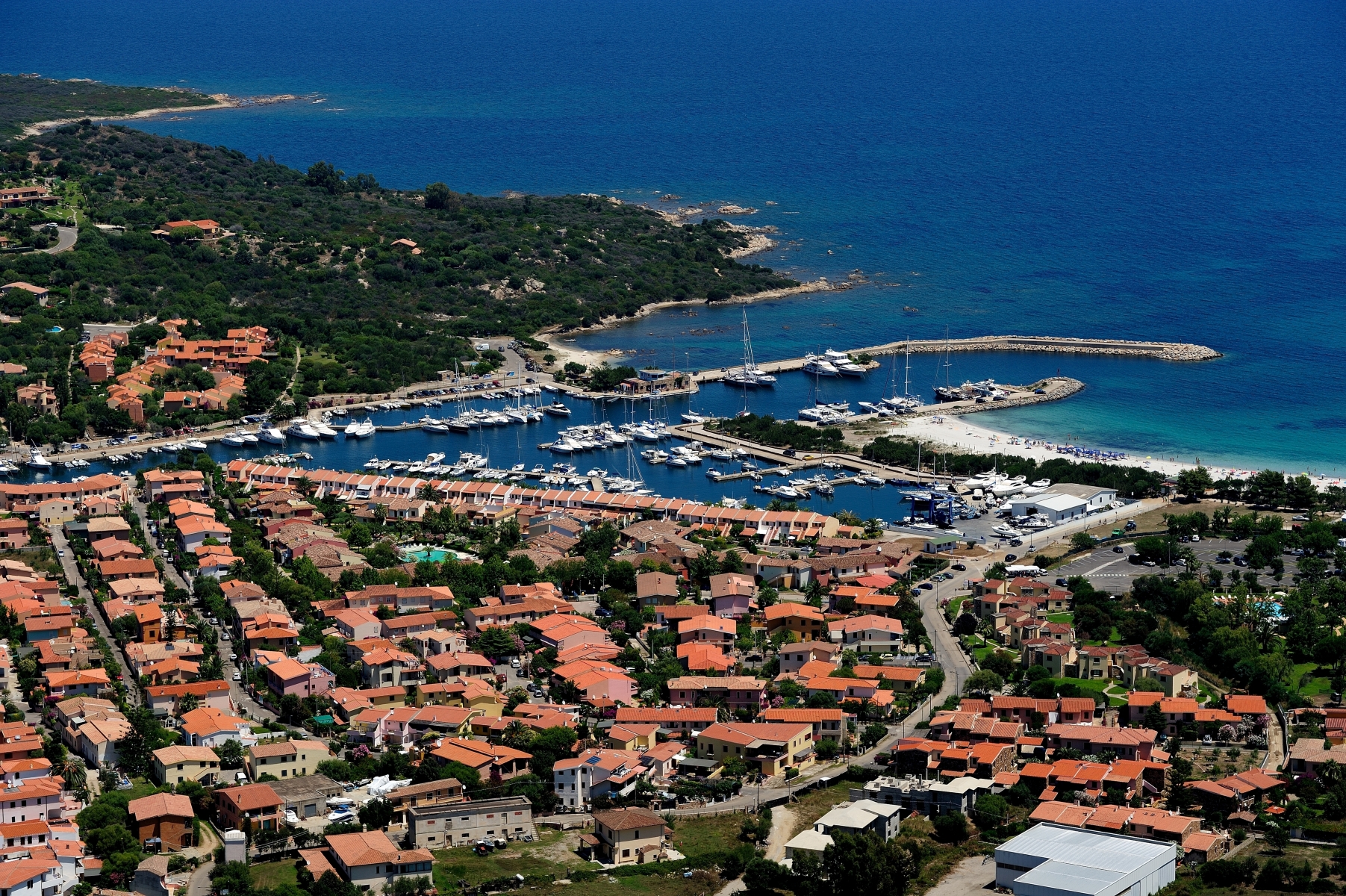
A captivating little village, a white beach, cobalt blue sea and a tourist port among the most well-equipped in Sardinia. Porto Ottiolu is a splendid bay situated halfway between Budoni, of which it is a district, and San Teodoro, on the border between Baronìa and Gallura.
Its beach is perfect for people to enjoy and a must for anyone wanting to experience all the amenities offered by the beach establishments: half a kilometre of fine, light, slightly sparkly sand, forming small dunes covered with low vegetation and a shallow seabed that makes bathing easy for children, in front of the little island namedTo d’ottiolu.
CalaOttiolu is accessible to the disabled, it has ample parking, places for dining/refreshments and it is very popular with windsurf and recreational fishing lovers, as well as by diving and snorkelling enthusiasts. It is possible to rent beach umbrellas, sunbeds and pedalos. Departing from Ottiolu and walking to Punta Li Turchi allowsyou to discover evocative places, like the Spiaggia dei Francesi and Poltu Quadu, in a sheltered and secluded little cove. From here, you can easily get to the other beaches of Budoni and those of San Teodoro.
The port takes up a large part of the bay and its position is sheltered from the winds. With a series of docks that stretch for two kilometres, it can accommodate up to 400 boats and vessels of every category. It is currently one of the most important tourist ports in Sardinia. Behind it, there is the village and residential area of Ottiolu, with its little main square and services, bars, restaurants, commercial premises and offices. From the port, you can set off on a journey to discover the natural beauty of the north-eastern part of the Island. You can choosefrom a large selection of organized tours, particularly in themarine protected area of Tavolara - Capo Coda Cavallo, in the park of the Maddalena archipelago and in the Gulf of Orosei with its unspoilt islands, sheer cliffs, little bays and charming beaches.

Porto Rotondo
One of the most important places for national and international tourism. It is a jewel in the crown, along with Porto Cervo, forthe Gallura area, on the north-eastern coast of Sardinia. Porto Rotondo is a district in Olbia, a few kilometres from GolfoAranci, Palau and Arzachena. In 500 hectares of territory, between the gulfs of Cugnana and Marinella, with a highly-equipped tourist port with 800 moorings for boat, there are about a thousand residents in winter. In the summer, there are sometimes as many as 30 thousand inhabitants in the villas, timeshare homes and residences built around an initial nucleus of the village, dating back to 1964. It was started by the Venetians, Luigi and NicolòDonàdalle Rose, as part of an initiative undertaken by a group of entrepreneurs. This is where its architecture, which decidedly resembles the structure of Venice, comes from and, not surprisingly, the main square is Piazzetta San Marco. Along with the magnificent residences, there are also numerous luxury and extra-luxury hotels.
Poltu Rutundu (in Gallura dialect) is considered one of the most ‘in’ places in Sardinia and the whole of Italy: it is easy to encounter famous personalities, especially in the summer, at nightclubs. Big names from the world of high finance and show business personalities choose it as a summer residence.
It is generally considered a Costa Smeralda locality, even though it is technically not part of it, based on what was established by the Costa Smeralda Consortium. This has led to a certain rivalry between the Porto Rotondo‘rotondini’ and the Porto Cervo‘cervini’, each wanting to be leader of the most renowned locality.
In Porto Rotondo, every year, at the end of August, the Big Game is held. This is a deep-sea fishing sports event, among the most important and spectacular in the Mediterranean. The Porto Rotondo Yacht Club, officially established in 1985, has become one of the most important at national level, maintaining a strong link with the Yacht Club Italiano in Genoa.
San Giovanni di Posada
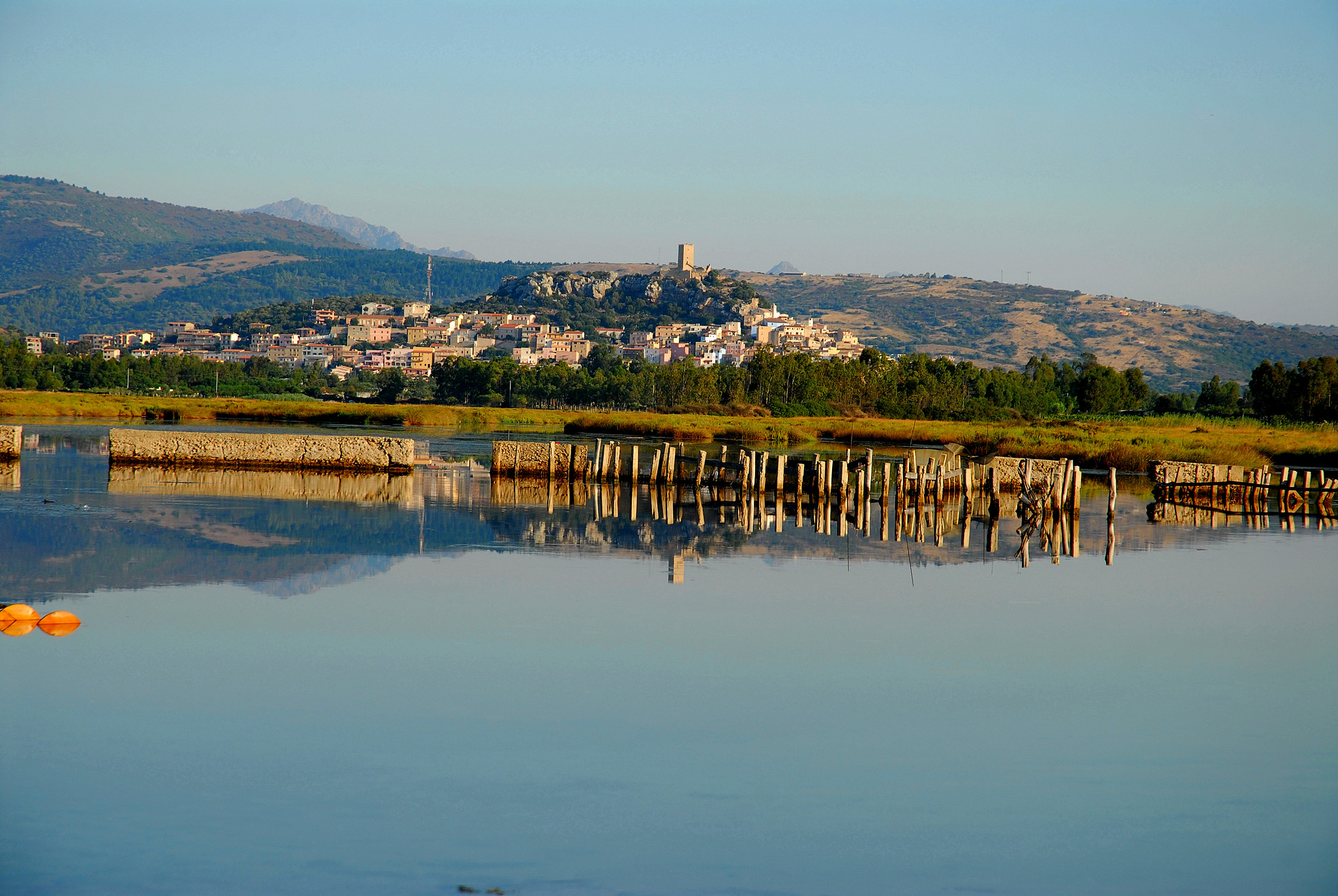
A location set in the greenery of a pine forest that surrounds a long white beach with a crystal clear sea. San Giovanni is a delightful village just over three kilometres from one of the most important towns in Baronìa, Posada, and near the large and well-equipped tourist port of the renowned La Caletta in Siniscola. It is the ideal place for anyone wishing to spend their holidays in a relaxing environment, a stone's throw from the sea, especially for families.
All the beaches of Posada, San Giovanni, Su Tiriarzu, Iscraios, Due Pini and Orvile, have been receiving the prestigious Cinque Vele Legambiente recognition for many years, thanks to the attention focused on their protection, ensuring that they remain true natural oases. Along the coast, you can enjoy various water sports like sailing, underwater recreational fishing, wind and kite surf, beach sports like beach tennis and beach volley and you can ride along the coastline on a bike or on horseback.
The tourist locations to stay at in Posada are in the old town centre, the outskirts and, of course, the village of San Giovanni, with hotels, residences and numerous bed&breakfasts and holiday homes. The entire Posada valley is an attraction, not only for its sea and beaches, but also for its extremely high environmental-natural value and for its history. Posada is one of the most beautiful medieval villages in Sardinia. It is perched on a hill and has impressive city walls. From above, the landscape is dominated by the Castello della Fava, an ancient stronghold built by the judges of Gallura in the 8th century, which can also be visited on foot. Its valley is perfect for nature-lovers, who can set out to discover the Rio Posada river that crosses the plain and can be travelled down in a canoe, allowing you to admire the pink flamingos that populate it, or the lake of Maccheronis, in the territory of Torpè. It is also the perfect destination for those who want to go on a journey back in time to prehistoric Sardinia, with its Nuraghe and tombs of the giants.
La Caletta
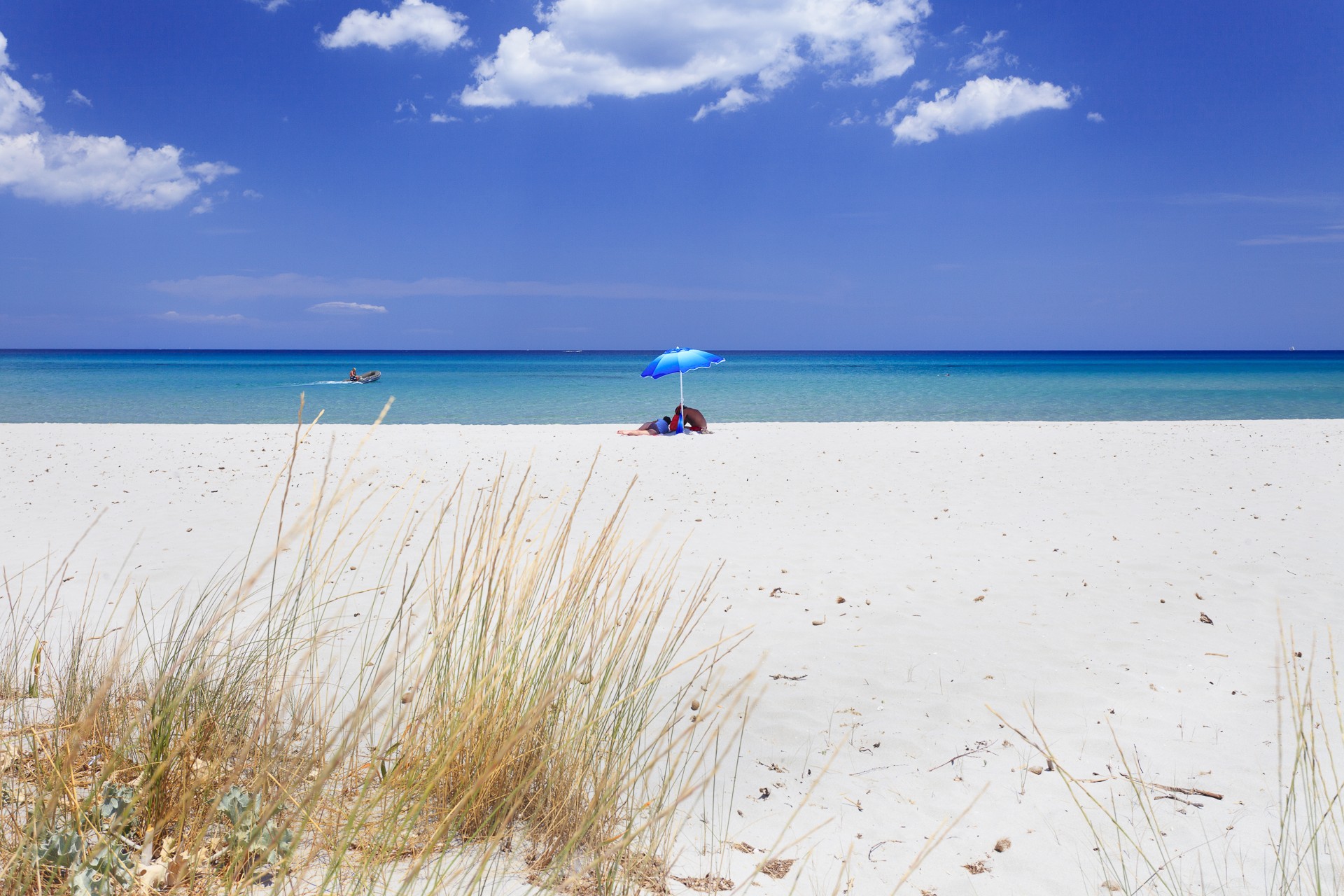
Five kilometres of soft, golden sand, clear blue sea and shallow waters, make it an ideal place for children. La Caletta is a long, wide beach that starts at a little coastal village of the same name, a district of Siniscola and one of the largest centres in the Baronìa area, and it stretches as far as the lagoon of Su Graneri. A pine forest surrounds the ‘spiaggia grande’ (big beach) - so-called to differentiate it from the other beaches of Siniscola - almost adjoining the beach of San Giovanni di Posada: they are interrupted only by the modern tourist port of La Caletta, which is full of services: sailing, surfing and diving schools, equipment rentals and a departure point for boat or dinghy trips.
The shoreline is often windswept and, unsurprisingly, the ‘spiaggia grande’ is equipped for water sports, among which kitesurfing and windsurfing. La Caletta has ample parking is a habitual destination for camper van tourists and campers and there are accommodation facilities in the vicinity, suitable for every type of tourist. In the village, you will find all necessary services, including car and bike rentals, restaurants, pizza restaurants and clubs.
Stretching for thirty kilometres, the Siniscola coastline is a mixture of landscapes with smooth rocks and white beaches. La Caletta takes up almost half of a total of 12 kilometres of fine sand. Moving south, you will come across Santa Lucia, another quaint fishing village, with fishermen originally from the island of Ponza, that was established around a 16th-century Aragonese tower. Then you will encounter the ‘spiaggia dei confetti’ (beach of sugared almonds), S’Ena e Sa Chitta, three kilometres of white sand, closed in by rocks in the area of an old lighthouse, off the shore of which you will find the litttle Isola Rossa (Red Island). A little further south, there are the pure white sand dunes and centuries-old junipers of Capo Comino. Continuing on, you can admire Bèrchida, which many consider tobe the most beautiful beach in the world, after which you will see theOasis of Biderosa, another magical place. It is a coastal forest of over a thousand hectares, the pride of Siniscola, thanks to its variety of flora and fauna, and it overlooks five little coves, among which the charming beach of Biderosa.