
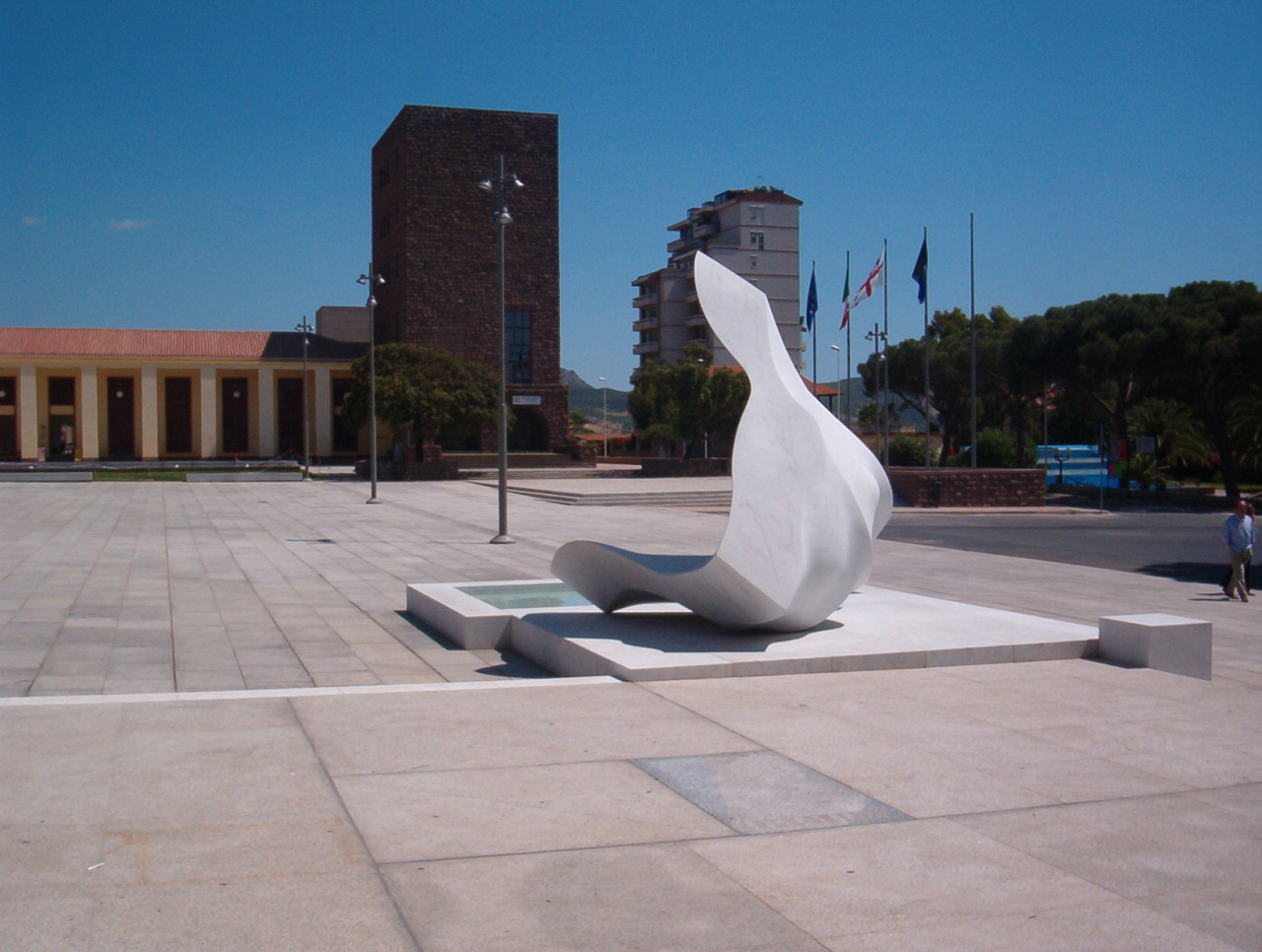
Spiaggia dell'Isolotto
The Isolotto beach is on the coast of the small town of Palau, a few steps from the port. It is a small beach of fine white sand, which overlooks the crystal-clear sea of the coast, where the wind makes fascinating ripples on the horizon. This slightly enclosed bay is very safe for bathing.
After reaching the centre of Palau follow the signs for the port. The beach is in the area behind the quay.
The beach has a small parking area, is medium-busy and it is a popular haunt for snorkelling.
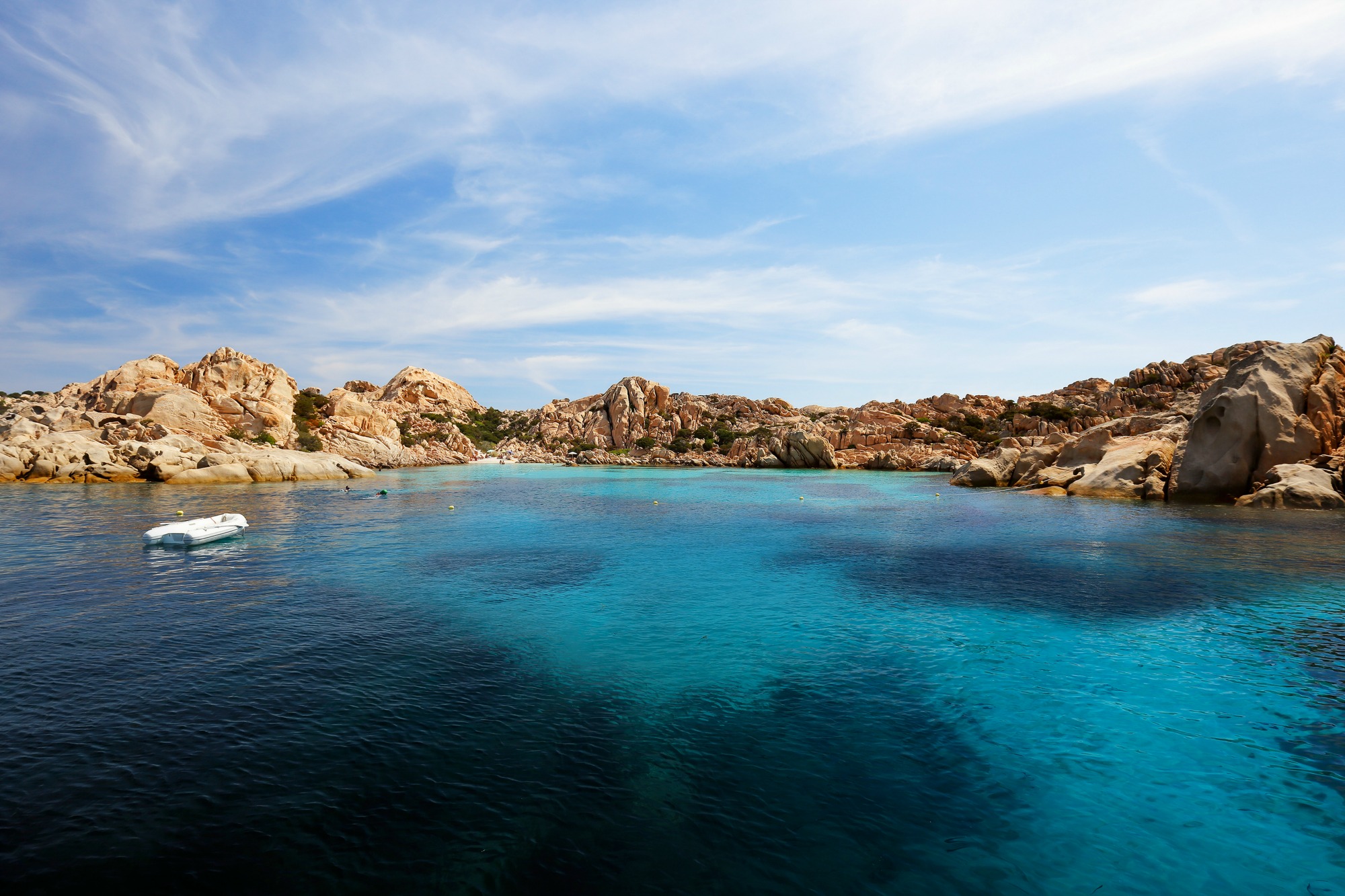
Cala Coticcio
It is undoubtedly one of the most beautiful little coves in the Maddalena National Park. The beach of Cala Coticcio is located on the northeastern part of the island of Caprera, the second largest island of the archipelago, in front of the Scoglio Murru. It has fine, almost dazzling white sand and the colours of the crystal clear sea are framed by rose-coloured rock and the shrubs of the Mediterranean scrub.
The beach is a real natural pool, also known as 'Tahiti'. It is environmentally protected and can be reached via sea, in boats with organized trips around the archipelago and also via land, along a partially unpaved trekking trail through the rocks.
This is a tiring walk, requiring gym shoes and a good supply of water, but at the end of the last, rather steep part of it, you will be rewarded by the sight of the iridescent reflections of the sea. You will be able to admire the stunning seascape, with its bright colours and background of impressive rocks, and enjoy relaxing in the peace and quiet it offers you. Then you can delve deep into the nature reserve: an authentic aquarium with numerous species of fish and starfish. It is ideal for snorkelling enthusiasts.
The 'Sardinian Tahiti' is undoubtedly not the only gem along the coast of Caprera. Not far away, you can visit Cala Portese (or Cala dei Due Mari), another source of pride for the island, and the splendid Spiaggia del Relitto(Beach of the Shipwreck), featuring fine white sand and the skeleton of an ancient ship on the shore. To the west, don't miss out on the blue waters of Cala Napoletana, the wild nature of Cala Garibaldi and the stretch of light sand in Cala Serena. After diving into this haven, still in Caprera, a visit to the place in which the Hero of Two Worlds resided during the last 26 years of his life is a must: the Compendio diGiuseppe Garibaldi with its Casa Bianca (White House) is one of the most frequently visited museums in Italy.
Nelson
Just off a small beach in Palau, Admiral Nelson, aboard his Victory, awaited the movements of the enemy French fleet for a long time. When the fleet set sail from Toulon to meet him in this area, a chase began, ending in the historic battle of Trafalgar. Even though the echoes of the events of the imperial fleets are distant in time, that inlet, protagonist of naval battles, , reminds us of the hospitality shown to the English commander and it is named after him. Nelson’s beach is a quiet, sheltered arch-shaped expanse of sand about 80 metres long, nestled between granite cliffs and with lush Mediterranean greenery behind it that almost reaches the shore. A captivating landscape stands out in front of it and, from the turquoise sea reflecting shades of emerald green, the western outline of the island of Santo Stefano appears on the horizon.
Looking to the left you can admire the south-west coast of the island of La Maddalena. ‘Nelson’s’ sand has a distinctive amber-colour and medium-fine grains, accompanied by a few rocks rounded by the smoothing action of the wind. The transparent water makes the beach an ideal destination for snorkelling enthusiasts, while a wooden pier is a berthing place for boats and also a platform for divers.
The shoreline lies on the stretch of coast of Palau that extends to Punta Sardegna. To the north, the first beach you come across frames the picturesque village of Porto Rafael, a tourist village that extends around a small square and is made up of white houses and colourful gardens. Exciting boat trips to the islands of the Maddalena Archipelago National Park depart from its small port. South of Nelson, in a deep bay, you will find La Sciumara, meaning ‘mouth’ in Gallura dialect, featuring creamy-coloured sand, a holm oak forest and Mediterranean scrub behind it, with the mouth of a river on the right edge. To the east, you can admire the ‘Nordic’ landscape of Porto Faro and, less than three kilometres from the town of Palau, a natural monument and symbol of the town: the Roccia dell’Orso (Bear Rock). In the direction of Santa Teresa Gallura, don’t miss s’Isuledda or Isola dei Gabbiani, which is actually a peninsula connected by a strip of light sand, on the sides of which extend the beaches of Porto Pollo and Arenaria, paradises for kitesurfers and windsurfers.

Li Cossi
The colours of the sea range from emerald green to sky blue and azure. The sand is warm, firm and white and multi-coloured rocks emerge from the water. A scenic access path follows a river as it makes its way in between pink rocks until it reaches the sea, with wild nature, all making this a very evocative place. Li Cossi is one of the most beautiful and charming beaches in Northern Sardinia. It is a pearl of the Costa Paradiso, a renowned tourist village in the territory of Trinità d'Agultu and Vignola and a rare case of a Municipality formed by the union of two localities, the first inland and the second on the coast, on the extreme western border of Gallura. The little ‘jewel’ opens up in a cove sheltered from the wind, enclosed by cliffs of pink trachyte, towering impressively above the sea and surround the cove, creating unusual shapes that will make you feel protected, in total relaxation, as you lie on the golden sand.
The seabed is sandy and gently sloping near the water’s edge, making it particularly suitable for bathing and for children to play on. A little further out to sea, it becomes spectacular and full of fish, making it very popular with scuba diving and snorkelling enthusiasts. Lush and varied Mediterranean vegetation with various shades of green and intense fragrances enrich this secluded little corner of Northern Sardinia, in which there are plenty of amenities and services: beach equipment rental, canoes and pedaloes, beach kiosks, campsites, hotels, bars and restaurants all around. After leaving your car in the car park, the path leading to Li Cossi is about 500 metres long and is bordered by granite and trachyte: a ten-minute walk including inevitable pauses for photos. A wooden rail accompanies you along the way in the steep parts. A river runs alongside the path, making the scenery similar to that of a small canyon.
If you love peace and privacy you can visit other captivating stretches of Costa Paradiso, a tourist oasis halfway between Santa Teresa Gallura and Castelsardo on coastal provincial road no. 90. A spectacular long (an hour) but also easy trekking itinerary, of about seven kilometres on foot, links Li Cossi to Li Tinnari, passing through the splendid little coves of Porto Leccio. The beach, which is shaped like double arch, is made up of crushed shells, grains of granite and round pebbles and is surrounded by Mediterranean scrub and washed by emerald green waters, while the little coves are perfect for scuba diving. Cala Sarraina is truly beautiful. On the way, you will find dunes and stretches of quartz and you will cross through some dense Mediterranean scrub, almost a forest. Then by car, six kilometres from Trinità, you will come to the picturesque seaside village of Isola Rossa, named this way due to the colour of the little island opposite it. Here, against the light green crystal-clear waters and the bright green vegetation, the beach of Longa and, attached to it seamlessly, La Marinedda stand out, with their stupendous dunes of soft, white sand, set in amidst impressive red granite cliffs. It is a regular destination for windsurf enthusiasts and every year, in August, international specialty competitions take place here. The beach is closed on one side by Isola Rossa and on the other by Punta Li Canneddi, where Cala Canneddi opens up and is another stretch of fine white sand, mixed with multi-coloured pebbles on the water’s edge. Nearby, there are other breathtaking inlets, Cala Rossa and the solitary and secluded Li Feruli, with creamy yellow-coloured sand. About ten kilometres further on, you will enter Anglona: the coast of Badesi begins here, where, various pearls with wonderful colours shine, such as Li Mindi, with a panorama opening up towards Asinara, and Baia delle Mimose, an expanse of pure white sand framed by dunes and furrowed by kite surf and windsurf boards.

Caprera
It is the second largest island of the archipelago, as well as a fully protected area. Caprera is connected to La Maddalena by a 600-metre bridge, built in 1958. In addition to its beauty, the island is famous for being Giuseppe Garibaldi’s last place of residence. The White House preserves his memories: the Hero of the two worlds resided here for 26 years before his death: at 6.21 pm on 2 June 1882, as marked by the clock and the calendar in his room. Everyday objects, goods and relics can be found here, in the Compendio Garibaldino, one of the most frequently visited museums in Italy.
The indented coastline divides Caprera into two zones. The eastern part is barely accessible, as it is shielded by pink granite rocks and is steep and covered with Mediterranean scrub. The uncontaminated eastern side allowed the island to become a nature reserve in 1982 and it was later included in the national park. Inside zone A, under the full protection scheme, fishing is prohibited. This is the case of Cala Coticcio, the ‘Sardinian Tahiti’, which is absolutely worth visiting via a path or by sea, and also of the marine area between Punta Rossa and Isola Pecora (Sheep Island). In the southestern part, you can’t miss Cala Portese or dei Due Mari (Cove of the Two Seas), one of the island’s many jewels: transparent water washes both sides of the cove. Moving beyond, you will find Punta Rossa and, after a stretch on foot, the splendid Spiaggia del Relitto (beach of the Wreckage), characterised not only by fine white sand, but also by the skeleton of an ancient ship on the shore.
To the west, flat expanses and a vast pine forest are dominant. The blue waters of Cala Napoletana are not to be missed and nor is the wild nature of Cala Garibaldi and the expanse of light sand in Cala Serena. Stagnali, a former military village with a small marina for fishermen and boaters, is the area with the most inhabitants. Caprera is also known for the Centro Velico, the oldest sailing school in Italy and the largest in the Mediterranean, the only accommodation for visitors.
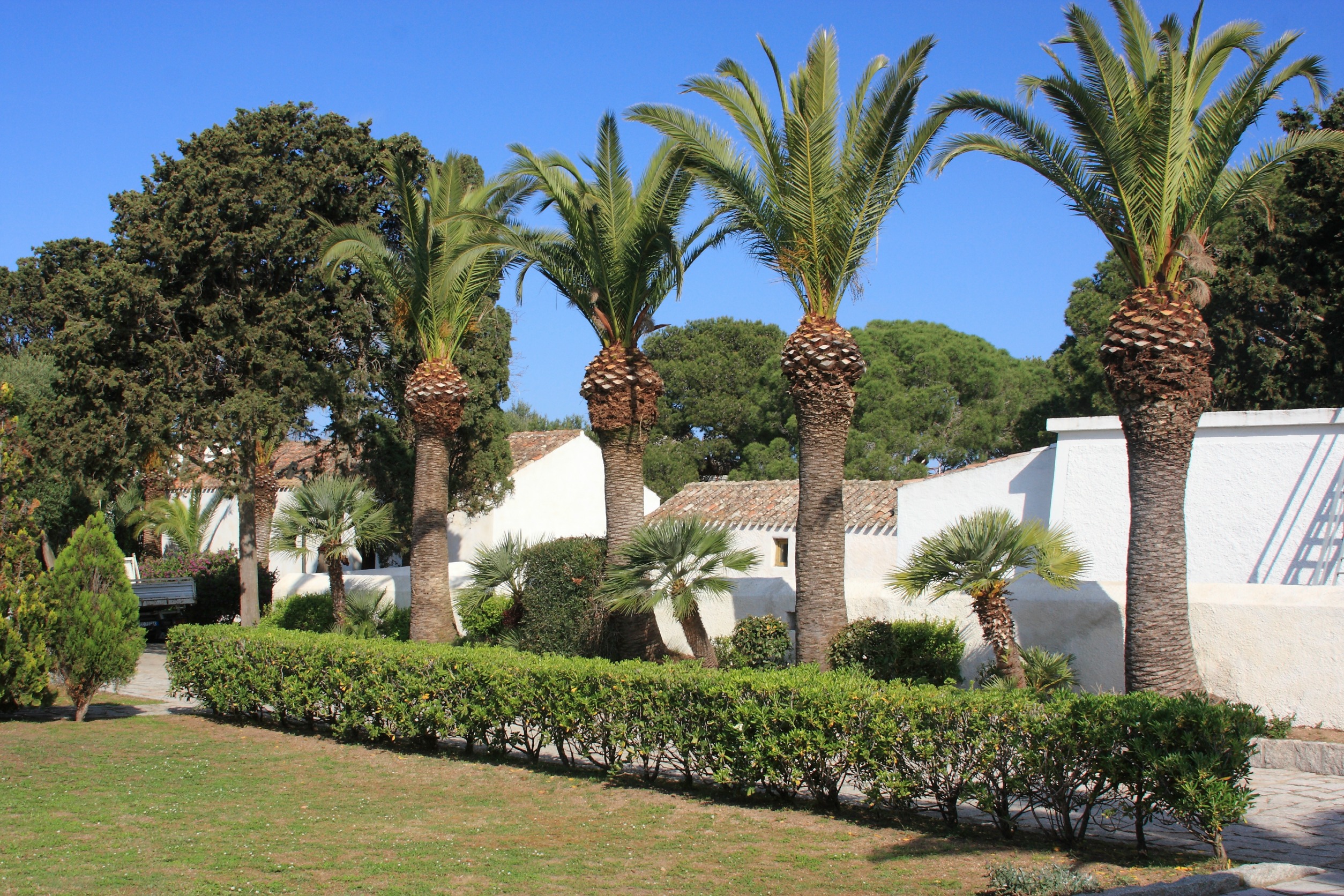
Musei garibaldini di Caprera
Giuseppe Garibaldi spent the last 26 years of his life in the splendid setting of Caprera, which represented a constant point of reference between one undertaking and another. In this peaceful place, surrounded by greenery and the colours of sea of the Maddalena Archipelago, he envisioned and prepared actions that marked the history of the Italian Risorgimento (Unification). A visit to the 'Casa Bianca' (White House), where the Hero of Two Worlds settled down after the death of his wife, Anita, and the abandonment of his children. You will be surprised by the contrast between the general's glorious past and the simple, rustic architecture of the dwelling. The frugality is disconcerting: white masonry walls, with a flat roof, similar to the dwellings that Garibaldi came across in Montevideo and in other places where fighting took place over the freedom of the South American people.
In the silence of the rooms, you will discover an unknown side of Garibaldi: the humanity of a father deeply attached to his children.Mementos, objects and portraits that tell the story of his daily life and of his loved ones. From one room to the next, you will retrace his heroic life. In the wardrobes: poncho, white cape and red shirt. In the showcases, there is the Aspromonte bullet, the lighter given to him by Antonio Meucci, and tricolour candles. In the room where he died, you will notice the solemn atmosphere, the pain that still lingers in the air, on the bed surrounded by a balustrade, on the wheelchair and the medicine cabinet, on the English clock that marks the time of his death (6:21 pm) - the end of an adventure that became a legend. The Compendio Garibaldino is one of most evocative historical and scenic places in Sardinia, a destination for cultural pilgrimages to which thousands of visitors flock every year from all over the world.
After the cultural visit, get ready for a swim in the splendid coves of Caprera, inside the MaddalenaNational Park: to the east you will find the fully protected area of Cala Coticcio, the 'Sardinian Tahiti' that can be reached along a trail or via sea. To the south-east, you can visit Cala Portese (or Cala dei Due Mari), the pride of the island, and the splendid Spiaggia del Relitto, with its fine, white sand and the skeleton of anancient ship on the shore. To the west, flat stretches of land dominate the landscape: don't miss out on the blue waters of Cala Napoletana, the wild nature of Cala Garibaldi and the stretch of light sand of Cala Serena.

Circoli di Li Muri
Precious heritage dating back to about five thousand years ago, fully preserved a few kilometres from Arzachena, a renowned tourist destination of Gallura. Here a Neolithic civilization has left clear traces of its passage with the necropolis of Li Muri , the oldest site of the entire territory, also called the 'circle tombs' (or 'Circles of Arzachena') for the characteristic layout of the tombstones. According to scholars, this is a type of necropolis that is common only in this area, so much so that the prenuragic culture that generated it is called 'Gallurese'.
Once near the necropolis you will observe four 'dolmen cistas', or small rooms made of slabs of stone placed vertically in the ground, and an allée couverte , or a gallery tomb in which there is no separation between the entrance corridor and the burial chamber. The size of the circles varies from five to eight and a half meters in diameter, bordered by small slabs planted in the ground with a knife and arranged in concentric circles. The rooms contained a mound of stones and earth with the tombs inside them, forming a series of little hills, one next to the other. Between them stood two large granite steles stuck vertically in the ground - just like the menhirs - with the function of signalling the tombs or representing the deities. A short distance from the clubs you will see small lithic boxes, presumably destined to collect offers at the time of burial. They are quadrangular in shape, formed by stone slabs.
Inside the tombs the deceased was buried in a crouched position and individually, unlike the rest of Sardinia where burials were generally collective. The type of burial represents one of the main peculiarities of the civilization that inhabited the area. The burial followed particular rituals, including painting the body of the deceased with red ochre. Pebbles with traces of this colour have been found as evidence of this ritual. Ochre was used to symbolise blood, meaning regeneration, and was therefore used on the bodies as a good omen. The body was accompanied by funerary objects, consisting of pottery, stone vases, axes and hard stones used as beads for necklaces. The excavations also found rare and refined artefacts in flint and steatite, including a finely worked cup, some knife blades and necklace beads in green stone. Some precious jewels suggest that the dead of Li Muri were important within those peoples, accustomed to combat, despite the fact that society was predominantly peaceful and dedicated to a pastoral economy.
There are numerous affinities between the Gallura necropolis and those of southern Corsica and the Pyrenean area, as well as the Aegean islands and the Balkan area: perhaps the culture of the Arzachena circles is an example of European megalithism. The circles of the necropolis are the most important Neolithic remains in Gallura - nearby there are also important nuragic remains: the tombs of Li Lolghi and Coddu Vecchju, the temple of Malchittu and, above all, the Albucciu nuraghe.
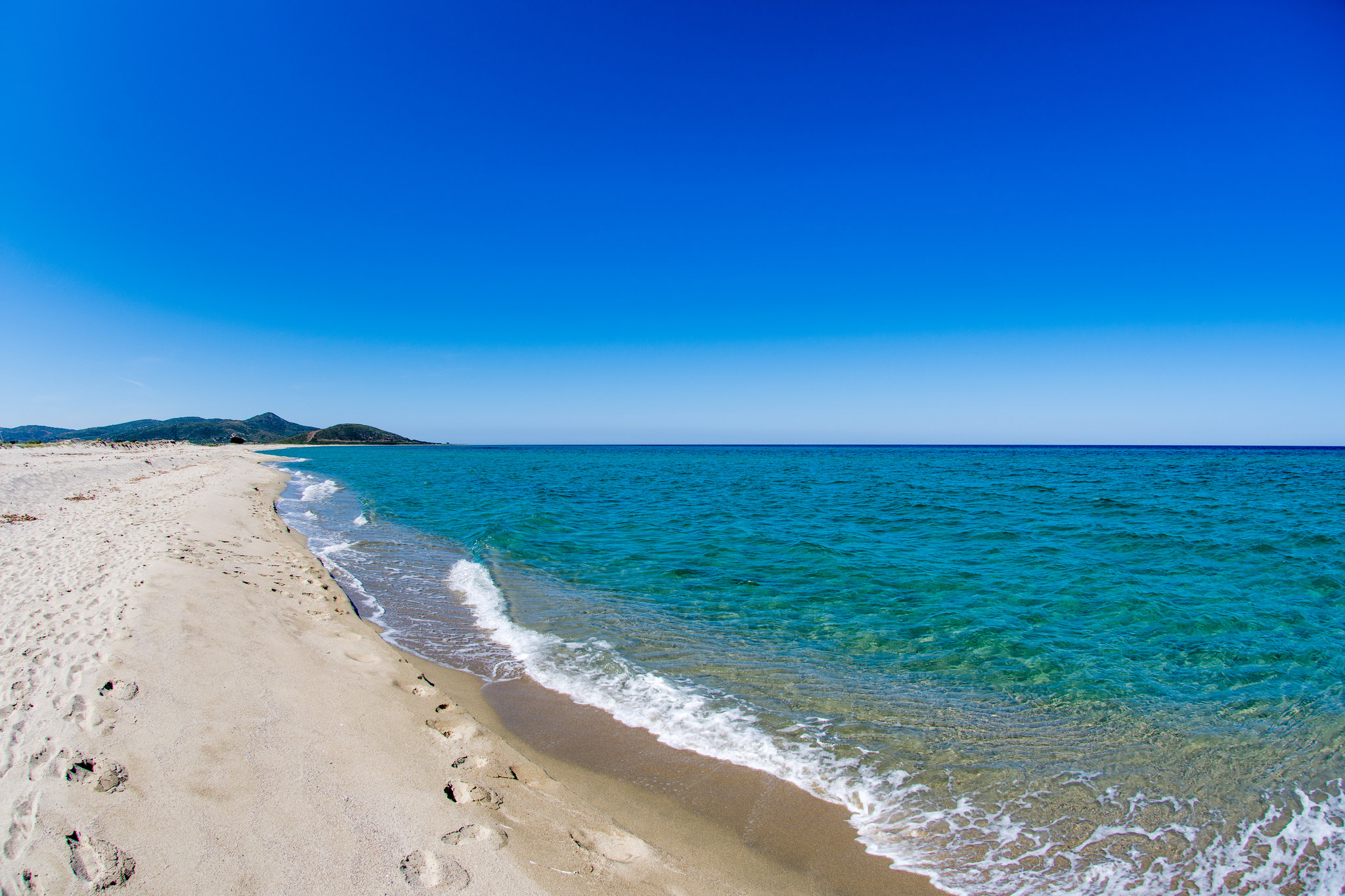
Su Tiriarzu
Protected by the rocky spur on which the picturesque medieval village of Posada is set surmounted by the spectacular Fava Castle, Su Tiriarzu is one of the largest and most beautiful beaches of the Baronia sub-region, immersed in an uncontaminated natural setting. Its wide and long expanse of clear sand, fine and deep, is punctuated by sea lilies, facing calm waters whose shades range from blue to green, backdropped by luxuriant vegetation on the banks of the Tondu and Longu basins and by the mouth of the Rio Posada, whilst the Montalbo arises majestically and clearly in the distance.
The beach is the southernmost part of a four-kilometre sandy stretch, which takes various names along its wide and straight course, being just three kilometres from the town. Upon descending down the limestone walls on which the village arises, a path will lead you to the beach along a wooden bridge. The beach, which takes its name from tiria, a type of broom that grows in the greenery near the sand, is equipped with all services, including bathing equipment and pedal boat hire. Nearby there are hotels, camping areas, bars and restaurants. Its winds render it the perfect destination for surfers, also being ideal for snorkelling and underwater fishing enthusiasts.
Like Su Tiriarzu, the other beaches of Posada are a short distance from the village, all extending along the low coast formed by the mouth of the Rio Posada. To the left of the beach, the view is encircled by a sand dune arch surmounted by a low, round hill. On the right is the tower of Posadina di San Giovanni, next to which extends the San Giovanni beach. Further south is La Cala and, in the background, Santa Lucia, being the seaside areas of Siniscola. Heading north are the beautiful beaches of Orvili and Iscraios. Behind Su Tiriarzu there is an initial stretch of dunes and a pine forest, followed by the lagoon area alternating with Mediterranean scrub and consisting of a river delta and ponds interconnecting with each other and with the sea, forming the habitat of various species of birds, including pink flamingos.
Cala Garibaldi
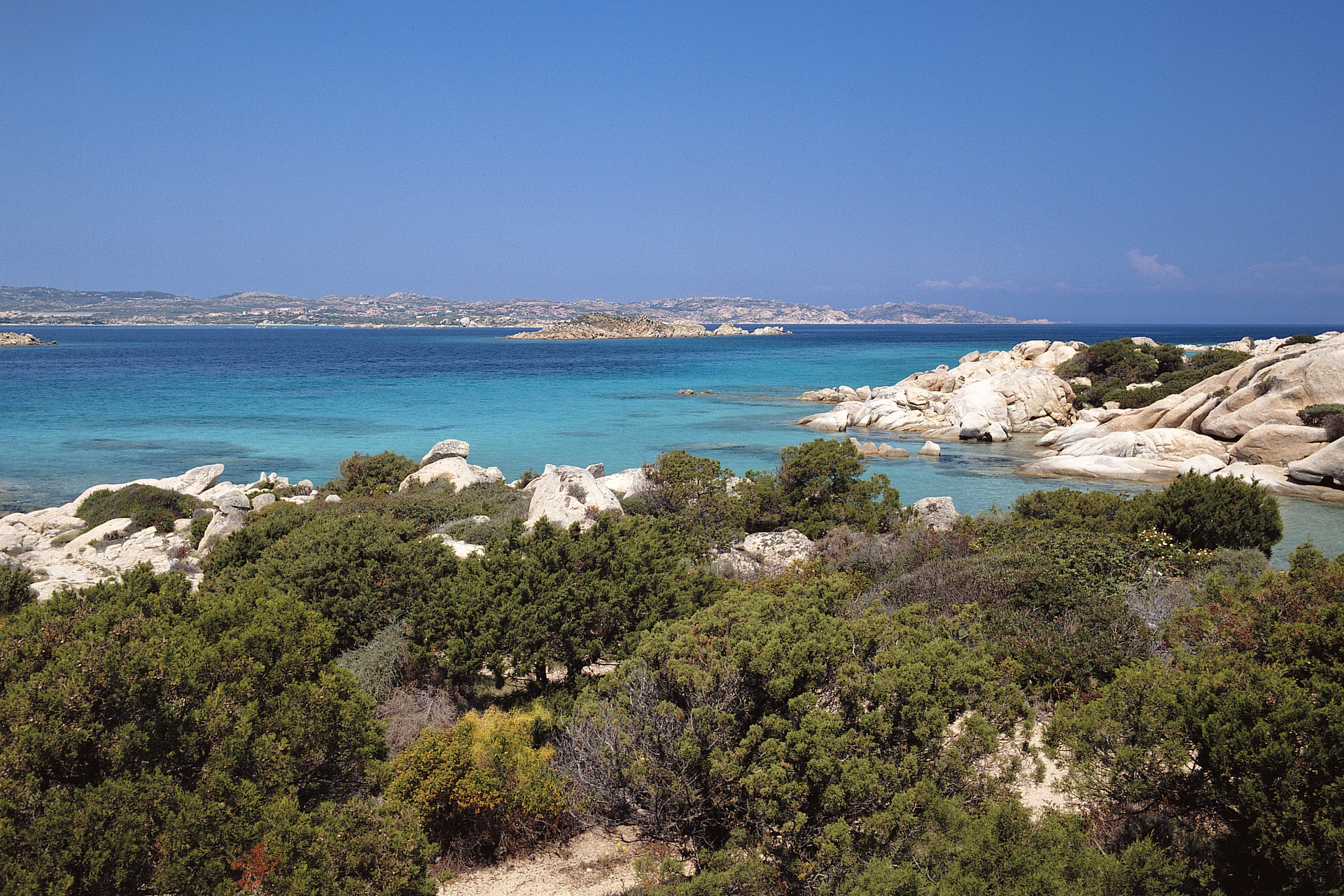
Its famous name is no coincidence: once upon a time, the hero of the two worlds moored his ships here, in a harbour that can still be seen. Cala Garibaldi takes up the north-western coast of Caprera, opposite the small island of Giardinelli and the three Italian islets. The beach has fine, golden sand, crystalline, transparent water and a gently sloping seabed forming small, natural swimming pools among the rocks, making the cala a popular place for families with children. It offers fairy-tale landscapes, and is popular with snorkelling, underwater fishing and windsurfing enthusiasts. The beach is framed by large, light-coloured rocks cloaked in the intense green of Mediterranean brush, contrasting with the brilliant, shifting emerald green, azure and turquoise tones of the sea.
To the north of the beach there are another two small calas protected by pink rocks, known as Cala Serena, an ideal place to spend a relaxing day (as the name says), with services including a large car-park, disabled access, beach equipment for hire, bar and restaurant. On the flat western coast of Caprera, the second largest island in the national park, don't miss Cala Napoletana. To the east, the coastline becomes steeper and more rugged: Cala Coticcio, "the Sardinian Tahiti", Cala Portese (or Cala dei Due Mari), where the water laps both sides of the cove, and the splendid Spiaggia del Relitto stand out. The whole archipelago offers stretches of coast that will leave unforgettable memories of your holiday: the beaches of the "big sister" La Maddalena, linked to Caprera by the Passodella Moneta, and the coves of the islands of Santo Stefano, Spargi and Budelli, which can be reached by guided excursion or private boat rides (with respect for the park rules).
A few kilometres from the coast of Caprera, on the other hand, you can combine seaside and culture by visiting the Compendio Garibaldino, one of the most popular museums in Italy, which includes the Casa Bianca, Giuseppe Garibaldi's last home. It still preserves his memory, with his daily objects, goods and memorabilia.

San Pietro apostolo - Tempio Pausania
Unsurprisingly, being located in the heart of the ‘city of stone’, it was made entirely from granite and embellishes the historic centre with its majestic appearance. The cathedral of San Pietro Apostolo is the main place of worship in Tempio Pausania, a town in Gallura at the foot of Mount Limbara, ‘carved’ into the granite rocks and surrounded by landscapes dotted with woods and springs. Its initial structure was medieval, dating back to the early 13th century, but it underwent numerous changes over the centuries. Its current appearance is the result of renovation carried out between 1832 and 1839, during which a span was added by ‘moving’ the façade ‘forward’. When the work was finished, it was reconsecrated and elevated to cathedral status for the diocese of Ampurias and Tempio.
You will immediately notice an unusual feature: the church has two façades: one at the front, the true façade, and a lateral one, on the south side. The first is simpler, with a splayed portal, a small mosaic depicting Saint Peter and two arched windows, while the one on the side is decidedly more elaborate. You will see that the surface is divided into pilasters, within which there are two gabled openings – one of which is walled -, oculi decorated with mosaics and a tympanum decorated with mouldings at the top. The interior has a single nave, with four chapels on each side. The hall has a barrel vault ceiling and ends with a semicircular apse, which contains a wooden choir. The church has Genoese Baroque-style marble furnishings, dating back to the 19th century: the main altar stands out and, above it, there is a niche with the statue of the saint after whom the church is named, the pulpit, a baptismal font and various statues. You can also admire an unusual pipe organ, gilded wooden altars inside two chapels and, in the vault over the apse, a fresco of Saint Peter holding the keys to the Kingdom of Heaven.
In front of the cathedral's façade you will notice another religious building: the Oratorio del Rosario, probably built between the 13th and 14th centuries and, according to some, on the site where a temple dedicated to Castor and Pollux stood in Roman times. Next to the bell tower of the cathedral, there is the Church of Santa Croce, which contains precious wooden furnishings, particularly an altarpiece and a Deposition.
Walking through the streets paved in granite stone you can visit Piazza Faber, dedicated to Fabrizio de Andrè, with a colourful ‘flying’ installation designed by Renzo Piano. In the city and its surroundings, encircled by the enchanting views of the peaks of Mount Limbara, you can visit the Rinaggiu springs, located in a park, and numerous archaeological sites, including the nuraghi Majori and Izzana.