
Oasis of Bidderosa
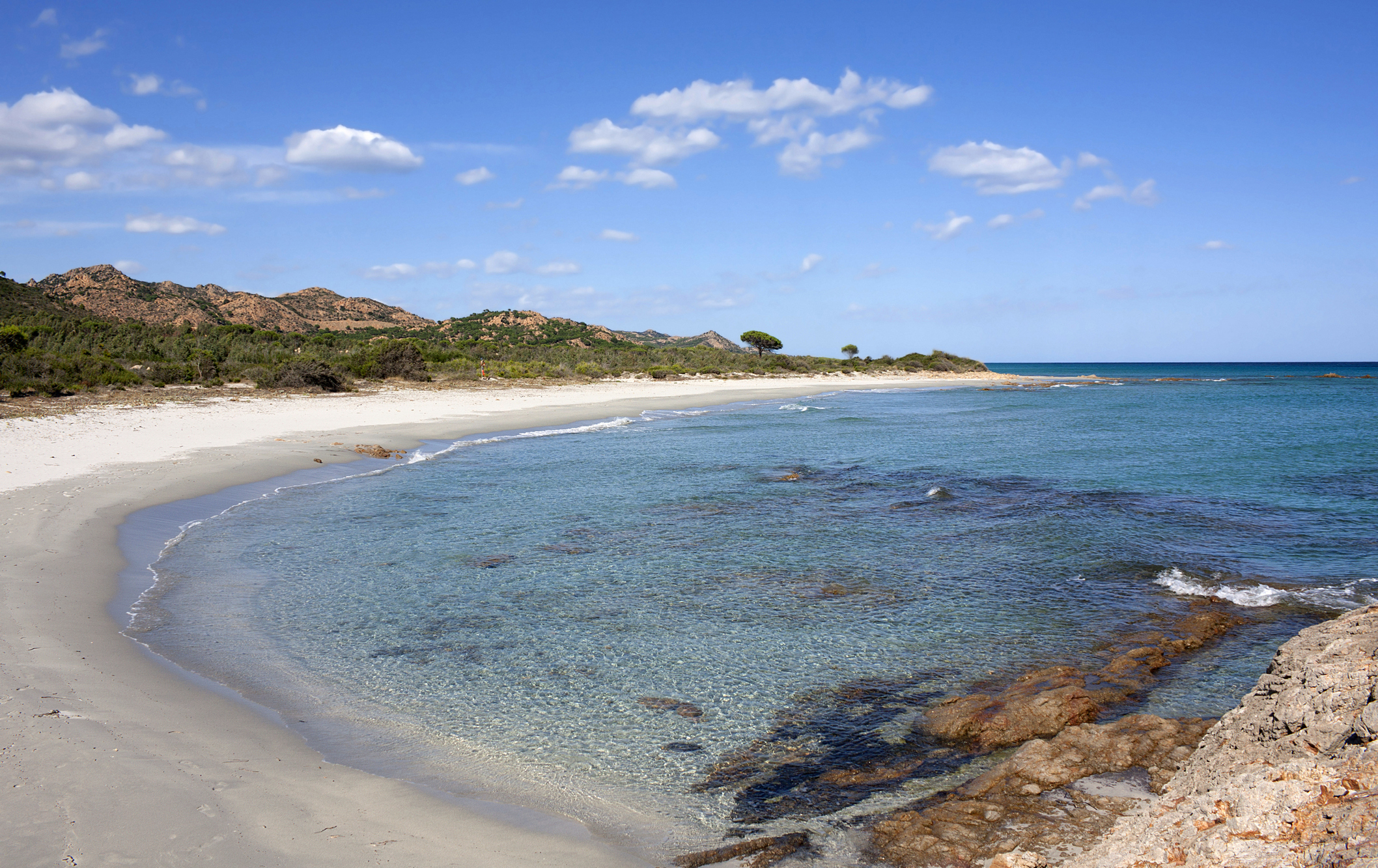
The dazzling white sand will suddenly appear before your eyes at the end of a long road bordered by junipers, pines and holm oaks. Although the sensation is that of being in a different world, this place really exists and it is the oasis of Bidderosa: five dreamy little coves inside a park of 860 hectares, mostly formed by woods and Mediterranean scrub, protected by the Forest Authority and entrusted to the Municipality of Orosei, which is 13 kilometres north of here. Access by car or motorbike is limited to a restricted number from May until the end of October. There are no seasonal limits if you enter by bike or on foot, although you must respect the rules regarding preservation of this quiet place set in greenery. By going on a trekking trip, you can delve deep into the reserve: you will admire the rolling greenery, artistic granite elevations and centuries-old junipers standing on the white shorelines. Otherwise, you can get there via a short swim in the sea from the adjoining Cala Ginepro (to the south): during low tide, the water is one metre deep. The first beach in the oasis is four kilometres from the entrance and you will gradually find the other four, all approximately one kilometre long, stretching as far as the northern border, represented by another picture postcard paradise: the splendid beach of Bèrchida, in the territory of Siniscola.
Fine white sand, sea daffodils and granite rocks appear, characterizing the five coves: a charming and silent landscape, filled with the fragrance of the vegetation and washed by the crystal clear sea, with its shallow waters. You can swim and do some snorkelling here, in waters with a constant depth even several tens of metres from the shore. Also in the oasis, there is Monte Tuttavista, covered in cork oaks and holm oaks, Fuile ‘e Mare and Senna ‘e Sachita, covered in Aleppo pines and stone pines, where you will find picnic tables and relax in the most sweltering hours. Eucalyptus trees, junipers and Mediterranean species will welcome you at the end of the dirt trail providing access to the coves, that winds through the pine forest and alongside the lagoon of Sa Curcurica (meaning pumpkin), populated by non-migratory and migratory birds, which you can observe from the bird-watching locations. Next to it, stands Monte Urcatu: from the summit, you will see kilometres of orderly trails and clean beaches. Bidderosa is the pearl of Orosei, a renowned tourist centre with heavenly beaches, among which Cala Liberotto, Cala Ginepro, Marina di Orosei and Cala Osalla, on the Dorgali border.
Escalaplano
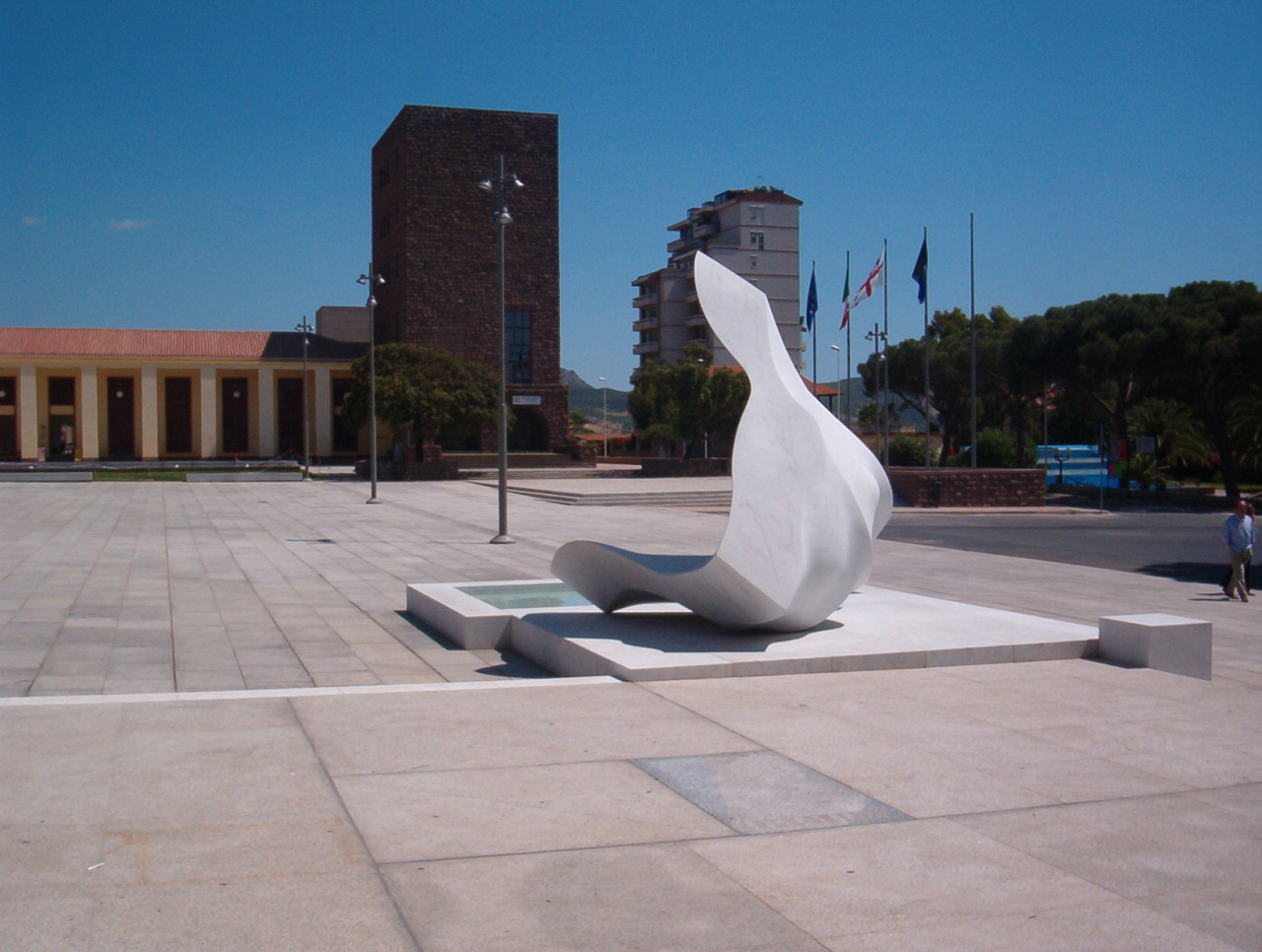
Perched on a plateau almost 350 metres high, Escalaplano is surrounded by the valleys of the rivers Flumendosa and Flumineddu, in a fertile area cultivated with fruit and olive trees, covered by forests of cork oaks. With 2,200 inhabitants in the historical region of Gerrei, Escalaplano is the last of the southern Sardinia provinces heading towards the Ogliastra border. The favourable position has allowed the area to be frequented since prehistoric times, with the earliest remnants being Domus de Janas, nuraghe and well temples. In a Spanish document from the mid-14th century, Escalaplano is mentioned as a newly-established town not yet subjected to taxation. According to legend, the village was located in Is Arantas, called Escall'e oru (golden stairway). It later transferred to the plateau, Su Pranu, and named Villanova de Scala de Plan, with reference to the long access road to the plateau. It was first controlled by the Carroz family, then passed to the duchy of Mandas.
The inhabited town is assembled around the parish church of San Sebastiano, built in the Aragonese Gothic style and dating back to the 16th century. The façade is original, adorned with a large inlaid rosette. On the Is Sceasa plateau on the road to Ballao, stands the Chiesa di San Salvatore. Made of mud and straw bricks, it has today been restored. Festivals and food fairs enliven Escalaplano all year round, with their traditions and flavours. Events commence on 17th January with the feast of Sant’Antonio Abate, continuing three days later with that of the patron saint, San Sebastiano. In honour of the two saints, large bonfires are lit, accompanied by wine tasting, desserts and dances. On 15th May, San Salvatore is celebrated, with his simulacrum being accompanied to the country church dedicated to him. 24th June is the day of San Giovanni, with a procession in traditional costume and traccas, carts drawn by oxen and adorned with flowers. Also in June, the tasty festival of lentisk oil and of cheese. In August, there is the Escalaplano folk festival for Ferragosto. Finally, on 4th December, the town celebrates Santa Barbara.
Cala Goloritzé
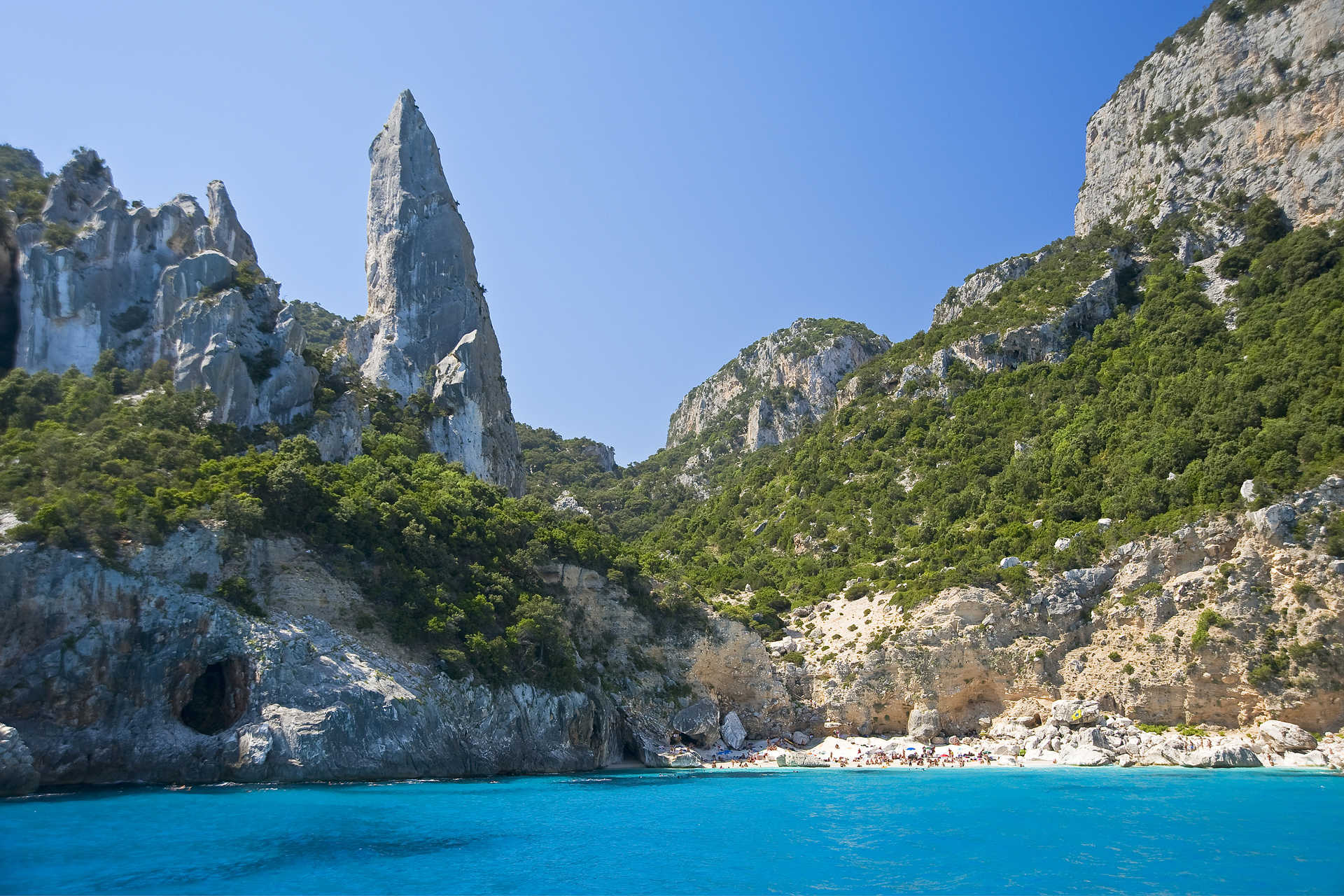
A landscape born from a fanciful reverie. In correspondence with Capo di Monte Santo, ten miles north of the Santa Maria Navarrese port, the rugged and rocky coastline overlooks the sea from dizzying heights – such as with Perda Longa that gently retreats inwards, in a scenic cove adorned with a plethora of smooth white pebbles. The seabed is of a surreal transparency, awash with turquoise waters flowing from underwater karst springs, with marble rocks shaped over time emerging from the sea including a natural arch and the famous pyramidal peak of Monte Caroddi. Its peak of 143 metres is crowned by a site that cannot be missed on your visit to the Island, considered as its symbol. All around are imposing cliffs that reach a height of 500 metres, covered with Mediterranean scrub that perfumes the air. Behind is a forest of holm oaks and strawberry trees. The unspoilt and wild Cala Goloritzé, a testimonial of Baunei, is one of the coastal stretches of the Gulf of Orosei in which sea and mountain unite in perfect harmony.
This national monument has been protected since 1995, being the most photographed beach in Ogliastra, permanently ranked by TripAdvisor users amongst the top ten most beautiful beaches in Italy. The spectacular beach, composed of endless white pebbles, was formed in 1962, following a landslide detaching from the sandstone wall. Two hundred metres north of the main beach is the quaint ‘Spiaggia delle Sorgenti’ (‘Springs Beach’), the name of which derives from the waters gushing from the springs to flow between the rocks. The bay is bordered to the south by a rocky wall in which the erosive action of the sea has carved out a stone arch that plunges into the sea. The enchanting scenery is watched over by its ‘guardian’, the grandiose spire, known as 'Aguglia a Tramontana', a limestone spur coveted by climbers hailing from all over the world, due to presenting a range of 'climbing routes', the most famous being the Sinfonia dei Mulini a Vento (Symphony of Windmills), opened by Maurizio Zanolla 'Manolo' and Alessandro Gogna. Thanks to the resonance of the summit being conquered by the two famous mountaineers in 1981, the beach immediately became a destination for free climbing enthusiasts, as well as being a habitat where the Eleonora's falcon nests. Not only for rock climbers, Cala Goloritzé is also home to trekking. It can also be reached on foot. The route sets out from the parking lot of su Porteddu, on the Golgo plateau, before unfurling across 3.5 kilometres in the Supramonte di Baunei with a difference in altitude of 470 metres. With there being about an hour travelling downhill and 1.5 hours uphill, it is certainly within reach of most. The long walk in the midst of a Mediterranean 'jungle' will be greatly rewarded upon reaching an unspoilt oasis, one of the most beautiful beaches in the Mediterranean. Access is much easier by sea, as you can take advantage of the charter services (as a group) and rubber dinghy rentals from the ports of Arbatax, Cala Gonone and Santa Maria Navarrese. Yet there are specific limitations - it is forbidden to moor within 300 metres from the shore. Boundary buoys mark the access point, from where you simply have to swim or row in.
To the north of Goloritzè is another 'pearl' of the Mediterranean, being the unmissable stop of Cala Mariolu, characterised by pebbles similar to sugared almonds mixed with sand. Its natural continuation is Cala dei Gabbiani. Even further north is Cala Biriola, which opens up at the end of a forest of centuries-old holm oaks, junipers clinging to rock, and Mediterranean scrub. The trail leading to this location runs along the crag, offering thrilling glimpses along the way. If you choose to go by boat or dinghy, just before arriving, you can immerse yourself in the 'Pools of Venus'. Beyond lies Cala Sisine, an unspoilt paradise at the end of a ravine, once a river bed. Alongside is the Grotta del Miracolo, a wonder of nature comprised of limestone columns, stalactites and stalagmites in the most surprising forms, along with basins and glossy floors. Halfway between the territories of Baunei and Dorgali is Cala Luna, another symbol of Sardinia and the setting of the film "Swept Away". Three kilometres away are the Grotte del Bue Marino, once a habitat of the monk seal. Spied along the 'tourist' route are ponds, sandy beaches and enclosures adorned with concretions.
Cala Mariolu
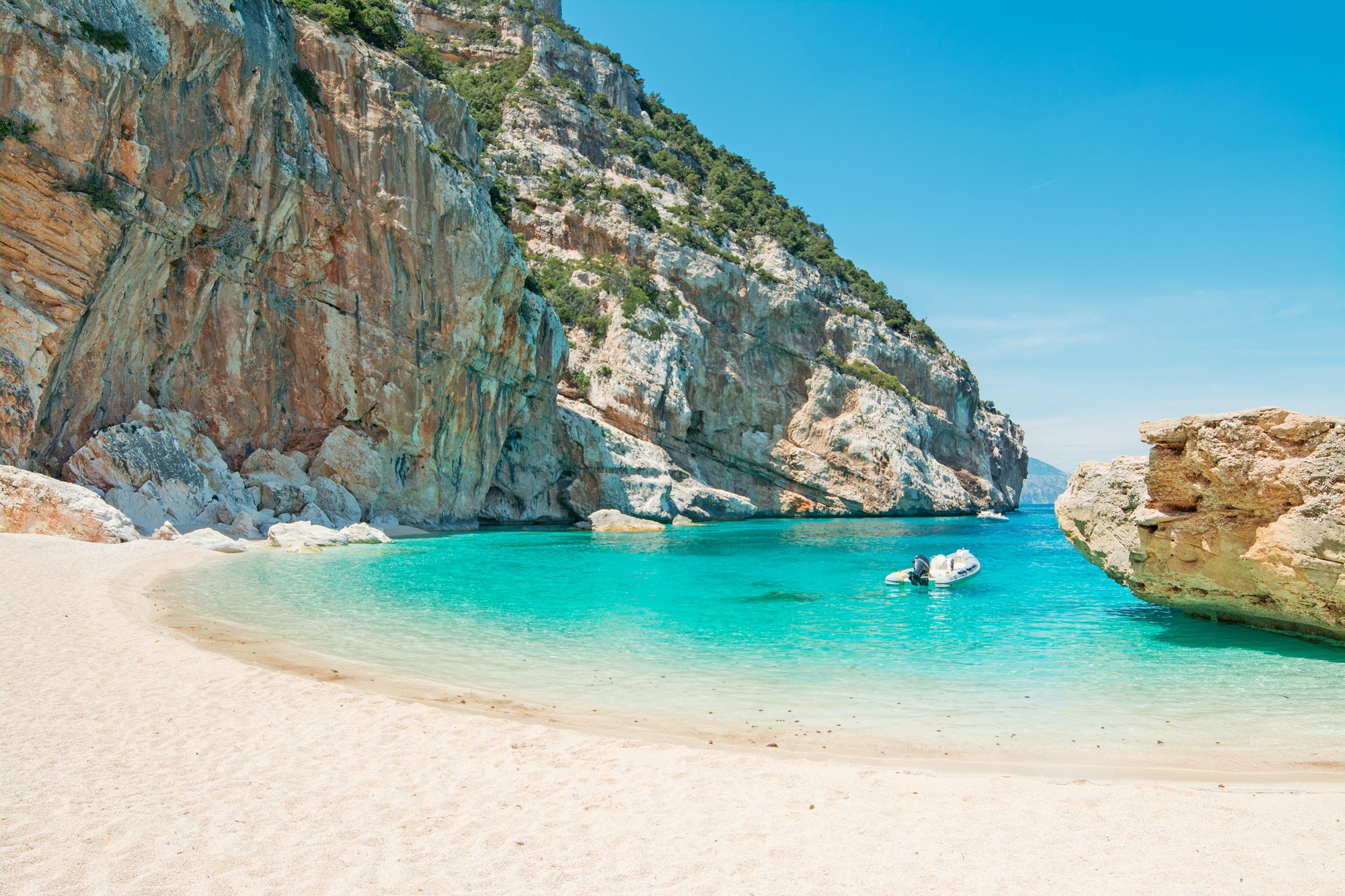
Dive into this sea that looks like it has been painted. It is also known as ispùligi de nie (snow fleas) because it consists of small round, pink and white pebbles, mixed with sand. Cala Mariolu, in the territory of Baunei, gets its name from the Mediterranean monk seal that is said to have ‘stolen’ the fish from the nets of the fishermen from Ponza and was therefore called the mariolo (thief).
Its landscape is striking, with its endless shades of blue, emerald green and sky-blue, as well as its pebbles that resemble snowflakes. The cliff surrounding it reaches a height of 500 metres and looks out onto the sea both to the north and to the south, making Cala Mariolu accessible from the land only via a challenging trekking trail (for experts) through dense Mediterranean scrub. In the past, Punta Is Puligi acted as a place in which coal could be loading by the furisteris, the coal merchants who populated the Baunei area.
The seabed with its shallow waters is worth exploring with a mask, for those who have less familiarity, or with diving equipment for those who want to explore its depths: it is the habitat of various species. You can even catch a glimpse of dolphins offshore from time to time. Out of the water, you will see the peregrine falcon and the Eleonora's falcon, the European shag and the golden eagle.
A large rock, sa perda 'e su saltatori, acts as a pier. In fact, the cove is easier to get to via the sea, in private boats or using services heading to the coves that depart from the ports of Arbatax, Cala Gonone and Santa Maria Navarrese. Nearby, there are numerous caves, one of which is in the cove: it begins with a little beach and is ten metres deep, which is the result of the incessant movement of the sea over the centuries. Not far away, there is the charming Grotta del Fico. During your trip along the gulf, there are other little coves not to be missed: the unspoilt Cala Goloritzè, the splendid Cala Sisine and Cala Biriola and one of the beaches symbolizing the Mediterranean, Cala Luna, halfway between here and the territory of Dorgali.
Berchida
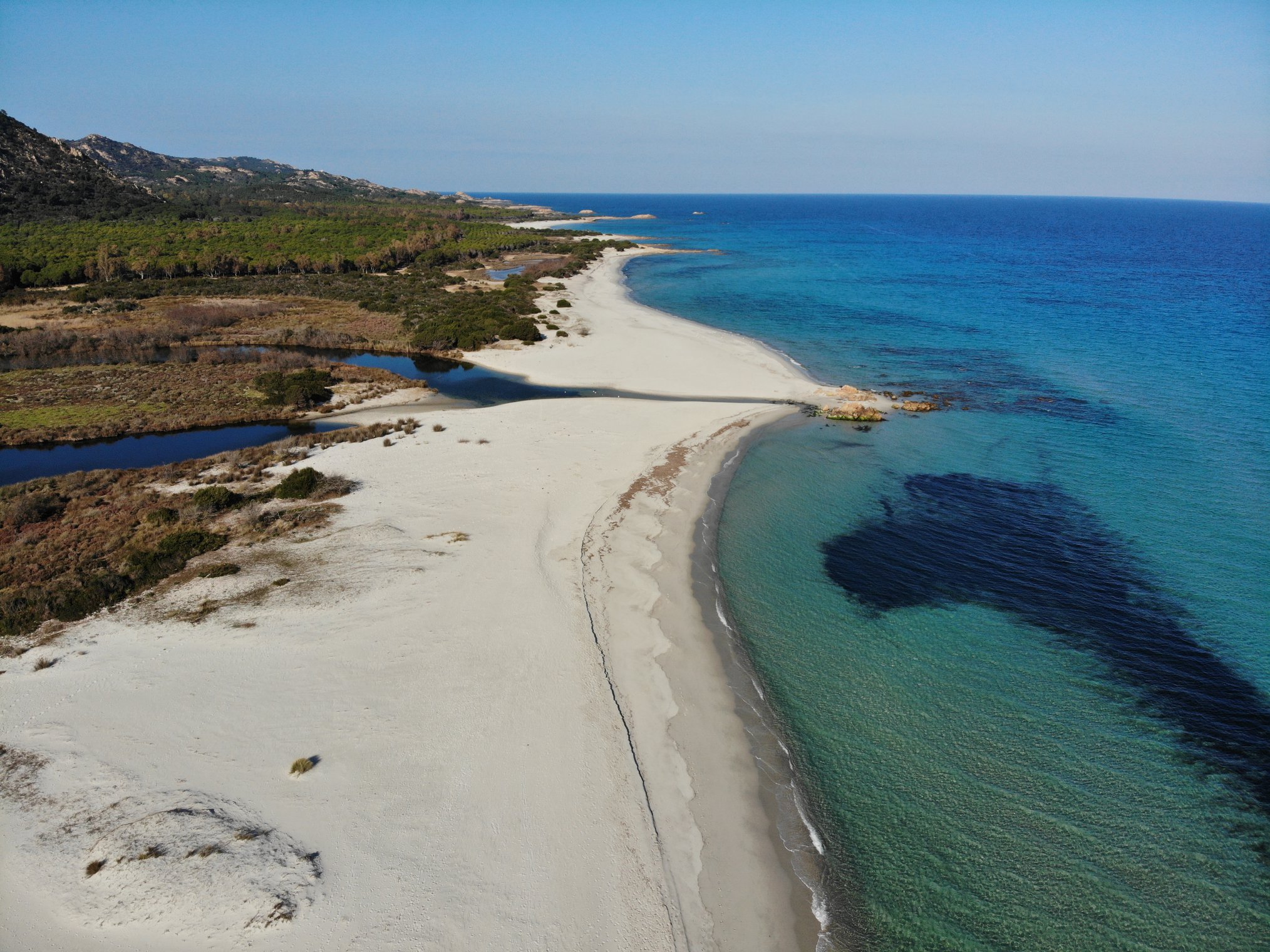
The scenery is described by many tourists as one of the wonders of Sardinia, able to regenerate the spirit and offer new emotions based on the sunlight, from sunrise until sunset. Bèrchida is a splendid, long, spacious beach, considered (and voted) one of the most beautiful in the Mediterranean. It is situated in the territory of Siniscola, in Baronìa, which is just a few kilometres away. Never crowded and the ideal destination for relaxing, withshallow waters, fine sand and the colours of the sea, which range from green to turquoise. You will be able to enjoy various amenities: kiosk-bars, beach equipment, canoe and pedalo rentals and ample parking.
It is surrounded by centuries-old junipers and Mediterranean scrub, forming a natural setting for the Rio Berchìdarivulet, at the mouth of which there is a pond inhabited by numerous animal species. Near the beach, there are also two archaeological areas, in which you will find the ruins of the Conca Umosa and Paule e’Luca nuraghi.
With a long, pleasant walk along the water’s edge, to the north you can reach the splendid dunes of Capo Comino and S’Ena e Sa Chitta, three kilometres of fine, white sand, closed in by rocks in the area of the old lighthouse, off the shore of which there is the little Isola Rossa (Red Island). Behind it, there is a pine forest of Aleppo pines and stone pines, about half a century old. Further south, you will find the little fishing village of Santa Lucia, which emerged around an Aragonese tower and behind a lovely white sandy beach, and the renowned tourist locality of La Caletta, with all necessary amenities and a five kilometres of beach.
Then, to the south of Bérchida, there is the Oasis of Biderosa, another magical place. It is a coastal forest of over a thousand hectares, inside which it is easy to sea migratory birds and resident species, the pride of Siniscola thanks to the variety of flora and fauna within it. The coastal forest includes five little coves, among which the charming beach of Biderosa with a pond behind it, inhabited by pink flamingos and herons.

Capo Ferrato
From Monte Ferru standing over it, the discovery of the Capo Ferrato promontory starts at the top. Climbing the mountain is an easy trek across the typical Sardinian Mediterranean landscape, inhabited since prehistoric times. Along the way, you will encounter sheepfolds, domus de Janas and nuraghi in the scrub. Once you reach the top, the view dominates the entire territory of Muravera: It seems to be suspended over the Sarrabus landscape, from the forest of the Park of the Sette Fratelli to the lively and very long beaches, Colostrai and Feraxi to the north, behind which there are the wetland oases, ponds and fish farm, while to the south you can admire the last strip of the immense expanse of Costa Rei.
Separating the two never-ending coastlines of soft sand is an oasis of peace and silence... it is the wild promontory stretching towards the sea. From the top of the mountain you will recognise the network of paths outlining it, leading to Porto Pirastu, to the panoramic lighthouse of Capo Ferrato and to the cliffs that enclose numerous small bays, hiding them from view, exclusive havens with a seabed perfect for snorkelling with a mask and flippers. It is a place where silence prevails. As you walk a few steps, the only noises are the sound of the waves and the chirping of the crickets. You can perceive a powerful charge of energy here, emanating from places that have reached us intact, and how many of them there are all over the Island.
Here, the intense scents of the Mediterranean essences wafting around promontory will embrace you as you gaze at the rocks from distant geological eras, emerging amidst the wild flowers and bushes of the scrub, leaving you captivated by the enchanting solitary, wild beaches of Cala sa Figu and Portu s'Illixi, nestled between wild cliffs, which can only be reached by sea or on foot after leaving your car at the entrance to the path that descends to the coves. A little effort is rewarded by a very unconventional day by the sea, with the secluded locations of the Capo Ferrato promontory that seem to be waiting there for those who want to enjoy their special, naturally primordial marine environment.
Casa Farci
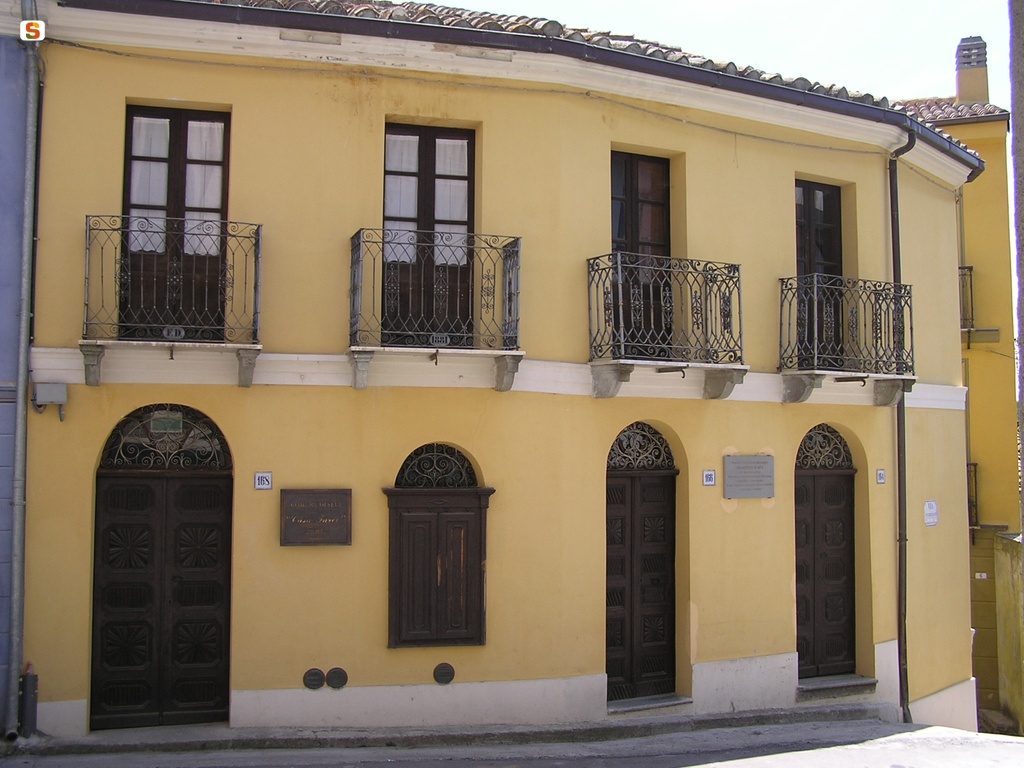
The population of Seui contributed to setting up the collection for the ethnographic part, while the rest is evidence of the life and works of a well-known intellectual and politician who was born here and lived here until his adolescence. Casa Farci is a building dating back to the 19th century, located in the heart of the main town of Barbagia di Seulo. Its historical relevance comes from the fact that Filiberto Farci was born here in 1882. He was a writer and co-founder of the Partito Sardo d’Azione together with his great friend Emilio Lussu. The visit allows you to admire his study, where objects, documents and letters are kept, as well as his library. In addition to his political and literary activity, both rooms also testify to his relationships with other important figures on the Island’s cultural scene, such as Sebastiano Satta, Grazia Deledda, Francesco Ciusa and Antioco Casula.
The study is located on the first floor. On the same floor, you can also visit the kitchen with a wood-fired oven, a bedroom and a section dedicated to costumes. On the ground floor, you’ll find the exhibition area dedicated to trade, a deeply traditional activity in Seui: you will be surprised by the carefully organised layout, aimed at reconstructing a late 19th-century emporium. There is a section with documents and objects from the Fund’e Corongiu anthracite mine. The first basement floor is dedicated to arts and crafts: you will see the tools used in traditional activities by su massaiu (the farmer), su maistu de muru (the bricklayer), su maistu de linna (the carpenter) and su ferreri (the blacksmith), with the reconstruction of a forge. Going down another level, you will enter the cellar: the wooden presses for grape marc and a large copper alembic still, with which brandy was produced, stand out. You will notice the serial number ‘Cagliari 0001’, evidence of the authorisation for production enjoyed by the owner. Another section of the museum is dedicated to emigration, including documents from the Bissiri family. Among its members, there were inventors: Augusto, who emigrated to the United States, is known for the creation of a sort of ‘precursor’ of the cathode ray tube, laying the foundations for the birth of the television.
Casa Farci is part of a museum circuit that offers a fascinating range of themes and cultural proposals: the Spanish Prison ‘tells’ the story of the life of prisoners in Barbagia di Seulo until 1975; inside the Palazzina Liberty there is an archaeological, artistic and mining collection; the Galleria Civica contains a large exhibition of canvases, watercolours, sculptures and paintings. The fifth site is s’Omu de sa maja, a museum dedicated to the magical-religious world and the pre-Christian traditions of the inhabitants of the area.

Girasole
According to several scholars, Girasole corresponds to the ancient Sulci Tirrenica (Tyrrhenian Sulcis). Since the times of Roman Emperor Caracalla it has been spoken of as Sardinia's eastern resort and the geographer Tolomeo (2nd century AD) defined its inhabitants as Sulcitans. Archaeological investigations confirm that Girasole emerged almost three thousand years ago: the ruins of buildings have been discovered and are of the same construction type as the Punic buildings in Sant'Antioco (western Sulci), dating back to the 4th-3rd century BC, preceded by more ancient Phoenician buildings. Numerous artefacts, recovered during reclamation of the nearby Pond of Tortolì, where the ancient port was located, have provided further confirmation. Phoenicians and Carthaginians made the ancient Sulci a fundamental port of call for routes towards the Peninsula. The development continued on during the Roman periods, making it a crucial outpost in Mediterranean trade. In the 12th century, it was called Gelisoi, which was transformed over time into its current name. In local dialect, it continues to be Gelisui and is the only village in Ogliastra, today with approximately one thousand 300 inhabitants, that has been standing (never has this term been more appropriate) in the same place for three thousand years. It is separated from Lotzorai by the Girasole rivulet and it is about one kilometre from the sea. The beach of Isula Manna with its light sand is surrounded by the greenery of a pinewood and it looks out onto iridescent blue waters. Next to it, the pond, which was a port in ancient times, is the habitat of numerous bird species and is an attraction for nature lovers and birdwatching enthusiasts.
Of the six ancient churches in Girasole, today only the parish church of Nostra Signora di Monserrato still remains. It was initially a Gothic-Catalan style building and was later rebuilt between the 16th and 17th centuries with simpler shapes. The renovation that took place in 2014 uncovered 18th-century frescoes. The celebrations in honour of the patron saint, with a parade of traditional dress and horsemen, take place at the beginning of September, while the celebration of St. Antiochus is held two weeks after Easter. In mid-January, the fires of Sant'Antonio Abate are lit. In April, in the context of Primavera in Ogliastra (Spring in Ogliastra), Pratzas de Gelisuli takes place: the houses are opened up and ancient know-how and flavours are commemorated: you will be able to admire manufacturing methods, cultural and folk expressions and food and wine specialties. On the subject of delicacies, don't miss the festival of Is culurgionis, a typical Ogliastra dish, in July: fresh pasta with a potato, mint and Pecorino cheese filling and sealed to look like 'ears of wheat'. Lastly, in August, there is the International Folklore Festival, with local folk groups and others coming from Africa, Asia, Eastern Europe and South America.
Loceri
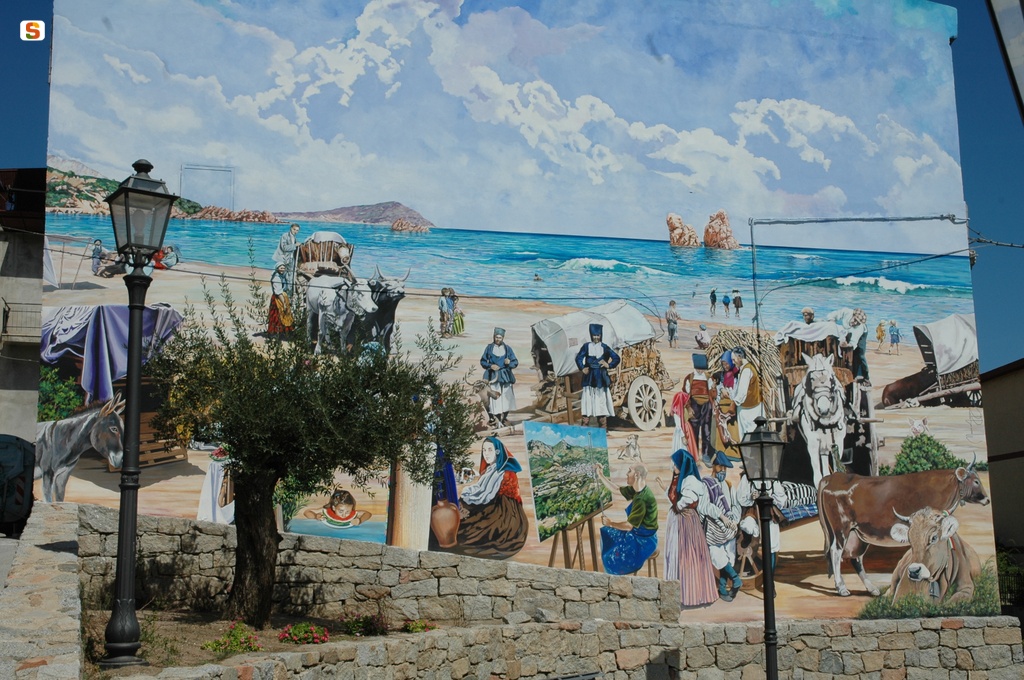
This is the ideal place to enjoy both the sea and mountains, at under twenty kilometres from the Gennargentu massif and Lago Flumendosa and about ten kilometres from the beautiful beaches of the east coast, including those of Tortolì, Lido di Orrì and Cea. Loceri is a small town with 1,300 inhabitants, nestled on the verdant hills of central-eastern Ogliastra. Surrounded by beautiful scenery, it has been inhabited since the Neolithic era as evidenced by the Domus de Janas of Serra Paulis. The Cuccui and Tarè mountains protect the hills and fields cultivated with vineyards and olive groves that have marked these lands for centuries, irrigated by rivers and springs. The result is excellent Cannonau wine and extra-virgin olive oil, products that form the basis of the diet of the centenarian locals. The tradition of olive growing is famous. To discover this tradition, there is the ethnographic museum Sa Domu ‘e s’olia, set up in a mill from 1910, in the heart of the village. In a series of environments, through original tools, are represented domestic life, fields and festivals, the preparation of cheese, oil, bread and wine, caring for livestock, weaving and other crafts. Part of the exhibition is dedicated to traditional clothing and another section to traditional games. In the nearby ‘Vecchi Frantoi’ museum, in another refurbished oil mill, exhibitions and cultural events are held. Next to the museums is the Parish Church of San Pietro Apostolo (18th century), whose patron saint is celebrated at the end of June. In the surrounds are houses decorated with murals. In the countryside are the churches of the Sacro Cuore, immersed in a lush green park, on the road leading from the Pelau valley to Lanusei, and of San Bachisio, in the popular Baroque style (17th century). The patron saint is celebrated in May and October, also with a procession in which the faithful cross the river with the simulacrum, accompanied by the sound of the launeddas. Knights and women in traditional costume kick off the festivities. Hospitality and a sense of welcoming characterise the fairs and festivals, accompanied by the traditional cuisine with marked flavours and rich dishes from the agricultural-pastoral tradition of Ogliastra. To start are with culurgionis, ravioli with potatoes and cheese, all pinched closed to make a spiked pattern. Then comes roast lamb and pork, the tasty braiding of sheep entrails, pecorino cheese, goat rennet and cas’axedu (fresh and soft cheese). There are many home-made breads (pistoccu, civargiu, pani pintau) and cermonial sweets: amaretti, paniscedda, and the sapa and pardulas sweet breads. To accompany the red wine and to conclude is myrtle liqueur and fil’e ferru, the Sardinian grappa.
Orosei
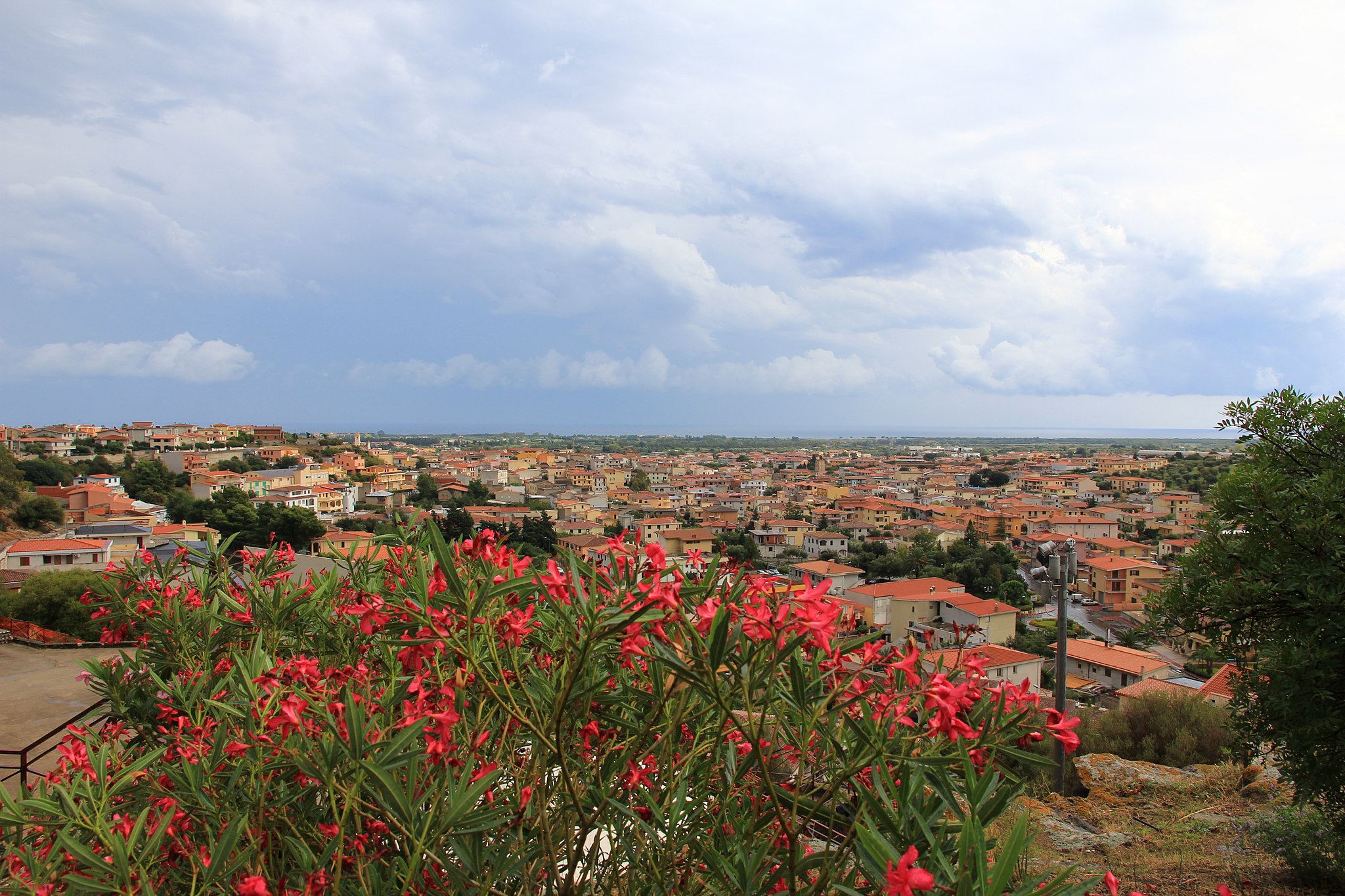
An enchanted place that combines the magic of the mountains with uncontaminated coastal beauties: its gulf, together with the Gennargentu massif, is a regional park. Orosei is a town in the Baronie area with seven thousand inhabitants, lying in the Cedrino valley, two and a half kilometres from the sea. The economy is based on agriculture, marble extraction and, above all, accommodation facilities and tourism.
The coast, beautiful by day and animated on summer nights, is twenty kilometres long: white sand alternating with cliffs. In every beach, you will feel an unstoppable urge to dive into the water. Like at Cala Liberotto, 11 kilometres from the centre, an emerald bay loved by surfers and diving enthusiasts and characterized by delightful beaches with turquoise sea, such as sas Linnas Siccas and sa Curcurica. Behind it lies the pond of sos Alinos, the habitat of resident and migratory birds. Not far away is Cala Ginepro, with soft sand mixed with smooth pebbles. Near the town is the Orosei Marina, a beautiful five kilometre long beach with enchanting stretches like su Barone. More jewels to the south are the wide and long beach on Petrosu and Cala di Osalla, a golden expanse surrounded by greenery half way to Dorgali, known for its ideal diving grounds. Meanwhile to the north is Fuile 'e Mare, protected by pine forests, Mattanosa, with white and pink sand and the oasis of Bidderosa, a stunning natural paradise: five white and fine sandy coves overlooking the emerald sea. The beach is framed by eucalyptus trees, junipers and Mediterranean plants.
The historic centre of Orosei is dotted with churches - 17 consecrated ones - including the baroque parish church of San Giacomo, celebrated on July 25th, the church of Le Anime, with an 18th century wooden pulpit, and the church of Sant'Antonio, with frescoes from the 1400s, next to which the fires of Sant'Antonio Abate are lit on January 16th. There is also a tower dedicated to the saint, a reminder of when Urisè was the main centre of his curia. The first settlement was Roman (Fanum Orisi), in the 2nd century AD, while the most significant prehistoric remains are the Rampinu Nuragheand the village of sa Linnarta. Don't miss Sa Prejone vetza (the old Spanish prison) and the Don Nanni Guiso museum, which collects miniature theatres from all over Europe, housed in the Palatzos Vetzos, where there is also a portrait of Alberto Moravia by Pier Paolo Pasolini. The festivals have deep roots in the past, especially the rites of Holy Week: sos Sepurcros, the via crucis and s'Incontru at Easter. In May the town celebrates Sant'Isidoro and Santa Maria 'e Mare with characteristic processions. In the festivals the flavours of the sea stand out in an exceptional dessert: the seadas sprinkled with golden strawberry-tree honey.