
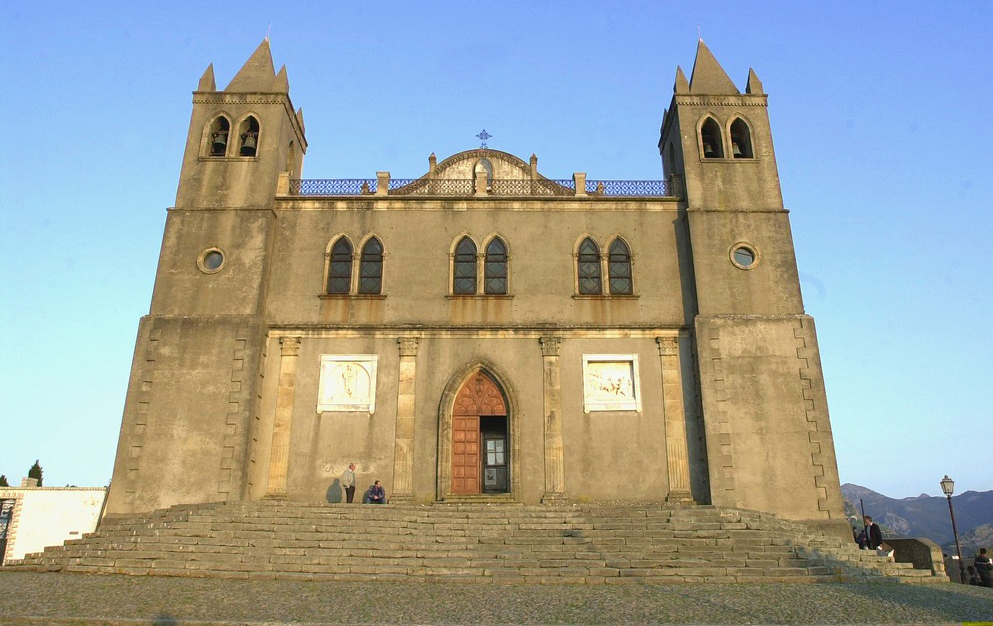
Santa Maria della Neve - Cuglieri
It was the first Sardinian church to obtain the title of minor basilica, it contains a remarkable stylistic variety of decorations and furnishings and is the scene of various rituals of one of the most exciting events during Holy Week on the Island. The church of Santa Maria della Neve stands over the town of Cuglieri from the top of the Bardosu hill, in the eastern part of the village. Its origin is steeped in legend: it is said that, in the 13th or 14th century, a group of fishermen from Cuglieri found a mysterious stone simulacrum of the Madonna - with a golden flower in her hand - on the beach of Santa Caterina di Pittinuri, and they decided to take it to the church of Santa Croce, which was the village’s parish church at that time. The oxen that pulled the cart with the statue in it continued their journey without stopping at the church and instead climbed up the Bardosu hill. Once at the top, it was impossible to make them move. The locals interpreted what happened as divine will and built a temple there. The name also apparently comes from a miracle: the church was originally supposed to be dedicated to Santa Maria del Fiore, but after the attempted theft of all the precious furnishings by a gang of thieves, sudden heavy snowfall prevented the criminals from escaping, allowing the treasure to be recovered.
The first news of the presence of a sanctuary on the hill dates back to the 15th century, but the current building is probably a late seventeenth-century reconstruction, the subject of a great deal of renovation and extension work over the centuries that followed. You can admire a Neo-Gothic style façade, built in 1913 and divided into two orders, above which there is a ‘double inflection’ tympanum, slightly set back to leave room for a terrace. Two small bell towers with spire crowning elements frame the façade, while there are two marble bas-reliefs on the sides of the portal, depicting the arrival of the statue on the hill and a further miracle, which occurred in 1824, when lightning struck the statue, leaving it unharmed. The single-nave hall is divided into bays with a barrel vault and four chapels on each side. In the presbytery, a ‘fan-shaped’ altar stands out, above which there is a dome with pendentives and a tholobate. Among the furnishings, you will notice a chestnut wood choir, marble statues depicting Saint John the Evangelist and Saint Paul and the painted stone statue of Our Lady of the Snow. The basilica is home to one of the historical brotherhoods of Cuglieri, that of the Rosary, of seventeenth-century origin. The brotherhood tends to the celebrations of feast days and helps with the Holy Week rituals: in fact, here, on Friday, sa contra rughe, a heavy black wooden cross, is hoisted up and acts as a support for the crucifix, the protagonist of the ritual of su ingravamentu, the crucifixion. In the afternoon, on the same day, another exciting ritual takes place inside the basilica: the deposition.
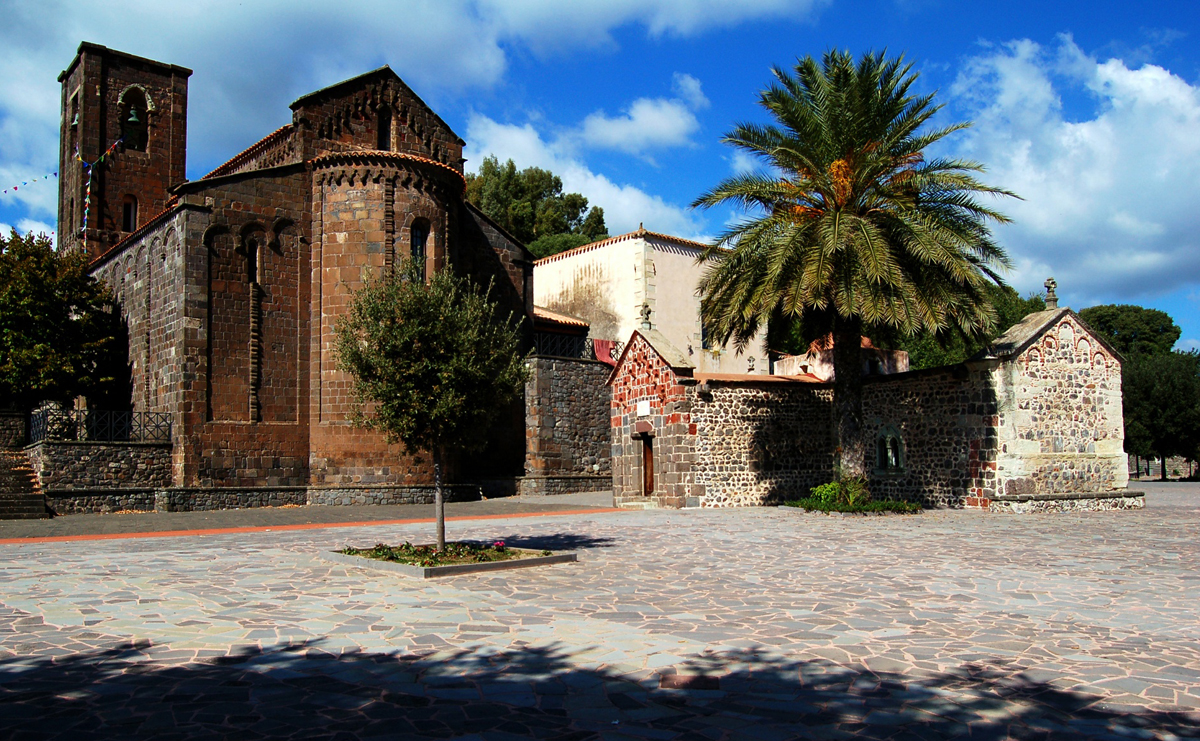
Santa Maria di Bonarcado
Its origin is referred to in one of the oldest documents written in Sardinian language, the story of its construction is true evolution over time and its present is that of one of the most captivating examples of Romanesque style on the island. The church of Santa Maria, parish church of Bonarcado, raised to the rank of minor basilica in 2011, stands in front of the early medieval sanctuary of Nostra Signora di Bonacatu, one of the very first Christian churches in Sardinia, as well as the site of the oldest documented Marian cult in the region.
The sources, particularly the condaghe of Santa Maria di Bonarcado, trace the beginning of its history back to around 1100, when the judge of Arborea, Constantine I, decided to found a Camaldolese monastery near the pre-existing little church. A few decades later, the same monks began to build the clesia nova, because the first one was too small to meet the needs of the community. The first building had a tau cross layout, with a single nave and dark basalt and reddish trachyte ashlars were used as building materials. In 1242, as demonstrated by an inscription that you can see on a pilaster in the left-hand corner of the apse, extension work began, perhaps by Iberian workers: the apse and the north wing of the transept were demolished, the length of the hall was doubled with the addition of a three-nave body, while the bell tower was set up in the south wing.
Today, you can admire several elements dating back to the 12th century: the façade with three blind arches, with an architraved portal in the central one, and the right side, including the first order of the bell tower, decorated with a series of small arches on corbels. Above the small arches that decorate the external walls of the ‘new’ part of the central nave and the apse, there is an arabesque foil - probably resulting from the place of origin of the workers. Inside, the roof over the naves is wooden and they are separated by arches resting on quadrangular pillars. The light is soft, coming from the single lancet windows of the apse and the pediment. Walking along the left side of the basilica, you will see the remains of the Camaldolese monastery that, among its properties, included cultivated land, vineyards, woods, pastures and fishing areas, between the Campidano di Milis area and areas of Mandrolisai. In the area where the two churches stand, traces of very ancient human presence have been recovered: there once stood a Nuragic settlement, on which a Roman village was built. The church of Nostra Signora di Bonacatu was built on the ruins of a late imperial spa building, a Greek cross plan sanctuary with a domed body at the point of intersection of the wings, an apse in the north wing and two façades: one Romanesque, with unusual inserts of ceramic bowls, and one built in the 20th century in neo-Romanesque style.
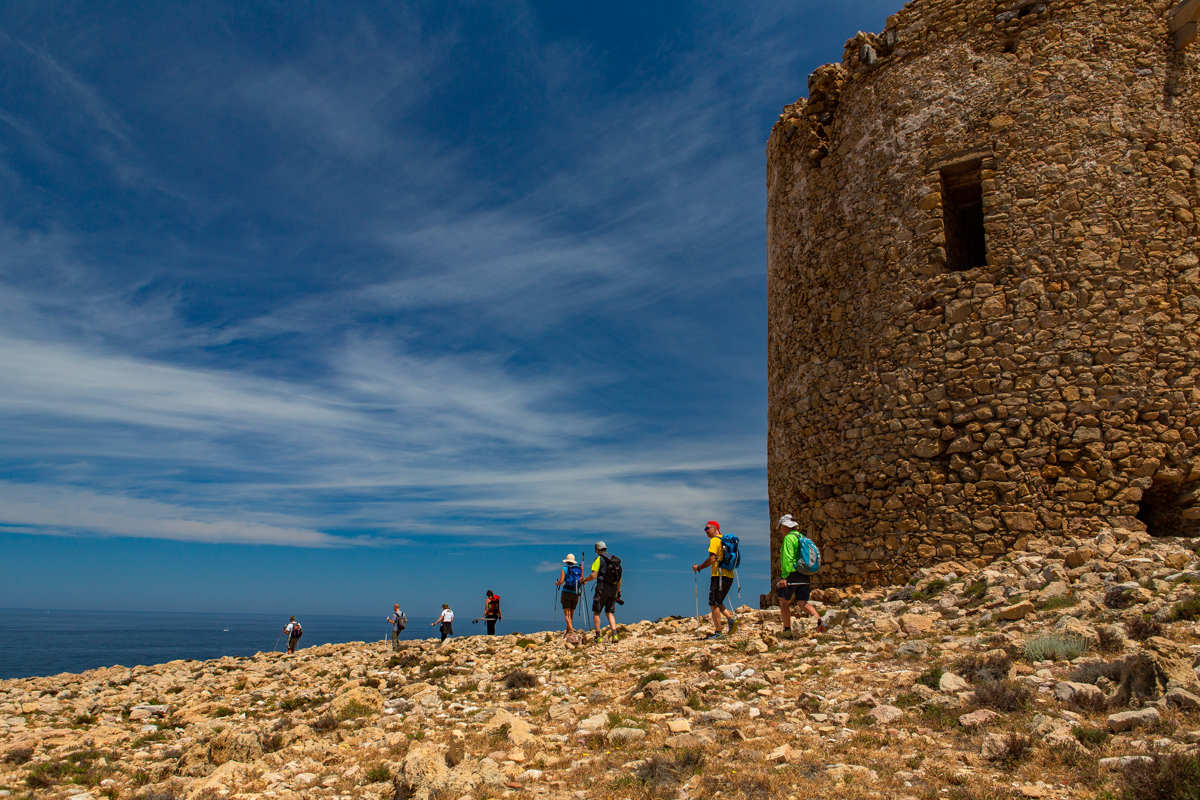
Shoes full of footsteps
The climate is mild most of the year and the temperatures are often pleasant even in winter. Intense light floods the paths along the coasts, as they wind through the wildest hinterland landscapes. Many of these are not quite beaten tracks and are pervaded by an impalpable primordial atmosphere that dominates the beauty of the landscapes. These are paths and hiking trails that lead to the discovery of the most exclusive and private Sardinia, to be explored while connected with the spirit of the places, that touches your soul.
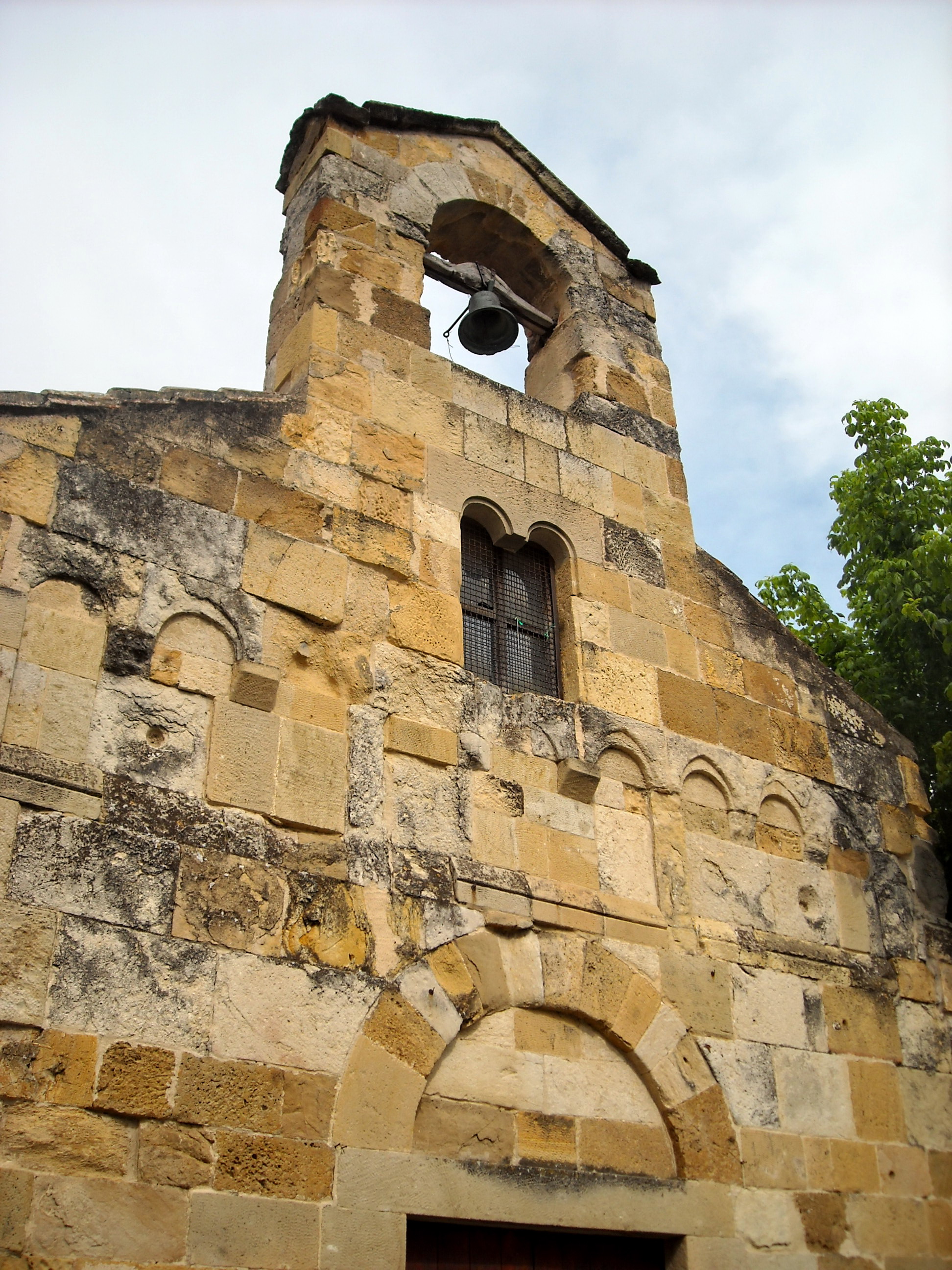
San Leonardo - Masullas
Its foundations tell a story, which is older than what you see at first glance, made of legends, abandonments and the ‘secular’ reuse of it. The Church of San Leonardo is the oldest place of worship in Masullas, a municipality in the Alta Marmilla area, in a scenic position at the foot of Monte Arci. There are no documents attesting to the building and consecration of the church, but its construction features have led to the theory that it dates back to around the mid-13th century. During a recent renovation phase, the foundations of a pre-existing place of worship, perhaps from the Byzantine era, were discovered. The current building was constructed on top of the previous one, respecting its structure and orientation: a longitudinal layout, with a single nave and a semicircular apse facing north-east. Sandstone and trachyte blocks were used for its construction. You can see them on the façade, decorated with small false loggias, where a mullioned window and a large bell gable stand out, as well as the entrance portal – along the same axis – with a monolithic architrave and a relieving arch.
The church hall has a wooden roof, capitals with plant decorations on the south wall and the image of a face carved into the centring of a single-lancet window in the apse. You will feel like you are in an intimate and cosy environment, also thanks to the simplicity of the furnishings. According to local tradition, the church contains the tombs of two martyrs, one of whom is Saint Callixtus, a pontiff in the first decades of the 3rd century. The origin of this legend lies in the fact that the church was part of the possessions of the then flourishing Vallombrosian Abbey of Thamis, the ruins of which are now located in the territory of Uras. The monastic order was in close contact with the German abbey of Fulda, to which the martyr’s remains, or at least part of them, were apparently transferred. Thanks to the cult of relics venerated by the Vallombrosian monks and the close relationship between the two abbeys, Saint Callixtus's remains finally reached the church, where some say that two sarcophagi were embedded in the walls. The church then went through a phase of abandonment and use as a monte granatico (wheat bank), after which it underwent initial restoration work in 1859.
The journey from the Middle Ages in Masullas to the Savoy period continues with a visit to the nearby museum of ‘I CavalierI delle Colline’ (Knights of the Hills), with an exhibition that focuses on the rural aristocracy of the ancient curatoria (administrative division) of Parte Montis, which the village of Masullas belonged to. Also not to be missed is the GeoMuseo located inside the former Capuchin convent. Among the fossils, agates, crystals and volcanic rocks, the ‘black gold’ of Monte Arci stands out, which was traded as early as the Neolithic period: in fact, the Conca ‘e Cannas obsidian park, the largest deposit cultivated in the Nuragic era, falls within the territory of Masullas. The surroundings lend themselves to fascinating excursions in nature: you can walk through the Taraxi forest and admire the rock face of su Columbariu, the pillow (underwater lava outcrop) of su Carongiu de Fanari and sa Perda Sperrada, a mass of rock almost perfectly split in half.

Tradition at the table looks to the future
The starting point is curiosity: observing them, listening to them, mothers and grandmothers carefully choosing the ingredients, showing off their skills and performing almost ritual gestures, while patiently explaining the various steps in just a few words. Then comes the passion, the tenacity, the desire to experiment, starting by repeating what was learned and adding just the right amount of imagination. Sardinian traditional cuisine, with its distinctive local qualities providing unique sensations and flavours, takes on a new character in the third millennium: that given by the new generation of brave and talented chefs.

Lunar Worlds
White and dazzling in the sun, ethereal and suspended in time, Sardinia’s lunar landscapes seem straight out of a storybook. To remind us that we are on Earth, there are a few details that strike you here and there: amazing wild flowers, the shadow of the golden eagle flying overhead, the bleating of the flocks of sheep in the distance and the scent of helichrysum. They are often found in environments that are challenging to explore. You need to be fit and accompanied by guides to get to the less accessible areas of Gennargentu, on Monte Corrasi, between Nuoro and Oliena and on Monte Albo, between Lula and Siniscola, and at sa Giuntura, along the canyon of Gorropu.
The stars of the Sartiglia, timeless excitement
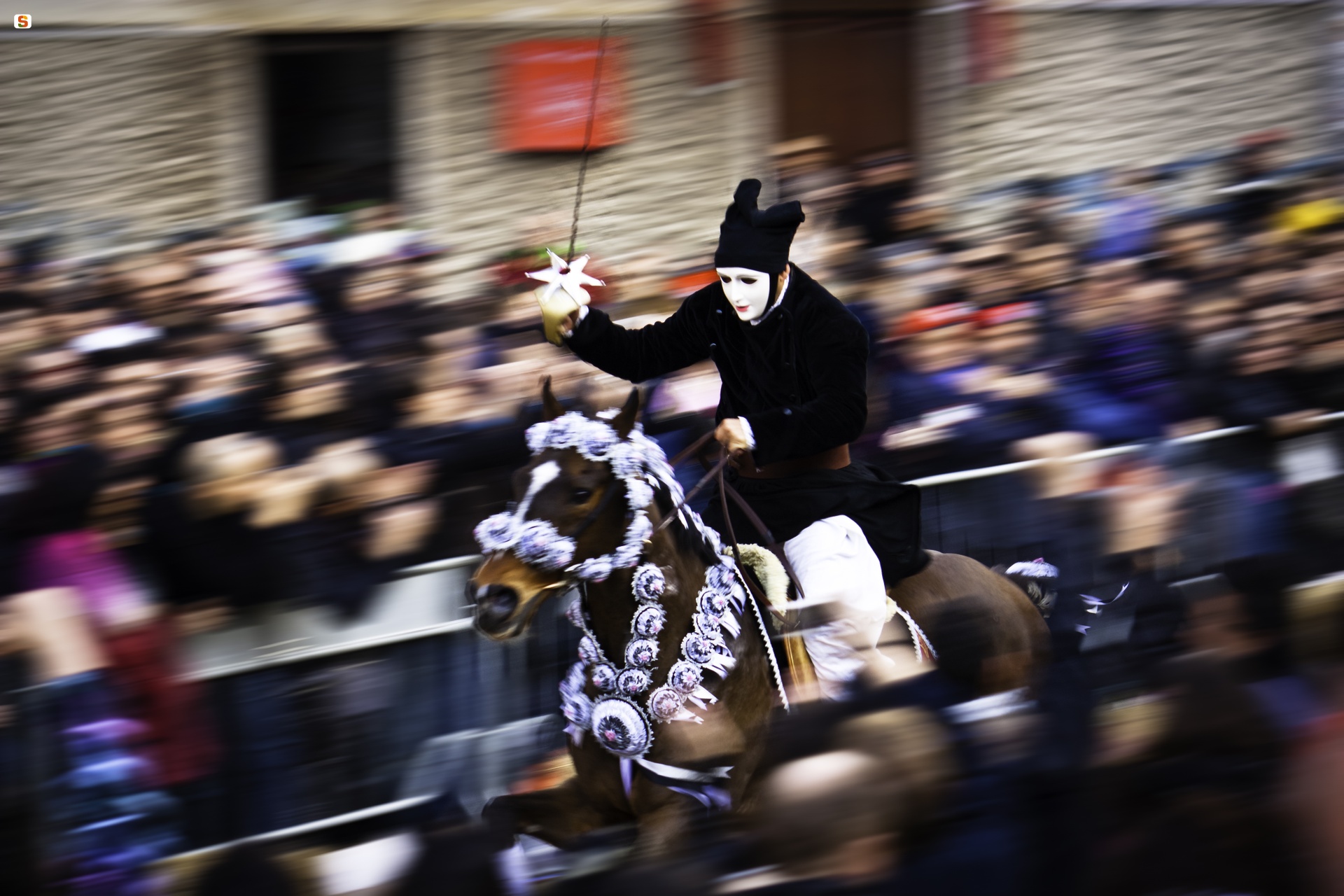
The snorting of steeds and stomping of hooves, the clanging of harnesses and roll of drums, the excited chatter of the audience: it’s a show rife with unforgettable emotions. Sa Sartiglia is an equestrian joust whose roots are set deep in ancient pagan rites of fertility and prosperity, it is the most anticipated yearly event in Oristano, a city that has made its mark on Sardinian history since the times of the Giudicato. More than a hundred masked horsemen elegantly clad in period Sardinian-Spanish dress gallop at full speed on horses fitted with decorative harnesses to the dramatic and insistent beating of drums. The aim of the “race for the stars” is to hook the hanging stars onto one’s sword and it takes place twice: once on Carnival Sunday when the horsemen compete during the gremio dei Contadini, and then again on Mardi Gras, for the gremio dei Falegnami, while Monday’s Sartigliedda is for young people. After the races teams of horses engage in daring exhibitions, and then the Carnival partying continues on the town squares into the wee hours. Almond sweets and delicious local vernaccia wine are enjoyed by all.
Homemade, like in the past
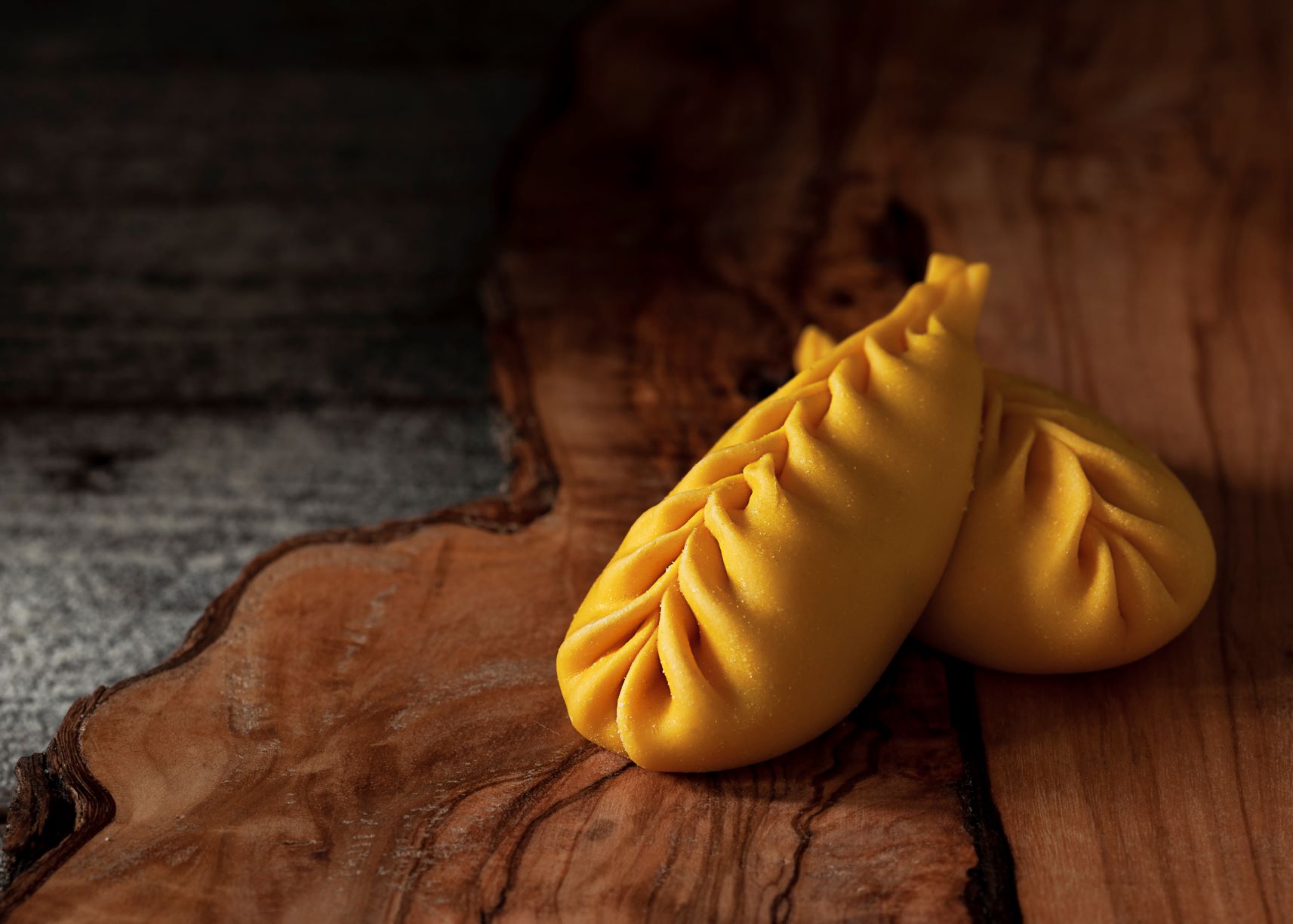
Each has its own preparation ritual, with meticulous and codified gestures, always the same, handed down from mother to daughter. The traditional pastas, both dry and fresh, are a bond between everyday life and celebrations. They are ever-present in moments to be remembered and are daily protagonists at the table, at home, in restaurants and in holiday farms. Their origin has been lost over time: wheat seeds have even been found even in the nuraghi, so it is no coincidence that Sardinia became the ‘granary of Rome’. The tradition has been cultivated (literally) up until the present day, generating a unique and solemn mixture of art, conviviality and taste.

Anchored in the seas of Sardinia
You can reach the most secret and isolated stretches of coast on a sailing boat, as well as hidden coves to be discovered amid the fjords, enchanting reefs and cliffs, to admire while zigzagging coast to coast, not to mention little archipelago groups surrounded by underwater life to explore by snorkelling, sand dunes and Caribbean beaches that can be reached by swimming or by canoe. Days on a sailing boat are spent between strips of Eden, memorable settings for unforgettable sunsets. It is a green, sensory, exciting and fantastic way to experience the Sardinian sea, chosen by boaters as a paradise of beauty, where boredom is banned.
The launeddas & others, Sardinia in music
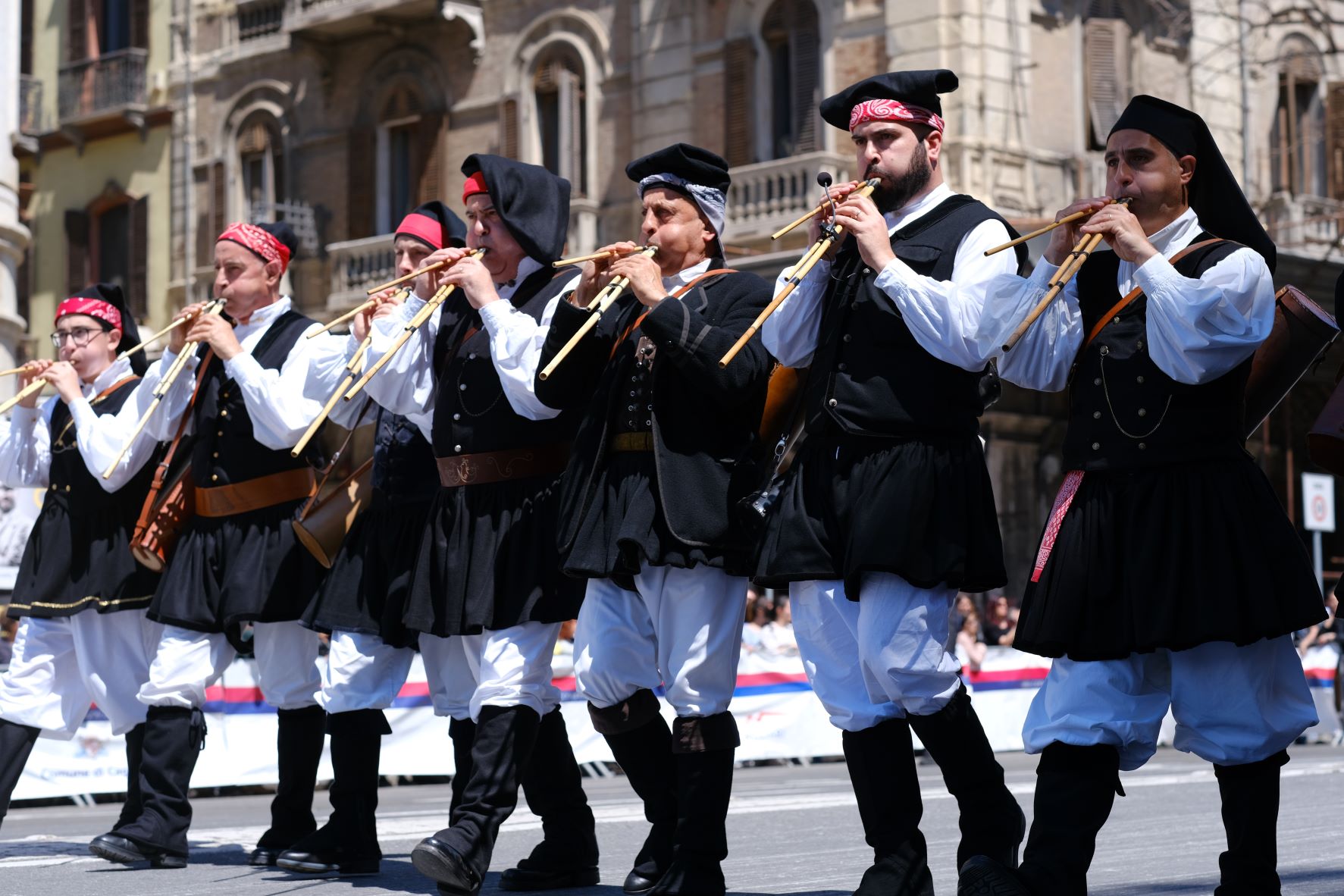
Once upon a time, there was no important moment in life or in the changing cycle of the seasons that was not accompanied by and celebrated with music. A profound bond, one with the sacred and profane aspects of everyday life that has changed but still continues today, on special occasions, when the sound of musical instruments, symbols of each community’s traditions, can be heard. The occasions are patron saint celebrations, events linked to local identity and big festivals, from the celebration of Sant’Efisio in Cagliari to the Cavalcata Sarda (Sardinian Cavalcade) in Sassari, as well as the festival of the Redeemer in Nuoro and during the rituals of Holy Week in numerous Sardinian towns.