

Travelling with flavour
Frue, burrida, civraxiu, fregula, malloreddusu, casizolu, pani frattau, filindeu, tzilicca... no ad hoc recipes to amaze the palate, simple and refined notes, delicate and at the same time robust flavours of the sea and the land skilfully blended, fragrances of special seasonings, from extra virgin oils to wild herbs. This is a cuisine where ancient acts and rituals are repeated, celebrating the mastery of traditional cuisine and expressing the art of young chefs capable of conveying the soul of their land through dishes rooted in memory and history, never the same from one place to another. In Sardinia, nothing is the same: wherever you go, traditions, culture and even language are incredibly different. Even the most popular 'non-sweet' dessert goes by many names: in Nuoro you have to order a sevada, in Cagliari a seada, elsewhere a sebada, seatta, or sabada (a deep-fried dumpling with cheese and honey). Each time it will seem like a dessert with new nuances, because the type of cheese, sheep or cow's milk, cooked or raw, and the type of honey added when cooked, delicate in the south, more sour in other areas, will be different.
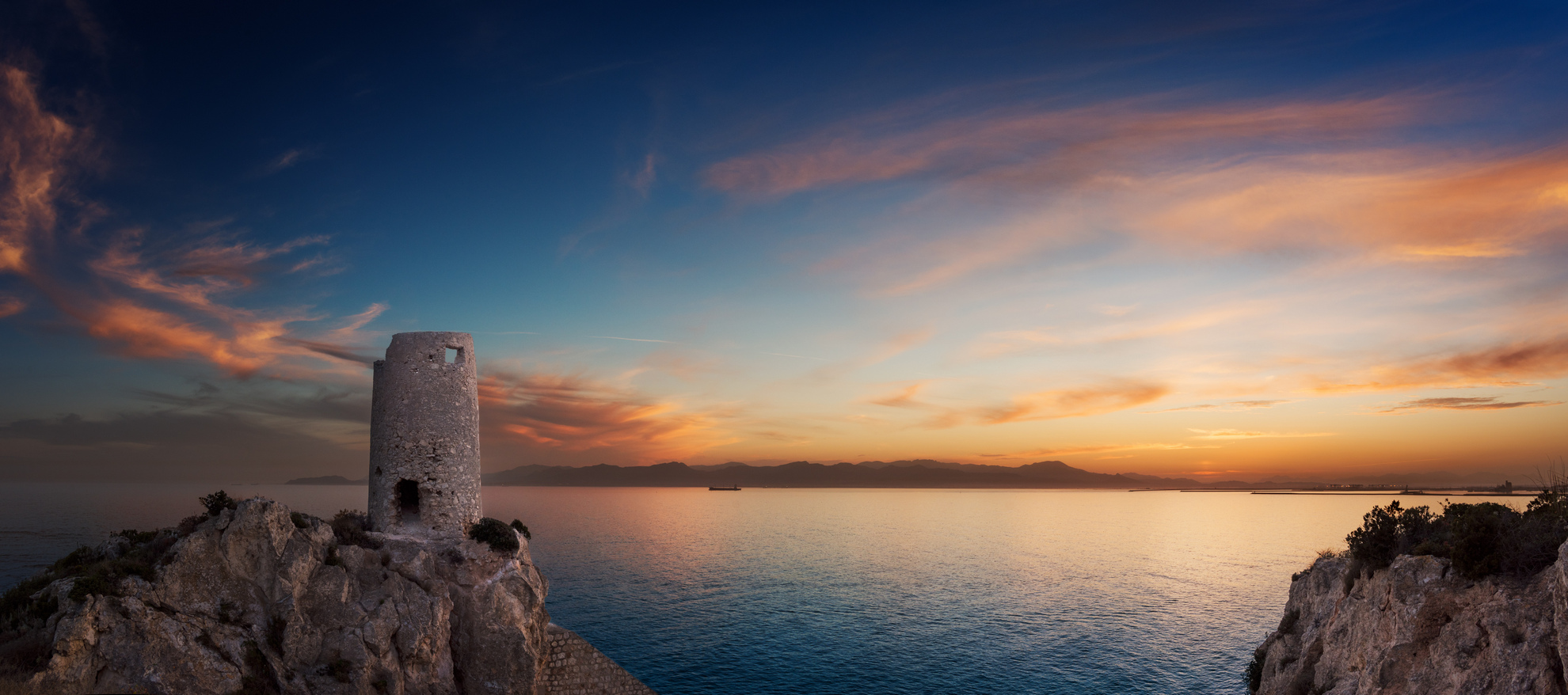
Sardinia, a beautiful story
Sardinia is a cradle surrounded by the sea where, eight thousand years ago, a mysterious and original civilisation began, open to innovations and cultural influences, brought by sea from one side of the ancient Mediterranean to the other. The Sardinians built nuraghi with boat moorings on the coast, joined together to monitor the sea and connected to those built inland. The island's location is strategic: it is a lively crossroads on the trade routes frequented by seafaring peoples, including the advanced and peaceful Phoenicians who made their base in Sardinia. They founded what were to be the most beautiful, cultured and rich cities of their time, Sulci, Bithia, Nora, Tharros and Karaly. Goods, ideas and knowledge moved freely between the Phoenician cities and the Nuragic villages until the imperialist peoples thirsting for new domains landed.
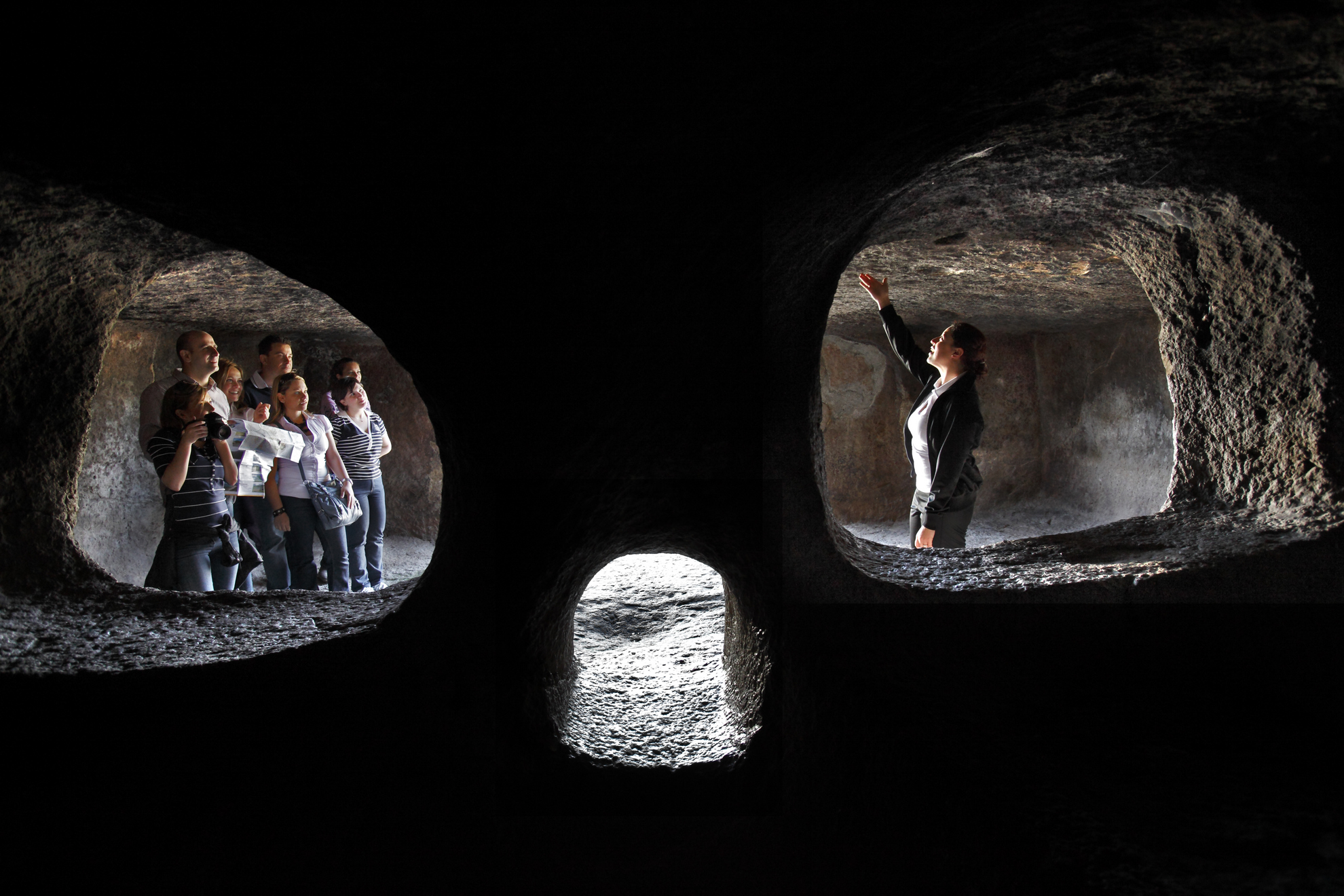
Janas and animeddas on Halloween night
It may have prehistoric origins, but it has been celebrated since the dawn of time and resembles traditional Anglo-Saxon festivals. It is the night at the end of October when the realms of light and darkness come together and allow the souls of the dead, having opened the gates of purgatory, to return to the places they once belonged to and to wander among the living. The suspended souls include the Janas as told in popular island legends and oral tradition. They are small spirits balanced between earth and sky, with persuasive voices and enchanting beauty, fairies or witches depending on the places where they are summoned. The live in domus de Janas, tombs dug into the rock, the symbol of a cultural facies that spread throughout Sardinia between the 4th and 3rd millennium BC.
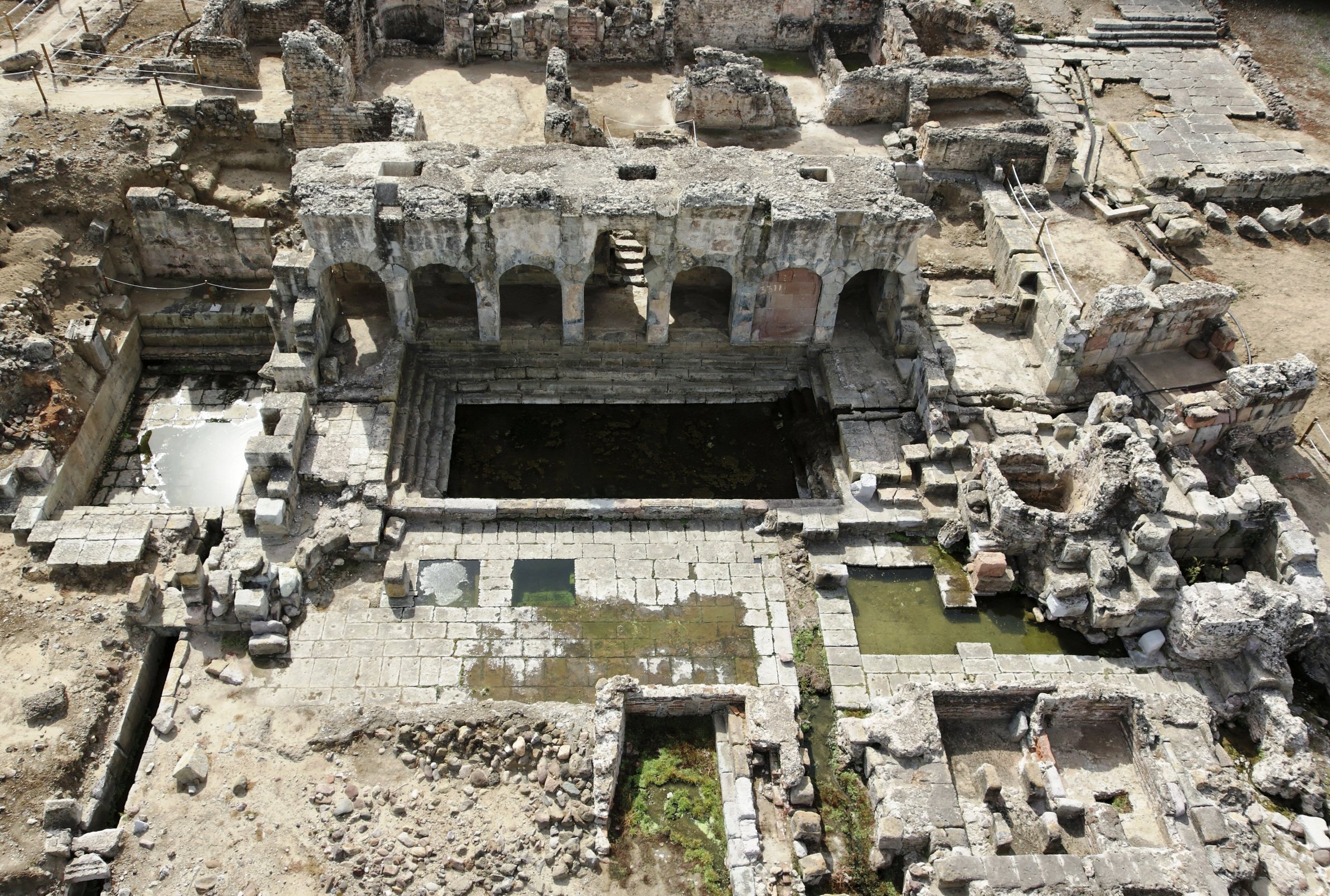
Forum Traiani thermal baths
Ancient Rome's passion for thermal waters extended to the far reaches of their empire, and an important neighbouring province such as Sardinia could not be missed. On the island they built their main baths in Fordongianus, to capitalise on waters that rise to the surface very hot (at 54 degrees) while maintaining their beneficial properties.
However, the history of thermal baths here, as in many other island spas, is much older, dating back to prehistoric times: the pre-nuragic and nuragic Sardinians considered these waters sacred and used them to heal themselves. Sacred springs and wells probably attracted the early Sardinian populations from other island territories near and far. In fact, the plains around the town today are dotted with prehistoric settlements, including Casteddu ecciu and several domus de Janas necropolises.
The Roman thermal complex was built on the banks of the River Tirso, precisely on the site of Caddas (appropriately meaning 'hot') that the Romans called aquae ypsitanae. Emperor Trajan commissioned the establishment at the edge of the town centre of Forum Traiani, the great trading market between the Romanised populations of the hinterland behind the Gulf of Oristano and the communities of the north and south of the island. When the complex was built, the forum also became a place of wellbeing and a social gathering place, where people not only bathed in the pools but also strolled along the arcades around the pools discussing politics and business: Forum Traiani became a popular destination for cultivating physical and mental health and the pleasures of life. The architecture, with its arcades, halls and pools, is still impressive today and gives an idea of what it must have been like in the days of imperial Rome.
In the centre of the establishment is a large rectangular pool reserved for bathing in warm water (tepidarium), once covered with a barrel vault and surrounded by porticoes where people stopped and rested between baths. On either side are the catchment and mixing basins and the Nymphaeum, a large basin surrounded by niches where statues and votive plaques were displayed. This was the sacred space for the worship of the healing powers of the aquae calidae. More secluded is the thermal pool circuit, from the hot baths (calidaria) to the frigidarium with changing rooms and dining areas.
Private patrician houses, 'reception facilities' for visitors, public buildings for civil activities and funerary rites were built around the spa, most of which are now part of the subsoil of the town of Fordongianus, which shows signs of ancient remains in many parts of its urban grid. With the fall of the Roman Empire, the baths were gradually abandoned. The final blow came during the Middle Ages, when they were dismantled to build churches, convents and places of worship. The strictly therapeutic parts of the building were saved, along with a few others that escaped the new worldview, but were fortunate enough to continue the tradition of the thermal baths and still make the former Forum Traiani a wellness centre par excellence.
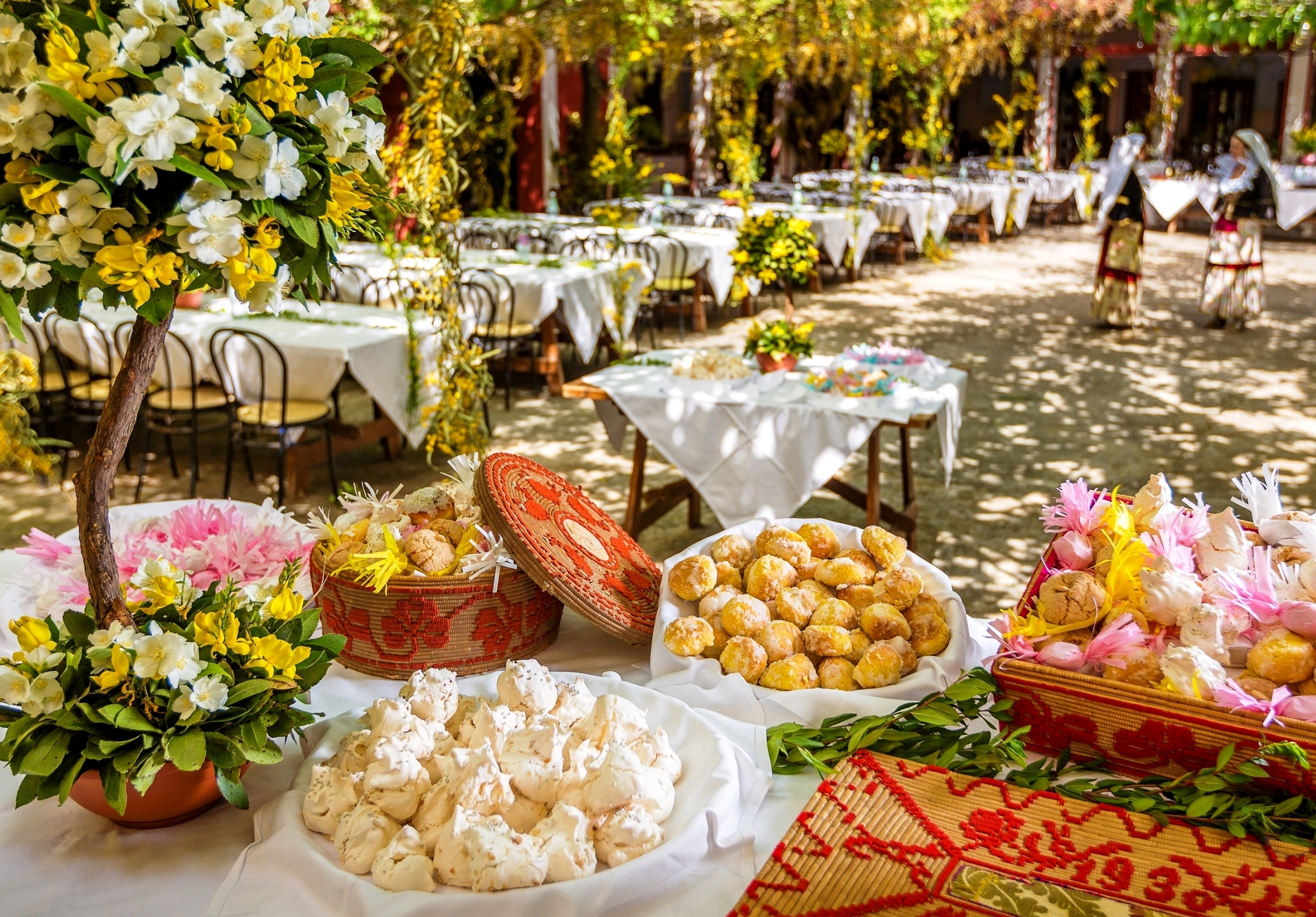
The sweet flavours of the festive season
The typical breads and cakes prepared in Sardinia for Christmas have always been a symbol of festivities and celebrations, and are richly flavoured jewels, always different from one village to another. In the Logudoro bakeries, su bacchiddu 'e Deu, a stick-shaped bread reminiscent of a bishops' crosier, and sa pertusitta, a flatbread decorated with relief images of shepherds and sheep, are prepared. The taste of sa tunda, a round bread from Oristano, is enriched with walnuts and sultanas. In Ogliastra, there used to be an ancient custom that returns every now and then: gifting loaves of bread in the shape of a heart, a star or a baby. Originally from the Nuoro area, nowadays baked all over the island, is su pani cun gherda, i.e. with pork crackling. There is a cake that was once only for Christmas but is now so good that for decades it has been prepared all year round: torrone di Tonara (nougat). It has no sugar, just a base of honey melted over a low heat in a copper pot and stirred for hours, with the addition of almonds, hazelnuts or walnuts.
Waterfalls of pure water
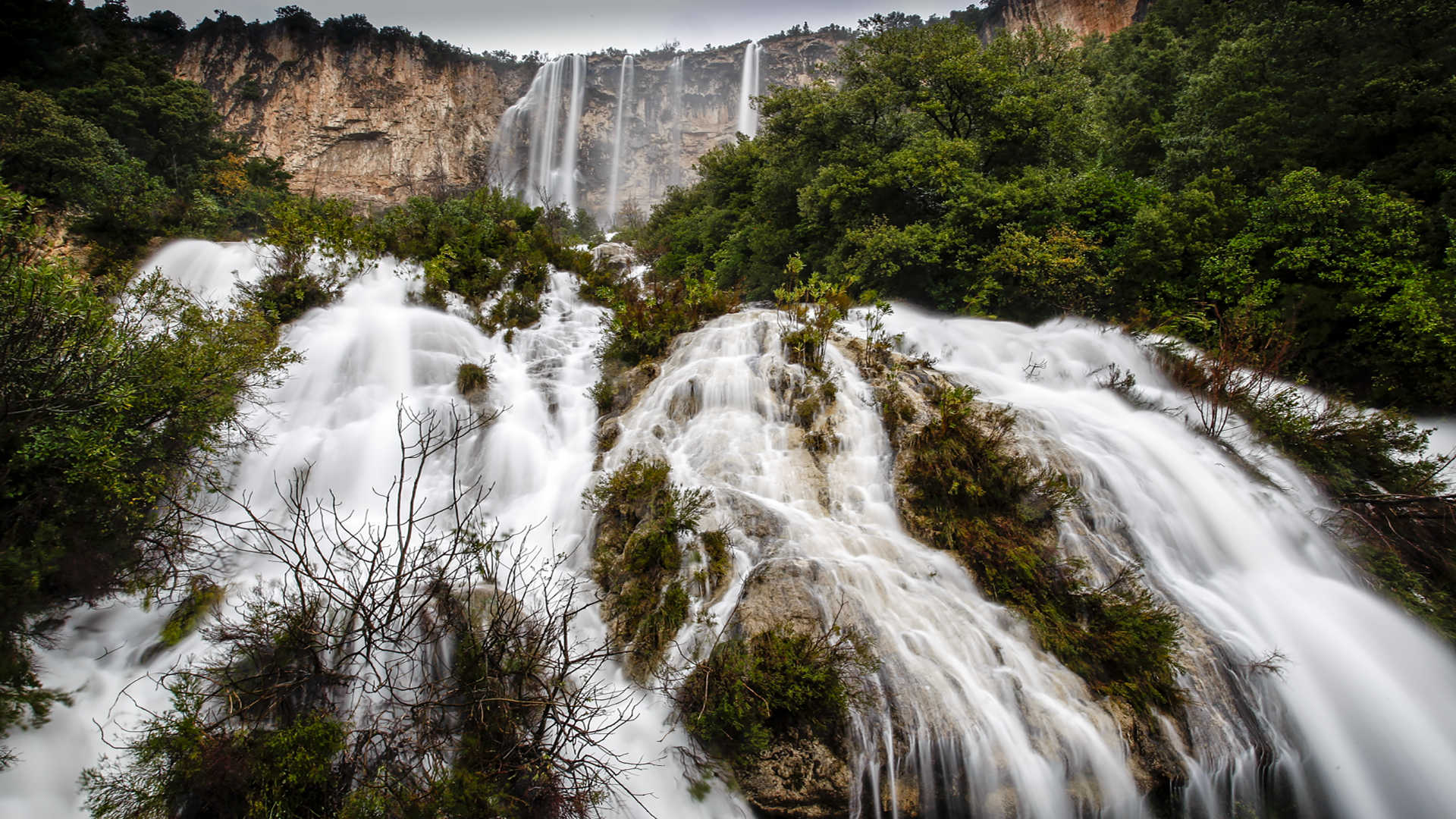
On an island of ancient volcanoes, Montiferru was the largest. Today it is an immense basalt plateau furrowed by rushing waters, which on the border between Bonarcado and Santu Lussurgiu give way to the enchanting waterfall of sos Molinos. Underground currents rise to the surface in the hamlet of San Leonardo, within the forest of the same name, with the purest and most mineral-rich springs of Siete Fuentes. The waters of Montiferru also feed the Salighes stream, a quiet torrent that is the star of a phenomenon like no other in the world: it plunges directly into the sea from the cliffs of Cuglieri. The waterfall is called s'Istrampu de Capu Nieddu, a thunderous 40-metre drop that is even more impressive when heard from the sea. Further south, in the Medio Campidano, there is Mount Linas with the oldest rocks in Europe, a primordial land with few signs of human interference and populated by deer, foxes and wild boar. The peace of its forests is disturbed by the roar of three grandiose waterfalls: sa Spendula cuts through the forest like a blade, in the words of D'Annunzio, Piscina Irgas plunges 45 metres into a distinctive emerald-green lake and Muru Mannu, one of the highest in Sardinia, surrounded by a scenic amphitheatre
Cabu Nieddu
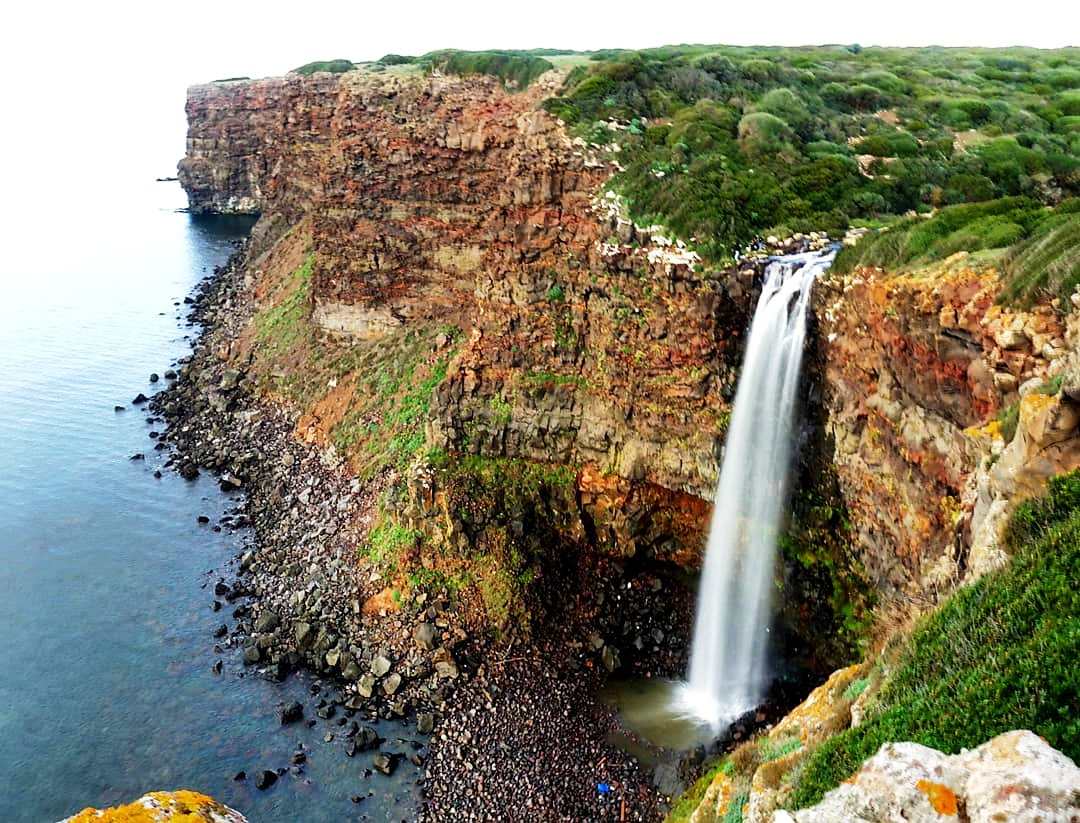
A spectacle that is unique on the island, very rare in Italy and unusual in the rest of the world: the waters of the Cabu Nieddu waterfall fall directly into the Sardinian Sea, a forty-metre drop, from a vast natural amphitheatre dug out of a high stretch of coast between the famous bay of s’Archittu and the Marina of Tresnuraghes. We are in the territory of Cuglieri, in the historical region of Montiferru, which gets its name from the massif of volcanic origin that dominates a landscape of plateaus, woods and rivers. One of these watercourses, rio Salighes, is the protagonist of the magnificent scenario: it crosses the solid layer of basalt rock that stretches as far as the Campeda plateau, until it touches the coast and flows into the sea.
In spring, the more abundant the winter rain, the more spectacular and unforgettable is the ‘plunge’ of s’Istrampu de Capu Nieddu, as it is known locally. The origin of the phenomenon lies in the volume of the river, which flows over the surface of the land up to the coast, because over thousands of years, it has never been large enough to gouge the hard basalt rock and create itself an underground ‘bed’ on which to proceed.
You can admire the whole waterfall in a boat, from a privileged position, setting off on a tour from Santa Caterina di Pittinurri, Bosa or Oristano. The view is spectacular, with the blue sea and the green slopes of the Montiferru massif: a landscape that brings to mind the famous Irish Cliffs of Moher. The elevations are covered in holm oaks, chestnut trees, strawberry trees, broom plants, wild roses and hawthorns, as well as the fragrances of thyme and helichrysum. Looking north, you can see the coast of capo Marargiu, where griffons dare, and in the distance the promontory of Capo Caccia; to the south, you can see Capo Mannu and the islet of Mal di Ventre. After seeing the waterfall, you can continue the tour towards the Spanish tower of Capo Nieddu and even further north, towards the mouth of the Rio Mannu river, where you can admire the view of Punta Foghe, also guarded by an ancient watchtower.
The surrounding area is dotted with evidence of the ancient volcanic activity of the massif, which shaped the current harsh and diverse landscape: in addition to Cabu Nieddu, in the valley of riu s’Abba lughida there is the waterfall of s’Istrampu ‘e Massabari, while a little further south, on the border between the territories of Bonarcado and Santu Lussurgiu, the valley of riu sos Molinos opens up and generates the waterfall of the same name, another unmissable masterpiece of nature.
Cane Malu
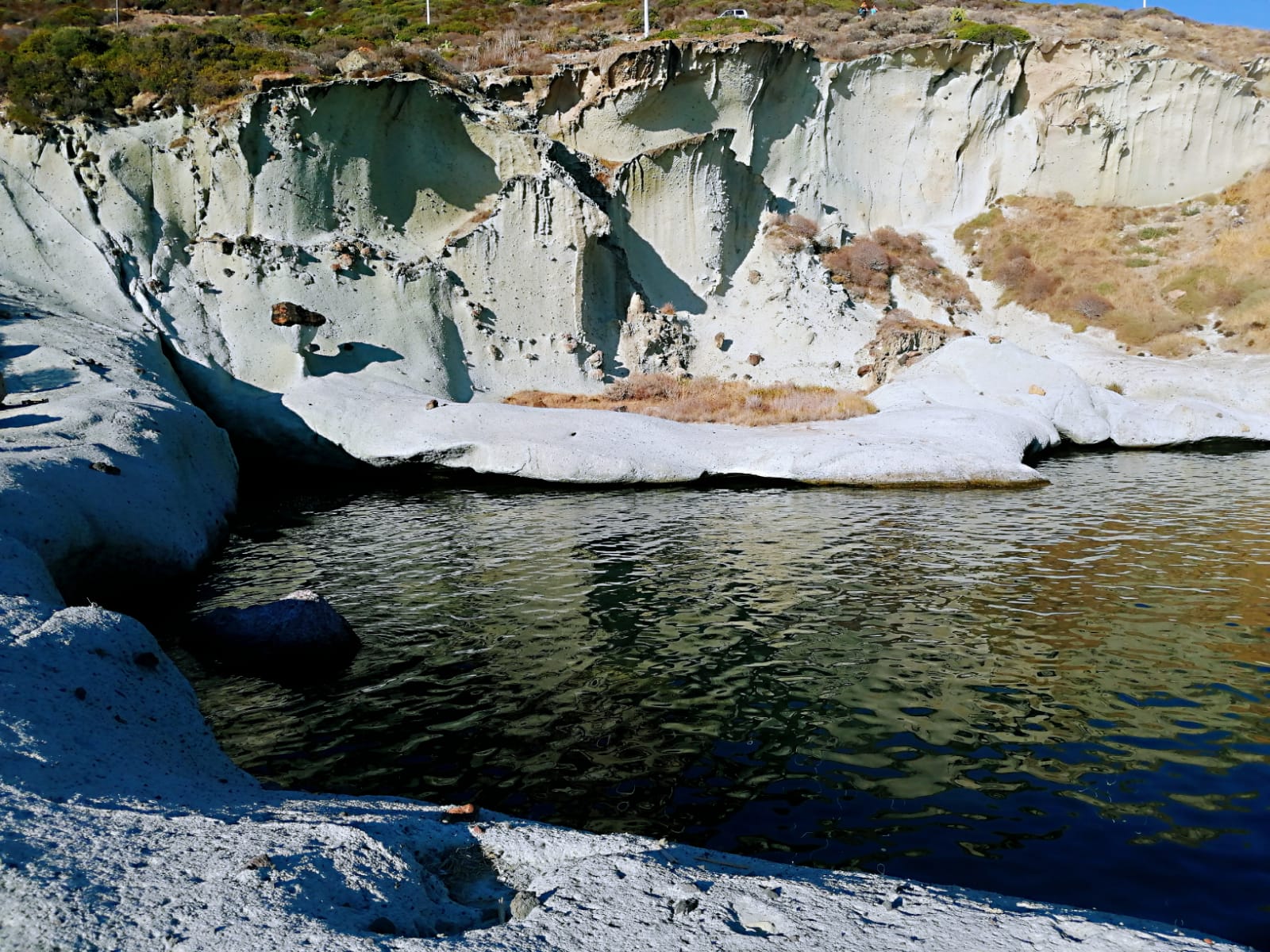
Going for a swim in a pool on the moon? You can imagine the scenery and experience the sensations in the cove of Cane Malu, three kilometres from the medieval village of Bosa. The natural pool is located on the tip of Cabu d’Aspu, a few steps from Bosa Marina, where the northern stretch of the Bosa coast begins, in the Capo Marargiu direction. You will reach it after walking for about ten minutes along a path that, setting off from the river port at the mouth of the Temo river, runs alongside the sea, over cliffs of white trachyte, the typical local stone. It is precisely this particular type of rock that creates the lunar scenery, a surreal, white landscape, which is counterbalanced by the intense turquoise colour of the sea. Countless storm surges, driven by the force of the northwesterly wind, have gorged and shaped the trachyte over thousands of years, creating the shape of a large ‘basin’, bordered by a band of rock. The white strip of trachyte resembles a dog's tail, especially when the sea is rough, hence the name: ‘bad dog’. Not surprisingly, it is a unique jewel of nature that requires prudence and, in fact, it’s best to choose a day with no wind and with a calm sea, to fully enjoy the charm of the pool. Then, if you wait for the sunset, the play of light between the light colour of the cliff and the reflections of the sea will treat you to unforgettable sensations.
Cane Malu is cosy and comfortable for those who want to lie down and relax in the sun. The surrounding beaches also offer relaxation: to the south of Bosa Marina is the beach of Turas, famous for its spectacular sunsets, while four kilometres north of the village is the beach of s’Abba druche, with its white, grainy sand mixed with pebbles and its shallow waters. Moving even further north, you will be surprised by the wild scenery of Cumpoltittu: the coast is protected on both sides by promontories covered with Mediterranean scrub stretching down to the sea with its blue and turquoise water. Not far away, the small cove of sa Codulera has a pebbly seabed and a transparent sea suitable for snorkelling, while Torre Argentina will strike you with its alternating inlets, coves and reefs that plunge into the cobalt blue sea.
Not only splendid beaches: the 45 kilometres that separate Bosa from Alghero are a setting worthy of a Hollywood film. Provincial road SP 49 - which becomes provincial road SP 105 halfway along - offers irresistible views, pink trachyte rock walls, expanses of yellow broom, shimmering reflections of the sea, ranging from emerald green to turquoise, and sheepfolds scattered here and there that have become guardians of the coast, a role that once belonged to the Spanish towers.

Sos Molinos
A masterpiece carefully guarded by nature. On the border between the territories of Bonarcado and Santu Lussurgiu, along Provincial Road 15, which connects the two picturesque villages of Montiferru, lies an enchanting landscape, which you will discover little by little. You'll start to hear the quiet roar of the water from the clearing by the roadside, the starting point of the path that will lead you to the valley and the waterfall of sos Molinos. This downhill mule track, with the occasional remnant of a paving stone, is lined with holm oaks, downy oaks and alders, which will accompany you on your walk. Along with the trees, you'll see countless laurel bushes, so lush that the valley has been declared a special area of conservation. Besides the green of the Mediterranean vegetation, you will be struck by the variety of flowers around the pond formed below the waterfall: cyclamens, daisies and orchids add pops of colour to the magical scenery of the water cascading over 30 metres, jumping from rock to rock. The stream that forms this waterfall flows from a height of 440 metres along the eastern slope of the basalt plateau of Montiferru, where the waters have carved a lush valley for thousands of years. There are five 'jumps', the largest - and most spectacular - being the last one, 15 metres long.
The name of this place (‘molino’ means ‘mill’ in Italian) originates from its function in the pre-industrial age: the steep watercourse, its high flow rate and the many drops meant that the water could be used as a means to power the many mills and stone fulling mills that followed one another along the stream. One of them is still there, right next to the main waterfall, and adds to the fairytale setting. Its structure and the materials once used to build it are in perfect harmony with the surrounding nature.
Santu Lussurgiu, a characteristic town with picturesque views and craft shops, is a veritable 'temple of water'. Further north, one of its hamlets in the middle of the san Leonardo forest, whose origins dating back to the 12th century are shrouded in mystery, is famous for seven springs that once flowed here, known as Siete Fuentes. Documents attest to some buildings in the villa - two monasteries and a hospital - but no traces remain. The oldest surviving structure is the church of San Leonardo. Bonarcado, on the other hand, is four kilometers from sos Molinos, and is famous for two masterpieces of Romanesque architecture: the sanctuary and the basilica of Nostra Signora di Bonaccatu, home to the oldest Marian devotion on the island.
Novenary of Santa Cristina
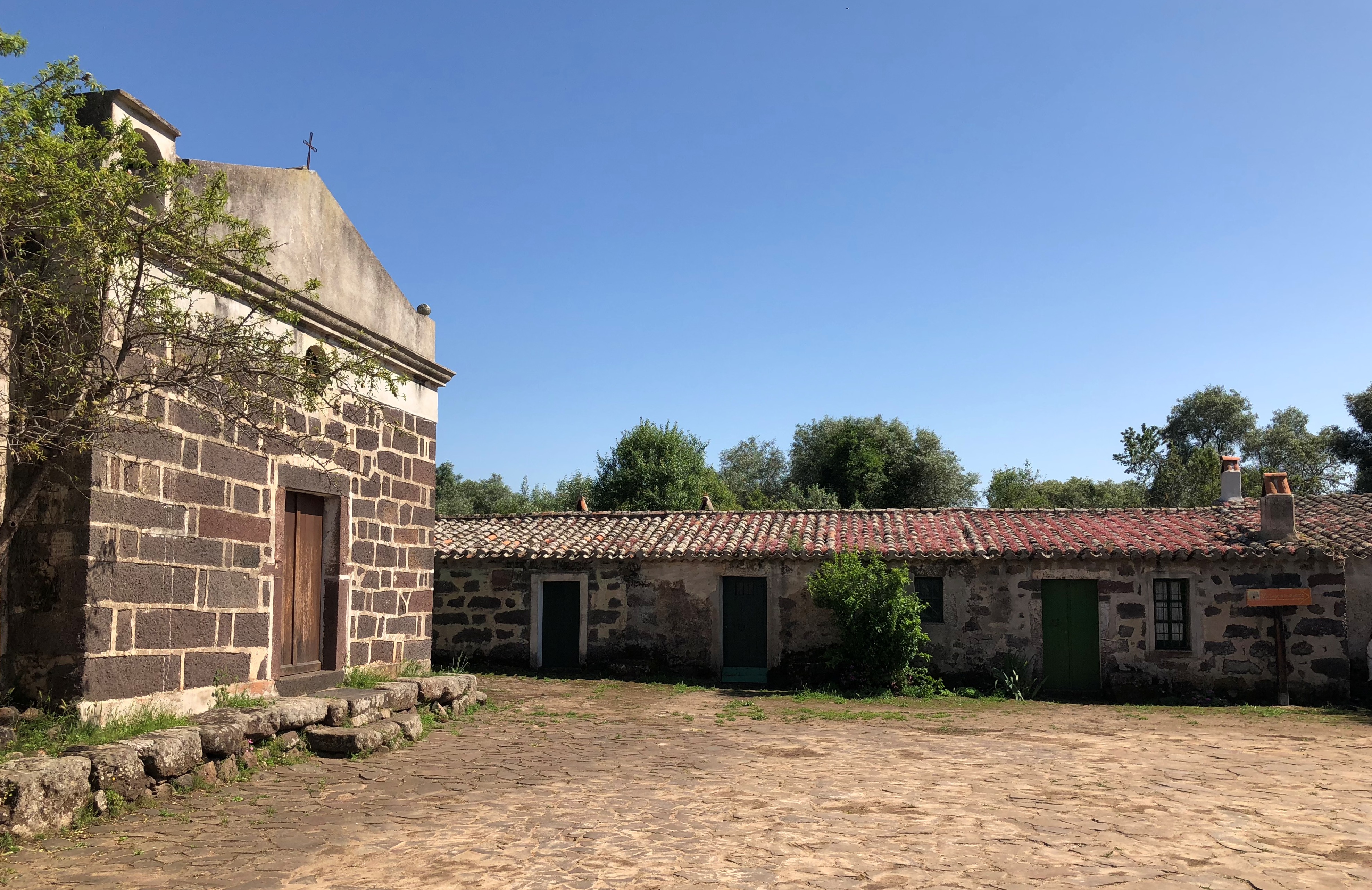
A village in the centre of Sardinia comes alive as worshippers fill it twice a year, in May and October, while during the rest of the year it brings an atmosphere of mysticism and sacredness to a place that is, in itself, magical, where the rituals of the cult of the water were celebrated for thousands of years. The church of Santa Cristina and its picturesque novenario, made up of 36 muristenes (dwellings for pilgrims), are located inside the Archaeological Nature Park of Santa Cristina, in the Paulilatino territory, four kilometres from its residential area. The charm emanating from the sanctuary lies in the union between the evidence of Nuragic, medieval and modern times, in a place that has remained an area of worship and devotion for thousands of years.
The church has undergone numerous renovations, making it impossible to reconstruct its original appearance. It probably originally had Romanesque stylistic features, traces of which remain in the oldest parts along the perimeter walls. The layout includes a single nave, with a small bell gable on the left side of the façade. You will see the façade from a rectangular square in front of it, called su corrale, while around it are the dwellings for the novena pilgrims, little stone houses with a simple and at the same time fascinating structure. The façade of one of them bears an inscription showing the year of construction: 1730. In this scenario, on the last Sunday in October, worshippers celebrate San Raffaele, while the most heartfelt celebration takes place in May, when the muristenes open for nine days, welcoming the pilgrims arriving as a sign of devotion to Santa Cristina. Tradition tells us that the saint was held prisoner and martyred in one of the nearby Nuragic constructions, giving rise to the cult and the pilgrimages of her devotees.
In fact, the church is a link between two centres of important and famous findings dating back to the Nuragic age, leading to the suspicion that the Camaldolese friars of Santa Maria di Bonarcado, who built it between the 12th and 13th centuries, wanted to break the archaic and pagan atmosphere of the Nuragic site. The ultimate sacred area is located in the first centre, surrounded by centuries-old olive trees: it is the best-preserved well temple on the Island and was built with impressive geometric precision. Inside, you can admire a vestibule, a staircase and a room with a tholos vault with concentric rings. At certain times during the year, the eternal water of the well reflects the light of the sun and the moon, creating enchanting plays of light. The temple is surrounded by a sacred enclosure, around the remains of Nuragic huts, including the main one ‘of the meetings’ with a circular seat. In the other centre, there is a single-tower nuraghe dating back to the 15th century BC - older than the well - and the traces of a vast village.