
Su Mannau
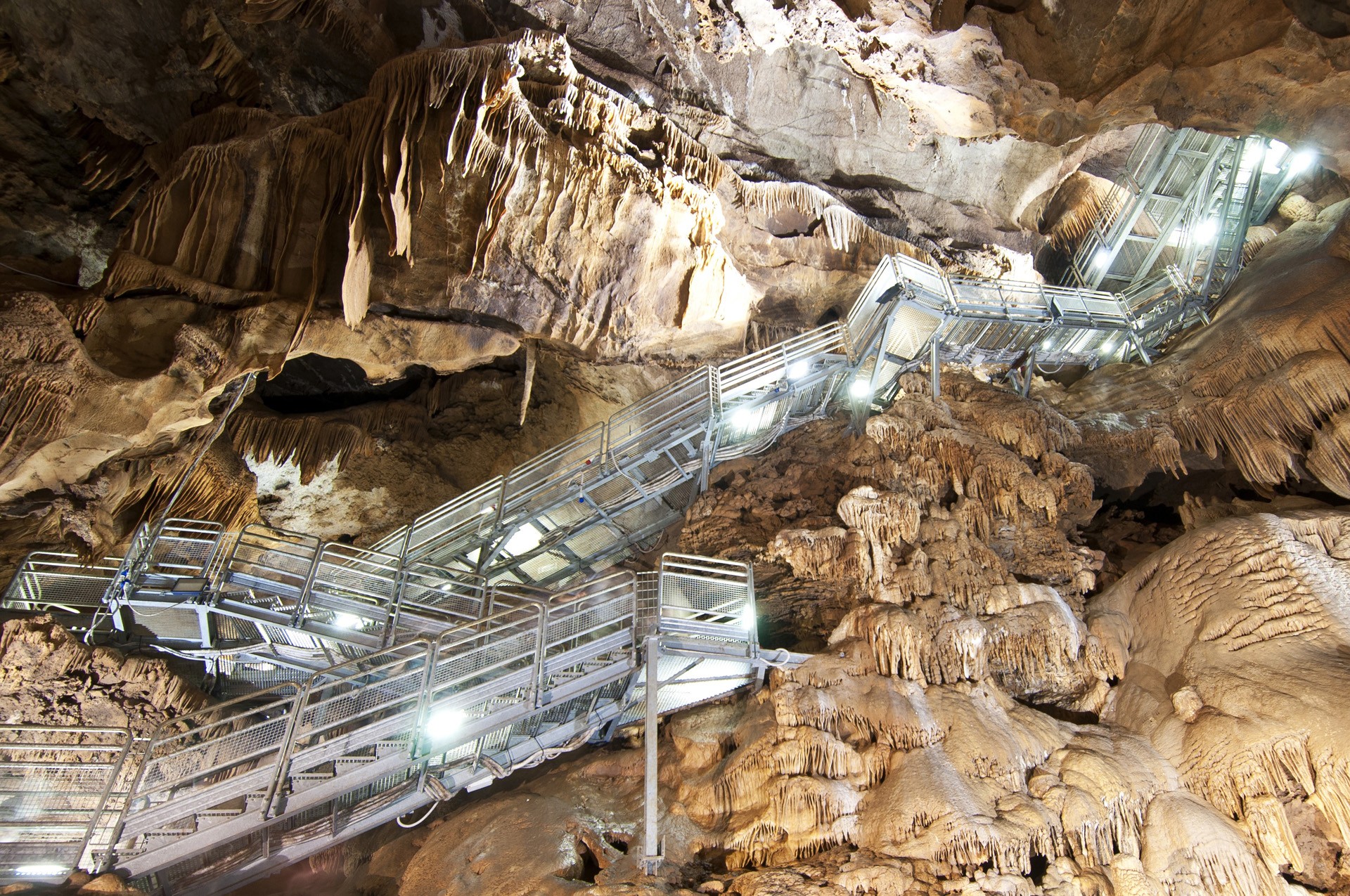
Step into the magic that lies under the ground in Iglesiente, from the red rocks, blue lakes, bright white stalactites and stalagmites to the sparkling transparency of the crystals. The grottoes of su Mannau, in the territory of Fluminimaggiore, are a Karst complex "sculpted" 540 million years ago, and still "living": the calcareous formations are constantly evolving. The cavern winds into the heart of the earth for 8 kilometres, with two main branches: the left originating from the River Placido, with spectacular tunnels and rooms, and the right branch, larger and almost "horizontal", originating from the River Rapido. The visible part is in the first branch, divided into archaeological and speleological parts.
The archaeological room is a large hypogeum temple used since pre-Nuraghic times: the remains of oil lanterns found here were part of the rites of a water cult. The cave was connected to the nearby Temple of Antas, which can be reached by a path already traced out by the Romans. The speleological part starts with the Central room, which has to be passed using ropes. Together with the guides, you enter the caves for about 500 metres, in a one-hour excursion that winds through walkways suspended over caverns, waterfalls and pools of clear water, where a tiny, almost transparent and unique species of shrimp (stenasellus nuragicus) lives. Along the left branch, made of large wells and rooms, a ladder leads to the Puddu tunnel. You continue among almost fossilized stalactites as far as the Rodriguez well. From here, a ladder leads up to the panoramic viewpoint. A seven-metre-high column stands in the centre, formed of a stalactite that joined up with a stalagmite to form a pillar. The well is 23 metres deep, and you can climb all the way to the bottom by a ladder. From this point a fossil path leads off, another path linked to the Infinito room, made of alabaster flows, and the Serra room, and a third leads to the River Placido, which flows gently towards the outside. The right branch, on the other hand, has a series of communicating rooms. One after the other you'll see the Sonno room, with 15 metre-high columns, Lake Pensile, 40 metres long and five deep, the Ribaldone room, the highest of all (150 metres), the Bianca room, with its unique stalagmites and aragonites, the Vergine room, the pearl of su Mannau with coralloid and eccentric aragonites, the Bizzarra room, with strange "mushroom" shaped concretions, and the Abeti room, the last known room, 40 metres high with a floor decorated with crystal "fir trees".
Santa Giusta
Once a Phoenician colony named Othoca, the ‘ancient city’ in contraposition with Neapolis arose following the work of the Carthaginians. From a promontory, it was dominated by the lagoon - at that time a navigable gulf – with its north-eastern shore lapping the present inhabited area. Santa Giusta rises from the ashes of one of the first cities of the island, founded in the second half of the 8th century BC along with Tharros and Sulky, which later became a Roman municipium, before being abandoned in the Middle Ages when, under the Giudicato of Arborea, the population was concentrated around the Cathedral of Santa Giusta. The majestic basilica, built between 1135 and 1145, was the seat of diocese until 1503. It appears in all its grandeur on a hill on the main street, a Romanesque ‘temple’ named after the martyr who gives the town its name, celebrated in mid-May. Some of the basilica’s columns hail from Tharros and from the same Othoca, of which there are also two arches of the bridge on the Rio Palmas that date back to the Roman era. Here, two arterial roads intersect, the western coastal road and the Karales-Turris road - once a military and commercial junction, as is testified by the Itinerarium Antonini (III AD) and the rich finds discovered within the necropolis (firstly Phoenician-Punic, then Roman). The burial site, with various kinds of tombs, extended within the area of the 17th-century Chiesa di Santa Severa, the saint celebrated at the end of September in conjunction with the food festival, Sagra de Is Malloreddus a Sa Campidanesa. The feast of St. John the Baptist, held at the end of June, is associated with the sheep festival.
Today, Santa Giusta is a town of 5,000 inhabitants, built on agriculture, fishing and industry (thanks to the port), practically joining Oristano, the Municipality of the province with the highest rate of population growth. From the hill of the cathedral, the gaze extends to the Stagno di Santa Giusta, the third Sardinian wetlands in terms of extension (800 hectares), an environmental and economic resource whose low waters are furrowed by Is Fassonis, prehistoric boats and the protagonists (ever since 1978) of a regatta sui generis on 1st August. From the dried mullet eggs fished from the pond, the fisheries prepare the delicious bottarga. Here, the grey heron and the mallard have found their habitat. The pond is connected to the smaller Pauli Figu and Pauli Majori, surrounded by thick reeds, where black-winged stilt, flamingos and western swamphen live. The vegetation of the lagoon has long provided raw materials - asphodelus, chamaerops and wicker used for the homemade baskets. Other precious handmade products are tapestries and carpets, made with horizontal looms and of evident Byzantine influence. Not only lagoons, there is also the sea with the great Santa Giusta beach, mountains, with the Monte Arci park, a splendid natural oasis rich in deposits of obsidian - the ‘black gold’ of prehistory and the raw material of the oldest human remnants of the Santa Giusta territory, dating back to the ancient Neolithic period. The largest haul comes from the tomb of a necropolis dating back to 3700-3300 BC: a statuette of the Mother goddess of just seven centimetres. The heights and lagoons were enriched by increasingly-dense settlements in the recent Neolithic period and then in the Bronze Age, with the Nuraghe Nuracciana, Nuragheddu, Sassu and the basilica’s hillock.
Santu Lussurgiu
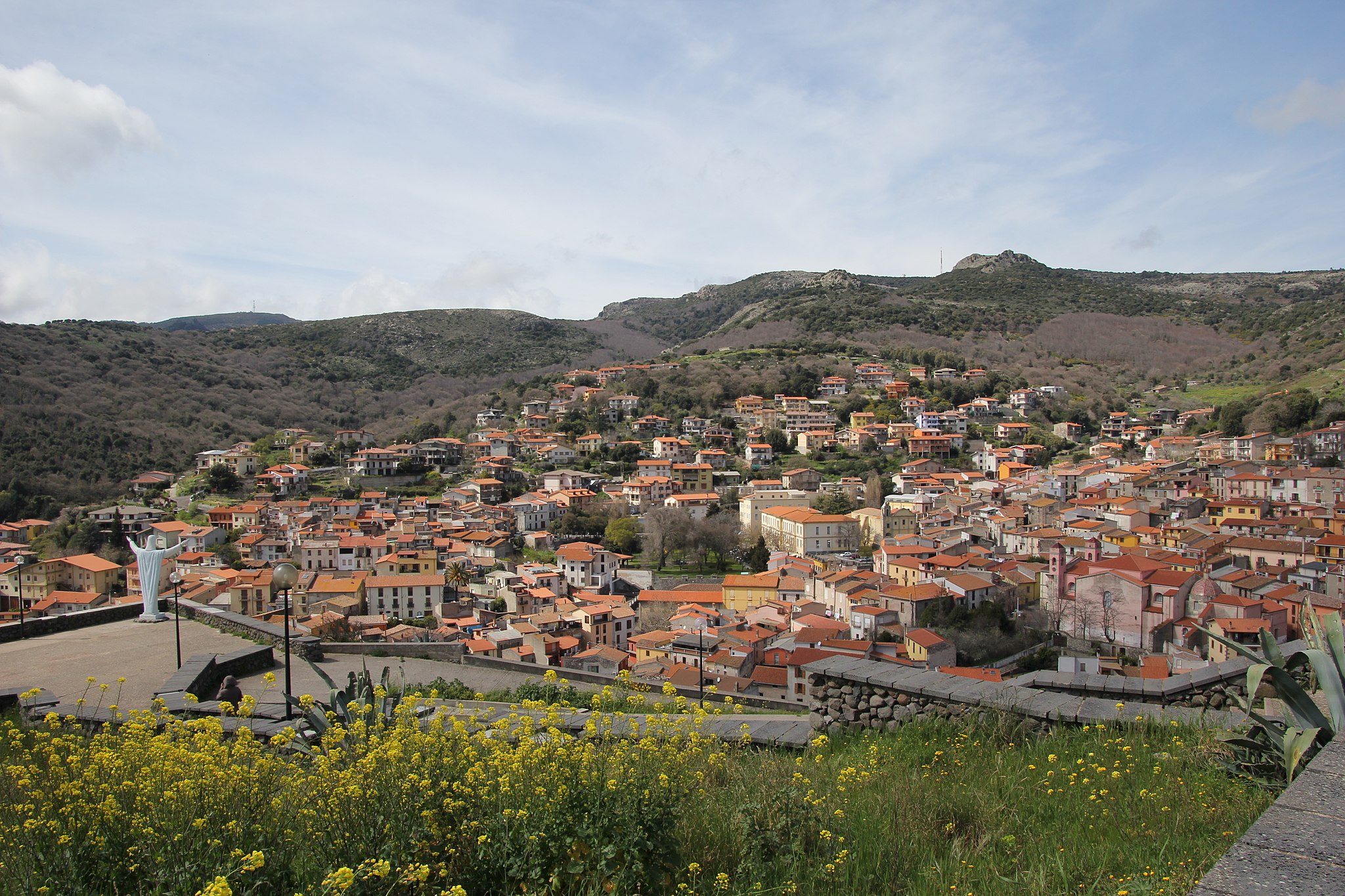
A treasure is held on the south-eastern side of the Montiferru, 500 metres above sea level and nestled in an amphitheatre of volcanic origin protected by lush forests - a myriad of springs. Santu Lussurgiu is a medieval town with 2,400 inhabitants, halfway between Oristano and Bosa. Its name derives from the saint-soldier Lussorio, who preached here before his martyrdom in 303 AD. Between the 19th and 20th centuries, Santu Lussurgiu was a renowned cultural centre, a summer residence of nobles and scholars, as well as an anti-feudal stronghold. Today, its accommodation facilities and restaurants are a destination for tourists attracted by the historic town, culture and excursions. The itinerary sets out from where seven sources of mineral water once derived in San Leonardo di Siete Fuentes, established in the 12th century and lasting through to the 16th century, now a ‘ghost’ village. Immersed in the forest of San Leonardo are the remains of its Romanesque church. The Villa enjoyed prestige and prosperity until the Aragonese conquest, before its decline. Santu Lussurgiu, rather, arose around the Church of Santa Croce, originally consecrated to San Lussorio (1185). Whilst the beautiful Santa Maria degli Angeli in late-Gothic style was built in 1473 by the Order of Friars Minor together with a monastery, the cultural ‘engine’ of the time. The church safeguards a wooden Madonna with child (16th century).
The ‘route of the springs’ continues in Silbanis then leading to within the built-up area, in Su Sauccu, an old wash house, and the Funtana Longa park. A nice place to stop for rest and refreshments is Sa Preda Lada, before then climbing up to the peak, to s’Ena ‘e s’Alinu, Sos Crabalzos and the scenic Elighes Uttiosos, home to the ‘trickling holm oaks’, as the water seems to flow from the trees. The originating from the springs are streams and waterfalls, including s’Istrampu de sos Molinos, whose name recalls the many mills used in pre-industrial times, together with fulling, for weaving and packaging textiles. Woods of holm oaks, oaks and chestnut trees, populated by deer and mouflons with hawks and griffins overhead, encircle the winding and steep cobbled streets and the basaltic or tuff stone houses of the village. Each district offers striking views - the terrace of sa Rocca stands out, where statue of Christ by Edgardo Mugnoz is positioned. The ancient artisan shops are renowned for their carpets, knives and horse equipment, to which the Cavallinfiera event is dedicated at the beginning of June, the oldest Sardinian trade fair in the sector, dating back to 1906. Tradition is also found in the festivals. There is the sa Carrela ‘e Nanti carnival, which includes horseback riding on a dirt road in the town. This is preceded by a few days of the Cantigos in Carrela, singing performances along the streets. The heritage of Canto a Cuncordu was handed down by the confraternities, which sing religious songs during the beloved customs of Sa Chida Santa. Another unbridled equestrian joust is the Ardia di San Lussorio taking place around the parish church of San Pietro at the end of August. Between June and July, rather, there is the Cavalieri De Su Sotziu, with the knights donning traditional Lussurgiu outfits to take part in Coru ‘e Zeus. The historical memory of the village is preserved by the Museo della Tecnologia Contadina, set up in an 18th-century manor house, where two thousand objects from traditional activities have been collected. The agricultural-pastoral soul is expressed by the breeding of the red ox, from which derive high-quality meat and the milk used in the casizolu cheese. Also of note are the liqueurs.
The territory has been inhabited since the Neolithic times, as can be confirmed by the Domus de Janas of Matziscula and Mandra ‘e Caddos. The village of Monte Agudu dates back to the Nuragic period, with a number of Tombs of Giants and many Nuragic structures, some well preserved. The remnants of the Villae di Santa Ittoria, Camputzola and Banzos show the passage of the Romans.
Tramatza
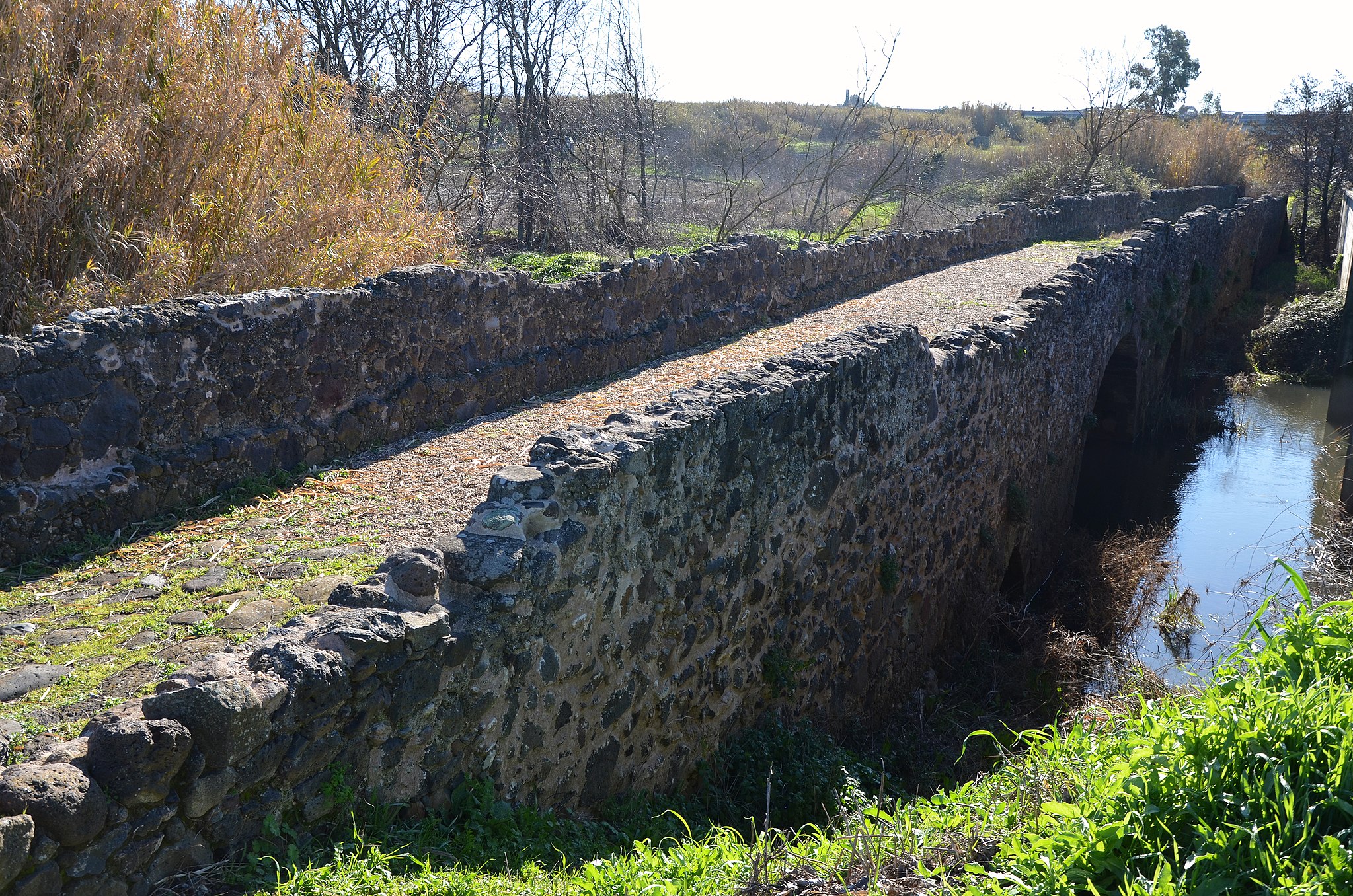
Tramatza sits on a very fertile part of an alluvial plain dotted with basaltic boulders, proof of the volcanic activity of nearby Montiferru. It’s a small town of some 1,000 inhabitants at the edge of the Oristano Province and is cut through by the Cispiri river, one that has played a major role in its history and rural economy, including the production of highly resistant reeds. You see plenty of them along the river bank, together with willows, rushes and tamarisks – or tramatzu in local dialect, hence the name – a bank that is home to herons, water fowl and egrets. The remains of a Roman bridge dated to the late Republican early Imperial Age were found near the river.
The first official mention of Tramatza appears on the foundation documents of the Santa Maria di Bonarcado monastery in 1130. It was part of the curia of the Milis Campidano, within the giudicato of Arborea. The town boasts rural houses built with bricks made of earth mixed with dry straw, graced with characteristic doors and loggias. They surround the church of saints Maria Maddalena, Salvatore and Geminiano, consecrated in 1388 and home to a sarcophagus with raised decorations from the giudicato period. The patron saint, Maria Maddalena, is celebrated in late July. On the outskirts of town you’ll see the XVII century church of San Giovanni Battista. He is the most venerated of the saints and celebrated in late June during a festival associated with the sheep festival. Other heartfelt celebrations are the bread festival in May, the onion festival in August and the novello wine festival in November, all celebrations in keeping with rural traditions. Sant’Efisio is celebrated in mid-January with a huge bonfire. Local cuisine includes a variety of delicacies made with legumes, especially fava beans, onions, potatoes, roast sausage, chicken and rabbit in a vernaccia wine sauce, vegetable stews and eel with cheese. The sweets prepared especially for the festivities and ceremonies are very popular: amaretti biscuits, bianchini, gueffus, pabassinus de saba, pardulas, pirichitus, pistoccus and “sighs.”
Many artefacts found in Tramatza point to the presence during the Neolithic Age of pre-Nuragic peoples living in two villages: su Sarrigheddu and is Launeddas, peoples who buried their dead in the domus de Janas. There are also a variety of Nuragic remains, including Attus and Mannu.
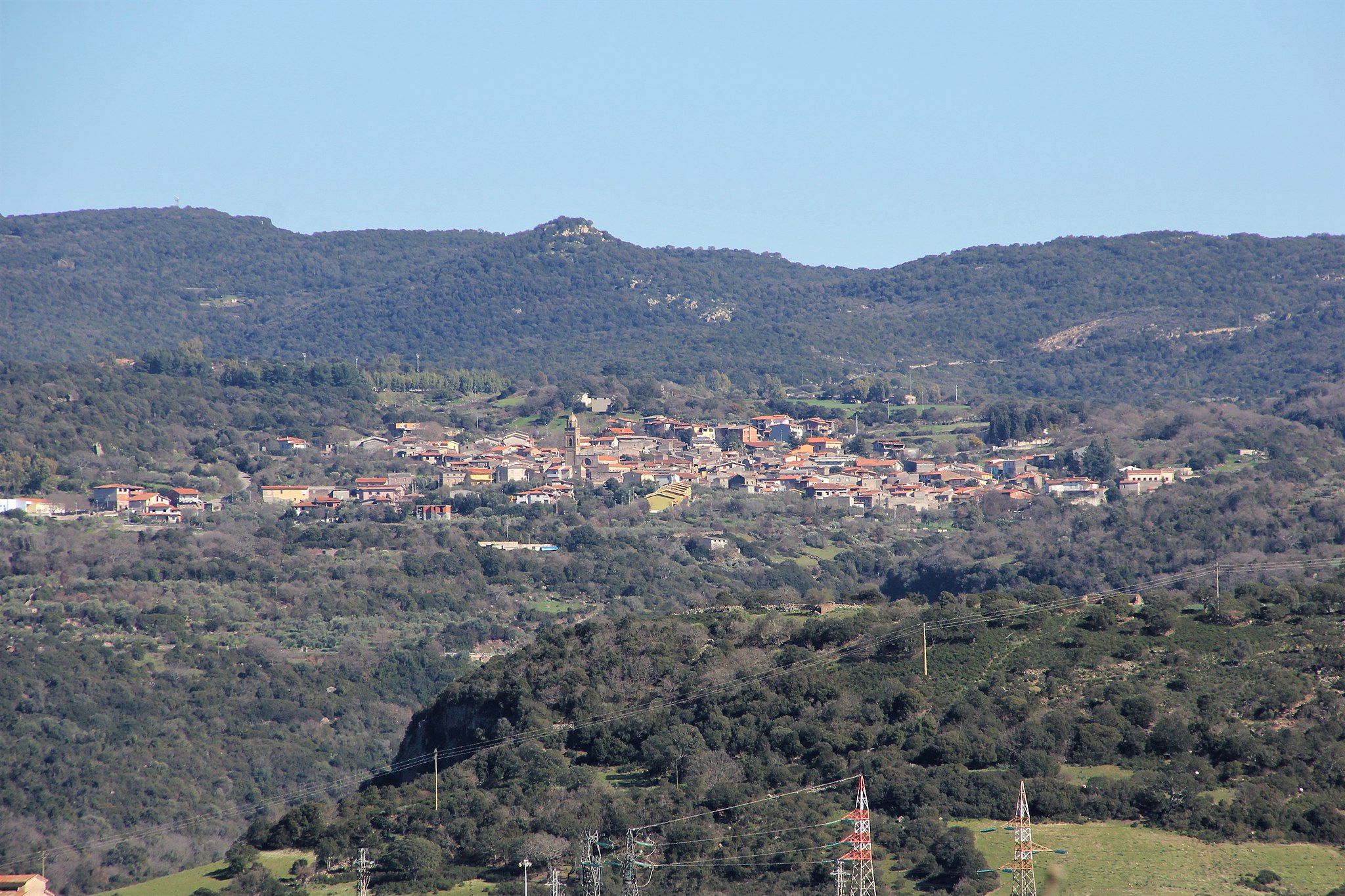
Ulà Tirso
The town’s name was once simply Ulà until, in 1870, Tirso was added to it because it sits on the left bank of Sardinia’s main river, nestled in a natural trachyte amphitheatre. The views from town are as beautiful as they are wild. Ulà Tirso is a tiny town of less than 600 inhabitants. It is within the historical Barigadu region and has medieval origins (XIII century), as well as a variety of archaeological sites dating from prehistory to the Roman Era. The town is also known for the Santa Chiara dam, a monument of industrial archaeology that, in 1923, created Lake Omodeo, then the largest artificial body of water in all of Europe. Today it remains a destination for the nature around it and active tourism. Further down you can tour the old hydroelectric plant: Ulà Tirso was the first town in Sardinia to make use of the electricity.
As you walk along the charming streets of town, stop in to visit the churches of Santa Croce, of Santa Chiara and, above all, the Gothic-Aragonese church of Sant’Andrea, built with trachyte in the XVII. It’s architecturally beautiful, with a great rose window under a rounded arch above the main Gothic door. From the top of the bell tower, built in 1769, the view spans the entire Tirso valley. The patron Sant’Andrea is celebrated every year in late November, just in time to try the novello wine. There are a variety of other religious and popular festivities during the course of the year that bring the streets alive with hustle and bustle: the most important one is in late July for the Maddalena. On 13 December Santa Lucia is honoured, while in mid-January the bonfires are lit for Sant’Antonio Abate, an event that includes the traditional tuva (bonfire), dancing, eating special bread with pork fat (pane cungherdas) and drinking wine. When Carnival comes around it is time to don the locally made masks, s’urtzu e sosbardianos. Holy week rituals are also quite impressive, the most heartfelt of which, s’Iscravamentu, takes place on Good Friday. At the end of May, in a country church in a nearby place called Besela they celebrate Sant’Isodoro, in honour of whom they boil lamb and enjoy it with local cheese and wine. Another culinary appointment is in August, the sagra de soscannisones, devoted to the typical Ulese pasta.
The Tirso was the cradle of local civilisation. In pre-Roman and Roman times the town rose on the left bank of the river in Orruinas and sosContones, where remains of settlements were uncovered, and Barigadu’s largest roman necropolis was discovered.

Genoni
Genoni, in the Sarcidano region, rises on the slopes of the volcanic hill of Santu Antine that dominates and protects it. The town is steeped in tradition and boasts some 800 inhabitants, as well as being surrounded by pristine nature and important archaeological sites. The little centre is divided into eight historical districts, one of which is home to the remains of a convent built in 1638. Its importance was documented by a 1550 map, Insula Sardinia, its name one of very few mentioned.
Santu Antine is an outcrop exposed through the erosion of the Jara Manna (or Giara di Gesturi). At its top are the remains of a Punic era fort (IV century BC), which had six towers, and a building that many believe to be the famous temple dedicated to the goddess Guinone, after which the town was named. There is also a chapel of the Romanesque church of Sant’Elena and San Costantino Magn, saints celebrated in early August with costumed processions and a hundred knights. Before it became a place of Christina worship it was a Nuragic era sacred well, the deepest of all Sardinia (39 m). It is one of many prehistoric sites that grace the area, the most interesting of which is in Duidduru, a geo-paleo site that can be visited, unique to Sardinia and one of very few in Italy. Some of its fossil remains are on display at the Paleo Archaeo Centre at the feet of the hill. Neolithic and Roman remains were are also found inside the sacred well. The area was densely populated in the Bronze Age, as proven by the 25 nuraghe, some still whole and open to the public, like Birìu and Santu Pedru, a variety of villages and the Conornoa arrubia sacred well.
From the top of the 600 metre high Santu Antine hill you can see all the way to Giara, one third of which falls under the jurisdiction of Genoni (1700 hectares out of 4200). It is characterised by flora that has adapted to life at altitude, with endemic species such as cork, holm oak, durmast, arbutus and myrtle surrounded by rainwater lakes (paulis) and the Giara horse, which the Phoenicians brought with them. Today there are still some 600 of them in the wild. Genoni is home to a centre that safeguards them, as well as the Museum of the Cavallino della Giara in an old house. The rural life of town is also on display at the museum. The most important religious celebrations are the bonfires of San Antonio Abate in January, the feast of Sant’Isodoro and that of the Madonna del Sacro Cuore, both in May.
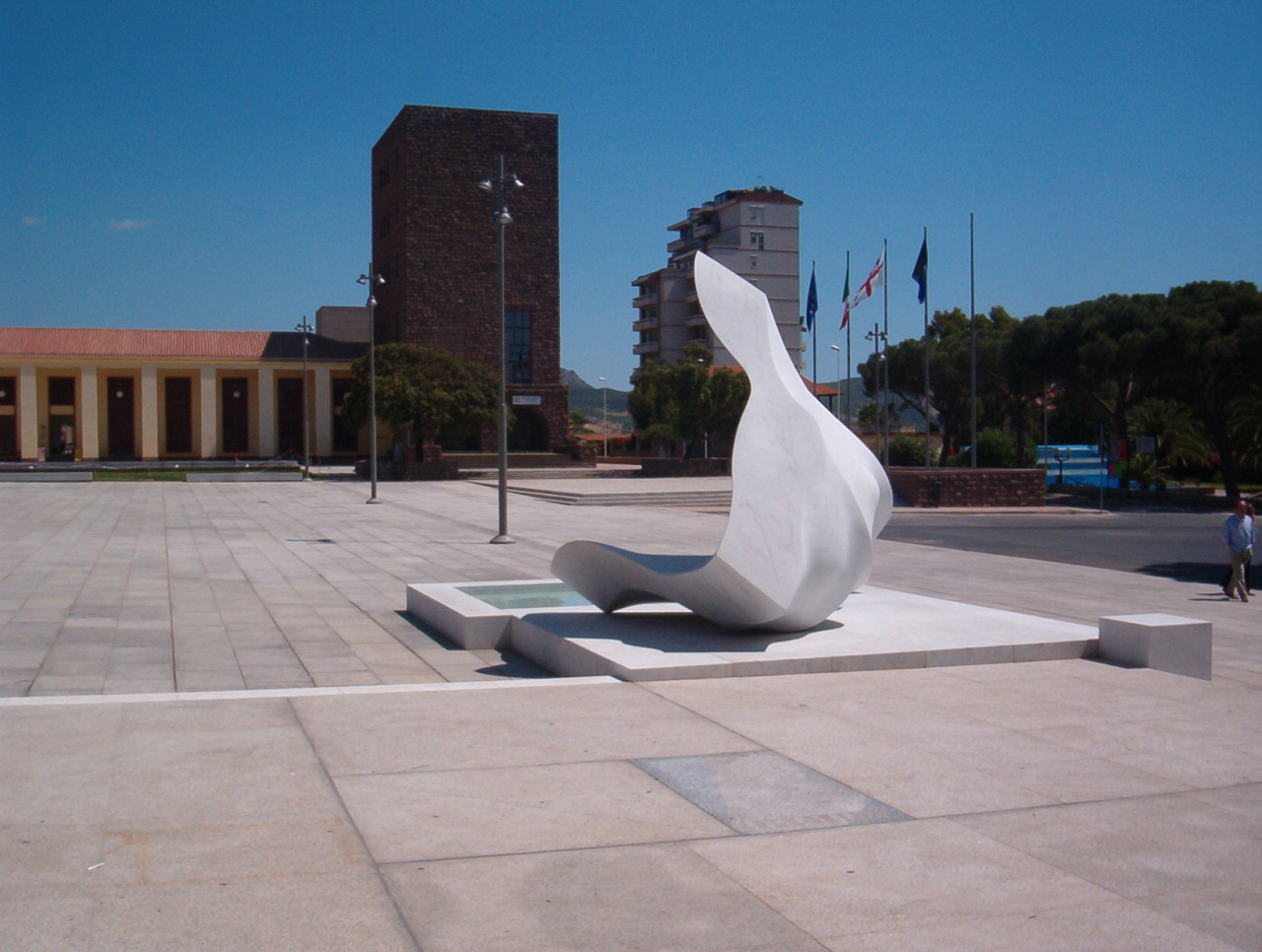
Assolo
It is located at an altitude of approximately 300 metres, on the slopes of the immense basalt plateau of Giara, on the side that extends from Scala Margiani to Corona Arrubia, in an area filled with centuries-old downy oaks and holm oaks, surrounded by sheer rock faces and moistened by temporary ponds. Assolo, a little village with 400 inhabitants, is surrounded by the dense vegetation of the Marmilla hills, making the views truly spectacular. All around the village, the woods make space for little roads, like Scala Cabirada and Scala Argiolas, that lead to the plateau, a nature reserve famous for the extremely rare Giara horses. In a valley situated between Giara and the hill of Giuerri, flows the evocative waterfall of Sa Caddaia, surrounded by greenery. Once upon a time, the village women would come here to wash clothes. All around, there are numerous springs: Abamasoisi, Genna Sobi, Cabirada and Barracca 'e Chiccu Soi.
The village, with its distinctive features, will remind you of a nineteenth-century village. Along the roads in the historical centre, you will encounter the traditional Campidano-type houses 'with courtyard', featuring ancient and majestic gates, spacious courtyards and loggias (is lollas). They are situated around the parish church of San Sebastiano, dating back to the 17th century. The patron saint is celebrated on 20 January, with traditional bonfires, processions, music and dances. In the outskirts, there is the little church of Santa Lucia. The rural celebration in honour of the saint takes place in mid-September, featuring equestrian skill tests and the procession of the traccas (decorated carts pulled by oxen), that also characterize the celebration of St Isidoro, in mid-May. The festival of the fregola (fregola is a type of Sardinian pasta) is a must, as is the living Nativity scene 'Sulla Via del Cometa' (On the Trail of the Comet), at Christmas, which is a theatrical performance along the streets of the historical centre of the village.
The territory of Assolo is dotted with numerous nuraghi, an impressive 25. You will be able to admire the Mammuzzola, the Moro, the Planu, the Narbonis and the Sassaioni, as you walk along the trails that lead to the Giara. In the valley around the village, you can admire the nuraghi San Pietro and Santa Lucia. Close to the little church of the same name, interesting artefacts from the Roman era have been found.
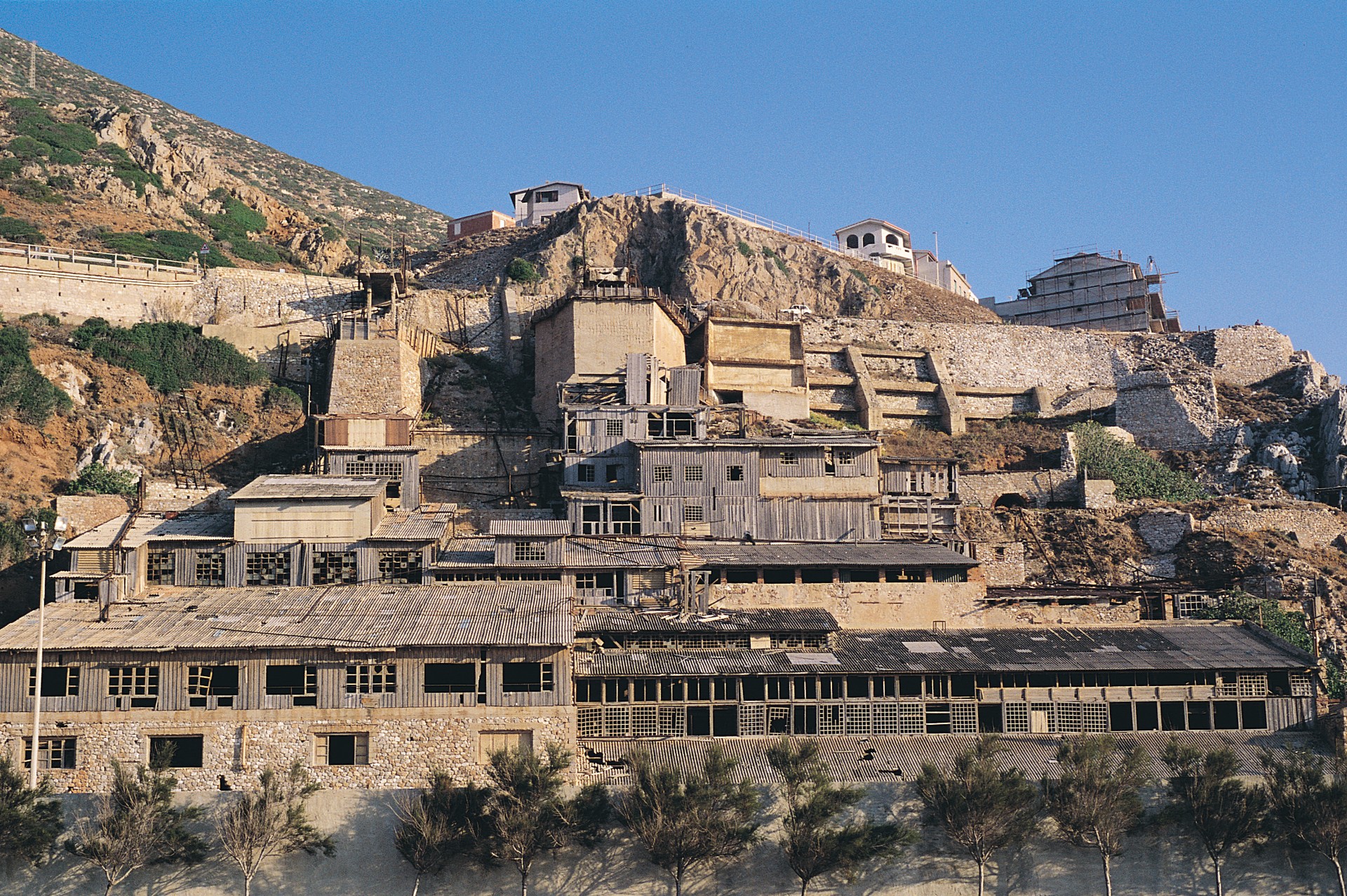
The Malfidano mine
It looks like a place where time came to a stop just when the mining activity, which went on – with its ups and downs - for over a century, was at its peak. The mineral riches of the Malfidano area were already known to the Romans, who sought silver here, and was then very different from what we see today, covered in thick woods where brigands and outlaws sought refuge. In fact, its name comes from the Italian for shady business, or malaffare. In 1864, the French engineer Giovanni Eyquem was given permission to mine for lead and found a huge deposit of calaminarian masses that provided zinc. This led to the foundation of the Malfidano mining company, while at the base of Mt. Caitas, not far from the beach, the first houses of the village of Buggerru began to be constructed.
They dug into the mountain of Malfidano and other nearby hills until they came across the Caitas deposits, which, they forecast, would provide plenty of work for well over a century. The Buggerru, Lamarmora and Malfidano processing stations to treat the minerals were constructed between 1870 and 1890. The Malfidano plant almost fulfilled its expectations and was in operation until 1979. It was the largest of the three and is still visible from the nearby tourist harbour. During its heyday, for the first time in Sardinia, pneumatic drills were used to carve a drainage channel, which allowed them to extract more of the mineral. Much was invested in the business of mining for lead and zinc and buildings cropped up around the village. From 1866 to when it was closed, Buggerru produced more than a million tons of zinc and in excess of 200 thousand tons of lead.
While today Buggerru is a popular seaside resort set on a lovely shoreline, home to Cala Domestica beach, it was also the site of the first repression of striking miners, who had asked for improvements in work and living conditions. Things came to a head on 4 September, 1904, the day of the Buggerru Massacre, when three striking workers were shot and killed. The 1920-30 financial crisis and the problems brought on by the world war eventually forced closure of the mine, which had became the property of Pertusola in 1928. The decline had been relentless and in 1955 the great Caitas mine was finally closed for good.

Sardara
In the middle of the Campidano area, there is a famous wellness centre, honoured with the Bandiera Arancione (Orange Flag) in 2005 of the Touring Club Italiano. Sardara, a village with four thousand inhabitants, has always been a strategic junction and was once the border between the Giudicati of Arborea and of Calari. The Castle of Monreale, towering over the hills in the south of the village, symbolizes the Giudicati period. It originally consisted of a keep, eight towers and town walls and today you can admire the powerful walls and, inside, the remains of the medieval village. Possibly built around the year 1000 and documented in 1309, it was crucial in the wars against the Catalan-Aragonese. The Giudici (judges) of Arborea Mariano IV and Eleonora stayed here. Sardara's history is linked, today as in Antiquity, to the thermal springs: the Aquae Neapolitanae led to the establishment of a densely populated Roman residential area (2nd-1st century BC). At the end of the 19th century, they were incorporated into the modern Sardara thermal baths. Two kilometres from the village, your stay will be an experience of well-being in an establishment surrounded by greenery. The waters gush out at a temperature of between 50 and 68 degrees C and are beneficial and therapeutic.
There is abundant evidence of prehistoric times here. The most important is the sanctuary of Sant'Anastasia, a Nuragic place of worship active between the 16th and 7th centuries BC, featuring a sacred well made of basalt and limestone. You can enter the room via a flight of steps protected by a covered corridor and you can admire the solid architecture as you descend down to the bottom. Its use as a place worship was not exhausted: this is documented by Punic ceramics and the remains of a Byzantine building beneath the church of Sant'Anastasia (rebuilt in the 15th century), giving the sanctuary its name. As well as a sixteenth-century baptismal font, inside the church there is another smaller Nuragic well, where pots dating back to the 8th century BC were found. All around, there is a fence enclosing a village that extends mostly below the houses of Sardara: it was the largest of the thirty Nuragic settlements scattered over the hills and plains. Furniture was found in a hut, among which an altar shaped like a Nuraghe and artefacts made of terracotta, lead and bronze. You will see them in the Villa Abbas Museum. Not far from the site, there is Casa Pilloni a 17th century dwelling, now a services centre for the archaeological area.
The old town centre is picturesque: cobbled roads and stone houses with exquisite portals. Historical manor houses and ancient churches stand out. The parish church of the Beata Vergine Assunta, dating back to the early 17th century, has sculpted reliefs, a pipe organ (1758), a marble altar and a retable of the Madonna of Itria. The church of San Gregorio Magno, dating back to the beginning of the 14th century, bears witness to the transition from Romanesque to Gothic. Near the thermal baths, stands the sanctuary of Maria de is Acuas, (of the Waters), a destination for pilgrimages. On the altar, a statue of the Virgin Mary stands out and dates back to the end of the 16th and the beginning of the 17th century. The church is where the most heartfelt celebration is held, in mid-September.

Basilica of Santa Giusta
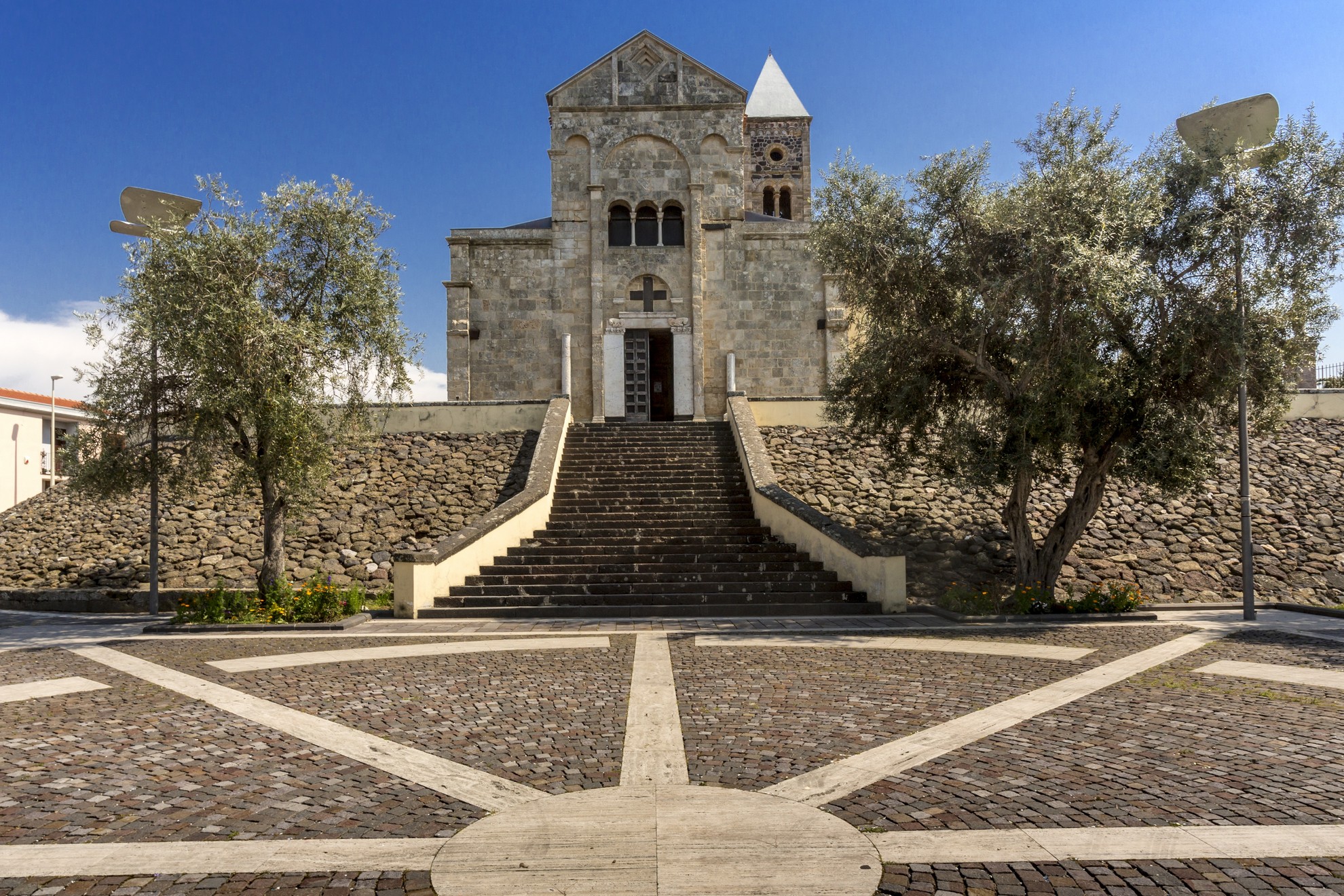
It melts your heart at first sight. The church appears in all its majesty rather unexpectedly, on a hillock in the main street of Santa Giusta, at the end of a majestic set of stairs: a gem of Romanesque architecture, model for nearby churches, including San Pietro di Terralba. Although it was the cathedral of the Santa Giusta dioceses, active until 1503, no document attests to its date of construction; it is estimated to have been built between 1135 and 1145. Its shapes, built under the direction of Tuscan masters, are clearly Romanesque-Pisan, very similar to those of the cathedral of Pisa.
The basilica has not been restructured over the centuries and still preserves its original beauty. The harmonious building is 28 metres long and 14 metres wide. It is formed by a hall divided in three naves with seven columns each – central nave with wooden ceiling and minor naves with ribbed ceiling – and by a crypt underneath, unique Sardinian Romanesque and entirely in brickwork, rectangular with four small naves with ribbed ceilings and divided by dwarf marble columns. Inside sit three small alters, one of which contains the relics of the saints that named the basilica: Giusta, Giustina and Enedina.
The strict façade, built, like the entire church, with sandstone from the quarries in the Sinis Peninsula, is divided in three parts by an arch that frames a portal, with a sculpted lion and lioness hunting down a pig and a roe deer, the symbols of the victory of the Gospels over heresy. The uniformity of the external part contrasts the great variety of the columns: these are reused pieces from Roman ages, perhaps from the ancient city of Tharros. The capitals are also of a different order (Corinthian, Ionic and composite), almost all made of marble, some of granite. Their change of style accompanies the passage to the presbyters. The same happens in the crypt: the capitals, however, are made of calcareous stone and sculpted ex novo. The subterranean was perhaps the first sanctuary where divine mysteries were celebrated, an indication that in the 4th and 3rd centuries BC this was once a temple dedicated to Demeter and Persephone. The territory of Santa Giusta, in the province of Oristano, was once the seat of Othoca, a Phoenician-Punic city, then Roman, abandoned in the Middle Ages, then inhabitants concentrated around the cathedral.