

Bolotana
Once famous for its wheat, the town is now known for its rugs, and has been part of the Borghi autentici d’Italia circuit since 2012. Bolotana has around 2600 inhabitants and is located on a hilltop, including a vast area running from the Marghine mountains to the middle valley of the Tirso, including the hills and forests of Badde Salighes and Ortachis along with the village of Santa Maria ‘e Sauccu. The setting has a range of different landscapes, with numerous springs that feed the River Coghinas, River Temo and River Tirso. Thanks to the fertile land, in the past the town was known as the granary of the province of Nuoro.
It's ancient name, Golòthana or Golòssene, which is still used in the nearby towns, first appeared in 1341 in the Rationes decimarum. The historic centre has medieval architecture with narrow and irregular roads that form an intricate "tangle".
The art of weaving made Bolotana one of the most important producers of Sardinian rugs, made using horizontal looms and characterised by the colours yellow, black and red and for their geometrical patterns. Agricultural tradition is expressed in local products such as oil, mirto, bread and homemade pastries. The town is also known for its strong religious devotion, and you'll find the sanctuaries of San Pietro and San Giovanni, both celebrated in late June, San Basilio, celebrated in late August, and above all, in the countryside, the Church of San Bachisio, celebrated by thousands of worshippers twice a year, in early May and early October. Other unmissable celebrations are the Fuochi di Sant’Antonio Abate bonfire (16 and 17 January and the moving Holy Week rites: the via crucis, Palm Sunday, s’Iscravamentu and s’Incontru. Since 2007, Bolotana has been a destination for rock and metal music lovers, thanks to the Rock&Bol festival.
The area has been inhabited since prehistoric times. There is an incredible concentration of pre-Nuragic and Nuragic settlements: dolmen, ritual circles at Ortachis, domus de Janas at sas Perdas de Zancànu and Puddèrigos, Giants' tombs, holy wells and forty-odd protonuraghes and Nuraghes, some built at altitudes of up to 1000 metres. The Tittiriola Nuraghe, with a single tower, dating back to between 1600 and 1000 BC and built out of blocks of basalt, is particularly noteworthy, overlooking the territory from a plateau. The tower is ten metres tall and has a circular floorplan (14 metres in diameter). The central chamber is intact: it has three niches, an entrance with architrave and passageway with stairs. It was surrounded by a large village. Traces also remain of later periods, the Punic (Fort of Pabude), ruins of Roman villas and Byzantine remains. On a more modern yet still famous note, the Liberty style Villa Piercy was built in the countryside in the late 19th century by engineer Benjamin Piercy, who designed the Sardinian railways. It is surrounded by a lush garden of exotic plants, which he brought back from his travels abroad.

Orotelli
The village is set on the edges of the Marghine mountain chain, on the granite plateau of sa Serra, where there is a natural park abounding with prehistoric relics. Orotelli is a town with 2000 inhabitants in the Barbagia di Ollolai, one of Borghi autentici d’Italia, known for producing excellent quality wheat, leather and stone goods as well as for its ancient traditions, such as the famous Thurpos (blind man's) mask, worn by men along with a black orbace (heavy woollen) hooded coat. Along with Mamoiada and Ottana, Orotelli is one of the most significant Barbagia carnivals. The hypotheses surrounding the origins of the name focus on its characteristics: it could derive from the Greek term oros (plateau) and tello (to be born), or from the Latin ortellius, land of gold, for the wheat. Compared to other nearby agricultural towns, Orotelli has always been known for its cereal-growing tradition. The local cobblers are masters in creating the traditional leather sos cambales (boots). You can see them at work in November, during the Autunno in Barbagia event.
The town is divided into two nuclei. The low, robustly-built granite houses of the historical centre are laid out around the parish church of San Giovanni Battista, an impressive Romanesque monument with a suggestive 14th century bell tower, or the nearby Church of San Lussorio, built in the 18th century in granite blocks. The new quarter of Mussinzua features the once-rural church of San Salvatore (16th century) and the other parish church of Spirito Santo, built on the ruins of a 14th century Aragonese church. The church of patron saint San Giovanni (celebrated in late August), built in red trachyte in the early 12th century, has undergone several restorations that have altered the original Romanesque layout, of which only the facade, apse and pilasters of the transept and sides remain. For 23 years (1116-39) it was the home of the diocese of Othana, while the new cathedral, the Church of San Nicola in Ottana, was being completed. Two other sanctuaries stand out in the countryside, in the centre of abandoned medieval villages: Nostra Signora di Sinne and the Church of San Pietro in Oddini, located next to the Sos Banzos hot, sulphurous springs with therapeutic properties.
The origins of the town date to pre-Nuragic times, as confirmed by the Sinne dolmen. The Giants' tombs of Forolo and sa Turre ‘e su Campanile, along with several Nuraghes (some of which have only one tower) date from the Bronze Age, including the spectacular Aeddos Nuraghe, one of the most important prehistoric remains in the Nuoro area. Built from enormous blocks of granite, the sheer size has remained intact over the millennia. The small Càlone Nuraghe that dominates the entrance to the town, and the Nuraghes with a central tower and tripartite bastions in the sa Serra park, are also of interest.
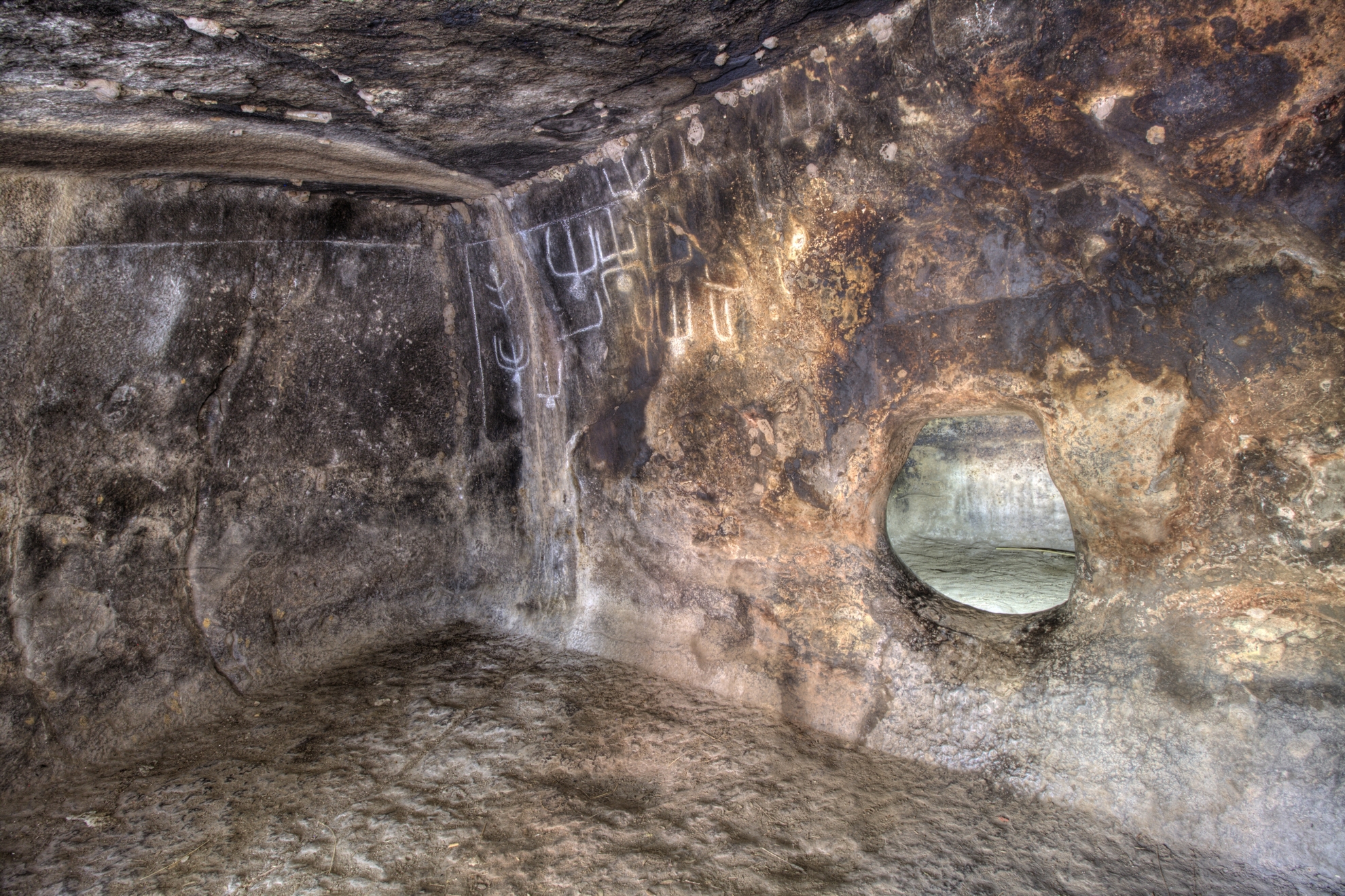
necropoli Sas Concas
Many archaeologists consider the twenty tombs of Sas Concas to be the most extensive and ancient Domus de Janas complex in the Barbagia region, a territory in which, unlike this site, subterranean burials are isolated or organized into small groups. The necropolis, dating back to around 2700 BC, is located in a trachyte outcrop in the territory of Oniferi, on the edge of trunk road SS 131, in the direction of Nuoro, and you can reach it via a short path. It stands out not only for its large and articulate structure, but also for its mysterious architectural and symbolic elements. In particular the walls of some of the tombs - the Hemicycle tomb, tomb X and the New West tomb - have graffiti engraved on them depicting stylized men upside down.
The Hemicycle tomb will impress you: it has a complex structure, formed by an anteroom that leads, through a door, into a large semi-circular room with a sloping ceiling. From here, you can get to another five secondary cells. Various architectural details are reproduced: a raised band created on all the walls, a pilaster strip painted in one corner and a false architrave, in relief, on the door in the centre of the back wall. The symbolic portrayals are organized into two groups: in the sector on the left of the back wall, eleven upside down anthropomorphic petroglyphs are engraved (of the 'anchor-shaped' or 'candelabra' type), perhaps representing two deceased people. Something similar appears on numerous Menhirs on display at the Museum of Laconi. The figures continue on along the left wall, without sharp outlines. On the opposite wall there is a single upside down stylized human figure. Furthermore, you will see numerous cupules engraved into the walls and the ceiling. In the New West tomb, you will walk along a long corridor that leads to the anteroom. A third space is situated along the same axis and leads to the entrances to two other rooms, with a 'T layout', that you will also find in tomb XVIII.
The whole territory of Oniferi is full of Nuragic and Pre-Nuragic sites: particularly interesting are the Domus de Janas necropolises of Brodu, as well as the Nuraghe of the same name, and Sos Settiles, due to the presence of Menhirs around the tombs. Other Nuraghi are the Soloai, the Maddorocco, the Murtas, the Istorito, the Ola and the Predosu.
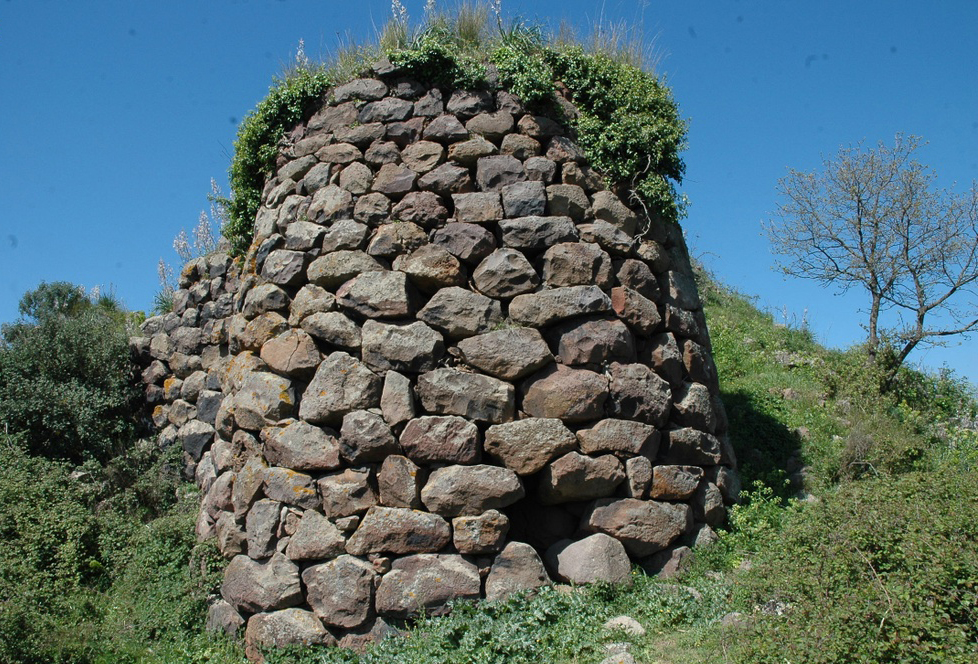
Genna Corte
The area in which it stands has unearthed some of the most important prehistoric finds on the Island, while its distinctive nature has not yet been fully clarified: the stones inside it have a blue colour. The nuraghe Genna Corte stands on a hill in the locality of Stunnu, ten kilometres north of Laconi. It is a complex structure, made up of a central tower (keep) and five secondary towers, connected by curtain walls running in a straight line, with a maximum residual height of seven metres. The construction material is trachyte, obtained from medium-sized blocks positioned in horizontal rows. About twelve metres of the height of the keep have been preserved and its diameter is slightly greater than this. The main room is full of stones caused by collapses, but it is still possible to ‘read’ the line of the walls in the corridor on the second floor.
Of the five towers, the one facing east is in good condition, as is part of the one facing south-west. In the east tower you will see a circular room, with a tholos roof still intact, from which a corridor with a pointed arch section leads into the courtyard. In one wall you will notice a niche, slightly raised with respect to the floor. In the room, you will see the phenomenon that characterises Genna Corte, the blue colouration in some points of the walls. It is assumed that this unusual chromatism is a result of the presence of lichens on the internal surface of the blocks.
About a kilometre and a half further south, you can take a leap back in time to the Neolithic period, exploring the site where the seven menhirs of Corte Noa stand - all still in situ except one. They have a ‘proto-anthropomorphic’ appearance, meaning that they show just a hint of human features, engraved in bas-relief. You will see the six monoliths that are still standing, positioned in a line, with heights varying from one metre twenty to two metres twenty centimetres. A short distance away, you can also admire a dolmen, which is of the gallery grave type. This is the type of tomb that preceded the Giants’ Tombs in Sardinia. You can then delve deeper into the megalithic culture of Laconi and Sarcidano by visiting the Civic Archaeological Museum of Menhir Statues (Menhir Museum), located inside Palazzo Aymerich. Various types of menhirs are on display, including those from the territories of Allai, Samugheo and Villa Sant’Antonio.
Laconi, a village that received the Italian Touring Club’s Orange Flag award, doesn’t stand out for its archaeology alone: the Aymerich Park deserves a visit, with a captivating waterfall inside it and the ruins of a medieval castle dating back to the period of the Judicates, as well as the house-museum where Saint Ignatius was born, a frequent destination for pilgrimages, especially at the end of August during the festival dedicated to him.
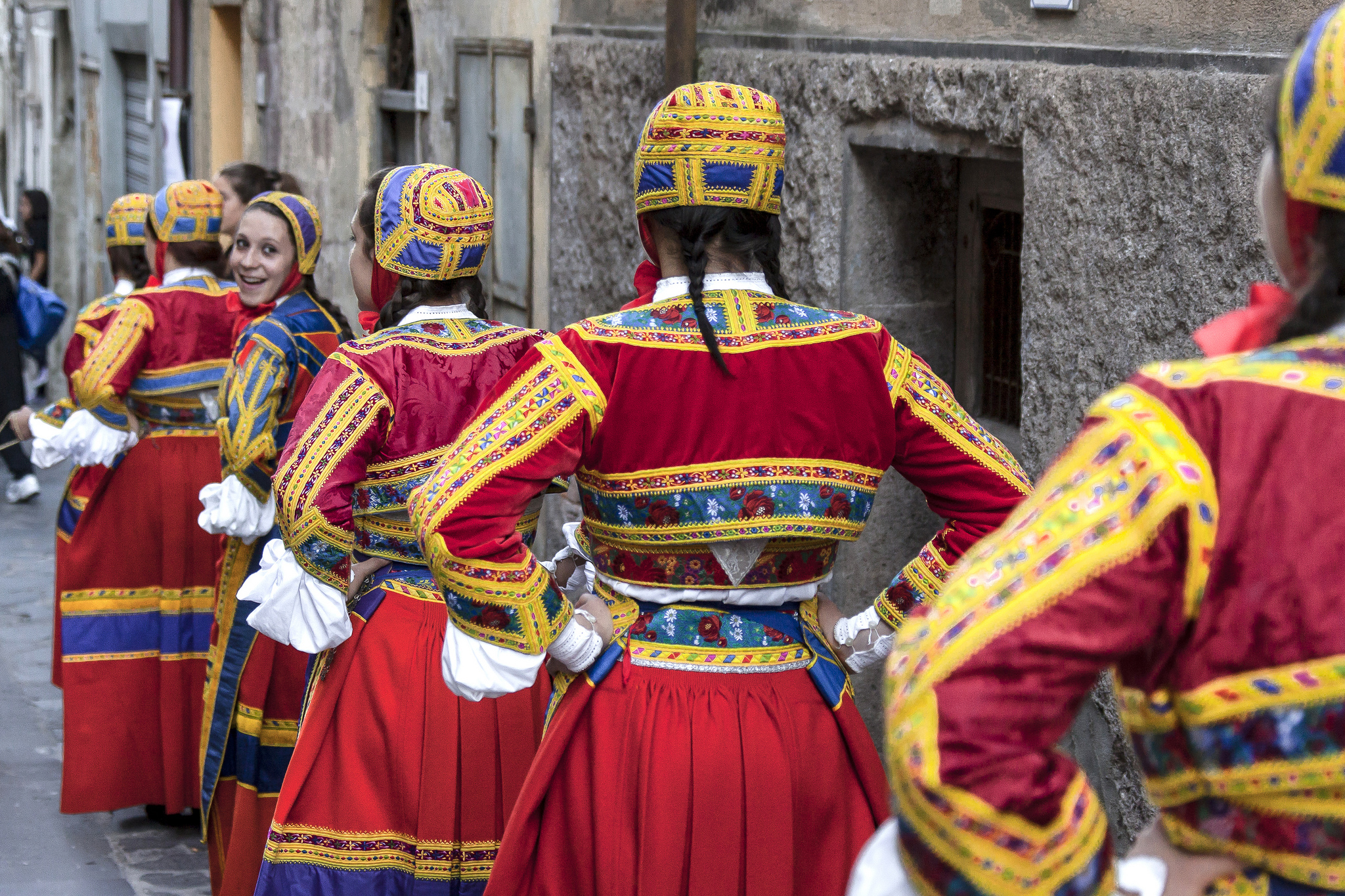
Desulo
An ancient village perched at an altitude of almost 900m on the western slope of Gennargentu. At Desulo you can enjoy the beauty of nature and a wide array of centuries-old traditions. The woods that circle town provide gorgeous scenery, colours that change with the seasons and a variety of fine hiking trails. Houses built with local shale, graced with doors and windows painted blue, line the narrow streets of the centre and offer timeless views. The town is made up of three neighbourhoods: Issiria, Ovolaccio and Asuai, home to some 2,400 residents. Here you will see the elegant traditional dress, embroidered precious fabrics like velvet, damask and scarlatto (a red woollen felt). The colours of this town are bright. Tradition dictates the red, blue and yellow that represent the three regions of the Barbagia (Ollollai, Belvì and Seulo).
When you are here you must go see the Carta house-museum, and the museum of Antioco Casula, the renowned XX century Sardinian poet, which houses the ethnographic museum of Monatanaru. The displays here include traditional dress, old farming tools and the poet’s own library. A yearly literary award named after him is handed out during the ‘La Montagna Produce’ celebration, the town’s Autunno in Barbagia event in late October, early November. During the celebrations you can admire fine craftsmanship, especially wood, and enjoy tasty local delicacies. The most artistically and architecturally interesting of the religious buildings is the ancient Church of Sant’Antonio Abate, the town’s patron saint. He is celebrated in mid-January when huge bonfires are lit in his honour. A few days later, more bonfires are lit to celebrate San Sebastiano, the patron saint of the Asuai district, a ritual that also plays out in July. Another summer celebration takes place in August, with the Madonnina delle Nevi festival at the Tascusì Pass, the highest point (1250m) of any road in Sardinia. The tallest peaks of the island are reached from here: Bruncu Spina (1829m) and punta La Marmora (1834m). Along your way you will come across a refuge named after General Lamarmora, who wrote about his travels in the XIX century. You will come across pristine forests like Girgini, and be able to admire a splendid rocky outcrop known as Genna Eragas. The views of the sea from these lofty peaks are breathtaking. In the area around Desulo you will find traces of settlements dating to the Neolithic era, like the domus de Janas shrine at Occile, from the Nuragic Age. Near town is Ura de sole, Sardinia’s highest nuraghe (1330m) and the Tomb of the Giants known as sa Sedda ‘e s’Ena.

Filindeu and Carasau, breads with simple, eternal flavours
For five centuries now, every year, during the nights of 1 May and 4 October, there is Feast of Saint Francis. Worshippers on a pilgrimage move along the roads of Barbagia to the sanctuary of the saint on the hill dominated by Monte Albo. In a climate of meditation and spirituality, a delicacy made by the local women reaches the pilgrims' plates: su filindeu, the threads of God, a soup that warms the body and nourishes the soul.
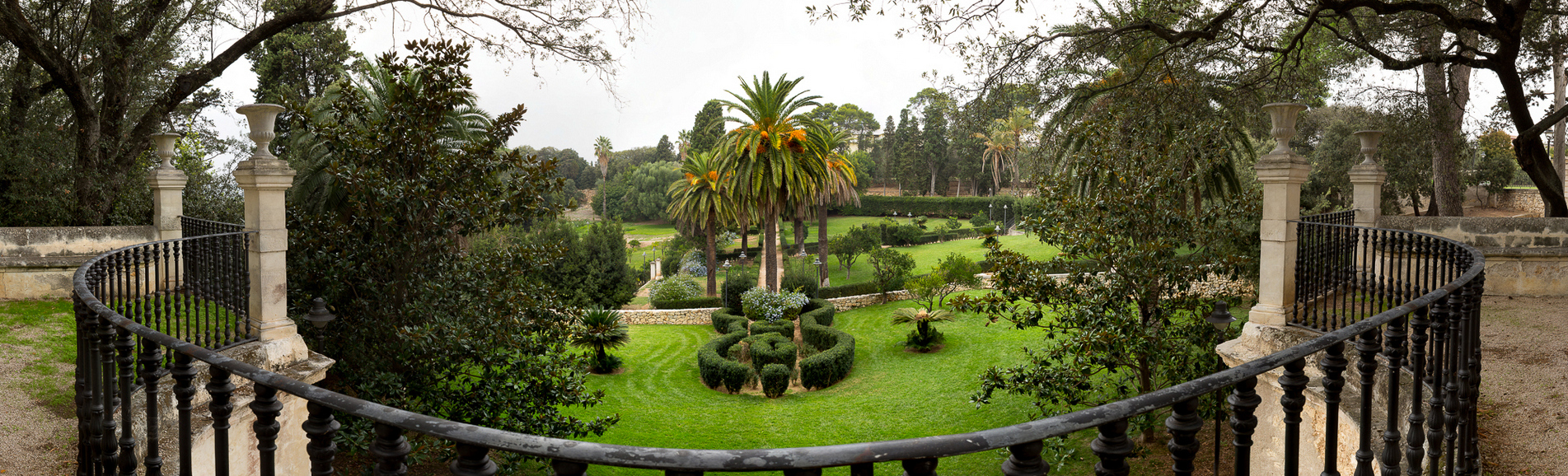
Sardinia's historic gardens, people and plants intertwined
A journey through scents and colours, art and history, to discover a landscape heritage consisting in seven historic gardens from the end of the 19th century, which combine architecture and botany. Stories of plants and people, of a passion for nature shared by remarkable characters who were apparently completely unrelated: the hero Garibaldi, the 'magnate' engineer Piercy, the 'enlightened' Marquis Aymerich. In 1866, the botanist Patrizio Gennari came up with the idea of having a collection of plants in the centre of Cagliari: that idea became the Botanical Garden, an expanse of five hectares with hundreds of specimens, including tropical plants and a section dedicated to plants from the Bible. Inside, we find an evocative archaeological area: four cisterns from the Roman era are incorporated into a Neoclassical project by the genius Gaetano Cima, who built a small temple to botanical science around them. Alongside the botanical garden is the Roman amphitheatre and the Orto dei Cappuccini.
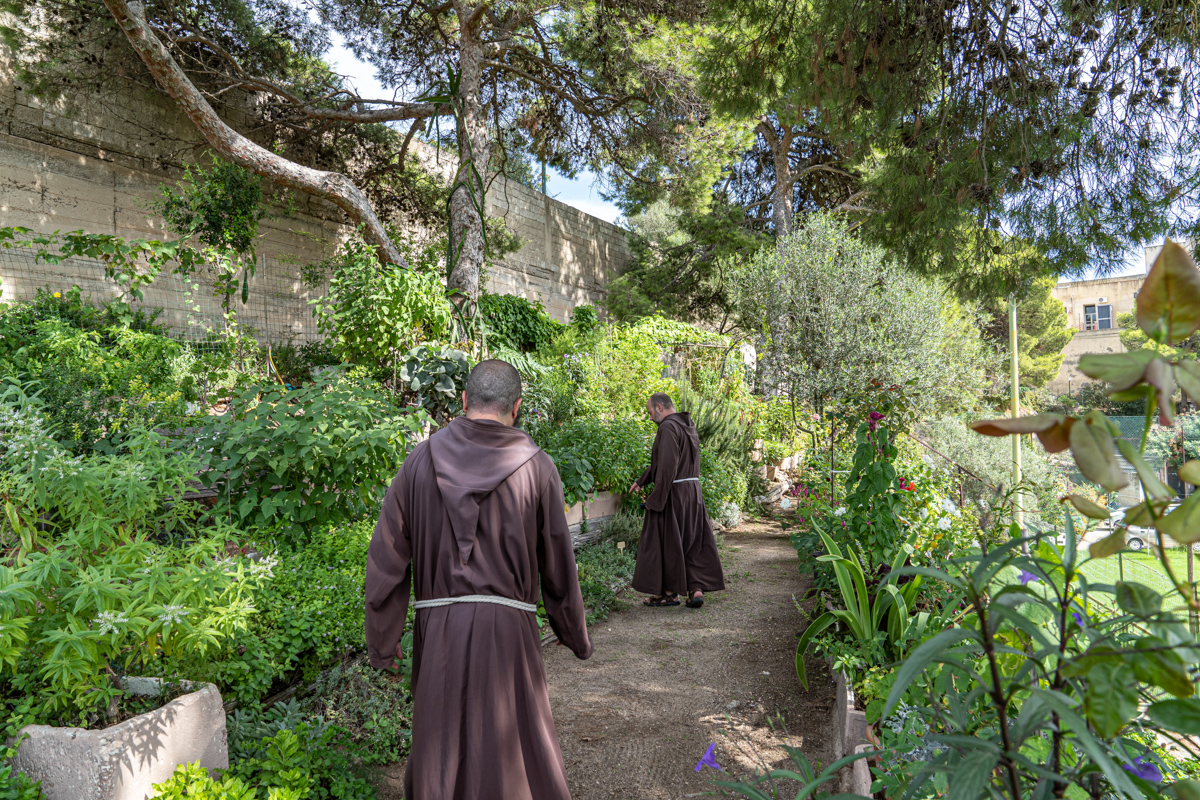
Franciscan places, interior well-being and a sense of community
Warm, familiar hospitality, simple yet precise rules, a slow pace that promotes reflection, moments of sharing and of learning, relaxing hours in an oasis of silence and peace. This is Franciscan hospitality, the “core” of an experience of physical and mental well-being and of cultural exchanges between travellers and those who host them; ideally, it brings together 14 Sardinian centres where followers of Saint Francis of Assisi have left traces that cannot be erased. In Gallura, since the early 13th century Franciscans have chosen the landscape of Luogosanto, where, perched among granitic rocks, is the Eremo di San Trano, today a popular pilgrimage site. In the town, the Franciscans built Nostra Signora di Luogosanto, a basilica with a Holy Door privilege, which is home to the queen of Gallura. Visit the sacristy to admire the diocesan museum, with holy items, statues and ex votos, including refined jewels. In their search for isolation, the friars climbed Mount Rasu: you can follow their steps and see the place where Giovanni Parenti, minister of the order after Francis, is likely buried. At Castelsardo, a hamlet perched over the sea, the friar minors of a convent have lived, over 500 years, in the church of Nostra Signora delle Grazie, home to lu Cristu Nieddu, a juniper crucifix that dates back to the 13th century and is blackened by time. At the Meilogu, in Mores, capuchin friars live in the convent of Sant’Antonio, the perfect place to try the Franciscan experience.
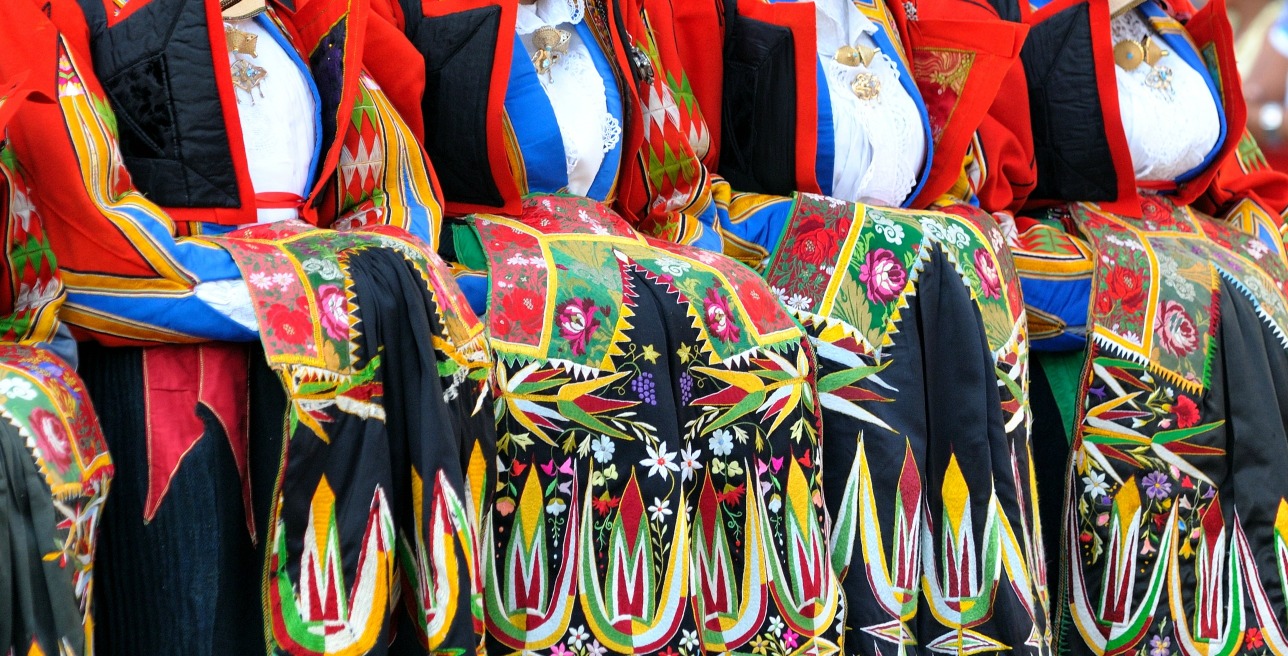
Patterns and textures of the soul
Original and imbued with meanings, the clothes and jewels are a fusion of signs left by the succession of different cultures in Sardinia: Nuragic, Phoenician, Greek, Byzantine and Spanish. Nothing was lost. Like the bright, coloured bonnets worn by the women of Desulo on festive days. They decorated them themselves, embroidering miniature details of the flamboyant Desulo dress: yellow, red and blue geometric designs alternated with embellishments based on the fantasy of skilled and sensitive artists. That of the women of Tempio Pausania was a different world, with their austere precious silk damask dress, which was completely black. They were admired for the elegant grace of their demeanour. On their heads, they wore a cascade of white lace, tied with filigree.

The Stonehenge of the Mediterranean
Sardinia has an age-old story, told by the archaeological evidence dotted throughout the territory. The tangible signs of the prehistoric island are endless: menhir, dolmen, domus de Janas, sacred wells, tombs of the giants and countless Nuraghe complexes. Enormous stones that have been guarding secrets for four thousand years. Buildings, often intact, of the first civilizations ever to exist in Europe, the only sites of their kind in the world, a patrimony to be discovered and experienced: this is the Stonehenge of the Mediterranean.