Every people left something here: traces of buildings, artefacts, names of streets or places, traditions and legends. From Alghero to Porto Torres, different universes cross each other in a few square kilometres. Along the coast, dotted with watchtowers, your journey is a combination of picture postcard natural scenery and stories from a past, each of which somehow continues to live in the present.
Itinerary: 99.5 km
Journey time: 21 hrs spread over five days
‘La Speranza’ (Hope) is the name of the place where the route begins, still in the territory of Villanova Monteleone. The Spanish tower of Poglina dates back to the 16th century and stands on top of a promontory located further north with respect to the beach of the same name, in front of an unusual rocky outcrop with an elongated shape. Proceeding north along the Riviera del Corallo, you will cross the bastions of Alghero and the streets of Fertilia, before catching sight of the impressive Lazzaretto Tower.
PoYou can take a detour to admire the landscapes and beautiful nature of Capo Caccia and the park of Porto Conte, or you can continue north, taking a look at the Baia delle Ninfe amidst vineyards and archaeological legacies. From the Torre di Porticciolo onwards, the coast becomes even more jagged and interspersed with wild coves, until the beach of Porto Ferro suddenly appears with its ‘guards’, Bantine Sale on the left and Torre Bianca and Torre Negra on the other side.
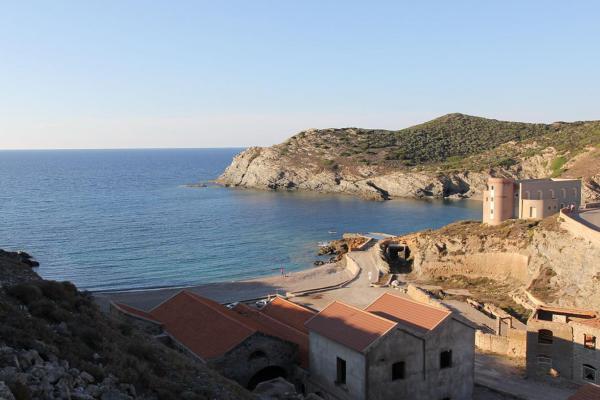
You will find no military or defensive constructions, just mining ones. Many are abandoned, within a village that has remained suspended in time. Argentiera is one of the most fascinating industrial archaeological sites in Europe and you won't have a hard time understanding why. The buildings, both old and new, are reflected in the turquoise sea, surrounded by ivory-coloured cliffs. There is also an open-air museum here, the Open MAR, which will tell you the epic story of the mine and the adjoining village.
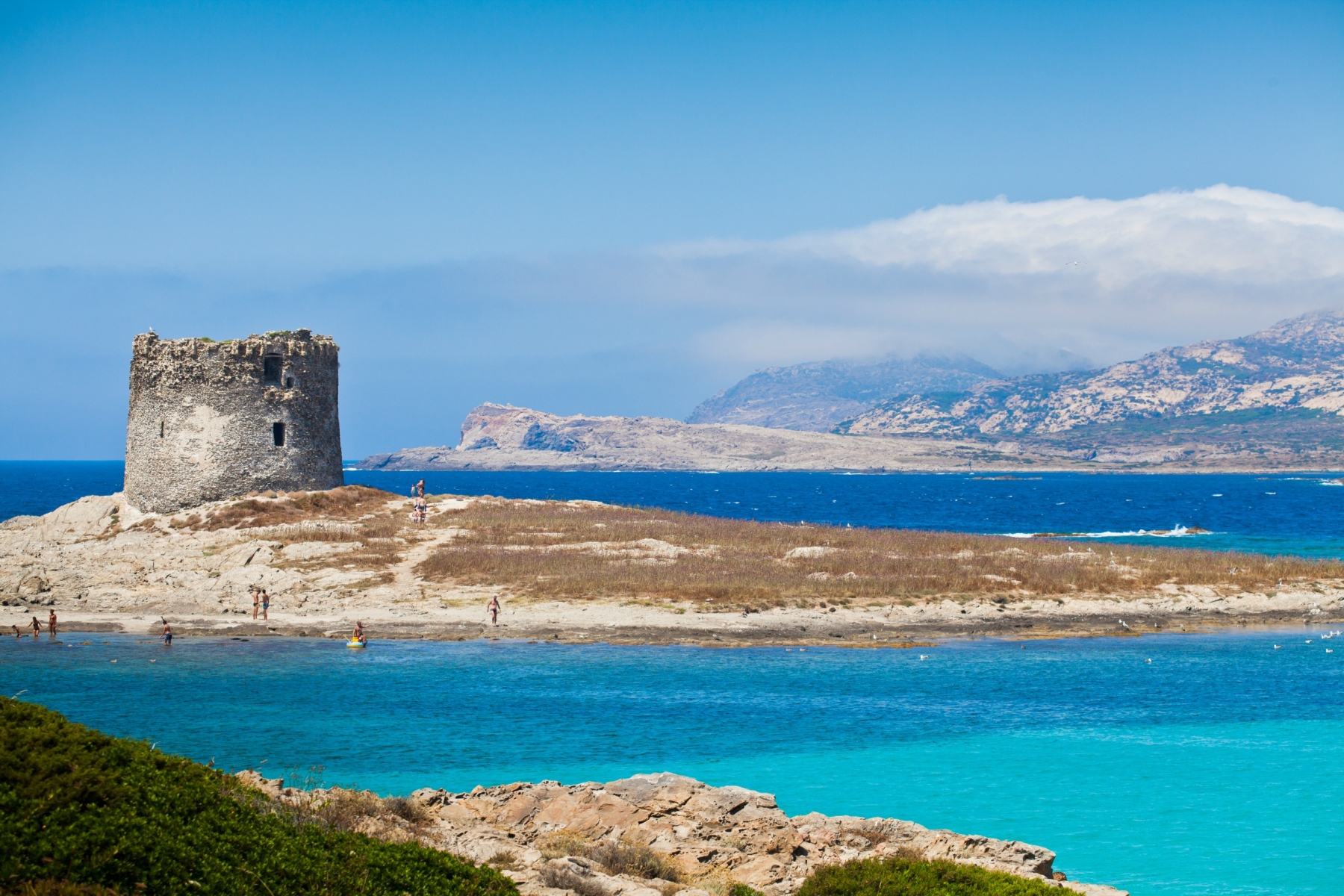
The longest leg of the journey crosses the northwestern extremity of the Nurra region, moving away from the coast to enter a landscape set in the scrub, where a few remote sheepfolds occasionally appear. The route takes you quite close to several picturesque churches, until you come back to the sea near the salt pans of Stintino. You will be able to admire the massive seventeenth-century tower, which kept the Falcone tower and the Pelosa tower company, today ‘confined’ on an islet almost in front of the spectacular beach.
A long coastline of sand and white pebbles, looking out at the Gulf of Asinara, will lead you eastwards and then alongside the Pilo pond. It is surrounded by rushes and tamarisks and inhabited by bird species, among which cormorants, herons and flamingos. You will return a few kilometres inland before entering the streets of Porto Torres, in the direction of the port, passing by the ruins of the ancient Roman town of Turris Libisonis, after which you will reach the brown Aragonese tower, dating back to the 14th century.