

Estate 2025, a suon di musica
By day, places of "boundless spaces and superhuman silences" seemingly disconnected from performances and live shows. By evening, however, music takes over the infinite stages provided by nature and history. Summer in Sardinia also means an irresistible combination of breathtaking locations and great national and international artists. Each year, a lineup captivates and excites an ever-growing audience, offering shows and concerts for all tastes and ages. From refined Italian songwriting to international pop, from rock to hip hop and dance music.
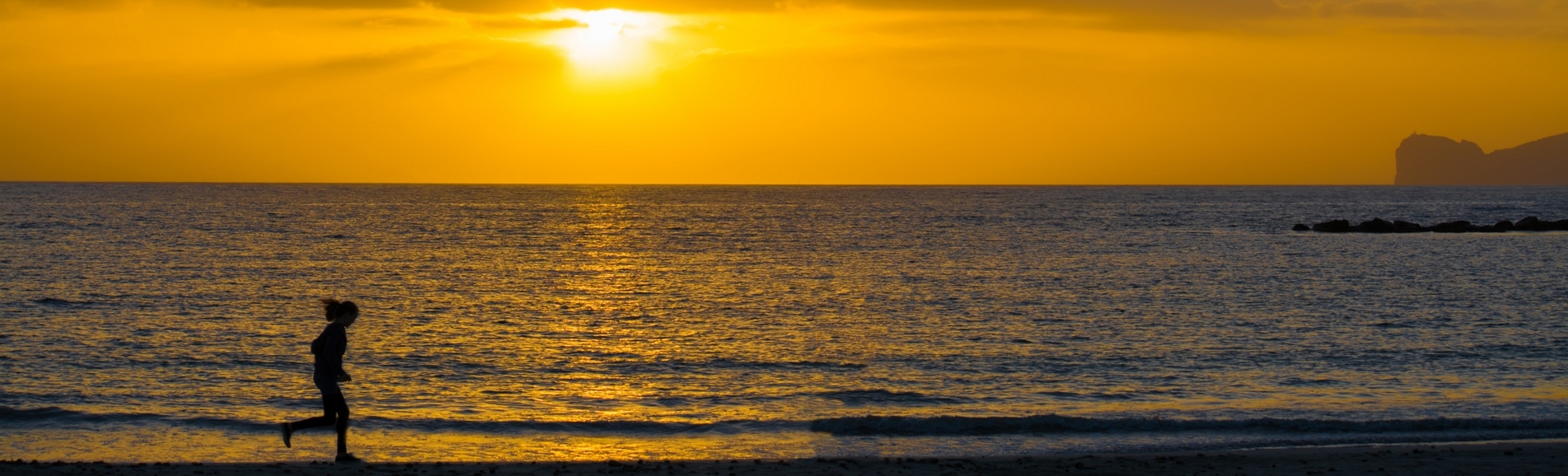
An open air gym
An open air park-gym that inspires all sorts of tourists throughout the year . Sardinia is the perfect destination for travellers who experience their holidays as protagonists: they can enjoy any sporting activity on the island, in unique and often unspoilt settings. It is the ideal land for anyone who likes to interact with nature and seek cultural and spiritual enrichment during their travels.
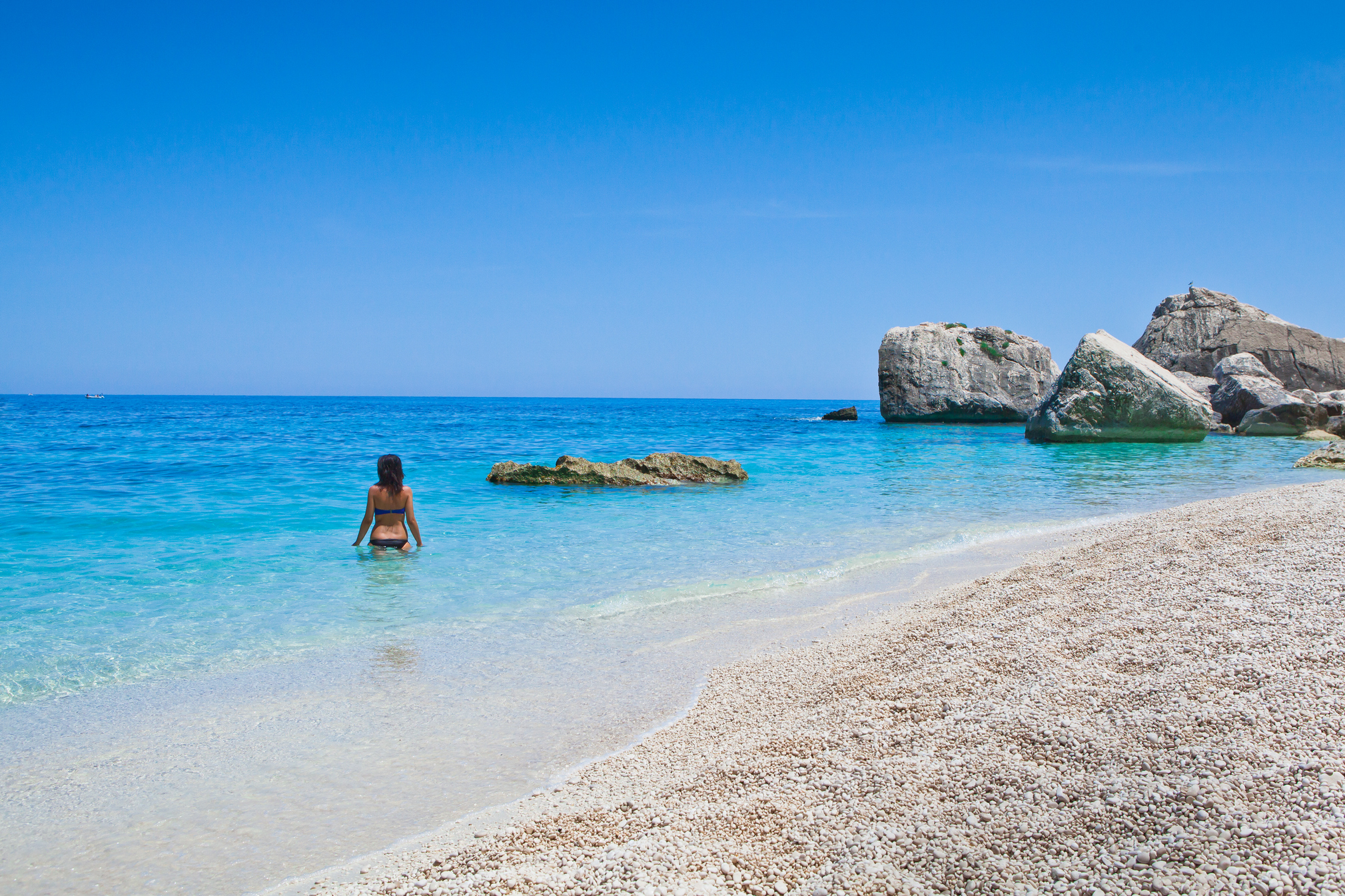
Sardinia, a great soul within it, the sea around it
It resembles no other place. This is what the first travellers from the past wrote about Sardinia. They recount the emotion of this land that slowly emerges from the sea and the spectacular unspoilt nature that is revealed. A land embraced by an intense light. Towering mountains that slope towards the coast, framing marine scenarios that are always different: cliffs sculpted by the wind, long beaches, bays hidden by the Mediterranean scrub, sand dunes covered with white lilies.
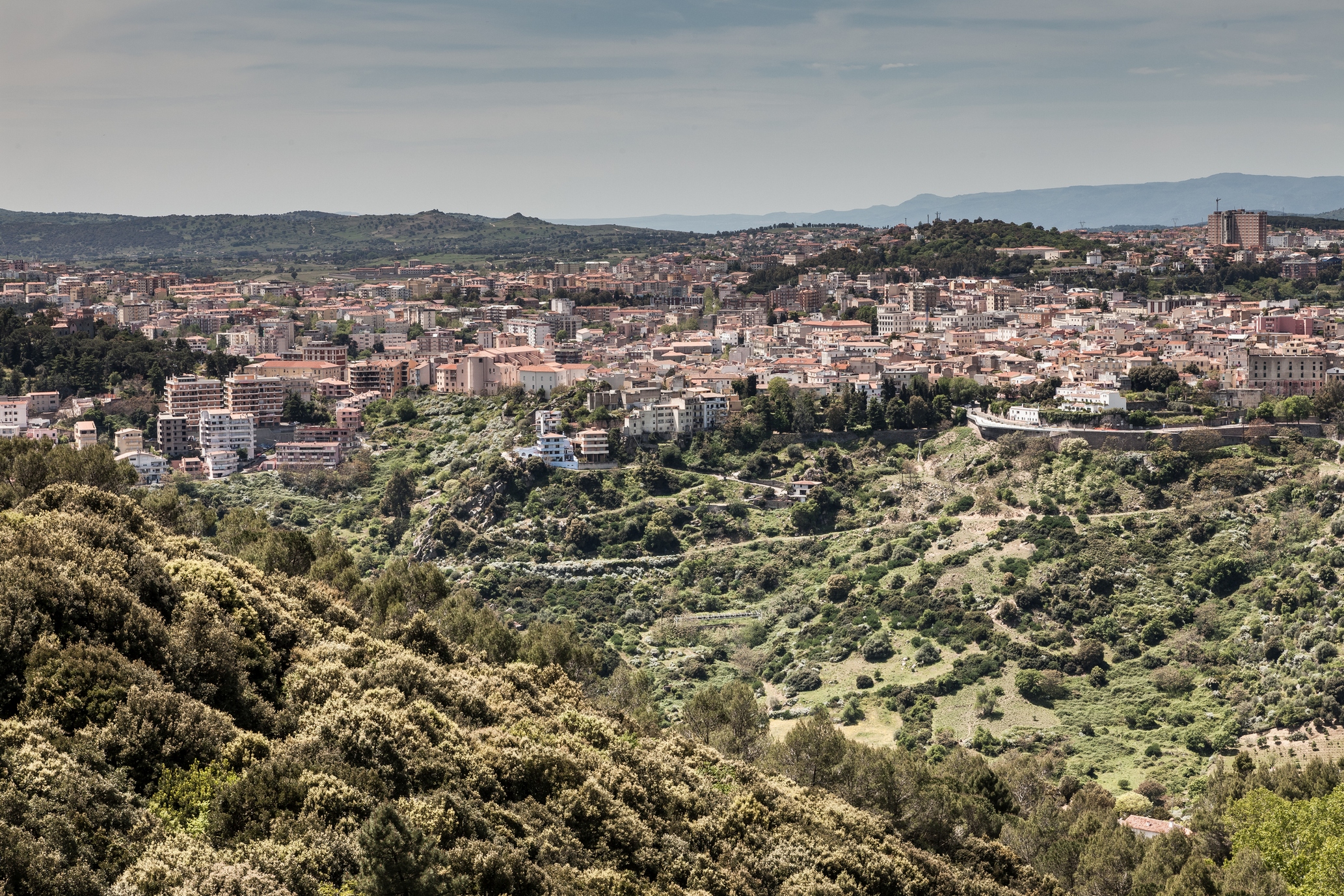
Nuoro, keeper of culture, of yesterday and today
Between the mountains and the woods of Barbagia, where fragrances fill the air in the summer, after being freed from the silent blanket of snow, lies Nuoro, the restless heart of the Island. It is easy to get there by car or, if you are taking your family from one of the localities along the coast, also by camper van. Once called the Sardinian Athens, it is a town “with a strong, noble, serene old age” as Grazia Deledda described one of her protagonists in ‘Canne al Vento’ (‘Reeds in the Wind’).
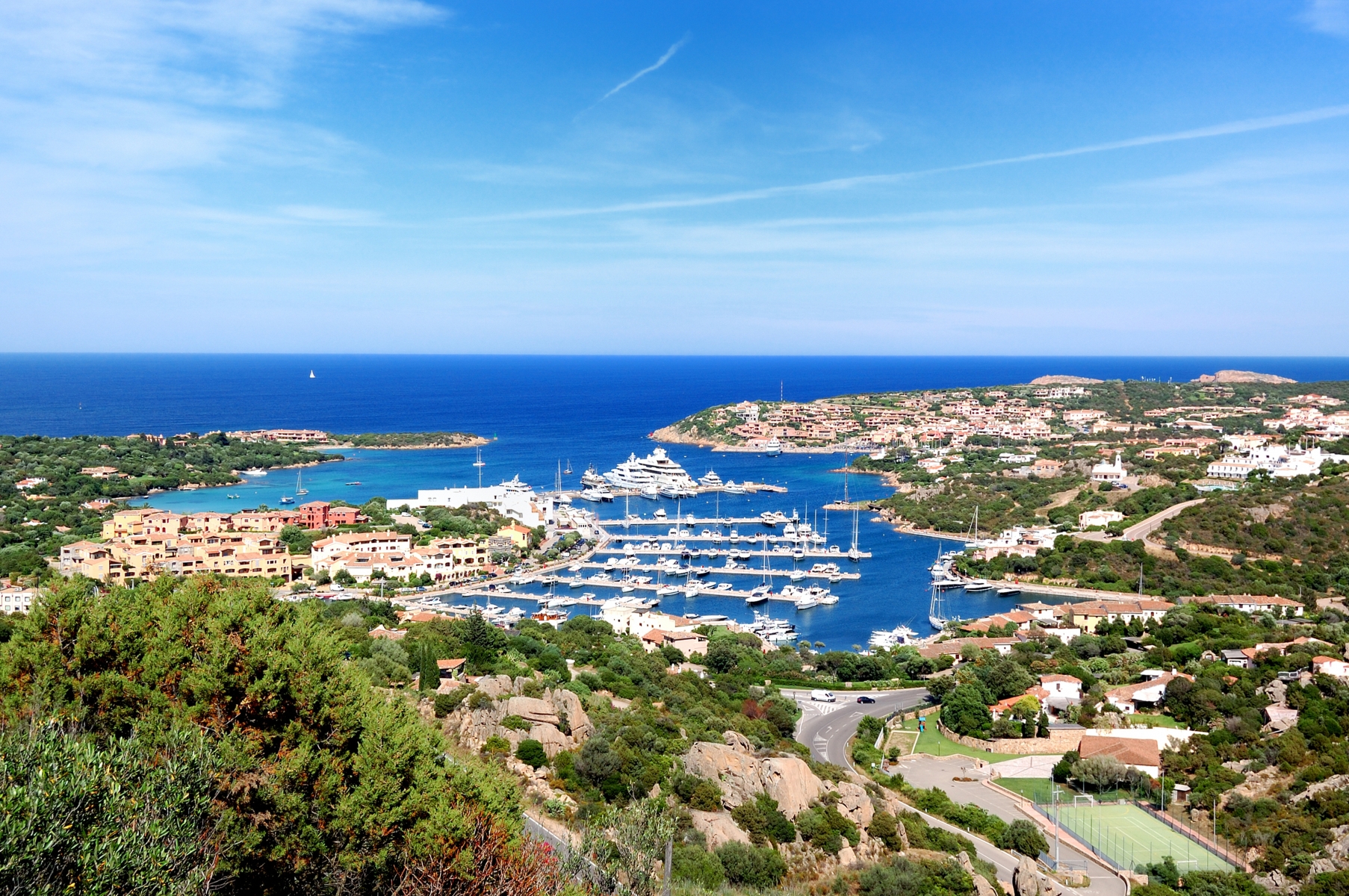
Porto Cervo
Undisputed capital of the Costa Smeralda, Porto Cervo is a district of Arzachena, a town in the Gallura area, with just a few hundred residents. In the summer, it becomes an extraordinary procession of hundreds of yachts and famous personalities: it is quite likely that you will find yourself in the square, shopping with stars of the cinema and the television. Every day is a continuous stream of engagements with the international jet set: parties, social events, sports events, golf in particular.
The seaside village emerged around a natural cove that resembles a deer. The old port dates back to the 1960s, when Prince Karim Aga Khan IV, captivated by the beauty of this stretch of coastline, had a brilliant idea when he decided to buy the lands of this part of Gallura and, together to the Swiss-French set designer Jacques Couelle, and later assisted by several Italian architects, he brought life to this paradise of international elite tourism. In the 1980s, the work to build the new tourist port began, which is now one of the biggest and best equipped in the Mediterranean (700 boat moorings), headquarters of the Costa Smeralda Yacht Club, organizer glamorous and prestigious regattas. Walking along the docks, you can admire the moored yachts of rich, famous personalities or you can watch them as they leave the port.
The town of Poltu Celvu (in the language of the Gallura area) was built high up on level ground with respect to the port. From Piazzetta delle Chiacchiere to the Sottopiazza there is a series of alleys, windows, balconies, built in typical Costa Smeralda style, as well as shops and boutiques selling prestigious designer items, while, all around, you will find the most prestigious restaurants, luxury hotels, the most fashionable clubs, at the centre of the coast's nightlife, and splendid villas climbing up the surrounding hills, nestled in the Mediterranean scrub. During the design stages, the prince and his collaborators came up with the idea of creating architecture that would maintain continuity with the typical Gallura architecture as much as possible, blending perfectly into the environment: it was the key to success. On the subject of architecture, remember to take a look at the splendid Stella Maris church, the work of architect Michele Busiri Vici, which dominates Porto Cervo Marina.
A few steps from the touristic centre are some breath-taking beaches. The expanse of soft, white sand of the Grande Pevero is lapped by the turquoise, blue and green reflections of the sea, flanked by granite rocks shaped by time, and by Mediterranean scrub. Behind it there are well-kept golf courses hat make the resort a popular destination for golfers. Separated by a promontory, you will find the Piccolo Pevero, a beach that is less than half the size of its 'older sister'. Offshore you can admire the islets of Li Nibani, 'the seagulls'. Two kilometres further south are other wonders: the Romazzino and the Principe beach (in honour of the Aga Khan). On the opposite end of the 'emerald' promontory, you will be entranced by delightful coves, including Cala di Volpe and Liscia Ruja. Further south, don't miss the paradise of Cala Capriccioli, beaches of fine, light-coloured sand, protected by yellow, pink and reddish granite rocks. The name Gallurese means 'goats', and refers to a pair of huge, polished round boulders that form various coves. The beach to the east is ideal for families, while the western side is formed by the beaches of 'Pirata' and 'delle Tartarughe'. The panorama is enhanced by the islands of Soffi and delle Camere and the islet of Mortorio.
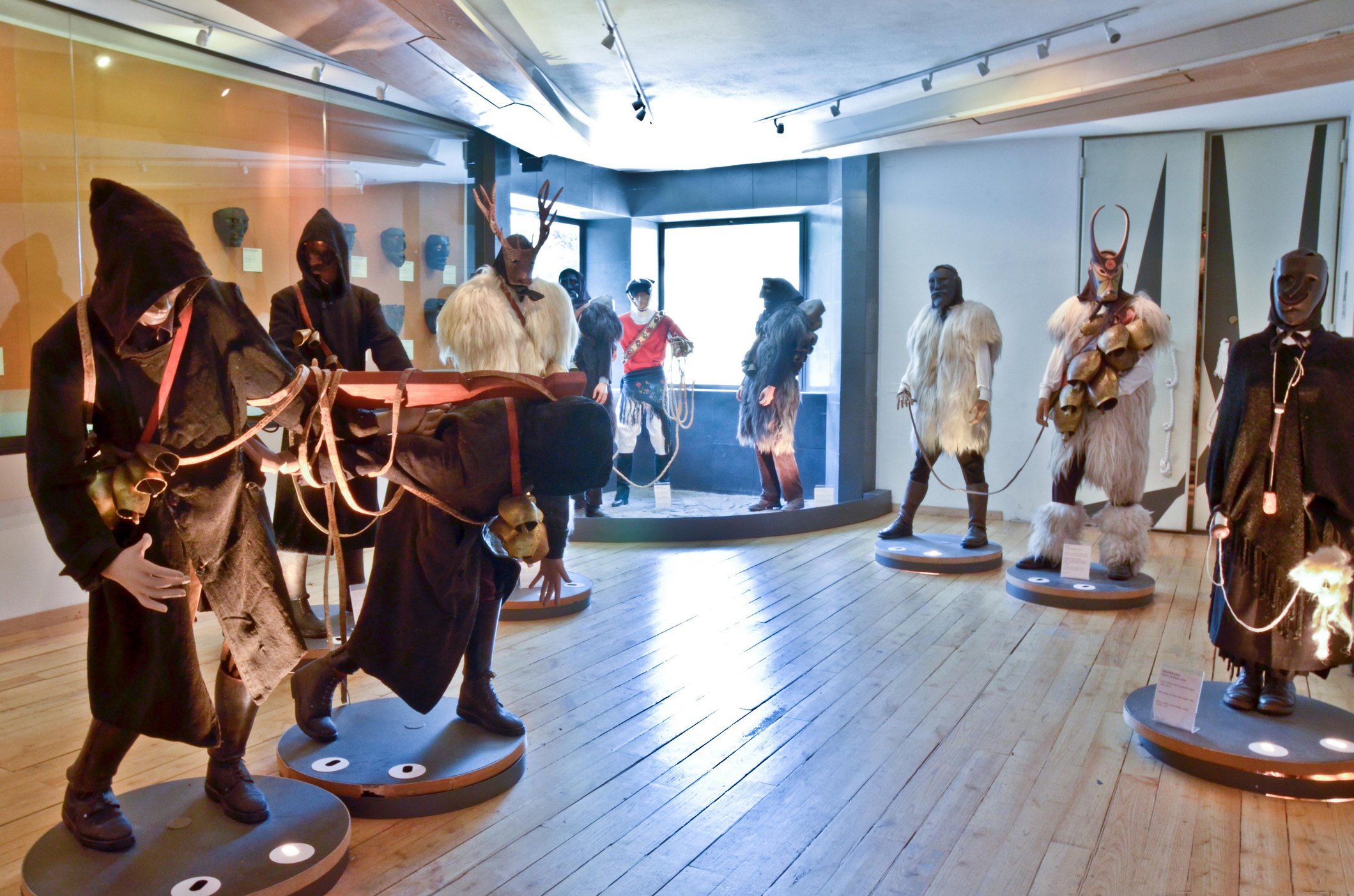
Museum of mediterranean masks
A point of contact between Sardinian traditions and other Mediterranean regions represented by the carnival masks and revealed in a unique place of culture, the only one of its kind. The Museum of Mediterranean Masks in Mamoiada, a village in the Nuoro area in the centre of the island, famous throughout the world for Mamuthones and Issohadores (traditional carnival masks), focuses on the common origin of the island's rituals, particularly those in the Barbagia area and those typical of other civilizations from more or less nearby lands, bathed by the same sea.
The museum focuses on the widespread use of wooden masks worn on the face, with animal and grotesque forms, as well as sheepskin and ram's skin, cowbells and other objects that make deafening sounds. In the rural and pastoral community, these costumes were thought to have influence over the fate of the agricultural year: despite their frightful appearance, their long-awaited visit was welcome and was seen as a chance to make them propitious, by offering them food and wine.
The museum will allow you to gain deeper knowledge of the local identity, starting with the local Mamuthones and Issohadores masks, and compare their affinity and similarity with artefacts from the different countries of the Mediterranean. Your visit will begin with images, texts and sounds, which recount interpretations offered regarding the origin of the Mamuthones. The pièce de resistance is the most ancient mask of Mamuthone, possibly dating back to the first few years of the nineteenth century. The Barbagia Carnival room will introduce you to a series of masks from central Sardinia: Boes, Merdules and Filonzana from Ottana and Thurpos from Orotelli. The third space, the Mediterranean room, is dedicated to carnivals in the Alps and the Iberian and Balkan peninsulas: you will discover affinities with the Sardinian ones.
Once your cultural experience in Mamoiada has ended with a visit to the house-museum, thanks to the museum guides, you can take trips to artisan workshops, nearby archaeological sites, to the Supramonte area and to the murals of Orgosolo.

Roccia dell'orso
According to Victor Bérard, a writer and scholar of Homer, Capo d'Orso is the only place in the Mediterranean identifiable as being the 'land of the Laestrygonians', the giant cannibals who were the protagonists of the 10th book of the Odyssey and who inflicted serious defeats and forced Ulysses' desperate escape. The hero of the tale disembarked here, near the spring of Arcacia ('of the bear'), in search of food and water for the crew, which went onto become the local population's “feast". An aura of legend surrounds the cape before the La Maddalena Archipelago National Park, taking its name from a spectacular natural sculpture that extraordinarily resembles the shape of a bear seemingly nodding towards the sea. It is the Roccia dell’Orso ('Bear Rock'), a natural monument visited by thousands of hikers. It stands on a granite elevation, being over 120 metres in height, watching over the nearby village of Palau, a renowned tourist resort nestled in a cove in northern Gallura, close to the Costa Smeralda.
It is located just over five kilometres from the village, reached by a half-kilometre panoramic path - of which around ten minutes is slightly uphill - setting out from the fort of Capo d'Orso, one of the many 18th-century military fortifications of Palau, including the battalions of Monte Altura and Talmone. The promontory offers a view over the entire park of the archipelago, also being associated with the area surrounding nature's work of art, one of the most special rock formations in all of Italy. The granite rock, “carved” over millions of years by the atmospheric agents, is smoothed, seemingly dug out from the surface, with a characteristic yellow-pinkish hue.
The promontorium arcti ('bear promontory') has been known of since time immemorial. The shape of the bear was first noted by sailors in ancient times, with its name remaining unchanged since this time. The first historical attestation comes from the Greek geographer Ptolemy (2nd century AD) who, in addition to providing coordinates, tells of the fear that the Rock Bear induced in sailors due to being able to attract ships “like a great magnet". It is not by chance that the stretch of sea before it contains numerous cargo ship wrecks hailing from various periods in time, confirming the intense commercial traffic throughout this area. The rock has always been a point of reference, being clearly visible from the sea and mentioned in the Portolan Charts, for the sailors who happened to venture off the coasts of Gallura and Bocche di Bonifacio.
The territory of Capo d'Orso is also interesting from an archaeological point of view due to the presence of several tombs in tafoni and a lithic industry from the Neolithic age. The Nuraghe Luchìa and Li Mizzani and Sajacciu Tombs of Giants are the other most famous sites within the Palau territory, where life revolves around tourism and the harbour, from where you can set out on a hike through the park. Granite promontories and sandy stretches alternate from one end of the coast to the other, such as that of La Sciumara ('outlet' in the Gallurese language) and the picturesque coastline with the Nordic atmosphere of Porto Faro. Near the port are L'Isolotto, a cove of fine white sand, and Palau Vecchio, a beach bordered by a pine forest, from where the Trenino Verde ('Green Train') sets out towards the innermost areas of Gallura. Continuing to the west, facing the island of Santo Stefano, the village of Porto Rafael unveils an exclusive and luxurious side of the area. Its most famous bay is Cala Inglese, known as the “Porto Rafael pool”. Extending nearby is the white stretch of Costa Serena. Then there is the indomitable beauty of Punta Sardegna and the exotic features of Cala Trana, nestled amongst the dunes, granite rocks, junipers and lentisks, being characterised by pinkish sand. To be found in the direction of Santa Teresa Gallura is the paradise of Isuledda or Isola dei Gabbiani. In fact, this is a peninsula joined to the mainland by an isthmus surrounded by the turquoise sea. Fanning out within the 'sandy stretch' are the Arenaria beach on one side and on the other, Porto Pollo - a dazzling beach ever caressed by the wind and the Sardinian town famed for funboarding, windsurfing and kitesurfing. Extending before the surfers' paradise is the Isolotto Cavalli and, in the distance, the beautiful La Maddalena islands of Spargi and Budelli.
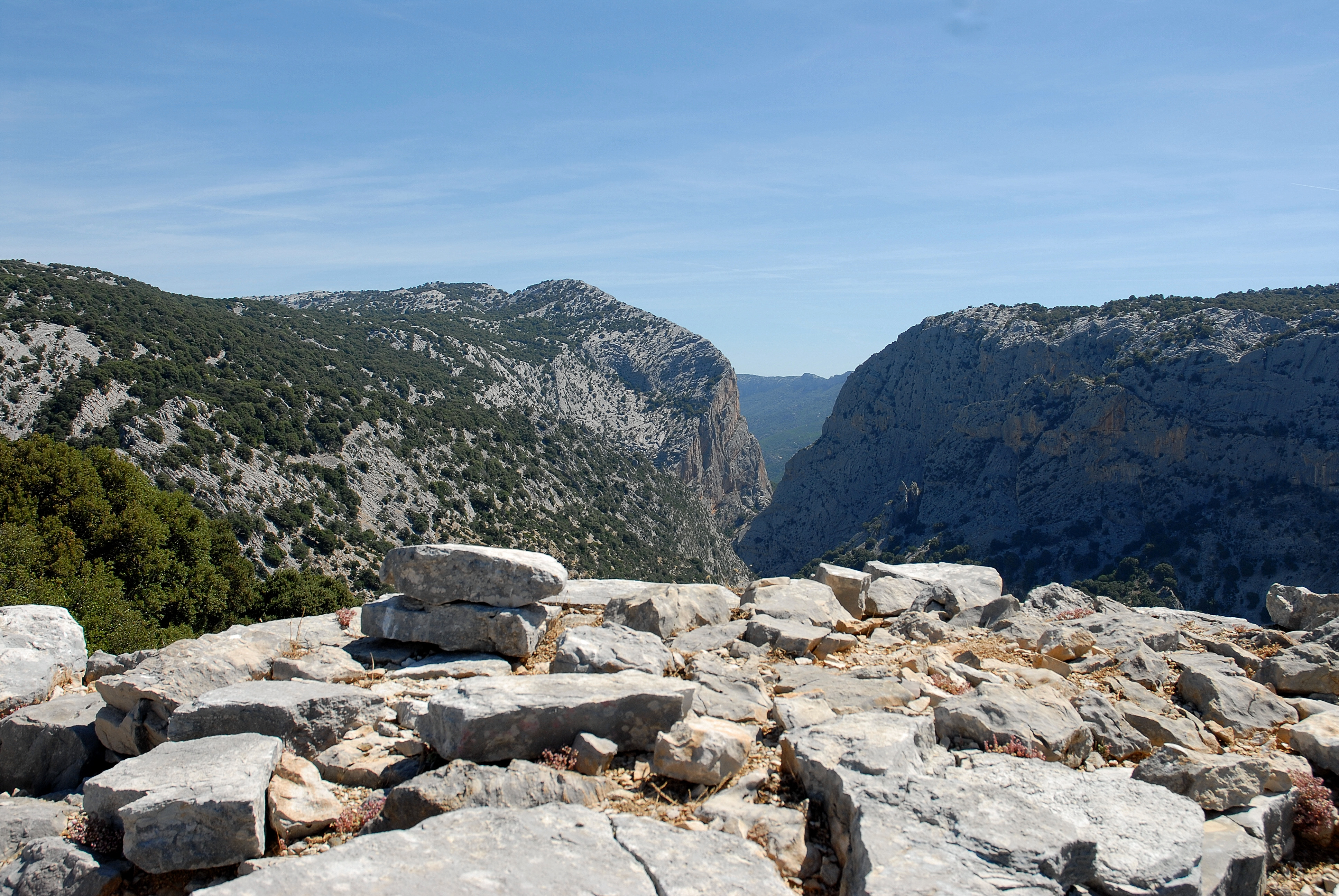
Gorropu
It is the most spectacular canyon in Europe and it is also one of the deepest: while driving down the eastern coast of Sardinia, you really must stop to visit it. Gorropu (or Gorroppu) is a gorge, created from erosion and located in the Supramonte area, between the territories of Orgosolo (Nuoro) and Urzulei (Ogliastra). It has been shaped over time by the force of the Rio Flumineddu rivulet that flows along its bed, at a depth of 500 metres. The width of the gorge varies from a few dozen metres to just four meters. You can reach it, departing from the Gorropu base camp, on the promontory of Su Cungiadeddu (altitude of 830 metres): in five minutes, you will be at the Genna Sìlana pass. From here, you can admire a unique landscape: from the Supramonte areas of Urzulei, Orgosolo, Oliena and Dorgali to Gennargentu and, on clear days, as far as Baronìa. It is the wildest territory on the Island: if you want to tackle its trails, place your trust in local hiking companies and equip yourself with technical equipment. The landscape is marked with long còdule - limestone gullies that sometimes stretch to the sea - narrow gorges and deep sinkholes, caves and ponors, cliff faces and peaks of over a thousand metres high. The area is covered with spectacular juniper trees, thousand-year-old yew trees, holm oak forests and Mediterranean species (among which oleanders and broom), is the habitat of typical Sardinian wildlife, like the golden eagle and the mouflon. There are also prehistoric remains: Nuragic villages and towers and Tombs of Giants, which blend into the environment and are positioned to watch over the territory.
You can reach the gorge along the Sedda ar Baccas-Gorroputrekking trail 'for experts', which is twelve kilometres long (in approximately three hours). Alternatively, you can leave Dorgali, crossing the valley of Oddoene (by car) until you reach the s'Abba Arvabridge and, from here, you can continue on foot for two hours, along a stretch of the Flumineddu river and the southeastern side of Mount Oddeu. These territories were the place of Sardinian resistance for centuries: the rulers had a difficult time here, as this was the area most hostile to Roman militia (Cicero's montes insani). The unusual nature of the place has generated legends: one tells us that, from the narrowest point of the gorge, where the vertical rock faces are over 450 metres high, you could see the stars in broad daylight. Or, it is said that the magical flowers of the 'male fern' bloom by night: only the bravest and greatest experts can pick them.
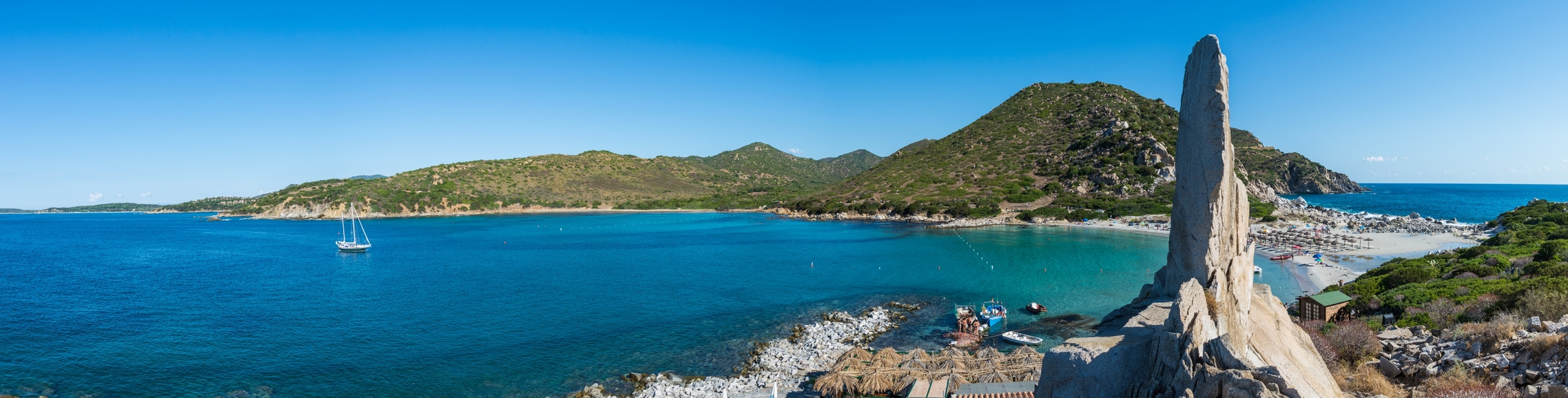
An Island park to be explored
An unusual and `unobtrusive' approach to Sardinia. A journey, or several journeys, through parks and marine protected areas, inside which, in any period of the year, you can do some trekking, cycling and horse-riding along the beach, take kayak or boat trips in the emerald green waters or dive down to see the breathtaking seabeds. Sardinia is an island - park: five marine areas over nearly 80 thousand hectares of unspoilt and 'protected' territory, where you will experience the strong emotions of itineraries on which you will discover nature, culture, food and wine.
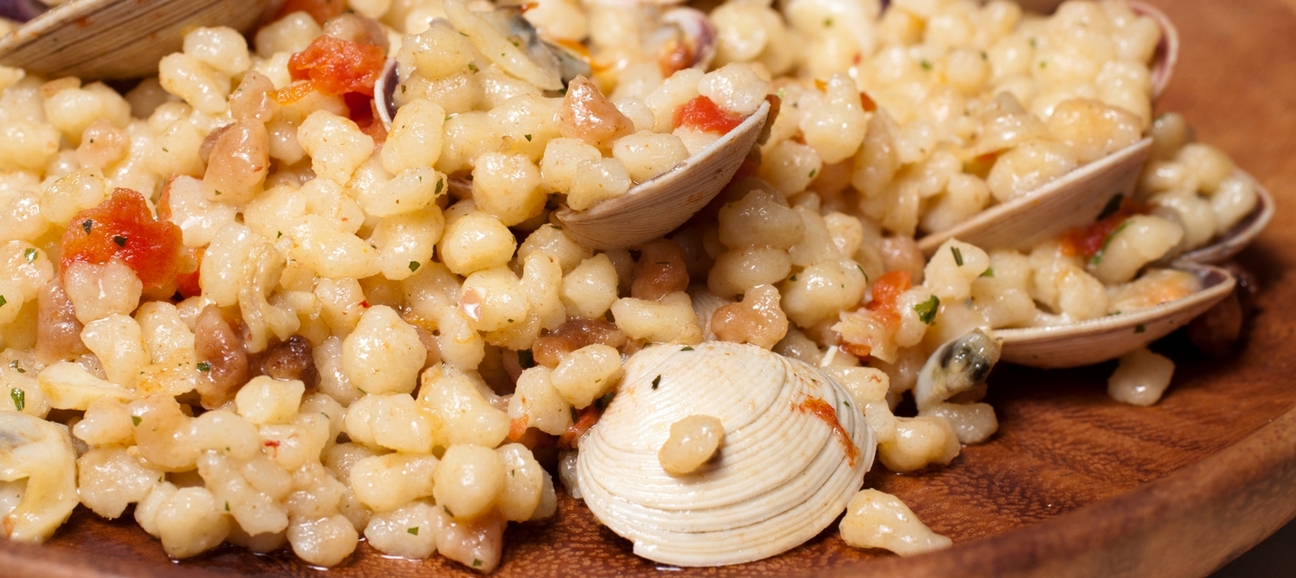
Sardinian cuisine, identity and flavour
Food tells the story of a territory: very few places in the world can boast food is as authentic as that in Sardinia. The quality of the products and the preparation and flavour of the dishes are values that go beyond their tastiness and are the heritage of thousands of years of history. Sardinian cuisine is still very similar to the way it was many centuries ago, while differing between the various territories and preparation techniques. Whether on the coast or inland, Sardinia's delicious specialities, based on simple and genuine ingredients, with strong yet delicate flavours, never fail to amaze you.