
Sa Lhopasa
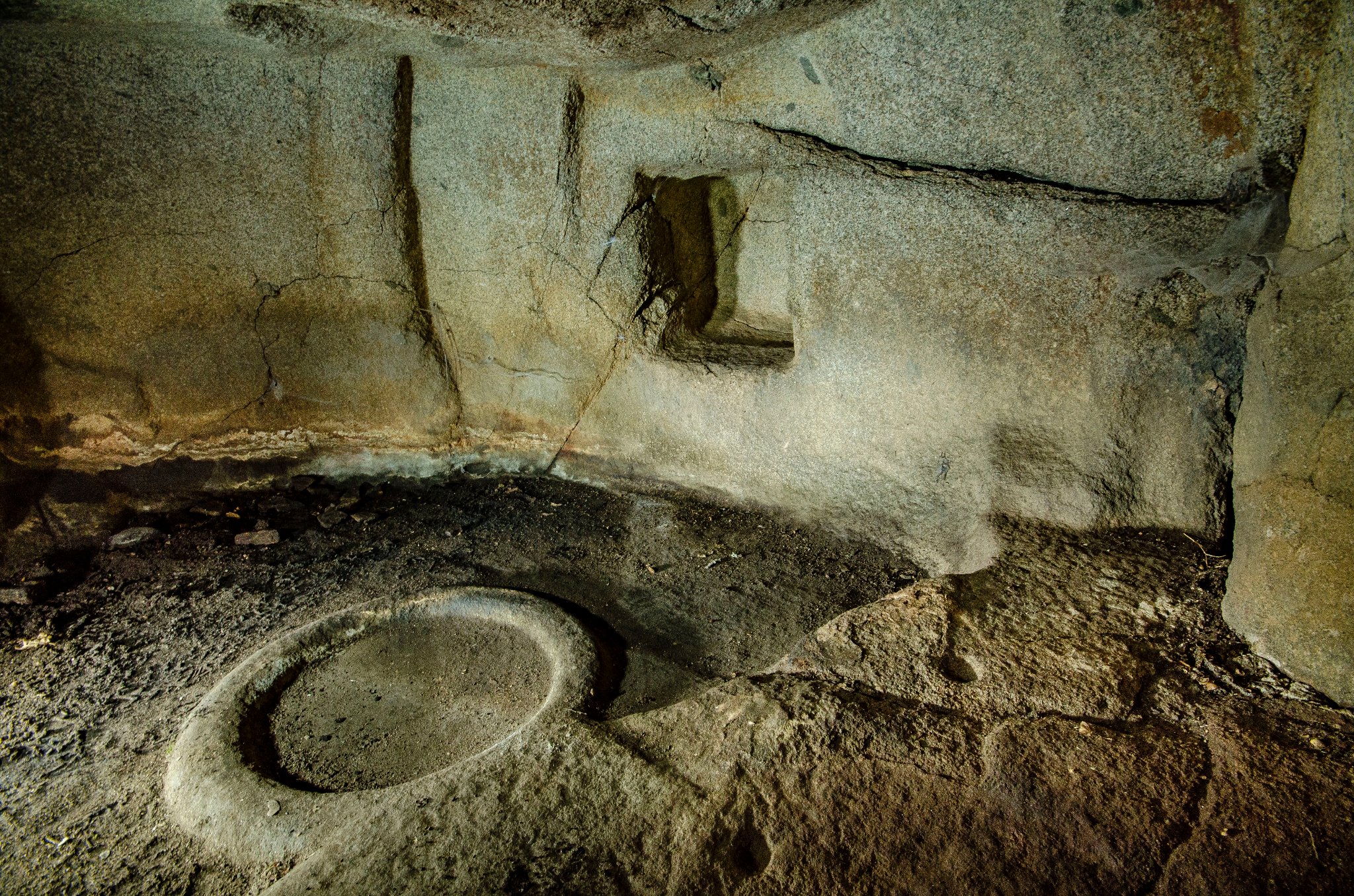
As soon as you come across it, set in the greenery of a holm oak forest, you will really think it seems like a house populated by fairies. The Domus de Janas of sa Lhopasa is located five kilometres from the village of Orgosolo, dug into a spur of granite rock and consisting of two rooms, the anteroom and the main cell. You can go into the tomb through a trapezoidal entrance, which leads to a quadrangular room. Traces of red ochre paint still remain on the side walls, under the ceiling. In the one on the left, there is also a bas-relief, perhaps belonging to a pilaster strip that was later destroyed. The main room, with a rectangular layout and a height greater than its depth, is on the opposite side to the entrance. You will notice that the walls and ceiling seem more finished in some places than in others, where they seem barely rough-hewn: it’s possible that the decoration of the domus was never completed.
The most surprising element of the cell is the circular hearth in the centre of the floor. It has a listel with rounded edges and boasts an unusual feature: it merges with a sort of platform saved on the rock, on which four cupules with a diameter of a few centimetres have been created. On the back wall, along with further traces of red paint, you will see a rectangular niche. A baetylic semi-pillar appears inside it, made as a bas-relief, most likely linked to the sacred and religious function of the room. For some, it represents a male symbol linked to reproduction and rebirth, in contrast with the funereal nature of the place.
The first three and a half kilometres of the route to sa Lhopasa coincides with a stretch of road that has become a devotional path leading to a heartfelt pilgrimage destination over time. In fact, the place of martyrdom of the blessed Antonia Mesina, who defended her chastity to the death and also became a symbol against wickedness and abuse, is located in Ovadduthai. An ever-increasing number of visitors pay homage to the very young martyr, taking the opportunity to admire the famous murals that embellish the village streets and then explore the natural and archaeological beauty of the Supramonte of Orgosolo. The climb to the panoramic Monte Novo San Giovanni is captivating and not excessively tiring. Equally enchanting are the sinkhole of su Suercone, the canyon of Gorropu, one of the deepest in Europe, and the forest of Montes, within which the ‘white’ nuraghe Mereu lies.
San Paolo eremita - Monti
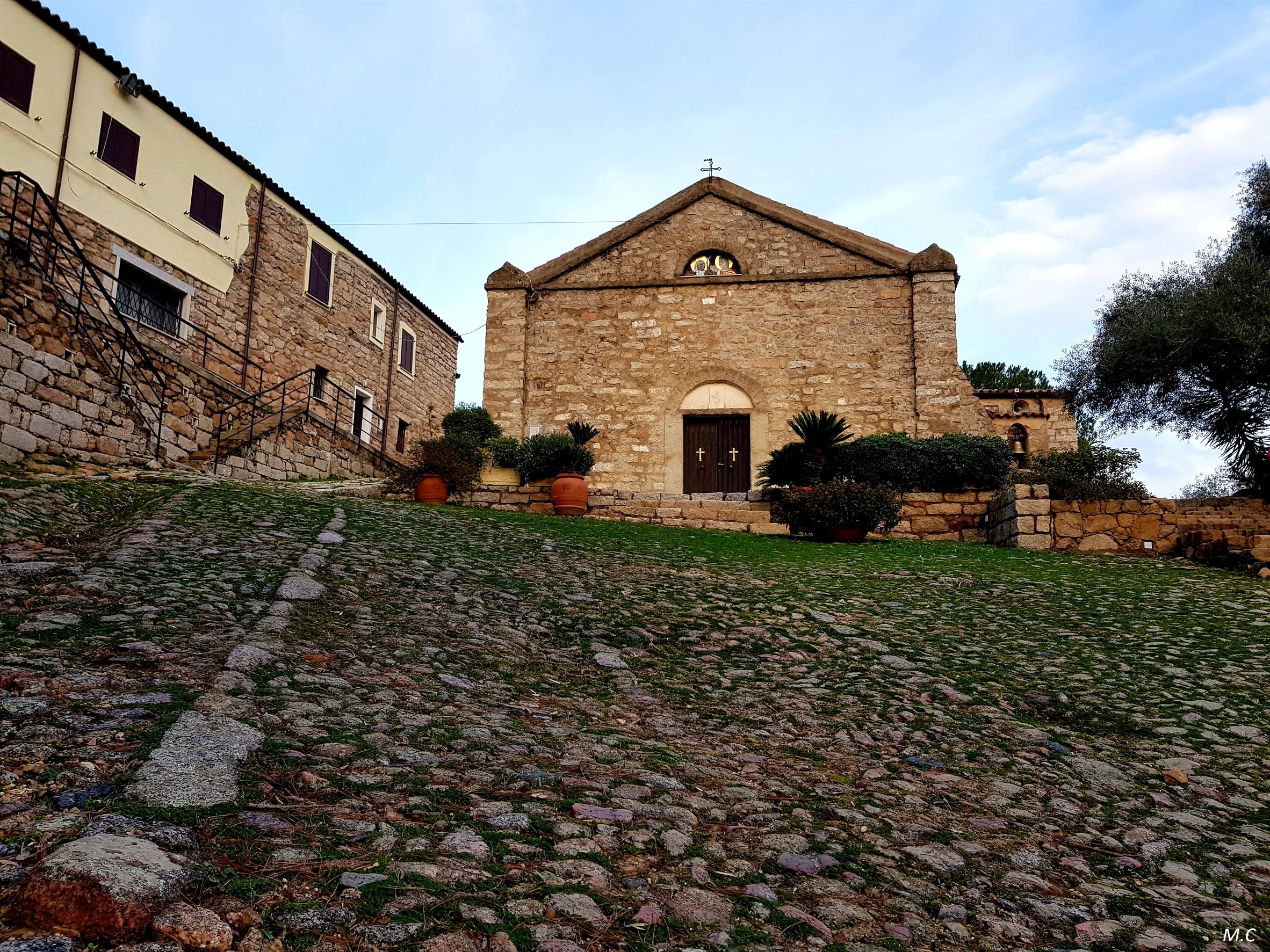
It is one of the most venerated places of worship in the north of the island, visited every year by numerous worshippers from Gallura, Baronia and Barbagia, some of whom are the protagonists of a night-time pilgrimage. The Sanctuary of San Paolo Eremita is located in the territory of Monti, about twelve kilometres from the town centre. Its origins are documented thanks to a parchment found in the altar, indicating the date of its consecration, 31 July, 1348, in the presence of the bishops of Bisarcio and Castro. The present-day building is the result of reconstruction that took place in various phases between the 18th and early 20th centuries. The sources also mention a monastery. It is not known which order it belonged to and there are no traces of it to date. Although the liturgical celebration of Saint Paul of Thebes is in January, local tradition placed the festivities in mid-August, before Cabudannu, that is September - the beginning of the agricultural year - as a good omen for the harvest.
The building stands on top of a granite outcrop, surrounded by Mediterranean greenery. In fact, the exposed ashlars with which it was built are made of granite. The façade is gabled, while it has a single-nave layout, with a barrel vault. Inside, you will see two columns from the Roman era on the sides of the altar and, on the wall behind it, the statue of the saint to whom it is dedicated. Next to the church are the ancient and recently-restored cumbessias, where pilgrims from the surrounding areas could stay and who were also accommodated by artisans, merchants and nougat makers.
Numerous miracles are attributed to Saint Paul and legends linger around the sanctuary: it is said that it was built by a bandit who was seriously injured, following the healing and conversion performed by the saint. It is no coincidence that, during the 19th century, it was frequented by fugitives from the area, who were granted a period of pardon during the celebration, allowing them to meet their families. According to another story, the citizens of Alghero tried several times, during the night, to bring the ancient statue of the saint to their town, as the artefact seems to have been of Catalan origin. In the morning, the statue always magically returned to its niche. The current simulacrum dates back to the 20th century. On Easter Monday it is carried in a procession to the Parish Church of San Gavino and it then returns, eight days later, accompanied by a torchlight procession. One of the most heartfelt pilgrimages sets off from Olbia, in the first half of September, at 3 o’clock in the morning, to reach the sanctuary in the late morning, after having travelled about 20 kilometres. The main celebration, however, takes place around Ferragosto, on 15 August, and it is also an opportunity to taste Vermentino wine, a product of which Monti is one of the ‘capitals’.

Discovering thousands of years of history on foot
Slow steps, curious eyes filled with splendour and a serene soul eager for emotions... this is the way to walk through the little villages and the unspoilt nature of Sardinia, lost in an atmosphere of purity and relaxation, far from crowds and confusion. It is the intimate and authentic face of a legendary land, where you can clearly see the material and other traces left behind by historical events and by religious men that, after hundreds or even thousands of years, continue to arouse the intense devotion of walkers, pilgrims and visitors to those places. Legends, traditional rituals, knowledge linked to nature, art and food inevitably intertwine with the ancestral evidence left behind. In the wake and in the footsteps of saints and martyrs, ancient and modern, you will discover situations where past and present coexist in a time that seems to be standing still and you will be welcomed by communities for whom hospitality is sacrosanct.
Giants’ Tomb of Coddu Vecchiu
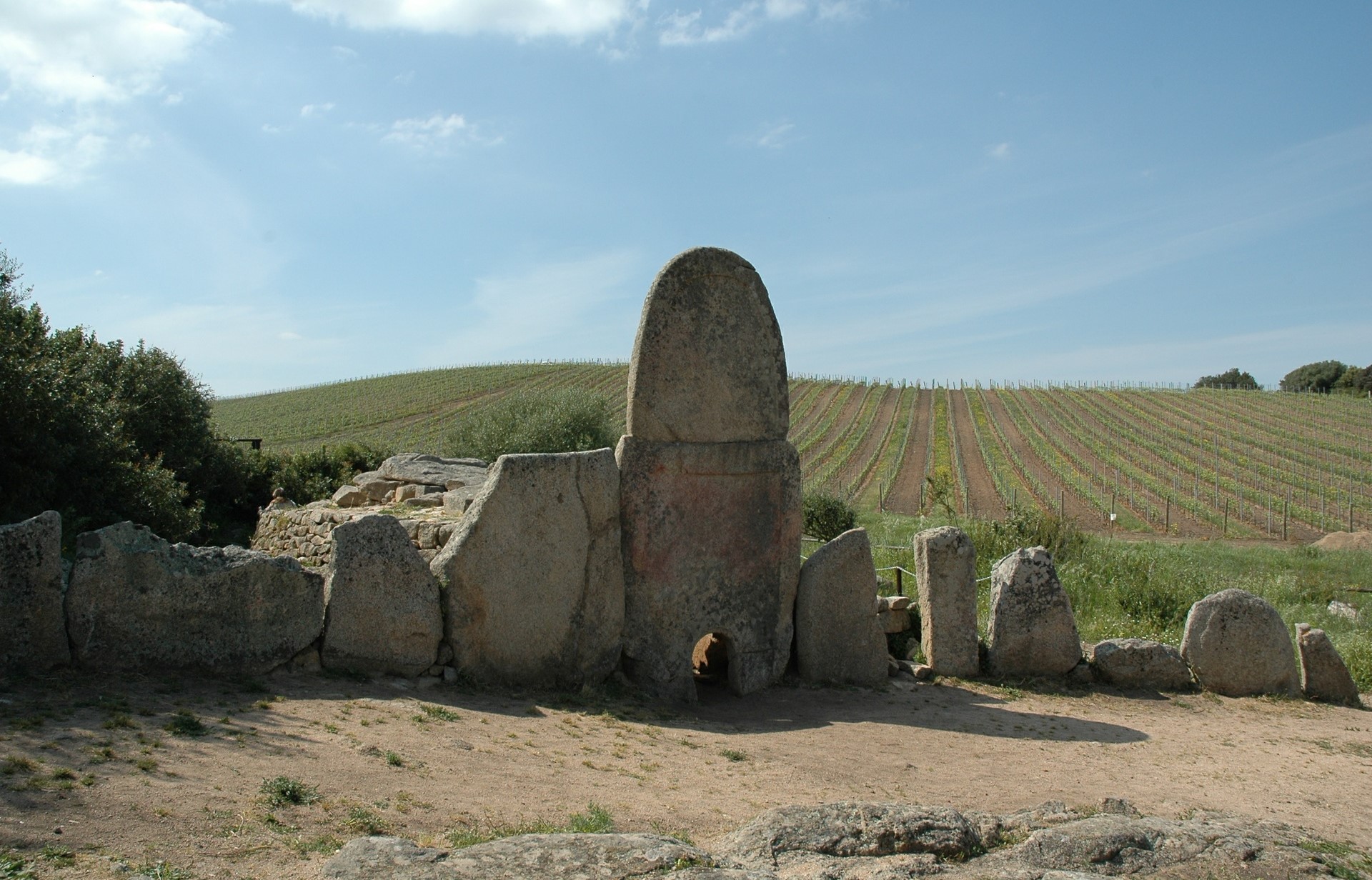
It bears witness to the evolution of the building techniques used on the prehistoric tombs and contains what many consider to be the highest ‘façade’ known to date among the Sardinian megalithic tombs. It is located a short distance from one of the most important Nuragic settlements in Gallura, for which it may have served as a ‘cemetery’. The Giants’ Tomb of Coddu Vecchiu – also known as Coddu Vecchju or ‘Ecchju – is located in the territory of Arzachena, in the locality of Capichera, just 700 metres from the La Prisgiona nuraghe. Built from local granite, it was originally a tunnel tomb, of the allée couverte type. The first construction phase probably dates back to the Early Bronze Age, around the 18th century BC. Later on, during the Middle Bronze Age - that is, between the 16th and 14th centuries BC. -, the tomb was ‘transformed’ into a Giants’ Tomb, with the addition of the front exedra and the curved stele, of an exceptional size: with its four metres, it is considered the tallest on the island.
The front is semicircular and made with orthostatic stone slabs, meaning fixed into the ground. You will notice that their height decreases towards the ends, while the stele stands out in the centre and is made of two overlapping slabs, both decorated with a raised frame. At the base of the lower slab, there is a door that leads to the tomb corridor. The room has a rectangular layout and is about nine metres long, with a paved floor. The internal surface is made up of slabs laid on edge, with rows of stones running above them, the function of which is to support the flat arch slabs that form the roof. The external surface is also made up of rows of medium-sized stones. Everything, during the tomb’s period of ‘activity’, was covered by a mound of earth and stones. During the excavations, grave goods were found, including pans, bowls, pots and rolling dishes with engraved decorations.
About 200 metres from the tomb, a few rows of the Demuro single-tower nuraghe can still be seen. Then, heading south-east, you can visit one of the most fascinating Bronze Age complexes in Sardinia, made up of a nuraghe and the village of La Prisgiona. The main building consists of a keep and two side towers connected by a bastion and surrounded by a wall. Outside, there were about a hundred huts, with living areas, storehouses and artisan ‘workshops’. The archaeological remains in the area are surrounded by hills covered in Mediterranean scrub and vineyards. The area is, in fact, renowned for the production of Vermentino grapes, from which the only DOCG wine in Sardinia is obtained. You can enjoy it as an accompaniment to tasty Gallura cuisine, or as an aperitif after a day in the sun on the enchanting Costa Smeralda beaches.

Nuraghe Ruinas
It stands on the slopes of Gennargentu, at an altitude of about 1200 metres, asserting itself as one of the ‘highest’ Bronze Age settlements in Sardinia. Furthermore, the traces of the village that surrounds it tell a story steeped in legend. The nuraghe Ruinas is ‘immersed’ in a mountainous landscape in Arzana, not far from woods, waterfalls and springs. Orruinas – as it is called by the people of Arzana – must have been a particularly important settlement: in addition to the nuraghe, it also has a Giants’ Tomb, (perhaps) a sacred well and above all a vast village of which around 200 huts can be seen today, although it is assumed that there were originally many more of them. The nuraghe has a trefoil layout, with about 8 and a half metres of the height of the keep still standing and the tholos roof of the main chamber still remains, while to the left of the entrance you will see the staircase that led to the upper room, which later collapsed.
The towers on the sides show signs of renovation work: in one of them, the main room was ‘sacrificed’ to allow the construction of a boundary wall, while a small room was saved, from which there is a staircase that led both to the upper floor and to a walkway on the curtain wall that connected two towers. Between the bastion and the keep you will notice the courtyard, with an irregular layout.
The village extended around the nuraghe, with mainly circular structures and a rectangular building, which some interpret as a meeting hut, given its considerable size of twenty metres by thirty. A few hundred metres north of the nuraghe are the remains of the Giants’ Tomb of reference of the village. The settlement has yielded numerous artefacts, among which a bronze statue, 12 centimetres tall with its arms outstretched in front of it, stands out. Some findings have been dated back to the Imperial age, thereby testifying to continued human presence at least until a historical period that may even have been medieval. In fact, there is a legend linked to the village of Ruinas, according to which it existed until the beginning of the 15th century, only to be abandoned due to an epidemic of the plague. Its inhabitants are said to have been accommodated in Arzana, in the Preda 'e Maore district, and therefore the territory in which the site is located, over 30 kilometres from the inhabited area, was ‘claimed’ by the Ogliastra village.
Visiting Orruinas is an opportunity to combine archaeology and outdoor activities: a trekking trail of about seven kilometres starts from the site and heads north, reaching Punta la Marmora, the top of Gennargentu and the highest peak in Sardinia. During the journey, you will see ancient sheepfolds and animals in the wild, until you find yourself gazing at spectacular landscapes and enjoying a unique view.
Forest of Niala
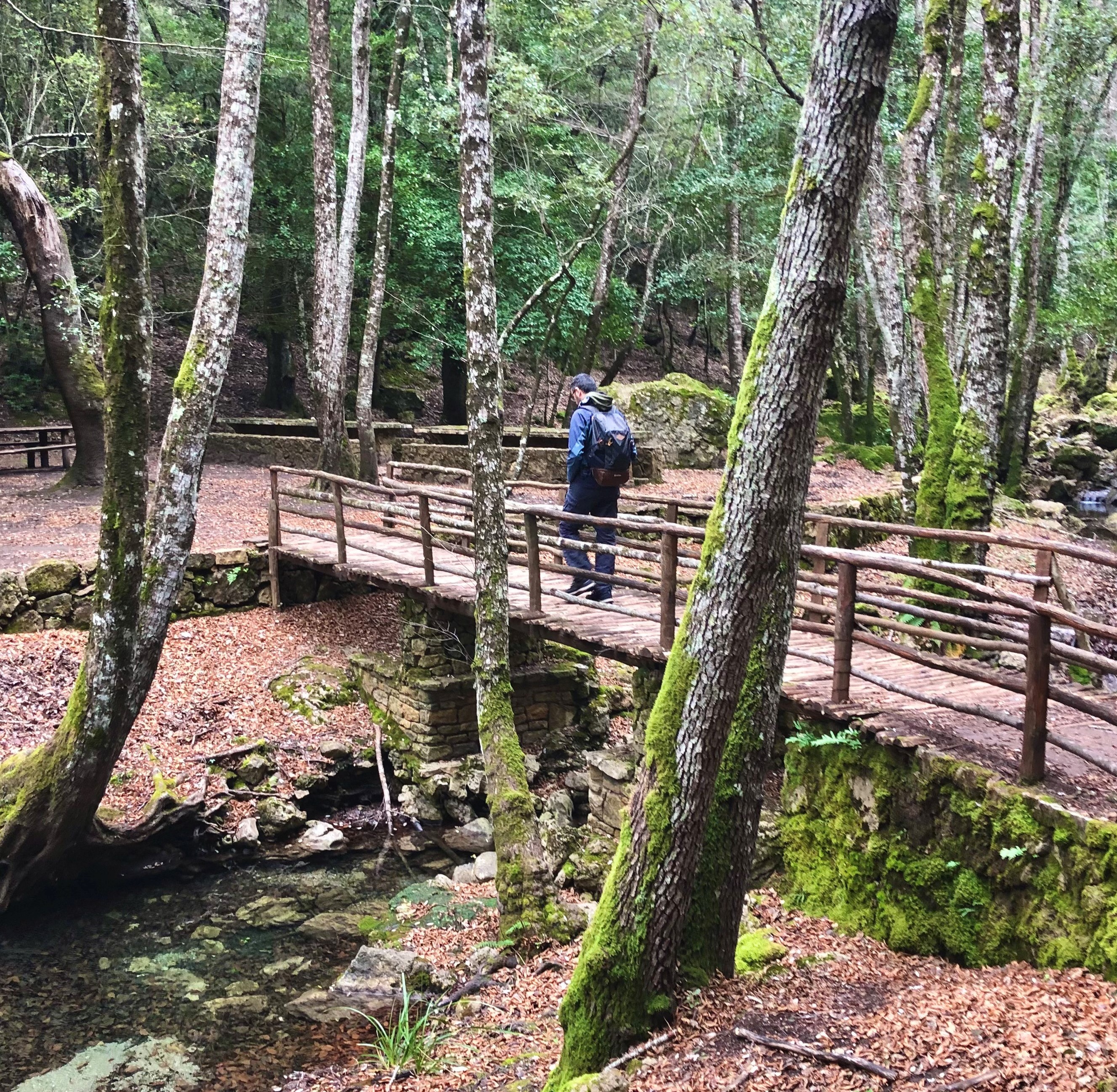
Those who visit it, cannot help but describe it with just one adjective: enchanted. The Niala forest, in the territory of Ussassai, next to the state-owned forest of Montarbu, is an oasis set in nature and full of attractions: lush expanses of holm oaks and Mediterranean scrub are crossed by torrents that generate waterfalls. The natural pools of Tuvu Nieddu, stand out and, during the hot season, you can enjoy a refreshing swim here. In springtime, you can admire several paths as they turn pink, thanks to the peonies in bloom.
Niala can be reached via various routes with a view of the distinctive ‘buttes’ of Ogliastra, including the Italia trail, along the Z20 section. Otherwise, you can get there from the Sentiero delle Aquile (Path of the Eagles) - to the west of Gairo Taquisara -, crossing through is Tostoinus, a place where you can admire a picturesque cuile, a small stone bridge and the remains of a Nuragic village. Part of the forest is crossed by railway tracks where, until recently, the Trenino Verde (Green Train) travelled along the Mandas – Arbatax stretch, so coming across a little station is no surprise, after which you can take a look at the fascinating bridge of Irtzioni, also called the San Girolamo bridge, from the name of the place in which it is located. It is an iron structure dating back to the late 19th century, considered by many to be one of the most distinctive features of the entire network that the little ‘trenino’ tourist train travels along.
Not far from the bridge, you’ll find a resting area, embellished by an installation, created by the artist Pinuccio Sciola: it is made up of ‘balls’, rocky spheres lying near a spring and a small lake. Here, there are also some rock arches and a few karstic cavities. One of the caves of Niala is called the ‘cave of the Madonna’, due to the shape of a rocky protrusion inside it, which brings to mind a Madonna with Child.
From the Niala forest you can carry on until you come to the Montarbu forest, through the forestry base of Taccu Mannu. In the most downstream part, the paths run through Mediterranean greenery, surrounded by strawberry trees, junipers and mastic trees. Montarbu is also a wildlife oasis, inhabited by deer, wild boars, foxes, squirrels, fallow deer and mouflons.
The immense natural heritage is the pride of Ussassai and so is the residential area. An excellent opportunity to visit it, is the apple festival in October, when the apple variety typical of the village, the trempa orrubia, or ‘red cheek'’ apple, is celebrated. You will be able to taste typical dishes such as culurgiones cun sa mècuda and is coccois prenas. Last stop is Trebigei, seven kilometres from the town, where the Romanesque sanctuary of San Salvatore stands, surrounded by stone cumbessias (dwellings for pilgrims).
Piscina Irgas
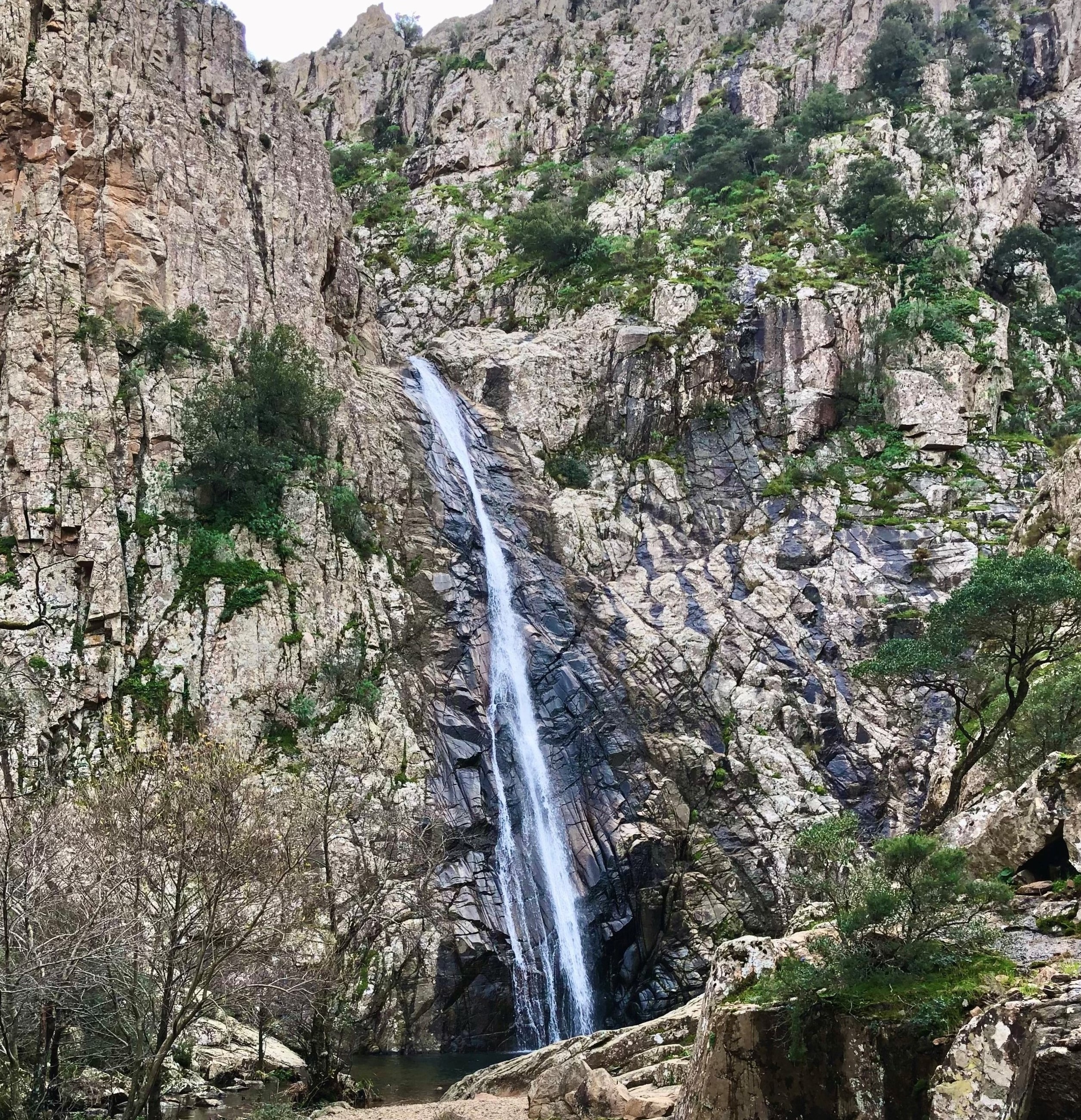
It’s hard to say which is more thrilling: the trail to reach it or actually seeing it once you get there. What is sure, however, is that to ‘conquer’ it you’ll enjoy an experience you’ll not soon forget. Piscina Irgas is one of three majestic waterfalls that furrow the granite rock faces at parco di Monte Linas – Oridda – Marganai, one of which, together with sa Spendula, lies within the borders of Villacidro, while the third, the highest, Muru Mannu, falls within the domain of Gonnosfanadiga. The waterfall is a preferred destination of enthusiasts of a variety of sports: hiking, canyoning and mountain biking, and it can be reached from diverse starting points.
Hikers generally set off at the entrance ‘gate’ of the Montimannu forest, some 15km from Villacidro, or from sa Duchessa, in the area of Domusnovas. The first trail bears the red/white banner marking CAI 113, which you’ll see all along the route. You’ll walk through an oak forest and cross to the other side of the Cannisoni river over a metal bridge, then hike up to the belvedere, at an altitude of some 600 mt. From here you can see Piscina Irgas from above in all its glory, not to mention the mountains of the Marganai massif and, further down, the gorge carved by the Oridda river. The walk continues downhill from here to the base of the waterfall not far away. The 45mt leap of the waterfall splashes into a lovely little emerald-green lake. The second trail passes through abandoned mining areas, towards the Oridda Valley, partly following – in the opposite direction – a section of route 11 of the Cammino minerario di Santa Barbara. An upwards section along the left bank of the Oridda river will take you to the top and another panoramic vista point, from which you can view, and hear, the waterfall from above. The trail, which is also marked with small stone figurines, will lead you down to the base of the fall. You can walk both trails – one going, the other returning – to create a 10km long ring walk.
Piscina Irgas, one of the first of Sardinia’s cascades to be equipped for canyoning, is now a favourite of those practising that sport, nestled in a gorgeous setting and blessed with plenty of fresh water. The route continues beyond the waterfall with fun smaller drops and pools. Mountain bike enthusiasts can set off along a trail which goes westward from the Campu s’Isca forest nursery to Bega Trotta point, and then northwards along the Oridda plains, and from there to the Piscina Irgas belvedere, then downwards along the Leni river back to the trailhead. The initial portion of the 113 CAI trail coincides with the route to get to Muru Mannu, which, with its 70mt drop, is Sardinia’s tallest waterfall! Closer to the village of Villacidro, and easy to reach, is sa Spendula, surrounded by a lovely park.

Masks up!
They have nothing to do with the revised and reinterpreted traditions... the masks of Sardinia and their rituals linked to Carnival have their roots in the mists of time. While elsewhere the period preceding the awakening of nature is experienced as a moment of unanimous joy, the climate of the ‘carnivals’ here is bittersweet, just like it was originally: primordial fears, the power of Nature, death and the Afterlife, the divine and the supernatural. The masks are made of wood, carved by highly skilled ‘masters’. They have also maintained their superstitious symbolism intact and it is said that it is good luck to have one in your home. You can find them in the artistic handicraft shops and in the little shops of sos maistos in Mamoiada, Orani, Oristano and Ottana, some of the most famous places that have preserved and handed down their ancient use intact.
Molara
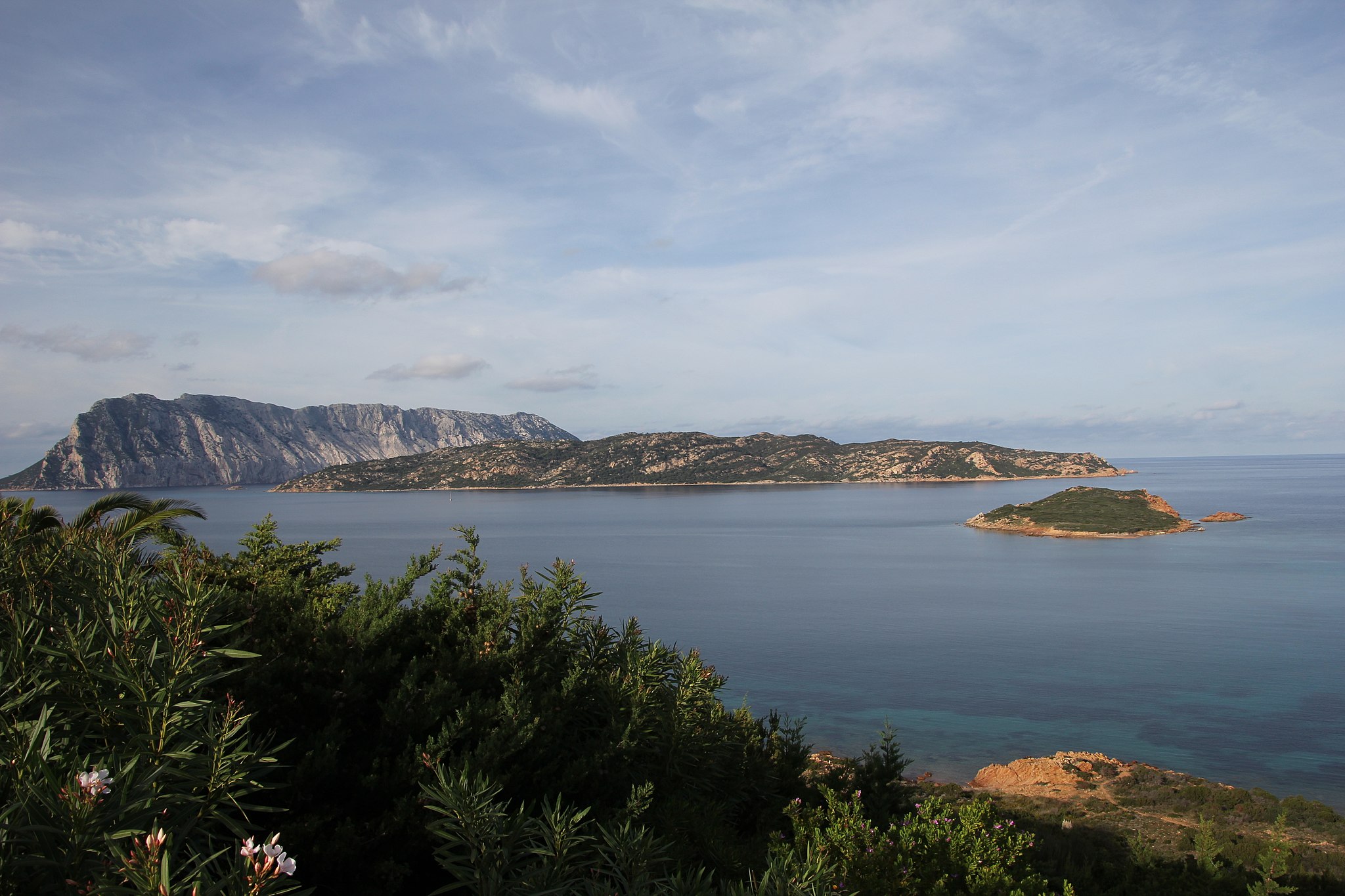
Here and there, it still contains traces of ancient human presence, but today it is above all an uncontaminated haven made of granite and covered in Mediterranean greenery, immersed in the enchanting Gallura sea. Molara is one of the islands within the perimeter of the protected marine area of Tavolara – Capo Coda Cavallo, the second largest after Tavolara. It differs from its more famous ‘neighbour’ in its composition, as Tavolara is predominantly limestone, its shape and because it is uninhabited. Its name is of medieval origin and probably comes from its rounded and basically even appearance, like that of a millstone. The ruins on the island are surrounded by an aura of legend: the remains of a single-nave church may be traced back to a sanctuary dedicated to Saint Ponziano, who is said to have been exiled here by Maximinus Thrax. Around it, there are traces of a medieval settlement and a castle, while some sources testify to the presence of a convent during the 15th century.
As well as its historical aspects, Molara stands out for its natural heritage. There are examples of cows and goats living here in the wild and the Audouin's gull and peregrine falcon nest here. Among the plant species, along with wild olives and lentisks, native plants thrive here, like the Sardinian Asteroideae and the Limonium Acutifolium. In the southwestern part you can go for a dip in the spectacular Molara pools, ‘mirrors’ of turquoise crystal clear water surrounded by granite rocks, also ideal for snorkelling. The waters around Molara are a destination for diving enthusiasts: about a mile south of the island, at a depth of 40 metres, lies the ‘shipwreck of Molara’, which was recently identified as the French merchant ship Oued Yquem. In 1941, the ship was hit, perhaps by mistake, by a Dutch submarine, while en route to the port of Marseilles. When on board, divers can observe groupers, snappers, amberjacks and sea bream, as well as colourful sponges.
You can reach Molara, without missing a chance to stop at the little Cala Spagnola, from Olbia, Porto San Paolo, Capo Coda Cavallo and from Marina di Puntaldia. The excursions also make it possible to sail around the smaller islands in the protected area: Molarotto, Proratora, the Islands of Piana and Cavalli, as well as the tiny islands of Porri, Topi, Drago and the islet of Rosso. A stop at Tavolara is a must. This limestone and granite mountain emerges from the sea, with an unmistakable profile, and hosts the Una Notte in Italia (A Night in Italy) film festival every year. You’ll find little houses, refreshment areas, several beaches and fabulous diving spots here. Among these, to the east, there is the Secca del Papa.

The Santa Barbara Cammino mine trail, history and devotion
The tower, site of the martyrdom of Saint Barbara, is the symbol of and marks, with yellow on blue, the 500 km route of the Santa Barbara mine Cammino. It is to her that the miners prayed before going down into the darkness of the pits, well aware of the grave risks and hardship. Yet they loved and felt the natural beauty and spiritual charm of these places as their own, proud of the hard, sometimes inhumane labour that was their only hope for a future for their families. The mine also employed women and children, in food halls or in post-extraction activities. Hundreds of people lived in communities in the villages that sprung up around the pits and tunnels, self-sufficient islands in a wild and spectacular setting, with emergency medical aid, schools, shops and, of course, chapels that were always open to welcome the heartfelt appeals of the miners to their patron saint.