

You write “September”, but you read “sea”
So far, there has been an explosion of presences and entertainment on Sardinia’s beaches. Now, however, the more seductive sea is making its début and the season will have a sensational finale. Once the hot, crowded intoxicating days become a thing of the past, you can enjoy the beautiful sea from sunrise to sunset, under the sun and in the water, still as warm as during the summer. And now, in the newly-found silence of the immense expanses of sand and secluded coves, all you will hear are the waves breaking on the shore and the vibrato sound of the cicadas perched throughout the juniper and myrtle scrubland. You can’t escape the happy combination of hints of tropical nature and coarse Mediterranean authenticity: this is the Sardinian sea in autumn.

Longonsardo tower
It is probably Gallura’s largest tower, most likely the most imposing one ever built on the island by the Spanish crown and is the symbol of Santa Teresa Gallura, together with the beach over which it watches. The Longonsardo tower stands on a promontory to the north-east of the town of Gallura, not far from where a castle once stood in the Middle Ages. It has a diameter of 19 metres at the base, some 16 in the upper cylindrical body, and a height of 11 metres. The building material used was, of course, granite, perhaps taken from the ruins of the manor. The tower was classified as de armas, or 'strong', built to house a garrison and heavy defence weapons.
It started appearing in documents in 1577, when it had become necessary to defend the harbour from attacks by Barbary pirates and the tower was built as part of a defensive strategy developed by King Filippo II, who instituted the “Royal administration of towers.” A surrounding wall was added, of which you can still see some remains, as well as a cistern for collecting rainwater. The entrance is six meters from the paved interior and will lead you to the fortified area, a domed room with a central pillar. On the right you’ll find the stairs that led to the parade ground.
The building was renovated towards the end of the 18th century when a domed crescent structure was built on the parade ground, with gun slits and rooms for the guards. At the northern end they put in a ravelin, a trapezoidal wall with barracks inside that included lodgings, ovens and a millstone. The tower was overtaken in 1802 when, led by a priest named Sanna Corda, a group of Sardinian and Corsican rioters conquered it. The occupation was short-lived and royal troops soon regained possession of it and captured the conspirators, all of whom ended up on the gallows. After the Royal administration of Towers was closed down, Longosardo was demilitarised although, for a short time during the Second World War, it was used to garrison a parachute regiment. Today it is open to visitors eager to learn about its fascinating history, and now and again it is used as a venue for gala and cultural events.
From its top at 40 metres above the sea, you will enjoy breathtaking views of Bocche di Bonifacio and the island of Corsica. If you look down to the left, you’ll be dazzled by the whiteness of Rena Bianca beach, Santa Teresa’s town beach. White sand with pink hues, the sea glittering with colours that span from blue to emerald green, and cliffs make this corner of Sardinia a must-visit on par with the gorgeous attractions of Capo Testa: the ‘twin’ beaches Rena di Ponente and Rena di Levante, Cala Spinosa and Cala Grande - Valle della Luna. Three kilometres to the south-west you can journey back in time to the Nuragic age of Lu Brandali. Nestled in Mediterranean brush, it is a fascinating complex with a nuraghe, village and Giants’ tomb.
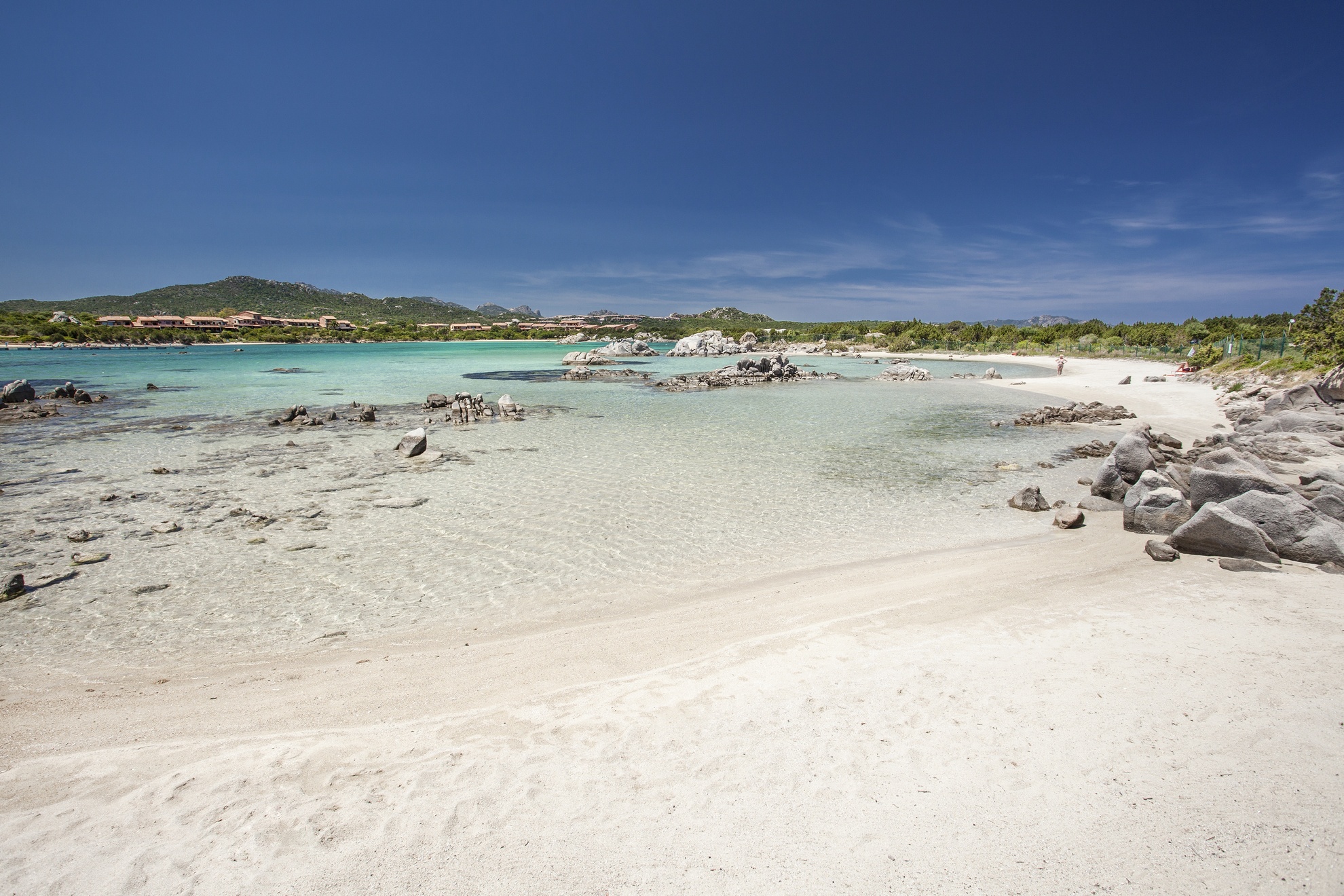
Baia de Bahas
They are often called ‘pools’, because of the unreal transparency of the water, though they are really coves that open up in succession along the eastern side of the Gulf of Marinella. The small beaches, positioned in an arch shape, form the de Bahas Bay, five kilometres to the west of Golfo Aranci in the direction of Porto Rotondo. You will be struck by the soft, medium-grained amber-coloured sand and the emerald green colours of the sea, also the result of the reflection of sun’s rays on the ‘carpet’ of Mediterranean vegetation all around. White rocks emerging from the water and granite rocks dotted across the beach and delimiting the borders of the various coves complete the picture.
On the left-hand side, there is a tourist port with a pier. It is the only ‘artificial’ aspect of the bay, which is otherwise completely free and unspoilt, making it an ideal place for a total immersion in nature. The shallow waters and shelter from the winds make it suitable for families with children, while diving and snorkelling enthusiasts will appreciate the rich plant life and fish fauna, especially on the eastern side and around the rocks. The panorama in front is enhanced by the view of the Islands of Soffi and Mortorio in the distance.
The southwestern corner of the Gulf of Marinella is occupied by the beach of the same name, which, unlike those of Bahas, extends uninterruptedly for more than a kilometre and is characterised by white sand. It shares the colour of the sea and the shallow waters with the bay. You will find various services here: parking, refreshment areas, beach equipment rentals and even a windsurfing school. Behind the beach, on the right side, stands the small seaside village of Marinella, equipped with a tourist port. Between the Bay of Bahas and Marinella, Punta Marana juts out into the sea and is a promontory dotted with coves and inlets, including the crescent-shaped beach of Cala Marana.
Golfo Aranci has 24 beaches, all worth visiting, starting from the Five ‘City’ Beaches and proceeding towards Olbia, with the enchanting and well-equipped Spiaggia Bianca (White Beach) and Cala Sassari, as far as Sos Aranzos, ‘tinged’ with the white of the granite rocks and the turquoise colour of the sea. In Capo Figari, which is rich in historical evidence, the jewels are Cala Moresca, Cala Greca and Cala del Sonno, while a little further east of the Gulf of Marinella, the picture-postcard landscape of Cala Sabina awaits you. It can also be reached by train and is ideal for exciting diving and nature walks in the surroundings.
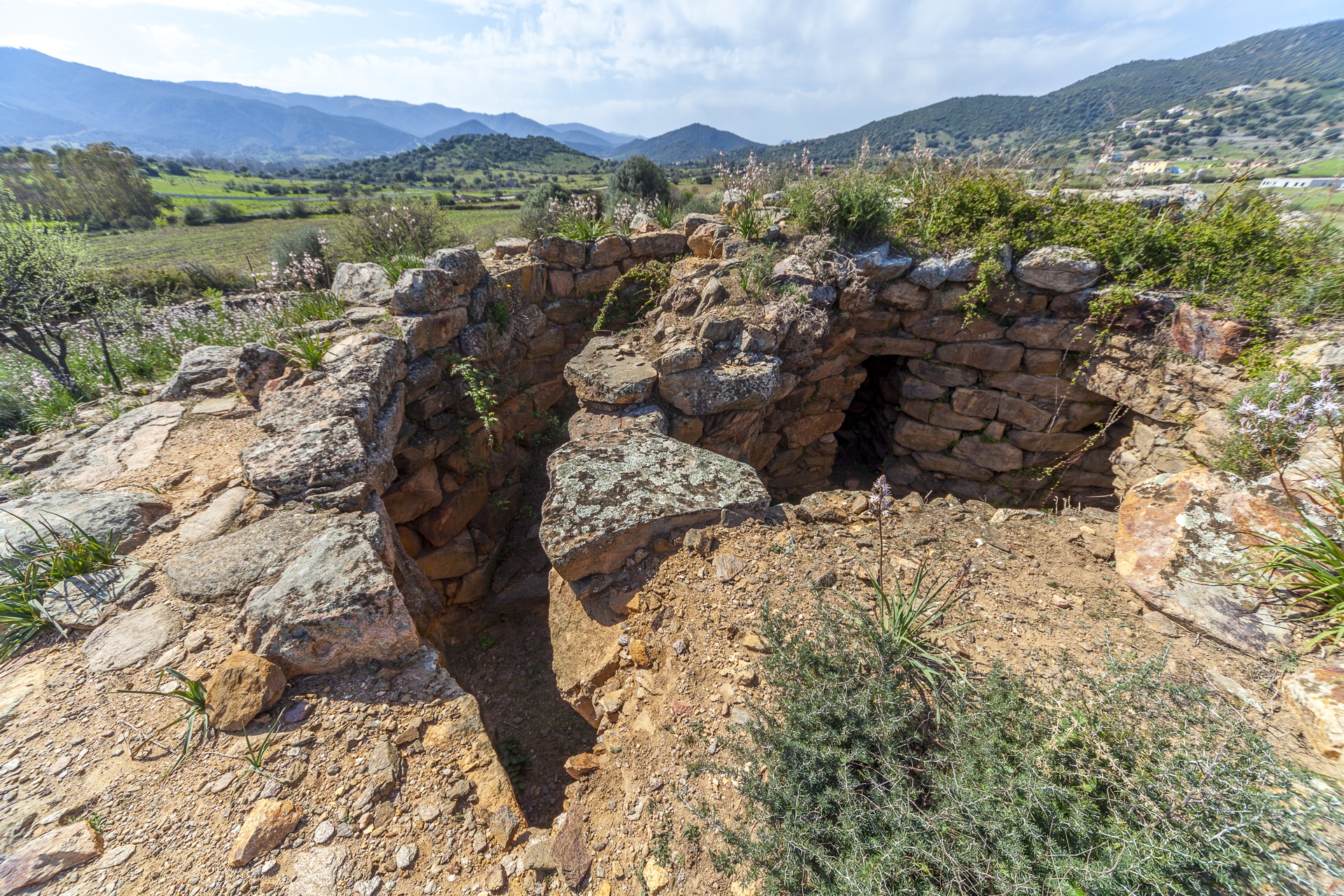
Nuraghe San Pietro - Torpè
It was most probably created on a previous Pre-Nuragic building, after which, for almost two thousand years, Nuragic and Ancient Roman populations gravitated around it, inhabiting a fertile plain crossed by the Posada river, which is now part of the Oasis of Tepilora area. The nuraghe San Pietro stands in the locality of the same name, three kilometres from Torpè, a few hundred metres from the river bed. It is a quatrefoiled building, with a central keep - perhaps older than the rest of the building – constructed using large blocks of trachyte, positioned in rows with the addition of shims. The lateral towers, on the other hand, were built using schist blocks. The main tower has a rectangular entrance, over which there is a flat arch, and it is south-facing. The external diameter is approximately 14 metres. Inside, you will see a sentry box and a spiral staircase leading to the terrace. Moving along the corridor, you will come to the central chamber, with three niches positioned in the form of a cross.
The building has an irregularly shaped courtyard, inside which you will notice a funnel-shaped well. During the last excavation campaign, a circular room emerged next to the keep: at the base, along the circumference, runs a counter on which a large number of objects were found, including pots, bowls and pans, evidence of the trading that took place on the site. In the centre of the room, there is a hearth, with rounded stones around the edges. The south-west tower has recovered the most evidence of the long period during which the site was frequented and, in fact, the finds range from the Early Bronze Age – particularly linked to the Bonnannaro culture, between the 19th and 17th centuries BC –, to the Imperial Age, up to the 4th-5th century AD. It is the only tower of the nuraghe that shows traces of Roman occupation: around the 2nd century AD, it was used as a granary, but broad beans, wood and cork were also stored there. Fifty metres south of the fortress, you can see traces of other buildings. It is a building complex originally made up of Nuragic huts, later reused in Roman times and, in turn, a quadrangular construction, perhaps medieval, was built on top of it.
The Torpè territory combines archaeology with nature: in fact, part of it falls within the Regional Park of the Oasis of Tepilora that, with its almost eight thousand hectares, contains a myriad of different landscapes, including granite plateaus, forests, ponds, springs and waterways. Inside it, you can enjoy numerous outdoor activities, including trekking, mountain bike excursions and kayaking along the Posada river.
Sa Domu 'e s'Orcu - Domusnovas
According to popular beliefs, the ‘houses of the ogres’ were inhabited by evil creatures and demonic spirits. Rumours that may have already been around in the early Christian era, to highlight the pagan aspect of the people who built them, are still useful for preventing children from venturing inside them today. The name is recurrent in several Domus de Janas – in Setzu and Siliqua -, in Giants’ Tombs, like the majestic tomb of Giara di Siddi, and in various nuraghi, including the one located just outside the village of Domusnovas. Sa Domu’e s’Orcu domusnovese is characterised by a large number of towers - nine, including the keep -, and by its position, at the foot of Mount Mannu, between the Marganai mountain chain and the Cixerri river plain. It is a complex nuraghe, with a central tower surrounded by a trilobate bastion, which encloses the courtyard, around which a rampart runs with five other towers. Limestone from the Marganai massif was used to build the monument.
Four and a half metres of the keep have been preserved, while the bastion is 17 metres long and its best-preserved parts reach a height of seven metres. In the external curtain wall you will notice the use of larger ashlars, positioned in rows that are more even than the rest of the building: it was most likely added at a later time. Therefore, the building must have been built in several phases: it is thought between the 17th and 11th centuries BC. In the corridor providing access to the room with an elliptical layout, on the right, there is a spiral staircase leading to the upper level.
One of the towers on the rampart contains a semicircular cell. Traces of the use of fire have been found on the walls of this cell. Smelting slag appears in some of the rooms in the courtyard and in the area around the building, near the remains of structures that have been interpreted as belonging to the village. These traces of metal processing most likely refer to the exploitation of the Marganai, deposits, where the mines remained active until the second half of the 20th century.
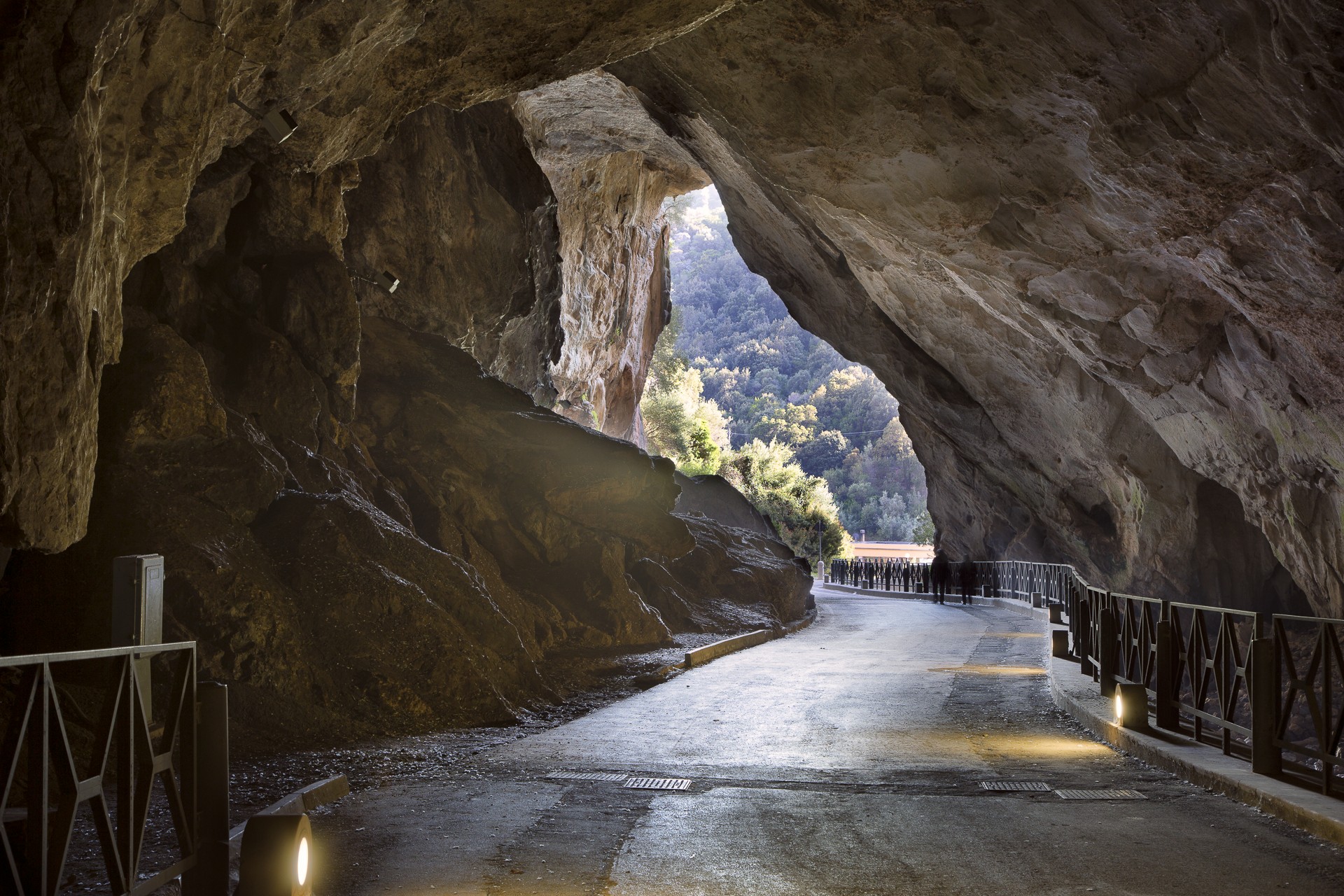
Just over two kilometres from the nuraghe, you can admire one of the longest natural tunnels in Europe, one of the very few to be crossed by a road: it is the cave of San Giovanni. It was carved out of the limestone by an underground river and, thanks to the lighting system, you will be able to admire its walls, which are rich in stalactites and stalagmites. All around, there are very ancient rocks - dating back to the early Palaeozoic era, 500 million years ago - and sheer cliffs, representing a destination for climbers from all over the world. Then, to the north, numerous paths branch out through the woods and next to abandoned mining sites in the Monte Linas-Oridda-Marganai park.

Archaeological park of Noddule
The first to appear are mysterious megalithic circles and then, almost in chronological order, there are other structures: the nuraghe emerges on top of a rocky outcrop; not far away, there are the surviving traces of a Giants’ Tomb and, lastly, the sacred area, with a spring that has a surprising feature. The Nuragic complex of Nòddule is located in the territory of Nuoro in the locality of su Linnamene, on the border of the Orune territory, in an area covered in granite rocks and cork oaks. The site was frequented from the 3rd millennium BC until Roman times, perhaps with a few sporadic periods of abandonment. Evidence of the pre-Nuragic phase are found in the megalithic walls and in two circles, made up of large granite rocks slightly spaced apart, the function of which is uncertain. It has been suggested that they represent a sort of prehistoric ‘calendar’, with the stones positioned according to the movement of the stars. When entering the complex, you will be ‘leaping’ forward in time as you explore the Nuragic monuments.
The nuraghe is a complex, trefoil one, surrounded by walls. You can enter the keep from the southern entrance, which leads to a corridor equipped with a bartizan. Just over four metres of the tower has been preserved and it has a diameter of about eight metres. A courtyard connects the two secondary towers. Next to the towers you will see traces of rectangular rooms: they were built with materials resulting from the collapse of the nuraghe in Roman or early medieval times. Then, around the nuraghe, you’ll see six Nuragic huts, the largest of which has a hearth in the centre.
The sacred area is located inside an enclosure containing several circular spaces and a spring. The well temple consists of a quadrangular vestibule with bench-seats and a cylindrical well that collected the water. Trachyte ashlars were used to create it and were positioned in even rows in the well, on the façade and in the tholos roof, where you will be amazed by the variety of colours in the ashlars and the decoration of the stone closing the building, with an eye-shaped hollow, almost as if the spring wanted to ‘observe’ its visitors. Beyond the settlement, but pertaining to it, you will see traces of a small Giants’ Tomb. It was built in rows, with large, well-squared granite ashlars. Many of them have been removed, but you can still identify the layout and the base rows of the funeral chamber and the exedra.
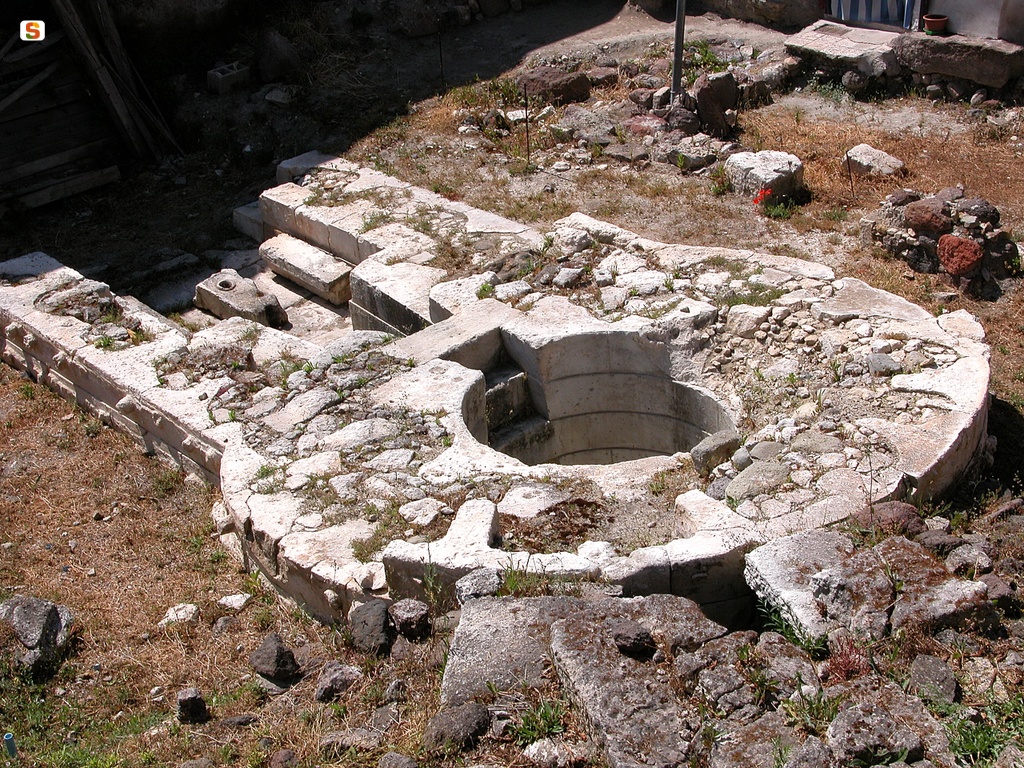
Predio Canopoli
It is one of the most refined examples of architecture linked to the worship of the waters from the Nuragic age, with incredibly precise measurements and geometries. The sacred well of Predio Canopoli is found in Perfugas, right in the town centre, and was discovered in 1924 by the owner of the land, from which the well got its name. The building is entirely made from limestone ashlars, probably from the Laerru quarries and worked with extreme care: there are no mortars or binders and the stones are laid dry, in blocks inserted with incredible precision, forming two walls connected by T-shaped or dovetailed ashlars. The building and installation of the blocks made using the opus isodomum technique bring to mind those of the well at the Sanctuary of Santa Cristina in Paulilatino. The hypogeic chamber has a truncated cone shape, it is paved and perfectly circular and has well-smoothed walls. The ceiling, which is missing, must have been a tholos (false dome) type. The room is preceded by a rectangular vestibule, which is also paved, with bench-seats, at the end of which there is a staircase with eight steps leading to the spring.
You will also notice that the ashlars of the thlobate of the well and the vestibule are bossages on the external side, with two protrusions per block: it is not clear whether this choice is aesthetic, symbolic - representing the horns of the bull - or simply practical, as the bossages would make it easier to handle and transport the ashlars. Around the area, there are traces of a fence made of trachyte blocks, built on the remains of a temple in antis. You will also see the remains of structures probably linked to the huts of a village. The dating of the temple is uncertain: some place it in the Middle Bronze Age (16th-14th century BC) and others suggest a later date, between the Recent and Final Bronze Age (13th-9th BC). The finds unearthed during the excavations have demonstrated that the site was frequented until the Middle Ages and a bronze votive offering, depicting a bull, stands out. The artefact, on display at the G. A. Sanna National Museum in Sassari, is considered one of the most elegant portrayals of bovines ever found in Sardinia. You can admire most of the findings from the well by visiting the Archaeological Palaeobotanical Museum of Perfugas, where there is an exhibition covering a period of time from the most ancient stone artefacts found so far on the Island - dating back to the Palaeolithic period - to medieval majolica from the churches around the Anglona village. On the subject of places of worship, a visit to the Parish Church of Santa Maria degli Angeli in Perfugas, right in front of the Predio Canopoli, is a must: the church contains the largest retable in Sardinia, dedicated to San Giorgio and created at the end of the 16th century. It is the work of an anonymous artist known as the Maestro of Perfugas.

Su Mulinu Vezzu
Its majesty, state of preservation and special construction features make it a unique place in Sardinia. The granite complex of Su Mulinu Vezzu is the only survivor of seven water mills operating on the Bisine river in the early 20th century. ‘The old mill’ is located less than a kilometre from Olzai and is surrounded by holm oaks, oaks, cork oaks and Mediterranean greenery. It is an impressive work of pre-industrial hydraulic engineering, built around the mid-19th century for the grinding of wheat and barley. You can admire a mill with a vertical waterwheel and its structure is divided into two complementary parts: the large wheel is between two high walls and drives the stone necessary for milling. Above it, embedded in the stone, a channel collects the water captured from the river through a stone and rock embankment. Thanks to the slope of the channel, the water falls onto the wheel, making it turn. The actual mill is inside the adjacent room.
Inside it, you will notice the stone floor and the wooden gears that activate the mechanism capable of setting the large grindstone in motion. The room also serves as a small museum, where typical milling objects and tools are on display. Flourishing agricultural activity was the basis of the economy of Olzai, the prosperity of which was also demonstrated by the high percentage of people with degrees between the end of the 19th and beginning of the 20th centuries. In 1921, a devastating flood swept away all the mills except the Vezzu, which nevertheless suffered serious damage and was abandoned. Between 2003 and 2004, the Municipality of Olzai took action to restore it. Today, the mill works and is activated for wheat milling demonstrations. A visit to the museum is also an opportunity to explore the Olzai landscapes. To the south-west of the town, stands Mount Gulana, a destination for trekking and mountain biking excursions, which has stone blocks on its summit: they are evidence of a castle, perhaps of Byzantine origin and the stage of fanciful legends. It is said that a treasure was hidden in the basement.
Olzai is the traditional destination for Autumn in Barbagia, an event during which you can taste the typical products of the area, admire the local artisans and observe su Mulinu Vezzu ‘at work’. The fourteenth-century Church of Santa Barbara is also worth a visit. Inside it, you will find the ‘Retablo della Pestilenza’, a work by an artist known as the Maestro d'Olzai.
Montiferru
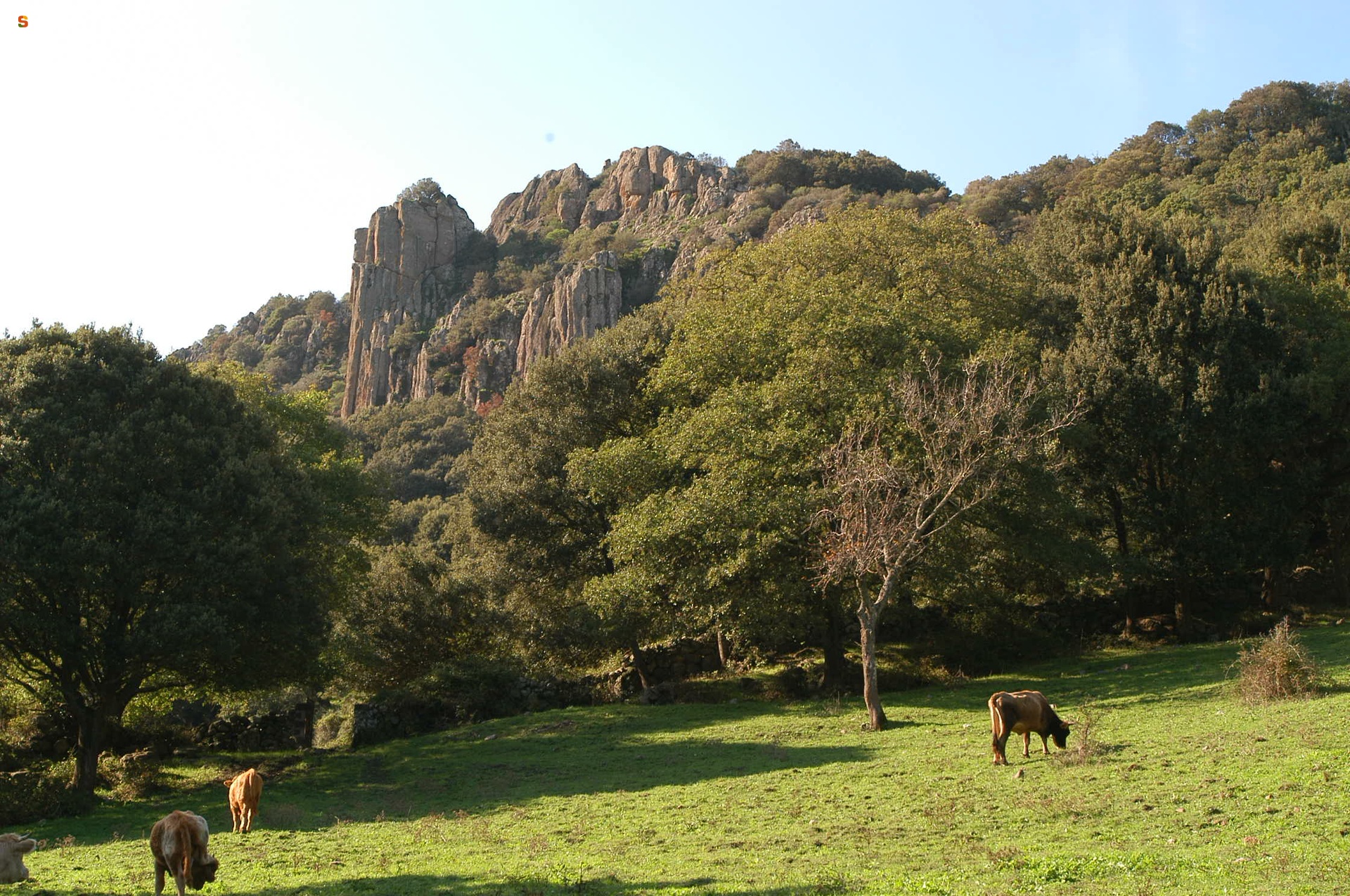
It is the largest volcanic complex on the Island and has a fascinating variety of landscapes, from sheer rock faces high up above the sea to slopes that gently descend towards the inland plateaus. In between, there are woods, springs, waterfalls, castles and archaeological treasures, as well as a wealth of wildlife. Montiferru is a massif with a perimeter extending into the territories of five municipalities: Bonarcado, Cuglieri, Santu Lussurgiu, Scano di Montiferro and Seneghe. Its morphology is the result of the volcano’s lava flows that occurred millions of years ago and ‘designed’ basaltic landscapes like the cliffs of the western coast and the eastern plateaus, including that of Abbasanta. The highest peak of the massif is Monte Urtigu, at 1050 metres: from its summit, on clear days, you can see both the island of Asinara to the north and Sella del Diavolo (Devil's Saddle) on the Cagliari coast.
The vegetation is dominated by holm oaks, but you will also see cork oaks, yew trees, holly and downy oaks. The massif is the habitat of wild boars, wild cats, foxes and a few mouflons, which have been reintroduced into the Pabarile area. The red ox is also bred in Montiferru. It is a species belonging to the Sardinian-Modicana breed. A circular route allows you to walk or cycle around the peaks of the complex, admiring breathtaking views, as your eyes move from the sea to the rocky ridges in no time. You can set off from Badde Urbara or from Elighes Uttiosos, walking on phonolites, which are called perdas sonadoras (sounding stones) here, and will emit sounds when you step on them. You will also pass by archaeological evidence, such as the single-tower nuraghe Ruju and the megalithic wall of Straderis or Giolza.
There is no lack of points of interest around its slopes: a few kilometres from Santu Lussurgiu lies San Leonardo di Siete Fuentes, a place where you can visit a village with an ancient church, immersed in a forest with springs of very pure water. On the border of Bonarcado, the spectacular waterfall of sos Molinos flows. It’s a fairy-tale place with a picturesque mill next to it. A real dive into the past awaits you a short distance from Santa Caterina di Pittinuri: here stand the ruins of the ancient city of Cornus, of Punic origin, and the settlement of Columbaris, the ‘heart’ of Christianity in the late Roman era. Along the coast there are ‘natural’ monuments for you to admire: s’Archittu, Cabu a limestone arch overlooking the beach of the same name, and, further north, the spectacular waterfall overlooking the sea of Cabu Nieddu. Among the ruins of Casteddu Ezzu, about 3 kilometres from Cuglieri, you can ‘dive’ into the medieval period of the Judicates, in an atmosphere of great charm and fascination.
Sirilò Archaeological park
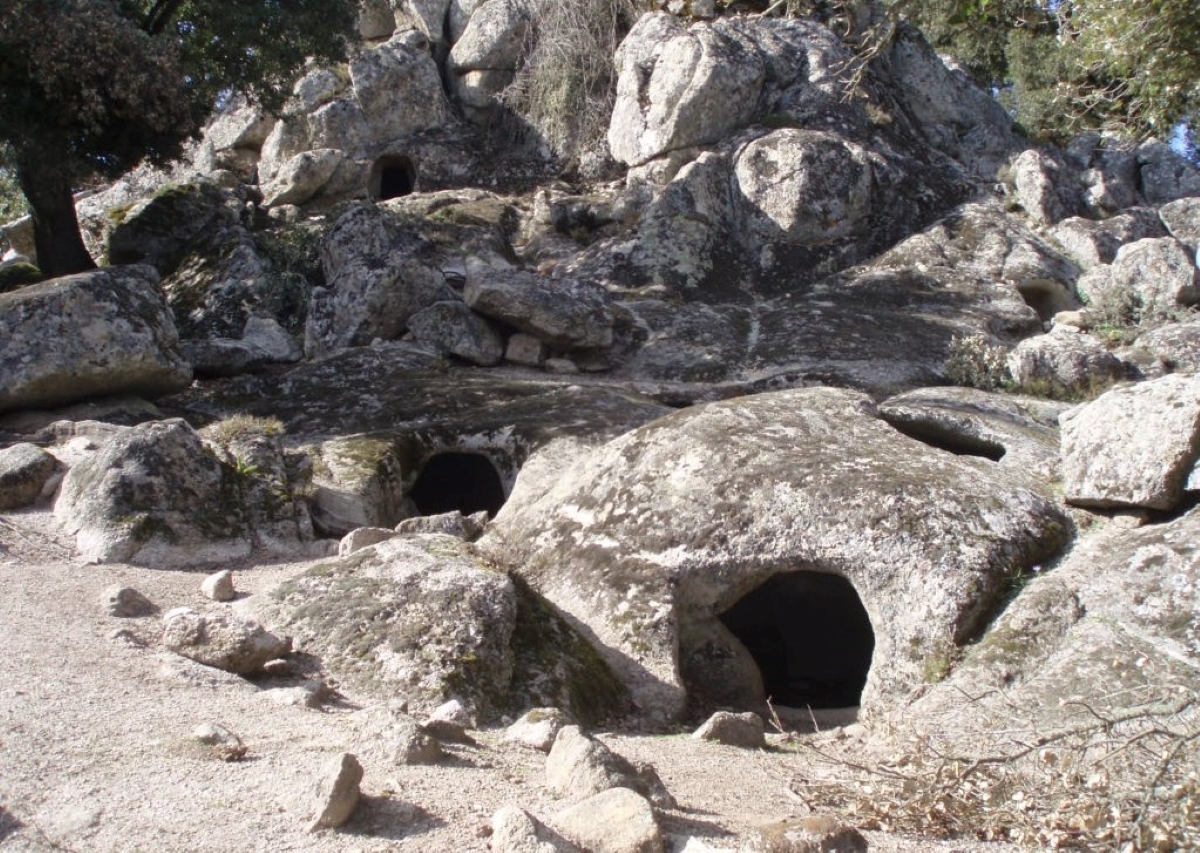
From the Neolithic to the Imperial Age, millennia crossed by eras, cultural phases and periods of encounters (and perhaps clashes) with peoples arriving from the sea. Sirilò is a settlement about four kilometres from Orgosolo, which occupies the peak and the slopes of a thousand-metre-high mountain. On the summit are the remains of a nuraghe, around which there is a village, various Domus de Janas – 13 have been identified so far -, a dolmen and an unusual temple that ‘incorporates’ another Domus. The first three rows of the Nuragic tower still remain: you will spot the trapezoidal entrance with an architrave still in situ. It was built using large granite blocks. From its position, you can enjoy a breathtaking 360-degree view: Supramonte di Oliena to the east, the Gennargentu massif to the south and to the west you can see Fonni, while to the north, beyond Orgosolo, the view opens onto Nuoro.
The village has about fifteen huts, already inhabited in the pre-Nuragic age. The necropolis dates back to the same period, with tombs that were dug out of the granite rock and a holm oak forest extending around it. You will see tombs created according to a simple plan and influenced by the shape of the slope, with one or two rooms with varying layouts. Some tombs are more elaborate from an architectural point of view, with funeral alcoves positioned higher than the floor, cornices, grooves in the doors connecting the rooms, small counters and cupules for depositing offerings. No symbolic elements have been identified - for that matter, they are absent in all the ‘fairy houses’ in the area -, but you will notice residual traces of red ochre on some walls.
The temple consists of a cylindrical body and a vestibule, where there are still traces of the benches against the walls. Further south, almost ‘camouflaged’ between the granite rocks and woods, you will find the dolmen. Unlike the religious and funeral buildings, materials that testify to continuity of use have been recovered in the village, including Etruscan and Greek imported objects. Sirilò therefore bears witness to the cultural change taking place at the beginning of the Iron Age, with the abandonment of the ‘old’ symbols. The traces continue as far as Roman times. Some think that the site - like the village of Tiscali, in the nearby Lanaitto valley – was an outpost of ‘resistance’ by the locals against the imperial conquest. The inaccessible position, which was easier to defend than to occupy, along with the absence of temples, memorial stones or Latin inscriptions in the area and the fact that there are no place names of Roman origin in the territory, seem to support this theory.
A few hundred metres separate Sirilò from another Pre-Nuragic necropolis: the Domus de Janas of Oreharva. There are 17 of them, of the single and multi-cell types, located in the forest. One of them is buried and two are unfinished.