
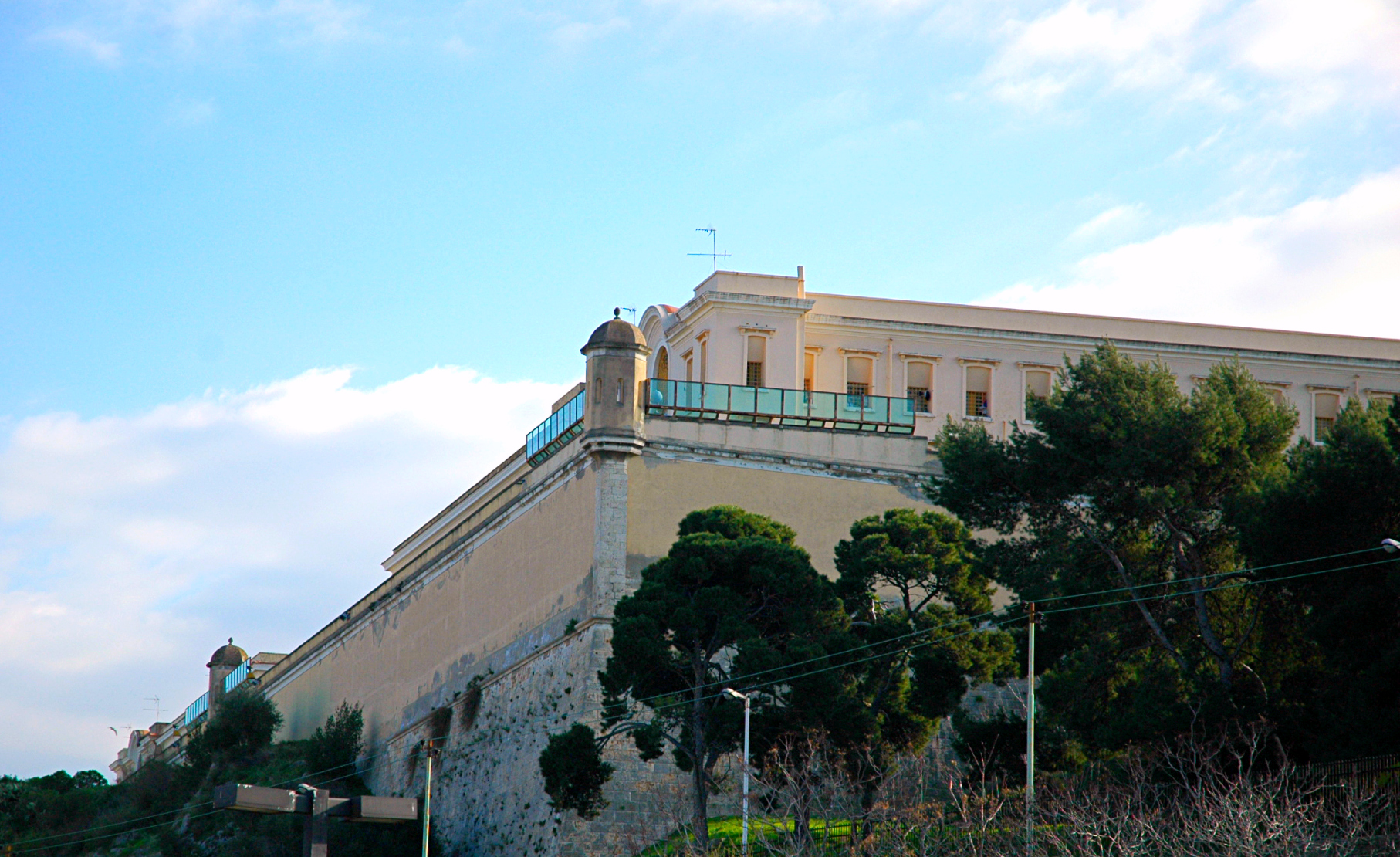
Former prison of Buoncammino
It is the most imposing urban building in Cagliari and it stands on top of a panoramic hill surrounded by tree-lined avenues and ‘terraces’ with a view of the entire city. The prison of Buoncammino, like the surrounding urban area, owes its name to the nearby church of San Lorenzo, originally dedicated to the Virgin of Buoncammino. At the top of a high ground, at an altitude of one hundred metres, it occupies a rectangular surface area of 15 thousand square metres.
The complex, made up of six buildings, was constructed in two phases: the first around 1855 and the second between 1887 and 1897. Before Buoncammino, prisoners were held in the Tower of San Pancrazio, with its entrance in the nearby Castello district, and in annexed and surrounding buildings. The first nucleus emerged to integrate the prison facilities in use at the time, but due to overcrowding and the hazardous conditions they were experiencing, it was decided that the new prison should be extended and transformed into a real ‘citadel’ that could accommodate from 500 to a thousand prisoners, with the consequent permanent closure of the San Pancrazio complex. The current appearance is the result of further additions of buildings, which took place around the 1930s.
At the corners of the perimeter wall, you will notice octagonal bartizans, covered by a small segmented dome. Two more are up against the building at the front of the complex, where the prison entrance archway opens up. Once you cross the threshold, you will see a terreplein that can be reached via two flights of steps opposite each other. Here you will find the management building and an additional porter’s lodge that leads to a courtyard, from which the wings leading to the cells branch off.
In many areas of the prison, you will recognise neoclassical details: rounded arches, cross vaults, decorations and paintings in the cornices and ceilings. Buoncammino stands in a ‘strategic’ position, in the outskirts of the town (at the time of construction), not far from the fortifications of the Castello district and on a high ground with a view of both the east and west sides of Cagliari. During its 120 years of ‘service’, no prisoner ever managed to escape. The prison was closed in 2014, as it no longer complied with the regulations on prison conditions. Since then, it has been opened up to the public, as a stop on cultural tours, particularly on the occasion of the FAI Days (FAI is the Italian National Trust), with a view to turning it into a permanent museum.
Viale Buoncammino boasts some of the city’s most panoramic viewpoints. While walking along it, you will cross through the nineteenth-century Porta Cristina, dedicated to the wife of King Charles Felix, and you will come to Piazza Arsenale, where the Citadel of Museums is located, and Piazza Indipendenza, where you can venture into the little lanes of the Castello district and visit the Tower of the Elephant, Palazzo Regio (Royal Palace), Palazzo di Città and the Cathedral of Santa Maria.
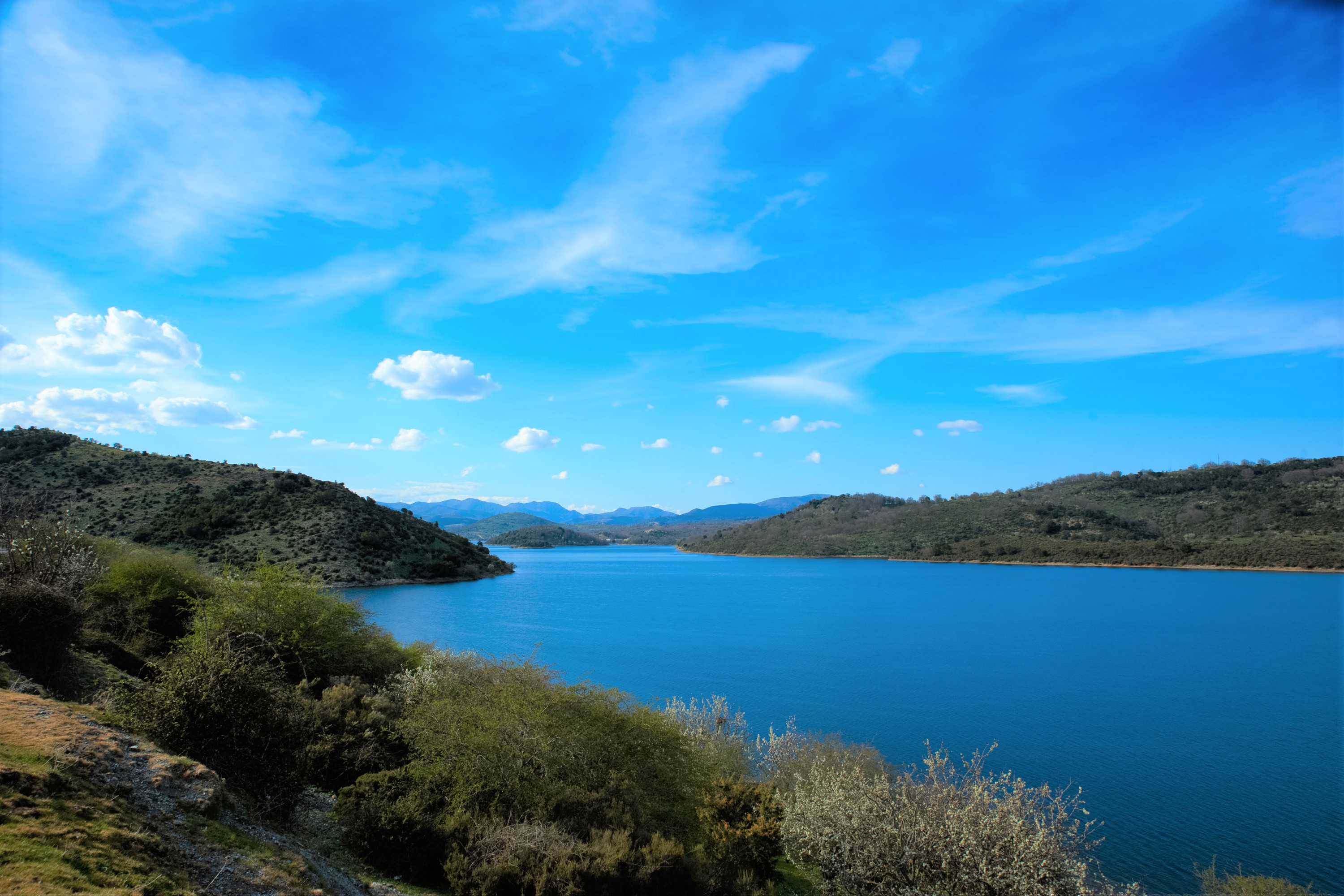
Bau Muggeris
Next to the first weir on the Flumendosa, the river with the highest flow rate in Sardinia, there is a large lake reflecting shades of blue, surrounded by archaeological legacies, ‘ghost’ villages and breathtaking landscapes. Bau Muggeris was originally the name of a gorge, where, according to tradition, the muggeris, meaning the women of the village of Villagrande Strisaili – in the area of which the reservoir is located - went to do their household washing. Today, it is the name of a dam, which was built, and of the artificial basin that emerged following its construction, which took place between 1928 and 1949. The first construction projects date back to 1915 but, shortly after the work began, it came to a sudden halt, when funds were redirected towards coal mining in Sulcis. Three power stations were built downstream, exactly at the ‘cascades’ in the river, which could produce up to 130 million kilowatts/hour at full capacity, equal to about one third of the electricity produced in the entire Italian peninsula in mid-20th century.
The ENEL (National Electricity Board) village also emerged next to the power station at the first ‘cascade’: as well as housing for the workers, it was equipped with a school, a shop, warehouses and a children’s camp. It was abandoned at the beginning of the twenty-first century, following the progressive automation of the power station. Today it is a ghost village, where vegetation has regained the upper hand and where flocks venture out to graze from time to time. In addition to providing power to the power stations, the basin of Bau Muggeris – with its 63 million cubic metres of water - guarantees an essential water supply for agricultural and drinking purposes and prevents the overflowing of torrential rivers in the area, which flow into the reservoir. The lake is rich in fish fauna: carp, pike, eels and above all trout. Three species can be identified, of which two were artificially introduced and one is a native species, the macrostigma sarda, the subject of recent protection interventions to avoid its extinction. You will be able to follow paths suitable for trekking and mountain biking around the shores of the lake, alongside the inlets, enjoying splendid views of the Gennargentu massif and the Buttes of Ogliastra.
A short distance from the ENEL village, you can also admire the remains of the nuraghe su Chiai and the Giants’ Tomb of sa Conca ‘e Pira Onne. Among the waterways that flow into the lake, there is also Bau Mela, ‘creator’, a few kilometres further north, of a spectacular show of nature: the natural pools of Bau Mela.

Castello di Baratuli
It is an important witness to the system of surveillance and defence of the Campidano territory in medieval times and it is also literally surrounded by fascinating legacies from pre-Nuragic and Nuragic times. The castle of Baratuli stands on the top of Olladiri in the territory of Monastir and was built on a previous settlement dating back to the Bronze and Iron Ages. It was built around the middle of the 12th century in the name of the judges of Cagliari, with the aim of monitoring the southern part of the Campidano area. It later passed to the Gherardesca family, who also owned the castles of Acquafredda and Gioiosa Guardia between the current territories of Siliqua and Villamassargia. After the fall of Count Ugolino, one of the most famous and controversial characters of Dante’s Inferno, it ended up in the hands of the Republic of Pisa, which destroyed it in the early 14th century, perhaps to avoid it being conquered by the Aragonese. Along with the castle, the village of the same name located in the valley, near the country church of Santa Lucia, was also destroyed.
By observing the foundations and the wall base of the fortress - a hexagonal layout with a paved courtyard in the centre - you will also see the remains of a barrel-vaulted cistern and other structures, probably used as storehouses and accommodation. On the other side of the courtyard, opposite the entrance, are the foundations of the main tower, which could be reached via a flight of steps. Beyond the courtyard, a furnace and traces of the curtain wall can be seen. From the castle, there is a 360-degree view, allowing you to see Monastir, as well as the towns of Ussana to the north, Serdiana and Dolianova to the east and Sestu to the south.
At the base of Mount Olladiri, next to the path leading to the top, you will notice cavities dug out of the basaltic rock: this is the necropolis of Is Aruttas, consisting of five Domus de Janas, dating back to between 3200 and 2800 BC. Four tombs are made up of an entrance, an anteroom and a burial chamber, while one of them was never completed and only has one room. Not far from the site are the remains of a pre-Nuragic settlement, after which a large Nuragic village was built with numerous huts. The surrounding area reserves other surprises: next to Olladiri, there is another mountain, Zara, on which you can see the ruins of a large settlement frequented between the pre-Nuragic age and the Roman period. There are two funeral areas, including a necropolis with two Domus de Janas, side by side, which, due to their unusual features, have been named is ogus de su monti, ‘the eyes of the mountain’. At the top, you will notice a monumental flight of steps, leading to a sacred area with altars and wells, while on the slopes of the hill there are traces of circular huts. This is where a sandstone artefact was found and some have identified it as a wine press, perhaps the oldest in the Mediterranean and an exceptional piece of evidence of wine production, a widespread activity in the Nuragic age. Today, it is kept in the council chamber of the Monastir town hall.
San Pantaleo - Martis
The most shining example of Italian Gothic style in Sardinia, before the spread of Catalan style, has been standing for centuries, challenging the precarious stability of the ground, thanks to continuous restoration actions. The church of San Pantaleo stands just outside the town of Martis and was built on a rocky spur overlooking the Rio Carrucana valley. There is no certain information on its foundation, but it is thought that it dates back to the first quarter of the 14th century. Two centuries later, the first restoration work was carried out, with reconstruction and consolidation, which were then repeated during the 19th century. Finally, in 1920, its deconsecration took place, due to the risk of a sudden collapse. Since 1988, the church and the rock ‘plinth’ on which it rests have been the subject of stabilisation and renovation work, aimed at ensuring the survival of the building.
It has a basilica-type layout with three naves - although it originally had a single nave - with cross vaults in the central nave and ribbed vaults in the side naves, separated by cross-shaped pillars that support pointed arches. The presbytery is closed by a quadrangular apse, which ends overlooking the edge of the rocky spike. The façade has retained a good part of its decorations, with the exception of the rose-window, which has nevertheless maintained its two-tone array, with alternating ashlars of black trachyte and light limestone. On the left side of the façade, you will notice a trace of the original entrance. The quadrangular bell tower is also still in good condition: the lower part dates back to the first construction of the church, while the upper part was rebuilt in the 16th century. The walls retain several decorations: on the north side, near a single-lancet window, you can see some engravings depicting crosses and a circle with floral elements. On the opposite side, there is an inscribed star, while you can spot traces of frescoes on some walls. The church also contained a precious oil-painted altarpiece, depicting the ‘miracle of San Pantaleo’, created by Andrea Lusso in 1595 and now on display in the parish church dedicated to San Giuseppe.
The church is shrouded in myths and legends: there are stories of miracles inside it, secret environments hidden under the foundations and ruins of ancient temples dedicated to the worship of the water on which it was built. The presence of an underground aquifer is, in fact, one of the causes of the landslide on the right side of the spur.
Just over a kilometre to the east, you can visit another unusual site: the Petrified Forest of Carrucana, featuring silicified fossils of tree trunks, dating back to volcanic phenomena that occurred twenty million years ago. In the opposite direction, you will find the waterfall of Triulintas, set in an almost fairy-tale landscape, with woods, lakes, little wooden bridges and the remains of an ancient mill.
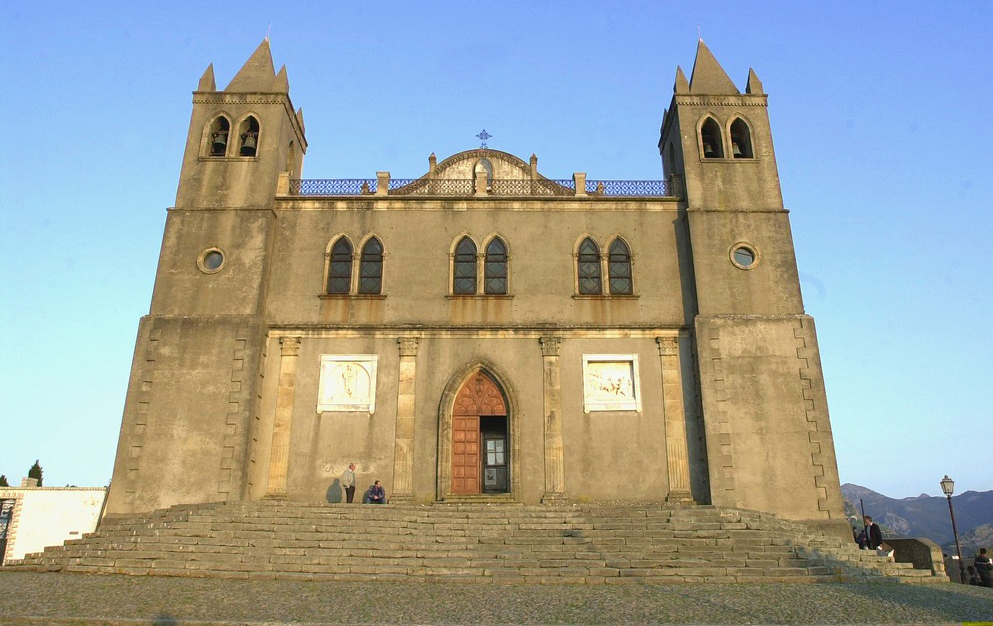
Santa Maria della Neve - Cuglieri
It was the first Sardinian church to obtain the title of minor basilica, it contains a remarkable stylistic variety of decorations and furnishings and is the scene of various rituals of one of the most exciting events during Holy Week on the Island. The church of Santa Maria della Neve stands over the town of Cuglieri from the top of the Bardosu hill, in the eastern part of the village. Its origin is steeped in legend: it is said that, in the 13th or 14th century, a group of fishermen from Cuglieri found a mysterious stone simulacrum of the Madonna - with a golden flower in her hand - on the beach of Santa Caterina di Pittinuri, and they decided to take it to the church of Santa Croce, which was the village’s parish church at that time. The oxen that pulled the cart with the statue in it continued their journey without stopping at the church and instead climbed up the Bardosu hill. Once at the top, it was impossible to make them move. The locals interpreted what happened as divine will and built a temple there. The name also apparently comes from a miracle: the church was originally supposed to be dedicated to Santa Maria del Fiore, but after the attempted theft of all the precious furnishings by a gang of thieves, sudden heavy snowfall prevented the criminals from escaping, allowing the treasure to be recovered.
The first news of the presence of a sanctuary on the hill dates back to the 15th century, but the current building is probably a late seventeenth-century reconstruction, the subject of a great deal of renovation and extension work over the centuries that followed. You can admire a Neo-Gothic style façade, built in 1913 and divided into two orders, above which there is a ‘double inflection’ tympanum, slightly set back to leave room for a terrace. Two small bell towers with spire crowning elements frame the façade, while there are two marble bas-reliefs on the sides of the portal, depicting the arrival of the statue on the hill and a further miracle, which occurred in 1824, when lightning struck the statue, leaving it unharmed. The single-nave hall is divided into bays with a barrel vault and four chapels on each side. In the presbytery, a ‘fan-shaped’ altar stands out, above which there is a dome with pendentives and a tholobate. Among the furnishings, you will notice a chestnut wood choir, marble statues depicting Saint John the Evangelist and Saint Paul and the painted stone statue of Our Lady of the Snow. The basilica is home to one of the historical brotherhoods of Cuglieri, that of the Rosary, of seventeenth-century origin. The brotherhood tends to the celebrations of feast days and helps with the Holy Week rituals: in fact, here, on Friday, sa contra rughe, a heavy black wooden cross, is hoisted up and acts as a support for the crucifix, the protagonist of the ritual of su ingravamentu, the crucifixion. In the afternoon, on the same day, another exciting ritual takes place inside the basilica: the deposition.
Paleo Archeo Centro
An original and innovative exhibition that brings together history and science lets you assume the role of the palaeontologist and discover Sardinia’s deepest Nuragic well. The Paleo-Archeo centre of Genoni sits at the foot of Santu Antine hill, a hill on which traces of civilisations dating to from the Bronze to the Medieval Ages were discovered. The museum has three sections: paleontological, archaeological and educational.
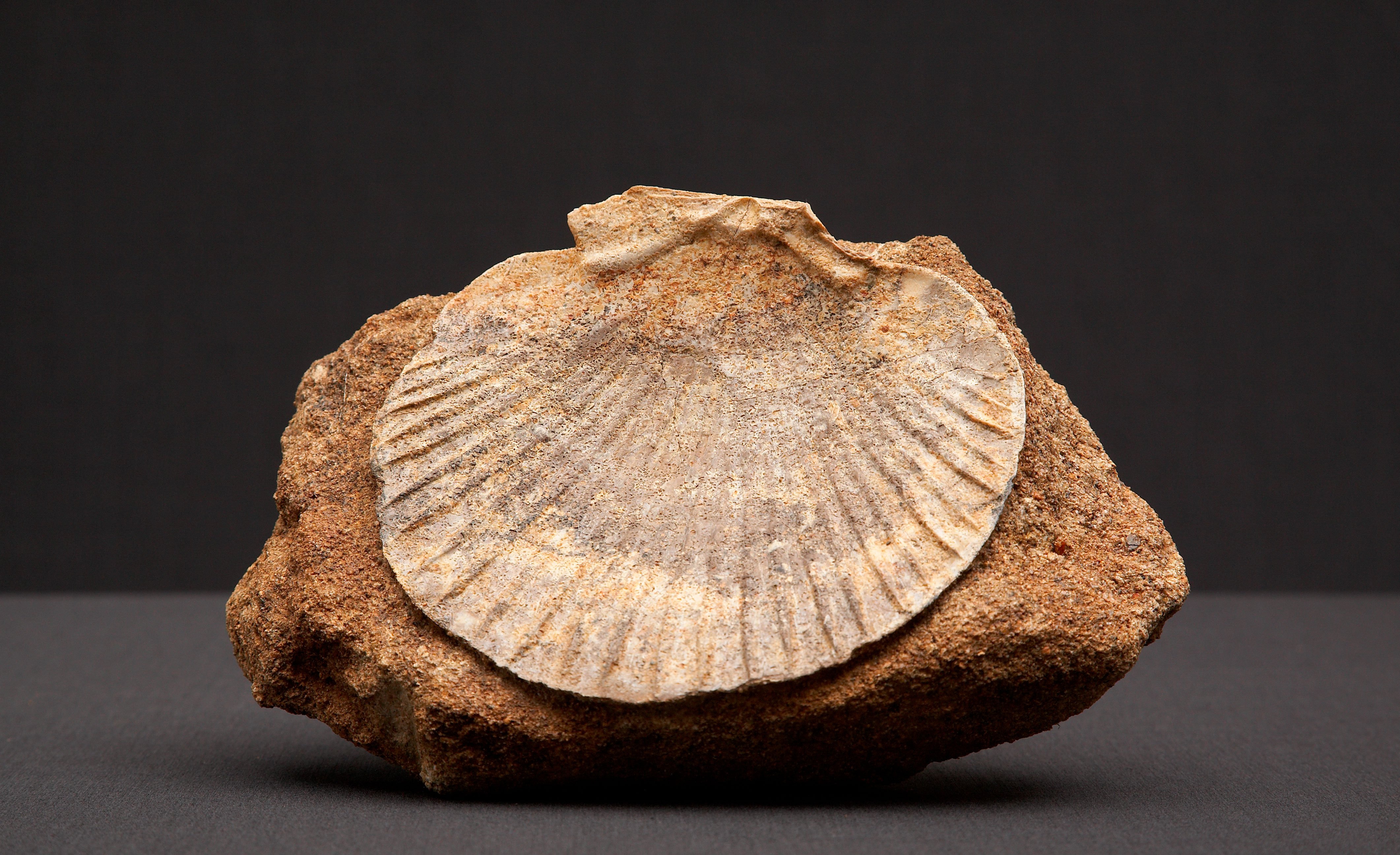
The first section, palaeontology, was created for the exceptional finds uncovered at an old quarry in nearby Duidduru. The quarry is home to an extensive (50 metre-deep) outcrop of marine deposits dating to the Miocene, offering proof that the area was once under water. It contains the fossils of sea urchins, shells, coral and sea snails, as well as the remains of an extinct shark, the megalodon. A 250-million-year-old crinoid and a crocodile tooth are also on display at the museum.
The archaeological section houses relics found on Santu Antine hill: a model of the hill complete with a nuraghe and sacred well, Punic fortifications and a chapel that belonged to a medieval church dedicated to St. Elena and San Costanzo, in Sardinian Antine, whence the hill’s name. There is also a 1:1 scale diorama of the bottom of the well, which with a depth of 39 metres is Sardinia’s deepest. Nuragic bronze figures and relics (especially coins) from Roman times and the Middle Ages were found in the well.
The educational section of the museum features interactive displays for visitors to enjoy, especially the younger ones. There is material to simulate paleontological and archaeological excavations, multimedia installations and the scientific tools used to clean and preserve the relics found. The museum regularly hosts educational workshops and palaeontology and archaeology summer camps for schools and families. Your tour of the museum can include the exploration of the Duidduru geo-site. A path leads you up the slopes of Santu Antine, with an altitude of 590 metres, from which you can enjoy lovely views of Marmilla and the giara di Gesturi (sa Jara Manna), which for some 1,700 hectares falls within the domain of Genoni. Here you will find the remains of a Punic settlement superimposed on a Nuragic village, to which the well, a megalithic wall, a hut with perimeter seating and what might be a Nuragic complex once belonged. The fort was eventually encircled with a stone wall with four more towers, built around the 4th century BCE. In the Middle Ages, the base of the eastern tower was built up into a church.
A visit to the Paleo Archeo Centre is not complete without a walk around Giara park, home to the famous horses to whom another museum in Genoni is dedicated, this one located in a typical Campidanese house.
Sacred Well of is Pirois
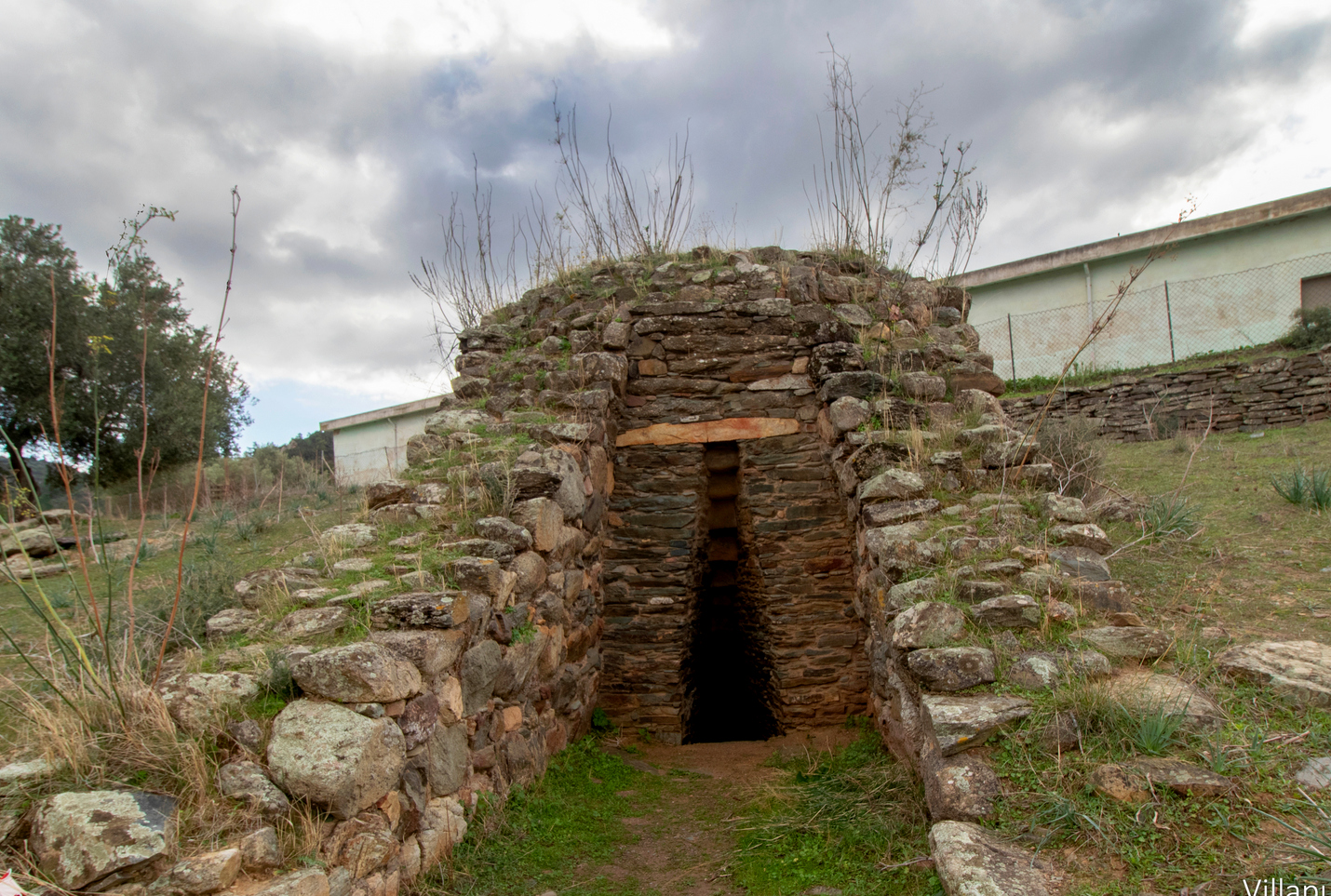
It is one of the best-looking sacred wells in Sardinia and it has something extra: its top is a real puzzle. The structure attached to the tholos roof of the Nuragic fountain of is Pirois, in the territory of Villaputzu, has been the subject of debate for decades. It is commonly thought that the well dates back to the Middle Bronze Age, between the 15th and 18th centuries BC, but some similarities with the nearby well of Funtana Coberta in Ballao and with the Sanctuary of Santa Cristina in Paulilatino could move the date of its construction, perhaps to around the 14th century BC. The architectural structure is located on the top of a hill and has adapted to the slope. The atrium is bordered by two granite wall surfaces; from the architraved entrance, there are steps leading to the well, enclosed in a vaulted room with a pseudo-dome. The wall surface is made of evenly-placed slabs of schist, while the series of architraves is positioned as an ‘upturned staircase’, typical of the Island's sacred wells. The water source is still active and has a perennial nature.
The most original feature of the site stands on its summit: you will notice a circular room, apparently without entrances. In the centre of the floor, at the top of the tholos that covers the well chamber, there is a hole, while there is a small niche on one side. Many identify the structure as a single-tower nuraghe, which would make is Pirois the only documented case in Sardinia of a sacred well with a nuraghe built on it. However, the absence of an entrance, the evenness of the ashlars in the perimeter wall - where no infill is visible - and the internal elements, hole and niche - have led to the theory of religious or even practical functions. At is Pirois, unlike the more famous sacred wells, the sun’s rays do not reach the body of water of the spring through the entrance, but through the hole. The system of sunlight reflecting on the water and then on the ashlars of the architrave, in particular periods of the year, appears to be linked to rituals performed by priests and perhaps even linked to a system for ‘evaluating’ the availability of water for the fields and for the livestock, to be interpreted based on where the reflection of the light appeared. The niche also seems to respond to this purpose, as it is connected to a cavity between two ashlars of the ‘upturned staircase’: The two architectural elements, corresponding to certain positions of the sun, would allow the projection of a ray of light in the clearing in front of the entrance, a phenomenon interpreted as divine in the Nuragic age.
The artefacts discovered in the surroundings testify to the fact that the site continued to be frequented in the Roman period and in the Early Middle Ages. In addition, traces of circular huts have been identified in the area and the nuraghe Nurresu stands on the top of a hill in front of the well, providing evidence of an important settlement during the Bronze Age. A few kilometres to the south, you can dive into the Middle Ages by visiting the two most famous monuments of the Salto di Quirra: the castle of the same name and the Church of San Nicola, made entirely of terracotta bricks.
MuMa - Museum of the Sea and Shipwrights
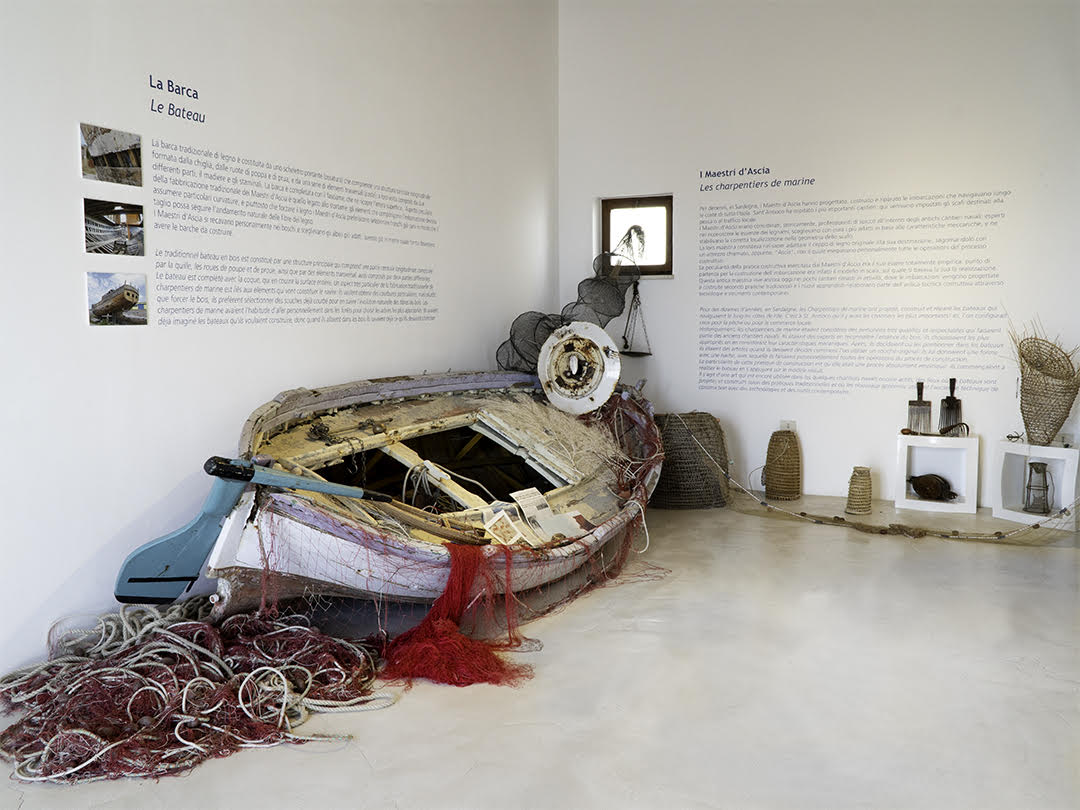
Not merely an exhibition space, but above all a journey into the legacy of the local community, explaining the history of the lagoon, the traditional crafts of the shipwright and the fisherman and the signals they used as their seafaring code. The Museum of the Sea and Shipwrights is housed on the premises of the former slaughterhouse of Sant'Antioco, along the picturesque seafront of the main town of the island bearing its name.
An integral part of the museums dedicated to the sea and navigation of the waters of the four smaller islands of Sardinia - Sant’Antioco, Carloforte, Asinara and La Maddalena – this museum is home to the cultural traditions and legacy of the ancient craft of the shipwright, the men who designed, constructed and maintained both the fishing boats and those used to ferry locals from one island to another, as well as transporting the minerals extracted from the nearby mines.
The axe is the main tool the masters used to expertly adapt every single plank of wood to exactly where it should go, using their trained eyes to identify the perfect piece of wood for each type of boat. In addition to the figure of the 'master', still today included in the navigation code, the exhibition tells the story of the environment of the Santa Caterina lagoon, of the Antiochian fishermen and the salt marshes, and will teach you about the flora and fauna of the wetlands. Thanks to transparent canoes you will be able to explore the depths of sea alongside the seafront, simulate the construction of a ciu, a typical vessel used for fishing on the lagoon, and search for - by virtual means - the pinna nobilis, the largest bivalve in the Mediterranean, from which byssus (a flax fibre) is obtained, a textile fibre whose processing represents one of the manufacturing traditions of the town. You will also enjoy the room dedicated to the maritime lights, lighthouses and watchtowers of Sardinia.
The MuMA is also home to the Sant'Antioco Environmental Education Centre for Sustainability, where excursions, educational activities, workshops and school camps are periodically organised. You can combine your visit to the museum with an excursion to the lagoon: a naturalistic oasis covering some 700 hectares, rich in plant species and aquatic birds, and where pink flamingos reign.
Sant’Antioco is a veritable mine of archaeological treasures: you will visit the catacombs upon which the basilica dedicated to the patron saint of Sardinia was built, the Ferruccio Barreca Archaeology Museum with its adjacent Phoenician tophet, the acropolis and a Punic necropolis. And there is no lack of beautiful beaches here either: on the eastern coast you’ll find Maladroxia and Coaquaddus, to the south Turri and Peonia Rosa, on the western side Cala Sapone and the fascinating natural landmark of is Praneddas, known also as the Arch of Kisses. And, finally, to the northwest, gorgeous seascapes await you on the shore of the island’s other town, Calasetta.

Penal colony of Castiadas
It all began with a landing on the wonderful and at that time deserted beach of Cala Sinzias. This event led to the creation of the biggest Italian agricultural penal structure, which has now become an elegant administrative and cultural centre and the ‘heart’ of a young municipality. The former penal colony of Castiadas is located in the central hamlet, one of the sixteen dotted between the coast and the hinterland, creating the ‘scattered’ village, which became autonomous in 1986. Thirty prisoners and seven prison guards from Cagliari reached the area by sea in August 1875 to start reclamation work after centuries of abandonment. In fact, the Sarrabus region was a marshy territory, uninhabited due to malaria and plague epidemics. The first nucleus of the colony originated on the hill of is Praidis and later on, also thanks to the addition of hundreds of other prisoners, numerous structures were built until it developed into a real self-sufficient citadel.
The countryside was reclaimed and vineyards, olive groves, orchards and cereal crops were planted. Workshops and carpentry shops arose around the management building, the director’s villa and the prison facilities. The colony was also able to count on a hospital, an emergency room, a chemist and post office. Between prisoners, agents and employees with their families, it accommodated more than two thousand people.
In addition to the redevelopment of the area, the aim of the colony was also the future social reintegration of the convicts, who received basic schooling and learned a trade. The colony ceased its activity in 1952, when the Sardinian Land and Agricultural Transformation Agency acquired the management of the territory and reorganised it by dividing it into various companies. It closed for good four years later: the prisoners were transferred to other penal colonies, including those of is Arenas, in the territory of Arbus, and on the island of Asinara.
In the management rooms you can visit the Territorial Museum, spread over two floors, where you can learn more about the history of the colony and Sarrabus traditions. You can observe the conditions in which the prisoners were confined by visiting the prison rooms, followed by a complete change of atmosphere, admiring the garden and rooms of the director’s villa, now also used as a location for events and ceremonies. Also, a few steps away from the villa and management, you will find the Church of San Basilide, built by the prisoners at the end of the 19th century. The small temple has a single nave and features a stained-glass window at the entrance, depicting the saint after whom it is named. Moving about 500 metres north of the villa, you can visit the historic cemetery.
Just over ten kilometres separate the former colony from the long and spectacular coastline of Castiadas, along which the beautiful beaches of Cala Pira, Cala Sinzias, Cannisoni, Marina di San Pietro and Monte Turno alternate and, beyond them, the enchanting expanse of white sand of Costa Rei begins.
Museo del Cavallino della Giara
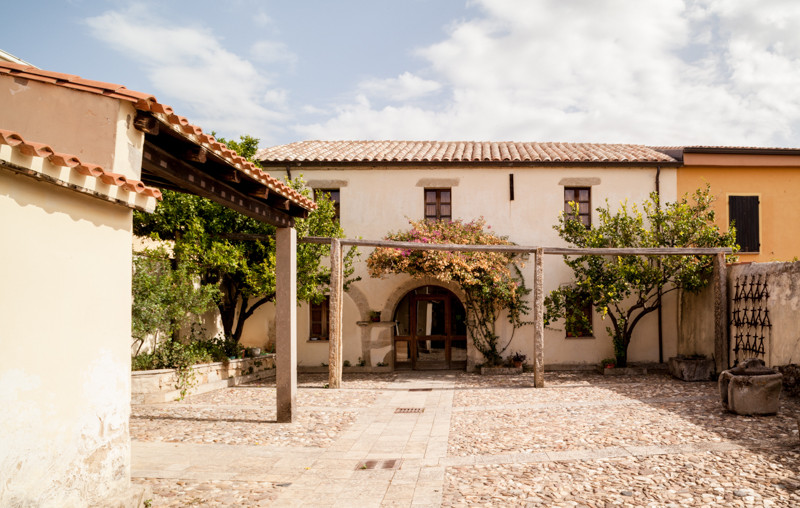
They live in the wild, on the plateau known as Sa Jara Manna or Giara di Gesturi and are the only survivors of a species that roamed freely throughout the island until the late Middle Ages. A very short distance from the ‘grande giara’ (great giara), an exhibition space tells us about their history, life and coexistence with man. The little Giara horse is the absolute protagonist of the museum located in a typical Campidano house in Genoni, a village that emerged at the foot of a hill that became detached from the Giara due to erosion. You can observe the various stages of the entire life of the little horses, thanks to a special photo gallery. Two dedicated rooms will allow you to learn more about the environmental characteristics of the Giara and its relationship with the populations of the nearby towns. Also on display are the tools used in the past for taming, shoeing and branding, now replaced by the implantation of a microchip. You can then visit the ethnographic section, where agricultural tools, utensils used by carpenters and shepherds and objects of domestic and daily use in the traditional Campidano dwellings are on display along a thematic itinerary, accompanied by video interviews: the elderly village folk talk about agricultural and rural life through memories and anecdotes.
The population of Genoni played an active part in setting up the museum, by personally donating objects and thus contributing to the creation of a ‘space of community memories’. An unusual feature of the exhibition is the possibility of involving children and adults interactively, letting them try to guess the function of some of the less familiar-looking tools. In this regard, there is also a purely educational section, designed for schools and families, while the garden and other parts of the rooms occasionally host events, parties and ceremonies. You can combine a visit to the museum with a trip to the Park of the Giara, a natural oasis within which paths have been marked out for about 25 kilometres and have wooden signposts. In addition to observing the famous horses of the plateau, a visit to the park will allow you to experience a fascinating landscape, filled with colourful flowers in spring and embellished by the snow-capped mountains of Gennargentu in the winter.
The Paleo Archeo Centro museum on the slopes of the hill of Santu Antine is also worth visiting. There are two sections, palaeontological and archaeological, that tell the story of the area, starting from the fossils found in the nearby Duidduru geosite and the traces of the prehistoric period on the hill. Lastly, a stop at the former convent of the Frati Osservanti Minori (Observant Friars Minor) is a must and dates back to 1638, with the adjoining church of Madonna del Sacro Cuore.