

The Stonehenge of the Mediterranean
Sardinia has an age-old story, told by the archaeological evidence dotted throughout the territory. The tangible signs of the prehistoric island are endless: menhir, dolmen, domus de Janas, sacred wells, tombs of the giants and countless Nuraghe complexes. Enormous stones that have been guarding secrets for four thousand years. Buildings, often intact, of the first civilizations ever to exist in Europe, the only sites of their kind in the world, a patrimony to be discovered and experienced: this is the Stonehenge of the Mediterranean.

Prince’s Beaches
An Ishmaelite Prince arrived, by chance, from the sea, at the natural fjord of Porto Cervo and was bewitched by what he saw. It was the end of the 1960s: it was love at first sight between Karim Aga Khan IV, Arab prince and Muslim imam, and a stretch of the wild and beautiful Sardinia, a rough diamond enshrouded in the fragrances of the Mediterranean scrub as it moves down from the mountains towards the sea and frames the enchanting beaches. His favourite beach became the Spiaggia del Principe (Prince's beach), a stretch of white sand surrounded by breathtaking scenery, behind a deep cove protected by a pink granite promontory. Exclusive for its beauty, but open to all: in just a few minutes on foot, you reach the green, pink, turquoise and blue heart of the Costa Smeralda, the new name that the Prince gave to this part of Gallura.
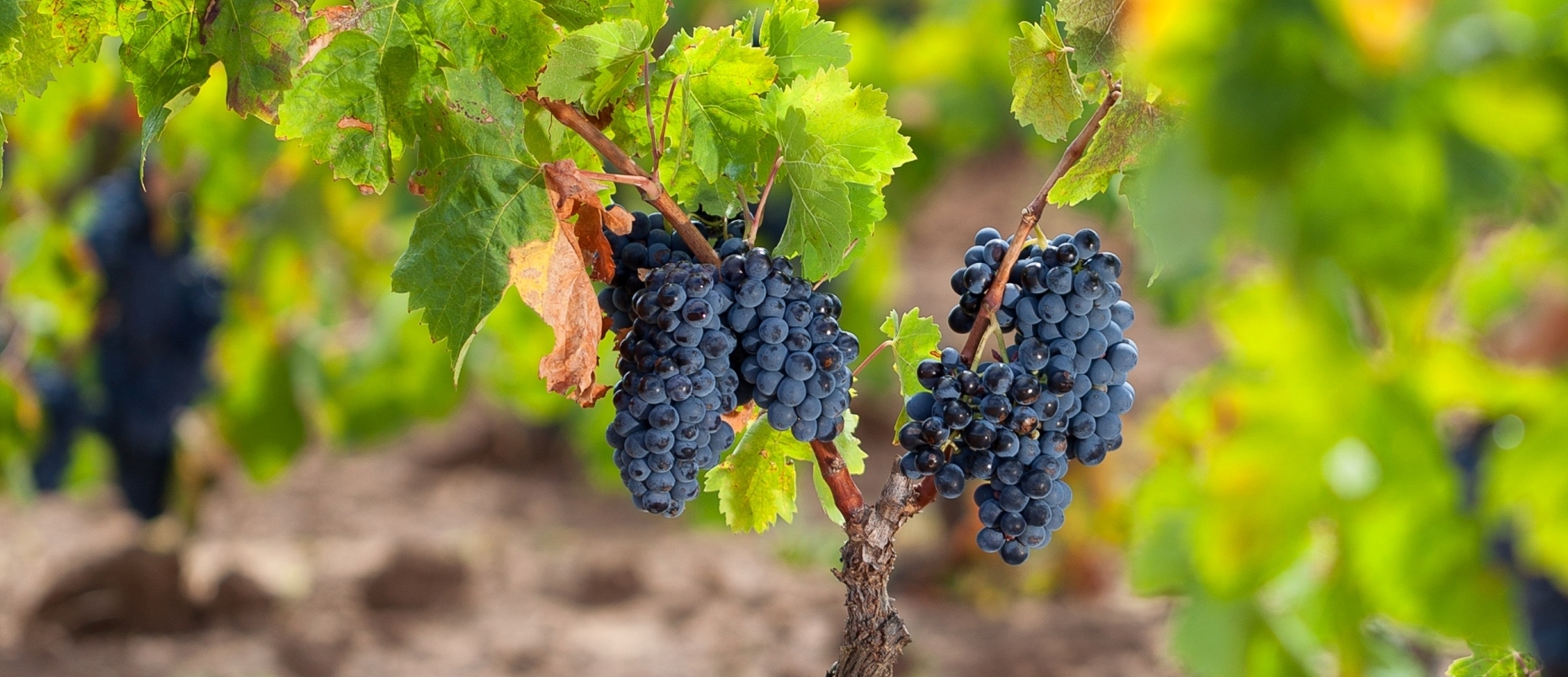
Sardinia, the quintessential land of wine
According to Greek legends, Aristaeus introduced this cultivation to Sardinia. The hero settled here because of the beauty of the land and he gave his two sons names linked to agriculture and viticulture: Kallikarpos, meaning ‘bearing good fruit’ and Charmos, from the Semitic krmy (winemaker). From mythography to reality. Today, the fact that wine-making on the Island goes back at least as far as the 15th century BC is a certainty: according to archaeologists, botanists and chemists, the oldest wine in the Western Mediterranean area was Sardinian. It was a sort of Cannonau dating back more than three thousand years. The theory became a certainty at the end of 2016, with the analysis of organic residue from a stone press discovered in the Nuragic village of Monte Zara, next to Monastir, a few kilometres from Cagliari. Archaeobotanical studies have unequivocally led us back to the practice of pressing and processing of grapes, particularly red grapes. This is the most ancient press in the Mediterranean, proof of the Nuragic civilization's considerable expertise in wine-making. The discovery places wine tradition as far back as the Middle Bronze Age, even though the thriving presence of vitis vinifera sylvestris leads us to assume that there was domestication and highly evolved oenology even further back in time.
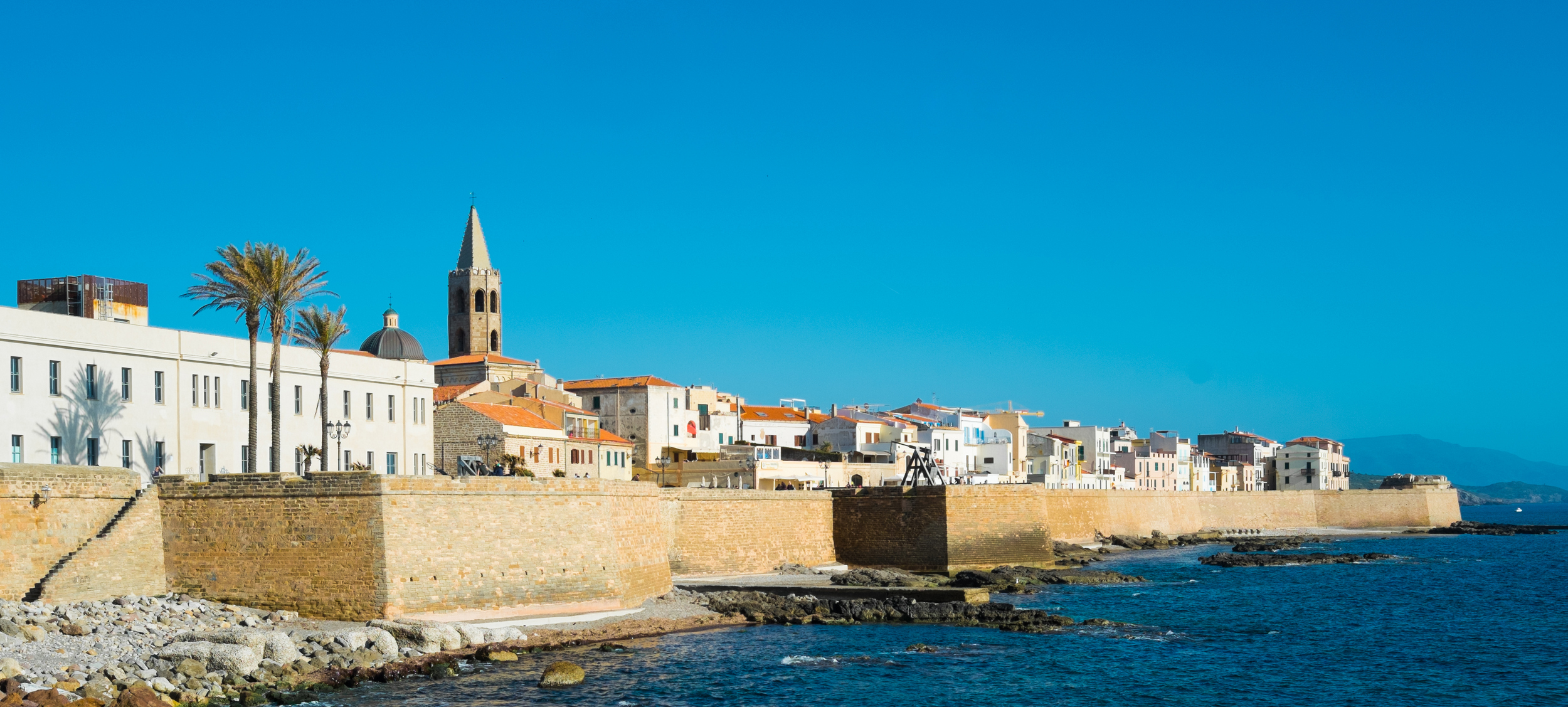
Monumenti Aperti, exploring architectural and artistic treasures
Magnificence, shared memory, authenticity and a sense of community: this is the most encompassing effort to safeguard, enhance and promote the cultural heritage of Sardinia. Over the next seven weekends, the 22nd edition of Monumenti Aperti (Open Monuments) – a candidate for the 2018 Europa Nostra award, a European Union award for cultural legacy – will shine a special light on the island’s architectural, historical and natural heritage: some 800 places of extraordinary cultural value that include the museums and archaeological sites, churches and historical buildings, natural monuments and parks of 59 municipalities all over Sardinia, seven of which are new to the movement. Each town will tells its tale through literary itineraries, architecture routes in cities that have been marked by centuries of powerful rulers, and journeys into the dawn of time among the remains of ancient civilizations. As you follow the route, some 18,000 volunteers – many of whom are school children of a variety of ages - will narrate the stories that marked the history and culture of their town.
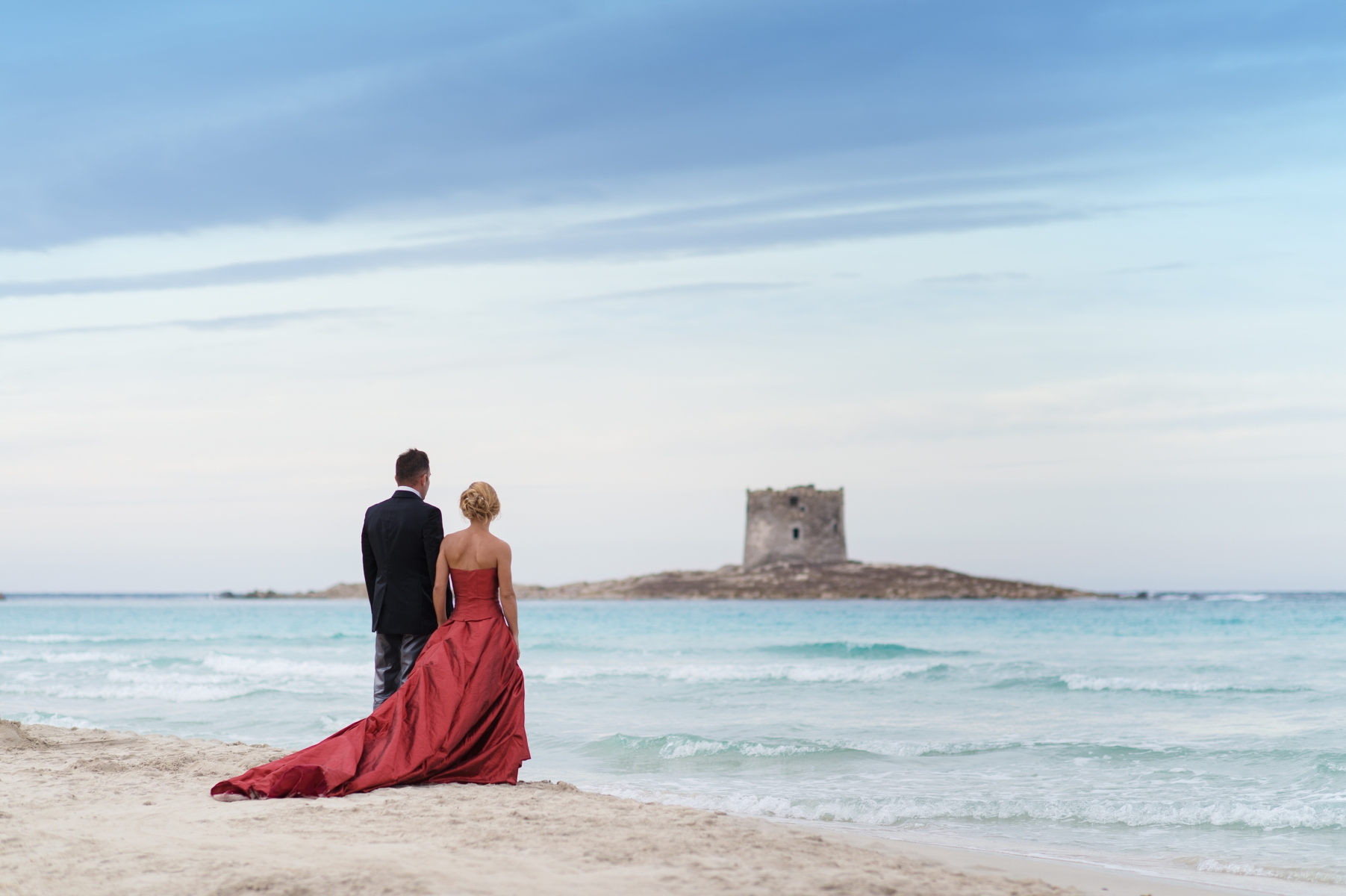
Saying “I do” in a magical setting
An ideal destination in every season and perfect for a wedding. An evocative, romantic and enchanting land: an increasing number of couples choose the most picturesque corners of Sardinia as a place in which to celebrate their love. Numerous guests get to know the island while on holiday, leaving behind a little piece of their heart and they sometimes return to take it back on one of the most important days of their lives. Many say “I do” in famous and captivating places, others in less well-known, poetic places reminiscent of an archaic past, in the bucolic peace and quiet or far away from the hustle and bustle of today’s world: a lighthouse, a cave, a sacred well, the rows of vines in a vineyard kissed by the sun, in gardens where fragrances and colours are transformed by the changing seasons. Dream weddings are celebrated throughout much of the island: the bride and groom spend the pre-event and honeymoon there, while their guests often stay on and take a holiday.
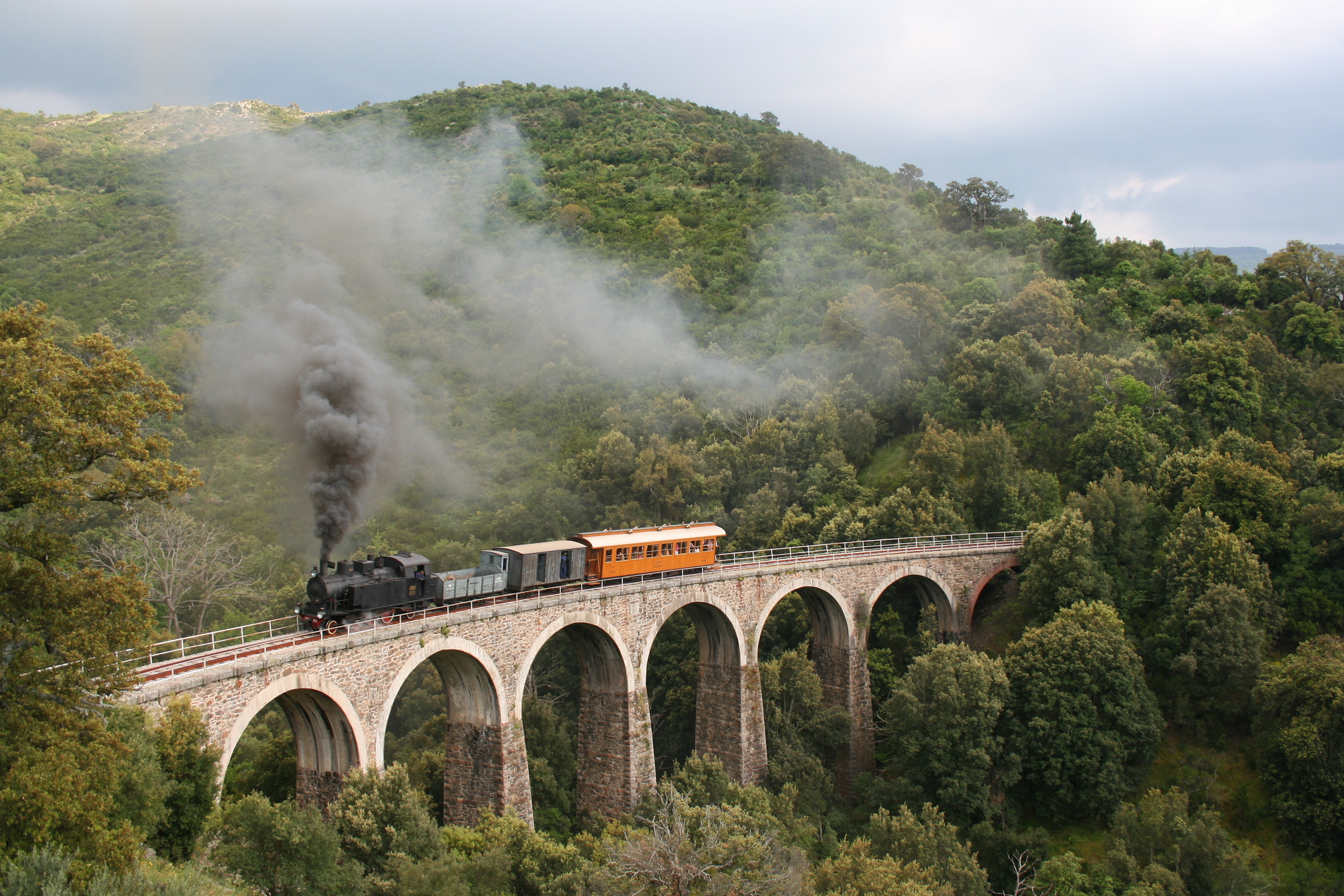
Great beauty travels on the Green train
“After a long pull, we come to a station after a stretch of loneliness. Each time, it looks as if there were nothing beyond — no more habitations. And each time we come to a station.” This is the poetic description, aboard the locomotive that is today the Trenino Verde (Green Train) of Sea and Sardinia, the project dedicated by David Herbert Lawrence on his 1921 voyage to Sardinia. Following in his footsteps a century later, travellers from all over the world are attracted to this unique railway line, derived from the ‘old components’, designed and constructed between the late 19th and early-20th centuries. An Italian excellence, a unique experience comprised of four trails totalling 437 kilometres, with three sections having been operating non-stop for 130 years, including engineering and architectural works, such as bridges and tunnels. The lines, never abandoned, have been preserved and protected, connecting the coasts and hinterland, integrating such with excursions to the lakes by boat, trekking, cycling and horse riding. You can hop on the on any of the seasonal calendar days or hire it out for a group excursion - thanks to the initiative Su Trenu Antigu, aimed at enthusiasts, schools and tour operators, for an exclusive railway line!
Borghi, the true soul of the island
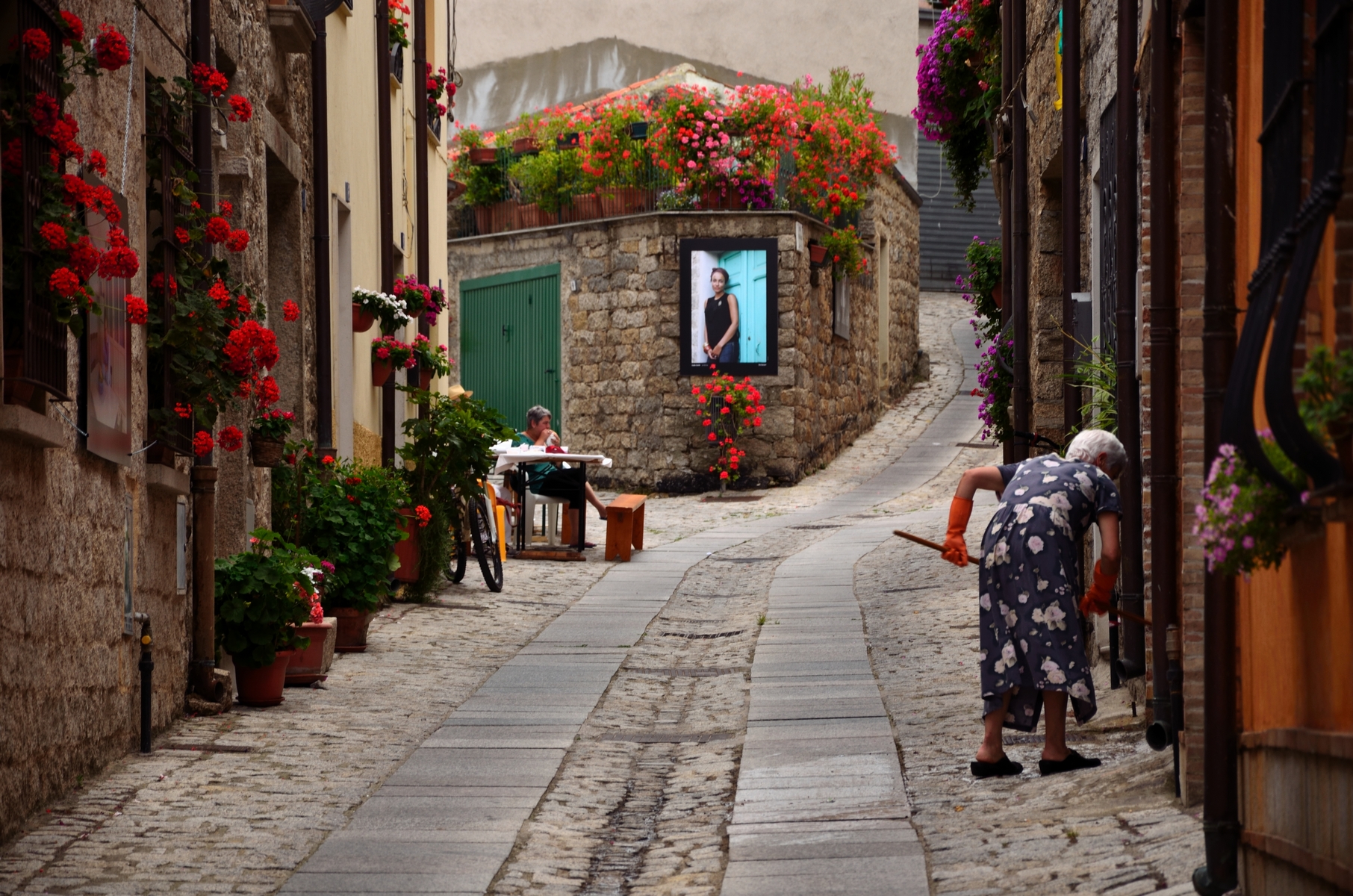
It is like nowhere else in the world. This is the Sardinia seen by the first travellers and by the writers of the past: they describe a land that emerges slowly from the sea, and tell of the natural spectacle that gradually appears, bathed in intense light. Mountains that sink to the coast, sometimes gently, sometimes suddenly, frame ever-changing scenery. It is never very far from the sea to the hinterland, and the route is dotted with small, traditional villages, the intimate 'soul' of Sardinia. On the roads that lead to the heart of the island, welcomed by the warm hospitality of its communities, you can discover the authentic life and ancient traditions of the villages. You can lose yourself in criss-crossed pavved alleyways, and come aross ancient buildings, natural monuments, archaeological sites, and discover masterpieces of artisan work and unequalled cuisine. You will experience the essence of Sardinia, and its most genuine identity.
Rituals and symbols of traditional weddings
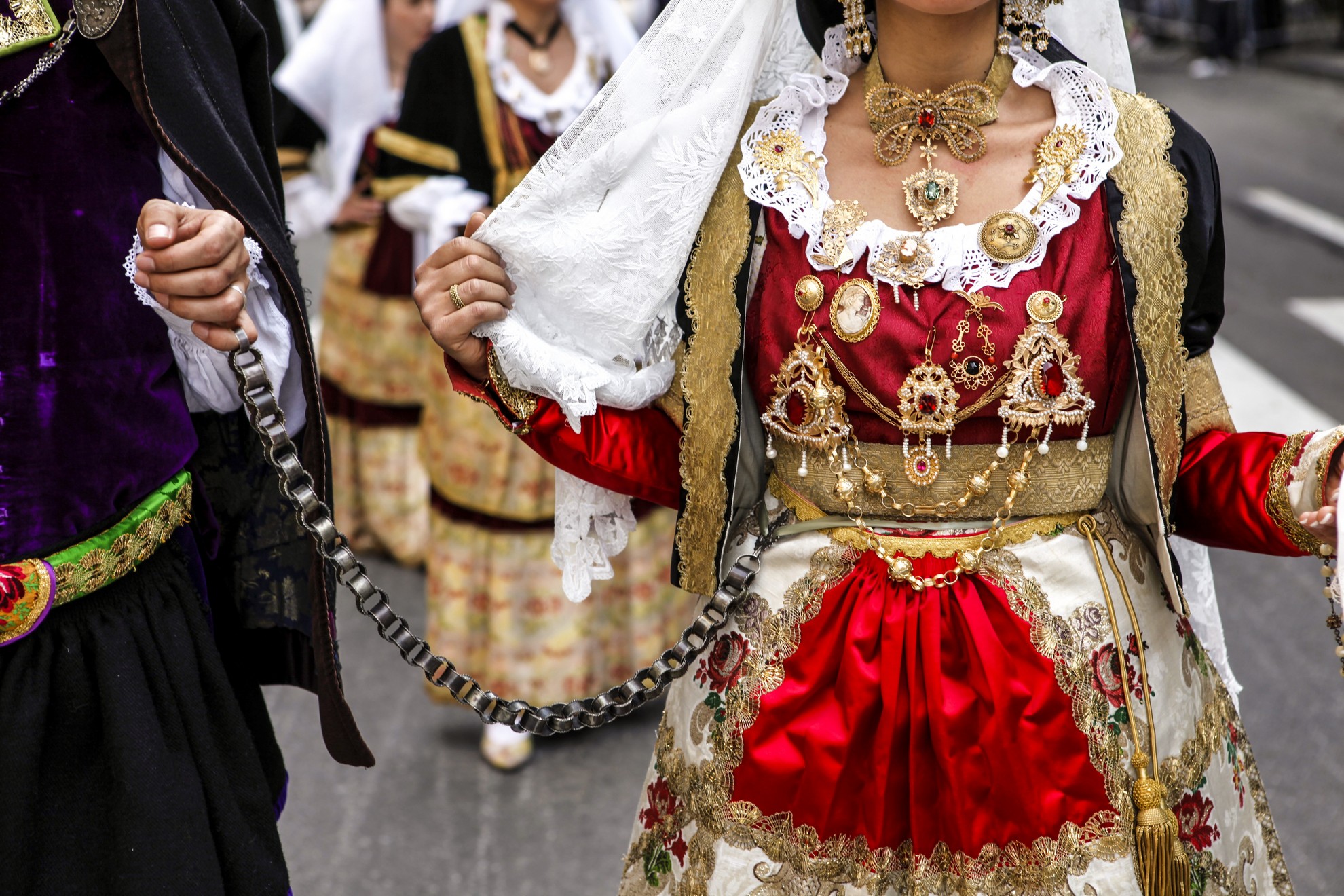
A polyphony of songs, a harmony of sounds and colours, a union of ancestral rituals and symbolic gestures that embody the spirit and knowledge of entire communities, stories of emotions and promises of love, to be preserved and passed on. Traditional Sardinian weddings are an expression of faith and authenticity, marked by ceremonies whose roots are lost in the mists of time. With the advent of Christianity, pagan traditions did not disappear but were reworked into religious practices. The two key elements of fire and water are the bases of ancestral forms of divination. There are also two wedding traditions that characterise the summer: On Sunday 3rd August sa Coia Maurreddina takes place, it's a re-enactment of the historical weddings of Santadi and of the rituals of the agropastoral community in the lower Sulcis. On September 14, comes the 65th edition of the historic wedding traditions of Selargius, the sa Coja Antiga Cerexina, the most historic, faithful and spectacular presentation of historical weddings of the Campidano plain and one of the most famous celebrated events marking the Sardinia identity, a triumph of traditional culture with a lavish ceremony and a folklore festival that welcomes the customs and traditions of all Sardinian communities to Selargius.
Enchanting cliffs sculpted by time
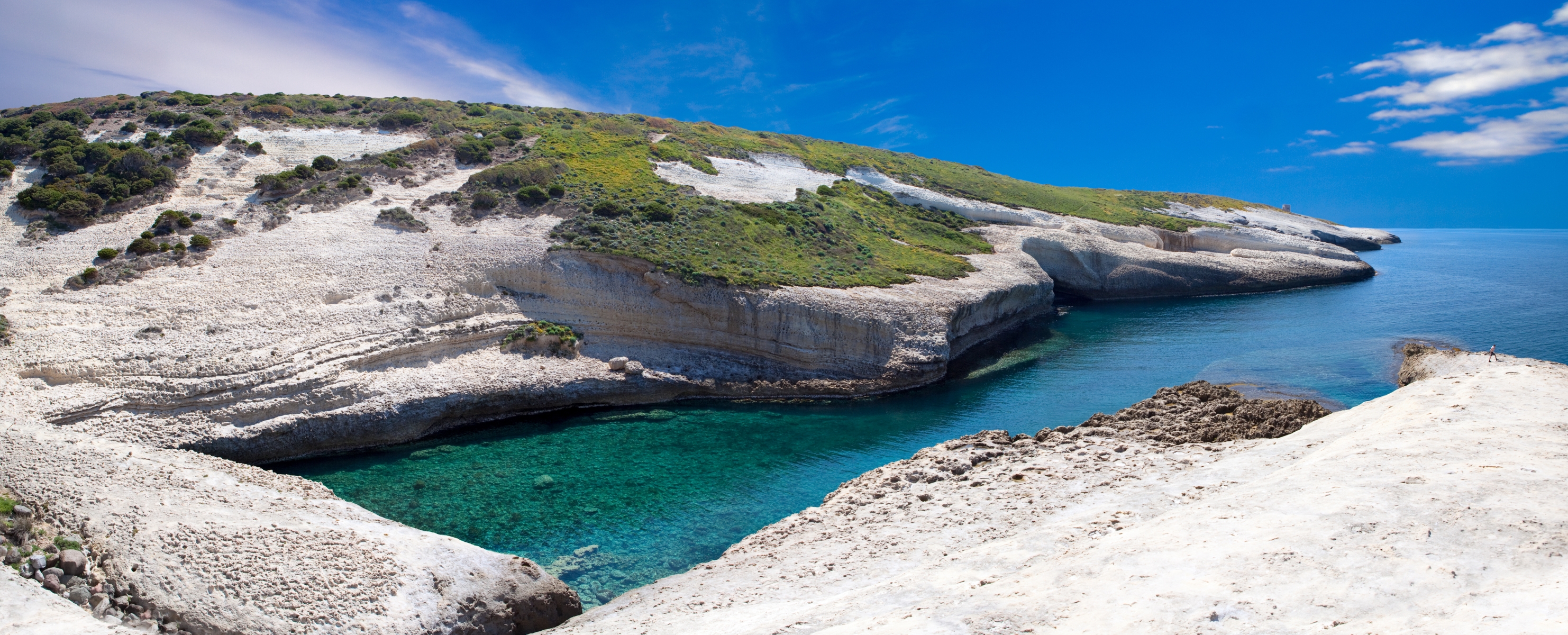
A surprising gallery of ever-changing landscapes. This is what the island's coastline looks like. Expanses of white or golden sand, sometimes sparkling with quartz or tinged with pink. Or stretches of soft virgin dunes. Or deep inlets and stunning cliffs shaped by wind and waves into the most original and bizarre shapes. Cliffs, stacks and tafoni (also known as honeycomb weathering) are veritable artistic installations on the sea, and are accessible natural wonders, easily reached by car, motorbike or bicycle. These striking places don't get very crowded, like the solitary promontories surrounding the island's charming lighthouses and countless coastal towers. There is always a sheltered spot where you can find an exclusive terrace overlooking the sea, an intimate corner to enjoy at your leisure, far from the bustle of the beaches. Take a refreshing dip amidst the light reflecting on the rocks or dive from 'balconies overlooking the sea', surrounded by sheer cliffs, spires and ravines. Peaceful places where you can witness unforgettable sunrises and sunsets while listening to the music of the sea.

Corsa degli Scalzi, barefoot in the legend
A human river. Nine hundred devoted curridoris, men of all ages, dressed in white robes with a cord tied around the waist and barefoot, carry on their shoulders the ‘simulacrum’ of santu Srabadori, which represents Christ in his Transfiguration. The army of Salvatore’, led by a flag bearer, quickly moves forward from the parish church of Santa Maria Assunta in Cabras as far as the little village of San Salvatore di Sinis. Seven kilometres non-stop, amidst sweat, dust, tears and strong emotions. This is the charm of the Corsa degli Scalzi, a celebration of faith and folklore, with the 2025 edition setting off at dawn on Saturday, 6 September. It starts with the celebration of the mass. Then, in a solemn and evocative atmosphere, comes the procession along the festively decorated town streets. At 7 am, the is curridoris are ready. The tension grows as they move along the dusty, dirt tracks in the fields of the Sinis peninsula, while the morning sun is already warm. Their faces express a sense of responsibility and pride, representing the 'protectors' of the Cabras community and evoking intense, palpable devotion, which emerged when a group of fishermen and peasants of the village saved the saint from Saracen pirates in the early 17th century.