
Giants’ Tomb of Coddu Vecchiu
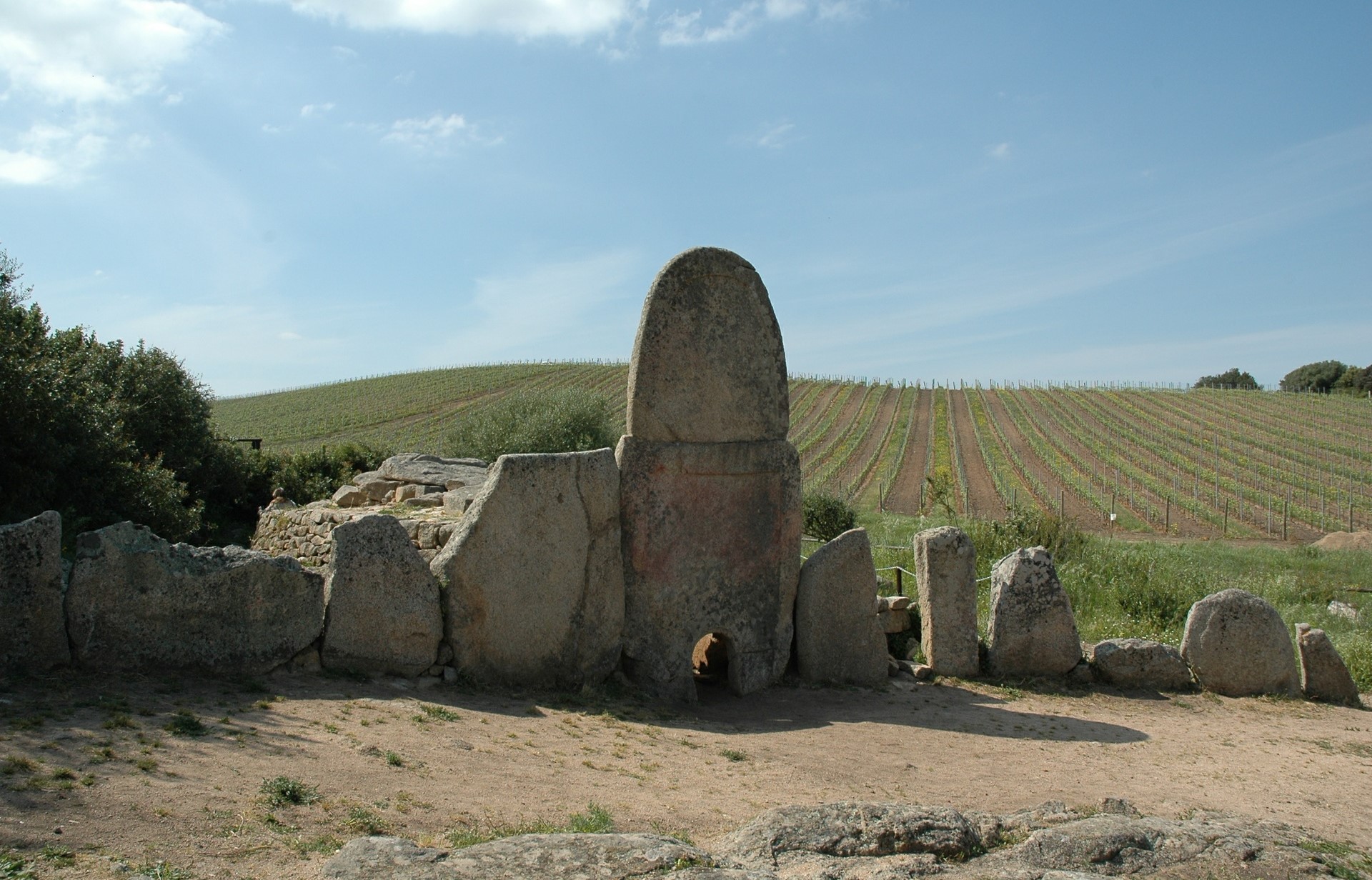
It bears witness to the evolution of the building techniques used on the prehistoric tombs and contains what many consider to be the highest ‘façade’ known to date among the Sardinian megalithic tombs. It is located a short distance from one of the most important Nuragic settlements in Gallura, for which it may have served as a ‘cemetery’. The Giants’ Tomb of Coddu Vecchiu – also known as Coddu Vecchju or ‘Ecchju – is located in the territory of Arzachena, in the locality of Capichera, just 700 metres from the La Prisgiona nuraghe. Built from local granite, it was originally a tunnel tomb, of the allée couverte type. The first construction phase probably dates back to the Early Bronze Age, around the 18th century BC. Later on, during the Middle Bronze Age - that is, between the 16th and 14th centuries BC. -, the tomb was ‘transformed’ into a Giants’ Tomb, with the addition of the front exedra and the curved stele, of an exceptional size: with its four metres, it is considered the tallest on the island.
The front is semicircular and made with orthostatic stone slabs, meaning fixed into the ground. You will notice that their height decreases towards the ends, while the stele stands out in the centre and is made of two overlapping slabs, both decorated with a raised frame. At the base of the lower slab, there is a door that leads to the tomb corridor. The room has a rectangular layout and is about nine metres long, with a paved floor. The internal surface is made up of slabs laid on edge, with rows of stones running above them, the function of which is to support the flat arch slabs that form the roof. The external surface is also made up of rows of medium-sized stones. Everything, during the tomb’s period of ‘activity’, was covered by a mound of earth and stones. During the excavations, grave goods were found, including pans, bowls, pots and rolling dishes with engraved decorations.
About 200 metres from the tomb, a few rows of the Demuro single-tower nuraghe can still be seen. Then, heading south-east, you can visit one of the most fascinating Bronze Age complexes in Sardinia, made up of a nuraghe and the village of La Prisgiona. The main building consists of a keep and two side towers connected by a bastion and surrounded by a wall. Outside, there were about a hundred huts, with living areas, storehouses and artisan ‘workshops’. The archaeological remains in the area are surrounded by hills covered in Mediterranean scrub and vineyards. The area is, in fact, renowned for the production of Vermentino grapes, from which the only DOCG wine in Sardinia is obtained. You can enjoy it as an accompaniment to tasty Gallura cuisine, or as an aperitif after a day in the sun on the enchanting Costa Smeralda beaches.
Molara
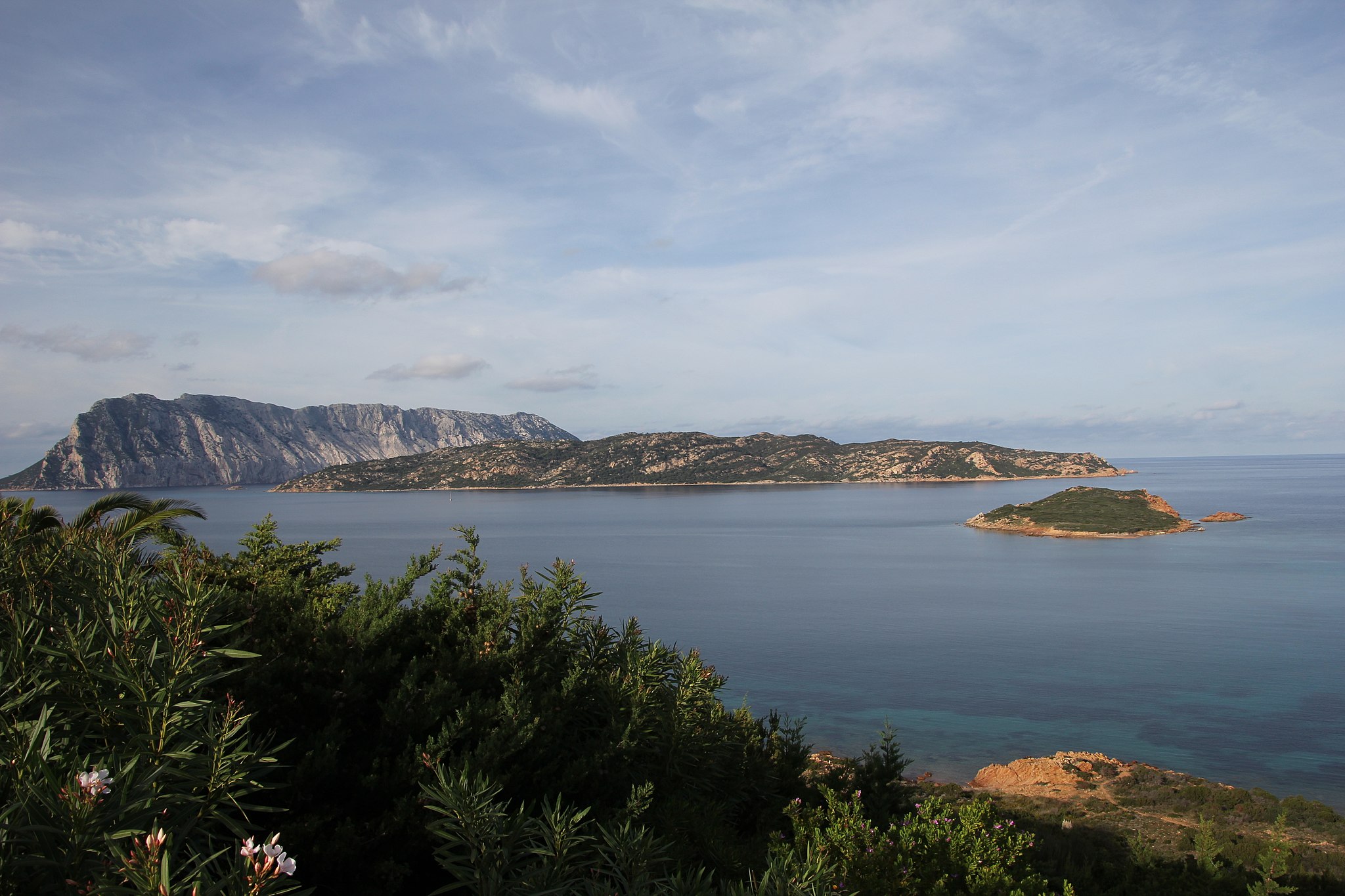
Here and there, it still contains traces of ancient human presence, but today it is above all an uncontaminated haven made of granite and covered in Mediterranean greenery, immersed in the enchanting Gallura sea. Molara is one of the islands within the perimeter of the protected marine area of Tavolara – Capo Coda Cavallo, the second largest after Tavolara. It differs from its more famous ‘neighbour’ in its composition, as Tavolara is predominantly limestone, its shape and because it is uninhabited. Its name is of medieval origin and probably comes from its rounded and basically even appearance, like that of a millstone. The ruins on the island are surrounded by an aura of legend: the remains of a single-nave church may be traced back to a sanctuary dedicated to Saint Ponziano, who is said to have been exiled here by Maximinus Thrax. Around it, there are traces of a medieval settlement and a castle, while some sources testify to the presence of a convent during the 15th century.
As well as its historical aspects, Molara stands out for its natural heritage. There are examples of cows and goats living here in the wild and the Audouin's gull and peregrine falcon nest here. Among the plant species, along with wild olives and lentisks, native plants thrive here, like the Sardinian Asteroideae and the Limonium Acutifolium. In the southwestern part you can go for a dip in the spectacular Molara pools, ‘mirrors’ of turquoise crystal clear water surrounded by granite rocks, also ideal for snorkelling. The waters around Molara are a destination for diving enthusiasts: about a mile south of the island, at a depth of 40 metres, lies the ‘shipwreck of Molara’, which was recently identified as the French merchant ship Oued Yquem. In 1941, the ship was hit, perhaps by mistake, by a Dutch submarine, while en route to the port of Marseilles. When on board, divers can observe groupers, snappers, amberjacks and sea bream, as well as colourful sponges.
You can reach Molara, without missing a chance to stop at the little Cala Spagnola, from Olbia, Porto San Paolo, Capo Coda Cavallo and from Marina di Puntaldia. The excursions also make it possible to sail around the smaller islands in the protected area: Molarotto, Proratora, the Islands of Piana and Cavalli, as well as the tiny islands of Porri, Topi, Drago and the islet of Rosso. A stop at Tavolara is a must. This limestone and granite mountain emerges from the sea, with an unmistakable profile, and hosts the Una Notte in Italia (A Night in Italy) film festival every year. You’ll find little houses, refreshment areas, several beaches and fabulous diving spots here. Among these, to the east, there is the Secca del Papa.

Climbing in Sardinia: the best walls to climb on the island
With climbing opportunities available year-round thanks to the island’s pleasant climate that ensures optimal climbing conditions, Sardinia stands as an enticing destination for those seeking varied and breathtaking routes amidst its natural beauty. Providing unforgettable experiences, its diverse landscape offers a wide range of climbing walls, grades and styles suitable for individuals of all levels, whether you're just starting out on your climbing journey or you're an experienced climber ready to push your limits and showcase your skills in Sardinia. From the dramatic limestone crags of Cala Gonone and the mesmerizing granite spires of Nuoro, Sardinia really does have it all. Discover your next climbing adventure in Sardinia's diverse terrains!

Canyoning, the spectacular itineraries of Sardinia
Canyoning in Sardinia is a unique experience for admiring the scenic beauty of the island from privileged viewpoints: those of its breathtaking gorges, with rocks sculpted by the wind that act as a treasure chest for waterfalls and natural pools.
You can explore the Sardinian canyons in every season of the year, but spring and autumn are particularly suitable for enjoying the excursion to the full. During the mid-seasons, the temperatures are pleasant and the views are rich in bright colours.
Get ready to dive into one of the most captivating lands in the world and experience the unique beauty of Sardinia’s canyons, among which there's the most spectacular one in Europe.
- Sa Figu
- Rio Pitrisconi
- Sa Spendula
- Rio Orrida
- Rio Zairi
- Codula Fuili
- Su Gorropu
- Over 30 canyons in Sardinia

Mountain biking, itineraries not to be missed
Exploring Sardinia by mountain bike is an exceptional way to surround yourself by its wild nature. There are numerous cycling routes that cross its breathtaking coasts, as well as lesser-known corners of the hinterland. The island is famous for seaside tourism which is concentrated in the summer months, although spring and autumn are also magical periods for admiring its beautiful scenery with the sea view filling your eyes and your feet on the pedals. Even in winter it offers sunny days and mild temperatures, ideal for active holidays in the company of your bike.
Discover the mountain bike routes in Sardinia
- MTB excursion in Cardedu
- MTB excursion in Orosei
- MTB excursion: La Maddalena archipelago
- MTB excursion Pala di Monti and Rio Pitrisconi
- MTB excursion: the red river and Piscinas
- Visit Sardinia by bike

Castle of Pedres
Sought-after because of its strategic position, it bears witness to the historical period of the Judicates and the Pisan and Aragonese dominations. It is one of the symbols of Olbia and, along with the Basilica of San Simplicio, one of its most important medieval monuments. The Castle of Pedres stands on the top of a granite rock about 140 metres above sea level, five kilometres south of the town in the Gallura region. According to fourteenth-century sources, downstream, a few hundred metres south of the castle, there was a village called Villa Pedresa, which has now disappeared. It is assumed that the manor house was built in the thirteenth century, during the ‘dominion’ of the Visconti of Pisa. Around the middle of the 14th century, it was entrusted to the hospital friars of San Giovanni di Gerusalemme and it then passed into the hands of the Aragonese. It was later abandoned starting from the next century.
To go up to the castle, you can follow a path with a flight of steps built in recent times, following a route that may have been used by soldiers during the Second World War. Halfway along the path, you will see the ruins of a small watchtower built in the same period as the castle. At the top, you can admire the remains of the fortress: the keep has a quadrangular layout, with two remaining floors - out of four original ones - and is about ten metres high. It also has an underground cistern. The ‘surviving’ corner is formed by two sides that belong to a second cistern and traces of two rectangular rooms. The castle was surrounded by a double wall: the first enclosed a fortified area, where the garrisons were probably located; the second protected the keep.
On the right, you will notice another building. It dates back to the Second World War and may have been an anti-aircraft post, a casemate or a storehouse. Thus, structures built six hundred years apart coexist on the top of the rock. You’ll take another big leap in time by walking three hundred metres to the west: here, you’ll find the fascinating Giants’ Tomb of su Mont’e s’Abe, built in two phases: during the first phase - dating back to the Early Bronze Age (1800-1600 BC) - the tomb was built with a gallery grave; later on, it was transformed into a Giants’ Tomb, with a semicircular exedra, a corridor and a burial chamber.
The archaeological heritage of Olbia, which also includes the nuraghe riu Mulinu, the sacred well of sa Testa and the Roman villa of s’Imbalconadu, as well as evidence that is still visible in the town, is ‘narrated’ in the Archaeological Museum, on a small island next to the port. Speaking of the sea, after visiting the town, you really must spend some time on the splendid beaches of the Olbia coast, overlooking the island of Tavolara.

Kitesurfing, spotlight on Sardinia
The winds move fast in Sardinia, to the delight of those who go kitesurfing and those who enjoy the vision, from the beach, of these colourful kites that seem to dance on the water. The Island offers a variety of exceptional spots to satisfy the desire for adventure and adrenaline of all the kitesurfers on holiday. In fact, Sardinia is one of the best destinations in Italy for enjoying this sport all year round, thanks to its constant winds and ideal weather conditions.
Fortress of Monte Altura
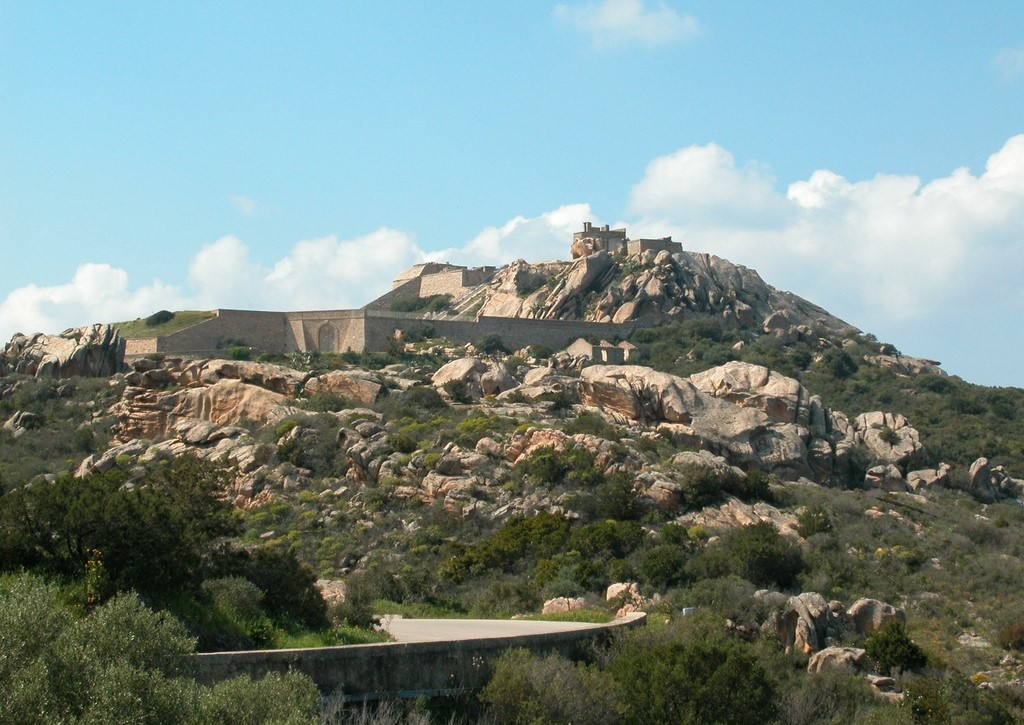
Many people consider it one of the most beautiful military works of 19th century Europe. It defended a sea, crossed by Napoleon, Admiral Nelson and Domenico Millelire almost a century earlier, and today it tells its story and offers an enchanting view of the Maddalena Archipelago National Park. The military fortress of Monte Altura stands in Palau, on the hill of the same name to the west of the residential area, a few steps away from the picturesque village of Porto Rafael. It was part of a complex of three military structures, along with the fortresses of Capo d’Orso and Barragge. It was built in record time, in just two years, between 1887 and 1889, using locally-extracted granite stone. This choice had two advantages: faster construction times and, above all, a ‘camouflage’ effect: the buildings in the complex seem to blend into the rocks of the hill.
The three fortresses dominated a strategic space, seriously at risk in the event of a conflict between the European powers. The territory was monitored 360° up to the coast of Arzachena to the east and Corsica to the north-west. In particular, Monte Altura had an anti-ship defence function, equipped with armaments that were cutting-edge at that time. The complex is surrounded by a series of bastions that stand on the granite ridges. After crossing a path surrounded by fragrant Mediterranean scrub, you will pass the entrance once delimited by a wooden door - now made of iron - and you will then see the buildings that survived naval battles, two world wars and decades of abandonment. Fortunately, Monte Altura was never bombed. Lodgings, warehouses, depots, washhouses, a munitions depot and the monumental ramp that leads to the shooting range seem suspended in time, as if they were ready to return to service at any time. The fortress has two levels, connected by a staircase: the upper level contained the armaments, while the other structures found a place on the lower level. The battery of Capo d'Orso, located near the famous rock, defended the port of La Maddalena during the Second World War, but was unable to prevent the tragic sinking of the cruiser Trieste in April 1943. The fortress of Baragge, on the other hand, is located halfway between the other two, overlooking the present-day town of Palau. Also built on two levels, it is now covered in vegetation.
After your journey through history, you won’t be able to resist discovering the jewels of the Palau coastal area: the city beaches of Palau Vecchio, Porto Faro and Spiaggia dell’Isolotto. To the west, beyond the captivating stretch of sand of La Sciumara, the ‘intimate’ beach of Nelson and the little white houses nestled in the greenery of Rafael await you.
Great beauty travels on the Green train
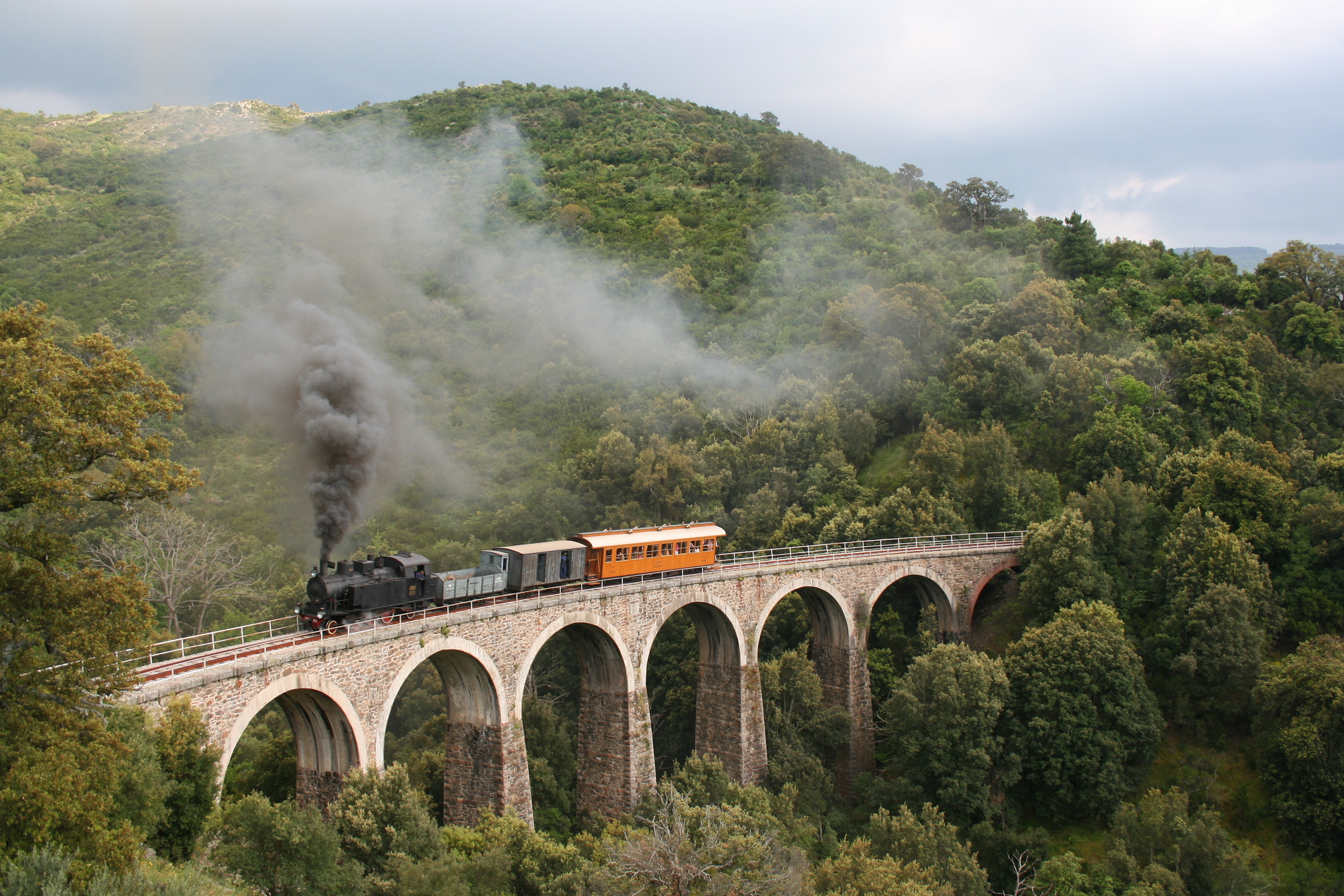
“After a long pull, we come to a station after a stretch of loneliness. Each time, it looks as if there were nothing beyond — no more habitations. And each time we come to a station.” This is the poetic description, aboard the locomotive that is today the Trenino Verde (Green Train) of Sea and Sardinia, the project dedicated by David Herbert Lawrence on his 1921 voyage to Sardinia. Following in his footsteps a century later, travellers from all over the world are attracted to this unique railway line, derived from the ‘old components’, designed and constructed between the late 19th and early-20th centuries. An Italian excellence, a unique experience comprised of four trails currently totalling 163 kilometres. The lines, never abandoned, have been preserved and protected, connecting the coasts and hinterland - and crossing bridges and tunnels -, integrating such with excursions to the lakes by boat, trekking, cycling and horse riding.

Green Flags, Sardinia's child-friendly beaches
Almost unreal colours and transparencies, soft, white sand, sometimes accompanied by pebbles and multicoloured grains, rocks and cliffs sculpted by nature into curious shapes, dunes, pine forests and lagoons as backdrops. These are the characteristics that enchant all those who frequent Sardinian beaches, to which we can also add a factor that is fundamental for many: safety and availability of services for families with children. Almost three thousand Italian and foreign paediatricians consider Sardinia to be on the podium of the regions with the highest number of family-friendly beaches, which have continued to receive the Green Flag award every year. For 16 years now, evidence of increasing attention to the needs and requirements of visitors has been ‘scattered’ across every corner of the Island.