
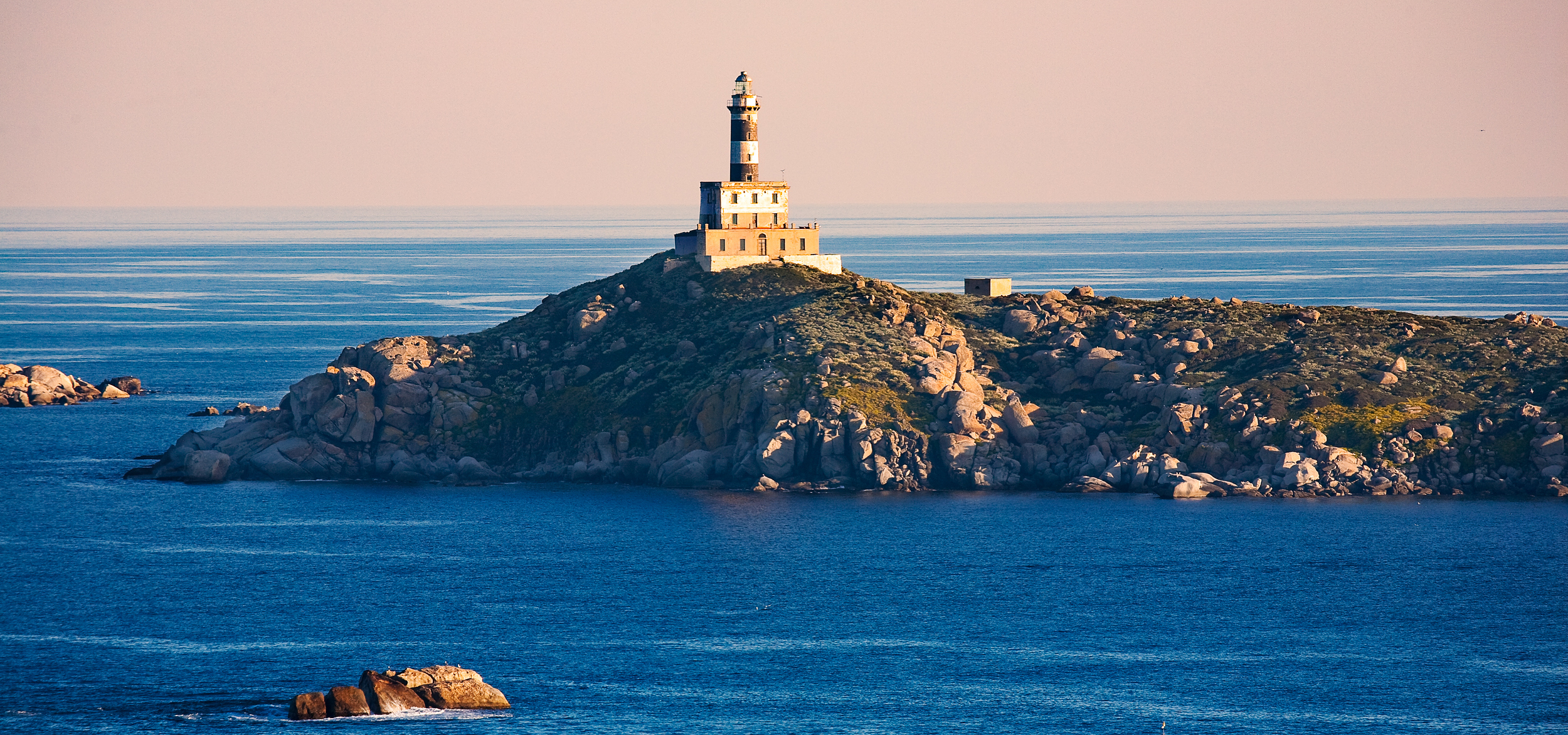
Lighthouse keepers, a story set on the edges of Sardinia
A beam of light keeps night sailors away from the coasts, signalling the last boundary between land and sea. During the day, with the light off, the charm of lost and wild places shines in its stead. Standing on headlands far from everything and on uninhabited islands, the lighthouses of Sardinia are lonely outposts, silent witnesses of the stories of the sea. They watch over bright-coloured waters, where the air smells of salt and Mediterranean scents and the hubbub of waves crashing on the rocks is incessant. They exude the emotions and feelings of the intense lives of their keepers, of yesterday and today. They tell of miraculous rescues and shipwrecks, of boats swallowed by the waves, as in the islet of Mangiabarche (boat-eater), only a short distance from the coast of Calasetta, on the island of Sant'Antioco, named for its reputation among sailors. Nearby, on the island of San Pietro, Capo Sandalo stands on a cliff overlooking the westernmost lighthouse in Italy, built in 1864. From its summit, at the top of 124 spiral steps, it emits four beams of light that reach up to 24 miles away.

Flavours of bread
The same thing always comes to mind: Sardinia is like a small continent. Everything changes from place to place, even bread, the simplest food in the world, is always different here. The most famous is carasau, the music paper with large, round, very thin discs that seem to make musical sounds. They make it in Barbagia but even there it is not always the same: in Ollolai it is called pane 'ine with smaller sheets, in Orani it is softer and folded on itself and becomes pane lentu or modde, in Mamoiada the dough is made with potatoes.
Ogliastra, on the other hand, is home to the smaller, thicker rectangular sheets of pistoccu, the bread favoured by shepherds for its freshness even months and months after its double baking. The huge loaves of civraxiu of Sanluri, which in some villages are smaller and become su moddixi or moddizzosu, are best enjoyed fresh from the oven. The large, puffy loaves are popular on the island, a bread that you will find under the name of pane tundu in Thiesi, while in Logudoro it is thinner, long and perforated, called pane segadu, i.e. cut. Its variants in shape and size are sa loriga in the shape of a ring, typical in Villaurbana, and sa moddighina in Tramatza. And then there are the spianate (flat breads): the most famous is that of Ozieri, with its inevitable variations, while in Busachi and Bonorva it is called su zichi, and in Logudoro sa fresa.

Altar of Santo Stefano
There is nothing quite like it anywhere else in the Mediterranean: It’ll feel as if you’ve been transported to a strange and mysterious place that evokes deep thoughts and poses unanswered questions. Halfway between Sassari and Olbia, in the Oschiri countryside, nestled in a surreal silence and stunning nature, lies a 10-meter-long slab of granite embellished with a precise sequence of geometric incisions. The stone “table” has been described as a “stone altar” because it sits facing the church of Santo Stefano, whence the name. In a nearby wood of Mediterranean brush is a necropolis with eight domus de Janas, or House of the Fairies, surrounded here and there by rocks with niches where it is hard to distinguish which are the work of man and which that of nature.
On the wide granite wall of the altar are incisions in a variety of different shapes: triangular, quadrangular and semicircular recesses, surrounded by dozens of cup marks and crosses. Between the necropolis and the altar, four other engraved rocks can be identified, each both charming and sacred: one with three quadrangular niches and cup marks above and below; another with two triangular recesses and a ledge, perhaps used for votive offerings or incubation rites; a rectangular niche, similar to a stone ‘tent’ or tafone tomb; finally, a 'meridian' consisting of a circular recess, surmounted by a step and surrounded by cup marks. Many of the incisions have been “Christianised” by the addition of a cross to erase its pagan origins. Dating the site is rife with uncertainty: the underground necropolis suggests anytime from the recent Neolithic to the Copper Age (4th-3rd millennium BCE). But there are those who say it dates to after the advent of Christ or even Byzantine times. While the absence of a thorough archaeological study has left it open to a wide range of interpretations, the symbols carved into the stone are entirely without explanation. The designs cannot be compared to any others, tied to rites and with profound religious value, recognizable as divine or astronomical symbols. The area around Santo Stefano remains imbued with a tangible sacredness: female shamans may have given birth here, or corpses may have been stripped here before being deposed within the domus. There is a sequence to the geometric figures and cup markings: they seem to describe the passage from the world of the living to that of the dead. The squares would have symbolised doors, typical of a domus and a Giants’ Tomb, a meeting point between the earth and heaven. The circles are a pagan symbol of continuity, infinity, solar divinities. The triangles can be seen as temples with steps. The site was a centre of profound spirituality for all the civilisations that settled here, from the Neolithic to the Christian Era. It comes as no surprise then that the site houses the remains of a Nuragic temple, and various other pre-Christian relics. Here, 2 kilometres north of town, in the late 15th century they built, possibly on the remains of a Byzantine building, a rural sanctuary to substitute or absorb sacred powers. It too seems to guard secrets: a small Nuragic betyl was adapted for use as a stoup and two stylized faces of the Phoenician goddess Astarte were carved into the façade. At the southern entrance, a trachyte architrave bears a Byzantine inscription (or ancient Logudorese) bearing the date of its construction: 1492. A parchment discovered during the restoration shows 1504 as the date of its consecration.
To get to the site, you will pass through an area of settlements that are the oldest Neolithic (3500-2700 BCE) civilisations in Sardinia, the Ozieri culture, not far from Oschiri. The entire Oschiri area, which goes from the foothills of Limbara and looks out over Lake Coghinas, to the border between Logudoro and Gallura, is dotted with prehistoric remains: a total of 70 domus de Janas, several dolmen and menhirs, some 60 Nuragic settlements. In the MuseOs, the town’s archaeological museum, you’ll find relics that date to Nuragic and Roman castrum times, symbol of one of Sardinia’s most Romanised areas, populated until the Middle Ages and home to Oschiri’s most famous church, Nostra Signora di Castro, its cathedral until 1508.

Hiking just a few steps from the city
The island is an infinite world to explore on a hike. Through the Rete Escursionistica della Sardegna (Sardinia Hiking Network - RES), you can explore the island with routes suitable for everyone, from beginners to experts. It is important to stay alert at all times, even when the route seems easy. At the end of the day your effort will be rewarded with unforgettable experiences. Towns and hinterlands offer the first insights into flora, fauna and history: Monte Urpinu, Botanical Garden, Molentargius-Saline Park and Sella del Diavolo (the ‘Devil’s Saddle’) in Cagliari, Mount Ortobene in Nuoro, in particular the stretch from the Chiesa della Solitudine church to the statue of the Redeemer, Monserrato Park in Sassari, the tour of the springs in Tempio Pausania and Aymerich Park in Laconi (with its medieval castle). From here, it is only a few steps into the Funtanamela forest. 500 hectares of holm oaks and Mediterranean maquis, a habitat for Sardinian deer and wild Sarcidano horses, along routes that follow the ancient herding routes between Barbagia and Campidano.

Traditional desserts make every party a good one
Sardinian cuisine reflects thousands of years of stratified culture, with added value brought by the extensive production of traditional desserts. The names, shapes and details of the recipes vary depending on the territories, but the basic ingredients are identical, simple and aromatic. The result is a variety of delicacies, like the famous seada or sebada, made of two disks of pastry, one on top of the other, with a tangy, stringy cheese filling, flavoured with lemon or orange peel. After frying in boiling oil, it is drizzled with honey, preferably strawberry tree honey, and served hot and crispy. Its origins are in the agro-pastoral culture of Barbagia, when the shepherds returned home after the transhumance, welcomed by the warmth of the family. The biscuits of Fonni, similar to sponge fingers but softer and flavoured with lemon or vanilla, are perfect for every occasion. In the Campidano area, the pastries are known as pistoccus. They are made from eggs, sugar and flour. The is pistoccheddus grussus are dry, light, crumbly biscuits and are ideal for breakfast. They come from the villages around Monte Linas, where they are called gallettinas. For an afternoon snack, there’s nothing better than a ricotta cake or an ancient dessert known as su papai biancu, already made in the Middle Ages in Cagliari: a milk pudding sweetened with almonds and lemon.
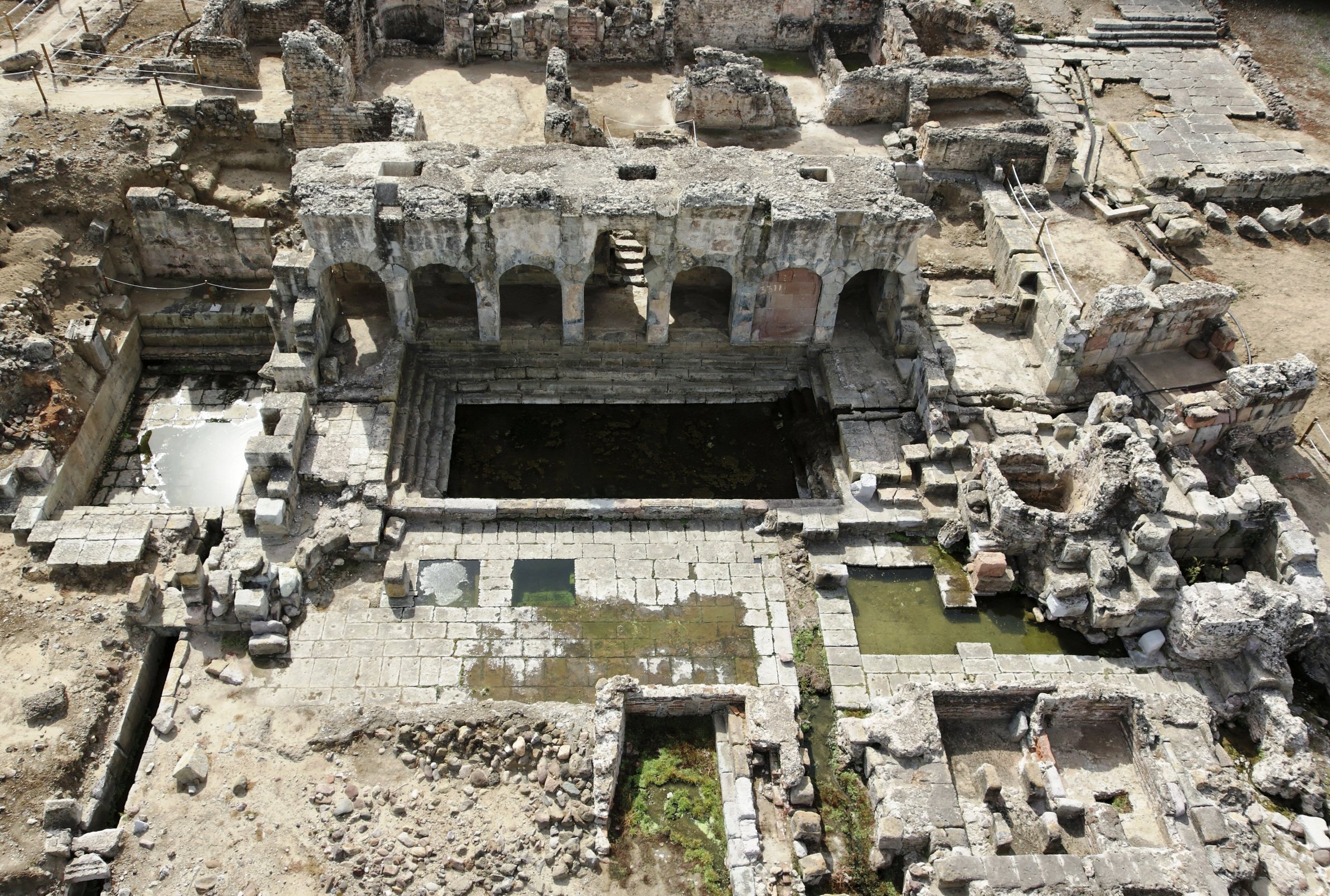
Thermal waters, wellness since time immemorial
It is no coincidence that in Sardinia the thermal waters, filtered by ancient volcanic rocks and heated by the effect of the geothermal gradient, flow near domus de Janas and nuragic sites. In fact, it can be said with relative certainty that the benefits of their saline-bromine-iodine or sulphurous composition have been well known since prehistoric times. These characteristics did not escape the notice of the Roman colonisers, who identified areas on sites already known in the Nuragic age where thermal baths could be built, which have survived to the present day. Even then, the 'patricians' benefited from curative and aesthetic treatments in unique surroundings. Today you can enjoy them in modern and cosy facilities, perfect for relaxation, wellness and pampering.
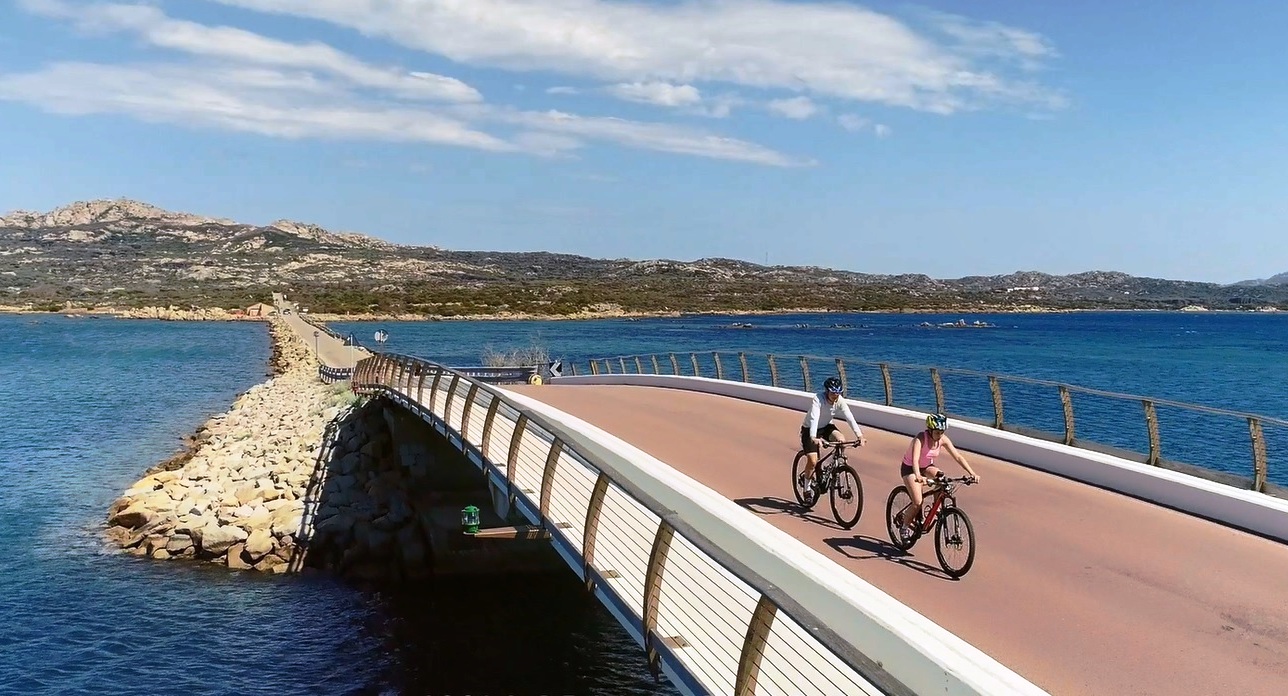
Capo di Sopra on two wheels
Silence amplifies the sounds of nature. The breeze cools the rhythmic pace. Wonderful landscapes flow by on easy roads. The mild climate goes hand in hand with discovering lands rich in history and culture and getting to know the communities that inhabit them. Quality facilities welcome you at the end of a day of riding. Authentic and delicious dishes recharge you so you’re ready for the next day. Sardinia has all the elements that a cyclist looks for in a holiday. Routes of varying difficulty offer a wide range of choices, from beginners to experienced cyclists.
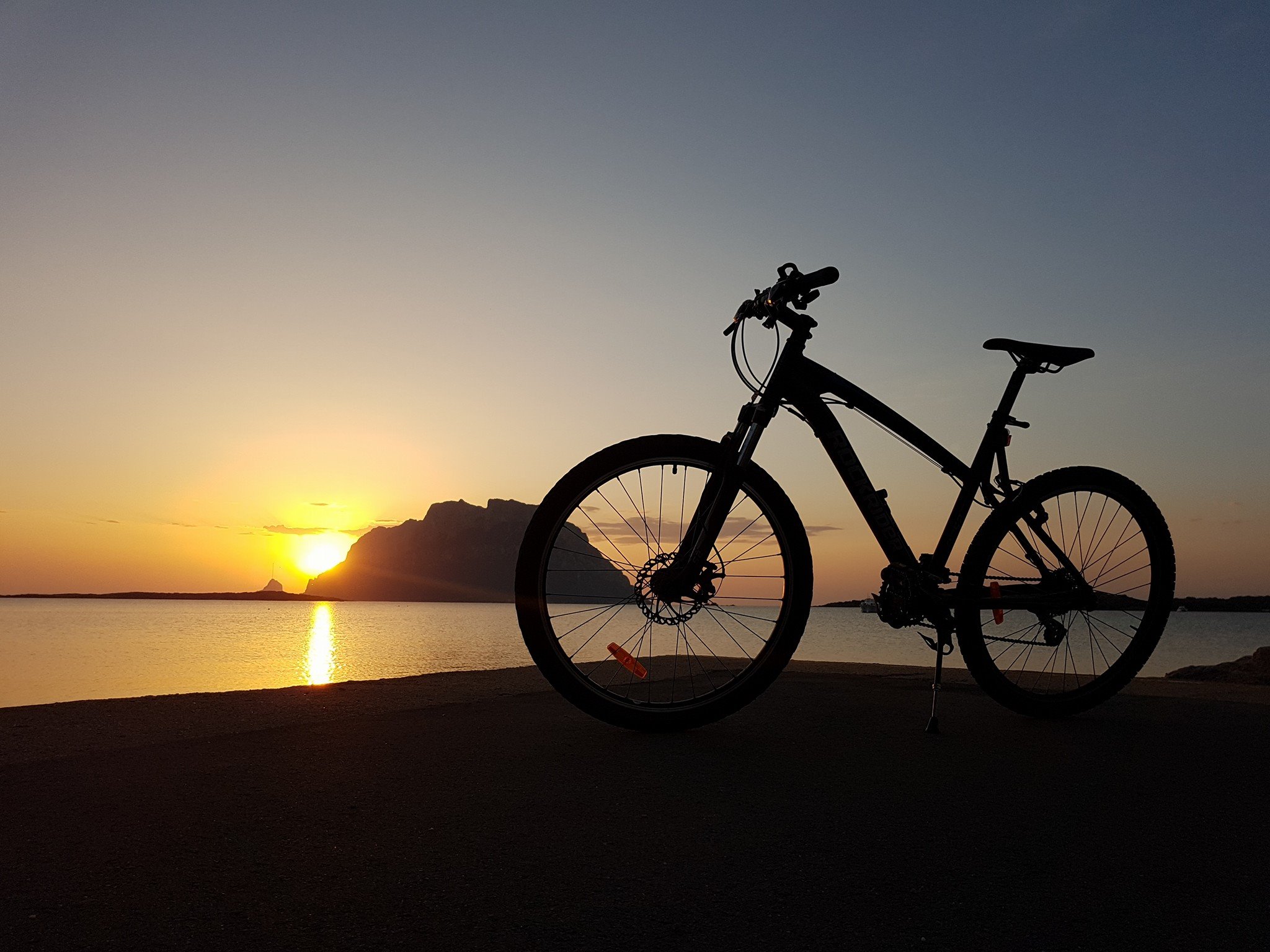
Riding between the mountains and the sea
It is by riding a bicycle that you learn the contours of a country best". Ernest Hemingway loved travelling on two wheels, the sense of freedom, the rhythmic pace, exploring new lands. He would probably have enjoyed cycling through Sardinia amidst enchanting scenery, comforted by a mild climate, away from traffic, on safe, sometimes deserted roads, in close contact with the local area and its communities. Cycling is the means and common thread for discovering an authentic, ancient and sometimes unspoilt land.

Bikes and nature, cycling in the parks
Sense of freedom, a rhythmic pace, mild climate, captivating scenery, not much traffic on the roads, sometimes deserted, silence that amplifies the sounds of nature. It is Sardinia on the saddle: lovers of cycling holidays will enjoy itineraries in direct contact with the landscape and the communities of an ancient land, with long uncontaminated stretches, sometimes rugged and wild. The roads merge with places rich in natural treasures and archaeological and cultural attractions and they satisfy the needs of those who combine passion for cycling and nature with a 'thirst' for knowledge. Two wheels are the means of transport and also the central theme. You can discover the area in which you are staying on ring-shaped routes or you can take a tour in stages with itinerant stays: a different location every day. On a road bike or a mountain bike (for off-road lovers), along the coast or in the hinterland, preferably in spring or autumn, there are routes of varying difficulty, for expert cyclists or amateurs.
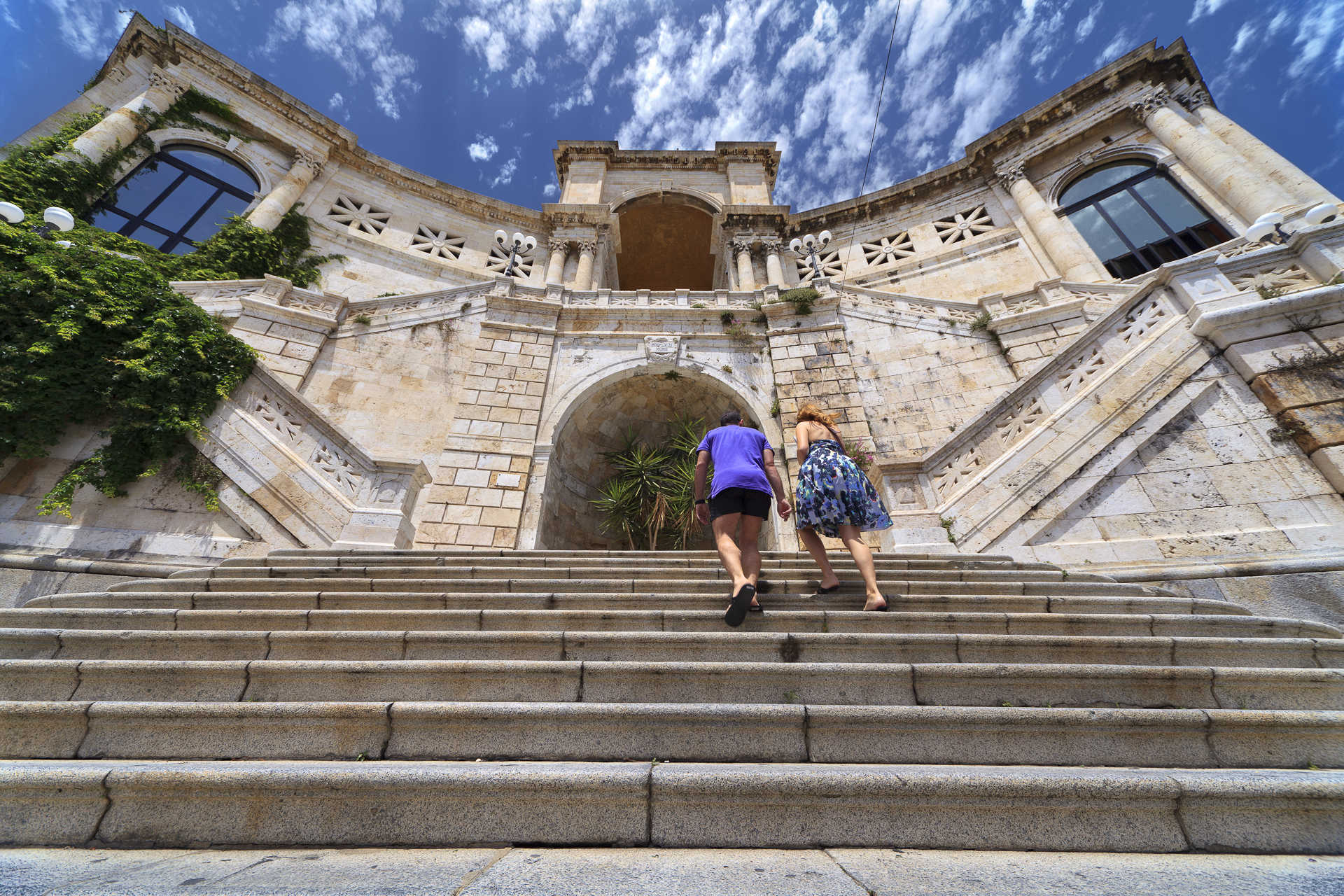
Monumenti Aperti, exploring architectural and artistic treasures
Magnificence, shared memory, authenticity and a sense of community: this is the most encompassing effort to safeguard, enhance and promote the cultural heritage of Sardinia. Over the next seven weekends, the 22nd edition of Monumenti Aperti (Open Monuments) – a candidate for the 2018 Europa Nostra award, a European Union award for cultural legacy – will shine a special light on the island’s architectural, historical and natural heritage: some 800 places of extraordinary cultural value that include the museums and archaeological sites, churches and historical buildings, natural monuments and parks of 59 municipalities all over Sardinia, seven of which are new to the movement. Each town will tells its tale through literary itineraries, architecture routes in cities that have been marked by centuries of powerful rulers, and journeys into the dawn of time among the remains of ancient civilizations. As you follow the route, some 18,000 volunteers – many of whom are school children of a variety of ages - will narrate the stories that marked the history and culture of their town.