
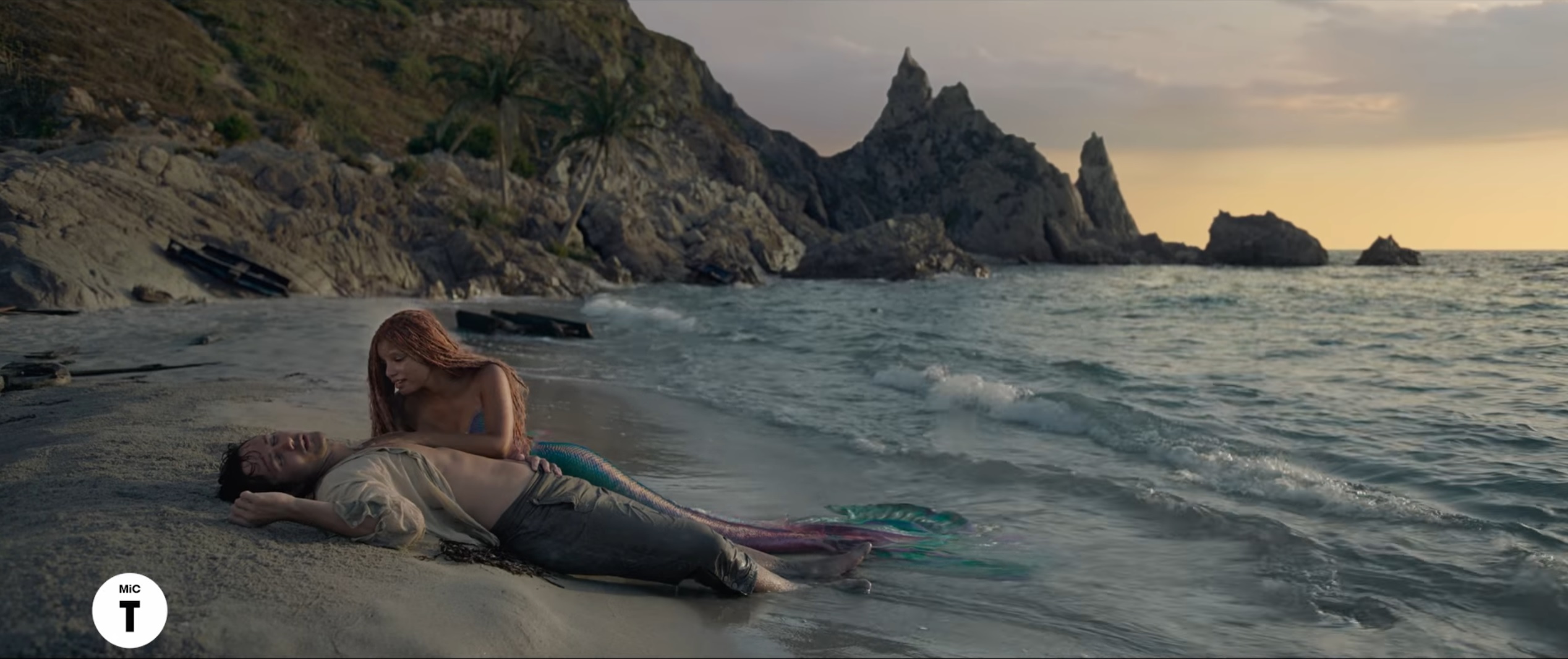
Natural scenery of an island straight out of a film
From deserted beaches to promontories overlooking the sea, from the wild Supramonte to the abandoned mining villages of Sulcis, from ancient forests to towns where time has stood still: Sardinia has always been an inspiration to writers and directors looking for scenery. Among the latest successes, there are several TV series, a very popular genre nowadays: ‘L'isola di Pietro’ (Peter’s Island), interpreted by Gianni Morandi and set on the island of San Pietro and in its village, Carloforte, and ‘Catch-22’, starring George Clooney, with its main location in the area around Olbia. The first films were recorded here in black and white, between the two world wars. The first successful film was “Forbidden” (1954) by Mario Monicelli, based on “La Madre” by Grazia Deledda, filmed between Codrongianos, Ittiri and Tissi. Ten years later, the scene of Isaac's sacrifice, part of “The Bible” (1966) by John Huston used Mount Corrasi in Oliena as a backdrop. A whole series was based on the wildest Barbagia: from “Bandits of Orgosolo” (1958) to “Father and Master” (1977) by the Taviani brothers. The theme was revisited in “Disamistade” (1988) by Gianfranco Cabiddu, set between Nuoro and Ghilarza.

Discovering thousands of years of history on foot
Walking in a rhythmic, meditative way, you can really appreciate the best of a unique, mythical land, fully taking in enchanted landscapes and views, getting to know the people and communities that inhabit it and their authentic traditions. Sardinian walks, spiritual experiences and destinations for pilgrimage offer everything the "slow tourist" is looking for, in full contact with the nature, culture and true identity of the places you visit, providing an enriching, educational experience. The island's walks are ideal for tourists looking for an intimate, true experience in a unique natural and cultural setting, and in an area that sees hospitality as sacred. To be seen on foot, by bicycle, on horseback or with the Trenino Verde.
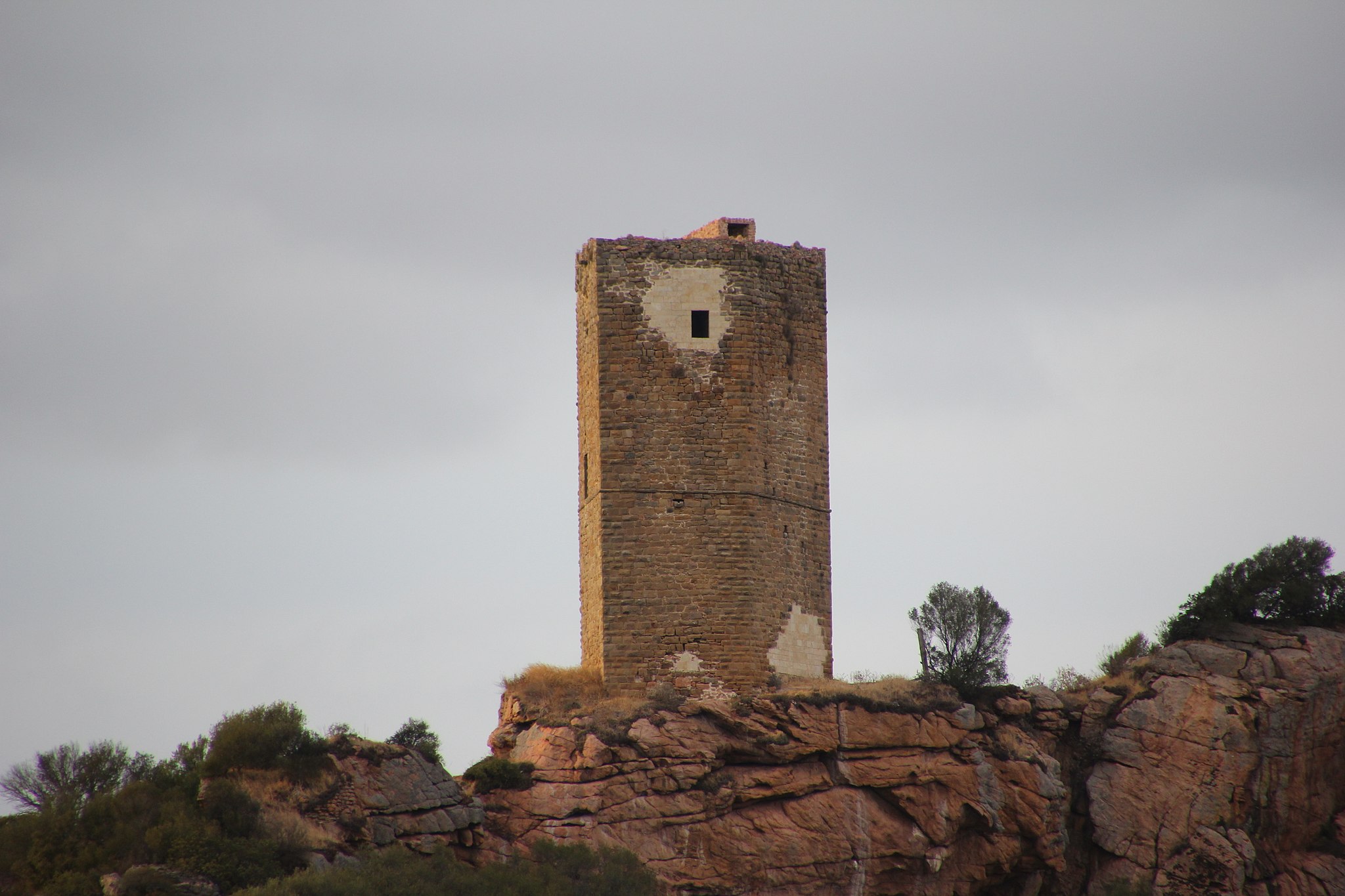
Casteldoria
An aura of mystery surrounds the ruins of a fortress near Santa Maria Coghinas, in the historical region of Anglona. Perching on the granite mountain known as monti di lu Casteddu (or Mount Urtigiu), along the Mount Ruju chain, Casteldoria (or Castello dei Doria) overlooks a fertile valley fed by the "healing" waters of the River Coghinas and Lake Casteldoria, where the Romans built an important bath complex. The castle was built around the 12th century by the Genoese Doria family, and passed from the Genoese dominion to the Aragonese, then to the Arborea Giudicato and lastly to the Malaspina family.
Only a few ruins remain of the fortress: parts of the walls, the remains of a chapel and a large cistern that was probably used to collect and store water. The famous tower, on the other hand, is well-preserved, and is an important part of the castle, built in large, rectangular granite blocks set in mortar. Twenty metres high, it has a pentagonal layout with the entrance on the north-eastern side. On the same side are two large, non-aligned openings, and a large window on the opposite side on the first floor. Inside, the castle has three wooden floors with a tiled roof and walkway. The last floor was created from what was originally a mezzanine floor before a terrace.
The castle, and in particular the tower, is surrounded by legends and myths that have been handed down over the generations and narrated by Nobel prize-winner Grazia Deledda in her Racconti Sardi (1894). One story tells of an intricate system of underground tunnels running between the castle and the chapel of San Giovanni in Viddacuia, (now known as Viddalba), on the opposite shore of Coghinas. The secret passage is said to have been used by the Doria family to get to church on feast days. The tunnels hide another secret - that of an explorer of the tunnels who discovered four large rooms. In one, there was a heavy iron door, which is said to protect the fabulous treasure of the Dorias. Deledda describes a "conca della moneta" (coin hollow) next to the castle, where popular stories say the Dorias minted coin. Here a large gold bell was said to stand, rung by a stone thrown from the top of the hollow. To the west of the tower, where the Dorias walked in the summer evenings, the high, impressive towers were said to overlook the river like guardians.
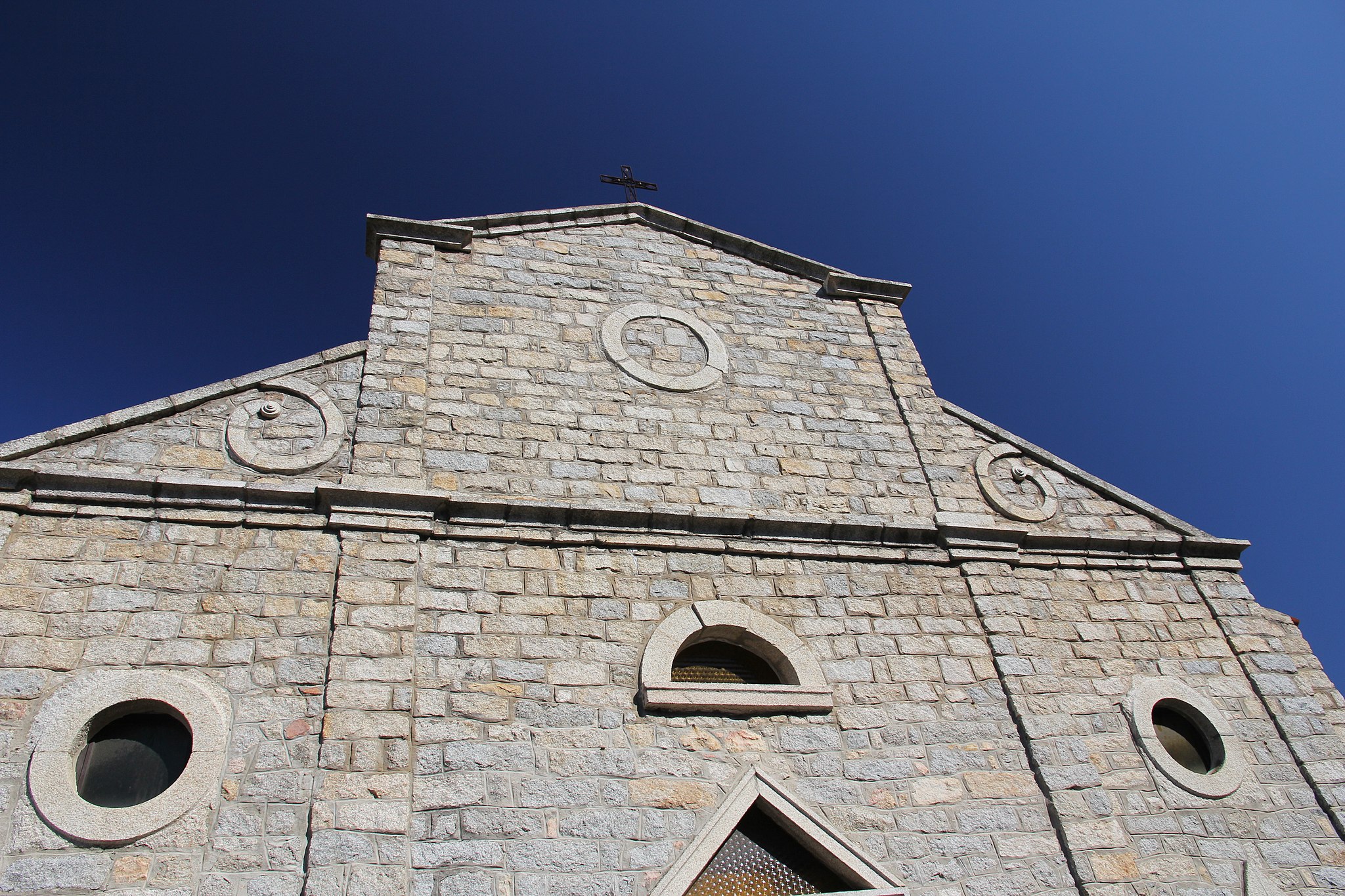
Nostra Signora di Luogosanto
Legend has it that the Virgin Mary appeared before two monks, showing them where to find the relics of Saints Nicholas and Trano and suggesting that a sanctuary be created in her honour amongst the granite and oaks of Cape Soprano, where Locus Santus would subsequently emerge. Legend has it that the Chiesa della Natività della Beata Vergine Maria, known as Our Lady of Luogosanto, was built around 1218 by the Franciscans who arrived in Gallura at the beginning of the XIII century, building one of the first monasteries here during the lifetime of Saint Francis. In 1227, a few years after its completion, Pope Honorius III granted the church the title of Minor Basilica (the first church in Gallura to receive this honour). In the same year, in the countryside where the relics of the protagonist Saints were found, the Hermitage of San Trano sanctuary was constructed. The basilica was rebuilt in the 18th century, at which point it was granted the honour of a Holy Door. Having been walled-up previously, from the 1970s it was represented by a bronze door, the work of the sculptor Luca Luchetti. Presently, it is opened by the bishop for 12 months once every seven years.
La Nostra Signora di Luogosanto, constructed in square granite ashlars, has Romanesque forms. It has maintained the original 13th-century structure with three naves, having been expanded in 1912 to incorporate a portico that was originally detached. The interior is characterised by a beautiful 18th-century wooden Madonna statue known as the Regina di Gallura. Even the statue is shrouded in legend, said to have been found on a beach in Arzachena. Highly revered, it is the symbol of Luogosanto, a village comprised of narrow alleys and granite houses, with the locals being particularly devout. 22 sanctuaries are housed within, throughout the village and the countryside. Not to be missed are that of San Quirico, San Leonardo and the village of Santo Stefano, having been declared a ‘Marian city’ as of 2008. Inside the Basilica are other works of art, including the frescoes of the Baptism of Jesus and the Saints Nicholas and Trano, the statues of the Virgin Mary of Sorrows and of Saint Anthony the Abbot, and a characteristic crucifix. The village is a pilgrim destination, particularly in May, June and on 8th September, when the nativity of the patron saint is celebrated with a great festival. During the period in which the Holy Door is open, the services are particularly solemn.
The foundation of the village dates back to the arrival of the Franciscans. The historic convent, having been restructured, houses the Museum of the Natività Beata Vergine Maria, a hub for documenting the Middle Ages in Gallura, which traces the historical-religious events and displays the ex-voto donated over the centuries to the Holy Child Mary. The Agnana museum, rather, displays the history of the stazzi, typical rural settlements. Interesting historical buildings close to the churches are Palazzo di Baldu and the Castello di Balaiana
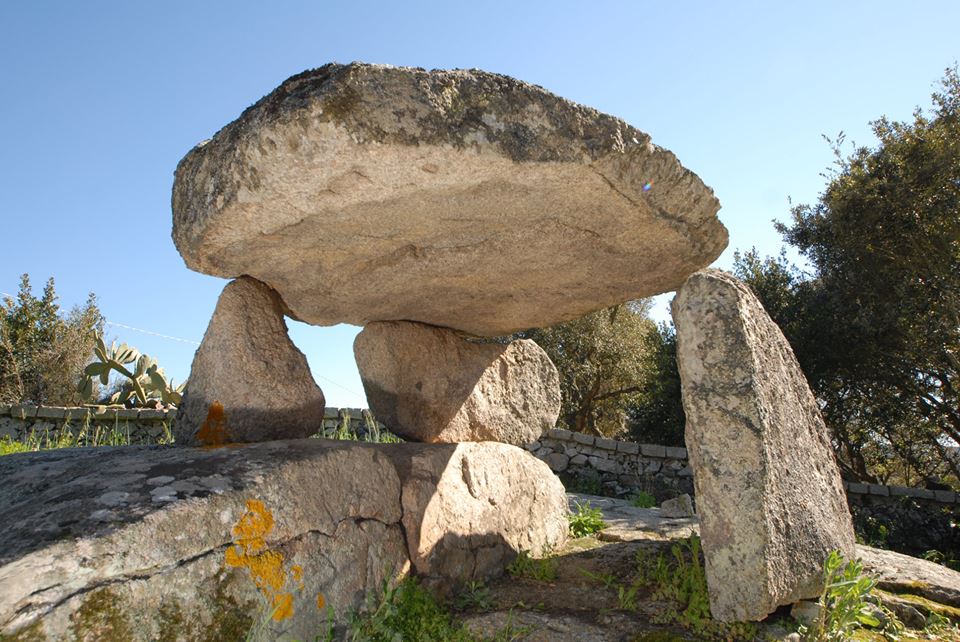
Dolmen di Luras
Sepulturas de Zigantes or de paladinos, as the inhabitants of Luras called the dolmen (from the Breton tol-men, being stone table), the funerary monuments built as of the late Neolithic period (3500-2700 BC), are found in greater concentration in these areas than anywhere else on the island. Here there are four of the 78 in total in Sardinia, located within the town or in its immediate vicinity. There is the allée couverte di Ladas and the simple-structured dolmen of Alzoledda, Ciuledda and Billella. Made according to a trilithic system – horizontal slabs supported by other vertical ones – they served the function of collective burials and, together, of a place of worship, compared with similar examples of Basque, Catalan, French, Corsican and Menorca origin.
Set in a splendid natural setting, the allèe couverte di Ladas consists of a gallery extending six metres in length and more than two metres in height, covered by two large slabs and equipped with an apse. The backing stone has a surface of 15 square metres that has been worked and polished. The walls are formed of regular vertical slabs, flanked by flat masses arranged in obliquely. Next to this is the Dolmen di Ciuledda, similar to that of Ladas but with a semi-circular layout and with reduced dimensions, being less than a metre in height. Found in the two sepulchres were ceramic fragments attributed to the 3rd millennium BC. Both sites are located on granite bases, from which one’s gaze rises up to the massif of Limbara. The simple structure of the Dolmen di Alzoledda rises within the inhabited area, its rectangular form with a trapezoidal chamber more than two and a half metres long and more than one and a half metres in height. The side walls are comprised of slabs surmounted by supporting stones, whilst the back wall is a single flat orthostat protruding from the walls. Amongst the vermentino and nebiolo vineyards, the dolomen di Billella rises, with a rectangular layout, at a length of two and a half metres and a height of 80 centimetres. The right wall is a rectangular slab, the left one has two worked boulders resting on the rock - one having been artificially adapted for the addition of the roof slab that is flattened on the lower surface.
These prehistoric megalithic monuments have bought great fame to Luras. To these must be added the ruins of six nuraghe from the successive age, along with other natural and cultural attractions, starting from the thousand-year-old olive trees. Amongst the trees next to the church of San Bartolomeo di Karana, on the shores of the Lago di Liscia, are two whose age is estimated to be three-four thousand years, perched amidst the twenty century-old trees of Italy. At the centre of the village is the parish church of Nostra Signora del Rosario, which houses precious paintings, and the Galluras ethnographic museum, an expression of the ancient local culture, displaying the macabre hammer used by s'Accabadora (the ‘woman of death’) in acts of euthanasia ante litteram.
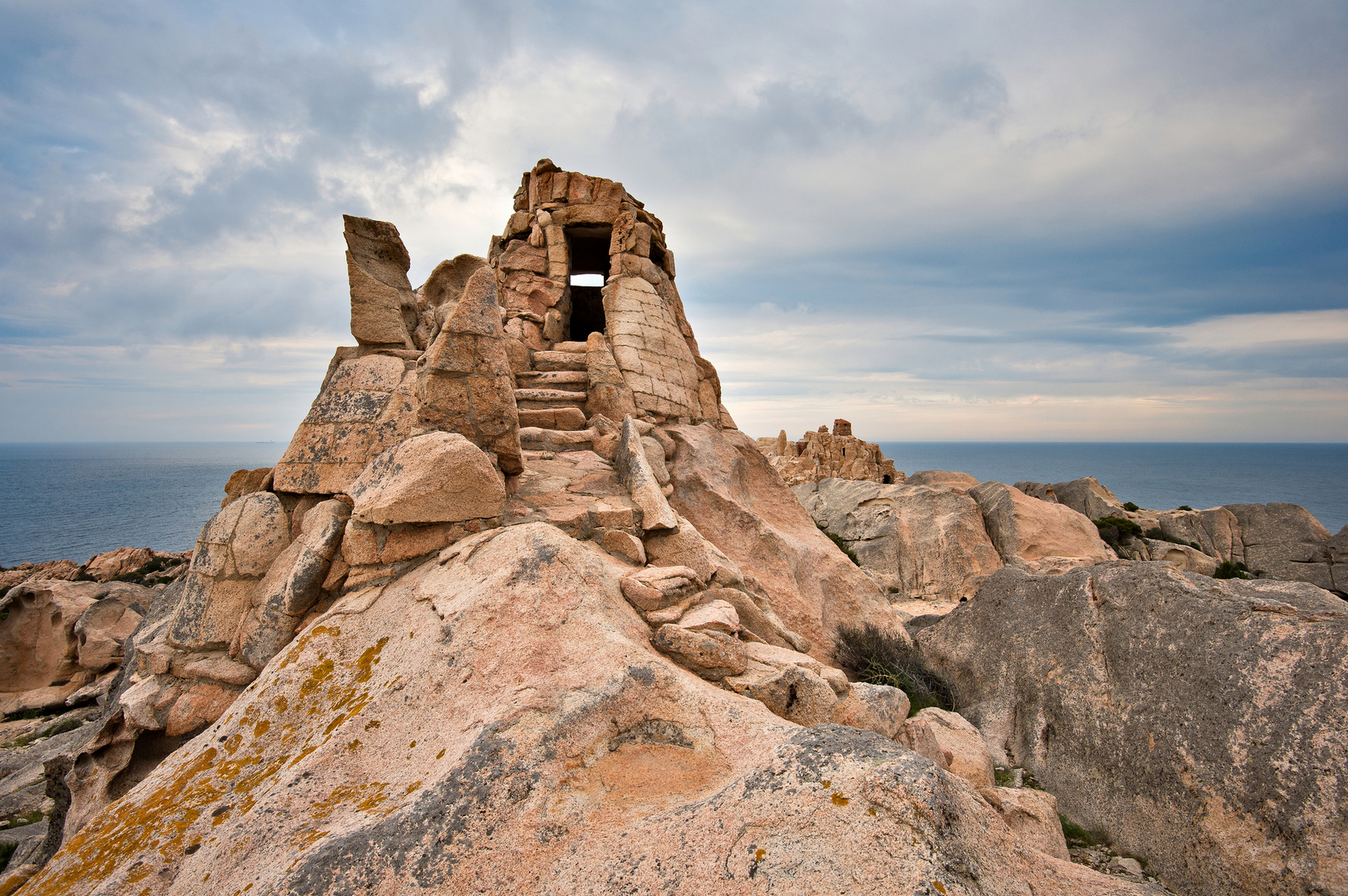
Military fortifications of the Maddalena Archipelago
The Maddalena Archipelago is a land off the border of Sardinia’s north-east, a strategic position that has marked its destiny over the centuries. Along the road that runs along the coastal perimeter of the Maddalena, the ‘older sister’ of a good 60 islands and islets, modern history can be retraced in a place that has been the scene - in Antiquity, as well throughout the last three centuries - of epic naval battles.
In the second half of the 18th century, with the advent of the Piedmontese who made it a support base for Sardinian Navy vessels, La Maddalena, Santo Stefano and other areas of the archipelago were ‘reinforced’ by fortifications - the square tower, the San Vittorio fort, also called the Old Guard, and other forts including the Sant’Andrea, Balbiano, Sant’Agostino and Santa Teresa (also called Sant’Elmo). All are visible from the sea, to discourage pirate attacks.
Commencing in the early part of the 19th century, the defensive system was implemented with the Carlo Felice fort or ‘Camicia’, to protect the Maddalena passage of the Moneta, and with the San Giorgio fort in Santo Stefano. The structures were replaced over time. More recent are other sighting posts and fortifications arising from the late 19th century through to the world wars. More powerful batteries were constructed, occupying positions facing the sea, such as that of Nido d’Aquila and Punta Tegge in the south-western area, Punta Rossa in Caprera, and on the mainland in Punta Sardegna (Palau) and in Capo Tre Monti (Arzachena). Of strategic importance are also other Maddalena forts on high ground, such as Guardia Vecchia and Trinita, which dominates the splendid beach of the same name.
The archipelago, now a national park, hides evocative traces of battles and camouflaged amongst the rocks are anti-aircraft posts. Starting from the splendid Spalmatore cove and in another vast array of strategic locations: Carlotto, Zavagli, Zanotto, Pietrajaccio, Candeo, Cervo Mass, Poggio Baccà, Isola del Porco, Teialone and Punta dello Zucchero. All of these sites can be visited today thanks to the park guides.
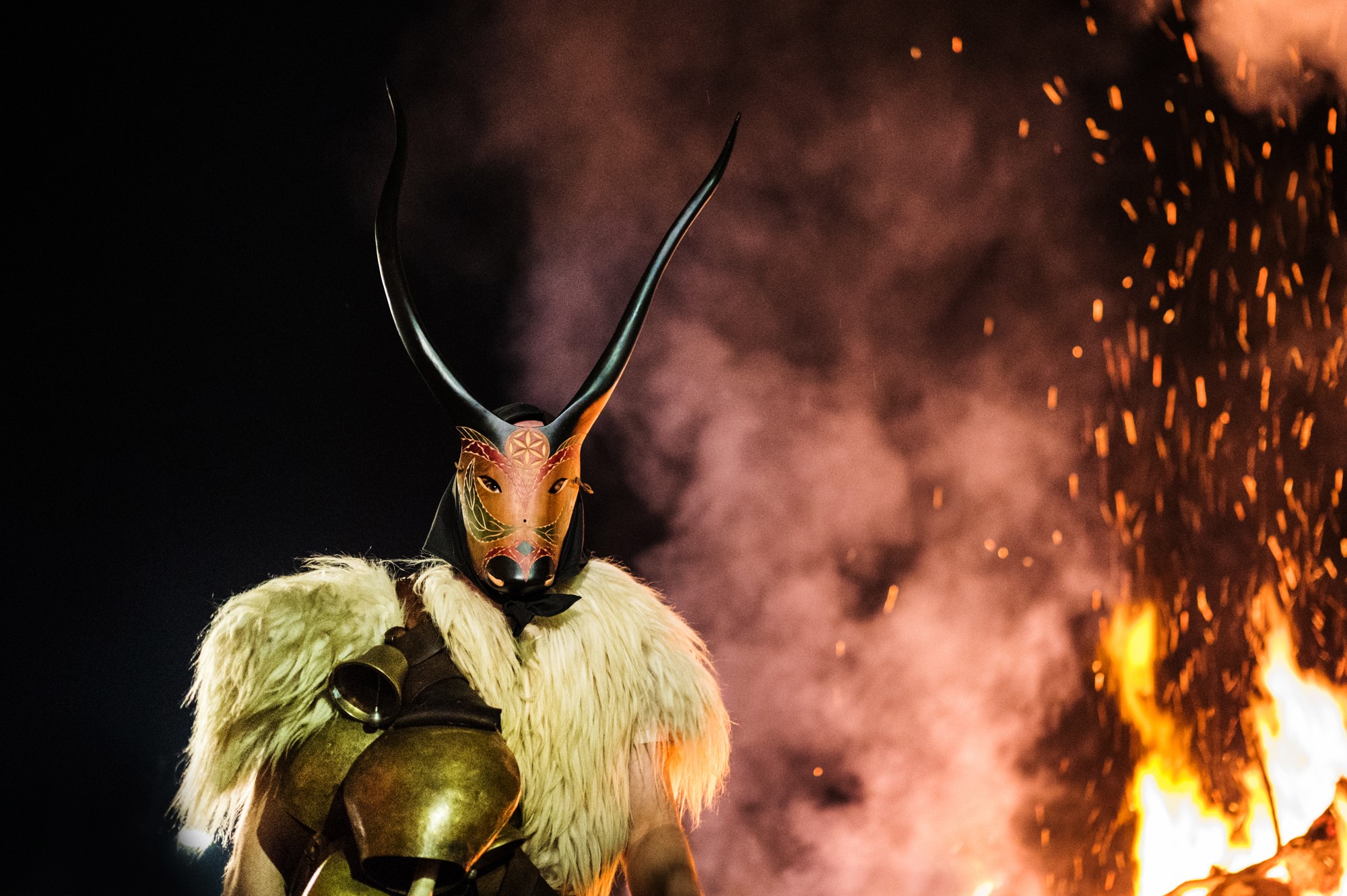
The mysterious beauty of Carnival in Sardinia
With the lighting of the spectacular bonfires in honour of Sant’Antonio Abate, an ancient, solemn rite performed in many of the island’s towns, Sardinia reawakens its spirit and enthusiasm during Carnival. Su Karrasecare has many different sides to it and each community celebrates it with its own traditions, vocations and spirit. January 17 marks the beginning when the bonfires of Sant’Antonio are lit, and Ash Wednesday marks the end, with the beautiful, heartfelt celebrations in Ovodda. They are the first events of the year to enliven winter with ages-old rituals. Sacred and profane, passion and identity, exciting rhythms and magnificent settings like the one at Gavoi, where the tumbarinos (drummers) play. In every town, from the North to the South, you can enjoy typical carnival delicacies like fava beans and lard, pistiddu and coccone, zeppole (doughnuts) and fine wine.

Santa Maria Coghinas
Santa Maria Coghinas lies on a bank of the Coghinas river, adorned with hills that surround a fertile alluvial valley, where vineyards and artichokes are highly cultivated as its main resource. The town has 1,400 inhabitants is and located just short distance from the Gulf of Asinara, a fraction of Sedini until 1960 and then of Valledoria until 1983, when it became an independent Municipality. The present inhabited area was repopulated in the 19th century by families of Gallura shepherds, after the medieval village was abandoned in the 15th century. This is why the language, customs and traditions of Gallura live on, despite the town being part of the Anglona. The name of the village derives from the river and the church of Santa Maria delle Grazie, in Romanesque style with a Gothic façade, coeval with the medieval nucleus of the village. To be admired within is the statue of the Virgin Mary, carried in a procession during the festivities held on 1st May. The quaint Romanesque church of San Giovanni is also well preserved.
A thick blanket of Mediterranean scrub and cork covers the landscape around Coghinas. Herein live herons, osprey, partridges and aquatic turtles. A short distance from the village, where the river loops back at the foot of a granite hill, the Casteldoria thermal baths emerge, famed since Roman times for their therapeutic qualities and today a renowned spa. The temperature of salso-bromo-iodic waters varies between 40 and 70 degrees Celsius. On the same hill, called Monti Di Lu Casteddu, framed by bright red rocks, emerge the ruins of Castedoria, a fortress built in the 12th century by the Doria, who had strong interests in the area, especially in Castelsardo. From the peak, you can spy the Anglona region and the coast, an area of intense traffic since ancient times. The castle was the protagonist of intricate events that involved the republics of Genoa and Pisa, the Giudicato of Arborea and of Torres and Crown of Aragon. The first written testimonies date back to the late-13th and early-14th centuries, then belonging to Brancaleone Doria, husband of Eleonora d’Arborea, and restored by Pietro d’Aragona (1354). It passed through many masters, until the slow decline in the 15th-16th century and the demolition by the Piedmonts at the end of the 18th century. Today, the well-preserved Torre dei Doria can be clearly seen from a distance, with a pentagonal layout and over twenty metres in height, with some parts of the walls, the remains of a chapel and a cistern for water supply. The ruins of the ancient village are still standing, perhaps built together with the fortress, around which myths and legends abound, many linked to the last reigning prince, possibly being Andrea Doria. In a story penned in 1894, Grazia Deledda wrote of a secret underground passage, excavated between the castle and the Cappella di San Giovanni di Viddalba, used to reach the church. The Nobel Prize also refers to the Conca di la Muneta, a basin in which the Doria are said to have pounded coins. The tale tells of an explorer who discovered a room full of gold and another closed by an iron door that was to have contained the treasures of the Genoese family.
Castello di Monte Acuto
The high plains of Monte Acuto, on the southern slopes of the Limbara range, are home to the remains of defensive fortresses and strategic outposts from early medieval times. Wounded during fierce battles and marked by the passage of time, Monte Acuto Castle sits at 500 metres in the Berchidda region and is a fine example. First documented after the XIII century, it enjoyed its most flourishing period when it was the seat of Giudicessa Adelasia di Torres and of archbishops, prelates and a variety of dignitaries. The castle was vied for first among the guidicati, and then fought over by Pisa and Genoa. It remained a vital structure until the Catalan-Aragonese conquest, after which it began to fall into disuse and declined to its current state. Perched on high, it watched over the roads travelled by convoys along the Mannu river valley, where merchandise was carried towards Terranova Port, modern-day Olbia, and connected with the Upper Gallura.
In order to get an idea of life at the castle you have to get through thick vegetation amongst which you’ll find a variety of pre-Nuragic and Nuragic sites: dolmen and menhir, huts and megalithic walls bear witness to the prehistoric remains you’ll come across along the trails. As you continue your ascent, you’ll see a sort of outpost, a guard tower, round, located a short distance from the fort. The castle’s main body, which seems to have had an elongated oval shape, is home to the remains of the walls. Tiles and bits of ceramic vases were found here too. At the top you’ll find the remains of a square room, the base of the tower (now gone), and next to that a partially interred cistern. From up here you can see the other systems of elevated outposts, each one visible to the other. You will go back to the life at the castle, imagining the chain of coded light signals created using metal items or mirrors that passed from one outpost to the other, or with bonfires when needed during the night.
After your trip to the castle, go and explore the many attractions in Berchidda, a lovely city with houses and neo-Classic palazzi set along narrow streets surrounded by a granite landscape shaped by the passage of time, dotted with oak and cork woods and Lake Coghinas. At Berchidda you can enjoy traditional cuisine, like the suppa cuatta, fine cheeses, sweets made with almonds and Vermentino wine. In mid-August they have the world famous Time in Jazz festival. In the town centre you can visit the church of San Sebastiano and the XVI century church of the Rosario and the wine museum at the feet of Sant’Alvara hill. In the surrounding countryside are prehistoric and Roman remains, like the bridge over the Silvani river.
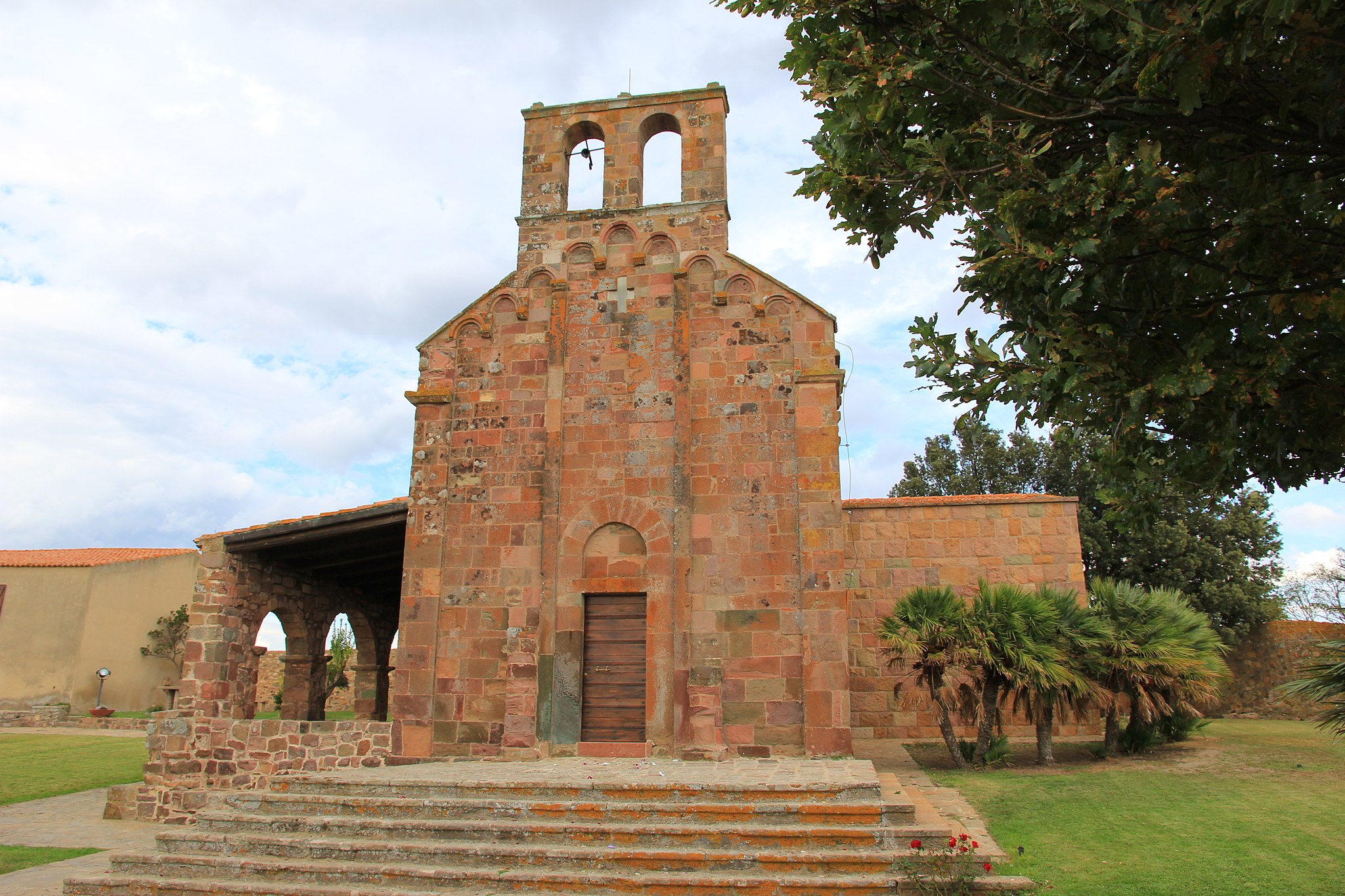
Nostra Signora di Castro
On a high plain on Monte Acuto, one of the most “Romanised” areas in Sardinia, a Roman-Byzantine castrum (castle) and medieval ruins dominate the plain below, home to the Coghinas river and lake. This is the setting around Nostra Signora di Castro, just five kilometres from Oschiri. Going up the hill of the small Romanesque church you will relive the history of the XI and XII century, when it was built between the banks of the lake, the castrum of Luguido, the village and the Castra castle, which lend their name to the temple. It was once the cathedral of the Castro diocese, which was done away with four centuries later, in 1508. No one knows the exact date of construction. The Liber judicum turritanorum claims it was founded by Mariano I di Torres in the XI century, at the same time as the Nostra Signora del Regno in Ardara, whose Romanesque-Lombardian style bears close similarities. Others think it’s consecration was linked to the cathedral of sant’Antioco di Bisarcio in 1164 or 1174.
The area around it has lodging for pilgrims, cumbessias, and a two storey building now used for exhibitions about the history of the sanctuary and the archaeological site. The church attracts many pilgrims, the courtyard comes to life on the Sunday after Easter for the Madonna di Castro celebrations. Once up the five stairs you will enjoy the light reflected by the blocks of trachyte used to make the building. They are graced with gradations of hues of intense pink to dark purple. Two pilasters face the door and divide the façade into three mirrors, each featuring three arches set on decorated bases. Inside is a single 11 metre long and 5 metre wide nave. The semicircular apse has a trussed wooden ceiling. To the left is a great door that was added at a later date. A parchment has survived from the Romanesque altar, now housed in the parish of Oschiri. It features St Restituta, an African martyr whose cult on the island dates to the High Middle Ages. Some graves in the surrounding area date to the same period.
In Oschiri, a town in eastern Logudoro at the feet of the Limbara and in the middle of a valley graced with Mediterranean shrubbery, oak and cork trees, are other religious buildings of the same period as the former cathedral. In the old town, near the parish church of the Immacolata is the Church of San Demetrio, in the countryside are the sanctuaries of San Giorgio, San Pietro, Santo Stefano and Nostra Signora di Othi. Low houses and narrow cobblestone streets are what characterise this rural village, where fine cheese, Vermentino wine and panadas are made. The surrounding area is home to Roman and Byzantine ruins, but also prehistoric remains like the 70 domus de Janas at the necropolis, the mysterious complex of Santo Stefano and 60 Nuragic settlements. The relics are on display at the MuseOs.