
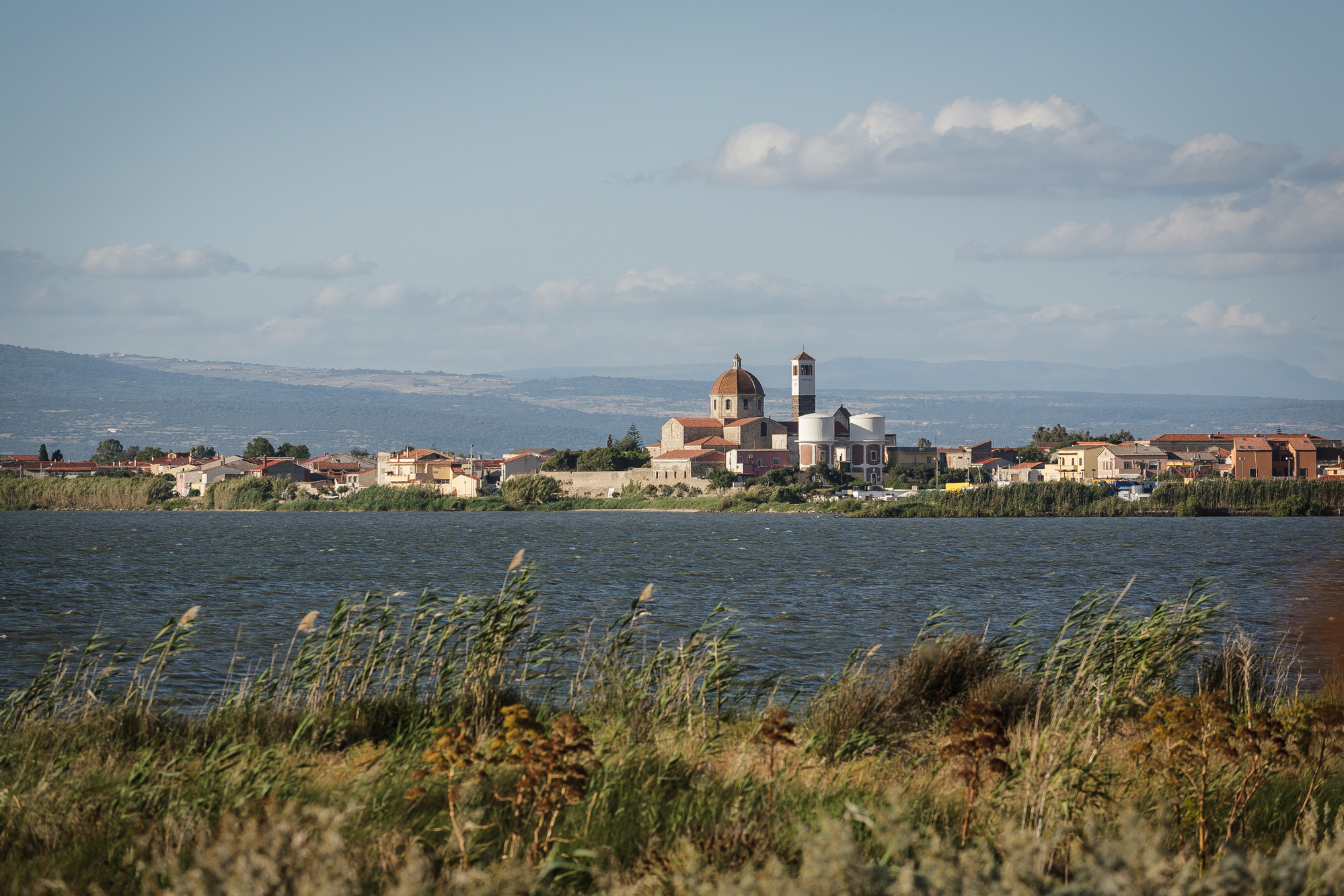
Cabras
It is the ideal place for a holiday in the pursuit of nature and culture. Cabras looks out onto about 30 kilometres of coastline, where the marine area of the Sinis peninsula stretches between the bay of Is Arenas and the Gulf of Oristano. The protected area also includes the island of Mal di Ventre and the little islet of Catalano, where the wreckages of ancient ships lie on the seabeds. Opposite, on the Cabras coastline, beaches of fine grains of quartz emerge from the turquoise sea, formed by the action of the wind and water on the limestone rocks in the area: don't miss the three wonders of Is Arutas, Maimoni and Mari Ermi. Their beauty will bewitch you. Other equally beautiful beaches with fine white sand are those of San Giovanni di Sinis. Along the road to Is Arutas, you can give your holiday a different touch, by passing through San Salvatore di Sinis. Its low houses, grouped around a central spring, have caught the attention of film directors: 'Garter Colt' (1968), belonging to the 'Spaghetti Western' subgenre of Western films, was filmed here.
Cabras is a very ancient village and in which there is evidence of the Neolithic period, with the site of Cuccuru is Arrius and numerous nuraghi. It can be dated as far back as the Iron Age (8th century BC) and is the greatest archaeological discovery of the late 20th century in the Mediterranean Basin: the statue complex of the Giants of Mont'e Prama, colossal stone sculptures discovered in a large burial area on the hill, partly on show at the town's Civic Archaeological Museum, which was named after the illustrious local personality Giovanni Marongiu. Today, they are a symbol of Sardinia’s identity. Continuing your archaeological visit in the territory of Cabras, you must not miss a chance to travel back in time to the ancient town of Tharros, founded by the Phoenicians in the 8th century BC on what was previously a Nuragic village. Sardinia’s history is summarized in this location: a flourishing centre of trade in the Phoenician-Punic period, an urbs romana, then Byzantine, first capital of the Giudici period and frequented until the Middle Ages.
Another attraction in Cabras: fishponds providing top quality fish, like grey mullet, the eggs of which are used to produce bottarga (fish roe), the 'Sardinian caviar', used by the best restaurants to enrich their dishes.

Sa Chida Santa: authenticity, passion and mystery
Centuries-old ceremonial rites rooted in the Middle Ages and tinged with Spanish tradition come together in archaic Campidanian, Logudorenian and Barbagian traditions that date back to Nuragic paganism. During Holy week, from the coast to hinterland villages you will discover Sardinia’s most authentic essence and experience an itinerary of sacred rituals that revolve around the Passion of Christ. Holy Week in Alghero reveals its Spanish roots. It all starts on the Friday before Palm Sunday with the Addolorata Procession and ends at Easter with the Encontre. The Disclavament (deposition) is deeply emotional: the body of Christ is carried in procession on His deathbed and as the sun sets, the town is illuminated by glow of torches and lanterns draped in red veils.
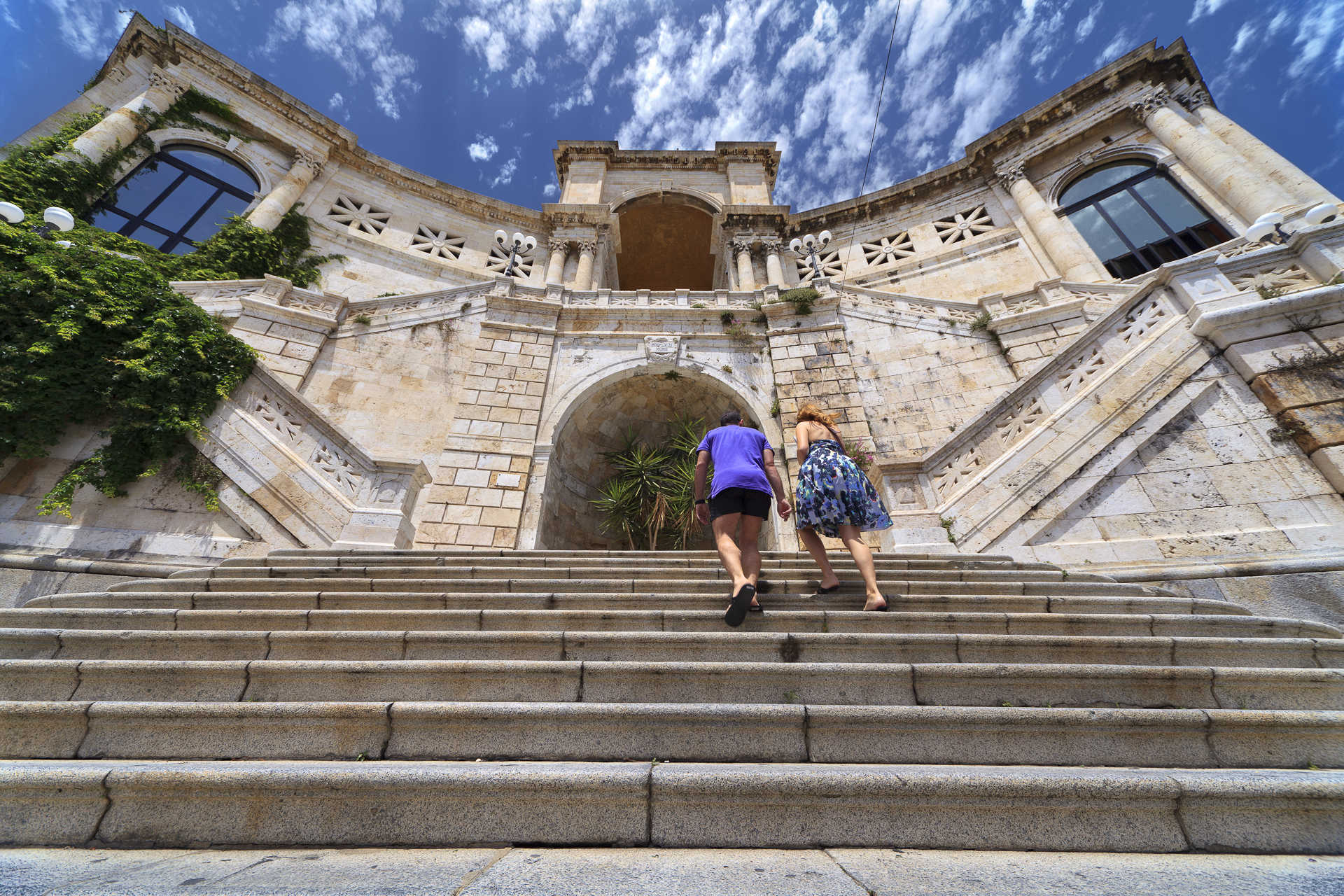
Sardinia unveils its architectural treasures
Artistic magnificence, shared memory, identity and a sense of community: this is the most encompassing effort to safeguard, enhance and promote the cultural heritage of Sardinia. Following in last year's footsteps, the 2025 edition — the 29th — will once again take place in two phases, stretching across nine weekends: from May 3 to June 1 for the first phase, and then again between October and November. Hundreds of cultural sites will open their doors during this time, such as museums, archaeological sites, churches and historical buildings, natural monuments and parks. Each town will tell its tale through literary itineraries, architecture routes in cities that have been marked by centuries of powerful rulers. Students and volunteers are warming up to lead you along a travel through the beauty that crosses millennia, all the way to the farthest past. Places of yesterday and today, where memories of the past and ideas aiming towards the future coexist.
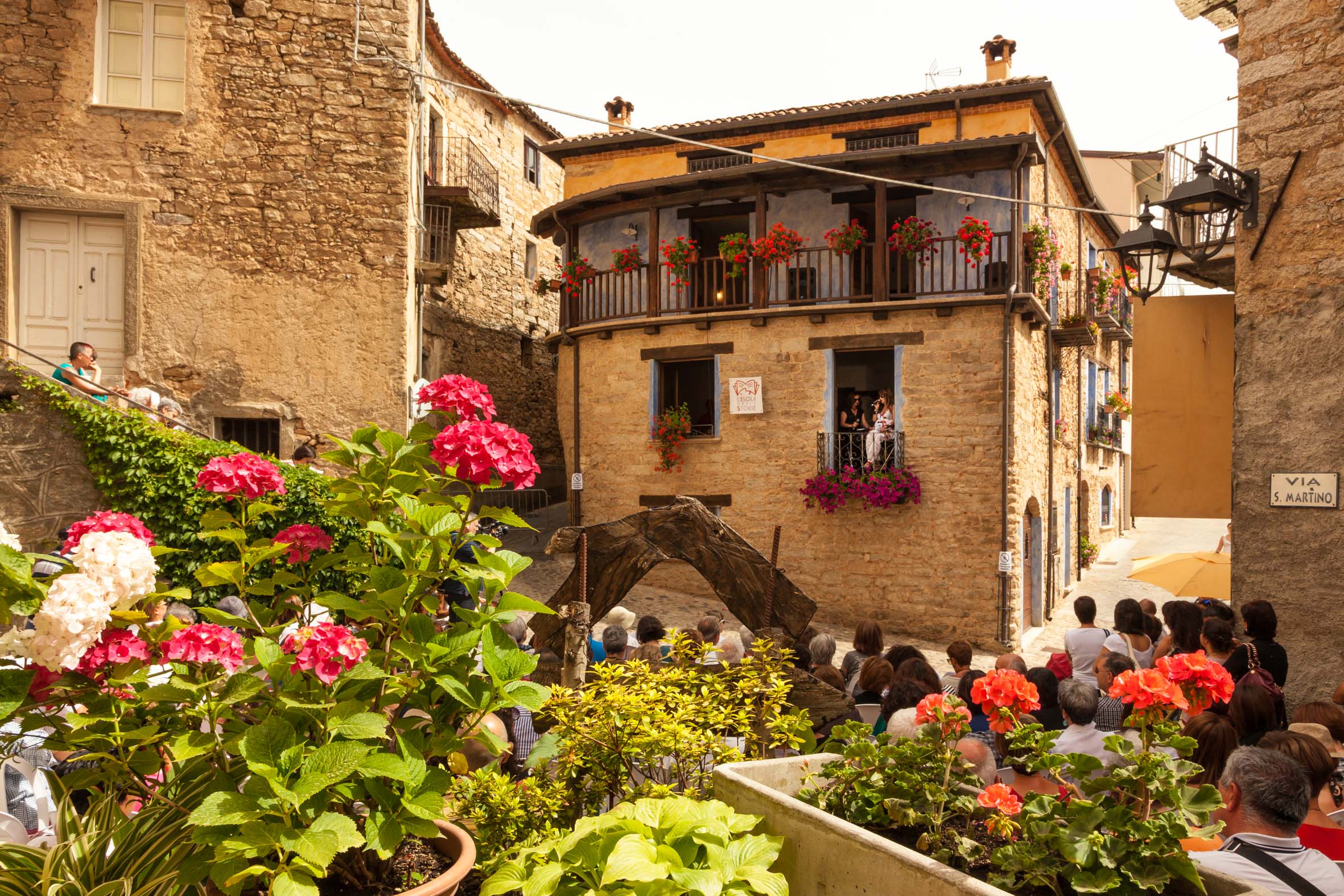
Spring in the villages
The explosion of spring colours on the island are in harmony with one of its most typical ‘picture postcard’ views: the colourful houses of Bosa. Walking along the Temo River, you can admire their reflections in the water, climb the hill dominated by the Malaspina Castle and, by crossing the Ponte Vecchio bridge, you will reach the south bank and discover the ancient tanneries. You will be welcomed by a glass of malvasia wine and impressed with coral jewellery, asphodel baskets and precious textiles. Bosa is a concentrate of history and craftsmanship, industrial archaeology and special treats. Do not miss the churches: the ‘cathedral’ of the Immacolata Concezione, Nostra Signora de sos Regnos Altos inside the castle, and san Pietro extra muros, at the centre of Bosa vetus. And then there is the natural beauty: the park of capo Marrargiu , the reserve of Badde Aggiosu and, on the coast, Bosa Marina, s’Abba Druche and Compoltitu.

Palazzo degli scolopi
Along the axis that crosses the old town centre of Oristano, from the Tower of Mariano to porta Mari, lies one of most famous squares in the town, Piazza Eleonora d'Arborea, in which there is a wealth of important and religious buildings. Around statue of the Giudicessa, you can admire the Church of San Francesco d'Assisi, Palazzo Corrias Carta and, on the corner of Corso Umberto I, Palazzo degli Scolopi. In its place, states the historian Angius, there was one a synagogue, 'justified' by the presence of a substantial Jewish colony that, during Spanish domination, was forced to leave the Island.
Other news on the complex dates back to 1536-40, based on reports from the Council meetings that were held here during those years. The building then became the site of the Jesuit convent: the Scolopi, in 1682, opened an institute there, which was financed by a rich merchant. The Piarists occupied the lower floor of the convent and remained active until 1886, the year in which the religious orders were suppressed and replaced by the Regio Ginnasio. Today, the Oristano Town Hall is located here: inside it, there is the council room, with a sandstone entrance portal, and administrative offices.
The complex was renovated in 1830 by Fra' Antonio Cano. This architect and sculptor from Sassari used classical elements on the long, tall façade. He also intervened on the richest monument, the former Church of San Vincenzo, now a council hall: of his work, four statues of the Evangelists still remain and are located in niches on the perimeter walls. During the fascist period, this space was used as a courtroom and the niches were walled over, in order to conceal the symbols of piety, which were not suited to its new function. The hands, which were protruding from the wall, were destroyed. Another typical decoration is the wrought iron balcony overlooking the courtroom. From here, walking along a corridor with arches, you will reach the sala giudicale (judicial room) in which there are two large paintings by Antonio Benini, 'Matrimonio di Donna Eleonora' (Lady Eleonora's Wedding) and 'Proclamazione della Carta De Logu' (Proclamation of the De Logu Legal Code), and a bronze crown donated by the Venetian women in Oristano in honour of Eleonora (1884). Another intervention took place in the mid-19th century, by Gaetano Cima, who designed the other two neoclassical buildings in the square (Palazzo Corrias Carta and the church of San Francesco). The architect from Cagliari tried to create an austere façade, over the previous one, with a Purist imprint: still remaining from this experiment, are the geometric rigour and a search for a compositional rule.
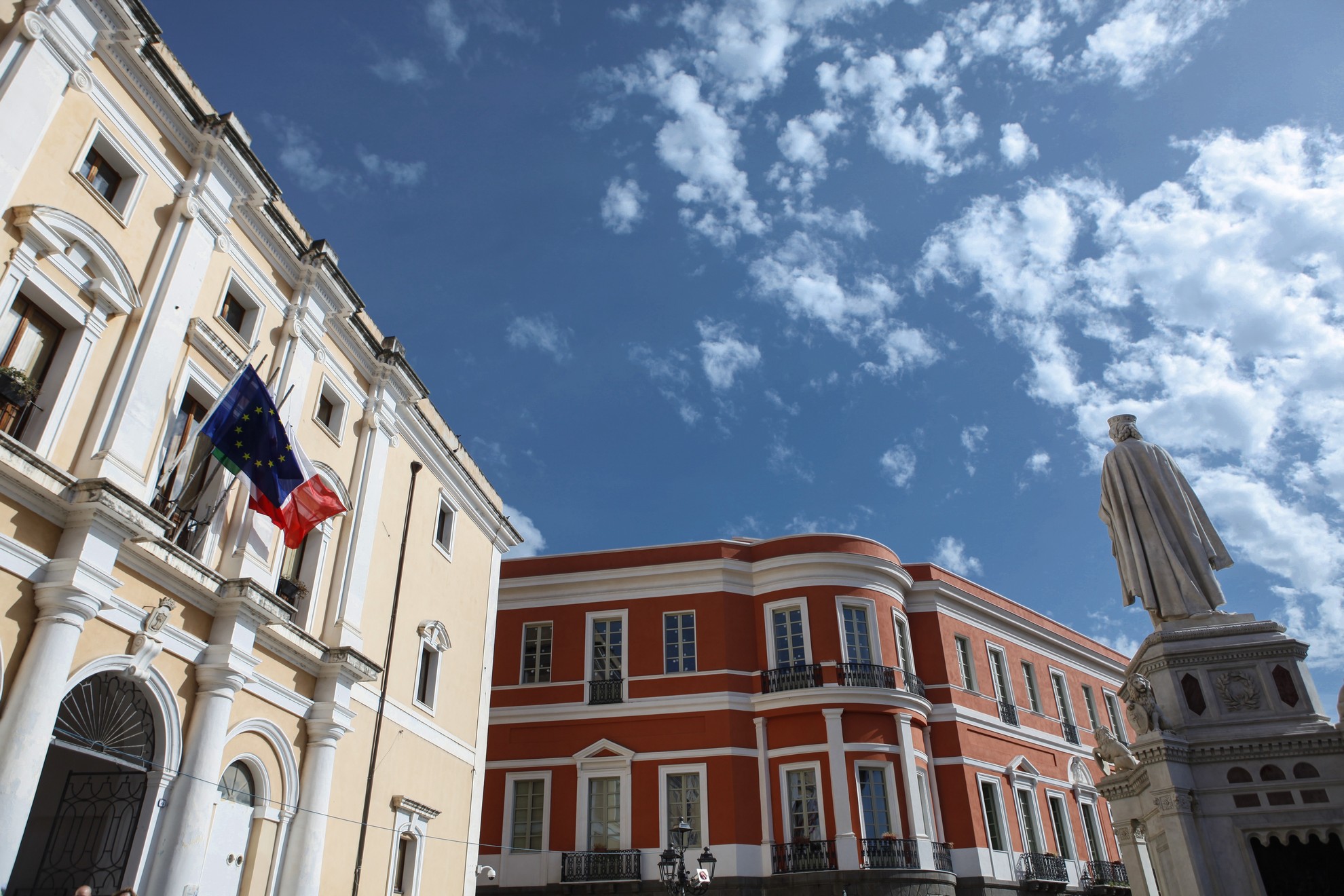
Palazzo Corrias Carta
Its unmistakable brightly-coloured neoclassical façade, stands in Piazza Eleonora d'Arborea, one of the most beautiful in Oristano, in the centre of which stands a statue of the 'Giudicessa' (local ruler). Palazzo Corrias Carta dominates the eastern side of the square at the junction with Corso Umberto I, with its elegant and rigorous style, blending perfectly with the noble character of the building. It was built at the behest of Giuseppe Corrias, as a family dwelling, just after the middle of the 19th century, based on a design by Gaetano Cima, who was also responsible for the neoclassical church of San Francesco d'Assisi. Thanks to the famous architect, it is the most valid testament to nineteenth century religious architecture in Oristano and the building also represents, on the other side of the square, a great example of civil construction. The two buildings have in common their neoclassical morphological repertoire and the great care and attention focused on their insertion into the urban context.
This work, completed in 1874, has the typical decoration of the noble palaces of the period and confirms Cima's simplicity and practical approach. It consists of two buildings joined together by a circular element. The lines are designed to create a balanced and homogeneous façade in which the rounded corner that softens and separates the two parts of the building has been skilfully inserted. This cylindrical space also has town planning value, as it is a connection and creates continuity between the areas of the city that the buildings overlook. Its exterior is elegant while on the inside there are precious frescoes and unusual decorations created by Giovanni Dancardi and Davide Dechiffer, as well as original classical decor dating back to a period between the end of the 19th and the beginning of the 20th century.
Piazza Eleonora is the site of other important historical buildings in Oristano, like Palazzo degli Scolopi, also in neoclassical style, once a Jesuit convent and now the site where the Municipal Council is located. Every year, one of the most famous events in Sardinia passes through this square: Sa Sartiglia. Nearby, you will discover other historical buildings and monuments, like the Cathedral of Santa Maria Assunta, and the Tower of Mariano, the most majestic of the ancient medieval fortifications in the city.
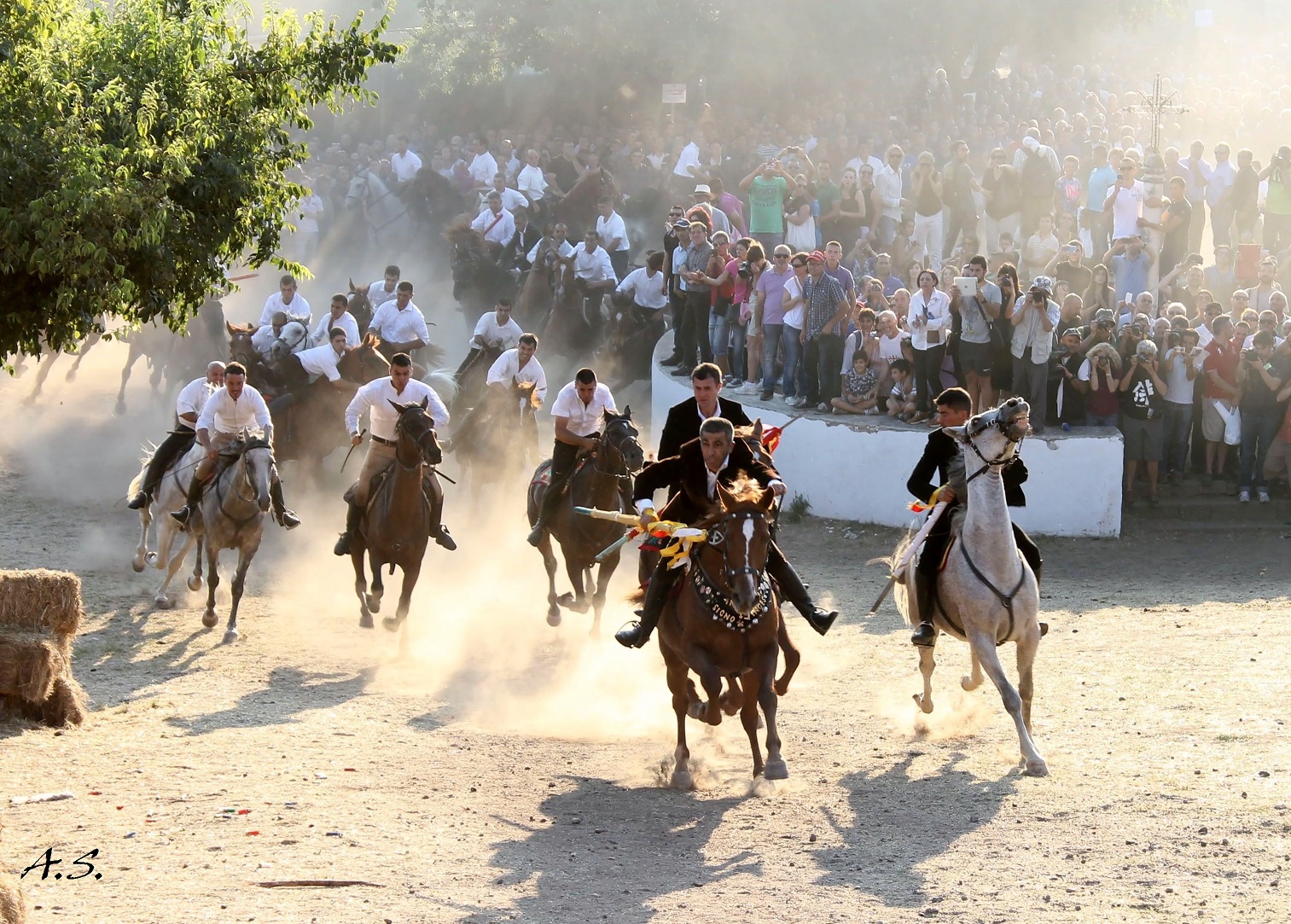
Faith and boldness: it’s time for the Ardia
Following an apparition, the young Emperor Constantine ordered his soldiers to write In hoc signo vinces (“in this sign thou shalt conquer”) onto their shields. Despite the fact that he was outnumbered, on 28 October, 312 AD, Constantine won the battle of Ponte Milva, defeating the pagans of the imposter Maxentius, who, with the support of the Senate, had proclaimed himself Emperor of Italy and Africa. A year later, in Milan, Constantine issued the edict that ended the persecution early Christians had been subject to. At Sedilo, a small town in the centre of Sardinia, the Roman emperor is known as santu Antine and is by far the island’s most venerated saint. Worship of him dates to Byzantine times and every year on the 6th and the 7th of July the emotional and mysterious s’Ardia is re-enacted.

Sanctuary of San Costantino imperatore
It is known as Santu Antinu.in the Sardinian language. The rural church of San Costantino, in the territory of Sedilo, overlooks the splendid scenery of Lake Omodeo, the largest artificial basin on the Island (for a long time also the largest in Europe). Along the perimeter of the sanctuary are the buildings used as accommodation for pilgrims, known as cumbessias or muristenes.
The year in which it was founded is unknown but there is certainty regarding San Costantino Imperatore’s very ancient origin. The current building, in Gothic Catal style, dates back to the 16th century and it underwent renovation work in the 18th century. Of the original structure, the quadrangular presbytery still remains and has a ribbed cross vault with suspended capitals sculpted at the base.
The hall, which is divided into three naves by pillars and rounded arches, has a barrel vault. The interior ends, just before the presbytery, with a pointed arch. The façade is made of exposed red trachyte and ends with a curvilinear shape. On top of the portal, there is a tympanus supported by two semi-pedestals. On the sides and inside the tympanus, you can see three niches and there is a rectangular window above. On the left side of the facade, there is a small belfry. Inside the sanctuary there are numerous ex voto offerings on display.
Around the church, at sunset on 6 July and at sunrise on 7 July, the S’Ardia takes place, a spectacular horse race in honour of the saint, commemorating the battle of Ponte Milvio between Constantine and Maxentius. It is one of the most evocative events linked to Sardinia’s identity and it attracts thousands of visitors with its charm and daredevilry. During the ritual, the sa prima pandela (capocorsa) leads the race, followed by another two horsemen and by three escorts, symbolizing Constantine and his army. Then there are a further one hundred horsemen representing the pagans led by Maxentius.
The Sanctuary and the Ardia are the symbols of the village of Sedilo that, as well as its ancestral traditions, also features ancient stone dwellings. Its territory is perfect for excursions on foot, by bike or on horseback, particularly its forests with sign-posted trails. The geological park is not to be missed and, inside it, on the banks of Lake Omodeo, there is the Nuragic Palace of Iloi (dating back to the Middle-Late Bronze Age), consisting of a trilobed Nuraghe, a village and two Tombs of Giants. Not far away, there is another important piece of Nuragic evidence: the sacred spring of Puntanarcu. Nearby, there is also the necropolis of Ispiluncas, consisting of about thirty Domus de Janas, proving that the territory was frequented in the Pre-Nuragic period.
Villa Sant'Antonio
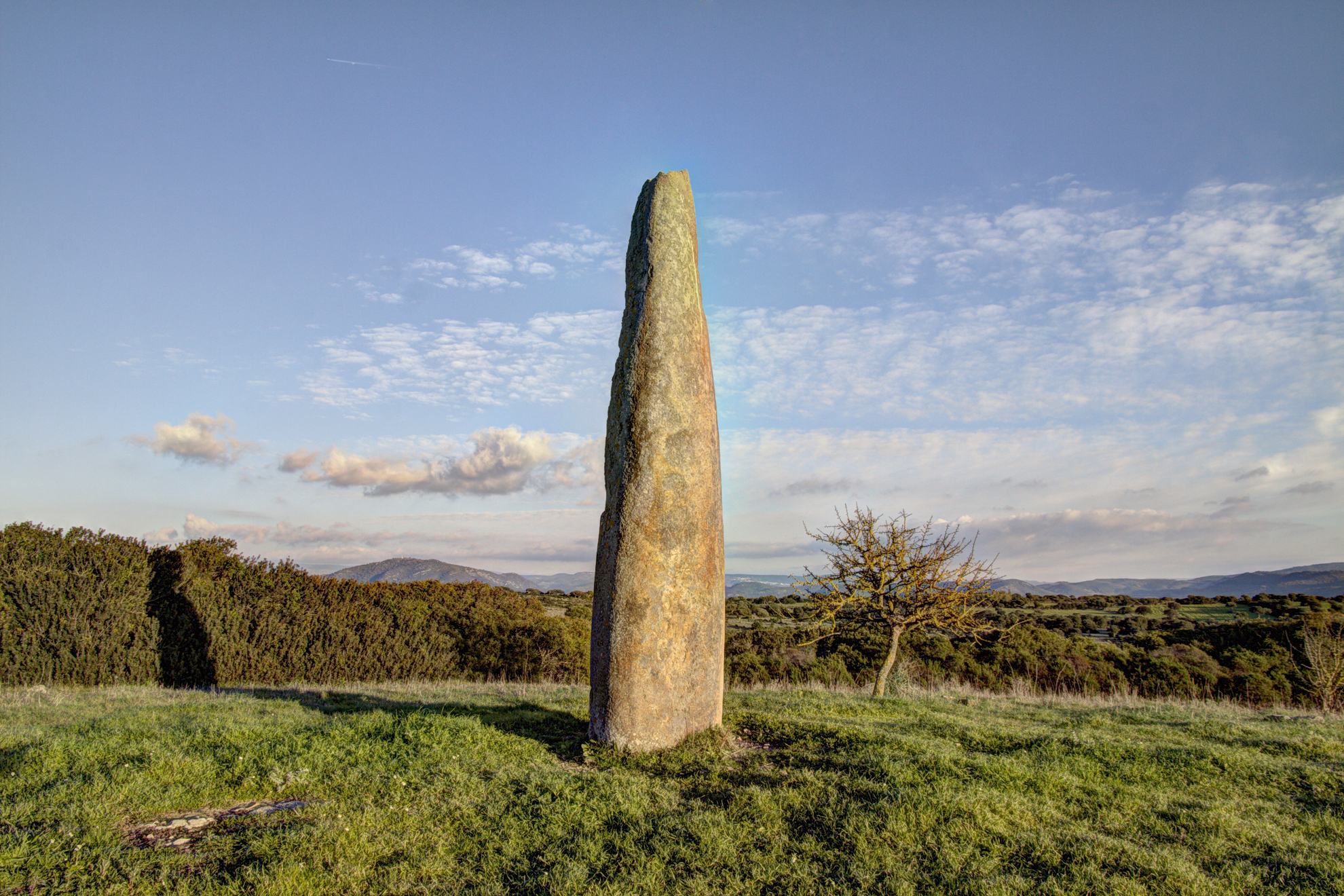
It stands on the hills and is delimited to the south by the basalt platform of Assolo, to the east by the river Imbessu, to the north by mount Grighine and to the west by Brabaxiana of Usellus. Villa Sant'Antonio is a village with just 350 inhabitants in the Alta Marmilla region, which occupies an area rich in natural attractions and rare archaeological evidence, like menhirs. The little village emerged in the early 18th century as a novenario (small rural village) around the church of Sant'Antonio abate, built to consecrate the place in which the simulacrum of the saint was discovered. It didn’t take on its current name only 1985. Agricultural and breeding activities are its main economic resources. The hilly territory, rich in springs, is covered by thick Mediterranean scrub and lush holm oaks and cork oaks. Along the Imbessu valley, there are green alders, willows and tamarisks. The territory is rich in evidence of prehistoric, protohistoric and Roman times. The first pre-Nuragic settlements left traces on the long plateau of monte Padrillonis, two kilometres from the village. Dating back to Neolithic times, there are about sixty domus de Janas: in is Forrus, there are the most ancient ‘well’ type and the more recent type with a corridor before the funeral parlour, and the same type in Genna Salixi. Other burials are located in the Maccettu (or Trunch'e Pani) site. In the territory of Villa Sant'Antonio there is an extraordinary concentration of perdas fittasi (embedded stones) or menhirs, megaliths made between 3300 and 2500 BC. They were originally big, roughly-finished boulders singly or in groups, embellishing the burial areas (and also residential settlements and places of worship). They later took on pointed forms with a flat-convex profile. In Villa Sant’Antonio there are a series of examples of these early phases, called 'proto-anthropomorphs', in Carabassa and Cardixeddu. Later on, their shape became more balanced and streamlined (anthropomorphic menhirs) and you can see some examples of these. The menhir of monte Curru Tundu is remarkable: it is almost six metres tall. Other ‘embedded stones' are located in the Tuttiricchiu area. There is no shortage of Nuragic evidence: there are ten examples, of four different types: corridor, monotower, complex nuraghi and one ‘a tancato’ nuraghe. The oldest is the nuraghe Spei, with two floors, dating back to the Late Bronze Age (1800-1500 BC). Slightly later ones include the Crannaiou and Genna sa Pira nuraghi (1500-1200 BC). The Roman age is represented by four settlements, to the north (Pranu Cilixia, sa Sedda ‘e s’aurras) and to the south of the village (Funtan Menta and on the banks of the Imbessu rivulet). The church of San Giorgio was built during the Byzantine period.

Cave of Santa Barbara
In the eyes of the miners who discovered it in 1952, during the excavation of a well, it must have seemed like an apparition. It had remained undiscovered until that point in time, hidden in the bowels of the mountain. Indeed, the Grotta di Santa Barbara is one of the oldest in the world, certainly the oldest in Italy, and a natural wonder at the heart of the San Giovanni mine, in the territory of Iglesias. After a long period of closure, visits resumed in 2016, with scheduled accesses that serve to preserve the grotto like a precious jewel it is.
The cavity consists of a large hall extending over 25 metres in height and dotted with columns of stalactites (extending from the top to bottom of the room) and beautiful stalagmites, covered with extravagant aragonite, formed over thousands of years. Another characteristic of the cave consists in the honeycomb concretions arranged along walls and vaults. At the bottom, a small, silent lake makes the surrounding walls glimmer with reflections of water. This Grotta opens up between a layer of ceroid limestone and yellow silicified dolomite, formations dating back to the early Cambrico period (about 500 million years ago). What is unique are the tabular crystals of dark brown barite covering the walls, a mineral only found in Europe.
From 1875 to 1998, lead and zinc were mined in the cave, which can be entered on a little electric train that crosses the mining tunnel (about 300 metres in length), located at an altitude of 200 metres. From the train, an elevator takes you 36 metres up the shaft before you enter Santa Barbara from a spiral staircase. The cave has no external exit points, hence why it has remained so intact.
The section of the train takes you back in time to the mining epic that characterised all of Sulcis-Iglesiente area - inside the gallery gunpowder, slow-burning fuses, detonators, hoppers, even the mineral on the walls can be seen. Next to the cave, passes the Santa Barbara mining route: a 400-kilometre long historical-religious itinerary, to be travelled on foot or by mountain bike, along ancient paths and abandoned railways, today the heritage of industrial archaeology of the Geo-mining Park of Sardinia. To further your knowledge of the mining world, you can visit the museum of mining arts and the machine museum in Iglesias or delve into the mining world through guided tours in the mines of Monteponi, San Giovanni in Domusnovas and Masua.