
The volcanic craters of Meilogu
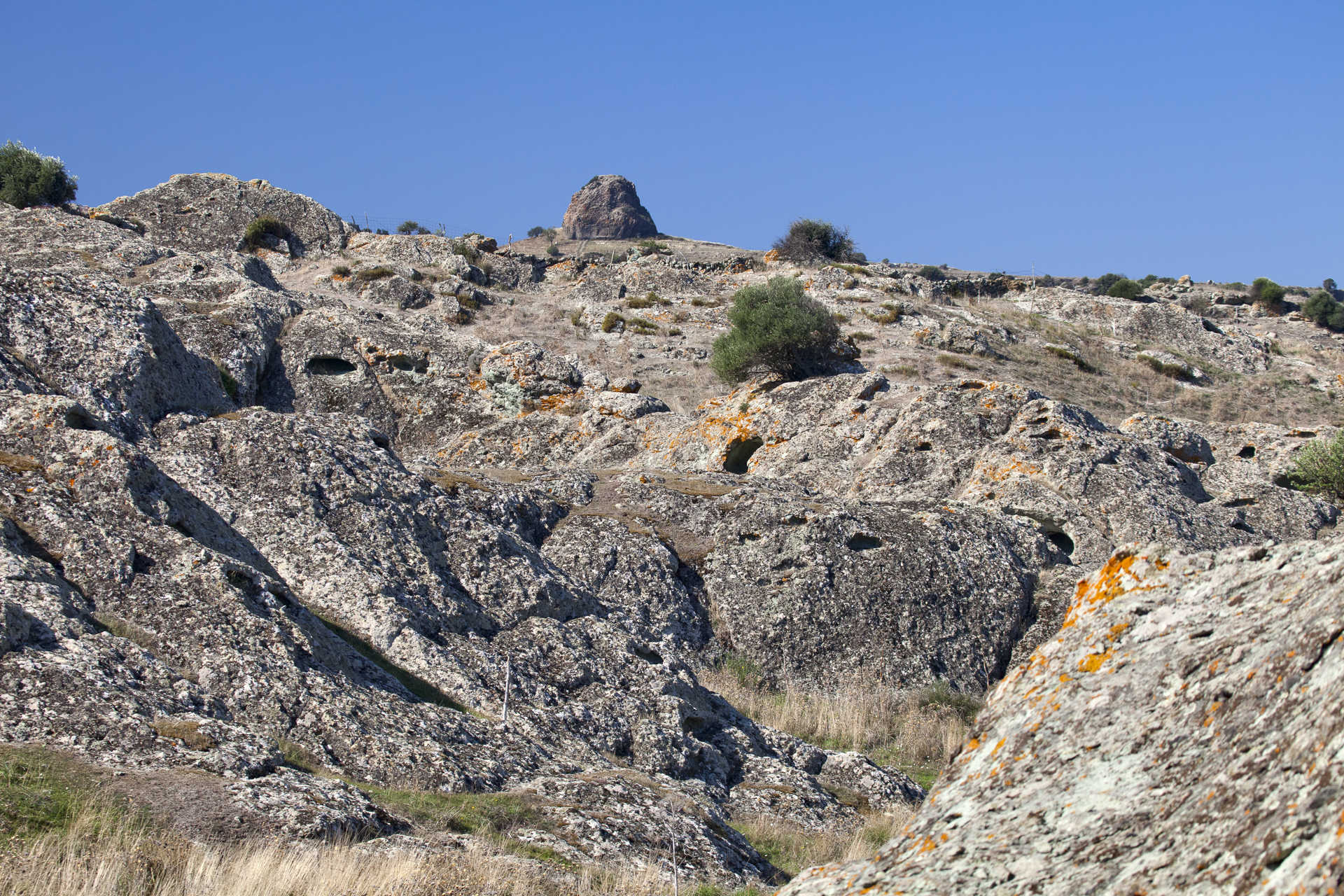
Santu Bainzu hill in Thiesi with two small, almost twin, volcanic peaks, Pabulena at Ploaghe and Ruju at Siligo, the beautiful Mt. Annaru-Pòddighe of Giave and the tabular profile of Mount Pèlao are all in the area of various towns in the Logudoro. A series of five solitary craters stand out in more than 20 thousand square metres of the Province of Sassari. They were declared protected natural monuments in 1994 and together with other volcanic cones – including Cuccureddu of Cherémule and Oes of Torralba – dot the historical region of the Logudoro-Meilogu. A land of extinct volcanoes, home to unusual and unique landscapes: cinder cones and volcanic flows give it its peculiar conformation, with crests at times small and pointy, other times ones round, all here and there separated by flat intervals.
Mount Annaru-Pòddighe is the most characteristic one. Almost 500 metres high, it is an almost intact crater. It is from here that lava flowed, solidified and was then filled with sediment to become the vast plateau north-east of Giave. It is an isolated area, an ideal place for some great walks, especially in autumn and winter when a small lake forms at its centre. You can go down into the crater in summer to see the 50 metres high walls and the original geological structure. Just south of you’ll find sa Pedra Mendalza, and south of the mountain is a resurfaced volcanic conduit on whose slopes crows and goshawks nest.
All of Meilogu will fascinate you, both for naturalistic and historical reasons: from the cinder cones to the flat plateaus (mesas), from the thermal mineral springs to the woods and pasture fields, from traces of prehistory to those from medieval times. The area around the craters is home to Sardinia’s highest density of domus de Janas and nuraghi, the Valle dei Nuraghi with thirty complexes within a range of just a few hundred metres. Some are very famous, like Santu Antine at Torralba and nuraghe Oes, built with blocks of basaltic lava from the craters of mounts Annaru and Cuccureddu. The finds from some 200 nuraghi, of the 350 known in Meilogu, can be seen on display at the museum of Torralba.

Sa Chida Santa: authenticity, passion and mystery
Centuries-old ceremonial rites rooted in the Middle Ages and tinged with Spanish tradition come together in archaic Campidanian, Logudorenian and Barbagian traditions that date back to Nuragic paganism. During Holy week, from the coast to hinterland villages you will discover Sardinia’s most authentic essence and experience an itinerary of sacred rituals that revolve around the Passion of Christ. Holy Week in Alghero reveals its Spanish roots. It all starts on the Friday before Palm Sunday with the Addolorata Procession and ends at Easter with the Encontre. The Disclavament (deposition) is deeply emotional: the body of Christ is carried in procession on His deathbed and as the sun sets, the town is illuminated by glow of torches and lanterns draped in red veils.

Nostra Signora di Tergu
You will stand in awe of the monumental grandeur that almost a thousand years of life have given to this gem of Romanesque-Pisan architecture revisited in a Gothic and Baroque touch. The Basilica di Nostra Signora dominates a vast plain in the area of Tergu, a small town near Anglona. It emerges from verdant nature in all its polychromatic glory, with colours from slabs of purple-red trachyte and decorations made with white calcareous stone. Sancta Maria de Therco was probably constructed between 1065 and 1082, perhaps at the behest of the local sovereign Torres Mariano I, the same man who had the Basilica of the Santissima Trinità di Saccargia built, which bears evident similarity. The church was expanded in the following century and became a Benedictine abbey and, together with the monastery, whose ruins you can see next to it, was the seat of the Cassinese priory. For centuries it has been the starting point of the heartfelt, 11 km long Lunissanti procession to Castelsardo that begins at dawn and returns, torches ablaze, after sundown to mark the beginning of the celebrations, rites and rituals of Holy Week.
What distinguishes the basilica are the colours of the façade, a blend of light-coloured stone with a parament of redish vulcanite. The rectangular shape is divided into two levels. The lower part sits on a basement and, as in Saccargia, set on three large blind arches resting on corner pillars and columns surmounted by elegant Corinthian capitals. The portal has a two-coloured raised arch and jambs framed by columns. The second row echoes the false arches, five, of which the two at the ends have a zig-zag design and frame nine tiles with an inlaid geometric pattern. The most striking decoration is a central rosette with an ornate trim and framed by four columns. On the left side of the facade is a massive square bell tower that rises above the basilica and giving it momentum. The original floor plan called for a single nave, which later became a Latin T-cross with the insert of the transept, the arms of which are barrel-vaulted and open toward the main body with an ogival arch. The rectangular apse dates to the second half of the XVII century, as does the barrel vault that once covered the nave, later replaced by the current wooden roof trusses.
Coral museum
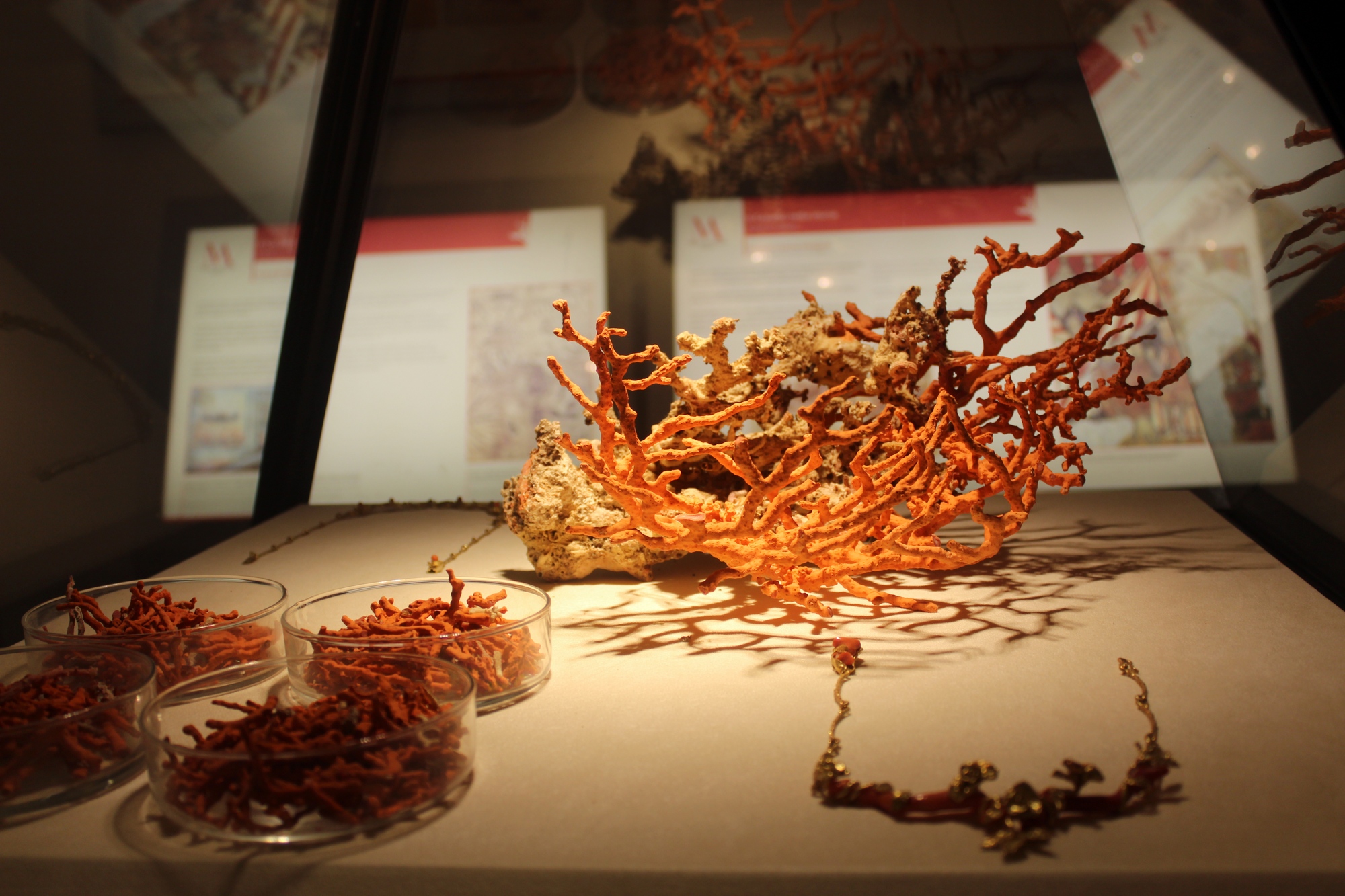
A dive into the sea at Alghero to uncover one of the its principle natural products, the city’s emblem, the item to which it owes great part of its fame and fortune: corallium rubrum. The Coral Museum is in the lovely Art Deco Villa Costantino that takes its name from the family that had it built, in 1927, outside the city walls, not far from bastions that were later demolished. Every display within the museum centres around the precious ‘red gold’.
The exhibition space was completely restyled and renovated in 2016 and focuses on the culture, history and identity of Alghero by way of the historical, scientific and economic significance of this prized material, as well as looking at some interesting anecdotes associated with it. But above all, it will introduce you to the works of art the craftsmen of Alghero have created, and still craft, with coral.
A fascinating journey into the marine ecosystem of what, with good reason, is known as the Coral Riviera, some 90 kilometres of coastline blessed with an infinity of scenery, and into the history of this precious living organism. Coral was the preferred catch of divers even in pre-historic and early history, when it was used in worship rituals, in connection with blood and, therefore, with life itself. Over the centuries it gradually became a valuable commodity that today is safeguarded in special underwater sites inside the Capo Caccia protected marine area within the Porto Conte regional park.
The Coral Museum is one of the cornerstones in a string of cultural proposals that together are known as the Musei Alghero, which includes three other museums (Archeologico, Diocesano d’Arte Sacra and Casa Manno) and a wide variety of archaeological and cultural sites.
Sardinia unveils its architectural treasures
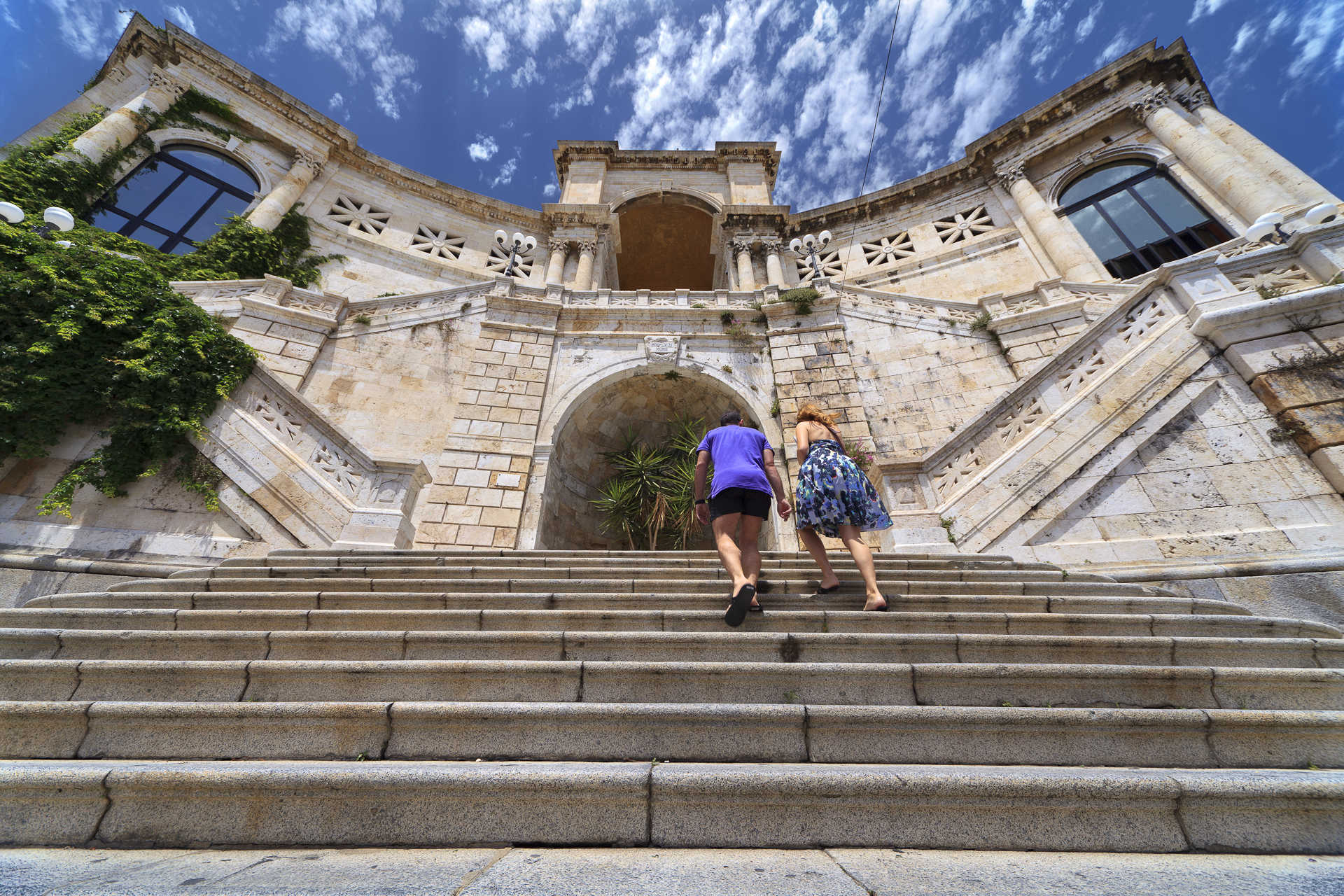
Artistic magnificence, shared memory, identity and a sense of community: this is the most encompassing effort to safeguard, enhance and promote the cultural heritage of Sardinia. Following in last year's footsteps, the 2025 edition — the 29th — will once again take place in two phases, stretching across nine weekends: from May 3 to June 1 for the first phase, and then again between October and November. Hundreds of cultural sites will open their doors during this time, such as museums, archaeological sites, churches and historical buildings, natural monuments and parks. Each town will tell its tale through literary itineraries, architecture routes in cities that have been marked by centuries of powerful rulers. Students and volunteers are warming up to lead you along a travel through the beauty that crosses millennia, all the way to the farthest past. Places of yesterday and today, where memories of the past and ideas aiming towards the future coexist.
Spring in the villages
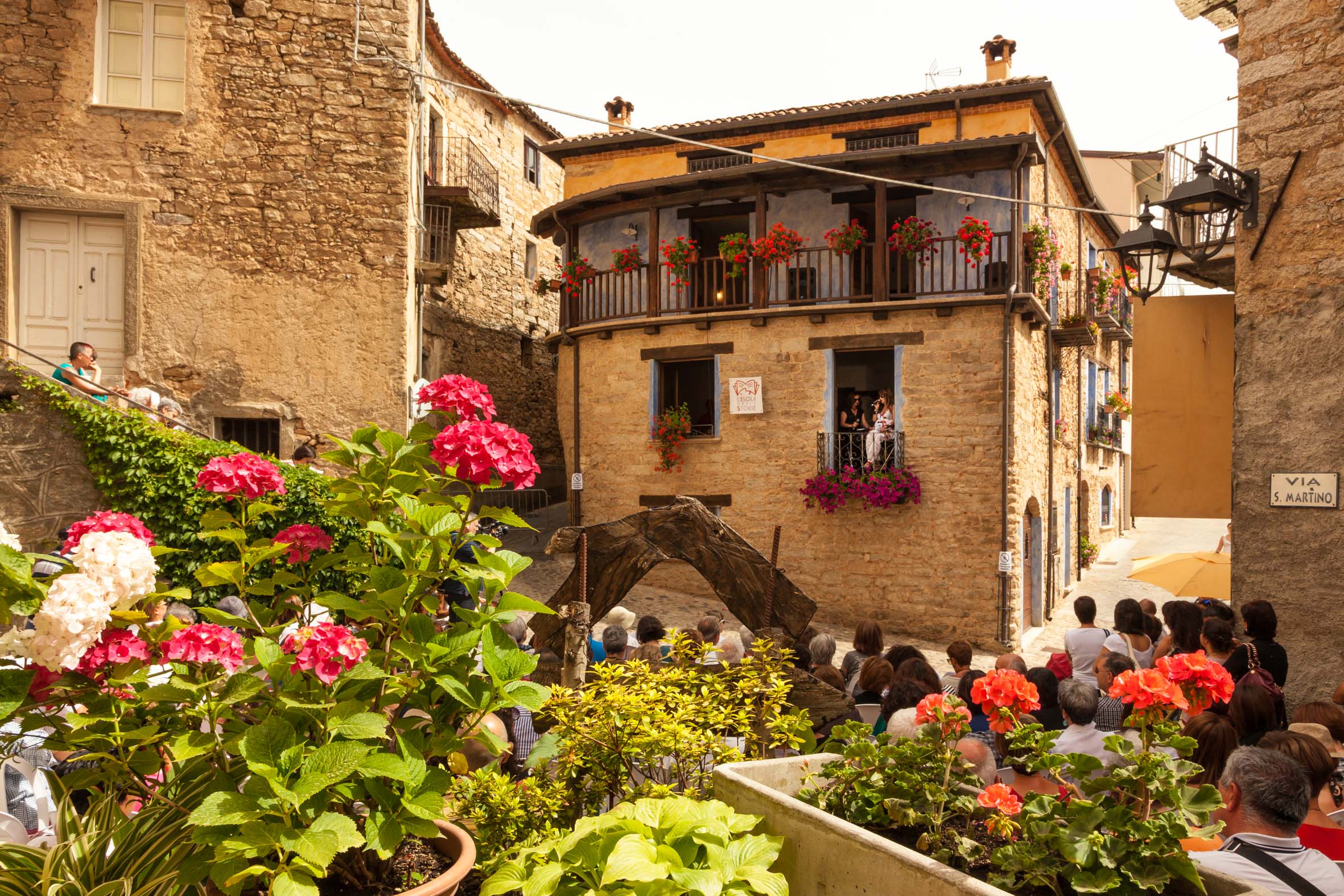
The explosion of spring colours on the island are in harmony with one of its most typical ‘picture postcard’ views: the colourful houses of Bosa. Walking along the Temo River, you can admire their reflections in the water, climb the hill dominated by the Malaspina Castle and, by crossing the Ponte Vecchio bridge, you will reach the south bank and discover the ancient tanneries. You will be welcomed by a glass of malvasia wine and impressed with coral jewellery, asphodel baskets and precious textiles. Bosa is a concentrate of history and craftsmanship, industrial archaeology and special treats. Do not miss the churches: the ‘cathedral’ of the Immacolata Concezione, Nostra Signora de sos Regnos Altos inside the castle, and san Pietro extra muros, at the centre of Bosa vetus. And then there is the natural beauty: the park of capo Marrargiu , the reserve of Badde Aggiosu and, on the coast, Bosa Marina, s’Abba Druche and Compoltitu.

Osilo
It is located at an altitude of almost 700 metres in the northernmost of the three peaks of Tuffudesu, dominated by the Malaspina Castle, dating back to the end of the 12th century, of which you can admire two towers and perimeter walls. Osilo, a village with three thousand inhabitants, is the second highest Municipality in the province of Sassari. It has medieval origins and was a very important village until the early 20th century. Its artisan traditions are still alive and well, especially textile products and agricultural and pastoral produce: it is the home of Pecorino cheese. Another delicacy is the casadinas (formaggelle), made with a soft cheese filling. In August, little cobbled streets, stone houses and historical buildings (like the Palazzo Civico built in 1600) come to life with Artes Antigas, a revival of ancient trades and traditional culture, and with the of Corsa all'anello, an equestrian joust where the knights, in traditional costume, catch rings, suspended along the track, on their lances, while galloping.
Osilo boasts an exceptional number of churches: 36. Churches that stand out include the parish church of the Immacolata Concezione (end of 17th century), with a multi-coloured marble altar and a seventeenth century wooden choir, and the little church of San Maurizio, in Gothic-Catalan style (17th century), with a tuff altar that guards the statue of the saint in a painted niche with a sculpted shell. Santa Ittoria 'e Sa Rocca was restructured in 1731 with a Renaissance façade and a curvilinear shape. In the old town centre, stands Nostra Signora del Rosario (17th century), an example of late-Renaissance art with Gothic details. Not far away, there is the church of Babbu Eternu, perhaps the most ancient in the village. In the outskirts, there is Sant'Antoni 'e Sa Punta (17th century). Not to be missed, is Nostra Signora di Bonaria, on the peak of Mount Tuffudesu, at a height of 800 metres: from here, you can enjoy a view that reaches as far as Asinara. It was a symbol for sailors, as it is one of the first points to be spotted from the sea. Lastly, there are the churches of San Giovanni Battista, Santa Lucia and San Lorenzo, which was mentioned as early as 1688 but renovated at the beginning of the 20th century. The little church is located in the district of the same name, inside the valle dei mulini (valley of mills). Here, the limestone rock features sudden vertical drops that make it possible for the water to flow forcefully and it has, in fact, always been used: in the middle of the 19th century, there were 25 active mills. Today, they are in a state of disuse and can be visited. In the precipices of Mount Tuffudesu and of the rest of the territory, there are more than thirty rock-climbing routes. As well as a destination for rock-climbers, the area is also popular with mountain bike enthusiasts, thanks to hills, mule tracks and winding roads. The territory is scattered with traces of human presence since the Neolithic era: the eight Domus de Janas tombs of Ittiari and the three of Is Scalas, two Tombs of the Giants and about ten Nuraghi, among which Sa Pala 'e Su Cossu.
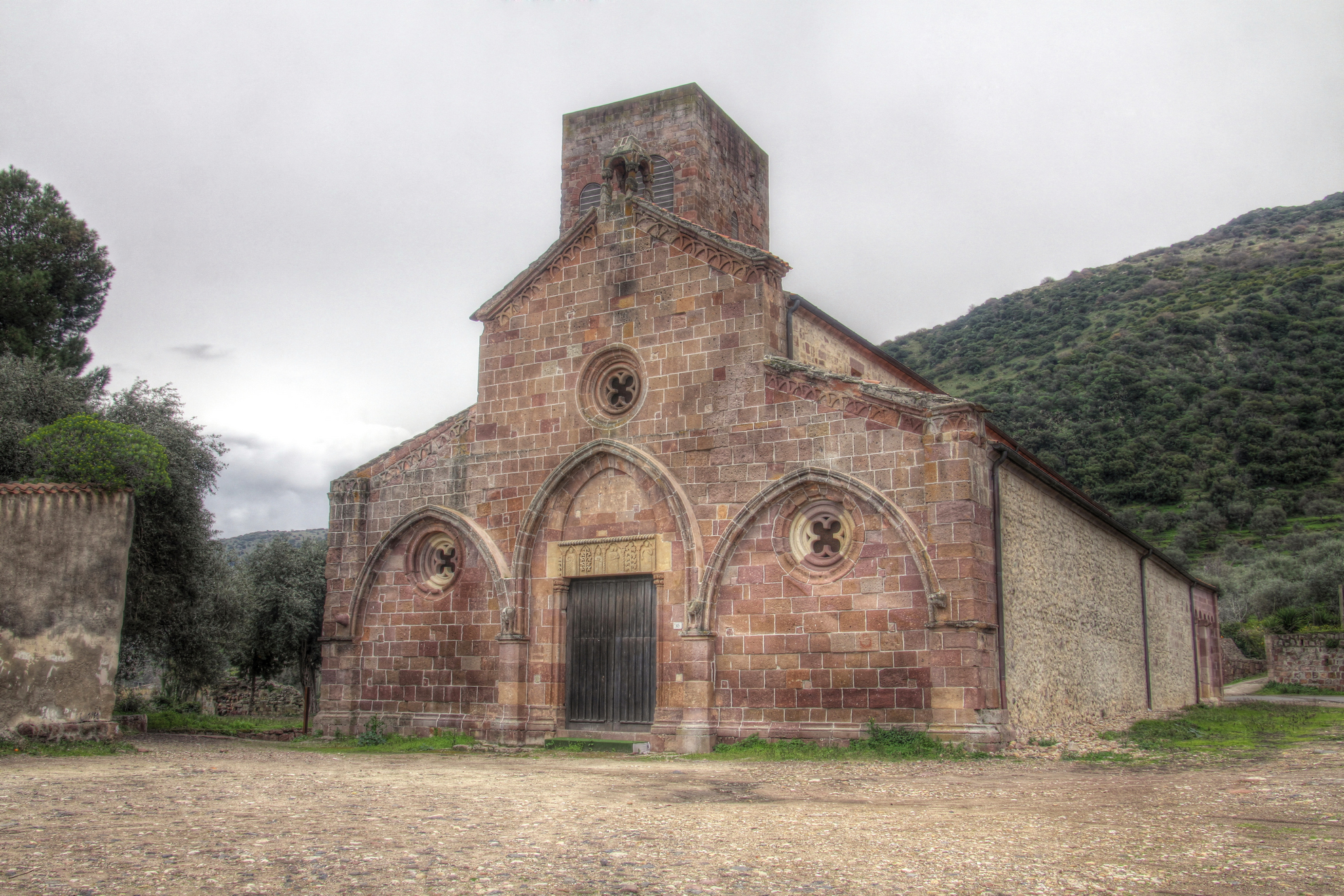
San Pietro extra muros - Bosa
From the colourful houses in the village of Bosa, travelling one kilometre along the Temo river, you will reach the locality of Calamedia, a site that was already inhabited in the Phoenician-Punic age: here, you will find the cathedral of San Pietro, the most ancient Romanesque church on the island. Its red trachyte walls stand near the river banks, on the opposite shore of the hill of Serravalle, dominated by the castle of Malaspina, inside of which you will find another gem of religious architecture: Nostra Signora di Regnos Altos (Our Lady of Regnos Altos). The cathedral of San Pietro is said to be extra muros because it is located outside the castle walls and it is more than half a century older than the castle itself. Around it, there was the original nucleus of the town, which was inhabited until the end of the sixteenth century. When the district of Sa Costa was later completed on the hillside, the population moved. The migration took two centuries: Bosa vetus disappeared.
The sanctuary is the result of a long process. The most ancient part dates back to the 11th century, as is confirmed by the epigraph of its consecration, which refers to the year 1063, while the tribune with a new apse, bell-tower (24 metres high and unfinished) and perimeter walls were created the following century. The overflowing of the Temo river compromised some parts, which were rebuilt in the middle of the 20th century: the complex regained its Medieval appearance. Today, you can admire a church that, despite losing its title of cathedral, has managed to keep its charm intact. The façade (dating back to the 13th century) is decorated with large arches and also with small intertwined arches. On the top, you will notice an aedicule, supported by little columns, with a snake wound around them. The portal is framed by an arch, over which you will be struck by an architrave sculpted with fake loggias and six little arches with bas-reliefs depicting, in a hierarchical composition, the Virgin Mary with Child in the main central aedicula, next to which there is the Tree of Life and a holy bishop (possibly Costantinus de Castra, who consecrated the building), on the right side, there is Saint Peter and on the left Saint Paul, wearing robes with elaborate drapery. The bishop is in the smaller aedicula but he is given a place next to the Virgin Mary. The apse is divided in to five sections by lesenes supporting corbels that, in turn, support little arches. In three of them, you will see single-light windows that help light up the interior, made up of three naves: the middle one is covered by wooden trusses, while the side ones have cross vaults. You can access them via nine rounded arches on each side, supported by quadrangular pillars. In the first one on the right, you will see a white limestone baptismal font.
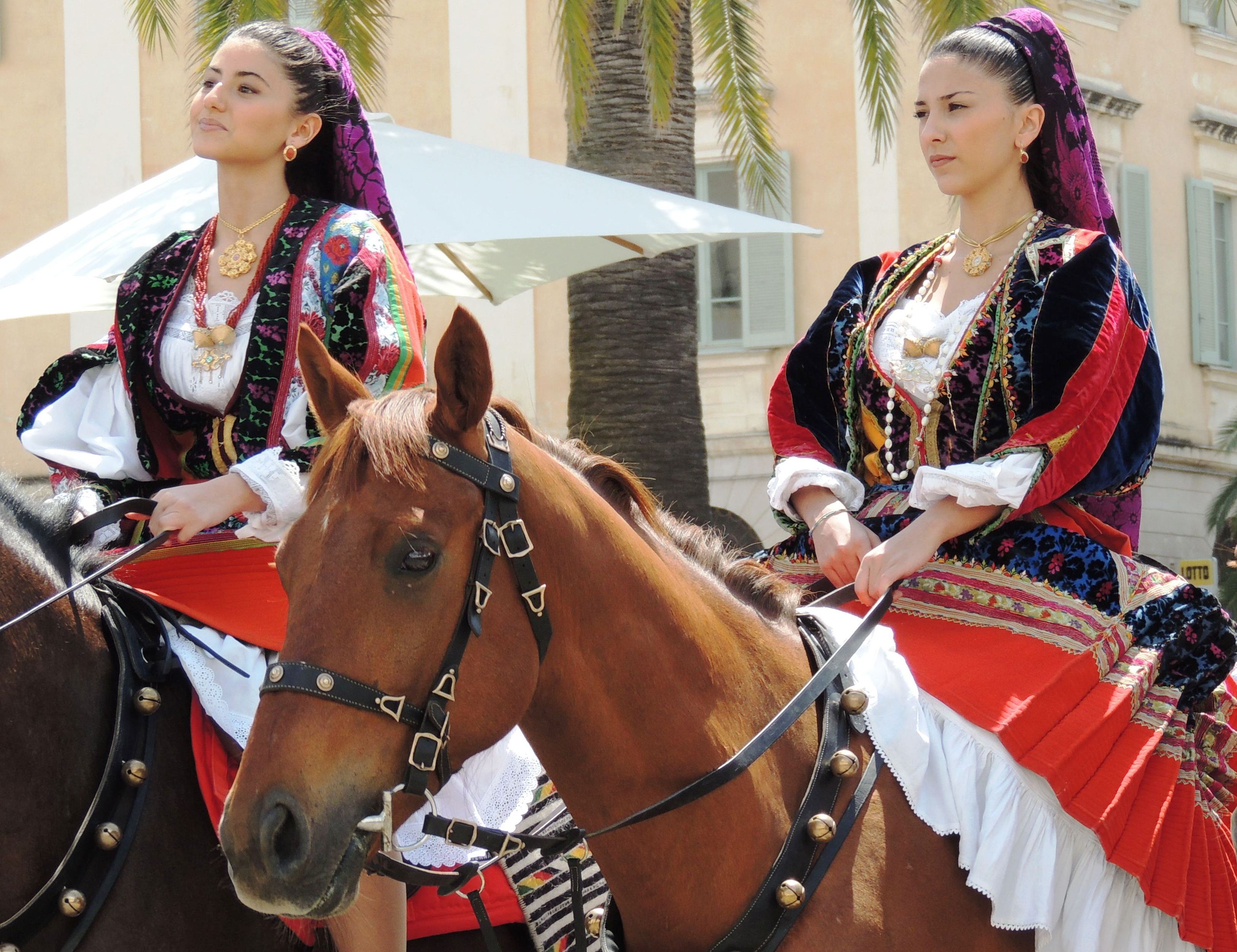
Cavalcata Sarda, the festival of beauty
The rhythm of the cantu a tenore singers takes turns with the thundering sound of the horses. Horesmen and Amazons offer breads, pastries and the first fruits of the season to spectators and Authorities. The rhythmic trot soon explodes into a daring race: the horsemen from Sedilo and the Sartiglia riders from Oristano. The Mamuthones of Mamoiada and the Boes and Merdules of Ottana captivate spectators and photographers with their fascinating and mysterious masks. The launeddas of the Sarrabus region accompany the procession and the final evening. These are the sounds and colours, music and dances, jewels and costumes of the Cavalcata Sarda of Sassari, where every year, on the second last Sunday in May, the unique identities of all the island communities meet each other. An unforgettable, rich show of majesty, a great spring festivity and the biggest lay event in Sardinia, now in its 74rd edition.
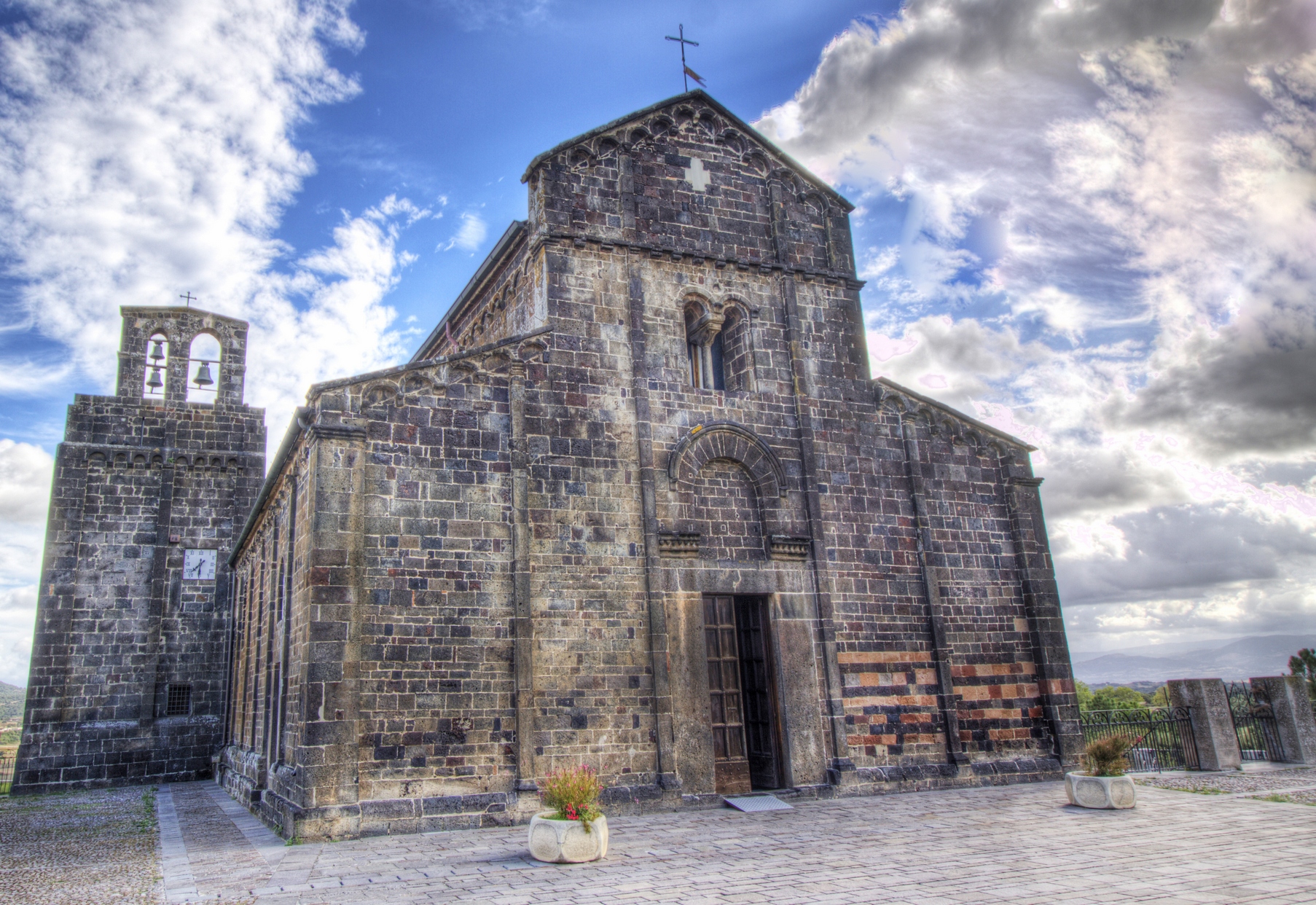
Nostra Signora del Regno
It stands with imposing darkness at the entrance to Ardara, a village in the Lugodoro region, perched on the slopes of Montesanto. The basilica of Nostra Signora del Regno is located near the ruins of a royal palace, a contemporary building that was once the place in which the Giudici (judges) of Torres resided. The Giudici would take oaths at the church altar and it was here that they were buried. It overlooks the plain below from high up on a hillock: its secluded and dominant position adds to the charm of this building made of jet-black ashlars of 'ferrous' trachyte. It was originally just a chapel: Giudice Comita (or perhaps his sister) was responsible for enlarging it in the second half of the 11th century. The expansion of the church was terminated by Pisan workers in 1107, as can be seen on a consecration inscription on the altar. An extraordinary monument was built and it is one of the most important pertaining to Romanesque architecture in Sardinia, characterized by simplicity and grandeur. It will strike you with the contrast between its black basalt stone and the gold sixteenth-century altarpiece.
An arched portal opens up on the façade, which is divided into five segments by pilasters. The bell tower stands against the northern side of the building. There are pillars along the three naves and the two lateral naves have cross vaults, while the central one has a wooden ceiling. The main Retable is in the apse: it is the story of Salvation, told by the images of prophets, patriarchs, saints and the blessed Virgin Mary. The author and date (1515) are indicated on the altar-step. Inside, you can also admire a series of eighteenth-century frescoes, depicting the twelve apostles and the four fathers of the Church, as well as the Smaller Retable, a wooden pulpit that narrates the Passion of Christ. Another valuable work of art, dating back to the early 12th century, is the processional banner: the Virgin Mary with Child is painted on one side, while the Veil of Veronica with the face of Christ is painted on the other. It is the protagonist of the celebration honouring the patron saint of Ardara, which is attended by flocks of worshippers. The celebrations culminate in a procession on 9 May, accompanied by the choir of Sos Gosos, singing praise to the Virgin Mary. Following this, there are songs, dances and folk exhibitions.
On the subject of places of worship, you can visit the nearby extraordinary Nostra Signora di Castro (12th century) and the Basilica of Sant'Antioco di Bisarcio, one of the most important Sardinian Romanesque churches. Also in the surrounding area, don't miss the castle of Monte Acuto, the Grotto of San Michele, which led to the formation of the 'Ozieri culture' (3200-2800 BC), the Nuraghe Burghidu and the Roman bridge on the Rio Mannu river.