
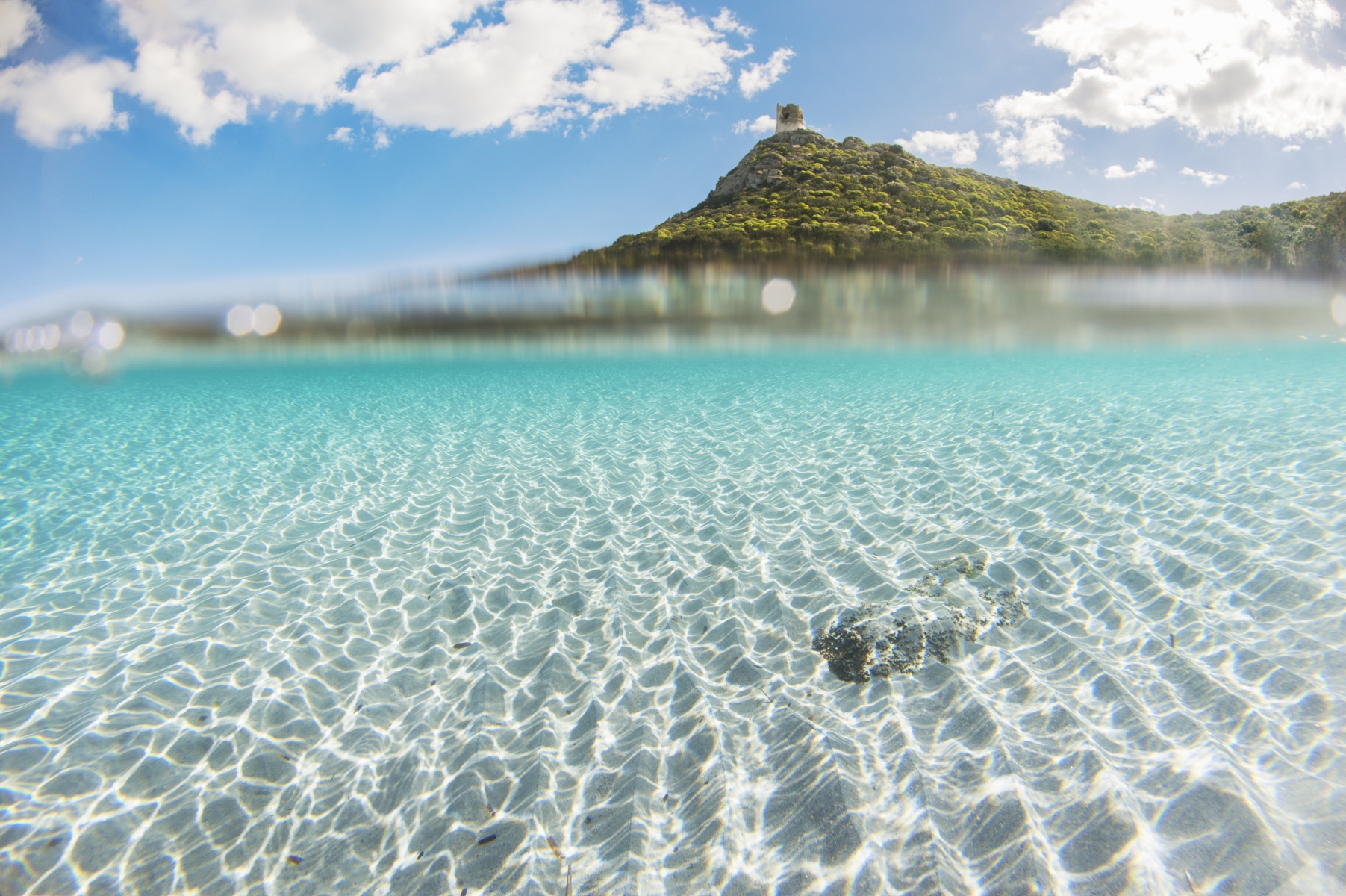
A sea of lost ships
An underwater world, rich with aquatic flora and fauna, where the wreckages of old abandoned ships dwell. The whole of Sardinia offers diving enthusiasts numerous not-to-be-missed opportunities: ships stranded on the seabed, where the sun's rays create magical visions of light and colour. Meanwhile, in the deepest darkness, the vitality of the sea brings the wounded wreckages back to life: the new inhabitants, including grouper fish, lobsters and prawns, peep out from their homes among the splendid carpets of flowering gorgonians and rare species of black coral. These shipwrecks are now completely colonized by red and yellow sea fans and expanses of seagrass that vibrate as the water flows through them, arousing the emotions of even the most expert divers.
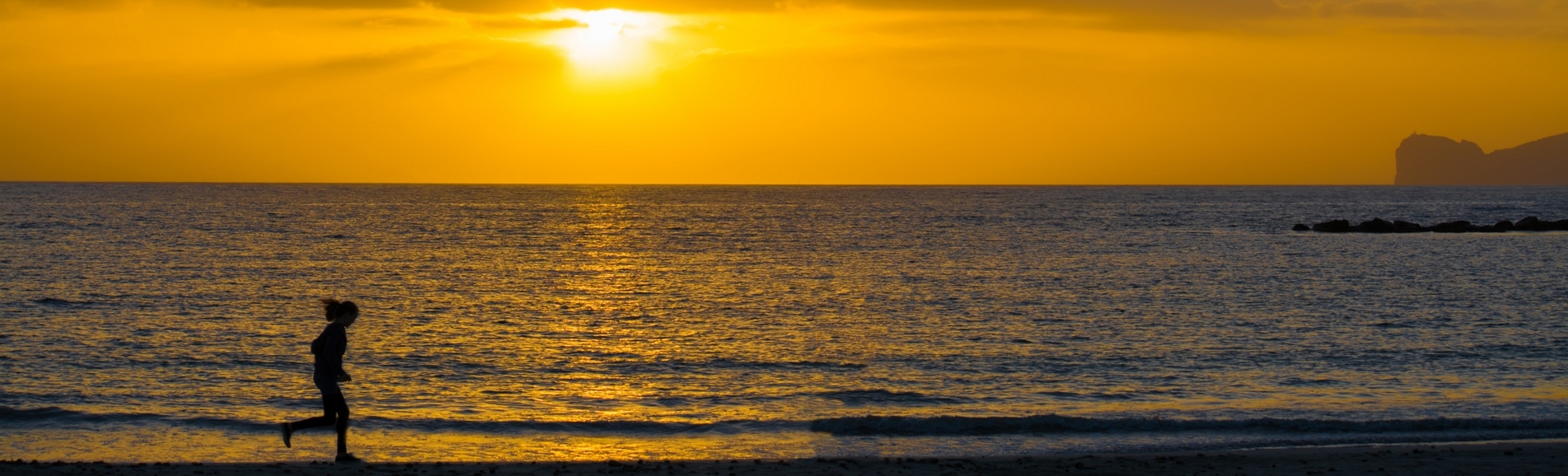
An open air gym
An open air park-gym that inspires all sorts of tourists throughout the year . Sardinia is the perfect destination for travellers who experience their holidays as protagonists: they can enjoy any sporting activity on the island, in unique and often unspoilt settings. It is the ideal land for anyone who likes to interact with nature and seek cultural and spiritual enrichment during their travels.
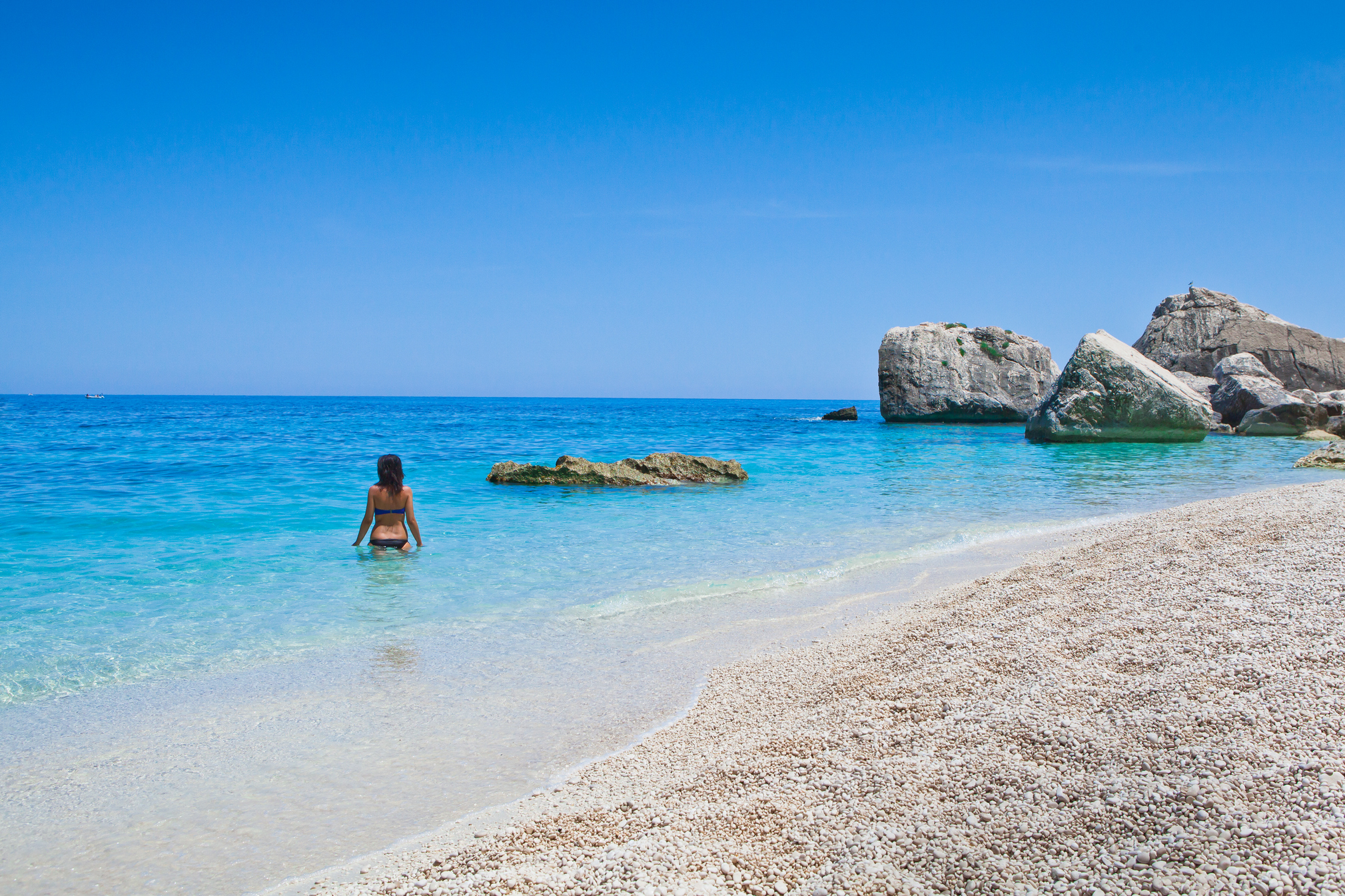
Sardinia, a great soul within it, the sea around it
It resembles no other place. This is what the first travellers from the past wrote about Sardinia. They recount the emotion of this land that slowly emerges from the sea and the spectacular unspoilt nature that is revealed. A land embraced by an intense light. Towering mountains that slope towards the coast, framing marine scenarios that are always different: cliffs sculpted by the wind, long beaches, bays hidden by the Mediterranean scrub, sand dunes covered with white lilies.
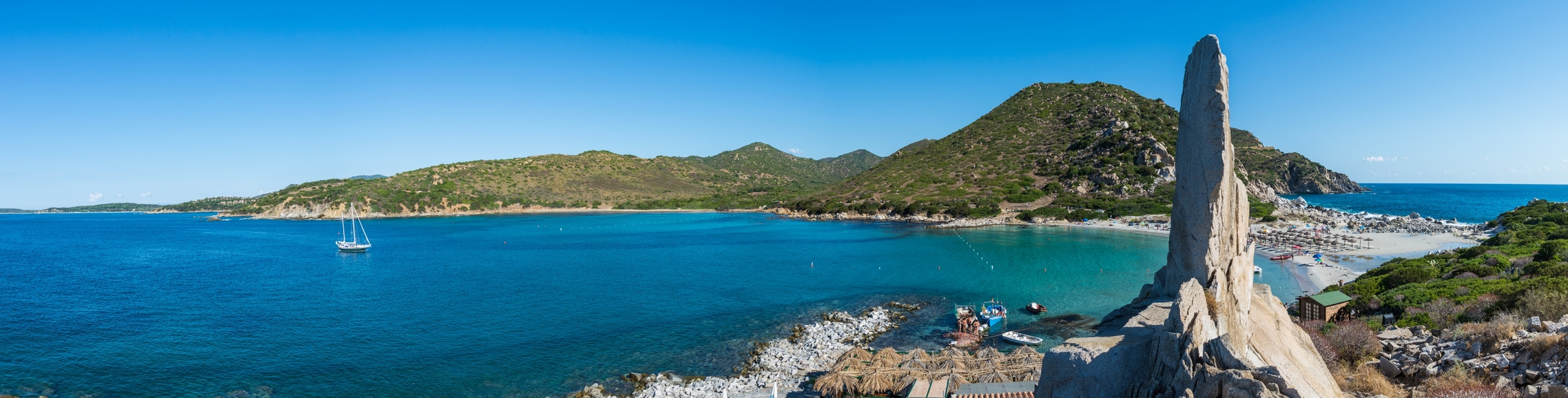
An Island park to be explored
An unusual and `unobtrusive' approach to Sardinia. A journey, or several journeys, through parks and marine protected areas, inside which, in any period of the year, you can do some trekking, cycling and horse-riding along the beach, take kayak or boat trips in the emerald green waters or dive down to see the breathtaking seabeds. Sardinia is an island - park: five marine areas over nearly 80 thousand hectares of unspoilt and 'protected' territory, where you will experience the strong emotions of itineraries on which you will discover nature, culture, food and wine.
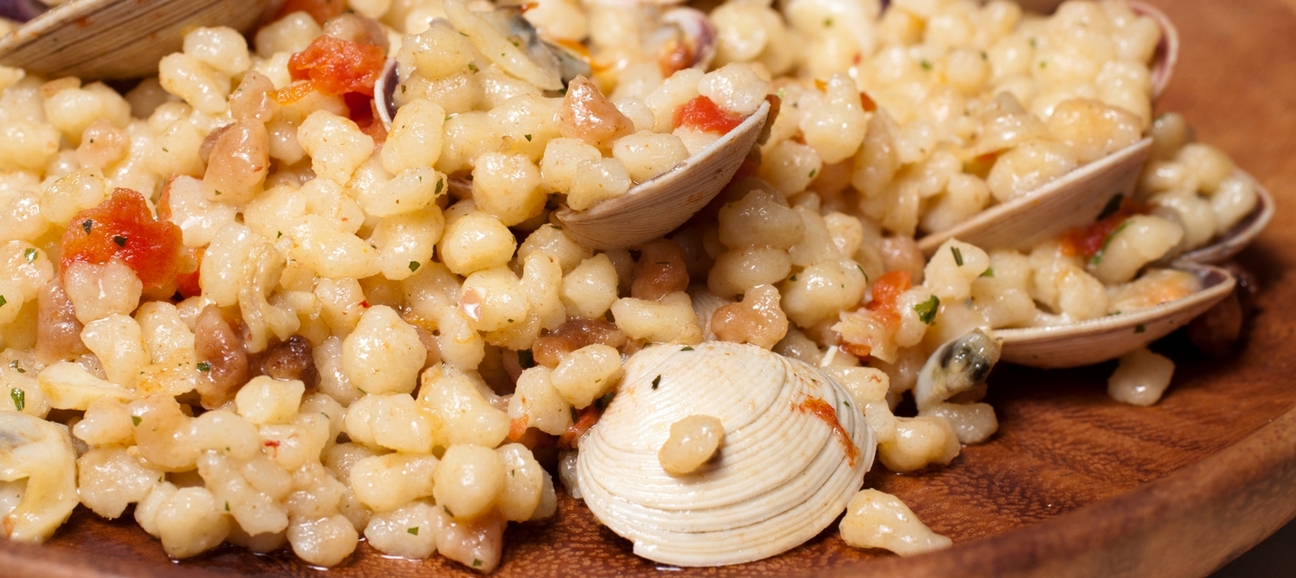
Sardinian cuisine, identity and flavour
Food tells the story of a territory: very few places in the world can boast food is as authentic as that in Sardinia. The quality of the products and the preparation and flavour of the dishes are values that go beyond their tastiness and are the heritage of thousands of years of history. Sardinian cuisine is still very similar to the way it was many centuries ago, while differing between the various territories and preparation techniques. Whether on the coast or inland, Sardinia's delicious specialities, based on simple and genuine ingredients, with strong yet delicate flavours, never fail to amaze you.

Identity and passion: traditional festivities last all year round
Throughout the year, you will be inebriated by the events that have been handed down over the centuries. The enchantment of the traditions begins in January with Fireworks celebrating Saint Anthony, bringing to life dozens of communities in the heart of the Island. In February, there are the compelling and mysterious celebrations of the Carnivals: every village has its own special events and masks. Not to be missed are the acrobatic exhibitions on two or three horses at a time, known as the “Pariglia” during the Sartiglia in Oristano, the ancestral dances of Mamuthones in Mamoiada and Merdules in Ottana, as well as the allegorical festivities in Bosa and the Tempio Pausania, where people live for the festivities all year round. At Easter, the passion of the Holy Week rituals lives again in numerous towns and villages, each with its own special characteristics. These are particularly famous in Aggius, Alghero, Castelsardo, Iglesias and Oliena.

Civic Archaeological Museum "Giovanni Marongiu" of Cabras
It contains the Giants of Mont'e Prama, the greatest archaeological discovery of the late 20th century in the Mediterranean. The Civic Archaeological Museum of Cabras, inaugurated in 1997 and named after Giovanni Marongiu, a personality from Cabras, is a journey from prehistoric times to the Middle Ages through traces of the past discovered on the Sinis peninsula.
An aura of legend surrounds the stone statues of the Giants, kept in a room that was opened in 2014. In the burial area of Mont'e Prama, which dates back to the Iron Age (8th century BC), over five thousand fragments were found. Patiently recomposed, they gave new shape to the mighty sculptures, almost two metres high: 18 boxers with shield and glove, six archers with protection, helmet and bow and six warriors. Six statues 'reside' in Cabras, along with four (of a total of 16) models of nuraghe found during the excavations. The others are in the Archaeological Museum of Cagliari. Thanks to a touch screen, you can conduct a virtual exploration of the entire sculpture complex.
The pre-Nuragic Age is documented by the artefacts of Cuccuru is Arrius, a village on the Cabras Lagoon, inhabited uninterruptedly between the 5th and 3rd millennium BC. The ruins of a necropolis date back to the first period, while elaborate and decorated pottery dates back to the more recent period. In the Nuragic Age, a shaft temple was built and became a sanctuary in the Roman period. Two display cases are dedicated to the sa Osa Nuragic site, active from theMiddle Bronze Age (17th-14th centuries BC) to the Iron Age. As well as pottery, some grape seeds were found inside a well, representing the oldest piece of evidence (dating back to three thousand years ago!) of vine growing on the Island.
Tharros takes up another section of the museum. This town was founded by the Phoenicians on top of a previous Nuragic village. It was extended during the Punic era and was an urbs Romana, frequented up until the Middle Ages. Materials on show come from the tofet, a Phoenician-Punic sanctuary, in which funeral urns were placed, containing the ashes of children and small animals, to which stone rods were attached (6th-4th century BC). In another part of the room you will find artefacts from the artisan district of the town, where iron and bronze were processed, along with ceramics. The room dedicated to a great underwater discovery dates back to 2008: the shipwreck of a Roman ship from the 1st century BC, identified one mile from the island of Mal di Ventre. In the remains of the boat, which lies on the seabed at a depth of 30 metres, a cargo of approximately one thousand exceptionally pure lead ingots was found, coming from Spanish mines. A unique example for the ancient world.
Su Pallosu
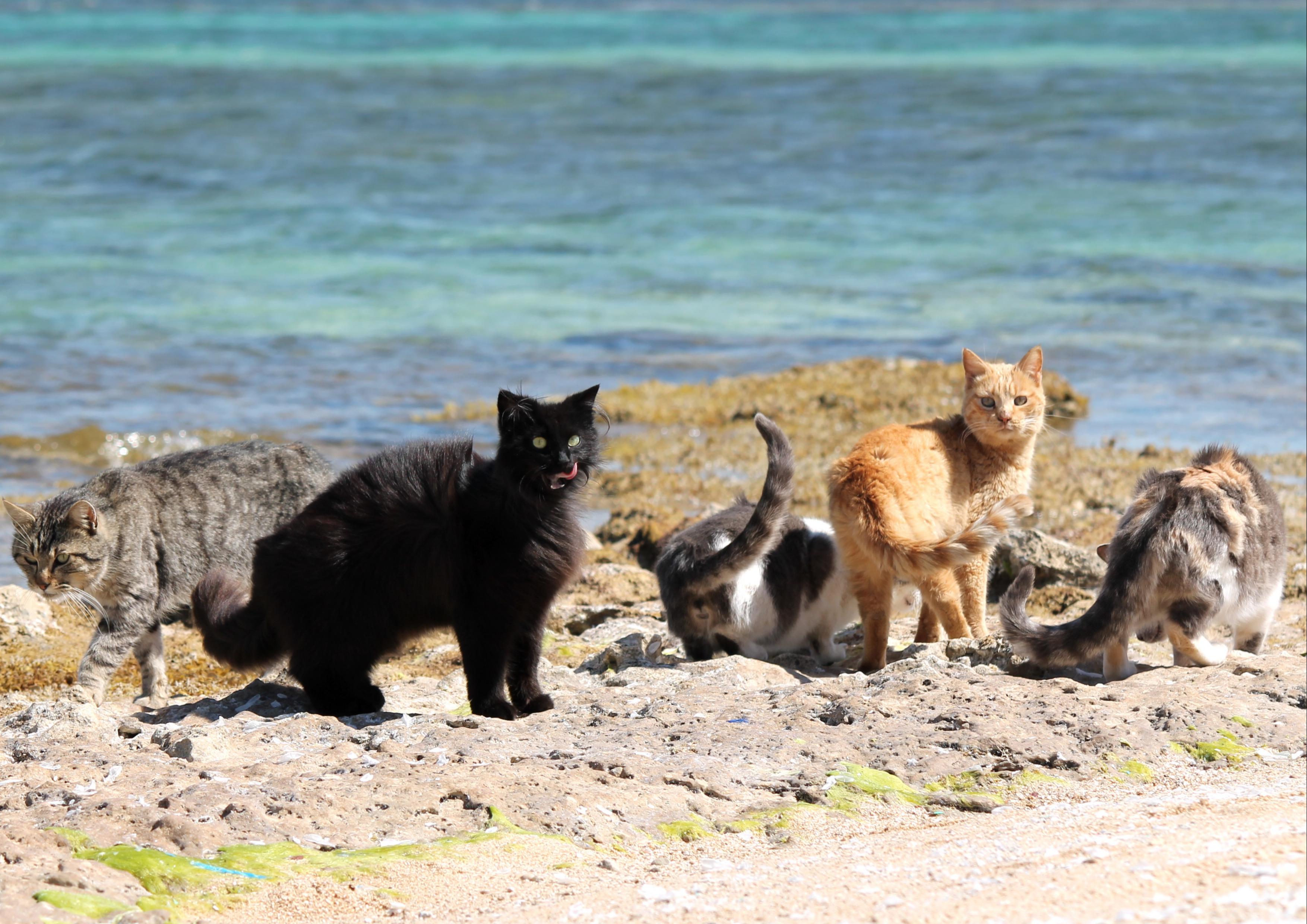
In 2016, travellers voted it the fifth most beautiful beach in Sardinia and the first in the province of Oristano. It is largely devoted to cats. Su Pallosu is one of the gems dotted along Capo Mannu, the northernmost part of the Sinis peninsula and of the marina protected area in which it is preserved. It is part of the territory of San Vero Milis, which is twenty kilometres away. It is very well-known because there is a feline colony behind it, where cats live and are taken care of and where guided tours are organised. The felines, whose presence dates back to the 20th century, often venture onto the beach: these cats are not afraid of going for a dip in the sea.
Su Pallosu is a thin strip of land with a seabed of golden and ambre-coloured medium-grain sand mixed with a few pebbles, hidden in a little cove and protected by a high barrier of earth behind it. It is washed by a transparent, crystal clear sea with iridescent green shallow waters and a sandy seabed.
To the left, you can bathe in beautiful natural pools between the rocks. There is a captivating view of the little island of Su Pallosu that dominates the scene and of the tip of Santa Caterina di Pittinuri to the north. In the western part, you can admire beautiful rocks sculpted by the sea over the millennia. To the east, the beach widens slightly. Near the beach, you will find parking, a restaurant and a bar.
It is the sandy shore furthest to the north of Capo Mannu, beyond which there is the beach of Sa Rocca Tunda and the little coves of Scal'e Sali. Further south, you will find the very unusual and sheltered beach of Sa Mesa Longa and at the base of the cape there are the beaches of Mandriola, Putzu Idu and S'Arena Scoada, the other pearls of San Vero Milis.

Art of weaving, able hands and centuries of secrets
Artistic handicraft is an intrinsic and distinctive feature of Sardinia. Weaving represents one of its main components, thanks to the skilful hands that have been able to perfect the art of wicker basket-making over the centuries. Their shapes vary according to the type of material and place in which they are made: in Flussio, Montresta, Ollolai and Sennori, asphodelus is the raw materials par excellence, while in lowland localities, near ponds or by the sea, like Castelsardo, San Vero Milis and Sinnai, rushes, grain or Mediterranean dwarf palm are used for making baskets. All the towns share an ancient and interesting tradition: women have been able to pass down the secrets of weaving, creating different shapes based on the function of the wicker containers, mixing coloured inserts, extraordinary designs and traditional patterns.