

Immacolata Concezione - Bosa
It is of medieval origin, perhaps dating back to the 12th century, but it now has a 19th-century appearance and its charm is linked to the original interweaving of different styles. Bosa Cathedral is dedicated to the Immaculate Conception and is the co-cathedral of the Diocese of Alghero-Bosa, standing almost adjacent to the right bank of the Temo river, with the medieval district of sa Costa extending alongside it. Walking through the narrow streets of the village with its colourful houses, you will suddenly see the majestic outline of the cathedral and the late Baroque and Neoclassical-style façade, which is divided into two orders separated by a protruding cornice, with pilasters and pilaster strips made of red trachyte.
Once through the entrance, you will see a single-nave layout with a barrel-vaulted ceiling, divided into bays and with four adjoining chapels on each side. In reality, the first chapel to the right seems like a church in itself: it is called the ‘chapel of the Sacred Heart’ and is adorned with side altars, while its presbytery is raised and domed. The main presbytery is also raised. It can be accessed via a staircase with two marble lions at the base and its ceiling has a dome inserted onto an octagonal tholobate. The main altar contains the statues of the patron saints of Bosa, Emilio and Priamo. Along the walls of the sanctuary, you will notice a captivating series of tempera paintings, depicting Dante’s Paradise, created over the two-year period of 1877-78 by Parma-born artist Emilio Scherer. The bell tower, made entirely of red trachyte, was never completed. The date 1683 is carved into it, providing evidence of a construction phase of which no other traces remain. Starting in 1803, the cathedral underwent long and impressive restoration work that greatly modified its structure and appearance, while the internal decoration work continued for much of the 19th century.
The church became a cathedral at the expense of the more ancient San Pietro extra muros, a charming Romanesque sanctuary that you can admire a few kilometres outside the town, in the area in which the original town of Bosa was once located and is now no longer there. The medieval Bosa goes hand in hand with the Castle of Serravalle or Malaspina, which dominates the landscape from the hill of the same name. In the courtyard of the fortress, you can admire the curtain wall and the watchtowers and you will hear tales of legendary battles, betrayals, ghosts and secret passages. You can also visit the church of Nostra Signora de sos Regnos Altos that has an extraordinary series of frescoes on its walls. The church is where the town’s most heartfelt religious festival takes place, while the most famous ‘pagan’ one is the karrasegare osincu, the carnival of Bosa.
Villa Abbas
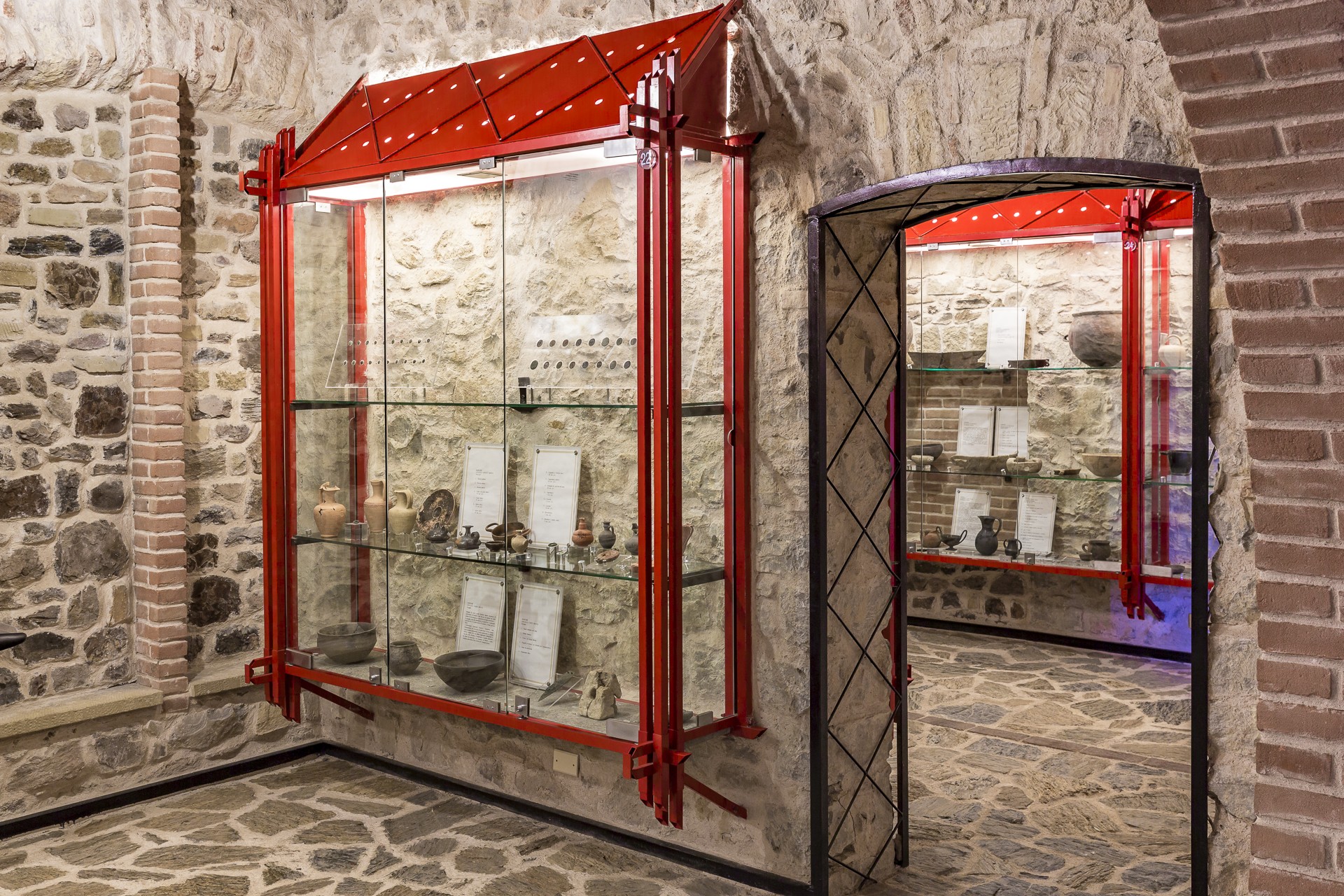
In the centre of Sardara you’ll enjoy a thrilling virtual journey back in time to the mysterious Nuragic and pre-Nuragic periods, delve into fascinating Punic relics, and into Rome’s Republican and Imperial eras. Housed in a lovely early 20th century building, the archaeology museum at Villa Abbas is worth a visit. Before the building was renovated and inaugurated (1997), it was a municipal building, a garrison and then a school. The exhibition is spread over 8 halls containing display cases and water wells. It includes items from the most important archaeological sites in the Medio Campidano area all the way to the Cagliari hinterland along route 131 (the island’s main motorway). The first hall is an educational one that will teach you how to ‘read’ the exhibits. Here you’ll find technical illustrations of the digs, complete with historical and chronological data, and a range of ceramic items dating from the Neolithic to the late Imperial Era. Every hall, and its items, is accompanied by illustrational panels.
The subject of the second hall is the Sanctuary of Sant’Anastasia in the town of Sardara. It takes its name from the little byzantine Church that was built over prehistoric ruins. The exhibit features items discovered in a well temple and a Nuragic village. A corridor, alongside a well in which Roman era tombs from the necropolis of Terr’e Cresia were reconstructed, leads to the third hall. Here you’ll find exact reproductions of wells, bones, and ceramic and metal objects. The fourth and fifth halls contain finds from the same site, as well as from cremation and inhumation tombs. The remaining section of the fifth hall offers an overview of the most important finds in the Sardara area, including bronze Nuragic archers. The sixth hall is devoted to the castle of Monreale, with its surrounding village and walls. The finds here include ancient Iberian, Italian, African and local ceramic finds, as well as objects made of wood, bone and metal. One of the display cases takes you into the daily life of the castle. The well exhibit offers a reproduction of how items were made from clay. The last two halls are devoted to the sites that came to light during the construction of the 131 motorway and include prehistoric relics from Padru Jossu (Sanluri), Sant’Antonio (in Serrenti) and San Sperate, but more importantly, clay ex-votos from the Punic Age that came from the ancient city of Neapolis.

The Cathedral of Saint Peter apostle - Ales
On the slopes of Mount Arci, in the upper part of the town of Ales, in the centre of Marmilla and famous for being the birthplace of Antonio Gramsci (1891), rises a scenic place of worship, the bishopric of one of Italy’s smallest dioceses. The Cathedral of Saint Peter apostle can be reached going up the stairway towards the baroque façade that dominates a spacious piazza. Two bell towers stand on either side connected by a balustrade porch with a central arch. The grandeur of the church and its three domes will surprise you: two of them cover the bell towers and the other the main dome, which at 36 metres high covers the nave and transept. The piazza is also home to the bishopric palace, a seminary and the Madonna del Rosario oratory.
The cathedral of the diocese of Ales-Terralba – which includes 57 parishes within less than 1,500 square metres – has been built several times. The version you see today was constructed in 1688. It was designed by the architect Domenico Spotorno who, 13 years prior, had restructured the cathedral of Cagliari in baroque style and begun the renovation of the parochial church of Santa Barbara in Villacidro. The “new” cathedral was built on the remains of a church erected at the behest of Donna Violante Carroz, the marquise of Quirra, who lived in the nearby Barumele castle. Graced with a Latin cross layout, it is home to a variety of masterpieces of sculpture and art. A single nave, 21 metres long and 10 metres wide and flanked by a chapel on either side, is embellished with fluted pilasters and soffits. The decorations are sumptuous and the furniture marble. The paintings depict the life stories of the two apostles and give a sense of unity to the church. At the foot of the presbytery sits a Roman school wing organ and is the oldest existing instrument in Sardinia.
Just outside of Ales are the various attractions of the park of Mount Arci, including the centuries-old holm oak forest of Aquafrida. If you are interested in prehistory, visit the necropolis of Gemitoriu and the nuraghi of Gergui and Otzili, whereas the history of Ales resulted from the destruction of the Roman colony of Uselis. The bishopric profoundly influenced the town from the 12th century onwards. Among the other churches worth visiting are the parish churches of Santa Maria (1535) and San Sebastiano (1663). And when you get to the hamlet of Zeppara, don't miss out on the traditional toy museum.

Capo Marrargiu
To the north of Bosa, along the rugged coastal area that leads to Alghero, a promontory emerges, volcanic in nature, around which there is a succession of reddish tuff rocks, coves and ravines. It is Capo Marrargiu, so inaccessible and secluded that, over the decades, it has welcomed majestic and extremely rare species of wildlife and, consequently, has become a bio-marine park. You can reach it via paths surrounded by Mediterranean scrub, amidst myrtles and lentisks, and you will find yourself in a timeless landscape: in the background, to the north, lies Capo Caccia with the islet of sa Pagliosa facing it, while to the south, you will see the white trachyte cliffs of Bosa. At the foot of the ‘cape’ there are a series of pebbly coves with some sandy stretches plunging into a sea of light and cobalt blue waters.
Peregrine falcons, golden eagles and Bonelli’s eagles nest in this area, but the great protagonist is another bird of prey and it’s no coincidence that it gives its name to this stretch of coastline: the griffon. The park is an irresistible attraction for birdwatchers and it is also a paradise for snorkelling and diving enthusiasts: appearing between the ravines and little caves, once landings for the ancient navigators of the Mediterranean, you will see lobsters, groupers, conger eels, morays, corbs, rays, breams, scorpion fish, tuna and above all corals, used by the goldsmiths of Bosa to create splendid jewellery. The nature reserve, which stretches for 160 hectares, also contains the world’s entire area of distribution of the limonium bosanum, a native plant species exclusive to the territory of Marghine-Planargia.
Near Capo Marrargiu, you will also find traces of industrial archaeology, with ruins of silver and manganese mines. By taking a boat trip, you will be able to see some tunnel entrances dug out along the coastline, used to load the minerals mined there. Travelling north along the ‘coast of the griffons’ – which stretches as far as the Coral Riviera - you will come across Poglina, known as the ‘coral beach’, half a kilometre of light sand with a bright blue sea in the territory of Villanova Monteleone. Then, proceeding south, you will find a series of enchanted coves, awarded Legambiente’s Five Blue Sails in 2020: Torre Argentina, with its basalt rocks that remind you of a lunar landscape, the beautiful Compoltitu and s’Abba Druche, characterised by flat rocks and blue-green waters. Around the medieval village of Bosa, you can relax on the coast of Bosa Marina or dive into the spectacular natural pool of Cane Malu.
Villages lost and found
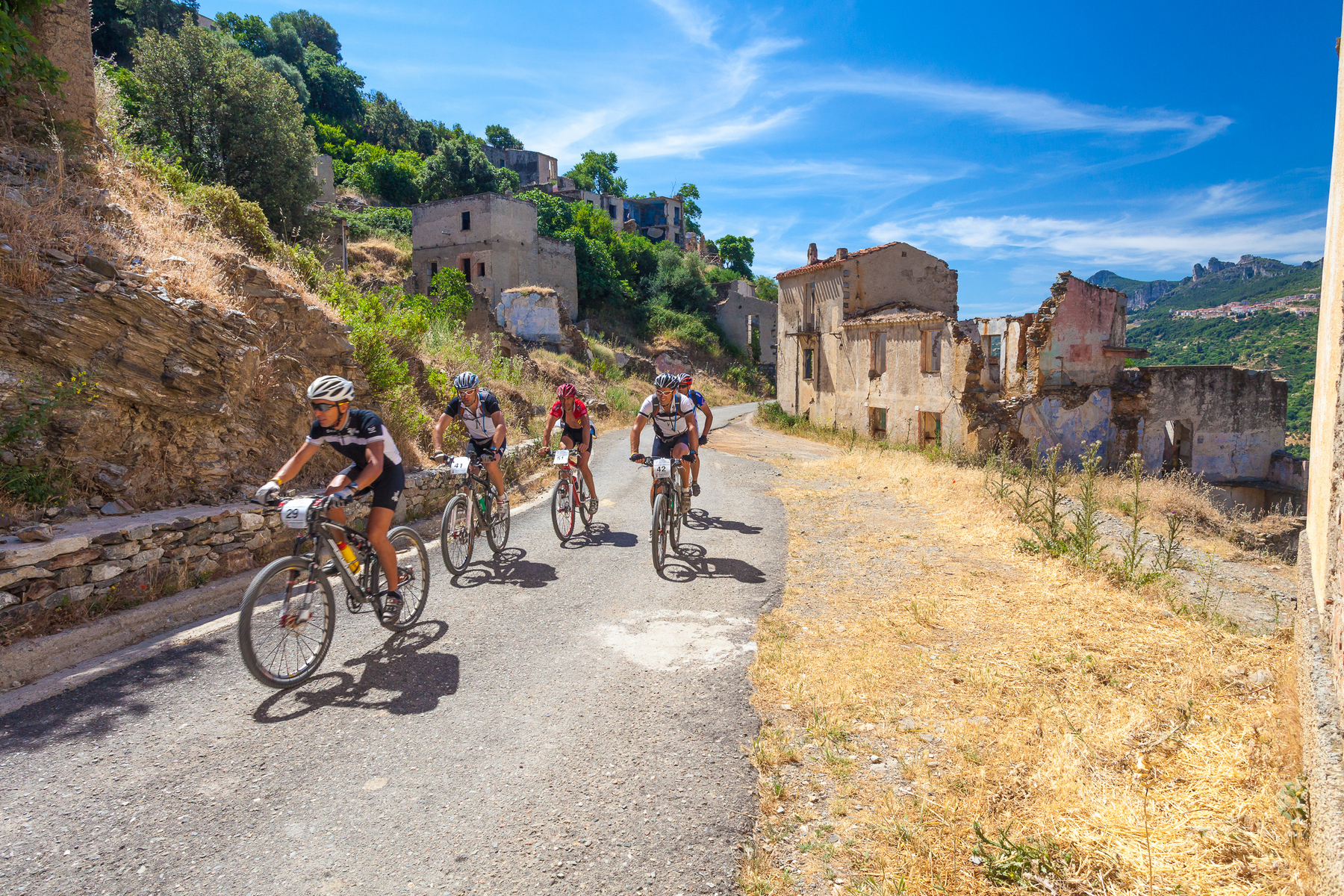
From the heart of Ulassai, the 'Maria Lai trail' climbs up the mountain to the sa Tappara canyon, its walls an incredible natural gym with more than a hundred free-climbing routes, some easy for beginners, others loved by experienced climbers. The canyon opens out onto the Padru valley, and from its opposite sides you can see the ghost towns of Gairo and Osini, overwhelmed by the common fate of their abandoned houses, made fragile by landslides and mudslides after days of incessant rain. Then came the slow exodus to safer shores, but nostalgia drove the villagers to return to the old houses to take care of the gardens and vegetable plots. More than half a century has passed since then, and the irises and calla lilies are still blooming, climbing roses cover the dry stone walls, the trees continue to bear fruit as a reminder of the life that once was and that will perhaps return. In old Osini some of the houses have been restored and the bell of the renovated church occasionally rings in the valley.

Torre Argentina
The SP 49 provincial road, that connects Bosa to Alghero, is one of the most captivating scenic roads in Sardinia. It is characterised by multicoloured landscapes, intense fragrances and a feeling of freedom in close contact with nature, interrupted only by a few isolated shepherds’ huts. Along the road, about seven kilometres from Bosa, an irresistible scenario appears as you look towards the sea: it is the promontory of Torre Argentina, where a fortress guarding the territory has been standing for over five centuries. At its foot, there is a succession of coves, framed by white limestone cliffs and dotted with basalt rocks and flat rocks, with an almost lunar appearance. The sea that opens up before it is of an intense cobalt blue.
Fifty metres from the shore, a rocky islet emerges, known as the island de sas crabas (of the goats). The landscape behind it is made up of expanses of Mediterranean scrub alternating with green meadows. The tower was built for defensive purposes during the last decades of the 16th century. Inside it, there was a small garrison and light weaponry and it allowed constant visual contact with the Tower of Bosa and, further south, with that of Columbargia. At sunset, its dark solitary profile, in contrast with the warm, bright colours of the sun, will treat you to an intense emotion.
From the tower, you can follow various trekking trails along the coast, surrounded by rosemary, myrtle, rockrose and helichrysum. Towards the south you will come to the cove of Cala sa Codulera, a pebble beach washed by the sea’s transparent, shallow waters, ideal for snorkelling. Moving beyond, there is a large bay where you will find the little beach of Compoltitu, with sand and limestone cliffs tinged with white. Once again on the scenic road, just over ten kilometres north of Torre Argentina, you will enter the heart of the ‘costa dei grifoni’ (coast of the griffons), a coastal stretch that has become the kingdom of this rare bird of prey. The bio-marine park of Capo Marargiu stretches across this area: along with the griffons, golden eagles and peregrine falcons nest here. At the foot of the promontory, the seabed is just as good in terms of its rich and varied marine life. Lobsters, groupers, conger eels, skates and white breams appear amid the marine grottoes and ravines. The most distinctive touch of colour is given by the corals. Before going back to the asphalt of the provincial road, it’s impossible not to take another look at the scenery: to the right, there is Capo Caccia and there are several rocky islets in the open sea, among which sa Pagliosa, while to the south, there are the white trachyte cliffs of the Bosa coastal road.

Oasis of Seu
In about one hundred hectares, it contains the most typical environmental and naturalistic aspects of the Sinis peninsula. The oasis of Seu reveals an expanse of Mediterranean scrub that stretches as far as the cliff overlooking the sea, covering the northern promontory of the cove of San Giovanni di Sinis, delimited on the opposite side by Capo San Marco. Returning to the territory of Cabras, the Tower of Sevo dominates the landscape and, in the Sardinian language of Campidano, it is called Turr’e Seu, which is what gave the name to the naturalistic area, in turn included in the protected marine area of the Sinis peninsula, and to the little beach nearby.
The oasis owes its conservation to the will of the landowners, who gained possession of it at the beginning of the 20th century, turning it into a game reserve. The area then became a wildlife oasis managed by the WWF, maintaining its wild and uncontaminated features that still make it stand out today. You will walk among myrtles, lentisks, rosemary bushes, palm trees and dwarf junipers, rockroses, broom plants and orchids. There is also a grove of Aleppo pines, while in the sandy stretches at the foot of the cliff, there are dunes covered with sea lilies. Partridges, hoopoes, larks and birds of prey such as buzzards and lesser kestrels find shelter in the greenery. Cormorants, Audouin's gulls and sea swallows circle the rocks, while it is not uncommon to see tortoises, foxes and wild rabbits between the dunes.
Almost cliff-side overlooking the sea, stands Tower of Sevo, a fortress built by the Spanish Crown in the late 16th century. Its shape is that of a truncated cone. The diameter of its base is over seven metres and it is almost ten metres high. The entrance is about four metres above the ground and it leads to a domed vaulted room. On the left, a staircase climbs up to the terrace with a parapet where the cannons were positioned. From the tower, you can admire a breathtaking view, especially at sunset: on your right there is the coastal road with the three ‘jewels’ of the Sinis peninsula: Maimoni, is Arutas and Mari Ermi are characterised by coloured quartz grains. Looking to the left, you can follow the coastline that ends at Capo San Marco. The little beach of Seu lies in a bay just east of the tower and has light sand with hints of amber and a few pebbles. The sea is crystal clear with shades of blue, turquoise and emerald green, with shallow waters and a sandy seabed. On the opposite side of the promontory, the beach of Caogheddas appears. It is larger and has two distinctive traits: an islet that emerges in front of it and the wreck of a steam boat, partly beached and partly submerged, about a hundred metres from the coast. Thanks to the fish that populate the remains of the boat, the submerged wreck is a popular destination for numerous snorkelling enthusiasts.
The hidden world of caves
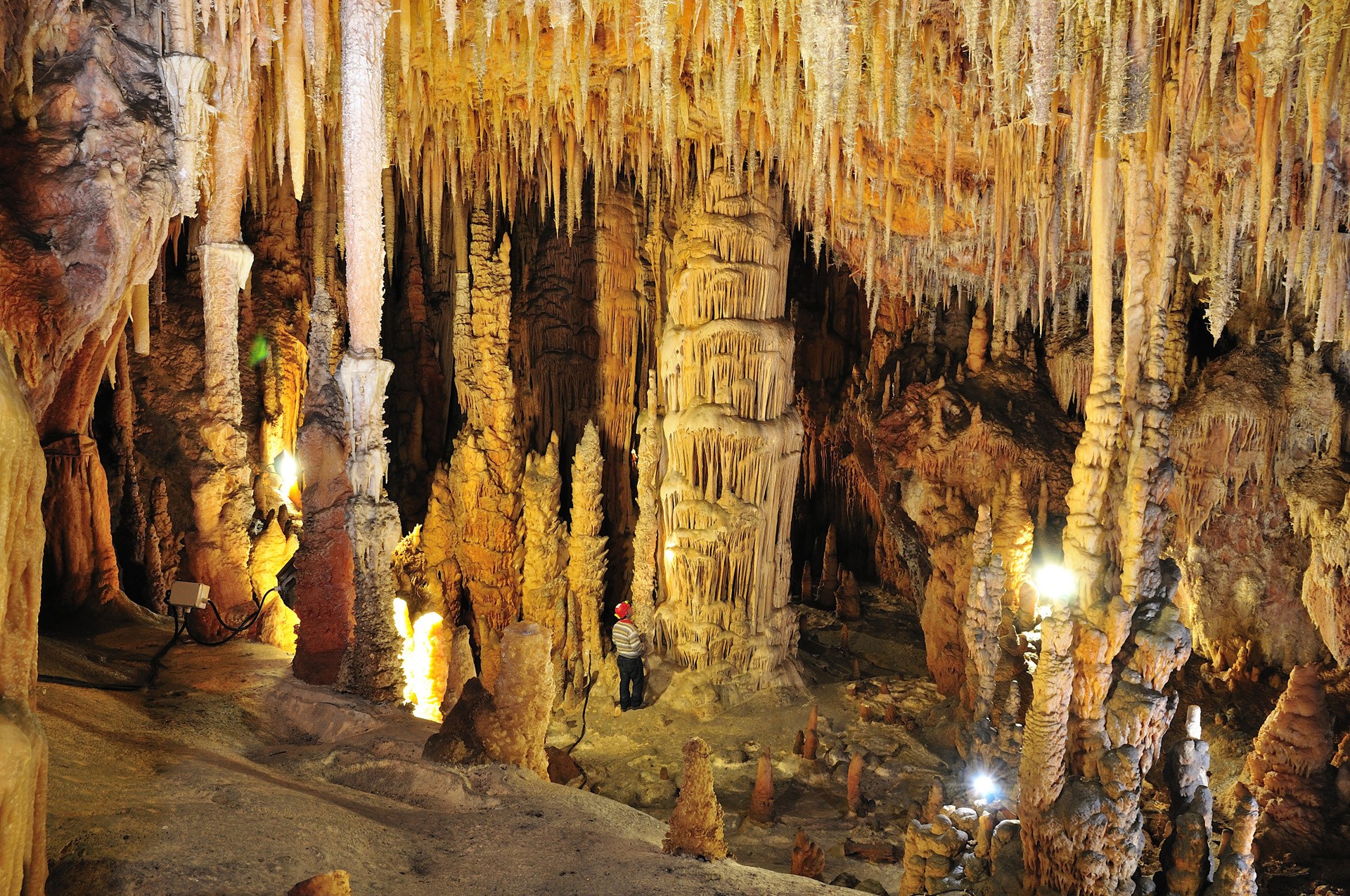
They guard masterpieces of nature, hide secrets, preserve the memory of legendary inhabitants. They still host some of them in their meanders and sometimes they talk. Like sa Oche, ‘the voice’, that howls, ringing out in the valley of Lanaitto in Oliena, generated by the air currents moving in the ‘twin’ cave of su Bentu. A short distance away, the words of Grazia Deledda, from her novel ‘L’edera’ (The Ivy) and from nineteenth-century tales can be heard, halfway between reality and legend, in the setting of the Corbeddu Cave. It was the home of a ‘gentleman bandit’, from whom it got its name and who transformed it into a tribunal of his own. Some of the oldest human remains ever found on a Mediterranean island come from here. Ispinigoli, in Dorgali, and its 38-metre high ‘column’ are also surrounded by original stories. Who knows if the 60-metre-deep hole at the bottom of the cave was really used for human sacrifices, to the point of earning itself the name of ‘abyss of the virgins’. In this area, the passage down from the mountains to the sea is short and there are also legends linked to the sightings of the monk seal: whether or not they still frequent the Gulf of Orosei is a mystery, but they undoubtedly lived around Cala Gonone, in the Grotte del Bue Marino (Sea Oxen Grottoes), named after them. The ‘room of the beaches’ was a safe haven for giving birth and weaning their pups. The Neolithic peoples also gathered here, in the same ‘rooms’, just above the level of the water, where the Cala Gonone Jazz concerts have been held every summer for decades.
Sa Rocca Tunda
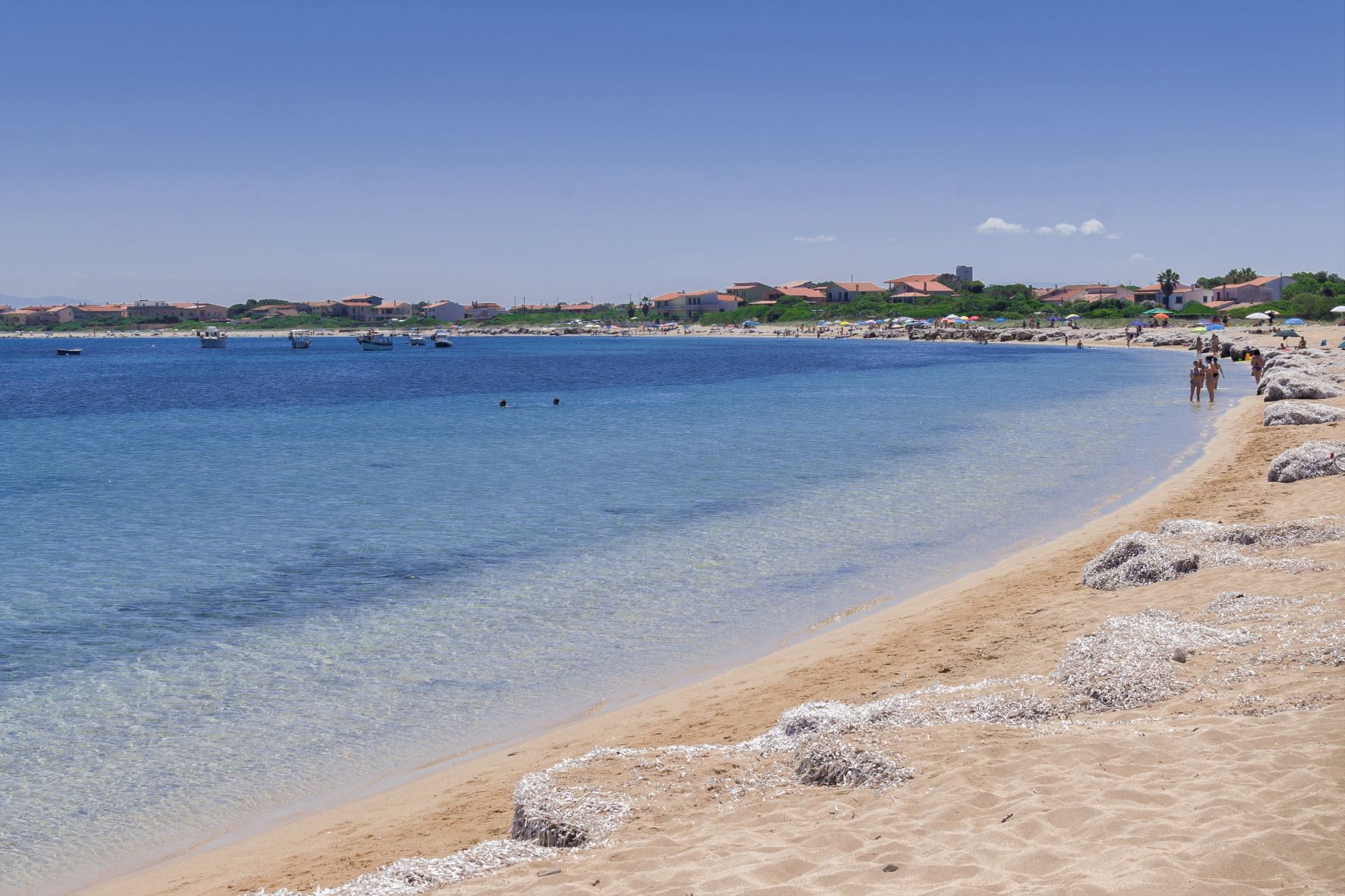
A wide expanse of pale grey sand, crystal clear waters and soft sand dunes behind it, a view that you will never want to stop observing, in absolute tranquillity. Sa Rocca Tunda stretches along the foot of Capo Mannu, in the northern part of the Sinis peninsula, next to a small village of little houses and dirt roads in the San Vero Milis area. The beach is about a kilometre long and part of the protected marine area of Sinis and is washed by a turquoise sea that takes on more vibrant colours offshore. The left side of the beach is delimited by the promontory of Capo Mannu. In front of it, the islet of sa Tonnara appears and, to the right, there is the cliff of su Crastu Biancu, beyond which you will have a view that stretches from the northern coast of the Oristano area all the way to the ‘costa dei grifoni’ (coast of the griffons) at Capo Marargiu. On the opposite side, behind the promontory, another rocky offshoot stands out, dominated by the remains of the Capo Mannu tower, built in the Spanish period (16th century).
A refreshment area is the only service in this wild and uncontaminated place. In fact, Sa Rocca Tunda is ideal for those seeking relaxation and tranquillity away from the chaos of the most crowded holiday resorts. Large spaces and shallow waters make it suitable for families with children. The transparency of the sea also attracts snorkelling enthusiasts, while the Sale Porcus pond behind it, populated by various species of birds - including pink flamingos - invites you to dedicate some time to birdwatching.
Around Capo Mannu, you will find numerous other unmissable beaches, which will take you on a real tour of scenic beauty. Almost in continuity with sa Rocca Tunda, towards the tip of the promontory, you will find su Pallosu, with its colony of cats. On the opposite side, a sandstone ‘barrier’ is located in the open sea a few dozen metres from a golden beach, creating an unusual landscape: it is Sa Mesa Longa, a real natural swimming pool with emerald green waters. To the south, in front of the village of Mandriola, lies the long beach of Putzu Idu, with its very shallow, blue and incredibly transparent waters. A spectacular cliff surrounds s’Arena Scoada, where rocks smoothed by the waves emerge, as well as sand mixed with quartz crystals and a sea reflecting shades of green and blue. Just before sunset, you can stop near the Capo Mannu lighthouse, at the foot of another Spanish tower, Turr’e sa Mora, to admire an unforgettable play of colours with a view of the island of Mal di Ventre.
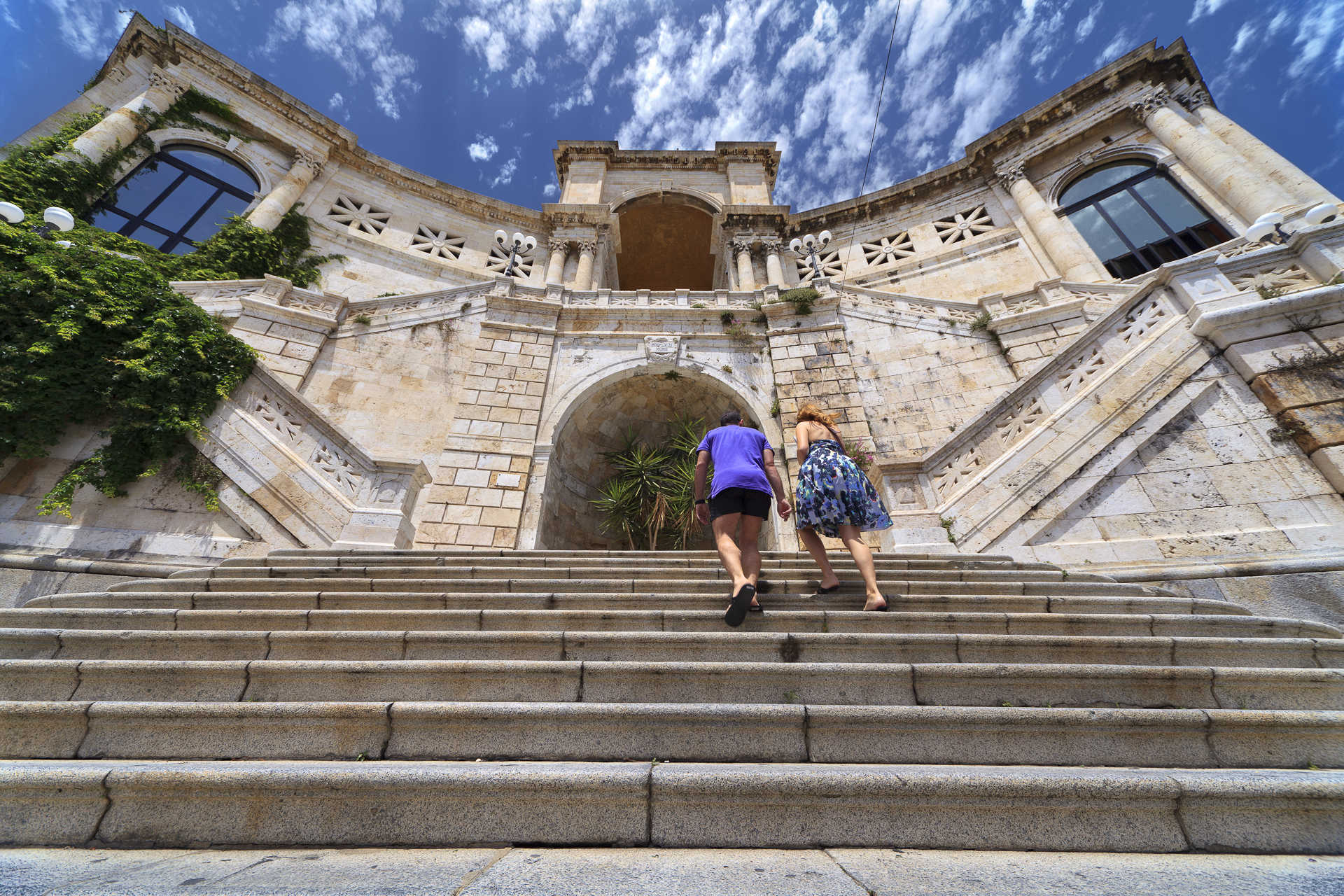
It cannot be spring without Monumenti Aperti
Artistic magnificence, shared memory, authenticity and a sense of community: this is the most encompassing effort to safeguard, enhance and promote the cultural heritage of Sardinia. In 2023, the 27th edition of Monumenti Aperti (Open Monuments) runs across five weekends, from the 6th of May until the first weekend of June. Hundreds of cultural sites will open their doors during this time, such as museums, archaeological sites, churches and historical buildings, natural monuments and parks. Each town will tell its tale through literary itineraries, architecture routes in cities that have been marked by centuries of powerful rulers. Students and volunteers are warming up to lead you along a travel through the beauty that crosses millennia, all the way to the farthest past. It is not a coincindence that this year's title goes by the name of 'Pratiche di meraviglia' (Practices of wonder').