
Patterns and textures of the soul
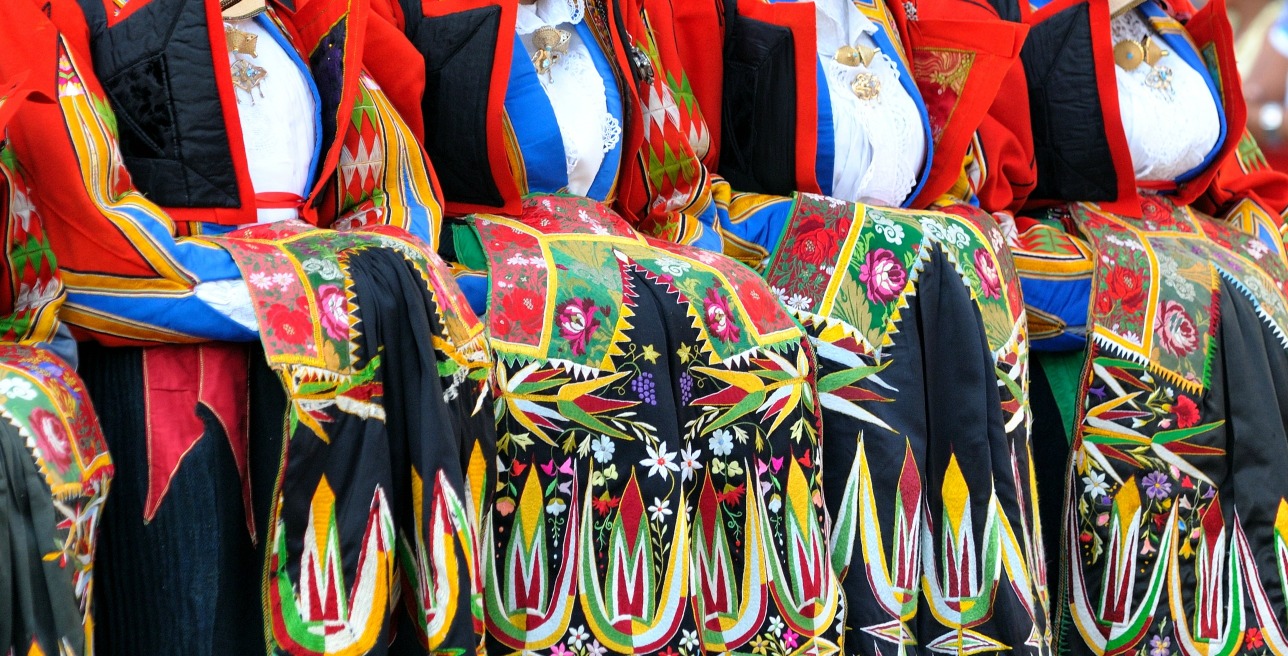
Original and imbued with meanings, the clothes and jewels are a fusion of signs left by the succession of different cultures in Sardinia: Nuragic, Phoenician, Greek, Byzantine and Spanish. Nothing was lost. Like the bright, coloured bonnets worn by the women of Desulo on festive days. They decorated them themselves, embroidering miniature details of the flamboyant Desulo dress: yellow, red and blue geometric designs alternated with embellishments based on the fantasy of skilled and sensitive artists. That of the women of Tempio Pausania was a different world, with their austere precious silk damask dress, which was completely black. They were admired for the elegant grace of their demeanour. On their heads, they wore a cascade of white lace, tied with filigree.

The Stonehenge of the Mediterranean
Sardinia has an age-old story, told by the archaeological evidence dotted throughout the territory. The tangible signs of the prehistoric island are endless: menhir, dolmen, domus de Janas, sacred wells, tombs of the giants and countless Nuraghe complexes. Enormous stones that have been guarding secrets for four thousand years. Buildings, often intact, of the first civilizations ever to exist in Europe, the only sites of their kind in the world, a patrimony to be discovered and experienced: this is the Stonehenge of the Mediterranean.
Sardinia, the quintessential land of wine
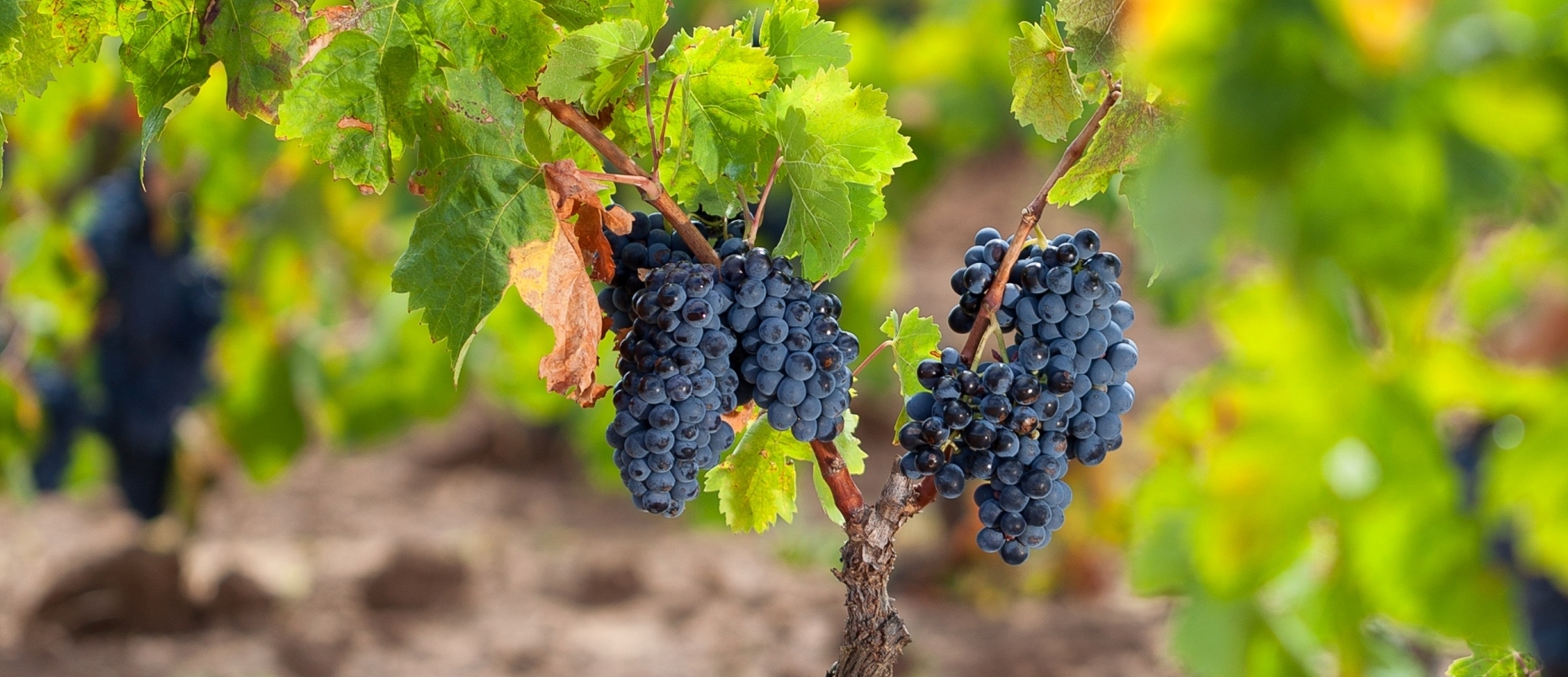
According to Greek legends, Aristaeus introduced this cultivation to Sardinia. The hero settled here because of the beauty of the land and he gave his two sons names linked to agriculture and viticulture: Kallikarpos, meaning ‘bearing good fruit’ and Charmos, from the Semitic krmy (winemaker). From mythography to reality. Today, the fact that wine-making on the Island goes back at least as far as the 15th century BC is a certainty: according to archaeologists, botanists and chemists, the oldest wine in the Western Mediterranean area was Sardinian. It was a sort of Cannonau dating back more than three thousand years. The theory became a certainty at the end of 2016, with the analysis of organic residue from a stone press discovered in the Nuragic village of Monte Zara, next to Monastir, a few kilometres from Cagliari. Archaeobotanical studies have unequivocally led us back to the practice of pressing and processing of grapes, particularly red grapes. This is the most ancient press in the Mediterranean, proof of the Nuragic civilization's considerable expertise in wine-making. The discovery places wine tradition as far back as the Middle Bronze Age, even though the thriving presence of vitis vinifera sylvestris leads us to assume that there was domestication and highly evolved oenology even further back in time.
Monumenti Aperti, exploring architectural and artistic treasures
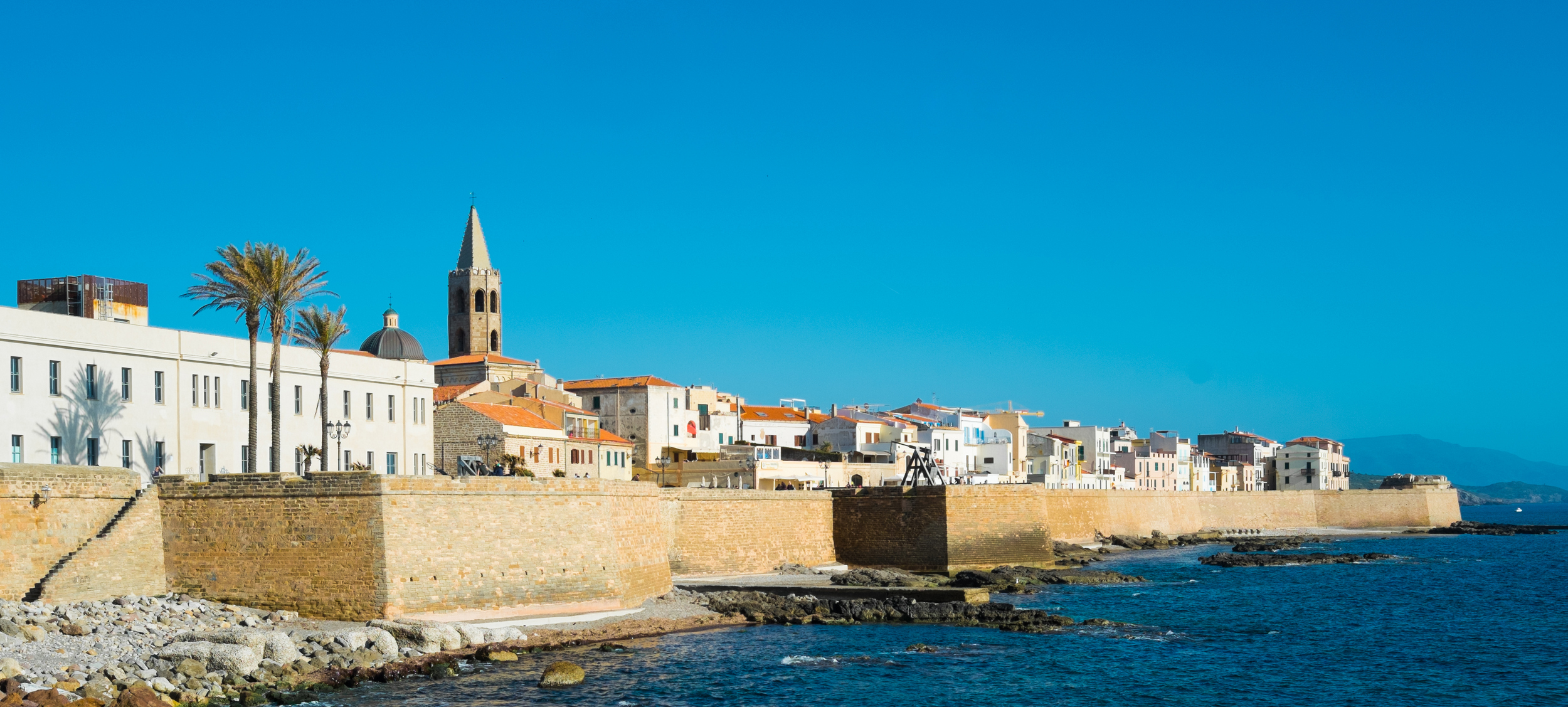
Magnificence, shared memory, authenticity and a sense of community: this is the most encompassing effort to safeguard, enhance and promote the cultural heritage of Sardinia. Over the next seven weekends, the 22nd edition of Monumenti Aperti (Open Monuments) – a candidate for the 2018 Europa Nostra award, a European Union award for cultural legacy – will shine a special light on the island’s architectural, historical and natural heritage: some 800 places of extraordinary cultural value that include the museums and archaeological sites, churches and historical buildings, natural monuments and parks of 59 municipalities all over Sardinia, seven of which are new to the movement. Each town will tells its tale through literary itineraries, architecture routes in cities that have been marked by centuries of powerful rulers, and journeys into the dawn of time among the remains of ancient civilizations. As you follow the route, some 18,000 volunteers – many of whom are school children of a variety of ages - will narrate the stories that marked the history and culture of their town.
Saying “I do” in a magical setting
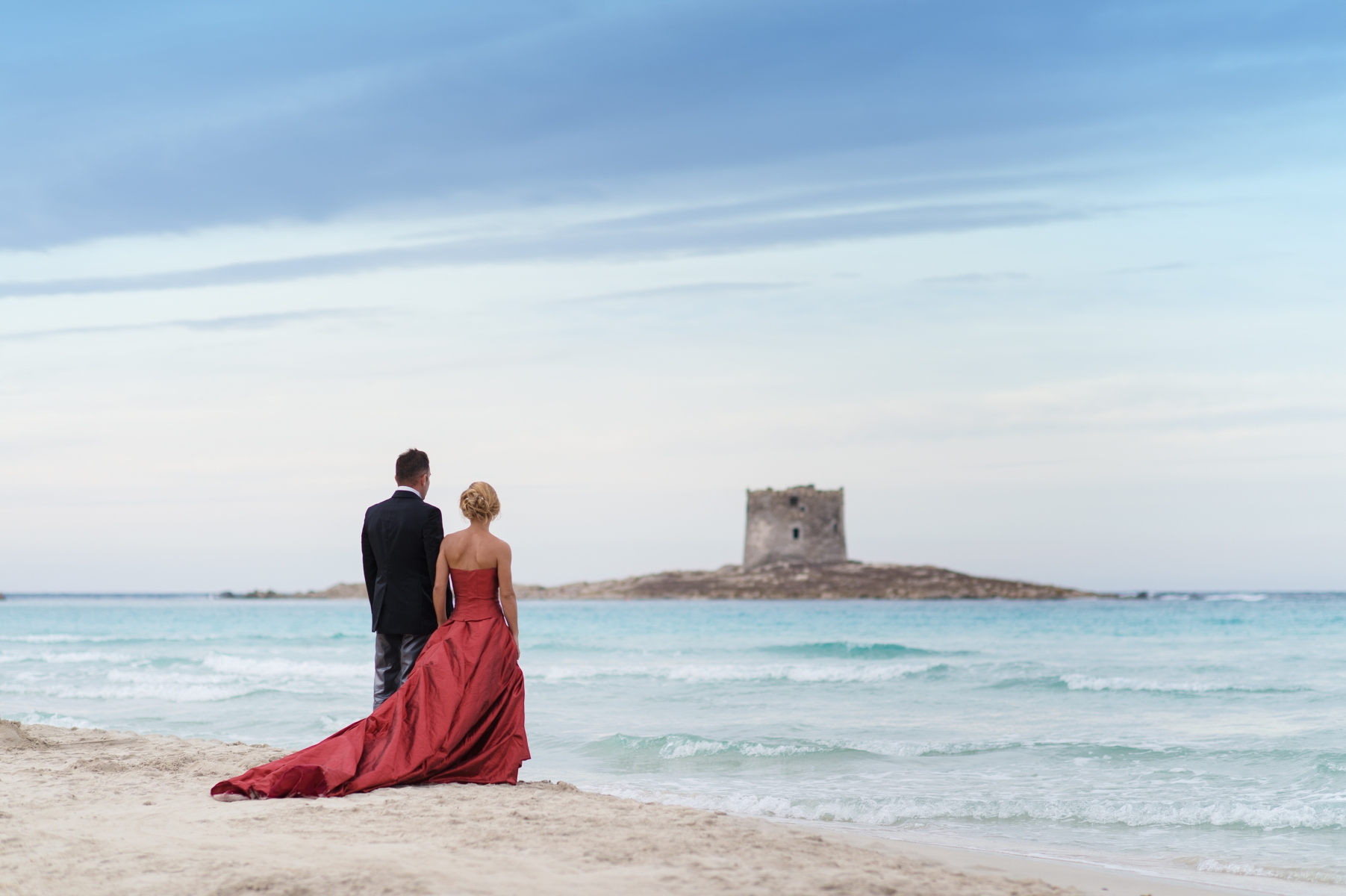
An ideal destination in every season and perfect for a wedding. An evocative, romantic and enchanting land: an increasing number of couples choose the most picturesque corners of Sardinia as a place in which to celebrate their love. Numerous guests get to know the island while on holiday, leaving behind a little piece of their heart and they sometimes return to take it back on one of the most important days of their lives. Many say “I do” in famous and captivating places, others in less well-known, poetic places reminiscent of an archaic past, in the bucolic peace and quiet or far away from the hustle and bustle of today’s world: a lighthouse, a cave, a sacred well, the rows of vines in a vineyard kissed by the sun, in gardens where fragrances and colours are transformed by the changing seasons. Dream weddings are celebrated throughout much of the island: the bride and groom spend the pre-event and honeymoon there, while their guests often stay on and take a holiday.

Nuraghe sa Domu beccia
According to the ‘father’ of Sardinian archaeologists, Giovanni Lilliu (1914-2012), this was the realm of a small capital, just like Su Nuraxi in Barumini and Nuraghe Losa in Abbasanta. Before him, at the beginning of the 19th century, other Sardinian scholars – Angius and Spano – bore witness to the fortress, exalting its architecture. The ancient majesty of the Nuraghe sa Domu Beccia (‘old house’ in the Campidanese dialect), a unicum on the island due to the unique articulation of towers and fortified walls, was then irremediably altered in the years 1822-25. With the boulders of the monument, 15 kilometres of paved road leading to Oristano were built. The charm of viewing such, however, was not affected: 800 metres from the town of Uras, at the south-western base of the Monte Arci park – a territory inhabited since the final Neolithic period also due to the presence of deposits of obsidian - the ruins of an elaborate and imposing complex that ‘came to life’ between middle and final Bronze (XV-XI century BC) period can be admired.
Sa Domu Beccia, built in basaltic stone, consists of a bastion with three towers joined by curtain walls, which encase a central tower (keep) and a courtyard, with a central well, from which open access to six rooms. Three flights of stairs lead out from the keep, hinting to the original complexity of the upper levels of the Nuraghe. The current burial does not allow the layout of the rooms, entrances and corridors to be determined, but you can see three large niches arranged in a cross in the walls of the keep. The splendid fortress is ‘protected’ by a monumental heptagonal bulwark with six towers (with a diameter of between five and six metres). To the south of the Nuraghe extends a vast village consisting of about 150 huts that have been rather well preserved, the majority of which are circular. A short distance to the north, the profile of a Tomb of Giants has been discovered, with an elongated apsidal body and a semi-circular exedra.
The origins of Uras date back to the end of the 3rd millennium BC, as can be determined by ceramics found in Sa Grutta Manna. In Roja Cannas, at the foot of Mount Arci, the largest Neolithic obsidian deposit was discovered. The territory was densely inhabited in the Nuragic period. In addition to Sa Domu Beccia, more than twenty megalithic towers and two Tombs of Giants can be seen. The subsequent history of the important agricultural town in the Campidano di Oristano sub-region is also interesting. The remains of the Abbey of San Michele in Thamis (12th century), two kilometres from the town, bear witness to the Middle Ages, remaining such until the early 19th century when - as attested to by Angius and Spano – the walls of the castle of Uras were built. Today, the historical town spreads out around the baroque parish church of Santa Maria Maddalena (1664-82). On the subject of history and places of worship, the church of San Salvatore was threatened on 14th April 1470 when Leonardo Alagon defeated the Aragonese of Viceroy Carroz.
Nostra Signora di Bonacatu
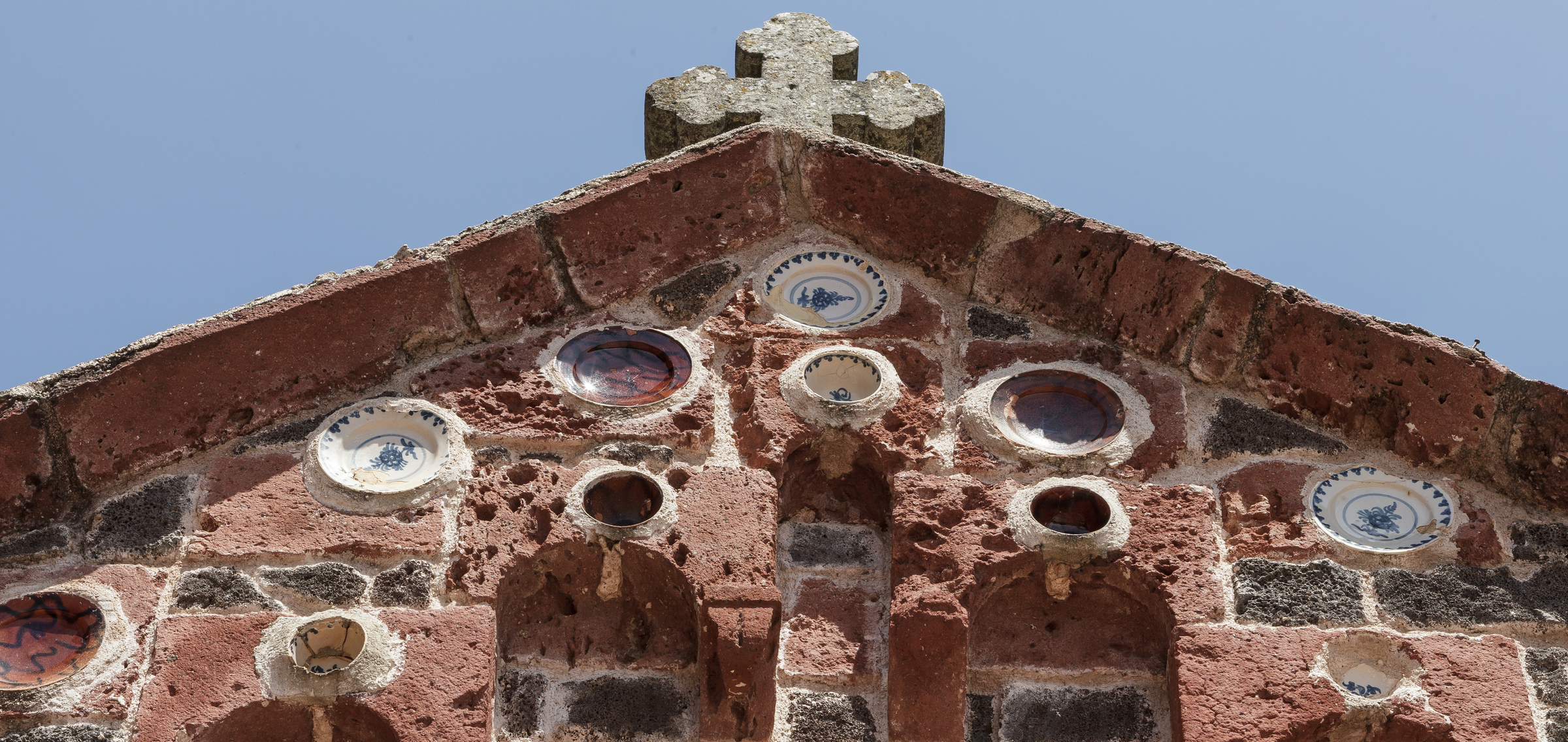
The story of Our Lady of Bonacattu begins in the 5th century, when the Byzantine settlers began building a small quadrangular church (12 metres each side) from basalt and trachyte rock. Subsequent alterations (7th-8th century) were made when the first nucleus of the present-day Bonarcado may have already been established, a village at the foot of Montiferru, 25 km from Oristano. The site of the little sanctuary, which was undoubtedly one of the earliest Christian buildings on the Island, has its roots in even more distant events, dating back to a Nuragic settlement on top of which a Roman village with a thermal bath building was built, the remains of which were used to build the sanctuary. A bath with mosaic flooring in the eastern ‘wing’ bears witness to this.
There are legends linked to the name: apparently, the church was discovered in the wood by a hunter and, in fact, the Sardinian name Bonacattu, meaning ‘a good find’. It is more likely, however, that the name comes from a Byzantine dedication to the virgin Panachrantos (meaning immaculate). The name of the village itself, originally Bonacranto or Bonarcanto is a corruption of the Greek name. The present-day ‘version’ of the temple is the result of various interventions, with the addition of architectural elements, including two facades, one Romanesque to the west added between 1242 and 1268 and decorated with hanging arches and multi-coloured ceramic bowls, and one to the north, added in 1933, in neo-Romanesque style. Inside, you can admire the most ancient part: the four 'branches' of the Greek cross layout, which have barrel-vaults, with a Byzantine-inspired dome above the point where they cross each other. In the southern branch, there is the main altar on which there is a multi-coloured terracotta bas-relief of the Virgin Mary with child (15th century): the effigy led to the most ancient Marian cult on the Island, here in Bonarcado, and it attracts thousands of worshippers every year, mostly during the celebration of the Virgin Mary in September.
A second turning point took place at the beginning of the 12th century, when the judge Constantine of Arborea entrusted the village to the Camaldolese of Pisa. The monks founded an Abbey – of which the founding act is the first document (in Logudorese dialect) of the condaghe (ancient Sardinian administrative document) of Santa Maria di Bonarcado – and they built a monastery. In 1146 a nova clesia was added alongside it, right in front of the ancient sanctuary, forming today’s complex that looks out onto a paved square in the old town centre. The impressive basilica of Santa Maria emerged, made of dark basalt and reddish trachyte inserts that heighten its appeal. It originally had a single nave and crux commissa and was ‘transformed’, giving it three naves, with the addition of a square-shaped bell tower, in the mid-13th century. The works were performed by workers coming from Spain (the same ones that worked on the sanctuary). The introduction of Islamic decorative elements in Sardinia is their merit: small lobed arches, ‘accordion-style’ pilasters, stepped and inverted-pyramid type corbels. More expansion work took place in the 18th century. Currently, the main façade features three arches with a central portal, over which there is arch made of two-tone ashlars.
San Serafino
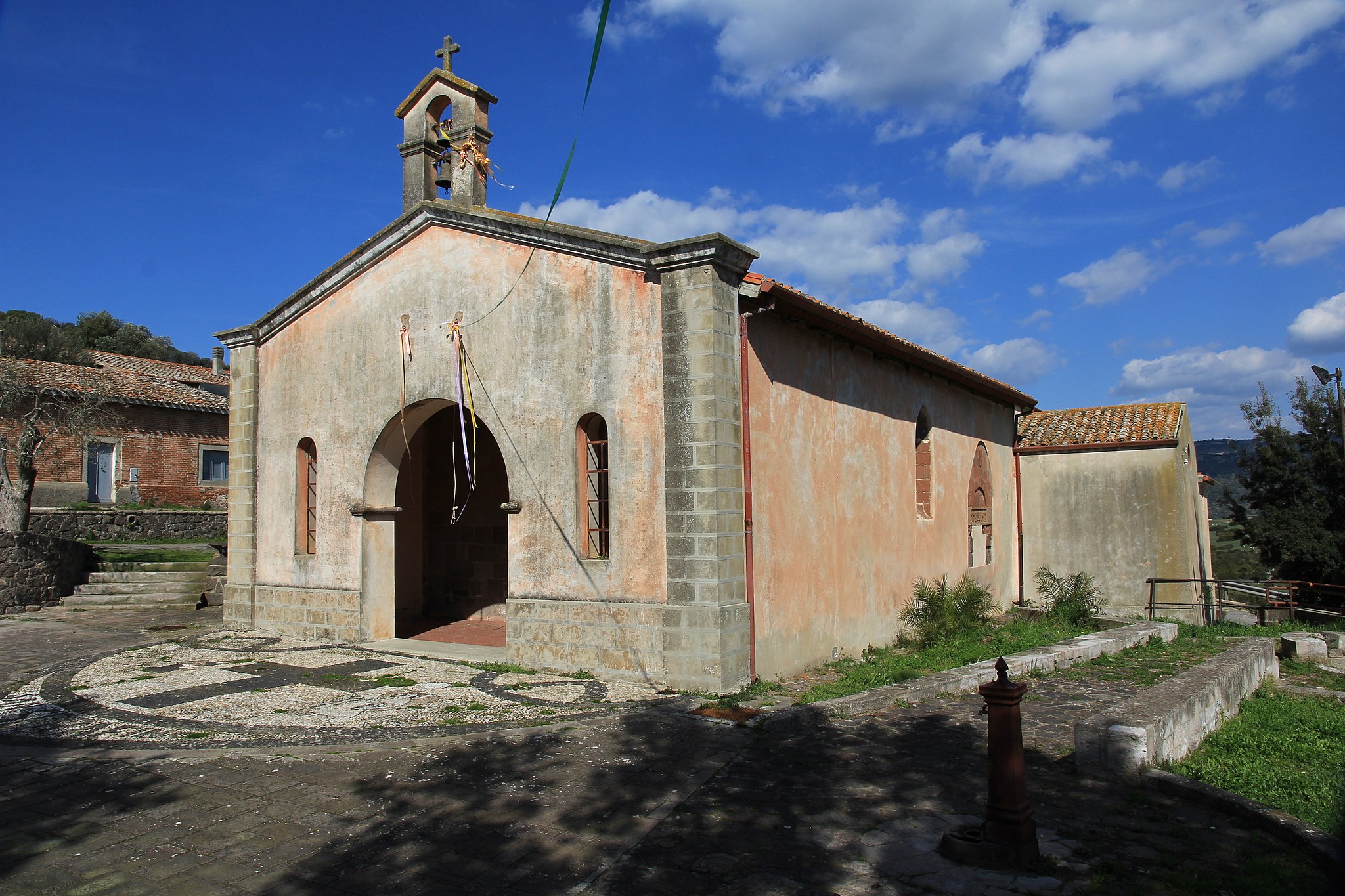
The buildings stand on the green slopes of the Perda 'e pranu plateau, set in a loop of the beautiful Omodeo lake. The sanctuary and novenary of San Serafino, immersed in the evocative scenery of Ghilarza territory, were built on the site of a 7th century Byzantine church, probably built on Roman ruins, of which pottery from the late imperial era were discovered during the works of restoration of the sanctuary (1950). Many centuries later, in the Giudicato period, the Byzantine building was rebuilt and enlarged. It retained its medieval appearance until 1884 when two side chapels were added, giving it the current cross-shaped layout. The single rectangular space is covered with a wooden roof on trusses and closes with a semicircular apse. The external decorations remain: on the fourteenth-century door of the façade, you will notice a light in the shape of a cross and a tile with the Agnus Dei, while in the southern side there is an arched door, above which an uprooted tree is carved, perhaps the oldest coat of arms of the Giudicato d'Arborea. On the architrave, San Serafino is represented together with ecclesiastics and high-ranking personalities. There is a seventeenth century pulpit, of which only a beautiful trachyte column remains, with a relief of angelic faces and the 'exhibition' of the vine, typical motifs of Sardinian minor art.
The church is surrounded by sas muristenes, 'casette' (lodgings) built in the seventeenth century to accommodate travellers and pilgrims: the novenary of San Serafino has 103 of them, and they are inhabited and very popular for the nine days of celebrations in his honour. The sanctuary is rich in social and cultural references, expressing the profound meaning of a community, retaining echoes and secular suggestions. The festival of San Serafino is known for its peace and intimacy. The procession passes through all the muristenes. The children run ahead of the saint, knocking at each house and announcing his arrival. The novenas are recited, sungos sososos (traditional religious songs) are sung, and food is eaten: when the bells stop ringing, it is an announcement of the saint's return to the church and the beginning of the dances.
Borghi, the true soul of the island
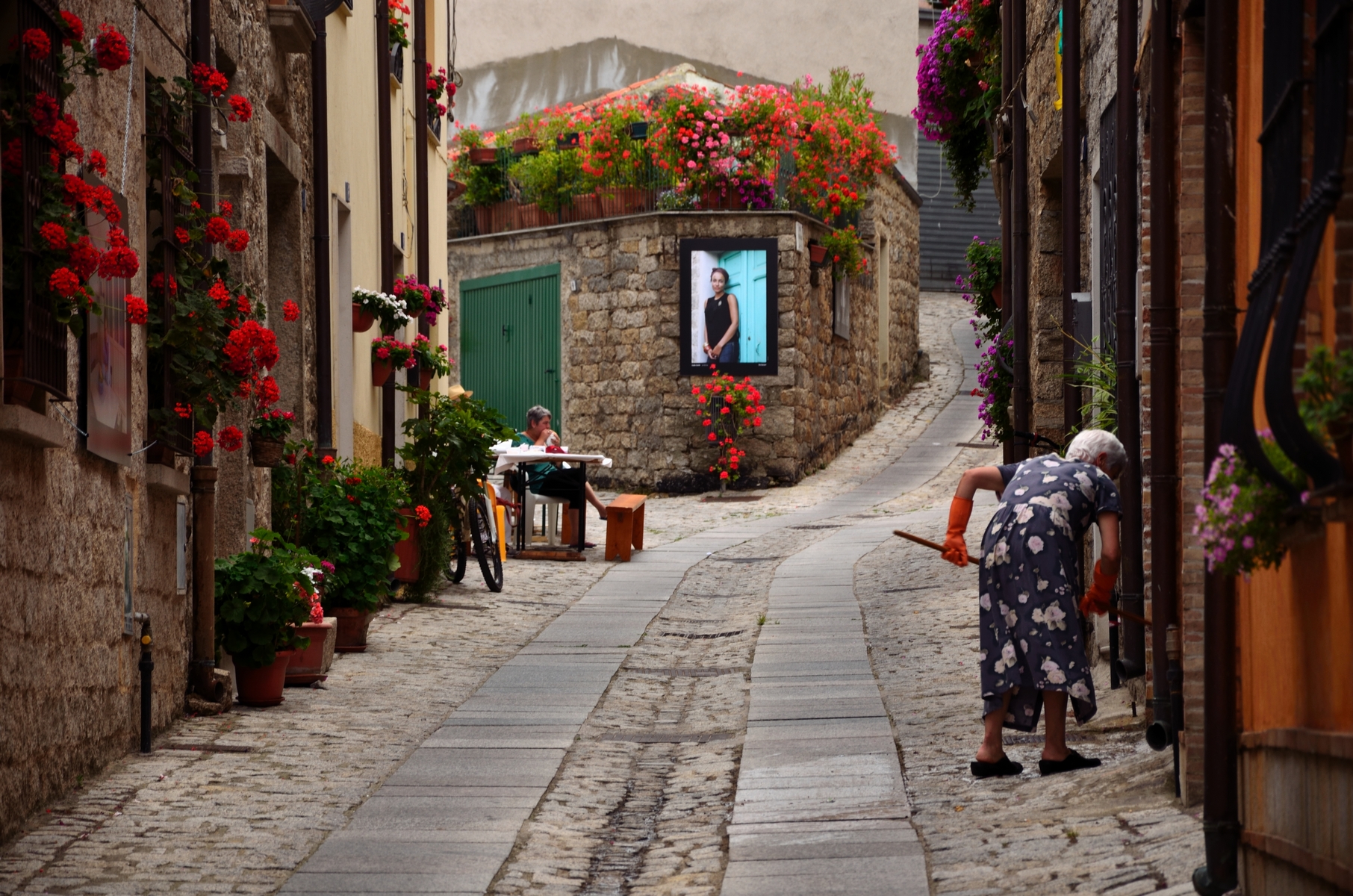
It is like nowhere else in the world. This is the Sardinia seen by the first travellers and by the writers of the past: they describe a land that emerges slowly from the sea, and tell of the natural spectacle that gradually appears, bathed in intense light. Mountains that sink to the coast, sometimes gently, sometimes suddenly, frame ever-changing scenery. It is never very far from the sea to the hinterland, and the route is dotted with small, traditional villages, the intimate 'soul' of Sardinia. On the roads that lead to the heart of the island, welcomed by the warm hospitality of its communities, you can discover the authentic life and ancient traditions of the villages. You can lose yourself in criss-crossed pavved alleyways, and come aross ancient buildings, natural monuments, archaeological sites, and discover masterpieces of artisan work and unequalled cuisine. You will experience the essence of Sardinia, and its most genuine identity.
Enchanting cliffs sculpted by time
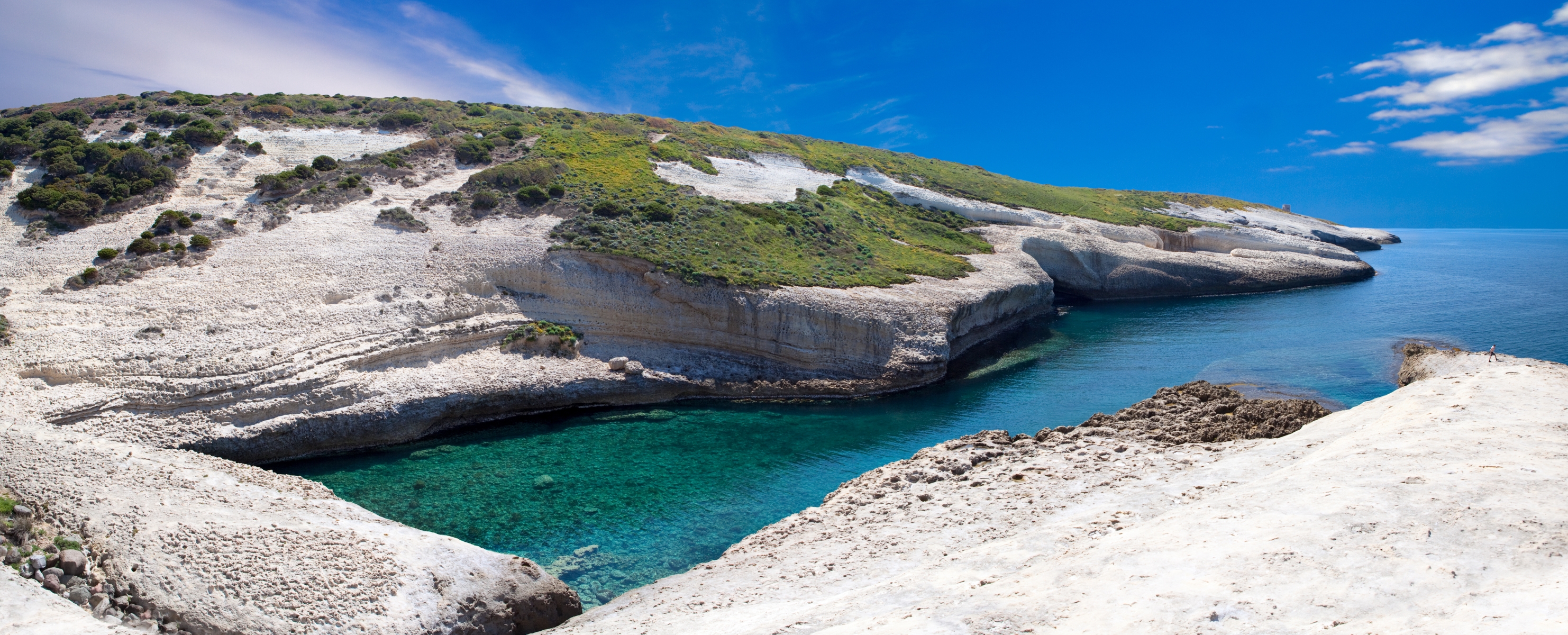
A surprising gallery of ever-changing landscapes. This is what the island's coastline looks like. Expanses of white or golden sand, sometimes sparkling with quartz or tinged with pink. Or stretches of soft virgin dunes. Or deep inlets and stunning cliffs shaped by wind and waves into the most original and bizarre shapes. Cliffs, stacks and tafoni (also known as honeycomb weathering) are veritable artistic installations on the sea, and are accessible natural wonders, easily reached by car, motorbike or bicycle. These striking places don't get very crowded, like the solitary promontories surrounding the island's charming lighthouses and countless coastal towers. There is always a sheltered spot where you can find an exclusive terrace overlooking the sea, an intimate corner to enjoy at your leisure, far from the bustle of the beaches. Take a refreshing dip amidst the light reflecting on the rocks or dive from 'balconies overlooking the sea', surrounded by sheer cliffs, spires and ravines. Peaceful places where you can witness unforgettable sunrises and sunsets while listening to the music of the sea.