
Gadoni
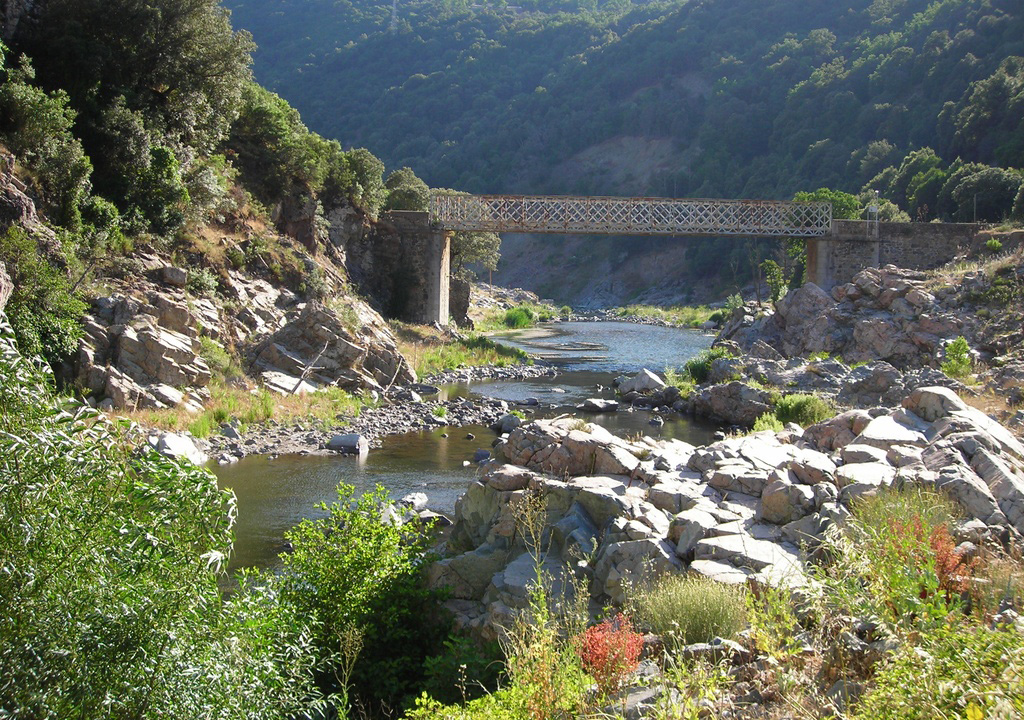
Guarded by mountains, crossed by ravines and surrounded by dense forests dotted with limestone rocks and natural springs, Gadoni is a small and welcoming agricultural town of 800 inhabitants, situated 700 metres above sea level on the slopes of Gennargentu. Founded in the 15th century, the oldest quarter is laid out in a semicircle: the houses look onto streets paved in red and black stone, and criss-cross with stairways and walls. In the centre are the parish Church of Assunta and the Church of Santa Marta, who is celebrated at the end of July. The surrounding countryside shows its wildest and most fascinating nature: spectacular landscapes with ravines, canyons, waterfalls and lakes. Trekking and horseback excursions will take you to the Corongia plateau, covered in an impressive forest of holm oaks, yews, pistacia and junipers, wild peonies and orchids; from there you can descend to the Flumendosa valley with its walnut, cherry and chestnut trees, through the ancient woodland of Crontas, home to rare mammals and birds of prey such as the royal eagle, and on to the lunar landscape of sa Scova, as far as the praecipes of Lattinazzu (up to 100 metres high), carved and moulded by time, including the su Campalini pinnacle, 80 metres high. You will discover magical scenes such as the Gruttas Albas caves, with their 70 metre high ceilings, and Gruttas de Perdu, adorned with stalactites and stalagmites, the sinkhole of su Disterru ‘e Luritta, the bizarre rock formations of is Breccas and the s’Istiddiosa waterfall: a small stream that creates thousands of tiny droplets that fall from the rocky, moss-covered walls, creating a myriad of threads of water.
Gadoni is historically known for its mining resources. At Funtana raminosa and Seddas is Puzzus, where bronze manufacts have been found, the Nuraghic peoples melted copper to create the symbolic Bronze Age sculptures. To extract the copper, Phoenicians, Carthaginians and Romans dug tunnels that were re-used in the early 20th century. Today it is a museum of industrial archaeology, part of the Parco Geominerario della Sardegna. The mine comes alive each year at the beginning of December with a festival in honour of Santa Barbara, the patron saint of miners, which coincides with the Gadona events during the Autunno in Barbagia event. Up to the late 20th century the town's economy was based on mining; today, it is focussed on agriculture and crafts, in particular wood-working and woollen goods. The typical local rug is called sa burra (like in Sarule), and was originally used as a blanket during the cold winter nights, and later as a carpet to place under tables. It is made by Gadona womenfolk using a horizontal loom, and decorates window ledges and balconies during religious processions. Other traditional products are honey and local dishes: roast meat, tasty cheeses and bread with a long baking process (pistoccu, mustazzu a corrusu, pani ‘e pattata and cocoi erda)
Ortueri
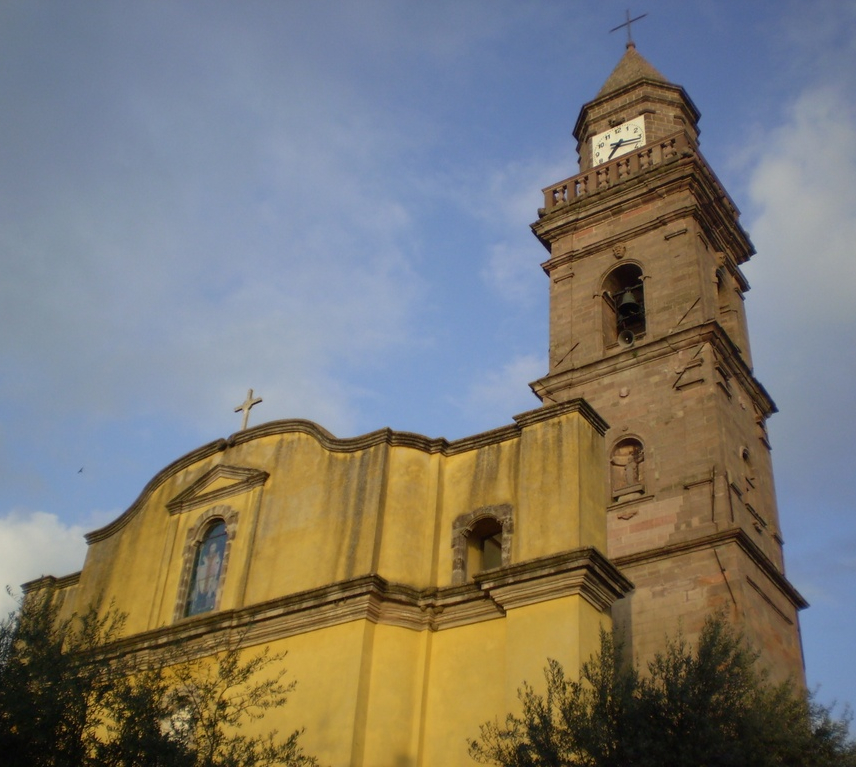
Surrounded by the Mandrolisai forests, this is the most western town in Barbagia. Ortueri is a medieval town with a population of more than 1000, strongly marked by the Roman civilisation, whose remains are spread throughout the territory, including the Pedra Litterada and the sarcophagi dedicated to the gods Mani di Prani e Laccos. It is no coincidence that the original village was located between Travi and Alas Ruinas, an old Roman colony. Today, the old houses in the town centre are piled up against the hillside of sa Serra, laid out around the ancient parish church of San Nicolò. The church, which dates back to the 18th or 19th century, has a majestic, 38 metre-high bell tower. The patron saint is celebrated in early December with a traditional procession, dances and a typical local pastry, s’angule. Other religious festivals linked to the fertility of the earth are held at the end of May in honour of San Nicola di Bari and in September, on the 8th for Santa Maria in the countryside sanctuary named for her, and on the18th for the Madonna addolorata (Our Lady of Sorrows).
The village is surrounded by springs and vines, holm oaks and cork trees: Ortueri is known for its cork products and orbace (a coarse woollen fabric) used to make traditional winter clothing by the skilful hands of local craftsmen. Don't miss the two most important events for discovering local crafts and foods: Magasinos Apertos, between May and June, and the Autunno in Barbagia event in December. Combine it with a walk in the dense forests and Mediterranean scrub of the Mui Muscas park, which has 50 "protected" Sardinian donkeys. The impervious Pedrarba point, surmounted by the sa Conca ‘e s’Isteddu rock, are of particular natural interest.
Gusana
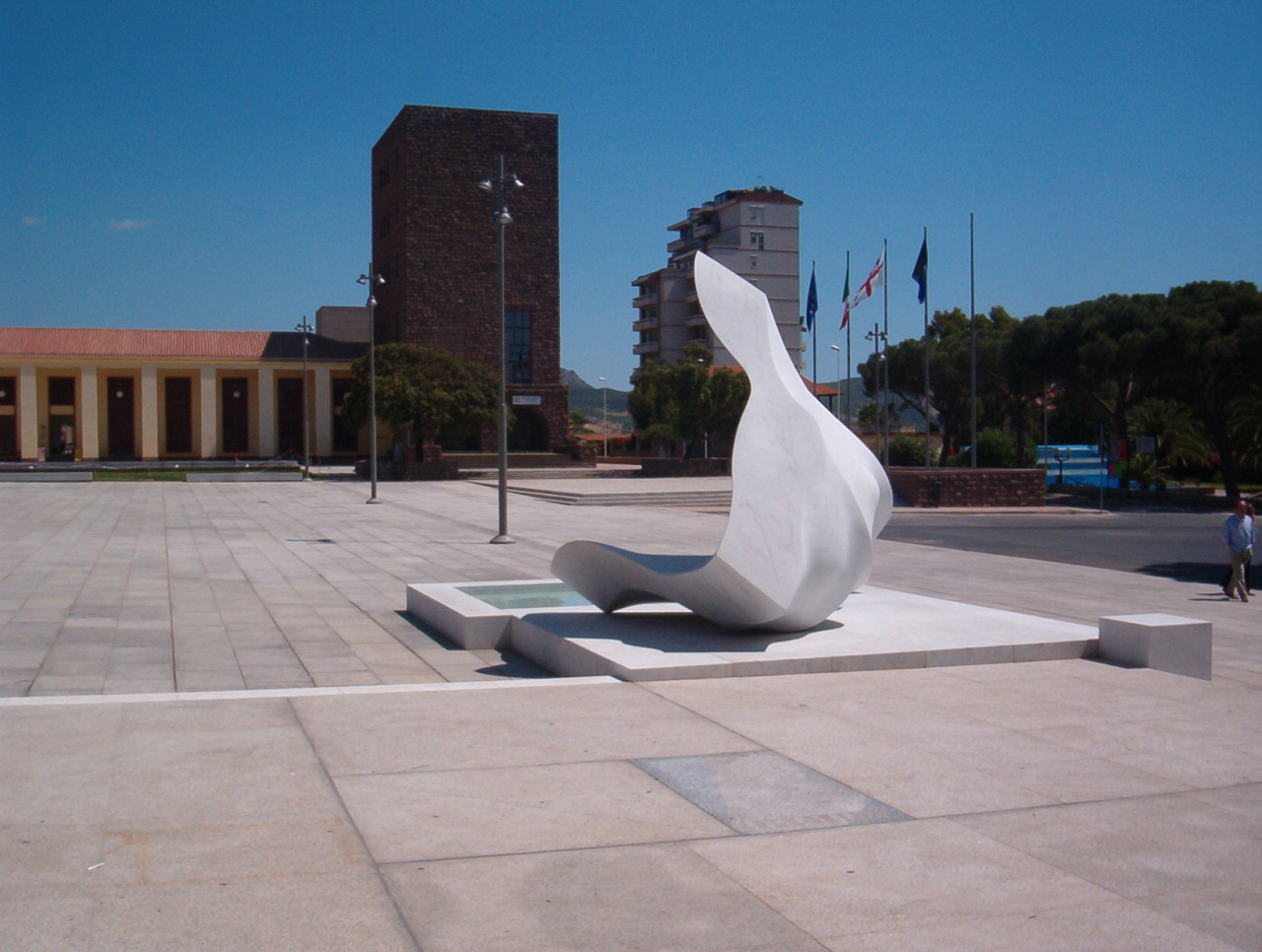
Protected by hills covered in downy oaks and Mediterranean scrub, giving it a pure look, the deep blue lake of Gusana stands out. It is an artificial basin, formed between 1959 and 1961 in the territory of Gavoi, which is just two kilometres away. Originating from the barrage of the river of the same name, it extends along the base of the plateau of Fonni, blending perfectly into the landscape, charmingly 'set' between the Barbagia mountains of Littederone and Nodu nos Arcos.
It is a precious destination for those who love relaxing and for the peaceful sensation: you can adventure into its waters on a canoe trip or you can have fun doing some recreational fishing, keeping in mind the limitations based on the periods in which it is permitted. You can also visit the woods around the blue lake on horseback. Near its banks, you will find accommodation facilities where you can enjoy a stay with every amenity at your disposal.
Throughout the year, you will be captivated by the natural context in which the lake is located: in the winter, by the snowy mountains in the background - with the nearby ski resort of Fonni - while in spring and summer by the cool climate and the bright colours of nature. Then, when Autumn in Barbagia comes to Gavoi in mid-October, you can taste the delicacies and admire the excellent artisan products.
Surrounded by mountains and the Gusana lake, Gavoi is located in the heart of the Island. Walking along the village streets, you will be attracted by the flower-filled balconies, from which writers, actors, musicians and journalists from all over the world perform at the beginning of July on the occasion of the literary festival, ‘The Island of stories’. In order to get a deeper knowledge of the local culture, visit the Casa Porcu Satta, a museum that boasts the most beautiful traditional clothes, toys from the past, the tools of ancient trades and musical instruments, like su tumbarinu, the drum played by the tumbarinos, who made the village famous.

ISRE - Museo Etnografico Sardo
Imagine discovering the “tangible and intangible” traditions and modern history of a people, all within a single environment. Such a place exists in Nuoro within a complex of buildings housing the Museo della Vita e delle Tradizioni Popolari Sarde (the Museum of Sardinian Life and Folk Traditions), formerly called ISRE (Istituto Superiore Regionale Etnografico - the Regional Ethnographic Institute), being the most complete ethnographic exhibition of the Island. Built between the 1950s and 1960s on the hill of Sant'Onofrio, based on a design by the architect Antonio Simon Mossa, today it is one of the most visited museum complexes on the island, thanks to the skilful representation of the island's cultural and handicraft beauties.
The route winds through three areas split into six environments. You can admire the tangible signs of Sardinian culture - the garments from the early-20th century, those worn “daily” and those used for ceremonies - also protagonists of the festival of the Sagra del Redentore (Festival of the Redeemer), the main event of Nuoro, featuring textile artefacts produced on traditional looms, an extensive collection of jewellery and amulets, weapons and utensils, around 60 instruments from Sardinian folk music (also 'toy' versions) and wooden Carnival masks linked to archaic pagan rituals, all accompanied by cowbells and sheep skins. In the dedicated rooms, you will find Thurpos and Eritaju of Orotelli, Boes and Merdules of Ottana and Mamuthones and Issohadores of Mamoiada. The museum is also a place of ancient flavours, with exhibitions of more than 600 varieties of traditional breads, some being veritable works of art. An auditorium room is dedicated to temporary exhibitions, concerts, theatre performances and international documentary festivals. You will be fascinated by the ethnographic films produced during the biennial international film festival, and by the images in the photographic archive of visual anthropology.
ISRE is a “scattered” museum system - the headquarters are in Via Mereu on the outskirts, connecting a network of other “thematic” museums in the city centre, part of an ideal identity pathway extending throughout the territory. In the historic district of Seuna, you will find the birthplace of Grazia Deledda, the most important literary site of the city, which safeguards the memory of the author who opened the Sardinian borders to the world. Next, you can immerse yourself in over thirty thousand volumes of the ethnoanthropological and museological specialist library. Nuoro is the Sardinian Athens, in which you can take a fascinating cultural journey. In a panoramic location alongside the cathedral of Santa Maria della Neve, you can access the Tribu cultural space and the Museo Ciusa that displays the sculptures of Francesco Ciusa, winner of the Venice Biennale (1907). The artist, the Nobel Prize winner Deledda, and the writers Salvatore and Sebastiano Satta also brought acclaim to the city. Nearby is the MAN, a famous art museum that hosts temporary international exhibitions and permanent displays of 20th-century Sardinian artists.
Man - Art Museum
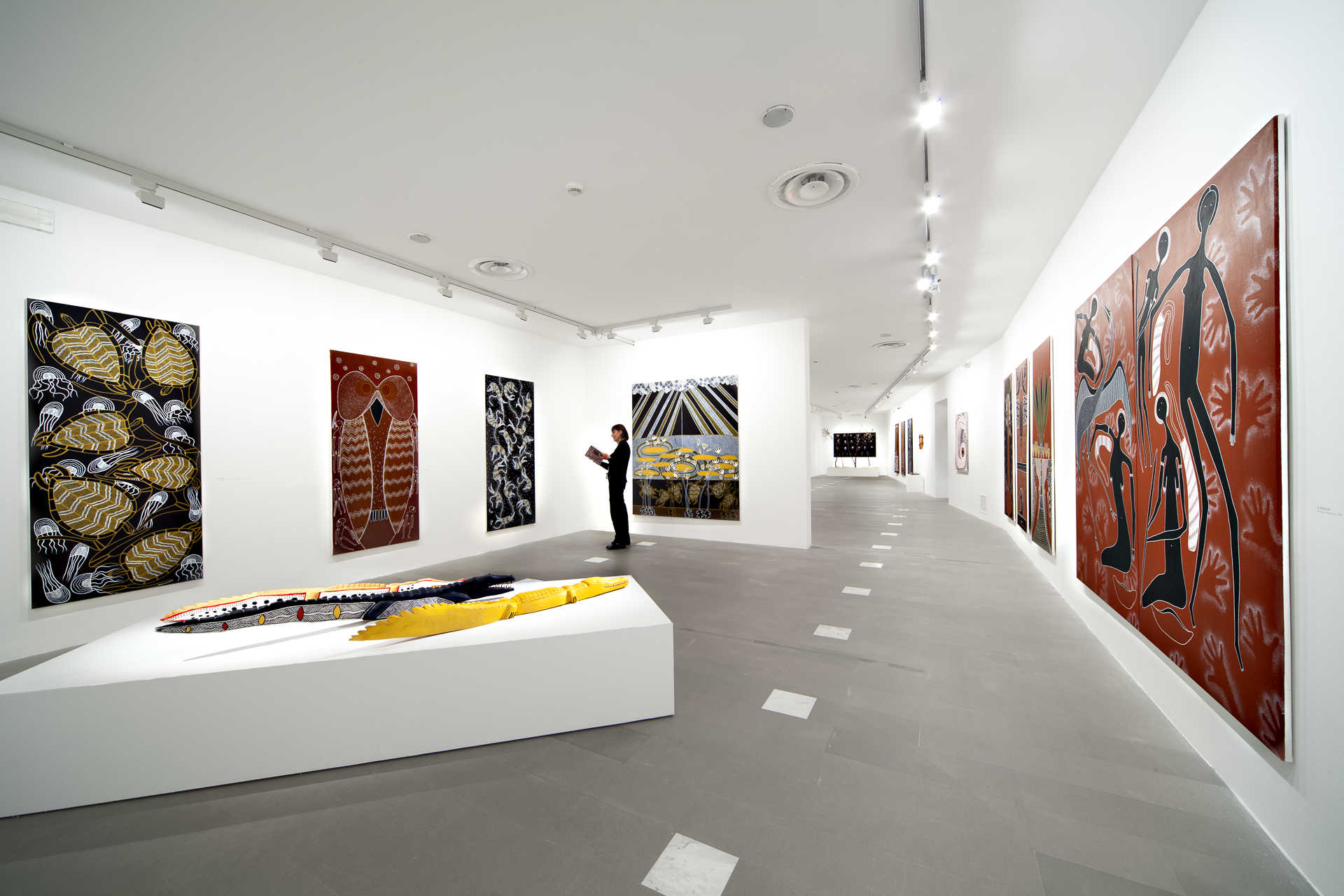
A cultural workshop, a centre of research into artistic forms and experimentation, a communicative space for the promotion of modern and contemporary art, a ‘school’ focused on training and raising awareness and, lastly, ‘also’ an exhibition space. The MAN, Art Museum in the province of Nuoro, is unique in the Sardinian territory, as it goes beyond the very concept of a museum, opening up to the external context and operating at 360 degrees in the conservation and promotion of cultural heritage. Not surprisingly, it is the only museum in Sardinia to be a part of the National Association of Contemporary Art Museums in Italy.
The museum is located in Nuoro, in a building dating back to the 1920s, not far from another symbol of the city’s artistic soul: Piazza Satta, designed by Costantino Nivola and enriched by his works. The museum allows you to ‘travel’ through Sardinia’s artistic world and through its contacts with the outside world, in a balance between memory and innovation.
Inside the MAN, there is a permanent collection with a steadily increasing number of works – currently around 600. Works by the main Sardinian artists are on display there, including Antonio Ballero, Francesco Ciusa, Maria Lai, Mario Delitala and Nivola himself. As well as the collections, the museum periodically hosts numerous temporary exhibitions, thanks to which you can learn more about the most recent creative trends and movements that characterised the artistic landscape between the 19th and 21st centuries. Alongside the exhibitions, MAN organises extra muros initiatives, which are spread across the territory, with the involvement of the local communities. Educational activities are added to all this: guided tours, workshops for school children and adults, special projects for different target audiences, with the aim of stimulating creative abilities and analysing the evolution of society through its artistic production.
A kaleidoscope of cultural and natural attractions exists in and around Nuoro. It is impossible not to associate the name of Grazia Deledda with the town at the foot of Mount Ortobene, where her birthplace is now a museum dedicated to her literary works. Barbagia traditions are on display at the Museum of Sardinian Life and Folk Traditions; furthermore, you can experience them on the last Sunday in August on the occasion of the Festa del Redentore (Feast of the Redeemer), during which worshippers make a pilgrimage to the top of the mountain, a thousand metres above sea level. In the town, the majestic cathedral of Santa Maria della Neve is also worth a visit, while on the road to Orune the fascinating Archaeological Park of Noddule awaits you.
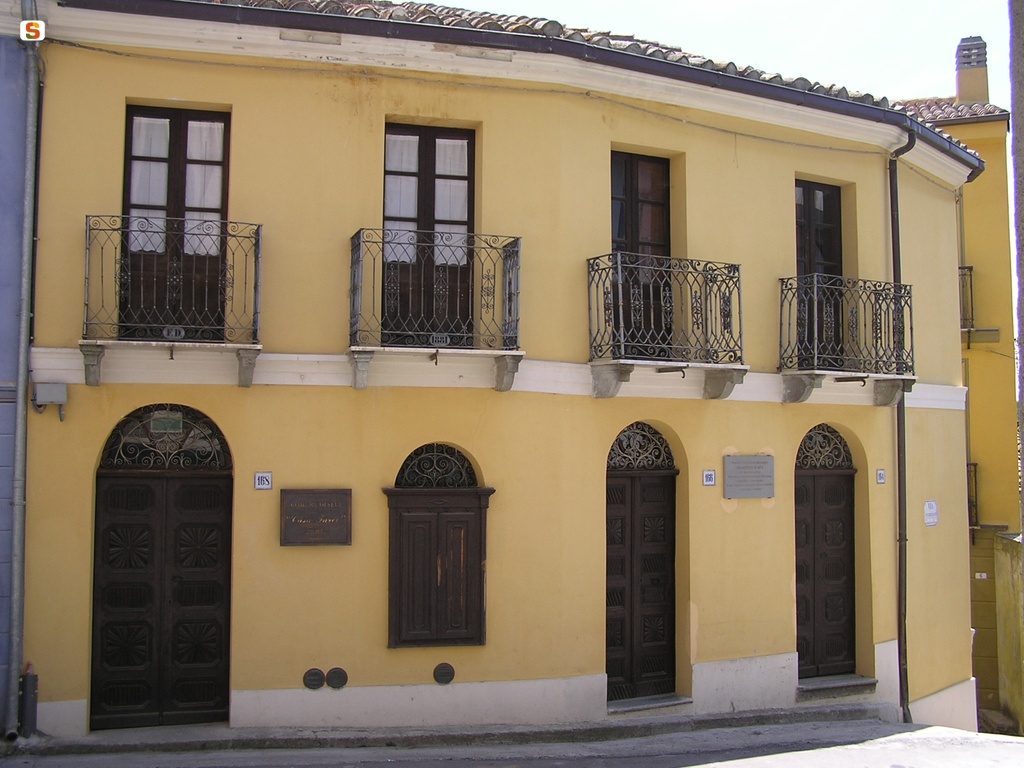
Casa Farci
The population of Seui contributed to setting up the collection for the ethnographic part, while the rest is evidence of the life and works of a well-known intellectual and politician who was born here and lived here until his adolescence. Casa Farci is a building dating back to the 19th century, located in the heart of the main town of Barbagia di Seulo. Its historical relevance comes from the fact that Filiberto Farci was born here in 1882. He was a writer and co-founder of the Partito Sardo d’Azione together with his great friend Emilio Lussu. The visit allows you to admire his study, where objects, documents and letters are kept, as well as his library. In addition to his political and literary activity, both rooms also testify to his relationships with other important figures on the Island’s cultural scene, such as Sebastiano Satta, Grazia Deledda, Francesco Ciusa and Antioco Casula.
The study is located on the first floor. On the same floor, you can also visit the kitchen with a wood-fired oven, a bedroom and a section dedicated to costumes. On the ground floor, you’ll find the exhibition area dedicated to trade, a deeply traditional activity in Seui: you will be surprised by the carefully organised layout, aimed at reconstructing a late 19th-century emporium. There is a section with documents and objects from the Fund’e Corongiu anthracite mine. The first basement floor is dedicated to arts and crafts: you will see the tools used in traditional activities by su massaiu (the farmer), su maistu de muru (the bricklayer), su maistu de linna (the carpenter) and su ferreri (the blacksmith), with the reconstruction of a forge. Going down another level, you will enter the cellar: the wooden presses for grape marc and a large copper alembic still, with which brandy was produced, stand out. You will notice the serial number ‘Cagliari 0001’, evidence of the authorisation for production enjoyed by the owner. Another section of the museum is dedicated to emigration, including documents from the Bissiri family. Among its members, there were inventors: Augusto, who emigrated to the United States, is known for the creation of a sort of ‘precursor’ of the cathode ray tube, laying the foundations for the birth of the television.
Casa Farci is part of a museum circuit that offers a fascinating range of themes and cultural proposals: the Spanish Prison ‘tells’ the story of the life of prisoners in Barbagia di Seulo until 1975; inside the Palazzina Liberty there is an archaeological, artistic and mining collection; the Galleria Civica contains a large exhibition of canvases, watercolours, sculptures and paintings. The fifth site is s’Omu de sa maja, a museum dedicated to the magical-religious world and the pre-Christian traditions of the inhabitants of the area.
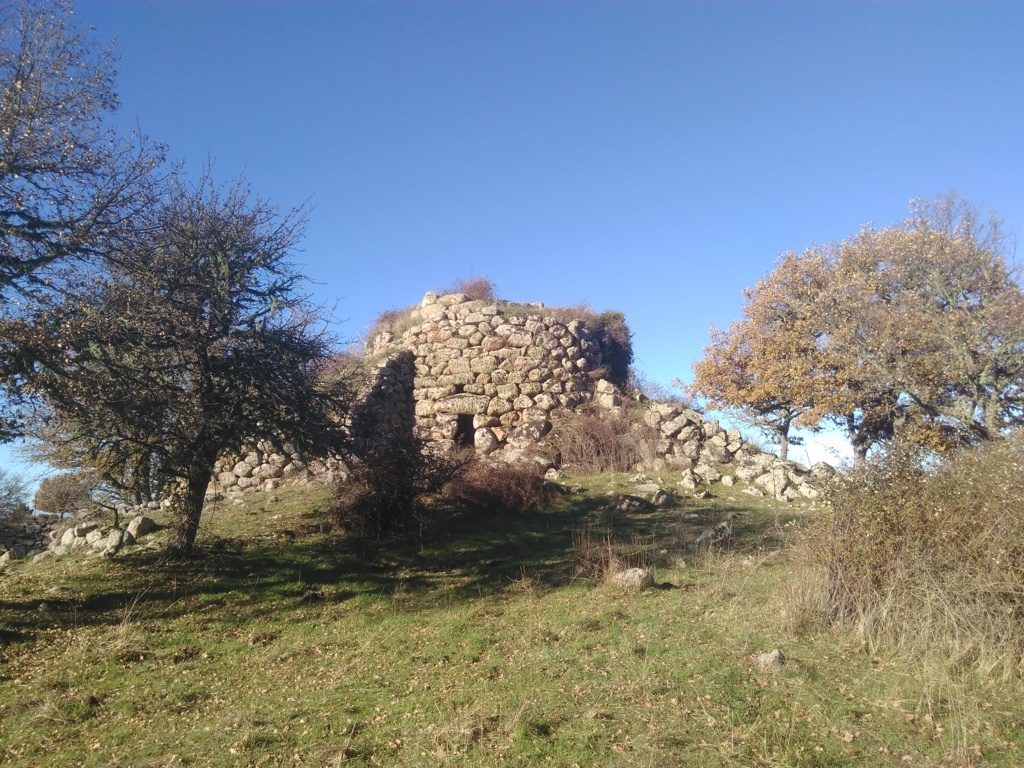
Nuraghe Dovilineò
It stands in a strategic position, taking advantage of the form of the granite rocks, dominating the Pratobello plain, with a village of extraordinarily large huts next to it. The nuraghe Dovilineò – also called Duvilinò – stands on a rocky outcrop about ten kilometres from Orgosolo. It is a mixed type of nuraghe, meaning that it has characteristics of both a corridor nuraghe (or proto nuraghe) and the later complex tholos nuraghe. The fact that it was built using natural rock would explain the reason for its unusual structure. The construction material was of course granite, obtained locally in square blocks of considerable size.
The fortress consists of a central tower with corridors, the residual height of which is about twelve metres, and three secondary towers around it. The architraved entrance leads into a covered corridor with a flat arch. On the left side of the passageway, there is a tunnel that leads to a well, made with rows of small stones and with pointed arch roofing, almost two metres deep. From an opening on the right, you can enter the main room, which has an elliptical layout and a niche, and another corridor that leads to the upper level via a spiral staircase.
Two of the three secondary towers are covered in rubble due to collapses, while the third, the western tower, has a curious structure: on the south side there are two corridors that lead to the same room, while a third corridor starts on the opposite side and opens onto the north side of the tower. The defence wall starts from the western tower, which extends until it closes the entire area in front of the main entrance. All around the building, especially on the southeastern side, there are traces of huts belonging to a village. You will be surprised by the diameter of some of them, which even reaches around ten metres.
After visiting the nuraghe, we return to the village: Orgosolo is a stop not to be missed, for its murals, the Canto a Tenore (typical Sardinian polyphonic folk singing), its food and wine and the spectacular landscapes of its Supramonte. Its territory contains other gems dating back to the Bronze Age: the most famous building is the nuraghe Mereu, surrounded by the forest of Montes and ‘overlooking’ the gorge of Gorropu. A few hundred metres away stands the single-tower Presethu Tortu, while one of the oldest holm oak forests in Europe is nearby. It is the thousand-year-old forest of sas Baddes, ‘watched over’ from above by the natural monument of Monte Novo San Giovanni.
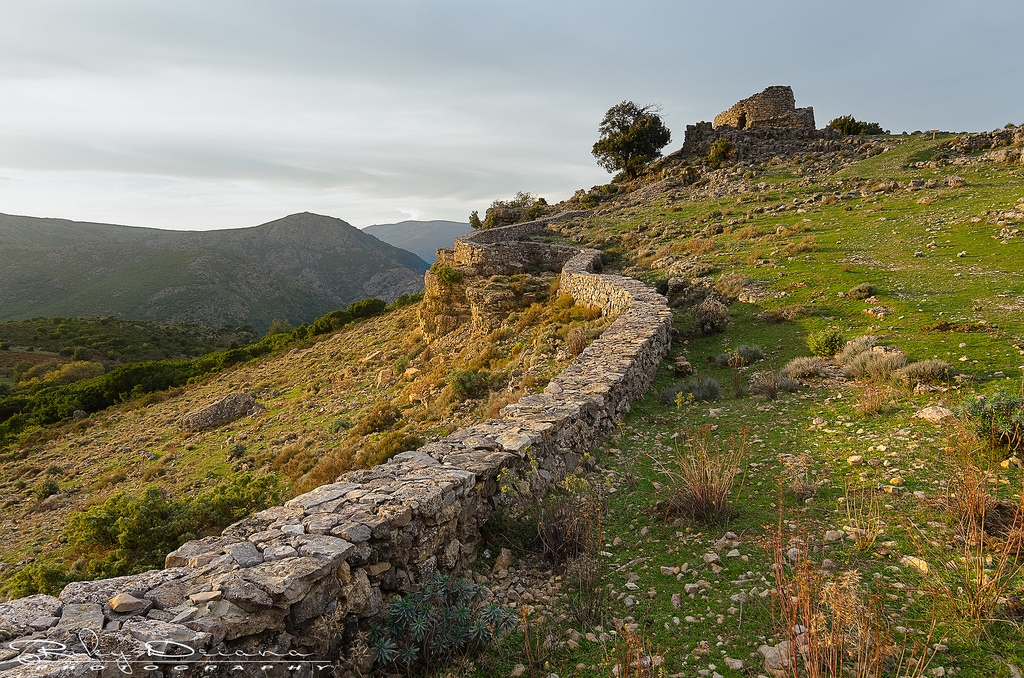
Spanish Prison of Seui
A house turned into a prison, camouflaged among similar dwellings, for several centuries it bore witness to dramatic detention conditions, as well as safeguarding precious documents. The Spanish prison in Seui, a medieval village on the border between southern Sardinia and Olgiastra, is a 2-storey square building set amongst narrow village streets and can be reached only via an evocative underpass, known as su Porci, lined with stone houses with carved wooden doors and wrought-iron balconies.
In the mid-17th century, the building became a penal facility of the Incontrada of Barbagia di Seulo, which belonged to the Duchy of Mandas. It was eventually turned over to the Savoy judicial system and then to the Italian government, until it was finally closed in 1975. It stands entirely surrounded by other buildings and prisoners had no view of the outdoors.
Once past a shale-paved courtyard you will enter rooms furnished with 19th century pieces, particularly in the residential part reserved for the custodian, a kitchen with hearth, and a bedroom. Food supplies were stored in a part of the attic known as su staulu varzu. On the upper floor was the office where the inmates were received, and a women’s cell. The floor was made of beams of wood and planks of chestnut and served as the ceiling for the area below.
A trap door and wooden staircase lead to the lower level, where, from a small courtyard, access was gained to the men’s cell and the penalty cell, known as sa cella de su pei in tipu. The men’s cell has a window with double grating, a table, two folding beds and a display case with documents dating to the 18th and 19th centuries. The other room is smaller and has an earthen floor and walls of bare shale. It has no windows and was where inmates underwent torture. In the display cases you’ll see documents dealing with the jailing and transportation of the prisoners, initially brought here on carts or on foot with armed escorts. In the late 19th century, they were brought here by train. The documents are the notes and studies done by doctors and pharmacists describing the medical interventions performed on inmates, and the potions and medicines administered also to the residents of Seui, complete with a list of the medicinal herbs and plants they used.
The old Spanish prison is one of five museums in Seui: an Art Deco palazzo that houses exhibits of art, archaeology, ethnography and mining traditions, casa Farci where Filiberto Farci, co-founder of the Sardinian Action Party, was born, the galleria d’arte civica (civic art gallery) and s’Omu de sa Maja, a museum dedicated to the world of magic, religion and pre-Christian Barbarian traditions.
Sant'Ignazio di Loyola
The church is entered via a double staircase positioned along the façade, which appears majestically, split vertically and horizontally in three parts by pilasters and cornices, concluding with a curvilinear tympanum. Rising up on the left is a square-shaped bell tower, topped by a small dome that recalls styles hailing from across the Alps. Sant’Ignazio di Loyola was erected in the historic centre of Oliena between the 17th and 18th centuries as part of a project by the master builder Domenico Spotorno on behalf of the Company of Jesus. The construction works of the Jesuit church and college lasted more than a century (1644-1758), hence the current structure is fundamentally of the 18th century. The vast interior space consists in a nave with three chapels on each side, separated by pillars supporting a jutting cornice, which serves as a barrel vault.
A triumphal arch leads to the raised presbytery, in Capilla Mayor style. At the centre is the neoclassical high altar with a niche holding the statue of St. Ignatius, completed in accordance with 17th-century iconographic models. In the niches of the minor altars are statues of the 17th and 18th centuries, including one of Saint Michael the Archangel by the sculptor Carena and the Saint Francis Xavier of Campania origin. On the walls are paintings by contemporary artists. On the sides of the presbytery are a number of rooms that connect to the former collegiate church, today being canonical, which houses a gallery full of artworks. Conserved therein is the retable of Saint Christopher, ascribed to the master of Oliena and dated as being from the mid-16th century, the Cristo del Rito de s’Iscravamentu (15th-16th century), perhaps by a Catalan sculptor, and beautiful wooden statues. In the adjoining convent, rather, tempera murals were found, some unfinished perhaps due to the sudden departure of the Jesuits, who left a lasting impact upon the culture and economy of the Oliena locals, favouring the widespread dissemination of education and bearing the culture of the mulberry, silkworm breeding and new irrigation techniques.
From 1791, the former Jesuit church has been the parish church of Oliena and Saint Ignatius of Loyola, its patron saint celebrated on 31st July. Masses are officiated only here and in the equally-suggestive Chiesa di Santa Maria, inherited from the Pisan age (13th century) but which preserves the 15th-century Gothic-Aragonese features intact. In all, however, there are eleven Oliena churches. Not to be missed are those in the two countryside areas of Nostra Signora della Pietà and San Lussorio - a testimony to the profound religiosity and intense devotion of a community that lives in a jewel of a village, which excels thanks to its landscapes and natural monuments, archaeological and cultural attractions, artisan crafts, food and wine delicacies and its hospitality.
Villanova Tulo
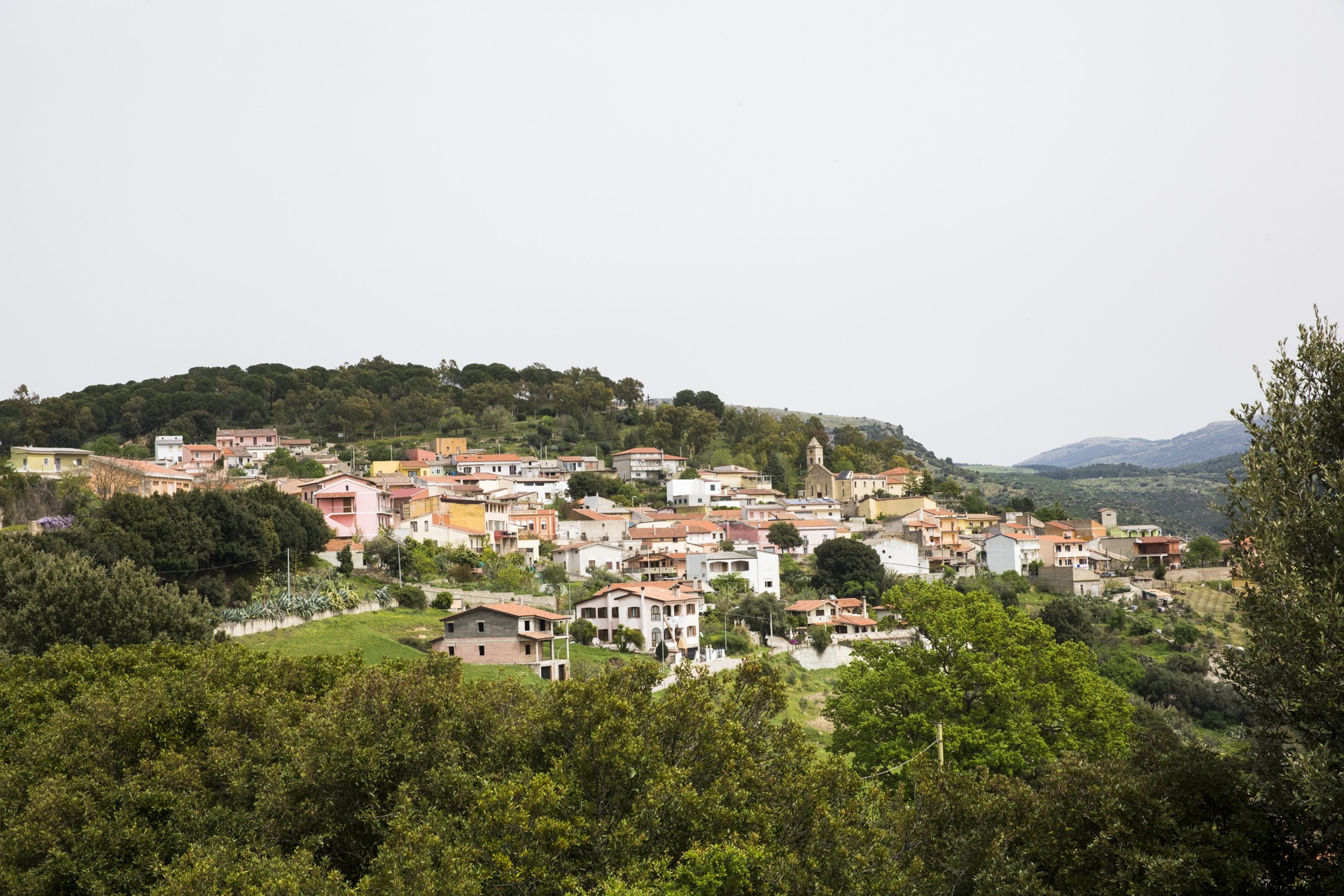
It is located at the foot of the hill of San Sebastiano. At the top of this hill, there is a little rural church. Villanova Tulo is a small village with one thousand inhabitants on the right bank of the Flumendosa, in the historical Sarcidano region. The economy is agricultural and pastoral. Excellent cheeses are produced and cereals, vegetables and fruit are grown here. From the residential area, you can enjoy a panoramic view of its natural heritage: the river valley, Lake Flumendosa and the lush forest of Pantaleo, with centuries-old plants.
The present-day village was formed in the mid-14th century. It was once two villages, Villanova and Tulo. Tulo was the most ancient village and, according to some scholars, its name comes from Tullio, a Roman official who founded the village. This theory is supported by material evidence of its origins: there is an arch dating back to Roman times in the village. The old town centre is enriched not only by traditional rural architecture, but also by the murales created by Pinuccio Sciola, inspired by the works of the writer Benvenuto Lobina, Villanova Tulo's most famous citizen (1914-93), who made his hometown famous, by painting a vivid picture of it in his novel (in Nuoro language) entitled Po cantu Biddanoa. A bronze statue by Piergiorgio Gometz is also dedicated to him. In the centre, the parish church of San Giuliano stands out. It was rebuilt in 1663, based on Gothic-Aragonese forms, on a previous building. Three kilometres from the village, there is a station of the Trenino Verde tourist railway line, which leads from Mandas to Tortolì-Arbatax. The ancient railway line, which is the only means of transport that allows you to discover unspoilt corners of Sardinia, 'climbs over' the Flumendosa at the exact point in which the river flows into the lake.
The territory of Villanova Tulo was inhabited at least from the Early Bronze Age, as is demonstrated by the burials in the grottos of Is Janas and Frumosa. The most important site is at the top of an elevation, near the village: the archaeological area of the Nuraghe Adoni, consisting of a central tower, a quadrilobed bastion (with four towers), a sturdy defence wall and village huts. You will also notice steps, niches and curtain walls. The construction techniques used bear witness to various building phases. During excavations, about 400 bronze objects were found, mostly incomplete (hatchets, tips of javelins, spearheads, blades), and numerous ceramic fragments, dating back to the Late-Final Bronze Age (1350-1150 BC): bowls, dishes, pots, earthenware jars. The fragment of a bronze oinochoe with a raised spout stands out, a type that was widespread in Etruria at the end of the 6th century BC and was often exported to other regions, but not to Sardinia. A storage room full of pots, discovered in the staircase of a tower, documents the fact that the Nuragic complex was re-used during Late Antiquity (6th century AD).