
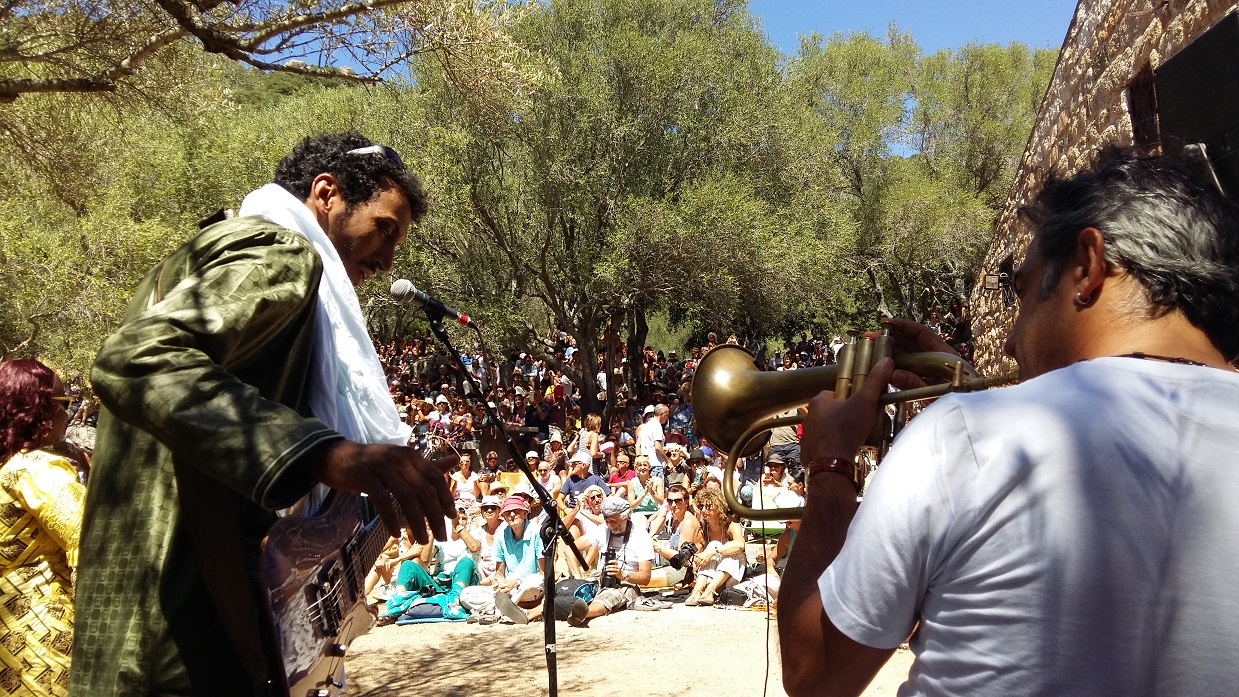
The jazz&blues soul of Sardinia
Granite coves sculpted by time, venues nestled among pure white limestone or red porphyry cliffs, enchanting village squares, archaeological sites, and even sea caves. From June to October, breathtaking natural backdrops become lively stages, resonating with melodies from renowned international artists. Harmonies and rhythms blend effortlessly with the environment, creating a symbiosis with Sardinia's unique lifestyle. For almost four decades, Sardinia has become an increasingly preferred destination for jazz, largely thanks to an artist who has unveiled a new musical soul for his homeland. Paolo Fresu was born in the small town of Berchidda, where he founded and nurtured Time in Jazz, now celebrating its 38th edition. Among the unmissable events, on Saturday, August 9th, in L'Agnata, the Sardinian retreat of Fabrizio De André, Paola Turci pays tribute to the unforgettable Genoese singer-songwriter.
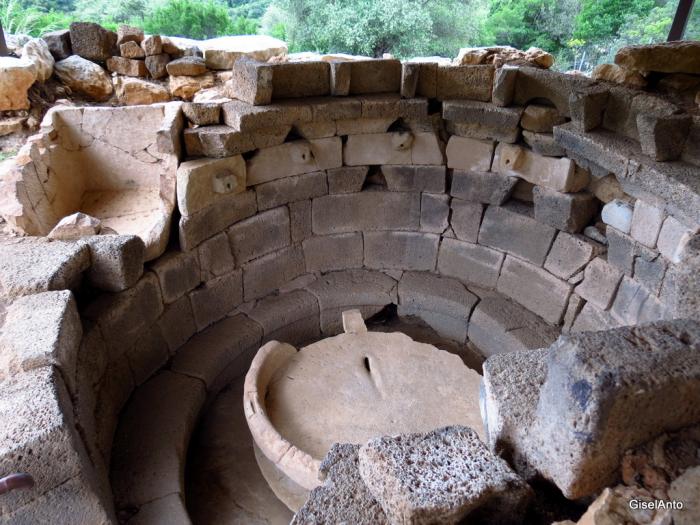
Village of sa Sedda 'e sos Carros
The name literally means 'where the carts pass', and dates back to the charcoal collection activities that characterized the site in the nineteenth and twentieth centuries: it is the location of a nuragic complex of exceptional architecture and engineering, created at the time of metalworking and linked to the cult of water, a precious element in the arid calcareous environment of the Supramonte, the Sardinian 'dolomites'. The village of sa Sedda 'e sos Carros is set in the wild valley of Lanaittu, a spectacular natural background within the territory of Oliena, accessible from the road that also leads (going towards Dorgali) to the national monument of the karst spring on Gologone and beautiful caves of sa Oche and su Bentu.
It is an insula similar to many nuragic villages in the Barbagia area, that grew up without any close nuraghes. It lies on the left side of Lanaittu, on the steep outcrops of Mount Uddè, about 300 meters above sea level. It dates back to a period between the Late Bronze and early Iron Age (12th-9th century BC) and is particularly important due to the presence of traces of metals fusion in the Nuragic age - an era in which man learned to extract and forge metals (bronze and iron), leaving behind the finds found in the numerous circular and oval huts that make up the village. One dwelling stands out for its singular architecture and ritual function: it is the 'source', a circular space with internal walls in dual-tone squared blocks - of white limestone and dark basalt - and carefully worked flooring. On the walls are carved mouflon heads in high relief with a hole through which the water, which came from the canal built into the wall thickness, gushed into the monolithic basin in the center of the floor. Near the hut you will see a large circular structure with steps: this was the pool for ceremonial ablutions, religious rites that involved the use of sacred water. This structure changed its use over time, becoming a storeroom for bronze objects waiting for a new processing cycle. It is probable that there was a casting workshop near the village.
In addition to sa Sedda 'and sos Carros, the Lanaittu valley also holds another nuragic site, the most spectacular of the island: the village of Tiscali. The green valley, which will appear sunny and solitary once you pass over passu malu (the bad pass), was inhabited long before the Nuragic age: it was a favorable environment for settlement since the Upper Palaeolithic, as shown by the remains of the Corbeddu cave.
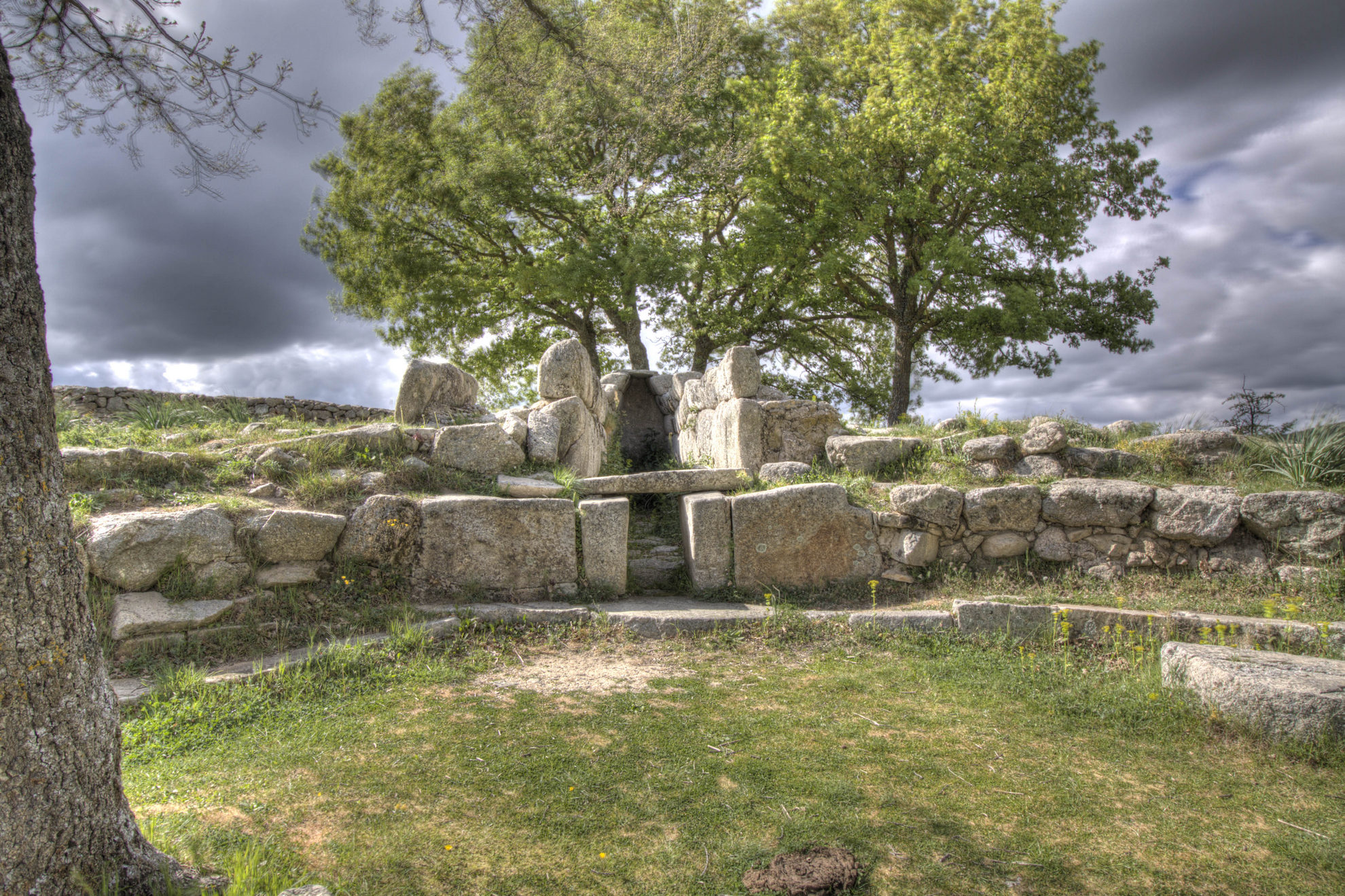
Necropolis of Madau
Near the hamlet of Pratobello, about 15 kilometres from Fonni, the ‘highest’ village of the island, a Nuragic necropolis with four similar Tombs of Giants arises, standing on a plateau in the midst of the splendid Riu Madau valley, at the foot of the Corr’e Boi passage, so-called because it looks like the head of a gigantic bull. The tombs, dating back to the early or late Bronze Age and perhaps connected to the nearby Nuragic village of Gremanu, are structured around an amphitheatre and face the rising sun. Two of them are well-preserved, having been excavated and studied between 1982 and 1986 by the ‘father’ of Sardinian archaeologists, Giovanni Lilliu.
After crossing a trail at the entrance of the archaeological area, one comes across the first and oldest tomb on the right. It looks like a sarcophagus made of large granite slabs set into the ground, delimiting the burial chamber. On the slabs magical-religious motifs and cups can be seen in the depictions. One is the Stela di Madau, which presents symbols connected to the cycles of Nature or, perhaps, to the constellation of the Pleiades. The next tomb is the most monumental. Having a 22-metre long funeral chamber and a wide exedra (24 metres around), its benches-seats (for votive offerings) delimit the space for funeral ceremonies. Relatives of the dead would have gathered around the still-visible hearth in this sacred place. At the centre of the exedra is an architraved entry door on which, perhaps, was the toothed frieze formed by two horizontally overlapping blocks, now lying on the ground. Accessed from the entrance is the funeral chamber, almost completely intact and made of perfectly-squared and horizontally-arranged stone blocks. The roof was created in ogive, with the flooring being part of an older tomb. The third tomb, alongside and similar to the previous one, is characterised by a large exedra that extends its arms until enclosing a large circular area. The entrance to the funeral chamber opens at the centre. Like the previous one, it was rebuilt on the remains of an older Dolmen tomb, as can be seen by the different masonry technique. The fourth tomb has not yet been explored. Interesting founds have been discovered in the necropolis, including Nuragic pottery, baetylus in trachyte, bronze bracelets and beads for glass-paste necklaces.
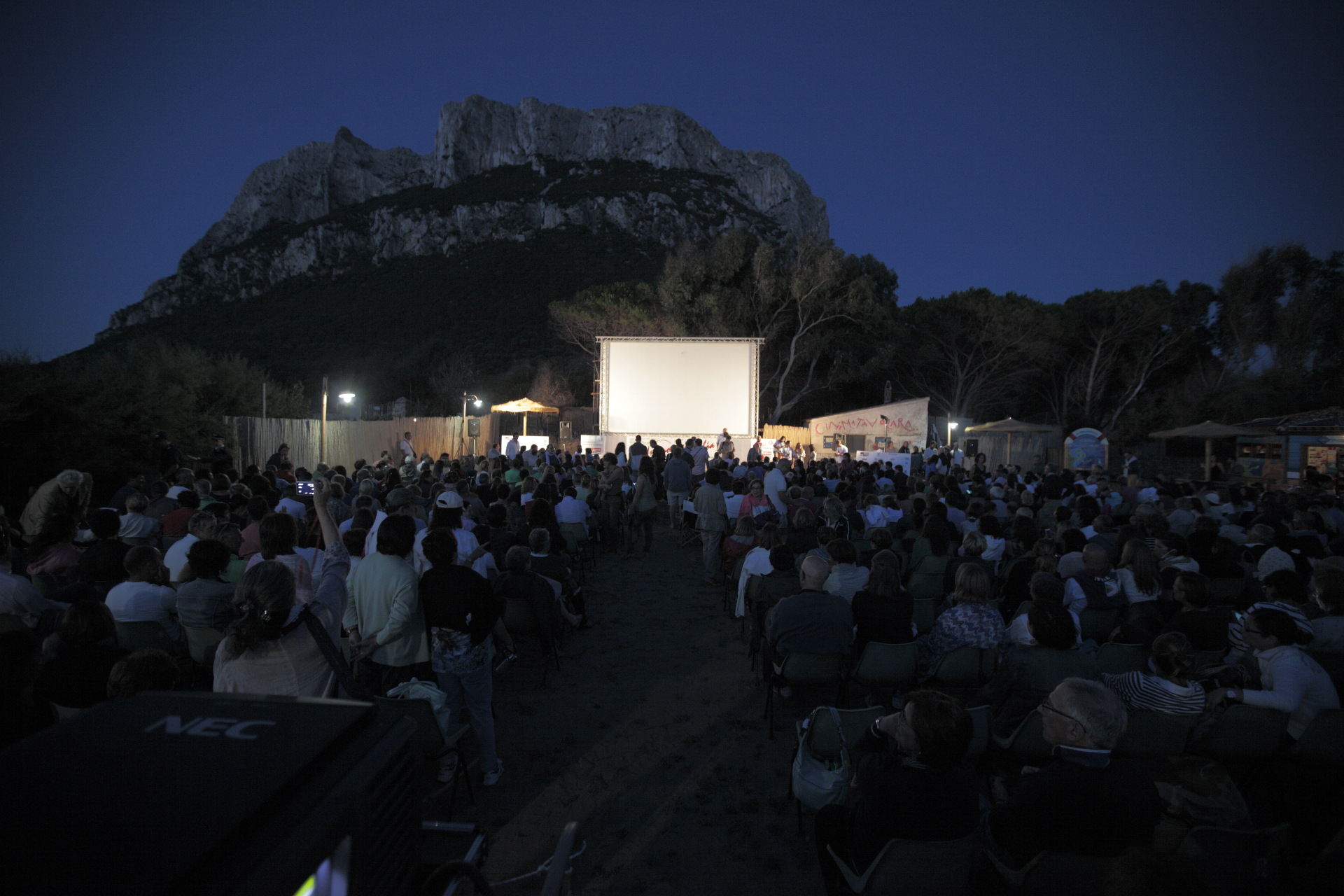
Sardinia, a natural cinema under a starry sky
Four festivals in the lesser islands of Sardinia, islands in the Island. Tavolara, a limestone mountain that emerges from the sea, in mid-July turns into an immense cinema with a starry vault of Una Notte in Italia. Established in 1991 to focus on filmmaking and creativity in Italian cinema, it is now a traditional event at national level. Meeting and interaction between the public, artists and experts already starts on board the boats that reach the island leaving from Porto San Paolo near San Teodoro and a little south of Olbia, that is, the three Municipalities involved in the 28th edition. For over a quarter of a century, the best Italian actors have walked on this unique red carpet surrounded by the waters of the spectacular marine reserve of Tavolara-Capo Coda Cavallo. Una Notte in Italia 2018 will be a travelling edition: it will start on Tuesday 17 July in the nature reserve of San Teodoro lagoon, then it will move to Porto San Paolo on Thursday 19 and then from Friday 20 the screenings will be held in the enchanting setting of the island of Tavolara.
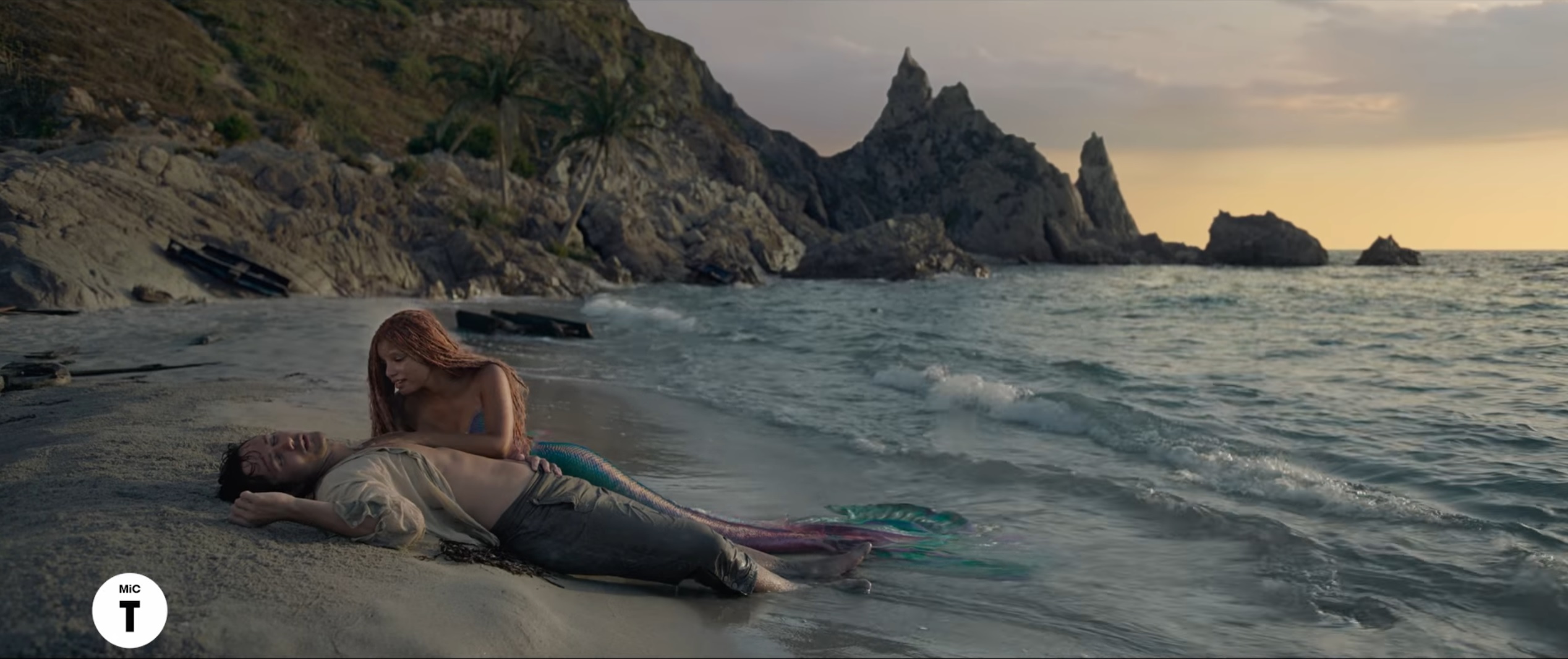
Natural scenery of an island straight out of a film
From deserted beaches to promontories overlooking the sea, from the wild Supramonte to the abandoned mining villages of Sulcis, from ancient forests to towns where time has stood still: Sardinia has always been an inspiration to writers and directors looking for scenery. Among the latest successes, there are several TV series, a very popular genre nowadays: ‘L'isola di Pietro’ (Peter’s Island), interpreted by Gianni Morandi and set on the island of San Pietro and in its village, Carloforte, and ‘Catch-22’, starring George Clooney, with its main location in the area around Olbia. The first films were recorded here in black and white, between the two world wars. The first successful film was “Forbidden” (1954) by Mario Monicelli, based on “La Madre” by Grazia Deledda, filmed between Codrongianos, Ittiri and Tissi. Ten years later, the scene of Isaac's sacrifice, part of “The Bible” (1966) by John Huston used Mount Corrasi in Oliena as a backdrop. A whole series was based on the wildest Barbagia: from “Bandits of Orgosolo” (1958) to “Father and Master” (1977) by the Taviani brothers. The theme was revisited in “Disamistade” (1988) by Gianfranco Cabiddu, set between Nuoro and Ghilarza.
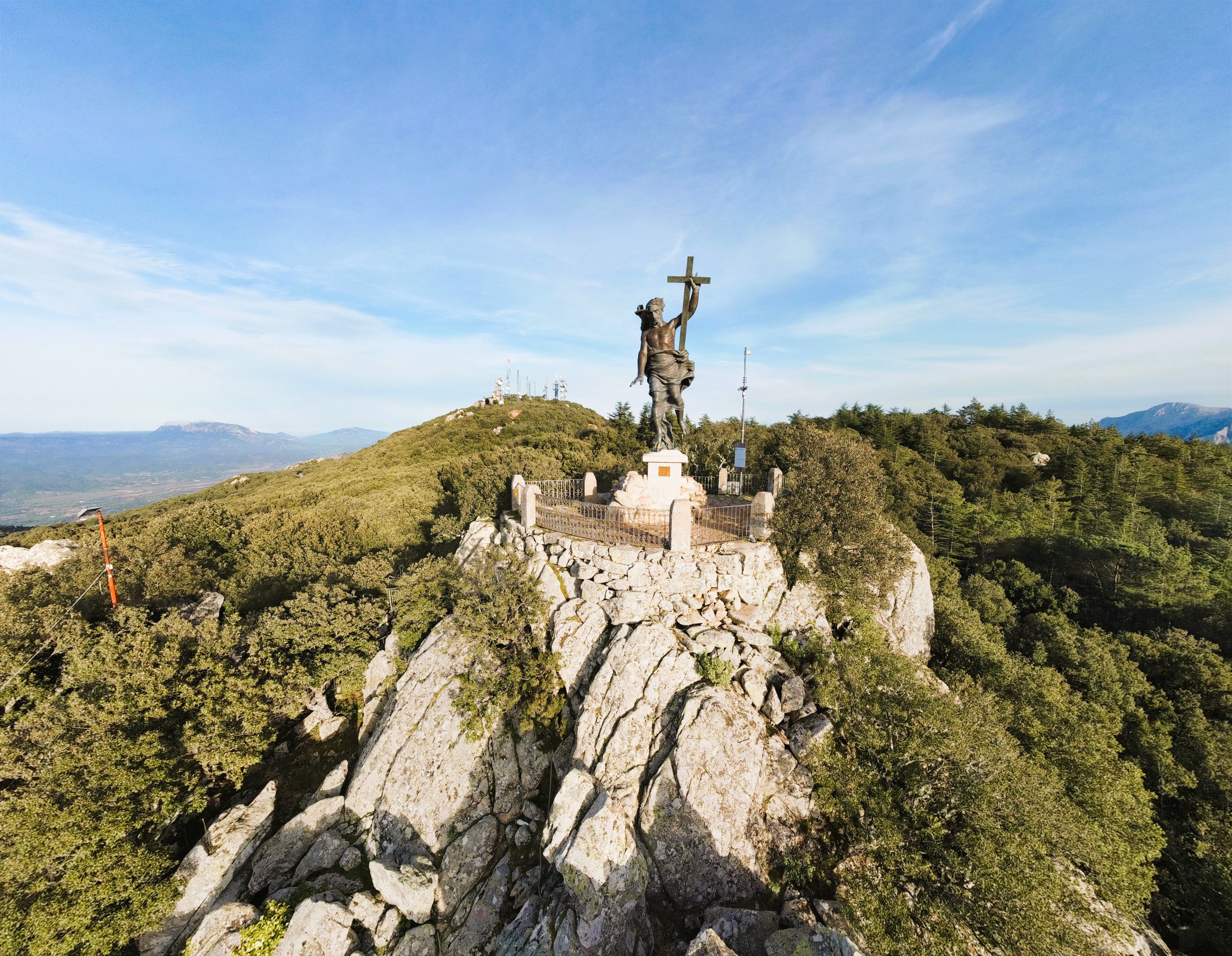
The Redentore Festival: religion and folklore
In Barbagia, an area of extraordinary beauty, once inaccessible and now a land of genuine hospitality, every year at the end of August, tens of thousands of people take part in an important event for the island: the Redentore Festival in Nuoro. Born as a tribute to the statue that has overlooked the town from Mount Ortobene since 1901, over the years the festival has also (increasingly) acquired a folkloristic note. Today it has a twin soul: two different moments, one dedicated to religious celebration and the other to a spectacular parade of people dressed in traditional outfits from all over the island. The festival encapsulates the many facets of Barbagia, a region where ancient places and traditions are preserved untouched, and still today loves to talk about itself, as have many great writers.
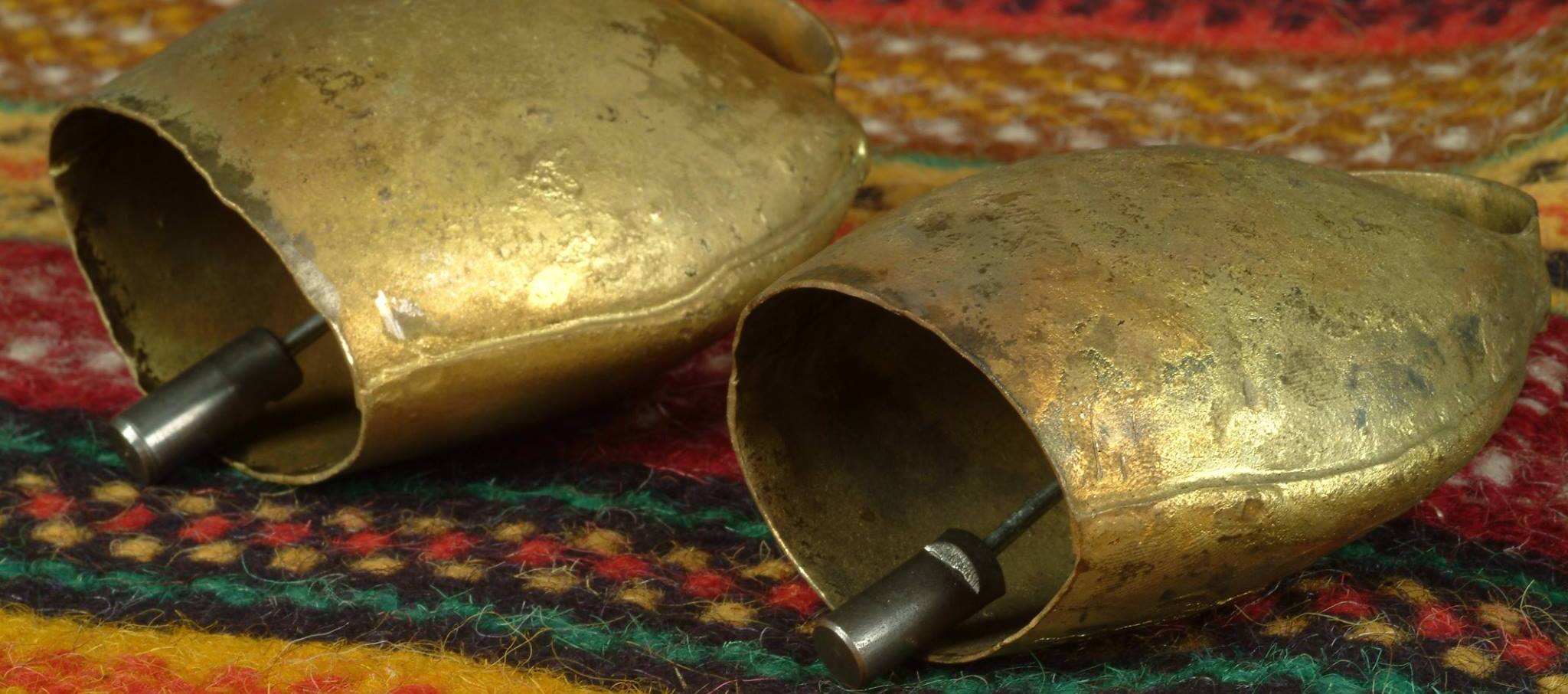
Autunno in Barbagia, discovering the heart of Sardinia
Skilled hands embroider clothes and rugs on frames, make su filendeu and other traditional pasta and decorate su pani pintau, those of sos maistos carefully craft ceramic vases, add intarsia to arresolzas and create filigree jewels. In the kitchen of the cortes su carasau are slipped into the oven and pan’e saba, pistiddu and durchicheddos are stuffed. Woodworkers cut the wood to build sas cascias, ironmongers skilfully hammer their wares, farmers crush freshly harvested grapes and shepherds make ricotta cheese. Meanwhile, guests leaning out over the belvedere sample tasty nibbles with full-bodied wine. And they chat to craftsmen, learning about the traditions of the past. Autumn in Barbagia is a trip into the “heart” of Sardinia, an itinerant exhibition of authentic traditions of the Barbagia area. For four months, weekends will see cultural, artisanal traditions and local food and wine showcased. All within the houses “a corte” in villages and towns. Each community with its own speciality.

Discovering thousands of years of history on foot
Walking in a rhythmic, meditative way, you can really appreciate the best of a unique, mythical land, fully taking in enchanted landscapes and views, getting to know the people and communities that inhabit it and their authentic traditions. Sardinian walks, spiritual experiences and destinations for pilgrimage offer everything the "slow tourist" is looking for, in full contact with the nature, culture and true identity of the places you visit, providing an enriching, educational experience. The island's walks are ideal for tourists looking for an intimate, true experience in a unique natural and cultural setting, and in an area that sees hospitality as sacred. To be seen on foot, by bicycle, on horseback or with the Trenino Verde.

Sos Enattos
A long history to be shared and to be discovered. Exploited in Antiquity, rediscovered in the mid-19th century and passing through various concessionary companies until the end of the 20th century, the Sos Enattos mine – the last Nuorese metal basin to cease operation (in 1996) – is now a ‘jewel’ of industrial archaeology and part of the Geominerario della Sardegna park, protected by UNESCO. With wells, washeries and other structures that are in a perfect state of conservation and which can be visited, the mine is immersed within the beautiful landscape, mostly untouched, of the ‘dolomitic’ chain of Mount Albo. Set amidst the woods of badgers, holm oaks, junipers and Mediterranean bush, it is the habitat of mouflon and royal eagles. Sos Enattos is part of a vast mining complex within the Lula territory, which includes two other nearby mines of galena and silver – Guzzurra and Argentaria – with the respective miners’ villages. Originally, the minerals were transported via ox carts to the Santa Lucia beach in Siniscola, then loaded onto ships.
The first signs of exploitation of the area date back to the recent Neolithic period, when the talc ‘steatite’ was extracted then worked to create artistic objects, including statues of the Mother Goddess. From the Roman era are wells and tunnels, from which those condemned to work in Metalla extracted lead and silver. The remains of the settlement were kept intact until 1960. Another ancient footprint is that of Jewish slaves of the 11th century who worked in the mines on behalf of a wealthy landowner, Nabat. As of the 19th century, excavations focused on lead-zinciferous vein and argentiferous galena, then also on sphalerite, in which the territory was very rich. The first turning point of the mine was its passing to the Societé Anonyme des Mines de Malfidano (1905). Its greatest moment of splendour came upon being taken over by the Rimisa (1951) that took the level of production to historical heights, thanks to the modernisation of old tunnels and the construction of a dam, a new washery, warehouses, a workshop, electric cabin, offices, plus housing and services for workers. In 1971, the Rolandi well was completed and the property passed to the Sardinian mining company, which tried to improve production and yields. Then came the decline, amidst strikes of the miners, who set a precedence with one of the first worker protests in Italy, as early as 1896.
Presente e futuro del sito sono rivolti alla scienza: a sos Enattos è stato inaugurato nel 2019 il laboratorio di superficie di una infrastruttura di ricerca, in vista della possibilità di ospitare l’Einstein Telescope, an che osserva e analizza le onde gravitazionali.
Present and future of the site aim to science: here, in 2019, the surface laboratory of a research centre has been inaugurated, in view of the chance that Sos Enattos could host the Einstein Telescope, an interferometer cabable of observation and analysis of gravitational waves.
Near the mine, there is also the Sanctuary of Saint Francis of Assisi, which remained dear to miners and their families. The church, built in 1795 and made famous by the Nobel Prize winner Grazia Deledda in her novels, is a pilgrimage destination for the entire island during the festivals in early May and early October. The faithful are offered on filindeu, a pasta made of super-fine strands dipped in mutton and cheese broth, one of Lula’s attractions.
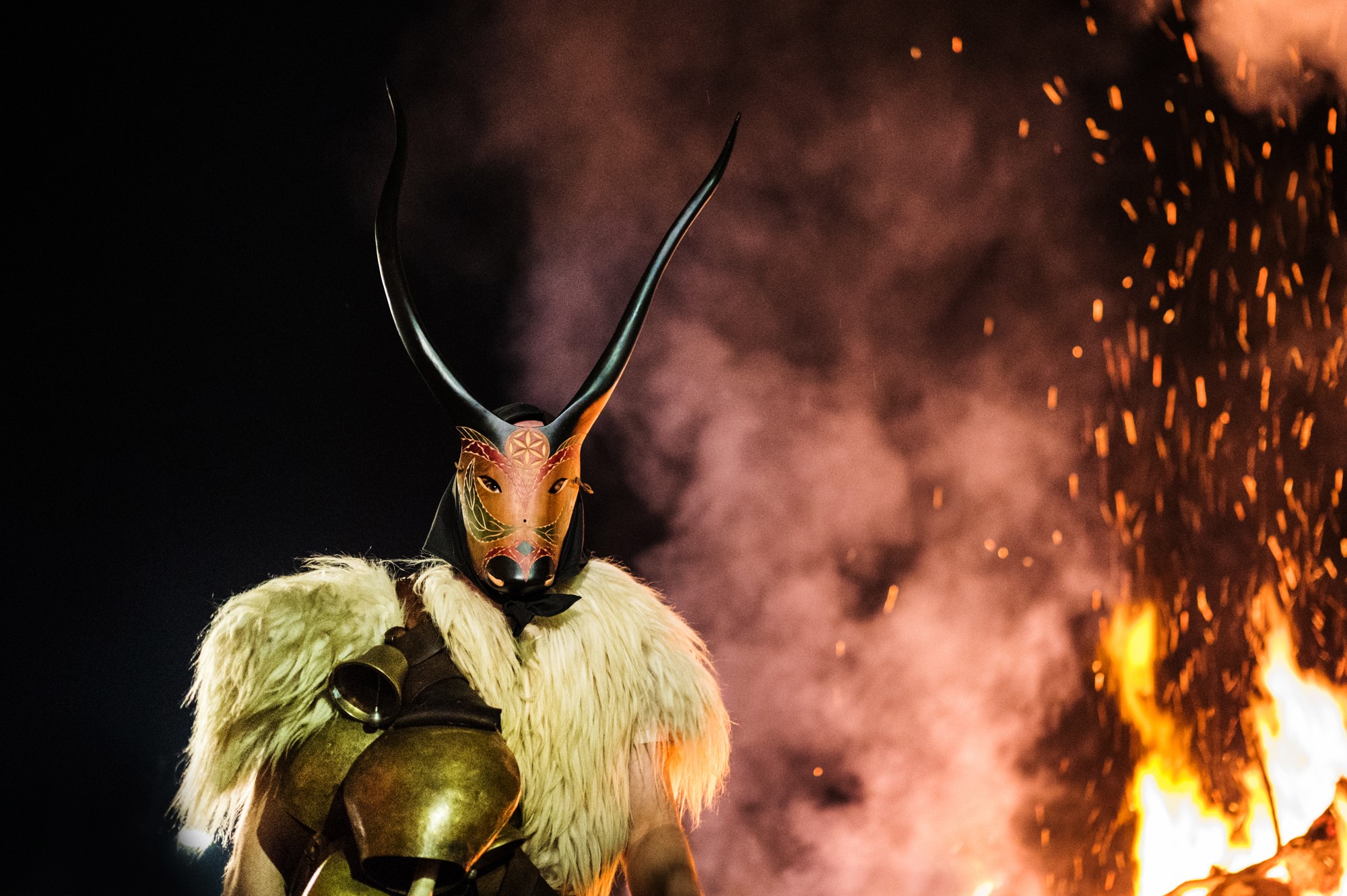
The mysterious beauty of Carnival in Sardinia
With the lighting of the spectacular bonfires in honour of Sant’Antonio Abate, an ancient, solemn rite performed in many of the island’s towns, Sardinia reawakens its spirit and enthusiasm during Carnival. Su Karrasecare has many different sides to it and each community celebrates it with its own traditions, vocations and spirit. January 17 marks the beginning when the bonfires of Sant’Antonio are lit, and Ash Wednesday marks the end, with the beautiful, heartfelt celebrations in Ovodda. They are the first events of the year to enliven winter with ages-old rituals. Sacred and profane, passion and identity, exciting rhythms and magnificent settings like the one at Gavoi, where the tumbarinos (drummers) play. In every town, from the North to the South, you can enjoy typical carnival delicacies like fava beans and lard, pistiddu and coccone, zeppole (doughnuts) and fine wine.