
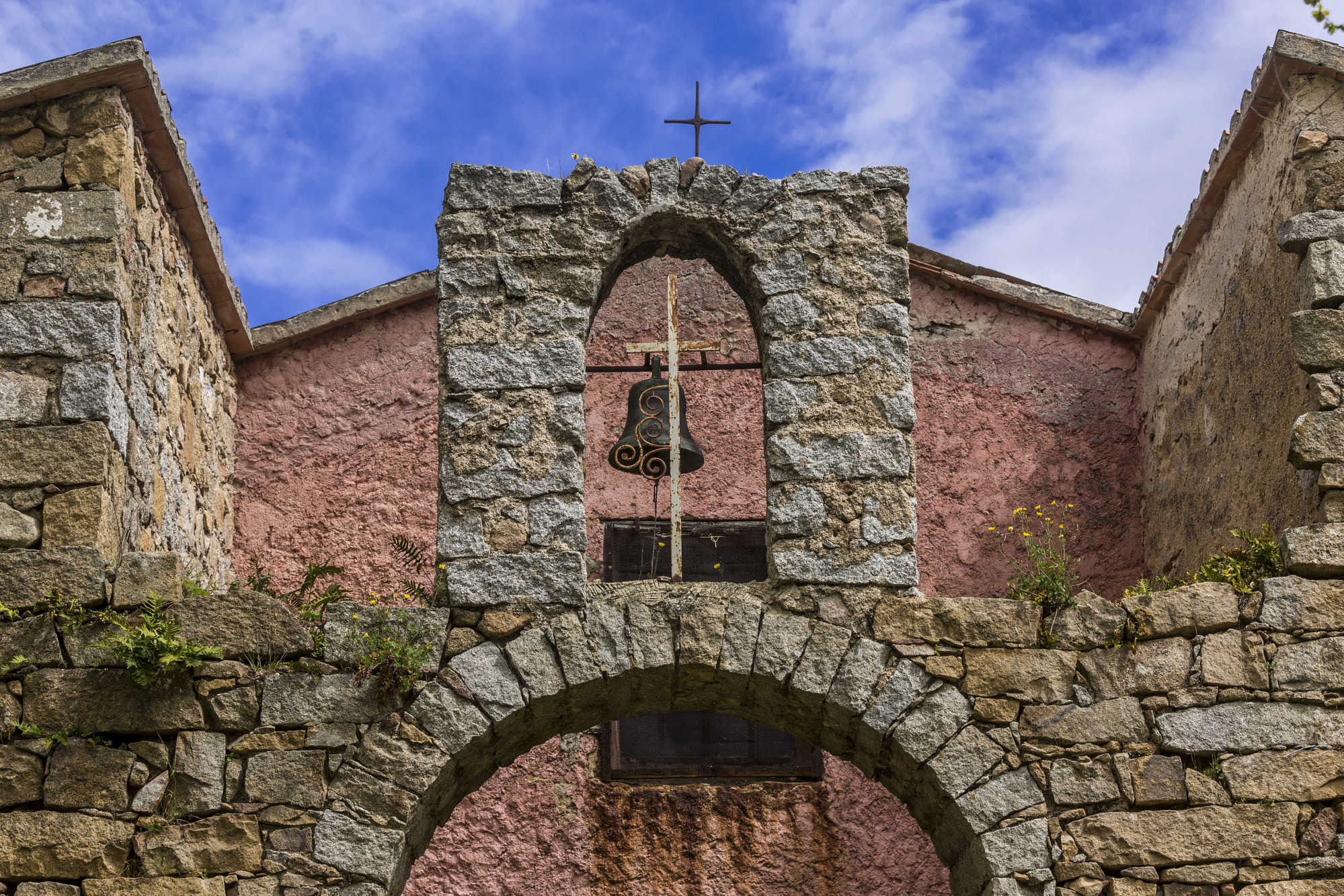
Nostra signora di Valverde
In a place of great allure and beauty outside of the city of Nuoro, a place known since remote times as Balubirde or Palu Birde, is a little country church dedicated to the Madonna. It was built in the late XVII century at the behest of a devout Nuorian lady, Nicolosa Solis Manca, who wanted to call it Nostra Signora di Valverde and to donate half of the tanca she owned in Goine to it.
On 8 September, the faithful climb up the slopes of Ortobene in a procession featuring a novena to reach the little church and thus inaugurate one of the most heartfelt of local religious festivities.
This area has, since prehistoric times, been frequented for religious reasons. There is a domu de Janas burial chamber at Borbore, also known as Valverde. It has a square courtyard you reach passing under a granite archway. The funerary chamber is unique and can also be accessed from the sides. Obsidian relics and stone axes were found here, and many believe the shrine was once used to worship water and the god Pan. Underground burial chambers, the most famous of which are the sas Birghines, were dug into the rocky slopes of Ortobene. Along the road you’ll find another fascinating church, the Nostra Signora della Solitudine built in the middle of the XX century, probably on the site of the ruins of a church from the XVII century. It is here that the Nobel author Grazia Deledda was laid to rest. She dedicated a novel to this little building, which has also been embellished with a bronze door designed by the artist Eugenio Tavolara.

The Carmelitane cloister
The majestic Monastery of the Carmelitane Scalze (Barefoot Carmelites) has been defined as a “marvellous miracle of Divine Providence” and sits alone, silently on Cuccullio hill, three kilometres outside of Nuoro. Its French architect, Savin Couelle, designed it to house 24 monks and was one of the forefathers, if you will, of the Emerald Coast. He was enamoured of Sardinia and did not leave it, desiring to repay his debt for the hospitality he had received by creating (of his own volition) another masterpiece. The bulk of the monastery looks like a castle on a hilltop, grandiose outside, poetic inside.
The image of it as an austere monolithic fortress evaporates as soon as you enter and discover the genius of the architect and his talent in using humble materials combined with fine and elegant lines. The result is a fluid architecture made of patterns, symbolism and plays of light. The work contains theological messages like the destruction of Christ and the deep humiliation of the Cross. The octagonal dome that closes the church symbolises the eighth day, resurrection and new life. The development of the building is vertical. Once inside you’ll go down to the altar, the lowest point, whereas you go up to the basin, the summit of the apse, together these features represent the Ascension. The building is graced with higher and lower areas that represent life’s own struggles. The tabernacle set in the rock, on the other hand, is an echo of the nature that surrounds Nuoro, just like the huge shell – brought in from Mauritius – symbolizes the sea and the island. The wooden statue of the Virgin Mary – hence the consecration Mater Salvatoris – came from the United State of America. It is damaged and burnt because it dates to the French revolution when the Jacobins desecrated religious symbols out of disrespect. On the side walls are four small bronze crosses bearing the date the church was consecrated: 20 May, 1994.
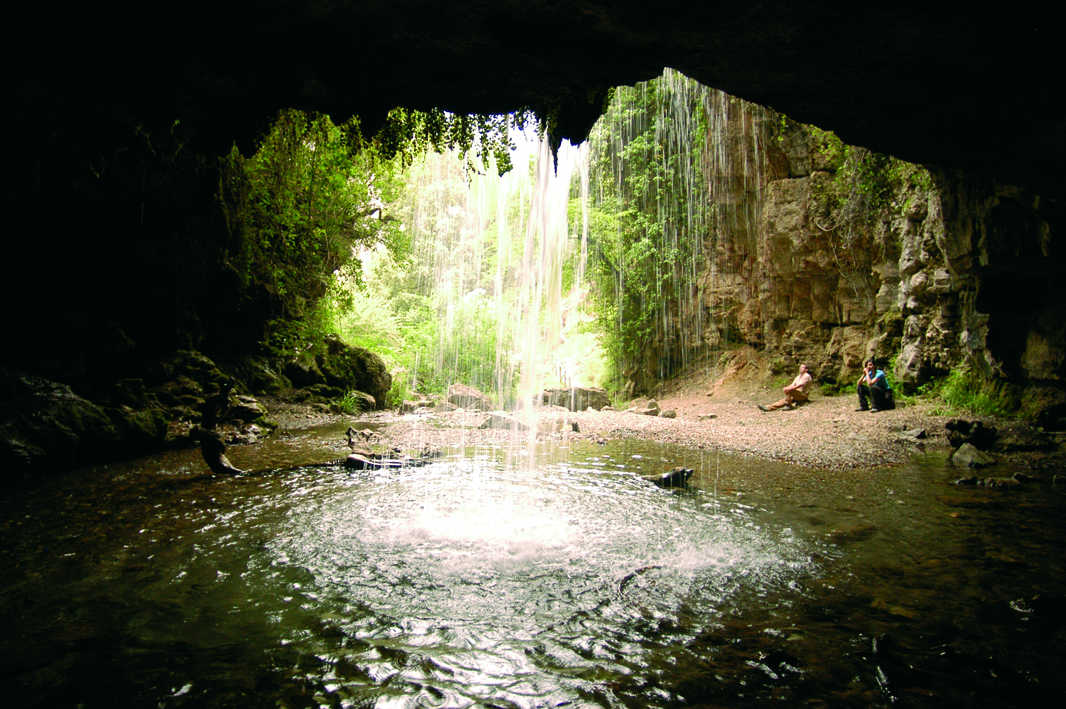
Su Stampu de su Turrunu
Nestled in the verdant nature of the Addolì woods, between Barbagia and Ogliastra, on the border between Seulo and Sadali, is a small masterpiece of nature that is a hole, a cave and resurgence with waterfall and lake. Su Stampu de su Turrunu is a unique hole carved into the Jurassic rock of the Tacchi – characteristic steep sided reliefs – by the erosive action of water that flows into a small cave with a stream, su Longufresu, that then drops 16 metres into a pool and finally flows downwards into the valley below.
A karstic phenomenon of uncommon beauty, a sound of a waterfall set in the verdant green that splashes into the pool below, the silvery glimmer of clear water that enlivens the entire area and makes it one of the loveliest natural monuments in all of Sardinia. The water is the star here. After having dug a sinkhole, it magically reappears in the cave, which has an even and rounded shape, surrounded by verdant green and rock faces covered in moss and climbing plants. It’s a place where you feel all the power of nature, a wonderful sensation that will linger in your heart, one that is hard to forget. Millions of years of this karstic phenomenon have created a dip where a variety of streams and rivers come together to give birth to a myriad of plants, a very real watery landscape.
An easy to follow marked path leads to this landmark, or you can engage the services of a guide. The itinerary in the heart of the Seulo and Sadali area should also include a visit to the nearby enchanted Is Janas, caves that are 350 metres deep and which, legend has it, are home to three fairies. Most of the cave interiors are easy to visit. The tour will end at Sadali, the Kingdom of Water, where a waterfall splashes right in the centre of town, not far from the Church of San Valentino, and then disappears into an underground abyss known as sa bucca manna, or the “big mouth.”

Sa Chida Santa: authenticity, passion and mystery
Centuries-old ceremonial rites rooted in the Middle Ages and tinged with Spanish tradition come together in archaic Campidanian, Logudorenian and Barbagian traditions that date back to Nuragic paganism. During Holy week, from the coast to hinterland villages you will discover Sardinia’s most authentic essence and experience an itinerary of sacred rituals that revolve around the Passion of Christ. Holy Week in Alghero reveals its Spanish roots. It all starts on the Friday before Palm Sunday with the Addolorata Procession and ends at Easter with the Encontre. The Disclavament (deposition) is deeply emotional: the body of Christ is carried in procession on His deathbed and as the sun sets, the town is illuminated by glow of torches and lanterns draped in red veils.
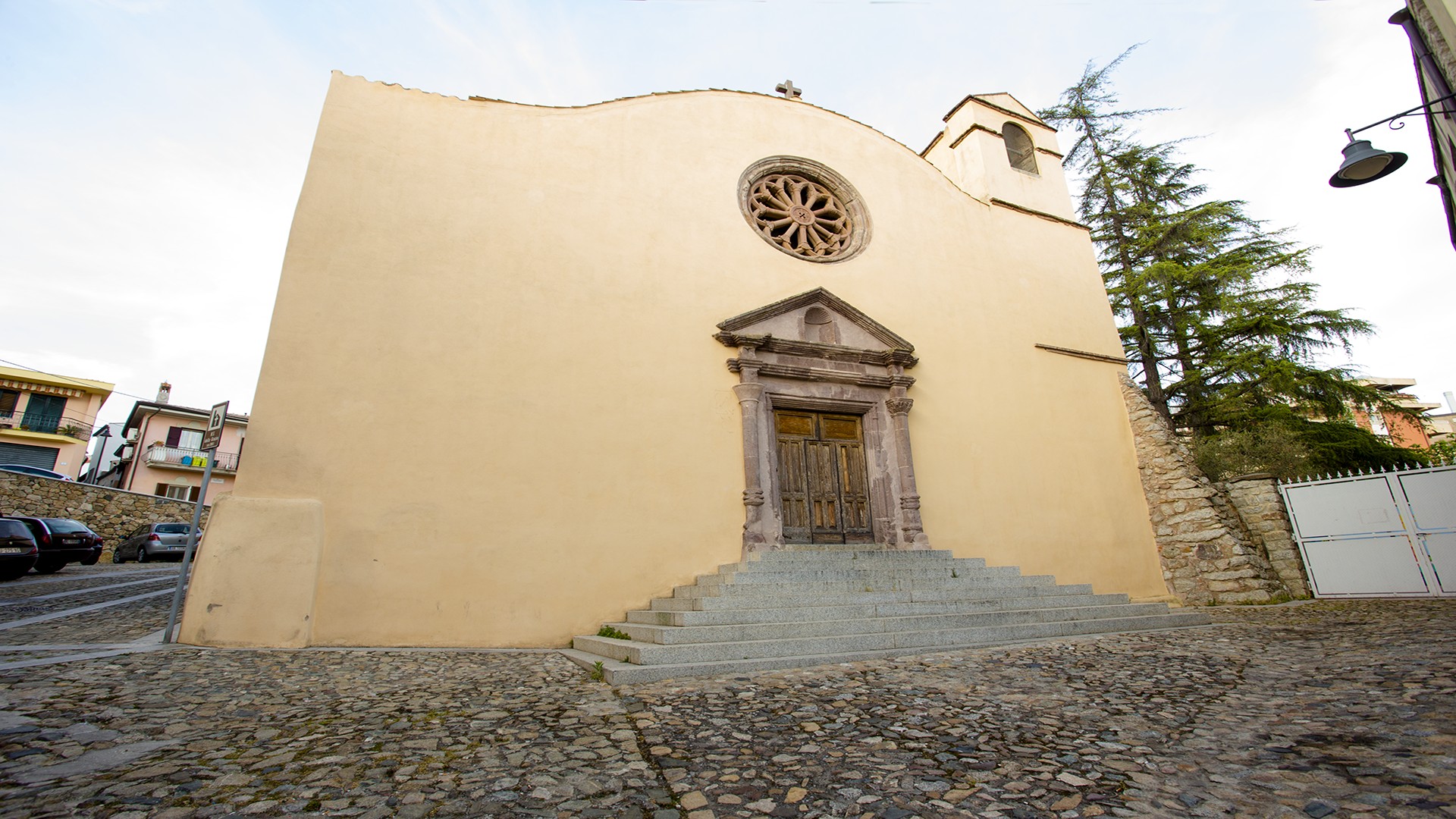
Madonna delle Grazie - Nuoro
Believers credit the small wooden statue of the Madonna found in Nuoro by a young shepherd in the XVII century with saving the town from the plague. In gratitude, every year since 1812 the hold of a vow made to the Virgin is broken. The festivities of the Madonna delle Grazie, the town’s patron saint, take place on 21 November, a feast that central Sardinia takes to heart. The “old church” (XVII century) in the Seuna quarter of Nuoro is dedicated to her and is called this to distinguish it from the new one built in her honour in the 1950s, which now houses the ‘miraculous’ simulacrum.
An official document states that permission to build a church in honour of Our Lady of Graces was given in 1679, but the date on the Latin inscription on the building’s façade is earlier: 13 May 1670. The inscription includes the dedication to the Madonna, the name of the man who had the church built (Nicolao Ruju Manca) and his claim to the right to be buried within the church along with his relatives.
The building has a single nave with a barrel vault ceiling and a square raised presbytery with a Neo-Classical altar that was added in the XIX century. Generally speaking, the shape and decorations of the church are a mix of Late-Gothic elements. The main door has a trachyte front piece, made up of a gable with niches, that sits on an architrave divided into identical parts by two frames and held up by two semi-columns. The capital of one of these sports flowers and animal figures, like the rose window, it too beautifully made of quality trachyte.
You can enter the church up the granite stairs or through two side entrances: the one on the left has late-Renaissance adornments, while the one on the right led to a cloister with a spacious loggia, once a hostel for pilgrims during the festivities in the patron saint’s honour. Along the sides are smaller loggias to lighten the massive volume of the building. Inside are priceless frescoes from the XVIII century that depict apostles, prophets and episodes from the Holy Scriptures.

Su Motti
A panoramic road from the historical centre of the town of Orroli, that then looks out over it and leads to two ‘memory trails’, will take you back in time to the archaeological and botanical park known as su Motti. The trail that goes off to the left is an easy walk leading to the area of the stone domus de Janas chamber (homes of fairies) while the one leading to the right will take you to the Taccu Idda high plain to gaze out over breathtaking views. The woods are comprised of centuries-old oak trees and thick Mediterranean brush graced with the distinct fragrance of mastic and rockroses. Traces of man’s settlement here date to the Neolithic Era (3800 BCE) and it is dotted with massive basaltic boulders spewed out by nearby monte Pitziogu, a volcano that last erupted during the Quaternary Era.
In the surrounding park you will find a few single-tower nuraghes and an underground necropolis that is home to some fifteen stone domus di Janas chambers, pre-Nuragic tombs cut into the rocky face of sa Carona Arrubia and in great basaltic boulders. Some fabulous legends surround the huge masses, like the one about the terrible giant Impolla, a local symbol. The legends were handed down word of mouth over generations and imbue these prehistoric remains with a mysterious aura. Su Motti is an open-air museum that also has roots in XIX century history, when parcels of land were allotted and dry walls of basaltic rock went up to create is tancas, enclosed lots of land. The walls bear witness to the age of private property. The fencing in of the land was sanctioned in 1823 and lead to class conflicts between farmers and shepherds as herds had always gone to pasture on the open fields, considered the property of the entire community. Don’t miss the chance to see the sa Ucca Manna (large mouth) cave where the water from nearby streams and rivers converges. The grotto is full of long, intact stalactites. You can start off from Orroli to go on walks in nature and to see sites, go on a boating excursion on Lake Flumendosa and hiking to the unique five-tower Arrubiu nuraghe, covered in a fine mantle of red lichen, go to Sadali and stroll through its historic centre after stopping in at the casa museo di zia Carmela, see the water mill, the San Valentino waterfall and the Is Janas caves, steeped in legends featuring witches and fairies who remain petrified within. Take a trip to the valle dei nuraghi of Isili, to San Sebastiano lake to see the eponymous church that sits on an island at its centre, and walk in the woods surrounding Santa Sofia and Villanova Tulo.
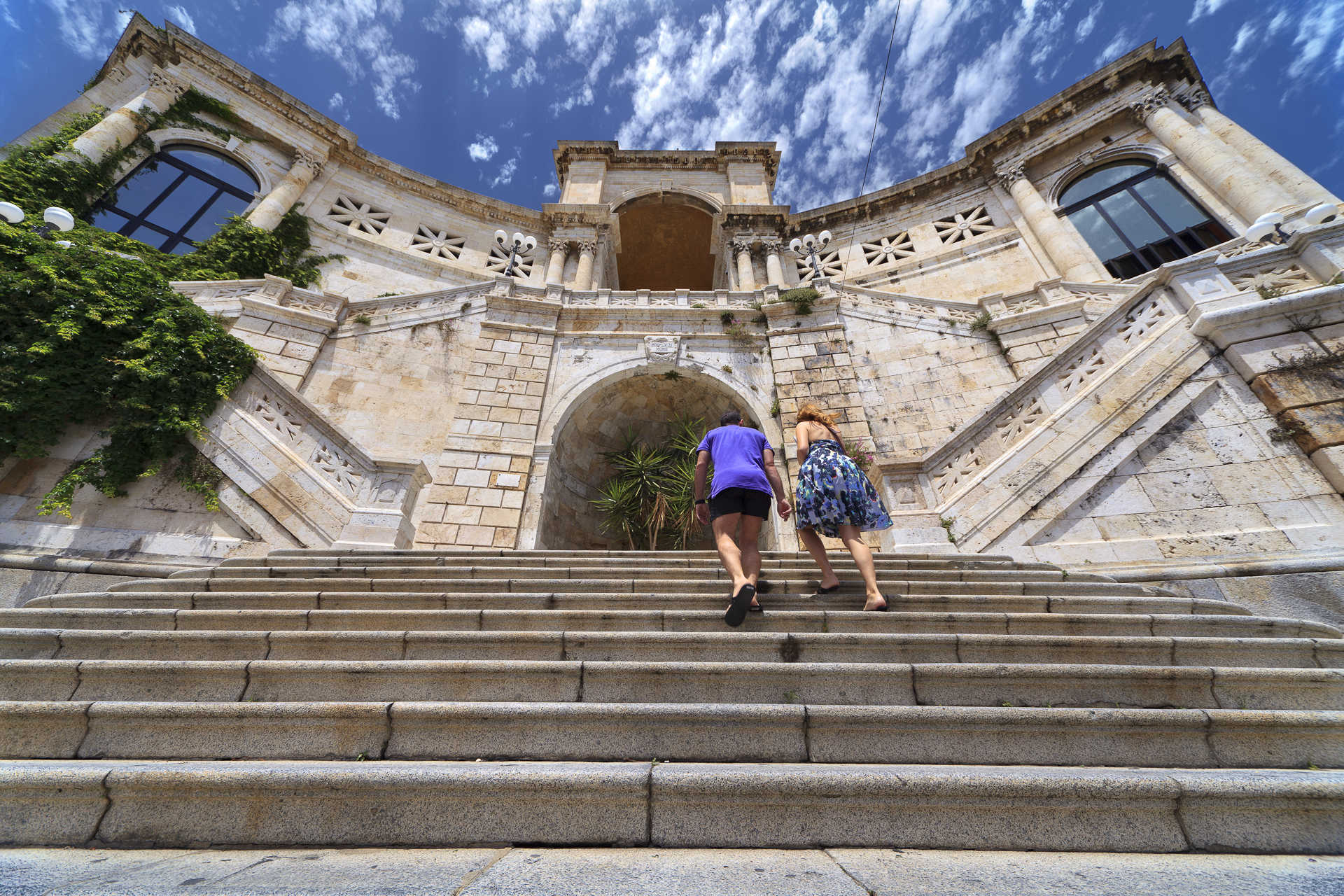
Sardinia unveils its architectural treasures
Artistic magnificence, shared memory, identity and a sense of community: this is the most encompassing effort to safeguard, enhance and promote the cultural heritage of Sardinia. Following in last year's footsteps, the 2025 edition — the 29th — will once again take place in two phases, stretching across nine weekends: from May 3 to June 1 for the first phase, and then again between October and November. Hundreds of cultural sites will open their doors during this time, such as museums, archaeological sites, churches and historical buildings, natural monuments and parks. Each town will tell its tale through literary itineraries, architecture routes in cities that have been marked by centuries of powerful rulers. Students and volunteers are warming up to lead you along a travel through the beauty that crosses millennia, all the way to the farthest past. Places of yesterday and today, where memories of the past and ideas aiming towards the future coexist.
Spring in the villages
The explosion of spring colours on the island are in harmony with one of its most typical ‘picture postcard’ views: the colourful houses of Bosa. Walking along the Temo River, you can admire their reflections in the water, climb the hill dominated by the Malaspina Castle and, by crossing the Ponte Vecchio bridge, you will reach the south bank and discover the ancient tanneries. You will be welcomed by a glass of malvasia wine and impressed with coral jewellery, asphodel baskets and precious textiles. Bosa is a concentrate of history and craftsmanship, industrial archaeology and special treats. Do not miss the churches: the ‘cathedral’ of the Immacolata Concezione, Nostra Signora de sos Regnos Altos inside the castle, and san Pietro extra muros, at the centre of Bosa vetus. And then there is the natural beauty: the park of capo Marrargiu , the reserve of Badde Aggiosu and, on the coast, Bosa Marina, s’Abba Druche and Compoltitu.

Sardinia surprises with its literary festivals
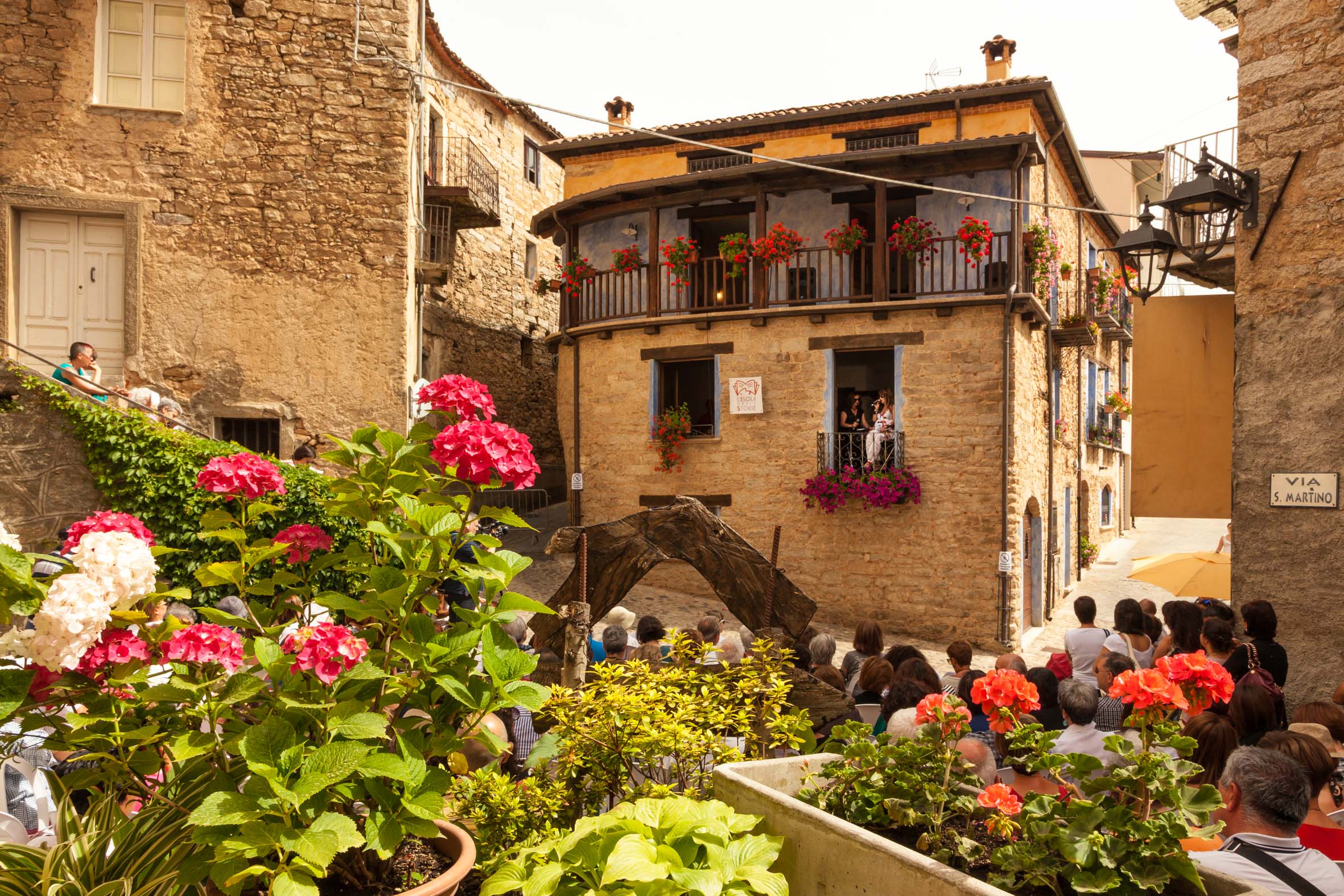
A fascinating cross section of Sardinia, reflected in literary events with dates sprinkled across spring, summer and autumn. Unmissable occasions that will go with relaxation during a holiday spent on the coast or inland. The Island of Stories Festival (Isola delle storie) in Gavoi in the Nuorese area is the standard banner for the festivals, Since 2004 writers, actors, journalists, musicians and thousands of avid readers have met up in the weekend of the beginning of July. They are drawn by the warm welcome given by the people of Gavoi, who are happy to share their traditions and their good life with them. Houses are opened up to guests, and the colourful wooden balconies of the stone dwellings become stages for reading stories and accounts, while the piazzas are arenas for the audience. Its prestige has done nothing but grow over its editions, and it is now a point of reference at a national and international level, together with other Sardinian literary festivals like La Notte dei Poeti, Éntula, Licanìas and Marina Café Noir.
Monte Corrasi
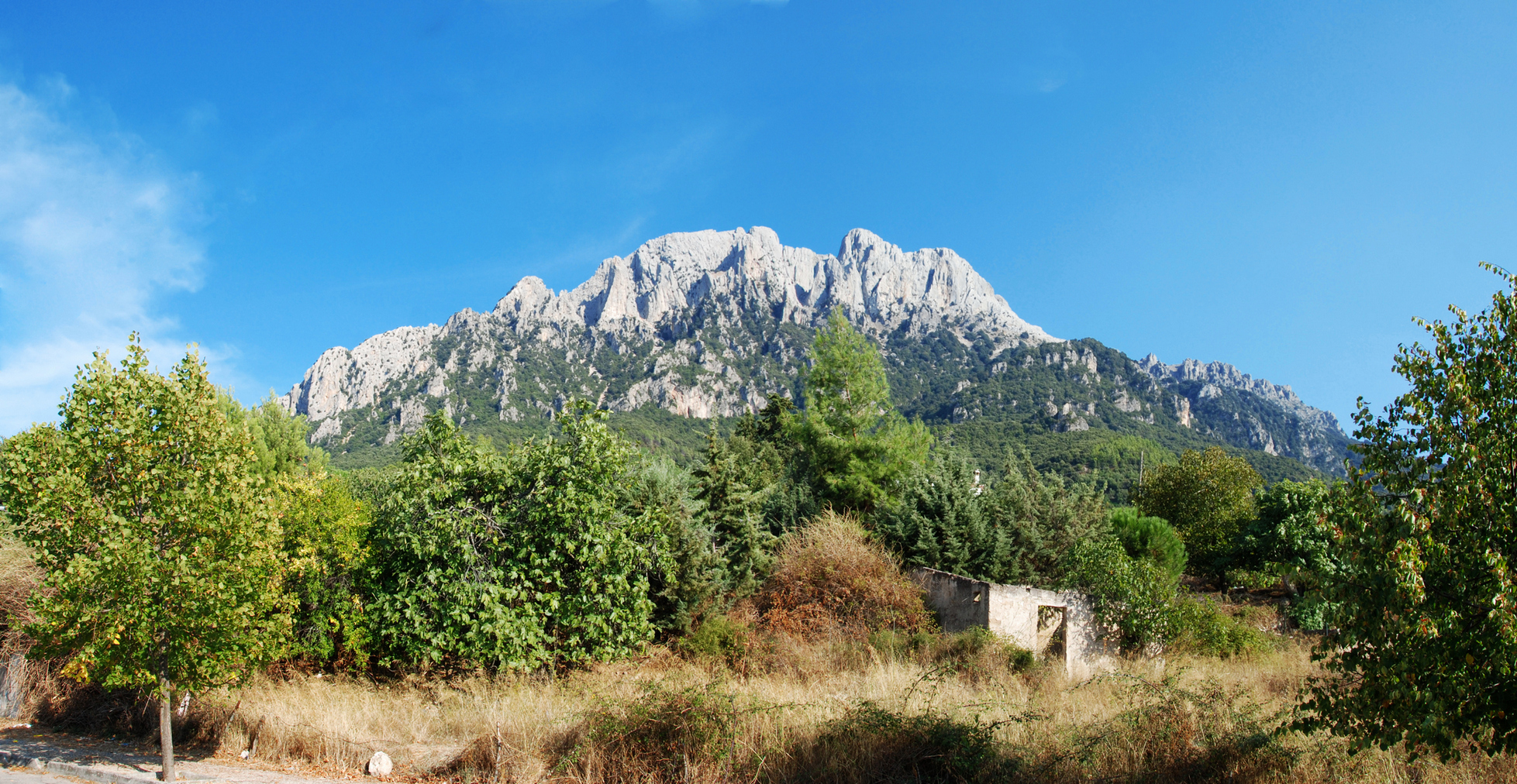
Its appearance is characterised by sheer limestone rock faces, crags, white pinnacles, caves and large plains. It is rugged and barren at the summit, covered in holm oaks in the middle strip and is adorned by olive trees, vineyards and almonds in the lower part. Mount Corrasi is the highest peak of the vast and inaccessible plateau of the Supramonte mountain range, as well as being one of the most evocative elevations in the Island. The challenging trails that cross it and climb to an altitude of 1463 metres are destinations that expert (and in good shape) trekking enthusiasts aspire to and arrive in Oliena to climb it. From the summit of the Corrasi, you can enjoy spectacular views and a 360-degree panorama that stretches from the coastlines of the Gulf of Orosei to the Gennargentu massif. Flora and fauna complete this 'special' place with its dolomitic atmosphere: although it might seem completely arid and desolate, in reality there are 650 botanical species here, about 60 of which are native ones. It is a green paradise of the highest order, persuading the Italian botanical society to include the mountain in the census of the biotopes of greatest interest, where birds of prey like the golden eagle, the buzzard, the Eleonora's falcon and the peregrine falcon reside and where the mouflon roams freely.
In the Oliena part of the Supramonte mountain range, which features valleys, plains, sinkholes and canyons, as well as the Corrasi, you can tackle other summits: Ortu Hamminu, sos Nidos, the evocative mountaintop of Cusidore and Carabidda, at the foot of which lies the village. Something else that trekkers should not fail to do is climbing Mount Maccione and, above all, visiting the valley of Lanaittu, rich in natural and prehistoric sites: within it, you will find the village of Tiscali, the caves of sa Oche and su Bentu and the Corbeddu cave. At the entrance to the valley you will find the sacred area of sa Sedda ‘e sos Carros, important for the traces of metalworking in the Nuragic period and as evidence of the practice of the cult of the waters. A visit to the su Gologone, which has been declared a national monument, is a must. “The murmur of the surrounding forests is like that of a sea not far away; a riptide at the foot of the mountains”. This is how Elio Vittorini, in his 'Viaggio in Sardegna' (Journey to Sardinia, dated 1936) evokes the sensations generated from by Oliena, a Bandiera Arancione (Touring Club of Italy Orange Flag) municipality and one of the most distinctive villages in the Nuoro area, with an enviable position, natural beauty, cultural traditions and welcoming community. Products, like embroidery on silk scarfs and filigree jewellery, Carasau bread, rustic cuisine and Nepente, the renowned Cannonau wine revered by the poet Gabriele D'Annunzio, are just a few of the things that make it stand out.