

Discovering thousands of years of history on foot
Slow steps, curious eyes filled with splendour and a serene soul eager for emotions... this is the way to walk through the little villages and the unspoilt nature of Sardinia, lost in an atmosphere of purity and relaxation, far from crowds and confusion. It is the intimate and authentic face of a legendary land, where you can clearly see the material and other traces left behind by historical events and by religious men that, after hundreds or even thousands of years, continue to arouse the intense devotion of walkers, pilgrims and visitors to those places. Legends, traditional rituals, knowledge linked to nature, art and food inevitably intertwine with the ancestral evidence left behind. In the wake and in the footsteps of saints and martyrs, ancient and modern, you will discover situations where past and present coexist in a time that seems to be standing still and you will be welcomed by communities for whom hospitality is sacrosanct.
Piscina Irgas
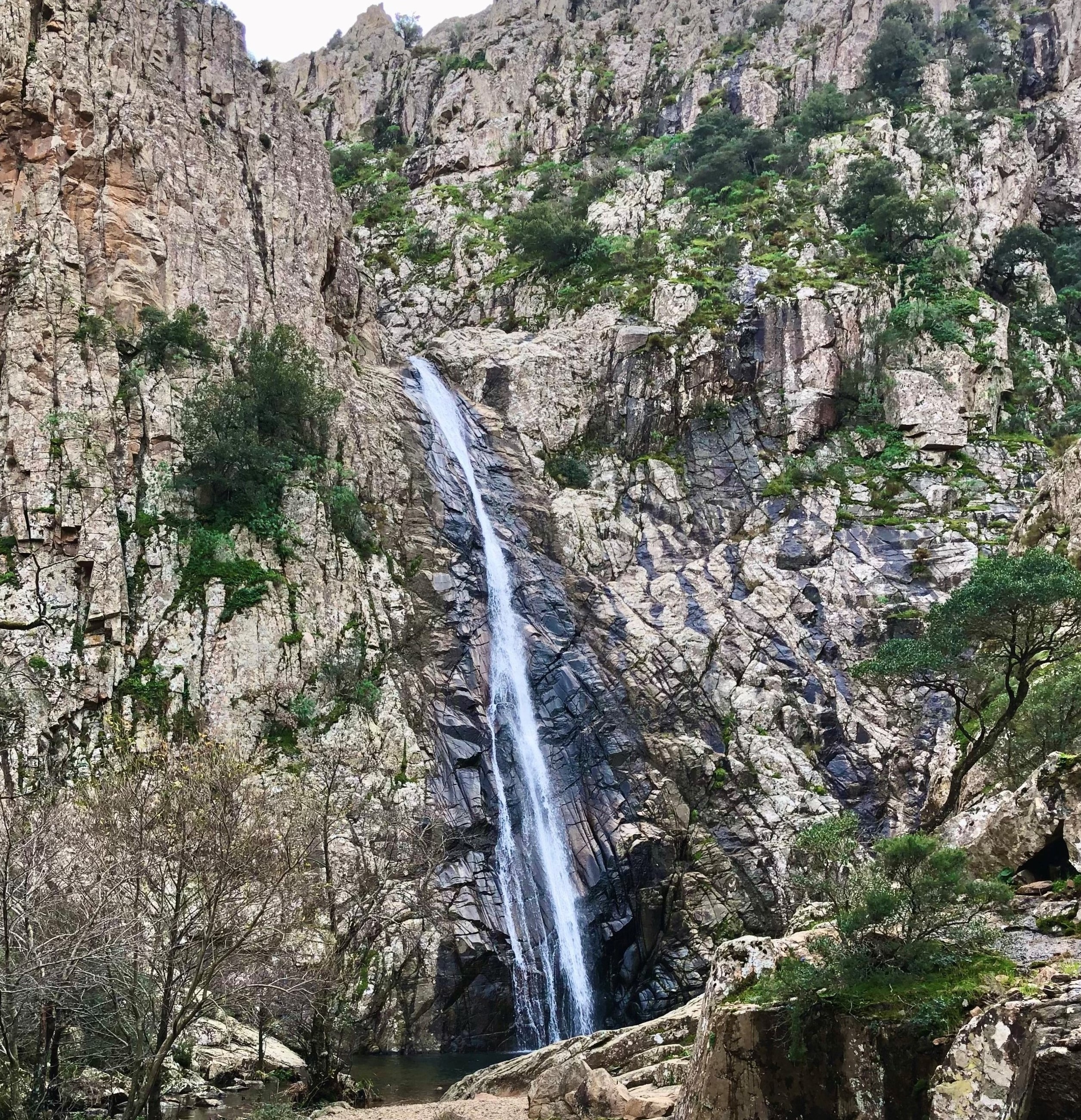
It’s hard to say which is more thrilling: the trail to reach it or actually seeing it once you get there. What is sure, however, is that to ‘conquer’ it you’ll enjoy an experience you’ll not soon forget. Piscina Irgas is one of three majestic waterfalls that furrow the granite rock faces at parco di Monte Linas – Oridda – Marganai, one of which, together with sa Spendula, lies within the borders of Villacidro, while the third, the highest, Muru Mannu, falls within the domain of Gonnosfanadiga. The waterfall is a preferred destination of enthusiasts of a variety of sports: hiking, canyoning and mountain biking, and it can be reached from diverse starting points.
Hikers generally set off at the entrance ‘gate’ of the Montimannu forest, some 15km from Villacidro, or from sa Duchessa, in the area of Domusnovas. The first trail bears the red/white banner marking CAI 113, which you’ll see all along the route. You’ll walk through an oak forest and cross to the other side of the Cannisoni river over a metal bridge, then hike up to the belvedere, at an altitude of some 600 mt. From here you can see Piscina Irgas from above in all its glory, not to mention the mountains of the Marganai massif and, further down, the gorge carved by the Oridda river. The walk continues downhill from here to the base of the waterfall not far away. The 45mt leap of the waterfall splashes into a lovely little emerald-green lake. The second trail passes through abandoned mining areas, towards the Oridda Valley, partly following – in the opposite direction – a section of route 11 of the Cammino minerario di Santa Barbara. An upwards section along the left bank of the Oridda river will take you to the top and another panoramic vista point, from which you can view, and hear, the waterfall from above. The trail, which is also marked with small stone figurines, will lead you down to the base of the fall. You can walk both trails – one going, the other returning – to create a 10km long ring walk.
Piscina Irgas, one of the first of Sardinia’s cascades to be equipped for canyoning, is now a favourite of those practising that sport, nestled in a gorgeous setting and blessed with plenty of fresh water. The route continues beyond the waterfall with fun smaller drops and pools. Mountain bike enthusiasts can set off along a trail which goes westward from the Campu s’Isca forest nursery to Bega Trotta point, and then northwards along the Oridda plains, and from there to the Piscina Irgas belvedere, then downwards along the Leni river back to the trailhead. The initial portion of the 113 CAI trail coincides with the route to get to Muru Mannu, which, with its 70mt drop, is Sardinia’s tallest waterfall! Closer to the village of Villacidro, and easy to reach, is sa Spendula, surrounded by a lovely park.

Monumental cemetery of Iglesias
It rivals the cemetery of Bonaria in Cagliari with its atmosphere and dark charm of the funeral works, so much so that it too is defined an ‘open-air museum’. Both also boast masterpieces created by the sculptor nicknamed ‘The Michelangelo of the dead’. The monumental cemetery of Iglesias extends close to the Church of Nostra Signora di Valverde, outside the city walls. It was inaugurated in 1835 and was extended several times starting from the second half of the 19th century, due to the progressive increase in population. The large central body is characterised by avenues with rows of cypress trees and Mediterranean plant species along the sides, creating quadrangular ‘islands’ and dedicated areas. One of these is delimited by what may be the best-known and most enchanting path, the ‘Viale dei Bambini’ (Avenue of the Children).
You will see statues and decorations in Art Nouveau and eclectic styles, also visible in the fences, urns and floral decorations, among which you will notice unusual symbolisms. The most famous work is the sepulchral monument of the little Zaira Deplano Pinna, known above all by the name of ‘Little Girl with a Hoop’. Daughter of a very well-known notary of the town, the little girl was stricken with acute meningitis, which ended her life at the tender age of six. The life-size statue portrays her sitting on a segment of a column. She is smiling and holding a hoop, her favourite pastime, which is made of bronze. Over time, dark legends arose around the tomb: it is said that the statue comes to life at midnight to play along the avenues and that the ghost wanders over the rooftops of the houses, every year on 2 November, in search of children who want to play with her, taking those who accept the invitation with her to the afterlife.
The work helped increase the fame of its author, sculptor Giuseppe Sartorio, who opened workshops in Cagliari and Sassari and created numerous works, now kept in the capital city and in various towns across the Island, as well as in the Verano cemetery in Rome. The cemetery of Iglesias contains 65 of them and the monument dedicated to Quintino Sella in the square of the same name in the city is also his work. Other sculptures by Sartorio are the funeral monuments of the Boldetti sisters and that of Domenica Antonietta Grimaldi, who also suffered a tragic fate.
Sardinia Radio Telescope
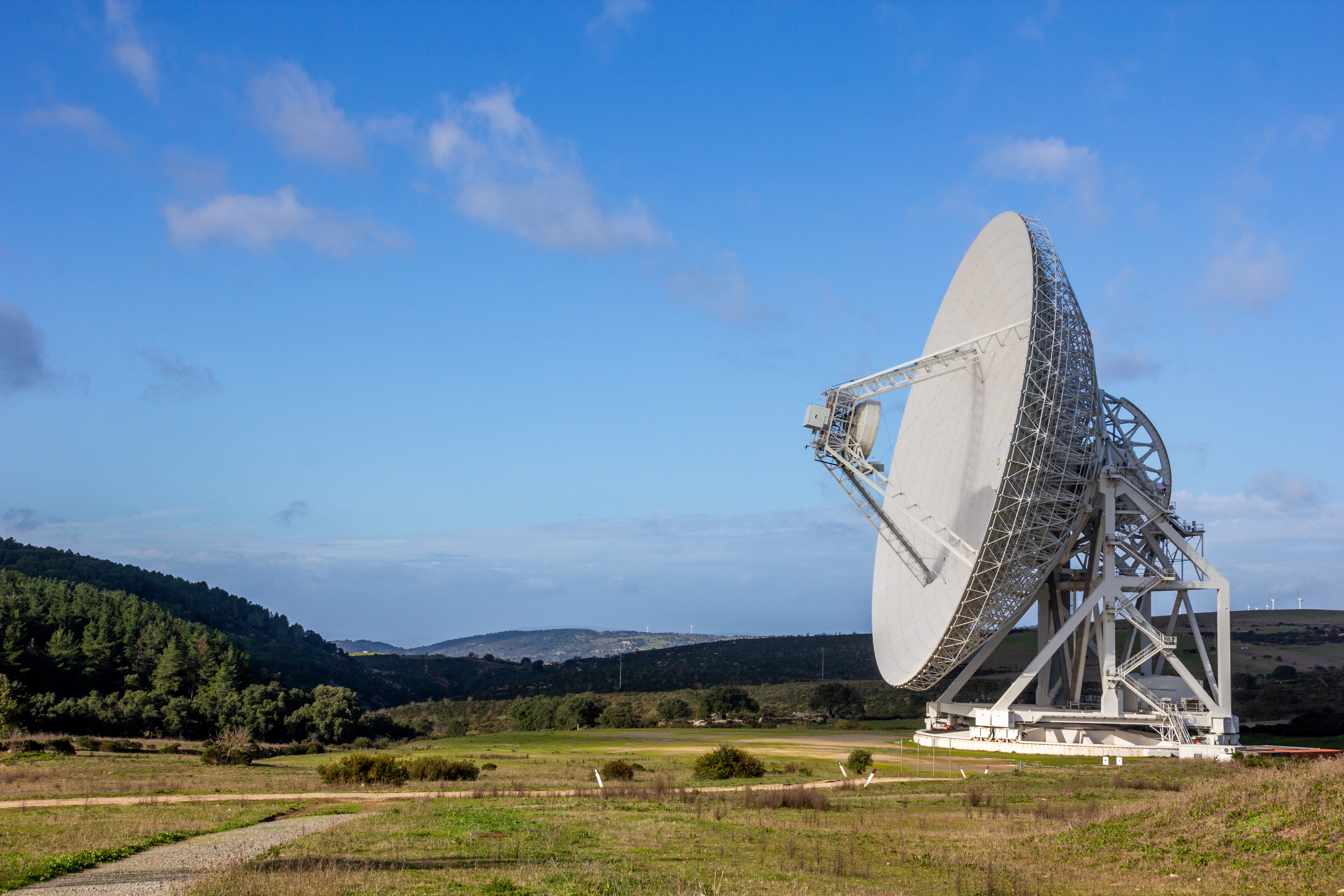
It is a technological jewel, constantly updated and essential for revealing the mysteries of space and allowing science to make important steps forward. The Sardinia Radio Telescope is a single-dish radio telescope, located in Pranu Sanguni, nine kilometres from the village of San Basilio and 40 km from Cagliari. The site, managed by the Cagliari Astronomical Observatory on behalf of the Italian Institute of Astrophysics, was inaugurated in 2013 and emerged as a research tool also available to the Italian Space Agency. Among the celestial objects that it is able to observe, there are galaxies, black holes, planetary nebulae, neutron stars and pulsars. You can admire a dish with a 64-metre diameter, composed of over a thousand aluminium panels that can move independently, thus allowing the antenna to adapt to the different focal positions of the receivers.
Not only physical elements: the telescope is also involved in the search for signals defined as non-natural, or coming from extraterrestrial sources. The Sardinia Radio Telescope is, in fact, involved in the SETI – Search for Extra-Terrestrial Intelligence - project, through the Breakthrough Listen programme, along with other telescopes from around the world. Furthermore, through the Italian Space Agency, the San Basilio telescope also collaborates with NASA and will be able to provide its contribution to guaranteeing communications during the next missions to the Moon and Mars, as well as tracking satellites and monitoring space debris.
Today, the Sardinia Radio Telescope is the most powerful Italian radio telescope and one of the largest in Europe, as well as one of the most technologically advanced telescopes in the world. This is also thanks to its new ‘glasses’: in 2023, Mistral, a receiver with 415 detectors that operate simultaneously, was installed, allowing us to observe celestial phenomena such as galaxy clusters and gas filaments between clusters, consequently deepening our knowledge of the dark matter of the universe.
During a visit, which you can book through the Cagliari Astronomical Observatory website, researchers, technicians and communicators at the observatory will tell you about all the interesting facts and various aspects of the research project, before taking you for a walk to see the radio telescope up close, located at an altitude of 700 metres, and observe the sky, trying to imagine new and exciting astronomical discoveries.

Climbing in Sardinia: the best walls to climb on the island
With climbing opportunities available year-round thanks to the island’s pleasant climate that ensures optimal climbing conditions, Sardinia stands as an enticing destination for those seeking varied and breathtaking routes amidst its natural beauty. Providing unforgettable experiences, its diverse landscape offers a wide range of climbing walls, grades and styles suitable for individuals of all levels, whether you're just starting out on your climbing journey or you're an experienced climber ready to push your limits and showcase your skills in Sardinia. From the dramatic limestone crags of Cala Gonone and the mesmerizing granite spires of Nuoro, Sardinia really does have it all. Discover your next climbing adventure in Sardinia's diverse terrains!

Canyoning, the spectacular itineraries of Sardinia
Canyoning in Sardinia is a unique experience for admiring the scenic beauty of the island from privileged viewpoints: those of its breathtaking gorges, with rocks sculpted by the wind that act as a treasure chest for waterfalls and natural pools.
You can explore the Sardinian canyons in every season of the year, but spring and autumn are particularly suitable for enjoying the excursion to the full. During the mid-seasons, the temperatures are pleasant and the views are rich in bright colours.
Get ready to dive into one of the most captivating lands in the world and experience the unique beauty of Sardinia’s canyons, among which there's the most spectacular one in Europe.
- Sa Figu
- Rio Pitrisconi
- Sa Spendula
- Rio Orrida
- Rio Zairi
- Codula Fuili
- Su Gorropu
- Over 30 canyons in Sardinia

Mountain biking, itineraries not to be missed
Exploring Sardinia by mountain bike is an exceptional way to surround yourself by its wild nature. There are numerous cycling routes that cross its breathtaking coasts, as well as lesser-known corners of the hinterland. The island is famous for seaside tourism which is concentrated in the summer months, although spring and autumn are also magical periods for admiring its beautiful scenery with the sea view filling your eyes and your feet on the pedals. Even in winter it offers sunny days and mild temperatures, ideal for active holidays in the company of your bike.
Discover the mountain bike routes in Sardinia
- MTB excursion in Cardedu
- MTB excursion in Orosei
- MTB excursion: La Maddalena archipelago
- MTB excursion Pala di Monti and Rio Pitrisconi
- MTB excursion: the red river and Piscinas
- Visit Sardinia by bike

Kitesurfing, spotlight on Sardinia
The winds move fast in Sardinia, to the delight of those who go kitesurfing and those who enjoy the vision, from the beach, of these colourful kites that seem to dance on the water. The Island offers a variety of exceptional spots to satisfy the desire for adventure and adrenaline of all the kitesurfers on holiday. In fact, Sardinia is one of the best destinations in Italy for enjoying this sport all year round, thanks to its constant winds and ideal weather conditions.

Green Flags, Sardinia's child-friendly beaches
Almost unreal colours and transparencies, soft, white sand, sometimes accompanied by pebbles and multicoloured grains, rocks and cliffs sculpted by nature into curious shapes, dunes, pine forests and lagoons as backdrops. These are the characteristics that enchant all those who frequent Sardinian beaches, to which we can also add a factor that is fundamental for many: safety and availability of services for families with children. Almost three thousand Italian and foreign paediatricians consider Sardinia to be on the podium of the regions with the highest number of family-friendly beaches, which have continued to receive the Green Flag award every year. For 16 years now, evidence of increasing attention to the needs and requirements of visitors has been ‘scattered’ across every corner of the Island.
Slow food & slow life
The extremely high concentration of long-living people, especially in certain areas of Sardinia, has attracted the attention of the international scientific community. Research carried out by various scholars tends to demonstrate the correlation between lifestyles, diet and longevity: along with genetic predisposition, the combination of environmental, anthropological and cultural factors that characterize Sardinia are the key to ‘successful aging’. People live better and longer on the Island, compared to the Italian and European average. It is no coincidence that the territory of Ogliastra is one of the world's five 'blue zones', areas in which the percentage of centenarians and ninety-year-olds in good health and still active is higher than in the bordering territories.