
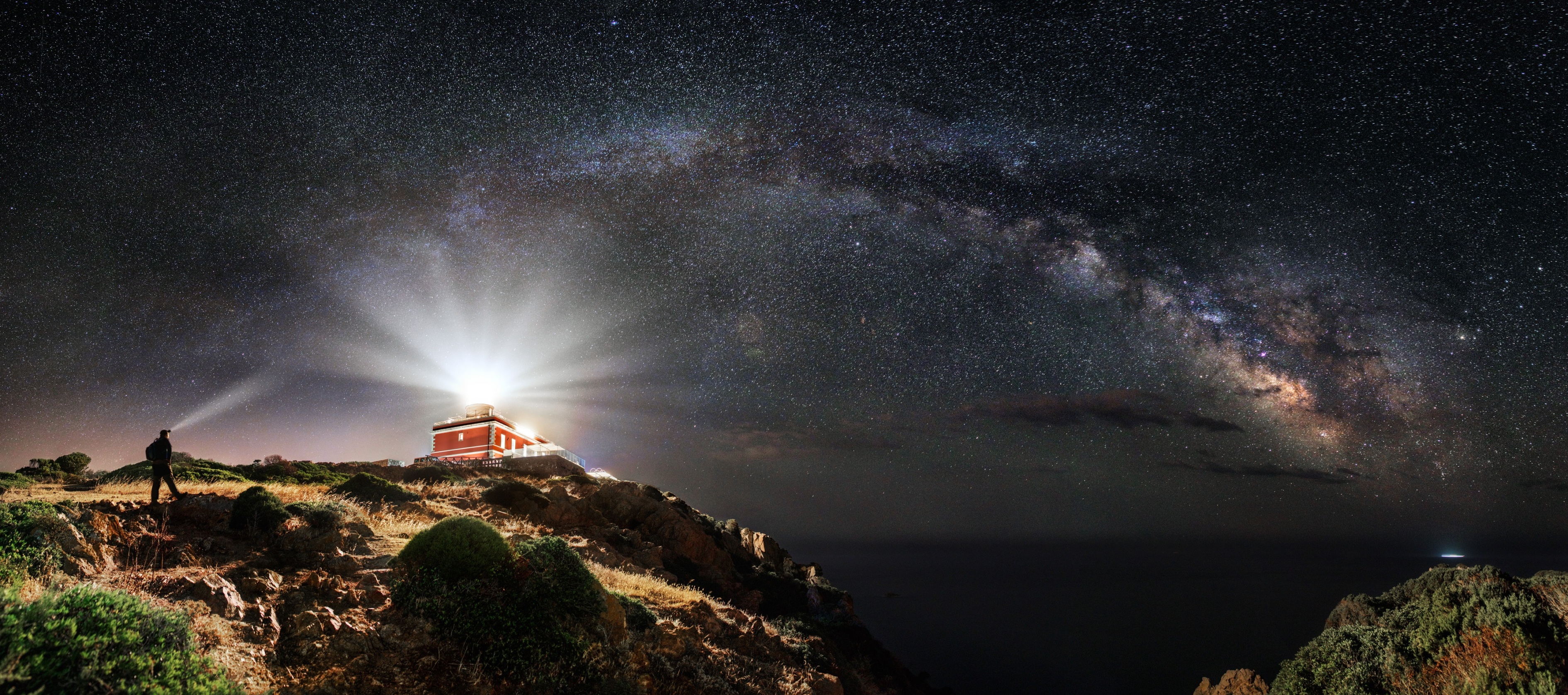
Thence we come forth to rebehold the stars
With few unnatural light sources and clean air, the sky above Sardinia is free from environmental and light pollution, free to offer its best and showcase, in the dark of night, the moon and constellations, planets and meteors. It will be a time of vast, open night skies, an immense planetarium where you can see the first stars appearing at dusk, solitary and full of energy, or in the company of the 'supermoons' , full at their maximum perigee, the closest point to Earth. You can see the most distant constellations and galaxies and in all seasons there will be swarms of shooting stars, the most beautiful in August, which create romantic nights to spend with your gaze turned upwards. One thing that never fails is the Milky Way, which you can admire from the island's solitary open-air observatories, a flood of astral light that fills the heart after a dark winter.
.

The most popular in Europe? In Sardinia, of course
Three of the 22 most beautiful beaches in Europe are in Sardinia. It is European travellers themselves who say so, according to a survey carried out by European Best Destinations, an organisation that, every year, studies the trends, tastes and requirements of European tourists seeking unforgettable locations. The ‘queen’ is Baunei, boasting two of the gems in the ranking. In fourth place outright, there is a symbol of the Island, where sea, mountains and woods embrace each other in harmony - it's Cala Goloritzé, a picture painted by nature, turquoise waters gushing from underwater karst springs, a carpet of white pebbles and an arch of cliffs - a destination for climbers – encircling the bay. You can get to it by sea, from Arbatax, Cala Gonone or Santa Maria Navarrese, or you can follow a trekking trail in the Supramonte area. So much wild beauty is not easy to conquer!
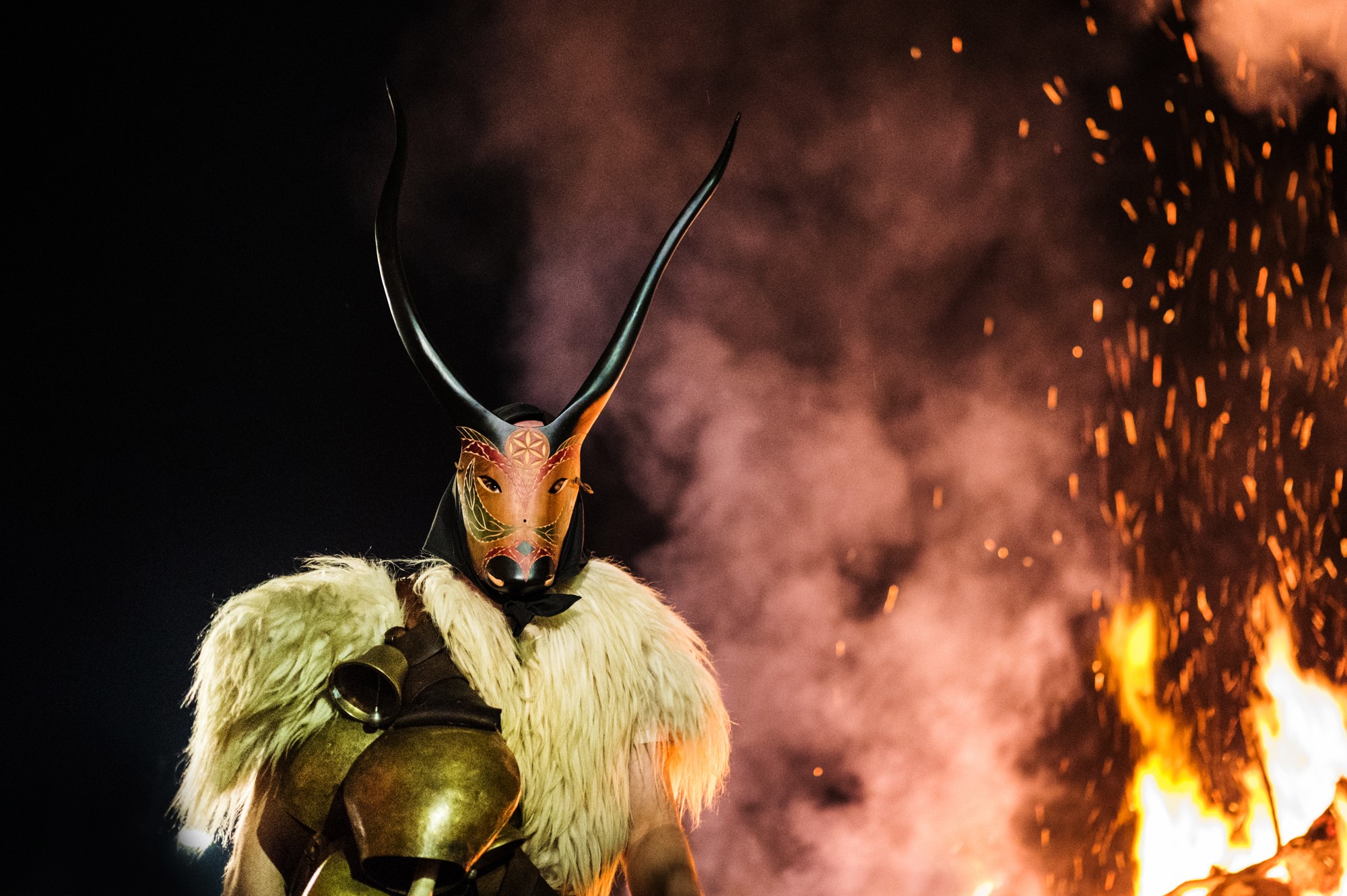
The authentic beauty of Carnival in Sardinia
With the lighting of the spectacular bonfires in honour of Sant’Antonio Abate, an ancient, solemn rite performed in many of the island’s towns, Sardinia reawakens its spirit and enthusiasm during Carnival. Su Karrasegare has many different sides to it and each community celebrates it with its own traditions, vocations and spirit. The bonfires of Sant’Antonio mark its beginning with the 'first exit' of the traditional masks, and Ash Wednesday marks the end, with the beautiful, heartfelt celebrations in Ovodda. They are the first events of the year to enliven winter with ages-old rituals. Sacred and profane, passion and identity, exciting rhythms and magnificent settings like the one at Gavoi, where the tumbarinos (drummers) play. In every town, from the North to the South, you can enjoy typical carnival delicacies like fava beans and lard, pistiddu and coccone, zeppole (doughnuts) and fine wine.
The quest for the America's Cup begins in Cagliari
The city’s involvement in the America’s Cup all began in 2017 in Bermuda at the end of the 35th Cup, the Luna Rossa syndicate was the first to lodge an official challenge with the winners, Emirates Team New Zealand, to become the Challenger of Record for the 36th edition. At the same time Prada became the naming and presenting partner for the event. The Cagliari-based Luna Rossa Prada Pirelli Team chose its long-time home city for the inaugural stage of the America's Cup World Series – the first step in their campaign to try to win the 36th America’s Cup presented by Prada for Italy. “Where else?” is the phrase that circulates around the organizers, skippers, crews, and media. People who have raced at famous yachting venues all over the world agree that Sardinia’s capital is the ideal place for sailing. Who can blame them? Perfect sailing conditions, a welcoming climate and prevailing winds, along with state-of-the-art infrastructure, and a warm welcome and engaging passion from the local people, mean that yacht racing on the Gulf of Angels are nothing short of spectacular.
The America’s Cup World Series Sardegna – Cagliari is the first of three ACWS events in 2020 leading up to the Prada Cup, a knockout competition during January and February 2021 in Auckland will determine which of the Challenger teams – Luna Rossa Prada Pirelli Team (ITA), INEOS Team UK (GBR) and NYYC American Magic (USA) – will take on the Defender from New Zealand in the Match for the 36th America’s Cup presented by Prada in March 2021. Long before that final challenge however the four top-flight international crews will meet in Cagliari from April 23 – 26, making the Sardinian city the capital of world sailing for those four days.
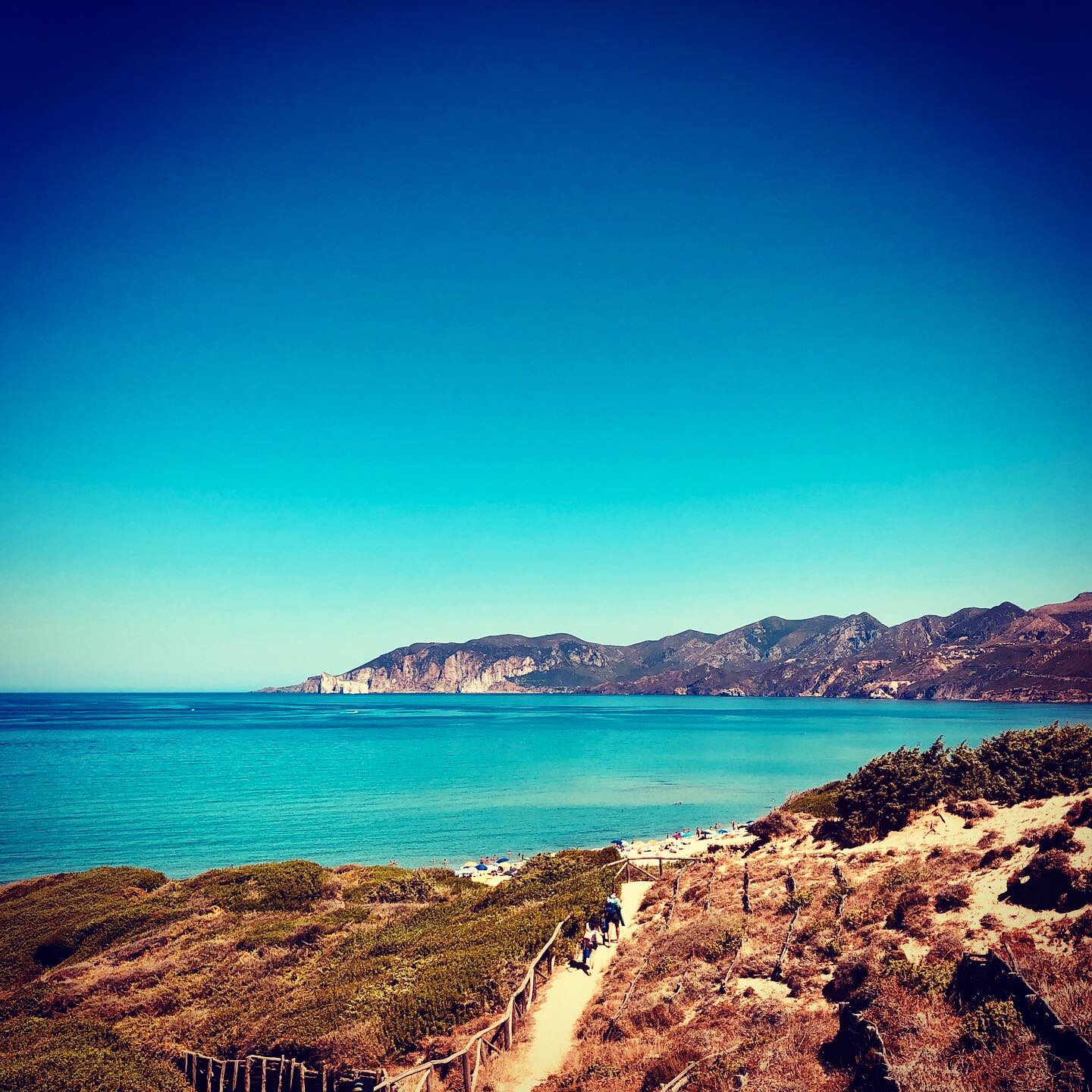
Porto Paglia - Marina di Gonnesa
A wonderful oasis ideal for all tastes, from those who love relaxing in nature and romantic atmospheres to sea sports enthusiasts. The marina of Gonnesa is an enchanting, endless expanse of soft, firm sand with a beautiful golden-amber colour within the Golfo del Leone (or of Gonnesa). The beach is wide and three and a half kilometres long, offering picture postcard views: fossil dunes covered with Mediterranean greenery and the surrounding landscape of colours ranging from beige to reddish, contrasting with the white sand and the iridescent sea with its shades of emerald green and blue. Although the sandy expanse is unique and seamless, you will hear talk of ‘beaches’ - in fact, there are four parts, corresponding to the same number of access points to the beach. Each stretch is beautiful and is identified as a beach in itself, with its own name and its own distinctive features: Porto Paglia, Punta s’Arena, Plag’e mesu and Funtanamare.
The southernmost part of the marina is Porto Paglia, which gets its name from the ancient tuna fishery dating back to the 18th century and, for two centuries, one of the most productive in the Mediterranean. The impressive complex formed by the dwellings of the tuna fishermen and the dock, which was renovated and used as a tourist village at the end of the twentieth century, dominates the promontory south of the gulf
. The beach is about half a kilometre long and has light sand with hints of gold and pink streaks due to the minerals mixed in with it. Scattered here and there on the shoreline, you will see trachyte rocks. The seabed is sandy for long stretches, then it gets deeper with pebbles. Currents and winds often agitate the clear waters, so the beach is much loved by kite and wind surf enthusiasts in search of waves.
Porto Paglia, the ‘pearl’ of Gonnesa, is the boundary between the Iglesiente and Sulcis coasts, where the elevations extend to the sea, with green limestone cliffs. The sandy shore is preceded by a stretch of wild coastline, with pebbly coves framed by trachyte rock faces overlooking the sea, similar to those of the Island of San Pietro and once crossed by the railway line that connected the Iglesiente mines to Portovesme. Right here, at the southernmost tip of the beach, highly appreciated by those who go underwater fishing and diving, the chiesetta della tonnara (little church of the tuna fishery), which was built directly on the rocks, stands out in a surreal context. A short walk on the rocky outcrops will take you to it at low tide. It is the only one in Sardinia that can be accessed directly from the sea: boats can be anchored at the small quay of the churchyard. Along the path, you will also see the ruins of a tower built under Spanish dominion to defend the southwestern coasts from pirate raids. In addition, hawks nest in the sandstone ravines surrounding the beach. On a beach suited to people who love relaxation and unspoiled nature, there is no shortage of services: you will find refreshment areas and bathing establishments directly on the beach, where you can rent beach umbrellas and sun loungers.
Plag’e mesu, or ‘middle beach’, as the name implies, is the central stretch of beach in the gulf, a huge strip of fine, golden sand, which is never crowded, even at the height of summer. The northernmost beach is Fontanamare, delimited by cliffs and by the ruins of the mining port. Here, you can admire the dunes of Gonnesa, shaped by the northwesterly wind, making it one of the Sardinian coastal stretches most frequented by surfers. Just beyond the gulf, the limestone rock known as Pan di Zucchero stands out and is the tallest rock in Europe, rising majestically out of the water. Close to the beach you can relax in a pine forest, alongside the marsh of sa Masa, where rare aquatic birds dwell, among which the western swamphen, and is a paradise for birdwatching enthusiasts.
From Iglesias and Gonnesa, you can reach the marina by first taking state road SS 126 and then scenic route 108 towards Portoscuso, along which you will find a detour taking you to the village of Porto Paglia. From the large car park, you can get to the beach via a flight of steps.
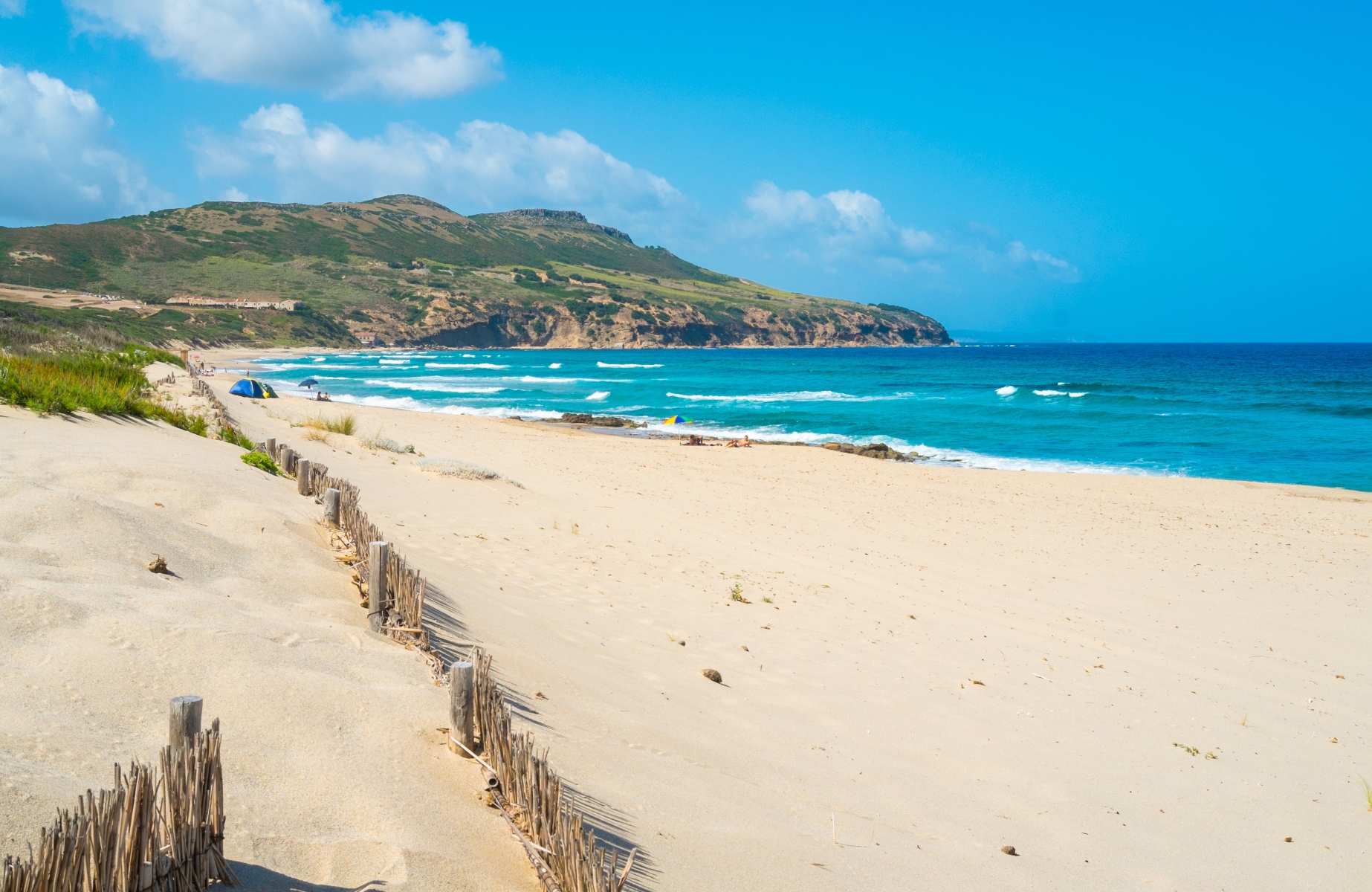
Funtanamare
A four-kilometre stretch of soft, firm sand, divided into four sections with four access points: Porto Paglia, Punt’e s’Arena, Plag’e mesu and Funtanamare. The Marina di Gonnesa is one of the largest, most enchanting and well-equipped shorelines along the Sulcis and Iglesiente coast, the border between the two territories on the southwestern extremity of the island. It extends within the captivating Golfo del Leone, bordered to the south by the eighteenth-century tuna fishery of Porto Paglia and to the north by the mining village of Funtanamare. The bay is framed by the elevations of the Sulcis region, with their lush offshoots reaching down to the sea, creating a marvellous series of golden sandy shorelines and limestone cliffs. There is a lush, green pine forest next to the beach. A little further on, you’ll find the sa Masa marshland, a destination for birdwatching enthusiasts, inhabited by rare aquatic birds, such as the western swamphen and the marbled duck.
The northernmost and largest part of the Gonnesa coast is Funtan’e Mari (in Campidano dialect): it’s about three kilometres long and is wild and evocative of the mining activities of the past. The fine sand is golden and pink in colour; the splendid multicoloured sea ranges from emerald green to blue; the waters are shallow and the seabed is sandy for a long stretch, becoming pebbly. Without the shelter of rocks for a few hundred metres and exposed to winds and currents, it is a year-round paradise for windsurfing and kitesurfing enthusiasts, who seek the waves generated by the northwesterly wind, and those who enjoy underwater fishing and diving also appreciate it. Funtanamare is very crowded in the summer but it’s also popular in the winter: many people go there for walks to admire the force of the sea and the spectacular views, especially at sunset, when you can see the outline of the Pan di Zucchero (meaning sugarloaf) sea stack and the Masua promontories overlooking the sea.
There is parking next to the beach, a restaurant nearby and a refreshment area right on the beach. The sandy coastline is framed by a border of fossil dunes covered in lush vegetation, limestone cliffs and the ruins of the 19th-century mining port. The town was once involved in mining activities, as you will see from the mining structures and facilities: the mineral loads were brought to the beach and placed onto small boats, the bilancelle (small Sardinian boats with lateens), which transported them to the island of San Pietro. You will also notice the mouth of a drainage tunnel from 1875, known by the name of Umberto I. There are also ruins of military fortifications from the Second World War.
Although Gonnesa, nestled at the foot of Mount Uda, is not a coastal town, it is only two kilometres from the sea. The southernmost stretch of its coast is Porto Paglia, followed by Punta s’Arena and Plag’e mesu, the ‘middle beach’ that connects the southern part to Funtanamare. You can reach the coast by taking state road SS 126 and provincial road SP 83 and passing through mining landscapes in Iglesias, between abandoned facilities in Monteponi and ‘red mountains’. Then, travelling from Gonnesa to Portoscuso, along the ‘scenic’ road 108, you will see small and enchanting coves with a view of the nearby islands of Sant’Antioco and San Pietro.
Gonnesa was also a protagonist during the historic mining period: various abandoned sites are evidence of this, including the village of Normann, with its mine close to the Cave of Santa Barbara, an unspoilt jewel of nature. In addition to the remains of industrial archaeology, the area is dotted with prehistoric sites, particularly the village of Seruci, the most important Nuragic complex in Sulcis, consisting of a complex nuraghe, a turreted defence wall, a Giants’ Tomb and a village of over a hundred huts.

Guide for travelers
1. What is the current situation?
Sardinia, like all of Italy, is classified as a protected area. The national government has taken extraordinary measures to contain the Covid-19 virus infection. Currently, and until May 3, the opening of pharmacies and newsagents are always allowed; every day, except on Sundays, the opening is granted to supermarkets, grocery stores, clothing stores for children, bookstores and stationery shops, tobacconists, petrol stations, banking, postal and insurance services are open. Passengers transport in urban and suburban areas, taxis, NCC and ferries to the smaller islands are active. Incoming and outgoing maritime and air mobility and internal mobility are limited to cases of proven need. As of May 4 the so-called 'phase 2' will enter into force and will provide for a gradual relaxation of the restrictions. View the DPCM of the 26-04-2020 and the Ordinances of the 24 March 2020 and of the 13 April 2020.
2. What precautions has the Sardinia Region taken to protect residents and guests?
The Sardinia Region ensures continuous connection with the national health authorities and with the regional health companies, alerted and informed on the operational indications and guidelines defined at national level. Italy has an efficient health system - of which Sardinia is an integral part - which guarantees foreign guests who are in the national territory for vacation, study and work the same assistance it offers to its citizens. View all the ordinances of the Sardinia Region
3. What is the situation of the access gates to Sardinia?
Transit through Sardinian ports is allowed only for emergencies and for the indispensable transport of goods, in particular foodstuffs, medicines and medical material. Currently the airports of Alghero and Olbia are closed, that of Cagliari-Elmas, indicated by the Ministry of Transport as one of the strategic ones in Italy for the public service during this emergency, is the only one open in Sardinia, although with a low flight regime.
Sogaer, the management company of Cagliari airport, rigorously applies the protocols envisaged for checks on arriving passengers; moreover, in order to protect them, it has increased the sanitation cycles of public spaces and adopted an innovative ultraviolet disinfection system.

Guide for travelers during the Phase 2
1. What is the current situation?
The Italian government has taken extraordinary measures to contain the Covid-19 epidemic. Currently the so-called 'phase 2' entered into force, that is a gradual return to normal. Currently the accommodation facilities and all shops, although with contingent entrances, are open, including restaurants, pizzerias, bars, pubs, patisseries and ice cream parlors, with precise rules related social distancing and with obligation to use the protective masks.
There are no limitations to the personal freedom of the residents, however avoiding gatherings in both outdoor and indoor places. All movements are allowed within the regional territory, while proven health, work or urgency reasons are required until 2 June to go outside the Sardinian borders or arrive on the Island.
View all the provisions in the DPCM of the 26-04-2020 and in the RAS President's Ordinance of the 17-05-2020
2. Is it possible to travel to and from Sardinia?
Currently air and sea travel to and from Sardinia have a reduced flow linked only to cases of proven needs, health and work reasons.
Currently the Cagliari-Elmas and Olbia Costa Smeralda airports are open for the private flights. The air connections of Sardinian airports 'in territorial continuity' to and from with Rome and Milan will restart on June 2nd. From June 15 all domestic flights should be reinstated and from June 25 the international flights also should be restart.
Even the transit in Sardinian ports, to date allowed only for emergencies and freight traffic, should follow the same timescales towards the restoration of pre-emergency traffic.
In all the Sardinian gates, to greater protection of the passengers, sanitation cycles of public premises have been increased.
The obligation to observe the period of stay at home, with fiduciary isolation, remains for those who arrive on the island.
3. Is it possible to cancel a trip?
About reservations, the accommodation or reference tour operator will apply the general cancellation conditions. For further information, contact them or possibly contact your insurance company if you have taken out a trip cancellation policy. However, given the reopening of accommodation and commercial activities and the imminent restoration of connections, we advise you not to cancel the trip and check the availability to move your booking on another date through your tour operator.
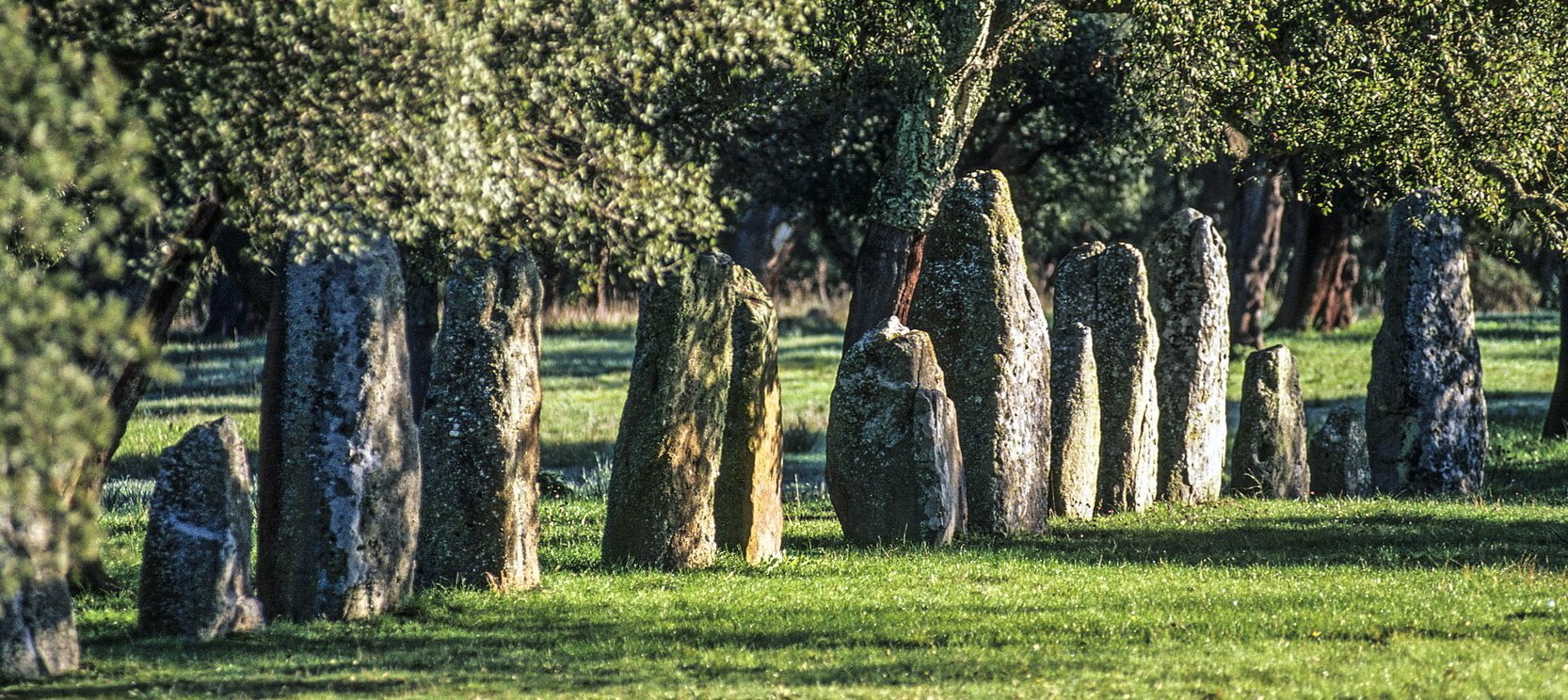
Perdas fittas between earth and sky
Places shrouded in legends and mystery, an ancestral world that speaks through huge stones. This is the atmosphere you will experience at Pranu Mutteddu in Goni and Bir'e Concas in Sorgono, in the green heart of the island, where there are hundreds of menhirs: solitary, in pairs, in a circle or in long rows symbolising ritual pathways, perhaps oriented based on celestial phenomena. Magic, sacredness and magnetic power, as in the famous Stonehenge, but here the menhirs are older and greater in number.
Plunged 'like a knife' into the ground, the perdas fittas (or 'driven stones' in Sardinian) rise up towards the sky surrounded by a fairytale landscape: centuries-old oak woods, meadows of cyclamen and wild orchids, lavender and myrtle bushes that perfume the air. The sky also plays its part, the sun filtering through the lush nature and making the huge, elongated, tapered stones glow with a soft light. They are refuges of the soul, sensory places that spark the imagination: is it all real or is it a fairy tale told by nature?

Henry Tunnel
A labyrinth of tunnels carved into the rock, opening spectacularly onto sheer views of the island's south-west coast. The tour of the Henry tunnel, which has been made safe and can be visited with prior booking, is a journey through time inside the Pranu Sartu mine, Buggerru's most famous and productive mine. On the way out, you can take an electric train along the route of the old steam railway, and on the way back you can walk along the old 'pedestrian' tunnel, which was once used by pack mules. Walkways carved into the rock run the length of the cliff: some sections are in the dark, broken every now and then by the light coming from huge windows carved into the mountain face and overlooking the sea. The most spectacular view is at the end of the route: 50 metres above sea level, with a breathtaking backdrop overlooking the coast and the village's houses.
Excavation of the tunnel took place during the last three decades of the 19th century. For the time, this was a futuristic piece of engineering, as was the Porto Flavia tunnel. The remarkable size of the Henry - named after the French manager of the Anonime des Mines de Malfidano company, the concessionaire behind its exploitation, who decreed its construction - is due to the use, from the end of the 19th century, of a steam locomotive that ran through it and allowed the transport of raw minerals from the underground sites to the washeries and then to the port, where the cleaned minerals were loaded onto boats. Rail transport, on which the wagons of the coal-powered train ran, quickly replaced slow and costly transport on pack mules and was a huge step forward in the plant's productivity. At the time of the innovation, mining had been going on for thirty years, in 1865, with the transfer of the concessions to Anonime de Malfidano.
The exploitation of the site between the end of the 19th century and the first half of the 20th century transformed a small village of farmers and fishermen into one of the main centres of the mining epic. The industrial 'revolution' was more sudden and abrupt than in other sites in Sulcis-Iglesiente. Today, thanks in part to the restoration of its industrial archaeology, Buggerru is one of the eight sites that make up Sardinia's UNESCO-recognised geo-mineral park, as well as an attractive resort boasting enchanting coastal landscapes, including the inimitable Cala Domestica and the beautiful town beach.
The tour of the 'Henry' is embellished by stories about mining life. The mines were places of suffering, where workers' solidarity and class consciousness flourished. In particular, Pranu Sartu is the symbol of the workers' struggle, the scene of the famous massacre at Buggerru in 1904.
The miners, exploited to the limit, 'dared' to stage a historic strike, the first in Italy's industrial history. In response, the mining company called in the army. The soldiers responded to the miners' stone pelting by opening fire: three workers died and eleven others were wounded. This episode led to other strikes throughout Italy. The trigger for the tragic uprising was the change in summer working hours, but the discontent was much deeper. Exploitation by French and Belgian bosses at the end of the 19th and beginning of the 20th century was ruthless: gruelling shifts, no rest, the lowest wages in Europe, child labour, even having to pay for work tools, overtime to survive. As you enter the tunnel, you will notice a respectful silence, broken by the clanking of the wagons: in the dark and cold, you can imagine the atrocious things experienced by men of yesteryear who, with hard work and suffering, enabled their families to live a barely decent life.